

Égypte ancienne | Figurine Féline Sacrée en Calcaire Sculpté | Basse Époque | Circa 664–30 av. J.-C.
- Prix habituel
- $700.00
- Prix soldé
- $700.00
- Prix habituel
Impossible de charger la disponibilité du service de retrait


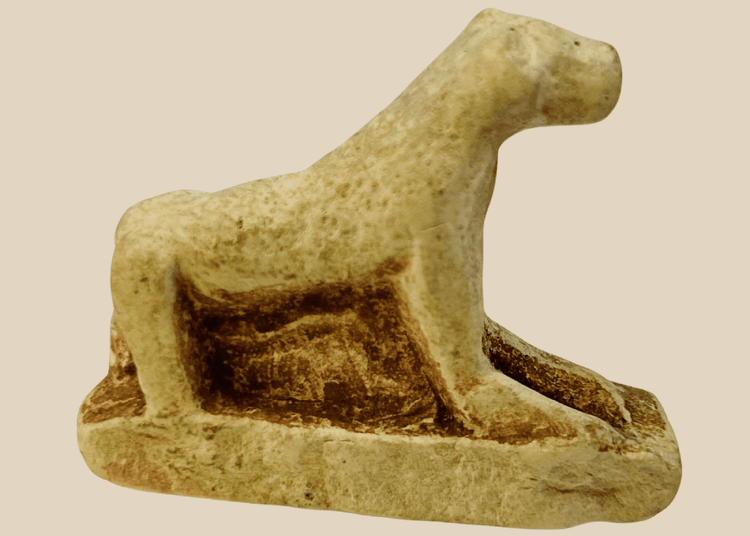

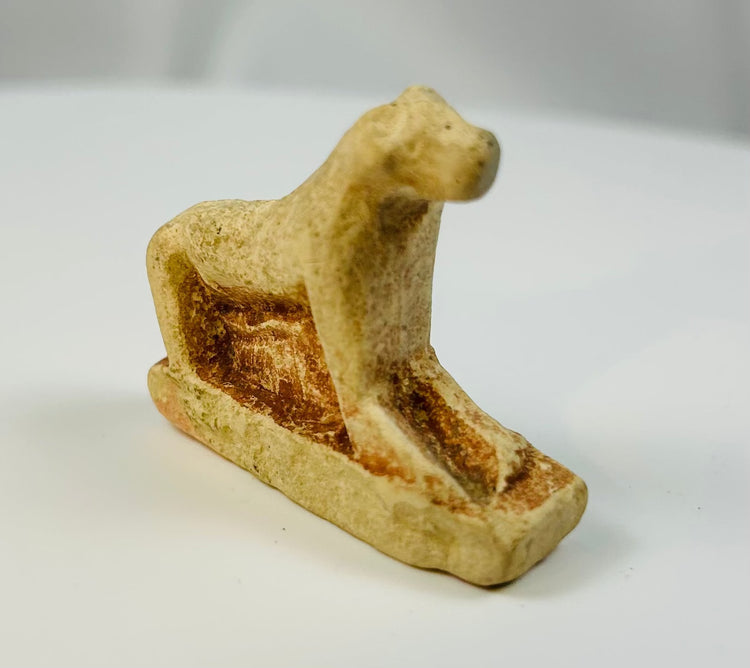

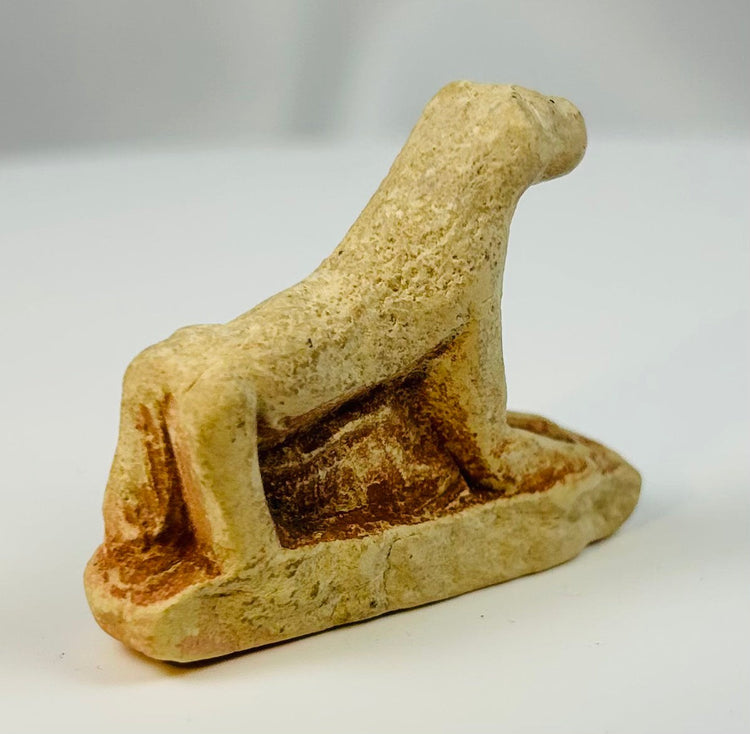
Égypte ancienne | Figurine Féline Sacrée en Calcaire Sculpté | Basse Époque | Circa 664–30 av. J.-C.
Description
Plus
Moins
Contexte historique et origine
Région : Égypte
Matériau : Calcaire sculpté
Période : Basse époque à la période ptolémaïque, 664-30 av. J.-C.
Description
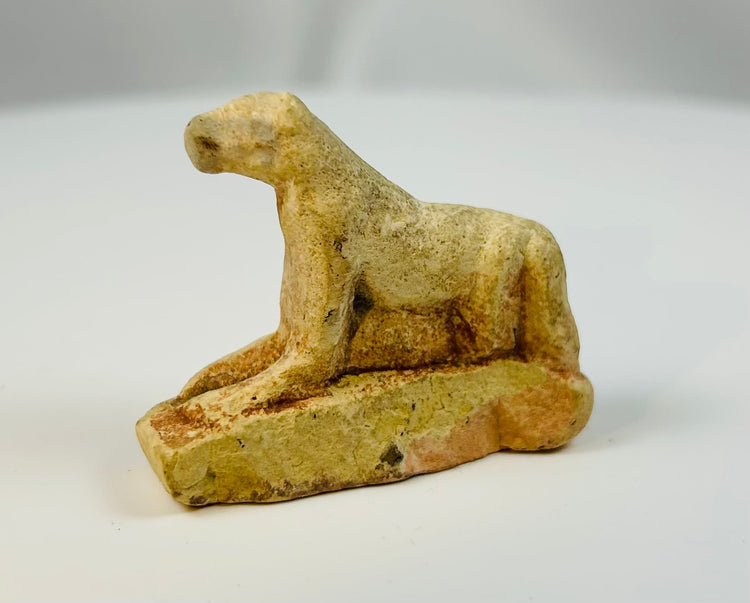
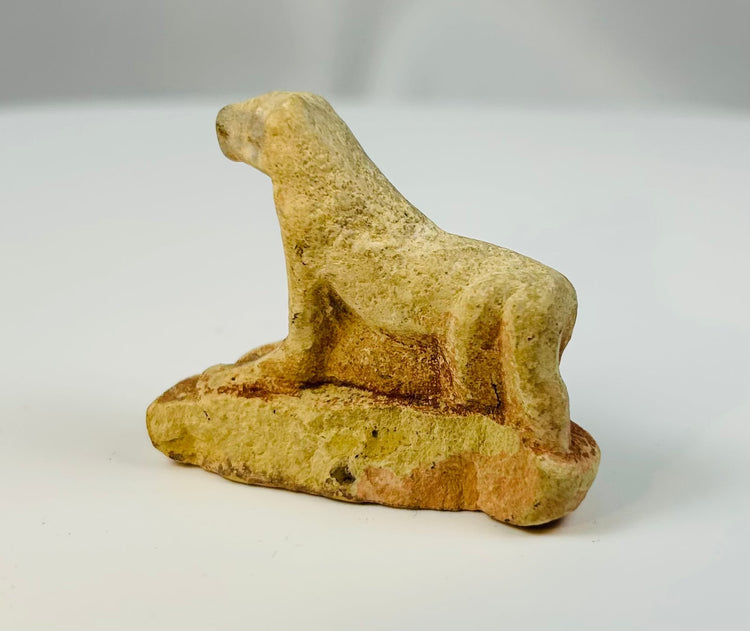
Une figurine égyptienne antique finement sculptée en calcaire, représentant une lionne couchée sur une base rectangulaire intégrée. L'animal est montré dans une position couchée et équilibrée, avec les pattes avant étendues vers l'avant et le corps légèrement relevé aux épaules, une pose symbolisant la vigilance et la force protectrice.
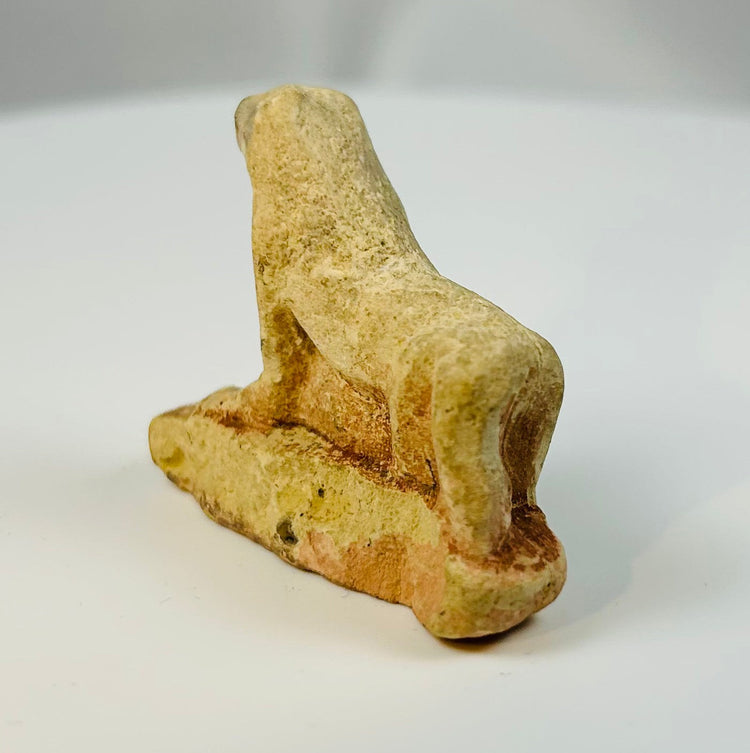
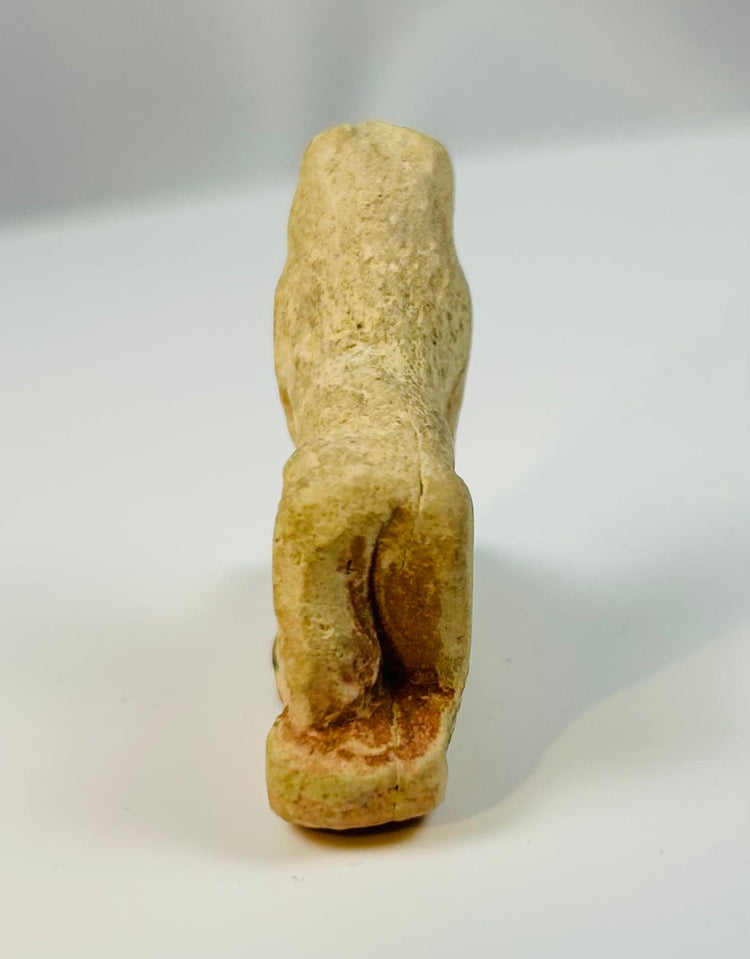
La sculpture est réalisée dans une forme simplifiée mais expressive, typique des petites figurines votives animales produites durant la Basse Époque. Le cou allongé et la tête stylisée sont tournés vers l'avant, tandis que l'arrière-train est replié sous le corps. Des sculptures subtiles indiquent la musculature des pattes et du torse, soulignant la puissance et la présence de l'animal.
L'imagerie de la lionne revêtait une profonde signification symbolique dans la religion égyptienne et était étroitement associée aux divinités solaires protectrices. De telles figures étaient parfois liées à de féroces déesses gardiennes telles que Sekhmet ou à des formes divines léonines apparentées représentant la force, la protection et l'autorité divine.
Caractéristiques
- Représentation en calcaire sculpté d'une lionne couchée
- Symbolisme classique de l'animal protecteur dans la religion égyptienne
- Sculpté sur une base rectangulaire intégrée
- Sculpture stylisée de la Basse Époque avec des détails anatomiques simplifiés
- Patine de surface naturelle développée au cours des millénaires
Signification culturelle
La lionne était l'un des animaux symboliques les plus puissants dans les croyances de l'Égypte ancienne. Elle représentait le pouvoir solaire, la protection royale et la férocité divine. Les divinités lionnes telles que Sekhmet incarnaient la force destructrice et protectrice du soleil, tandis que le symbolisme félin apparenté était également lié aux aspects protecteurs de Bastet.
De petites sculptures d'animaux sacrés étaient couramment placées dans les temples, les sanctuaires ou les contextes funéraires comme offrandes dévotionnelles destinées à invoquer la protection et la faveur divines.
État
Bon état ancien avec usure de surface, dépôts minéraux et patine conformes à l'âge. Des abrasions mineures et une altération naturelle sont présentes sur toute la surface.
Dimensions (approximatives)
Hauteur : 1,63 po
Longueur : 1,25 po
Profondeur : 0,50 po
Âge (approximatif)
2 000 à 2 600 ans
Provenance
De la succession d'Andrew Cunningham Ware (1945–2024), Floride du Sud, États-Unis. Formée principalement dans les années 1990 et 2000, la collection Andrew Cunningham Ware reflétait son intérêt de toute une vie pour l'Antiquité. Égyptologue amateur, Ware a étudié auprès de la célèbre égyptologue française Christiane Desroches Noblecourt et partageait son temps entre la France et le sud de la Floride. Sa collection comprenait des artefacts égyptiens anciens, des héritages familiaux et du matériel historique associé aux Révolutions française et russe, acquis par le voyage, l'étude et l'héritage. Ware était l'arrière-petit-fils d'Andrew Woodbury Preston, cofondateur de la United Fruit Company. La pièce est ensuite entrée dans une collection privée au Montana, États-Unis.
En savoir plus
Examinez le rôle des félins sacrés dans l'Égypte ancienne dans l'exposition Félins Divins au Brooklyn Museum
Découvrez notre collection d'artefacts égyptiens anciens.
Description
Contexte historique et origine
Région : Égypte
Matériau : Calcaire sculpté
Période : Basse époque à la période ptolémaïque, 664-30 av. J.-C.
Description
Une figurine égyptienne antique finement sculptée en calcaire, représentant une lionne couchée sur une base rectangulaire intégrée. L'animal est montré dans une position couchée et équilibrée, avec les pattes avant étendues vers l'avant et le corps légèrement relevé aux épaules, une pose symbolisant la vigilance et la force protectrice.
La sculpture est réalisée dans une forme simplifiée mais expressive, typique des petites figurines votives animales produites durant la Basse Époque. Le cou allongé et la tête stylisée sont tournés vers l'avant, tandis que l'arrière-train est replié sous le corps. Des sculptures subtiles indiquent la musculature des pattes et du torse, soulignant la puissance et la présence de l'animal.
L'imagerie de la lionne revêtait une profonde signification symbolique dans la religion égyptienne et était étroitement associée aux divinités solaires protectrices. De telles figures étaient parfois liées à de féroces déesses gardiennes telles que Sekhmet ou à des formes divines léonines apparentées représentant la force, la protection et l'autorité divine.
Caractéristiques
- Représentation en calcaire sculpté d'une lionne couchée
- Symbolisme classique de l'animal protecteur dans la religion égyptienne
- Sculpté sur une base rectangulaire intégrée
- Sculpture stylisée de la Basse Époque avec des détails anatomiques simplifiés
- Patine de surface naturelle développée au cours des millénaires
Signification culturelle
La lionne était l'un des animaux symboliques les plus puissants dans les croyances de l'Égypte ancienne. Elle représentait le pouvoir solaire, la protection royale et la férocité divine. Les divinités lionnes telles que Sekhmet incarnaient la force destructrice et protectrice du soleil, tandis que le symbolisme félin apparenté était également lié aux aspects protecteurs de Bastet.
De petites sculptures d'animaux sacrés étaient couramment placées dans les temples, les sanctuaires ou les contextes funéraires comme offrandes dévotionnelles destinées à invoquer la protection et la faveur divines.
État
Bon état ancien avec usure de surface, dépôts minéraux et patine conformes à l'âge. Des abrasions mineures et une altération naturelle sont présentes sur toute la surface.
Dimensions (approximatives)
Hauteur : 1,63 po
Longueur : 1,25 po
Profondeur : 0,50 po
Âge (approximatif)
2 000 à 2 600 ans
Provenance
De la succession d'Andrew Cunningham Ware (1945–2024), Floride du Sud, États-Unis. Formée principalement dans les années 1990 et 2000, la collection Andrew Cunningham Ware reflétait son intérêt de toute une vie pour l'Antiquité. Égyptologue amateur, Ware a étudié auprès de la célèbre égyptologue française Christiane Desroches Noblecourt et partageait son temps entre la France et le sud de la Floride. Sa collection comprenait des artefacts égyptiens anciens, des héritages familiaux et du matériel historique associé aux Révolutions française et russe, acquis par le voyage, l'étude et l'héritage. Ware était l'arrière-petit-fils d'Andrew Woodbury Preston, cofondateur de la United Fruit Company. La pièce est ensuite entrée dans une collection privée au Montana, États-Unis.
En savoir plus
Examinez le rôle des félins sacrés dans l'Égypte ancienne dans l'exposition Félins Divins au Brooklyn Museum
Découvrez notre collection d'artefacts égyptiens anciens.
Vous aimerez peut-être aussi
