



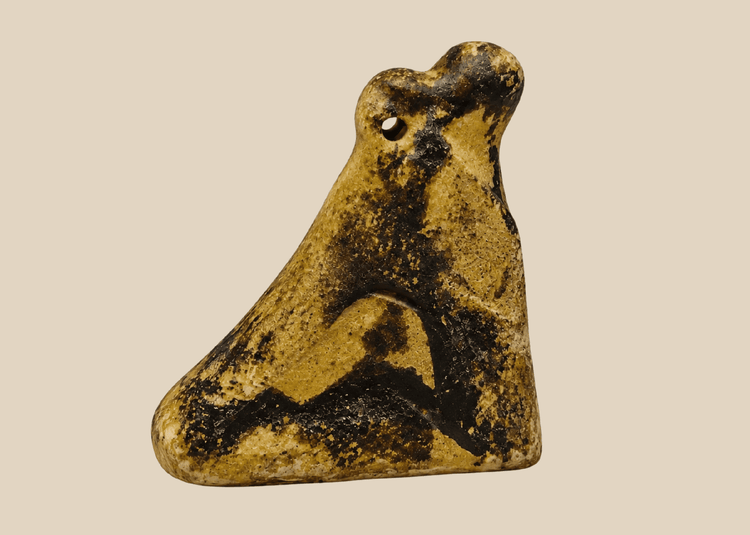
Égypte ancienne | Figurine d'Horus sculptée en pierre | Basse époque | Vers 664-30 av. J.-C.
- Prix habituel
- $400.00
- Prix soldé
- $400.00
- Prix habituel
Impossible de charger la disponibilité du service de retrait





Égypte ancienne | Figurine d'Horus sculptée en pierre | Basse époque | Vers 664-30 av. J.-C.
Description
Plus
Moins
Contexte historique et origine
Région : Égypte
Matériau : Pierre sculptée avec dépôts minéraux en surface
Période : Basse Époque à la Période Ptolémaïque, 664–30 av. J.-C.
Description
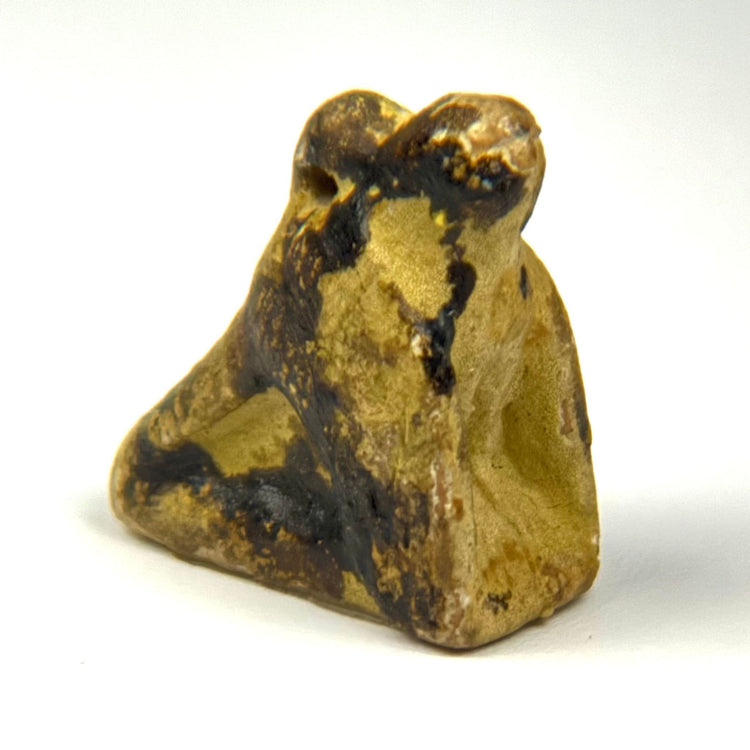
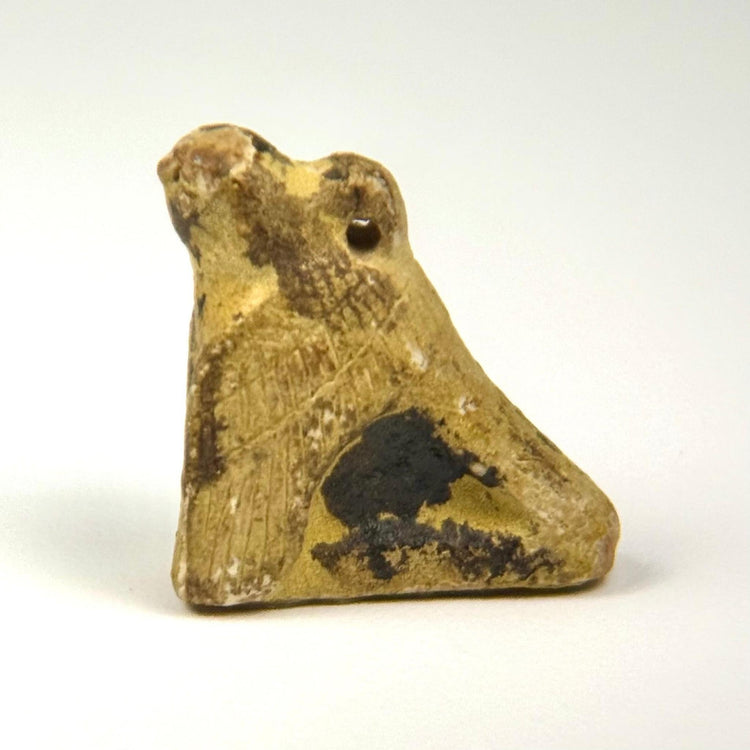
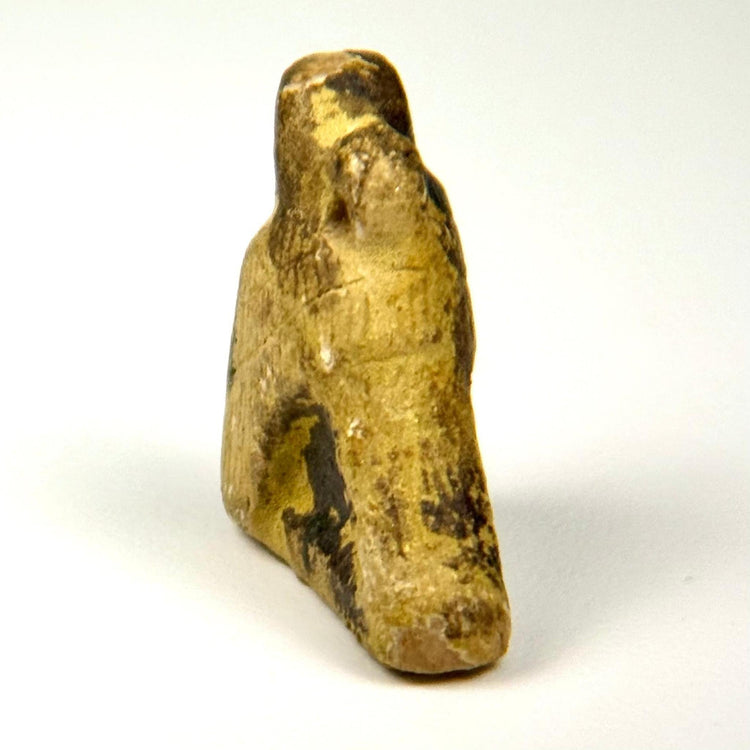
Une amulette égyptienne antique finement sculptée représentant un faucon accroupi, rendu sous une forme compacte avec les ailes repliées et la tête légèrement relevée. Le faucon est posé sur une base basse, son corps incliné vers l'avant, traduisant la vigilance attentive caractéristique de l'imagerie égyptienne du faucon. Une petite perforation près de la tête indique que la pièce était à l'origine suspendue comme amulette protectrice à porter.
Le faucon était l'un des animaux les plus sacrés de la religion égyptienne et était étroitement associé à Horus, le dieu du ciel et protecteur divin de la royauté. Les amulettes de cette forme étaient largement utilisées pendant la Basse Époque et l'ère ptolémaïque comme symboles de la protection divine et de l'autorité royale.
Caractéristiques
- Représentation sculptée d'un faucon sacré
- Posture accroupie compacte avec les ailes repliées
- Trou de suspension pour être porté comme amulette
- Patine minérale naturelle développée au fil des siècles
- Symbolisme protecteur égyptien classique
Signification culturelle
Dans la croyance égyptienne, le faucon incarnait le pouvoir d'Horus, la divinité céleste dont les yeux représentaient le soleil et la lune. Les amulettes de faucon étaient portées pour invoquer la protection divine et pour associer le porteur à la force, à la vision et à l'autorité du dieu.
De telles amulettes étaient également placées parmi les bandelettes de momie pour assurer une protection spirituelle et un guidage dans l'au-delà.
État
État antique avec usure de surface et dépôts minéraux conformes à l'âge. Abrasions mineures et patine naturelle présentes sur toute la surface. Perforation de suspension intacte.
Dimensions (approximatives)
Hauteur : 1,13 po
Âge (approximatif)
2 000 à 2 600 ans
En savoir plus
Explorez le symbolisme du faucon Horus et son rôle dans la royauté égyptienne et la mythologie de la création.
Découvrez notre Collection d'Objets Anciens Égyptiens
Description
Contexte historique et origine
Région : Égypte
Matériau : Pierre sculptée avec dépôts minéraux en surface
Période : Basse Époque à la Période Ptolémaïque, 664–30 av. J.-C.
Description
Une amulette égyptienne antique finement sculptée représentant un faucon accroupi, rendu sous une forme compacte avec les ailes repliées et la tête légèrement relevée. Le faucon est posé sur une base basse, son corps incliné vers l'avant, traduisant la vigilance attentive caractéristique de l'imagerie égyptienne du faucon. Une petite perforation près de la tête indique que la pièce était à l'origine suspendue comme amulette protectrice à porter.
Le faucon était l'un des animaux les plus sacrés de la religion égyptienne et était étroitement associé à Horus, le dieu du ciel et protecteur divin de la royauté. Les amulettes de cette forme étaient largement utilisées pendant la Basse Époque et l'ère ptolémaïque comme symboles de la protection divine et de l'autorité royale.
Caractéristiques
- Représentation sculptée d'un faucon sacré
- Posture accroupie compacte avec les ailes repliées
- Trou de suspension pour être porté comme amulette
- Patine minérale naturelle développée au fil des siècles
- Symbolisme protecteur égyptien classique
Signification culturelle
Dans la croyance égyptienne, le faucon incarnait le pouvoir d'Horus, la divinité céleste dont les yeux représentaient le soleil et la lune. Les amulettes de faucon étaient portées pour invoquer la protection divine et pour associer le porteur à la force, à la vision et à l'autorité du dieu.
De telles amulettes étaient également placées parmi les bandelettes de momie pour assurer une protection spirituelle et un guidage dans l'au-delà.
État
État antique avec usure de surface et dépôts minéraux conformes à l'âge. Abrasions mineures et patine naturelle présentes sur toute la surface. Perforation de suspension intacte.
Dimensions (approximatives)
Hauteur : 1,13 po
Âge (approximatif)
2 000 à 2 600 ans
En savoir plus
Explorez le symbolisme du faucon Horus et son rôle dans la royauté égyptienne et la mythologie de la création.
Découvrez notre Collection d'Objets Anciens Égyptiens
Vous aimerez peut-être aussi
