

Égypte ancienne | Fragment de récipient Bastet en faïence | Vers 664-30 av. J.-C.
- Prix habituel
- $600.00
- Prix soldé
- $600.00
- Prix habituel
Impossible de charger la disponibilité du service de retrait


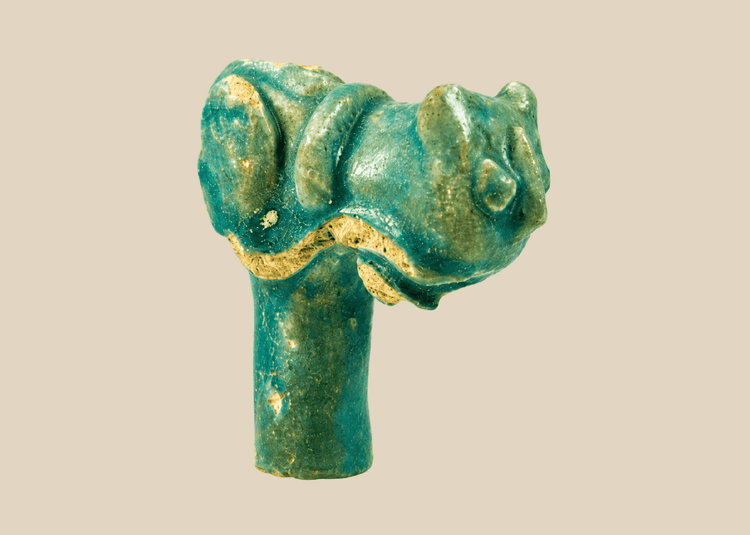
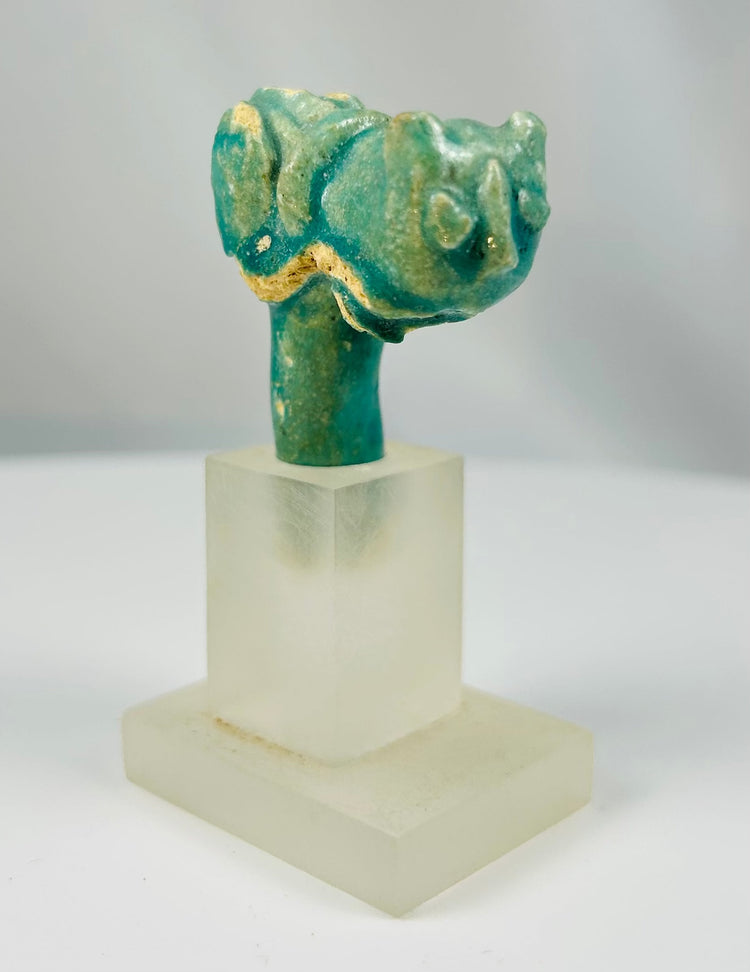
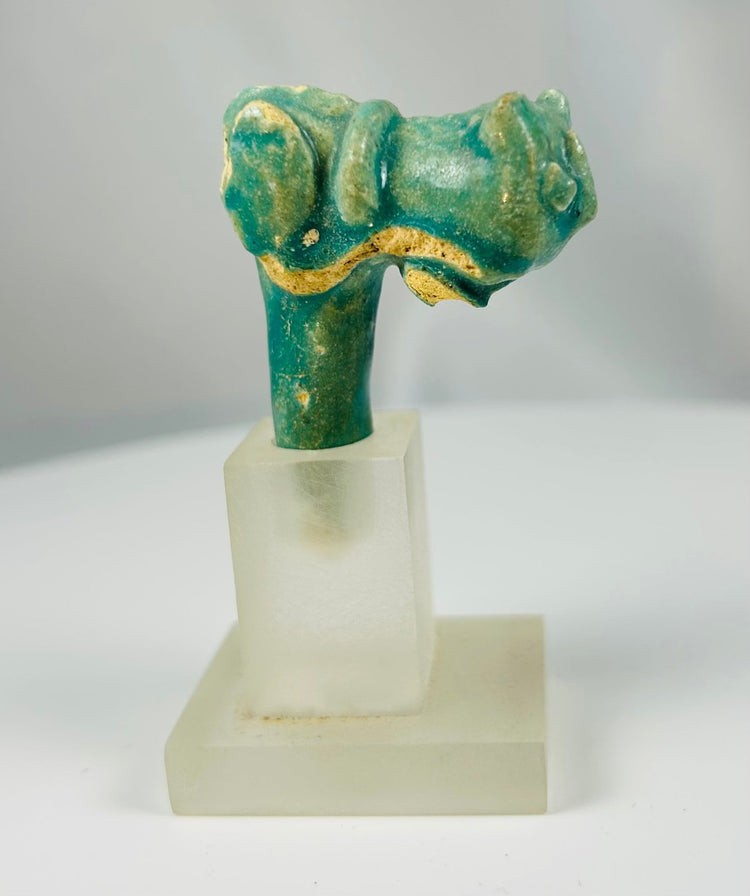
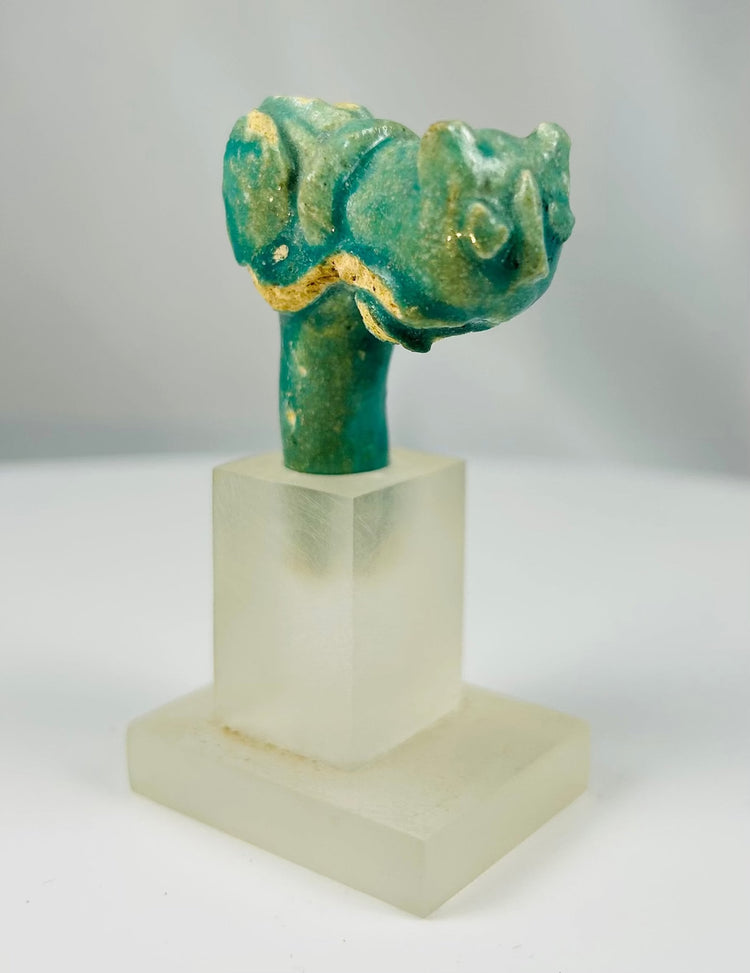
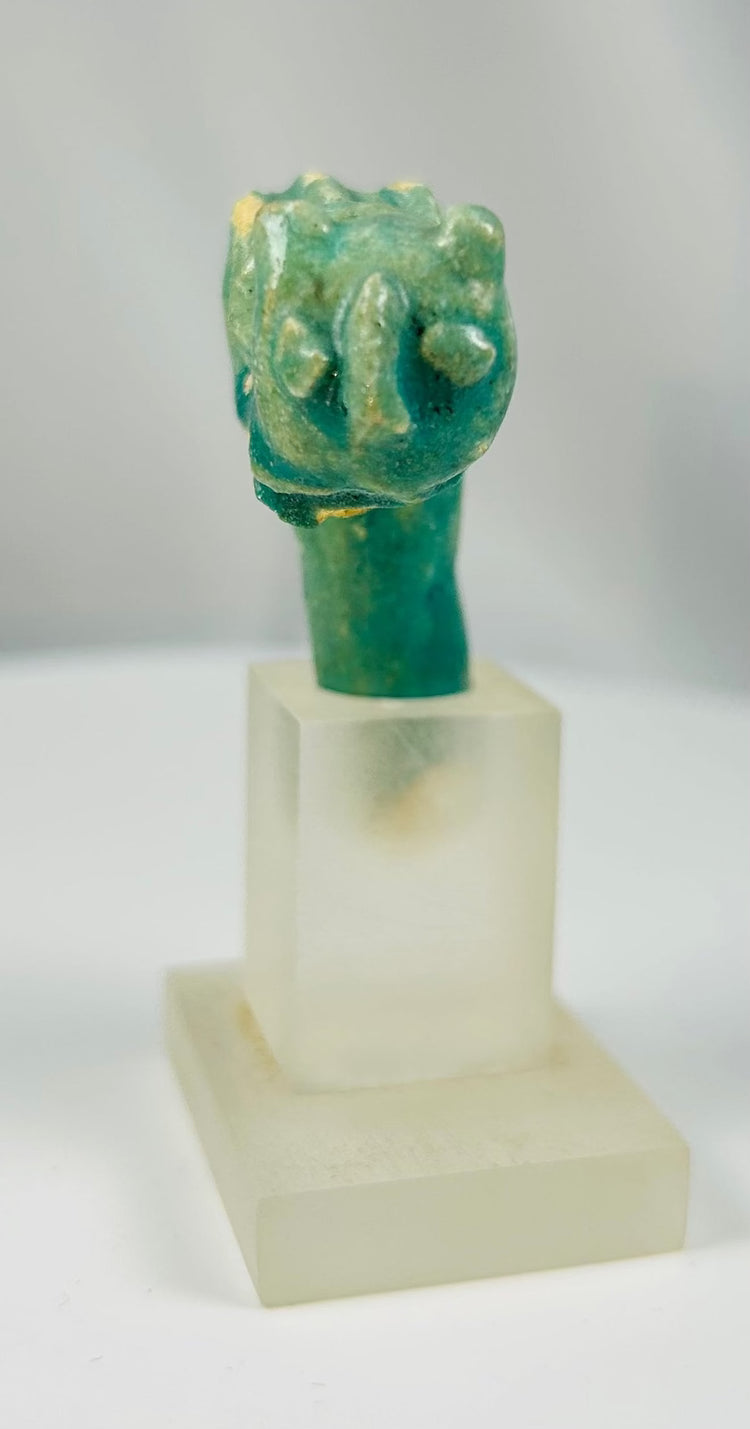
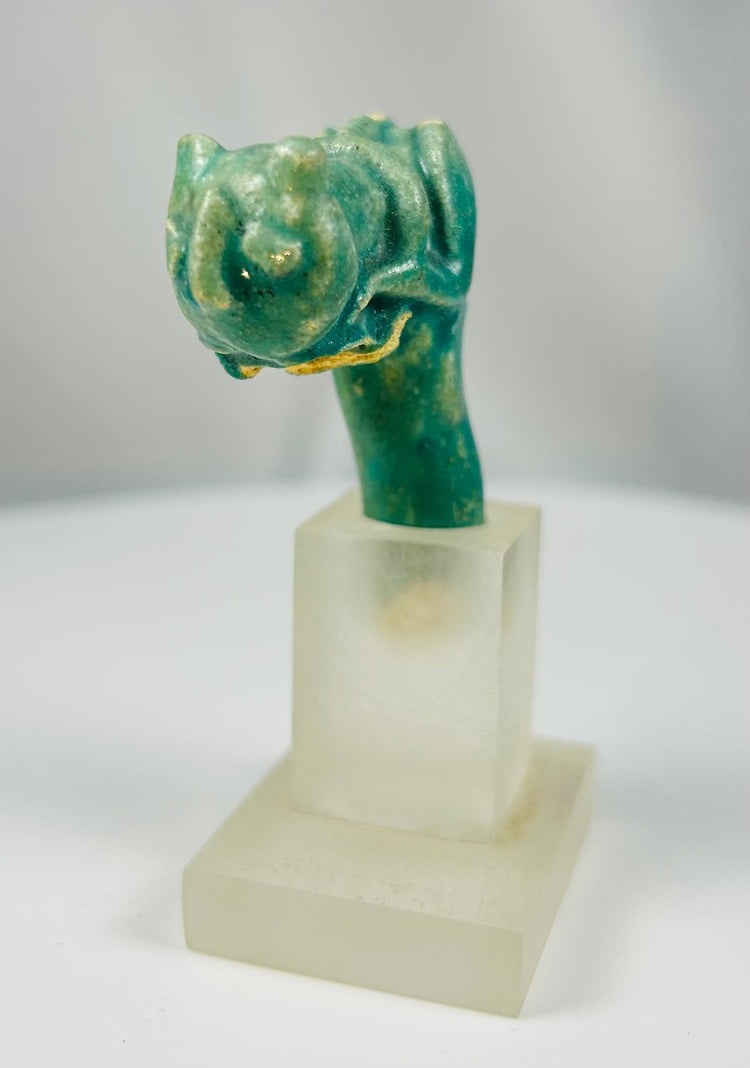
Égypte ancienne | Fragment de récipient Bastet en faïence | Vers 664-30 av. J.-C.
Description
Plus
Moins
Contexte historique et origine
Région : Égypte
Matériau : Faïence égyptienne bleu-vert (composition émaillée)
Période : Période tardive à période ptolémaïque, vers 664-30 av. J.-C.
Description
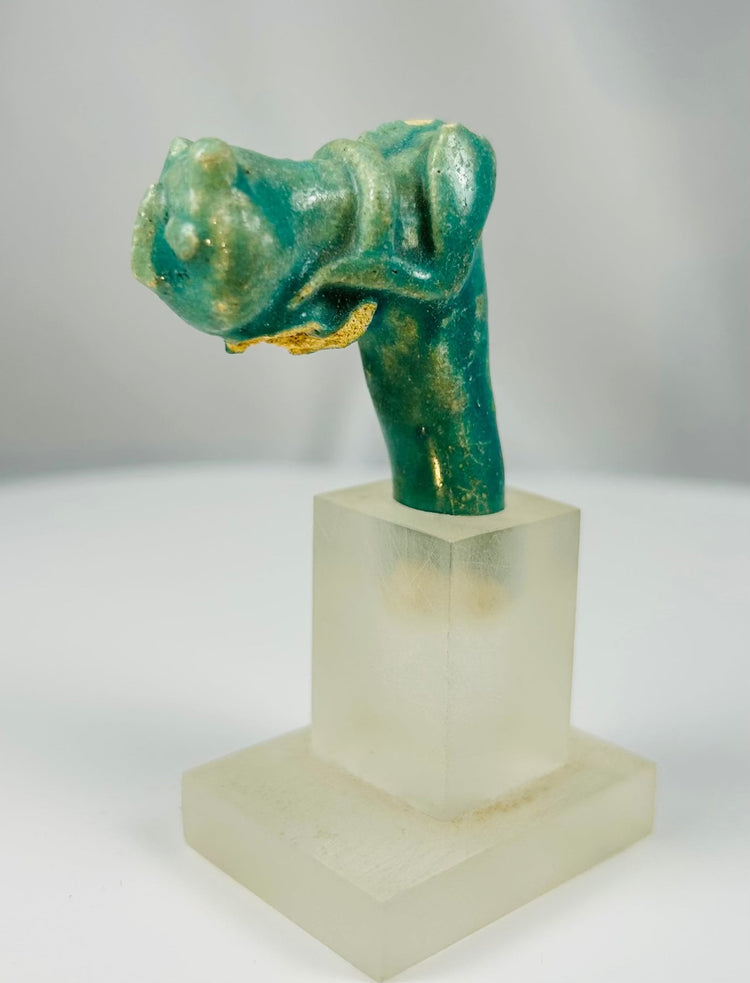
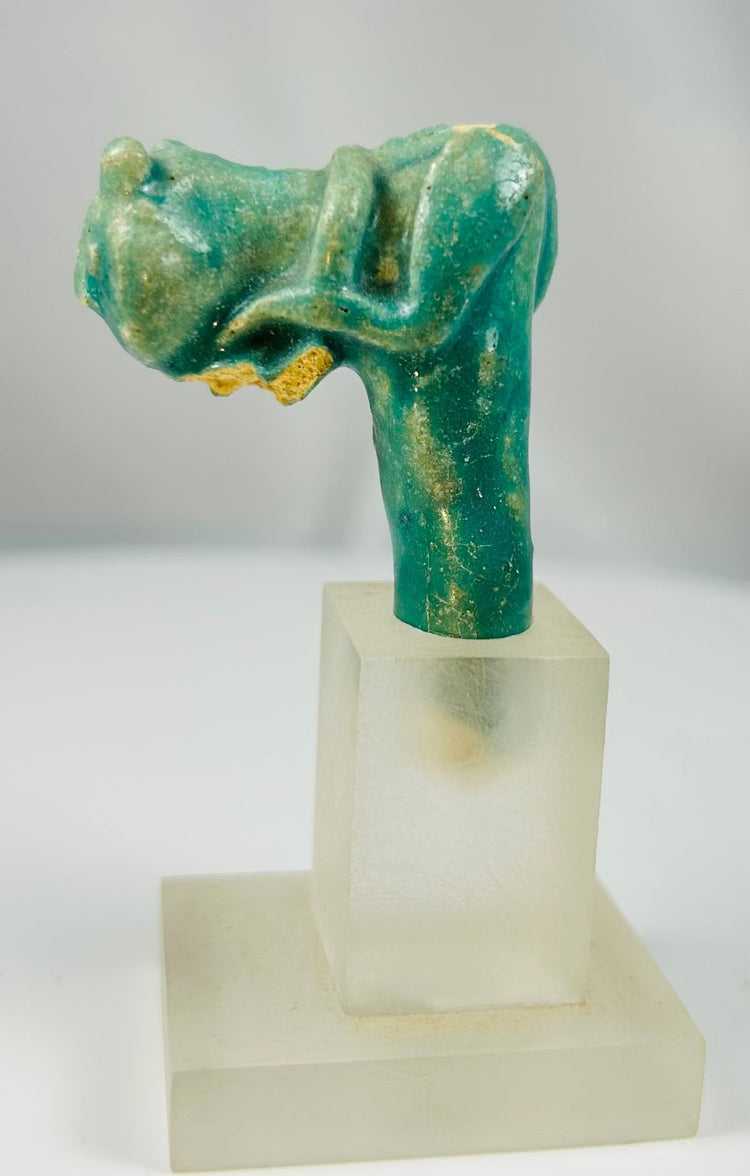
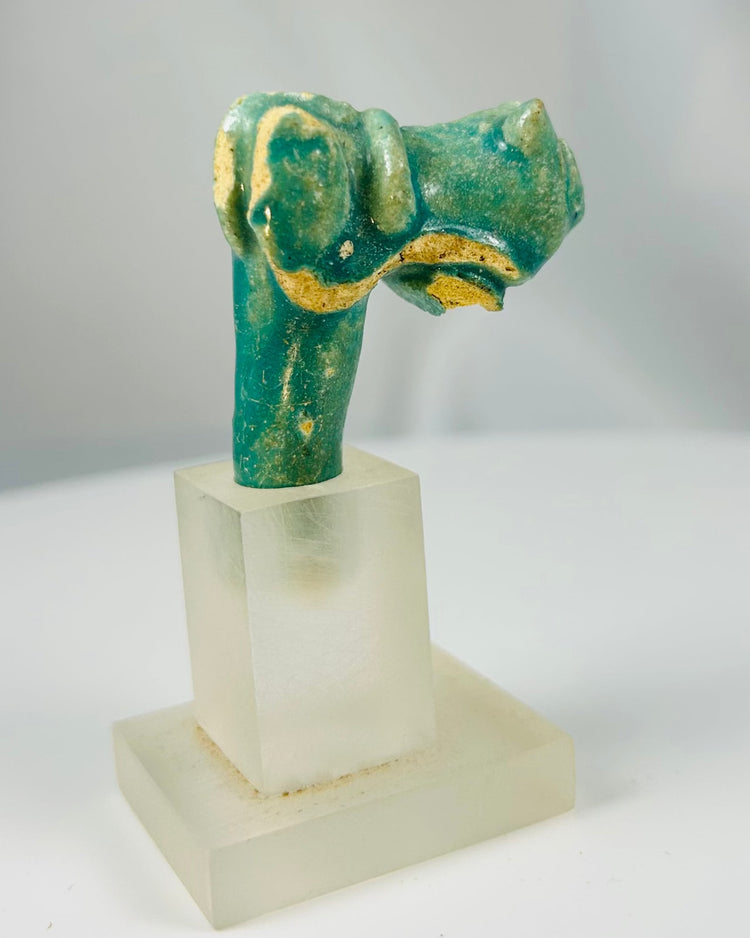
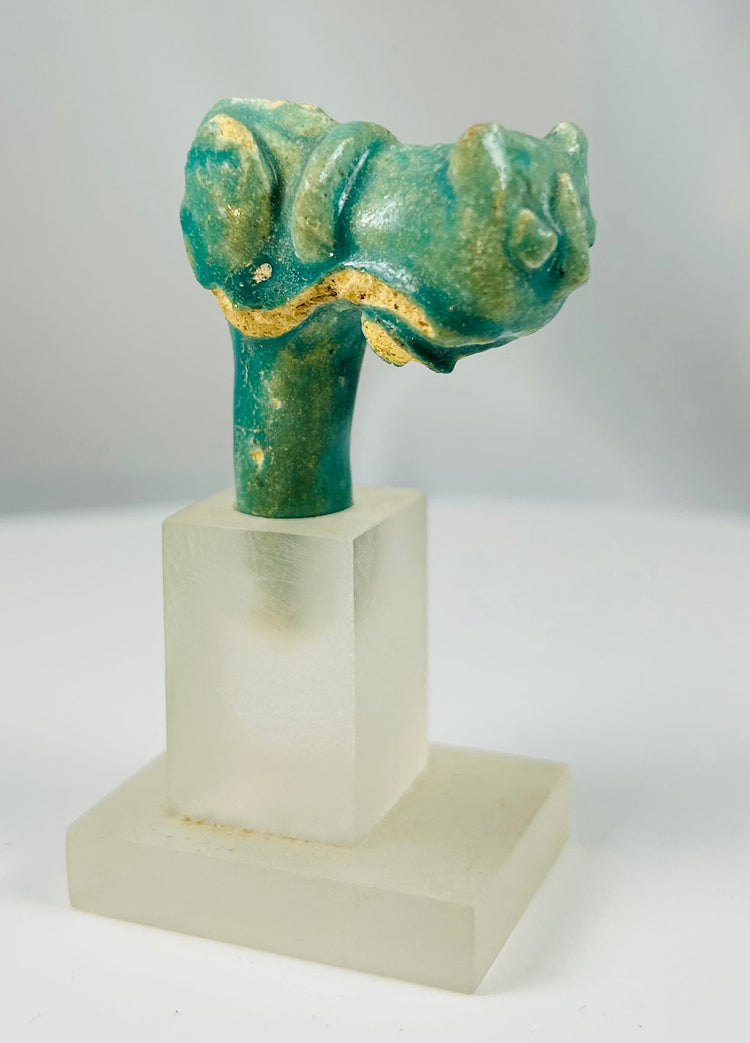
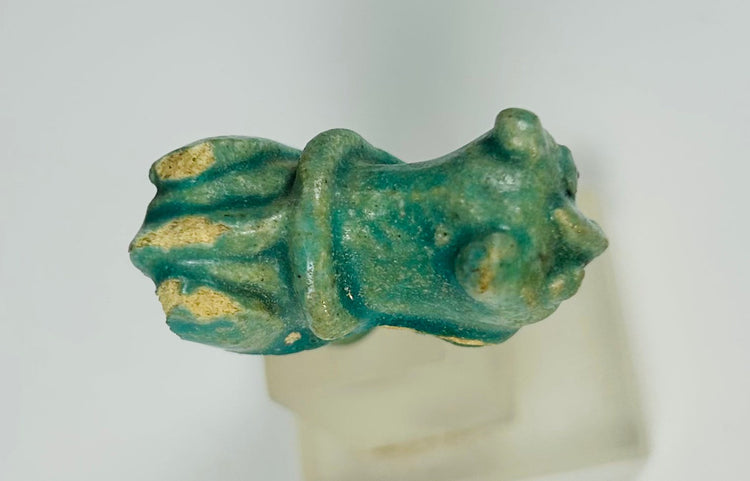
Fragment rare et évocateur d'une ancienne anse de vase en faïence égyptienne, surmontée d'une figure de chat stylisée représentant Bastet, l'une des divinités les plus appréciées du panthéon égyptien. Réalisée dans le glaçage distinctif en faïence bleu-vert caractéristique des objets religieux égyptiens, la tête féline émerge de la section supérieure incurvée de l'anse, ses petites oreilles, son museau arrondi et ses traits faciaux stylisés étant visibles malgré l'état fragmentaire.
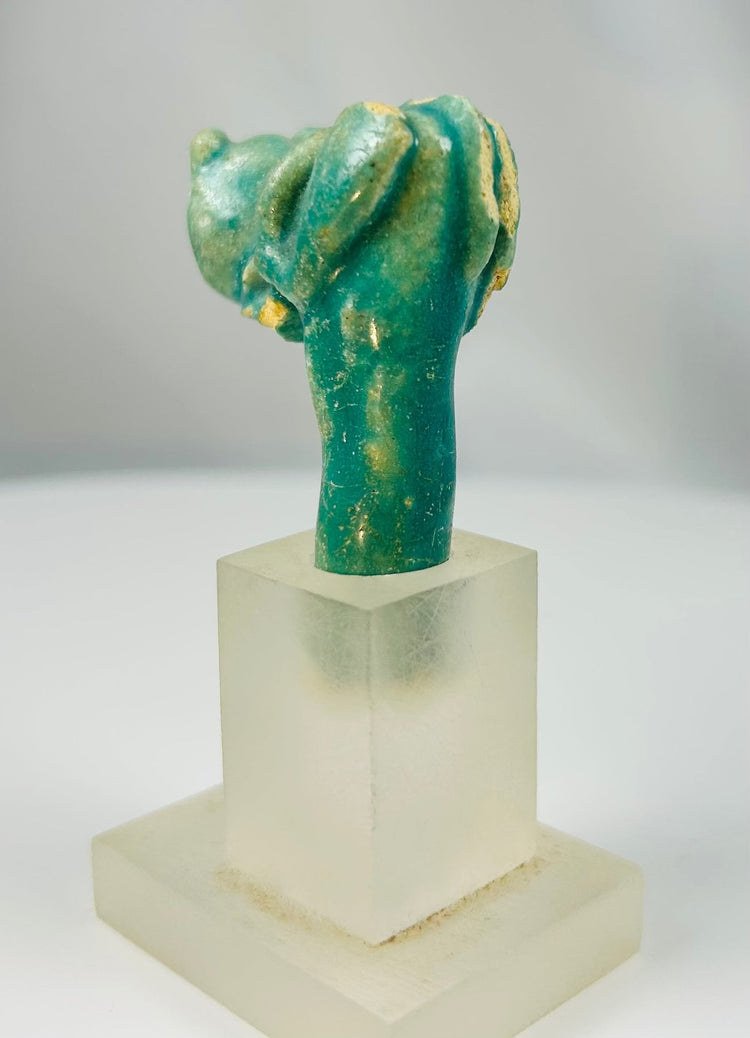
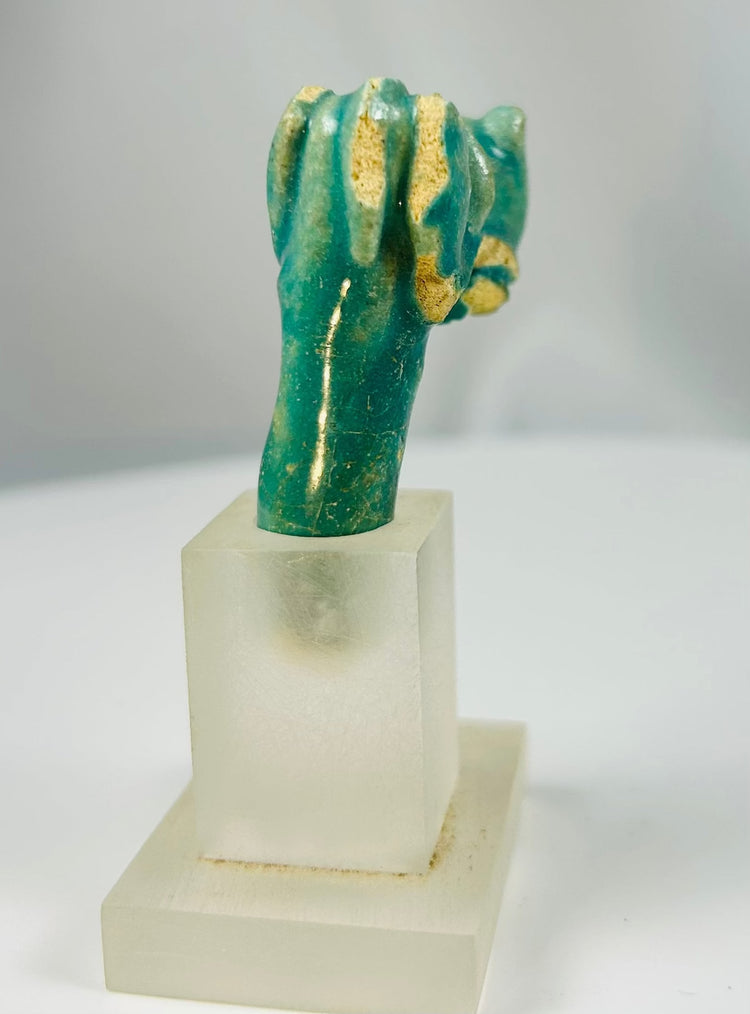
La partie subsistante conserve la tige verticale de l'anse et l'élément décoratif supérieur représentant un chat. Dans l'Antiquité, de telles anses étaient fixées à de petits vases rituels ou à des récipients cultuels utilisés dans les temples ou comme offrandes votives.
Le glaçage lumineux turquoise-vert reflète la tradition égyptienne de production de faïence – une céramique de quartz de haute technologie ancienne dont la couleur vive symbolisait la renaissance, la fertilité et le pouvoir régénérateur du Nil. Les objets en faïence étaient fréquemment utilisés comme substituts aux pierres précieuses telles que la turquoise ou le lapis-lazuli.
Caractéristiques
- Fragment rare d'anse de vase en faïence avec représentation d'une divinité féline
- Tête de chat stylisée associée à la déesse Bastet
- Glaçage classique en faïence égyptienne turquoise-vert
- Tige verticale d'anse subsistante indiquant une fixation à un vase rituel
- Oreilles, museau et contours faciaux sculptés du félin
- Monté sur un support d'exposition moderne pour la présentation
Signification culturelle
Les chats avaient une profonde signification religieuse dans l'Égypte ancienne et étaient étroitement associés à la déesse Bastet, protectrice du foyer, de la fertilité et de la maternité. Bastet était couramment représentée sous la forme d'un chat domestique ou d'une femme à tête de chat.
De petites représentations félines apparaissaient largement dans les offrandes votives, les amulettes et les éléments décoratifs de vases. Les objets portant la forme du chat étaient censés offrir protection et faveur divine. Pendant les périodes tardive et ptolémaïque, de telles pièces étaient souvent dédiées dans les temples voués à Bastet, en particulier à Bubastis dans le delta du Nil.
État
Fragment ancien avec des éclats, des pertes et des zones d'usure de l'émail visibles, conformes à l'enfouissement et à l'âge. Des portions de l'anse originale et des éléments décoratifs sont manquantes. La pièce reste structurellement stable et se présente bien.
Dimensions (Approximatives)
Hauteur : 7,32 cm
Largeur : 5,08 cm
Profondeur : 3,18 cm
Âge (Approximatif)
2 000–2 600 ans
Provenance
De la succession d'Andrew Cunningham Ware (1945–2024), Floride du Sud, États-Unis. Formée principalement dans les années 1990 et 2000, la collection Andrew Cunningham Ware reflétait son intérêt de toute une vie pour l'Antiquité. Égyptologue amateur, Ware a étudié sous la direction de la célèbre égyptologue française Christiane Desroches Noblecourt et partageait son temps entre la France et la Floride du Sud. Sa collection comprenait des artefacts égyptiens anciens, des héritages familiaux et du matériel historique associé aux révolutions française et russe, acquis par le voyage, l'étude et l'héritage. Ware était l'arrière-petit-fils d'Andrew Woodbury Preston, co-fondateur de l'United Fruit Company. La pièce est ensuite entrée dans une collection privée au Montana, États-Unis.
En savoir plus
Examinez une anse de vase en faïence égyptienne comparable avec un chat au Musée des Beaux-Arts de Budapest
Parcourez notre collection d'artefacts égyptiens anciens
Description
Contexte historique et origine
Région : Égypte
Matériau : Faïence égyptienne bleu-vert (composition émaillée)
Période : Période tardive à période ptolémaïque, vers 664-30 av. J.-C.
Description
Fragment rare et évocateur d'une ancienne anse de vase en faïence égyptienne, surmontée d'une figure de chat stylisée représentant Bastet, l'une des divinités les plus appréciées du panthéon égyptien. Réalisée dans le glaçage distinctif en faïence bleu-vert caractéristique des objets religieux égyptiens, la tête féline émerge de la section supérieure incurvée de l'anse, ses petites oreilles, son museau arrondi et ses traits faciaux stylisés étant visibles malgré l'état fragmentaire.
La partie subsistante conserve la tige verticale de l'anse et l'élément décoratif supérieur représentant un chat. Dans l'Antiquité, de telles anses étaient fixées à de petits vases rituels ou à des récipients cultuels utilisés dans les temples ou comme offrandes votives.
Le glaçage lumineux turquoise-vert reflète la tradition égyptienne de production de faïence – une céramique de quartz de haute technologie ancienne dont la couleur vive symbolisait la renaissance, la fertilité et le pouvoir régénérateur du Nil. Les objets en faïence étaient fréquemment utilisés comme substituts aux pierres précieuses telles que la turquoise ou le lapis-lazuli.
Caractéristiques
- Fragment rare d'anse de vase en faïence avec représentation d'une divinité féline
- Tête de chat stylisée associée à la déesse Bastet
- Glaçage classique en faïence égyptienne turquoise-vert
- Tige verticale d'anse subsistante indiquant une fixation à un vase rituel
- Oreilles, museau et contours faciaux sculptés du félin
- Monté sur un support d'exposition moderne pour la présentation
Signification culturelle
Les chats avaient une profonde signification religieuse dans l'Égypte ancienne et étaient étroitement associés à la déesse Bastet, protectrice du foyer, de la fertilité et de la maternité. Bastet était couramment représentée sous la forme d'un chat domestique ou d'une femme à tête de chat.
De petites représentations félines apparaissaient largement dans les offrandes votives, les amulettes et les éléments décoratifs de vases. Les objets portant la forme du chat étaient censés offrir protection et faveur divine. Pendant les périodes tardive et ptolémaïque, de telles pièces étaient souvent dédiées dans les temples voués à Bastet, en particulier à Bubastis dans le delta du Nil.
État
Fragment ancien avec des éclats, des pertes et des zones d'usure de l'émail visibles, conformes à l'enfouissement et à l'âge. Des portions de l'anse originale et des éléments décoratifs sont manquantes. La pièce reste structurellement stable et se présente bien.
Dimensions (Approximatives)
Hauteur : 7,32 cm
Largeur : 5,08 cm
Profondeur : 3,18 cm
Âge (Approximatif)
2 000–2 600 ans
Provenance
De la succession d'Andrew Cunningham Ware (1945–2024), Floride du Sud, États-Unis. Formée principalement dans les années 1990 et 2000, la collection Andrew Cunningham Ware reflétait son intérêt de toute une vie pour l'Antiquité. Égyptologue amateur, Ware a étudié sous la direction de la célèbre égyptologue française Christiane Desroches Noblecourt et partageait son temps entre la France et la Floride du Sud. Sa collection comprenait des artefacts égyptiens anciens, des héritages familiaux et du matériel historique associé aux révolutions française et russe, acquis par le voyage, l'étude et l'héritage. Ware était l'arrière-petit-fils d'Andrew Woodbury Preston, co-fondateur de l'United Fruit Company. La pièce est ensuite entrée dans une collection privée au Montana, États-Unis.
En savoir plus
Examinez une anse de vase en faïence égyptienne comparable avec un chat au Musée des Beaux-Arts de Budapest
Parcourez notre collection d'artefacts égyptiens anciens
Vous aimerez peut-être aussi
