

Égypte ancienne | Figure naine protectrice en faïence | Basse Époque | Vers 664-30 av. J.-C.
- Prix habituel
- $250.00
- Prix soldé
- $250.00
- Prix habituel
Impossible de charger la disponibilité du service de retrait


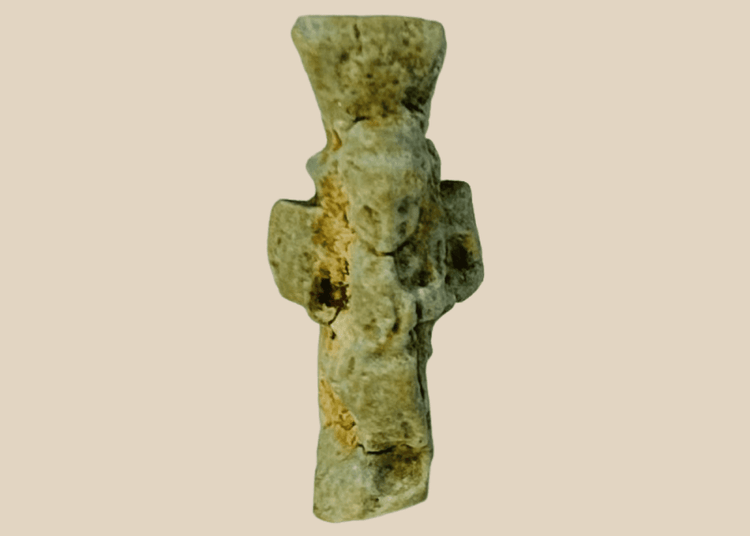


Égypte ancienne | Figure naine protectrice en faïence | Basse Époque | Vers 664-30 av. J.-C.
Description
Plus
Moins
Contexte historique et origine
Région : Égypte
Matériau : Faïence égyptienne (composition émaillée)
Période : Basse époque à la période ptolémaïque, 664-30 av. J.-C.
Description
Une amulette finement moulée en faïence égyptienne ancienne représentant le dieu nain Bès, montré dans sa pose frontale caractéristique avec une grande tête et un corps compact. La figurine est réalisée en faïence émaillée vert pâle avec des traces de dépôts minéraux accumulés au fil des siècles. Une perforation de suspension est visible sur le côté, indiquant que la pièce était autrefois portée comme un talisman protecteur.
Bès est représenté debout, avec des traits faciaux stylisés et une tête proéminente, typique des petites amulettes de la Basse Époque représentant la divinité domestique populaire. Malgré sa petite taille, la figurine conserve la puissante présence symbolique associée à l'imagerie de Bès.
Caractéristiques
- Représentation en faïence moulée du dieu nain Bès
- Pose de divinité protectrice frontale typique de l'iconographie de Bès
- Perforation de suspension pour être portée comme amulette protectrice
- Traces de l'émail de faïence vert d'origine
- Forme compacte et portable typique des talismans protecteurs de la Basse Époque
Signification culturelle
Bès était l'une des divinités protectrices les plus aimées de la religion égyptienne ancienne. Contrairement à de nombreux dieux représentés de profil, Bès était montré frontalement comme une figure naine aux traits exagérés, destinée à effrayer les esprits maléfiques.
Il servait de gardien du foyer, de protecteur des femmes et des enfants, et de défenseur contre les forces du mal. Les amulettes représentant Bès étaient couramment portées pour la protection, en particulier pendant l'accouchement et dans les milieux domestiques.
État
Ancien, avec une usure de surface, des dépôts minéraux et une perte d'émail conformes à l'âge. Légères abrasions et patine présentes partout.
Dimensions (approximatives)
Hauteur : 0,88 po
Largeur : 0,25 po
Profondeur : 0,25 po
Âge (approximatif)
2 000 à 2 600 ans
Provenance
De la succession d'Andrew Cunningham Ware (1945–2024), Floride du Sud, États-Unis. Principalement formée dans les années 1990 et 2000, la collection Andrew Cunningham Ware reflétait son intérêt de toute une vie pour l'Antiquité. Égyptologue amateur, Ware a étudié sous la direction de la célèbre égyptologue française Christiane Desroches Noblecourt et a partagé son temps entre la France et la Floride du Sud. Sa collection comprenait des artefacts égyptiens anciens, des héritages familiaux et du matériel historique associé aux révolutions française et russe, acquis par le voyage, l'étude et l'héritage. Ware était l'arrière-petit-fils d'Andrew Woodbury Preston, cofondateur de la United Fruit Company. La pièce est ensuite entrée dans une collection privée dans le Montana, aux États-Unis.
En savoir plus
Découvrez une amulette protectrice en faïence comparable dans la collection du Metropolitan Museum of Art
Explorez notre Collection d'artefacts égyptiens anciens
Description
Contexte historique et origine
Région : Égypte
Matériau : Faïence égyptienne (composition émaillée)
Période : Basse époque à la période ptolémaïque, 664-30 av. J.-C.
Description
Une amulette finement moulée en faïence égyptienne ancienne représentant le dieu nain Bès, montré dans sa pose frontale caractéristique avec une grande tête et un corps compact. La figurine est réalisée en faïence émaillée vert pâle avec des traces de dépôts minéraux accumulés au fil des siècles. Une perforation de suspension est visible sur le côté, indiquant que la pièce était autrefois portée comme un talisman protecteur.
Bès est représenté debout, avec des traits faciaux stylisés et une tête proéminente, typique des petites amulettes de la Basse Époque représentant la divinité domestique populaire. Malgré sa petite taille, la figurine conserve la puissante présence symbolique associée à l'imagerie de Bès.
Caractéristiques
- Représentation en faïence moulée du dieu nain Bès
- Pose de divinité protectrice frontale typique de l'iconographie de Bès
- Perforation de suspension pour être portée comme amulette protectrice
- Traces de l'émail de faïence vert d'origine
- Forme compacte et portable typique des talismans protecteurs de la Basse Époque
Signification culturelle
Bès était l'une des divinités protectrices les plus aimées de la religion égyptienne ancienne. Contrairement à de nombreux dieux représentés de profil, Bès était montré frontalement comme une figure naine aux traits exagérés, destinée à effrayer les esprits maléfiques.
Il servait de gardien du foyer, de protecteur des femmes et des enfants, et de défenseur contre les forces du mal. Les amulettes représentant Bès étaient couramment portées pour la protection, en particulier pendant l'accouchement et dans les milieux domestiques.
État
Ancien, avec une usure de surface, des dépôts minéraux et une perte d'émail conformes à l'âge. Légères abrasions et patine présentes partout.
Dimensions (approximatives)
Hauteur : 0,88 po
Largeur : 0,25 po
Profondeur : 0,25 po
Âge (approximatif)
2 000 à 2 600 ans
Provenance
De la succession d'Andrew Cunningham Ware (1945–2024), Floride du Sud, États-Unis. Principalement formée dans les années 1990 et 2000, la collection Andrew Cunningham Ware reflétait son intérêt de toute une vie pour l'Antiquité. Égyptologue amateur, Ware a étudié sous la direction de la célèbre égyptologue française Christiane Desroches Noblecourt et a partagé son temps entre la France et la Floride du Sud. Sa collection comprenait des artefacts égyptiens anciens, des héritages familiaux et du matériel historique associé aux révolutions française et russe, acquis par le voyage, l'étude et l'héritage. Ware était l'arrière-petit-fils d'Andrew Woodbury Preston, cofondateur de la United Fruit Company. La pièce est ensuite entrée dans une collection privée dans le Montana, aux États-Unis.
En savoir plus
Découvrez une amulette protectrice en faïence comparable dans la collection du Metropolitan Museum of Art
Explorez notre Collection d'artefacts égyptiens anciens
Vous aimerez peut-être aussi
