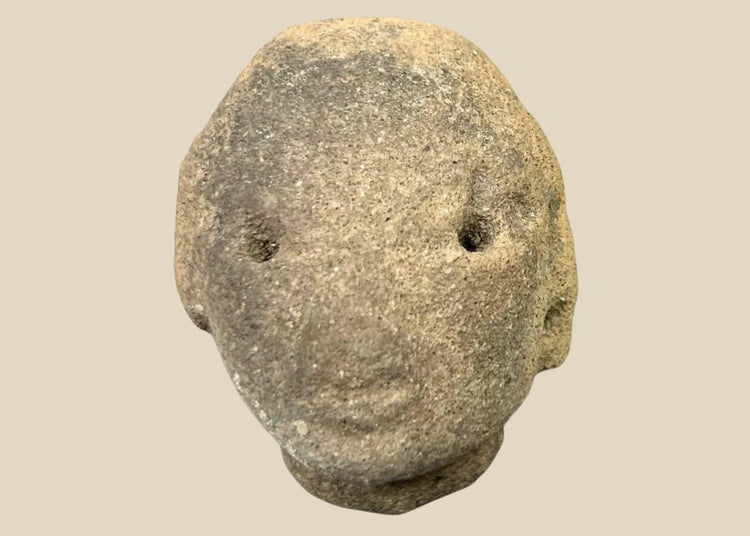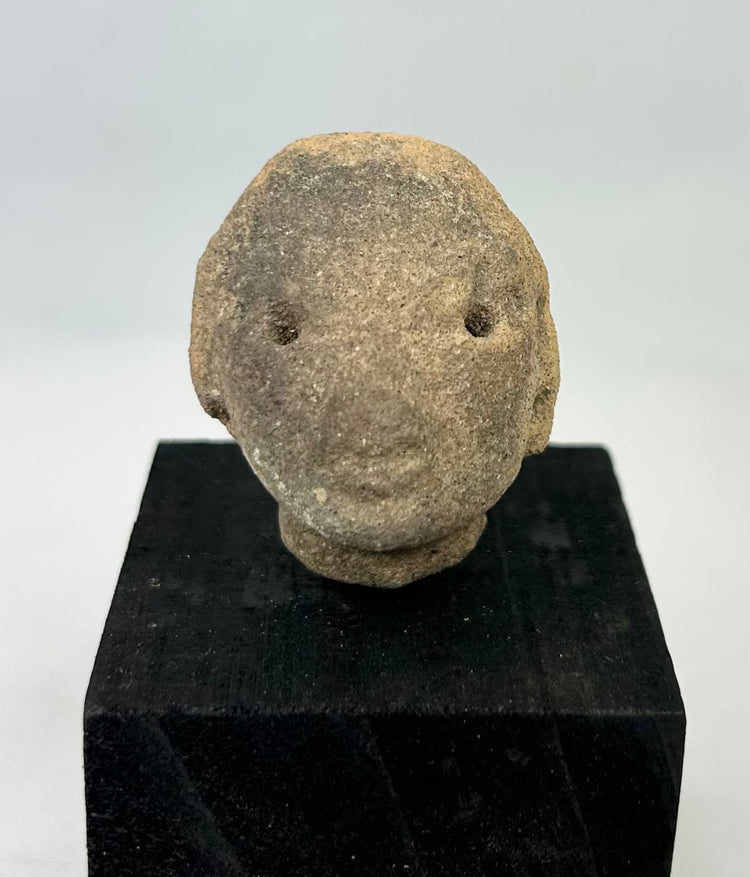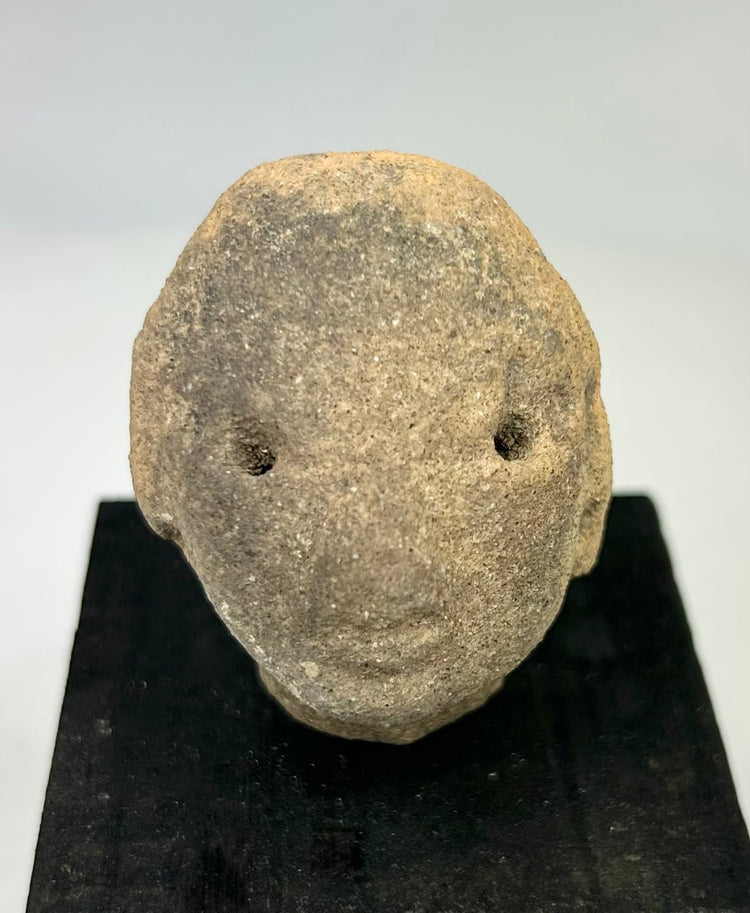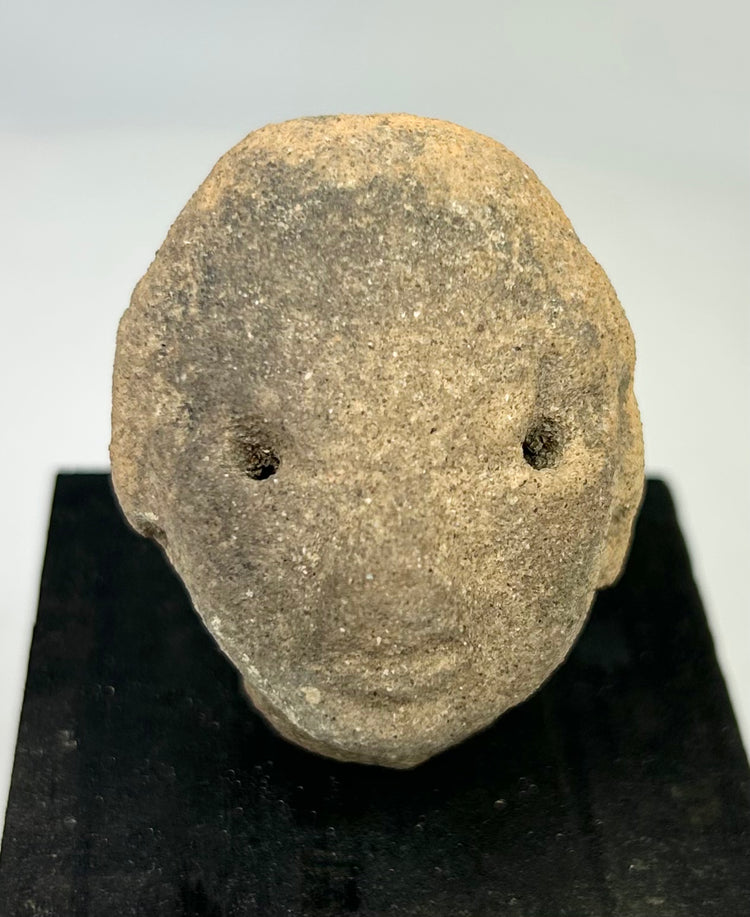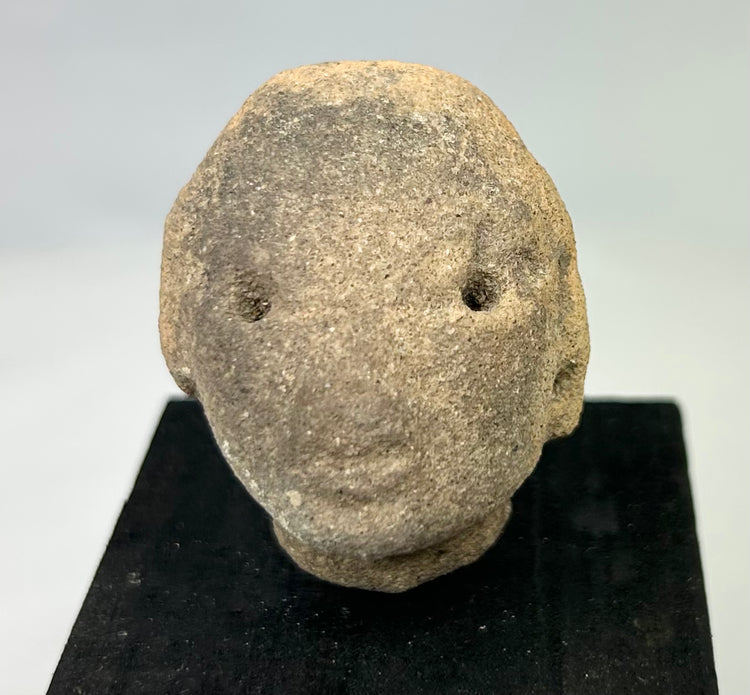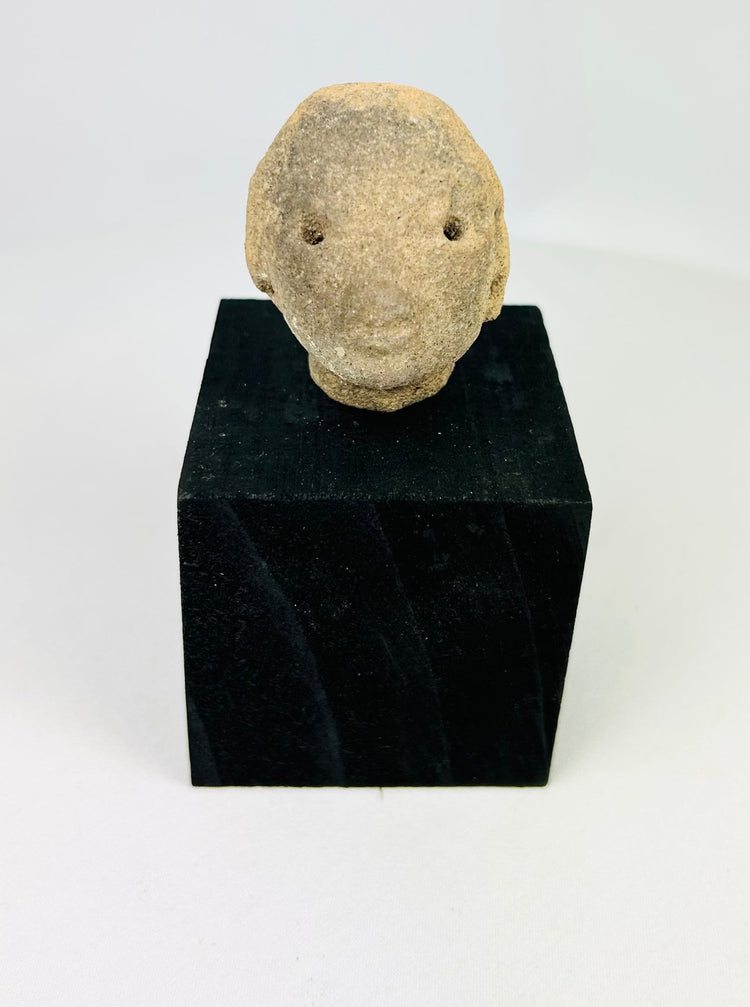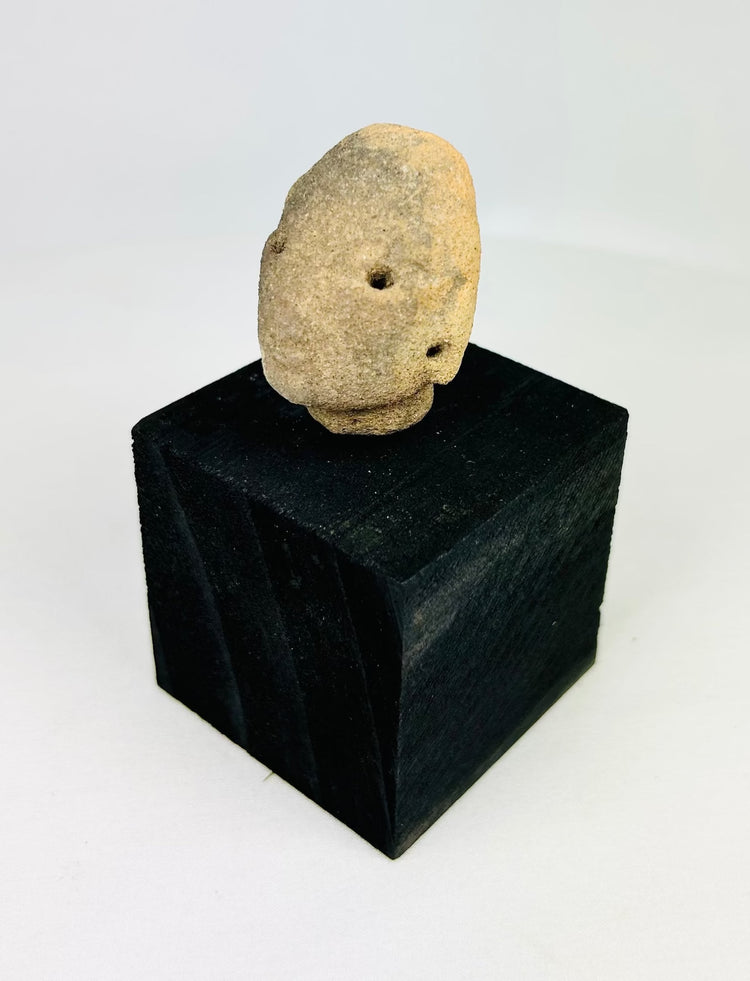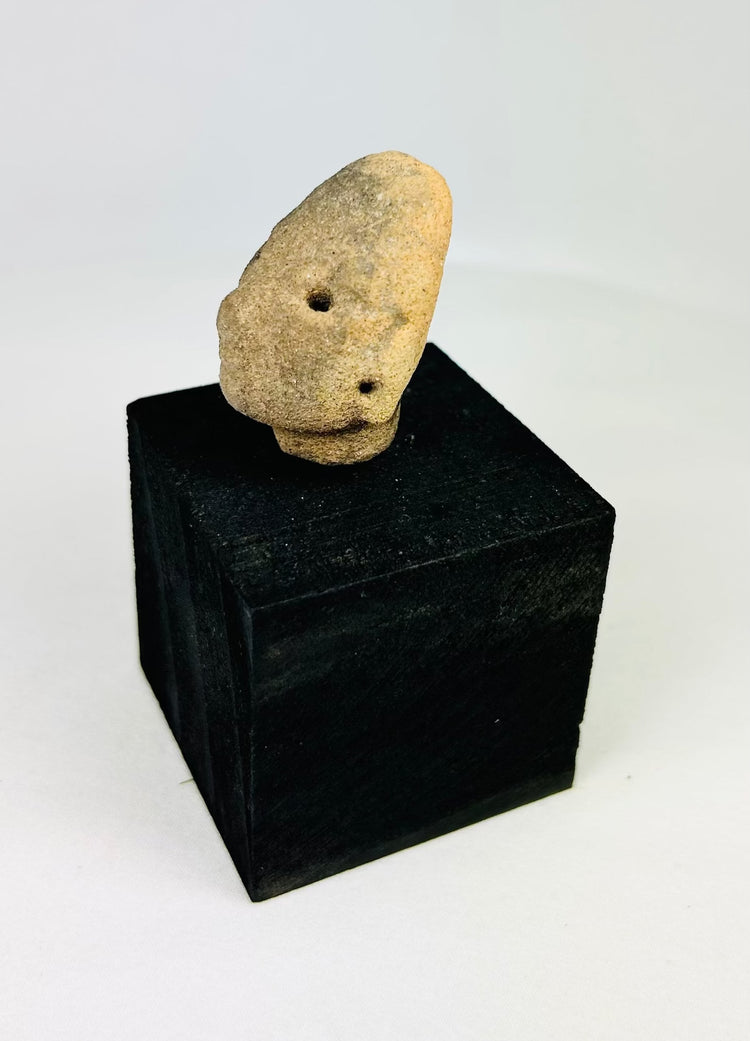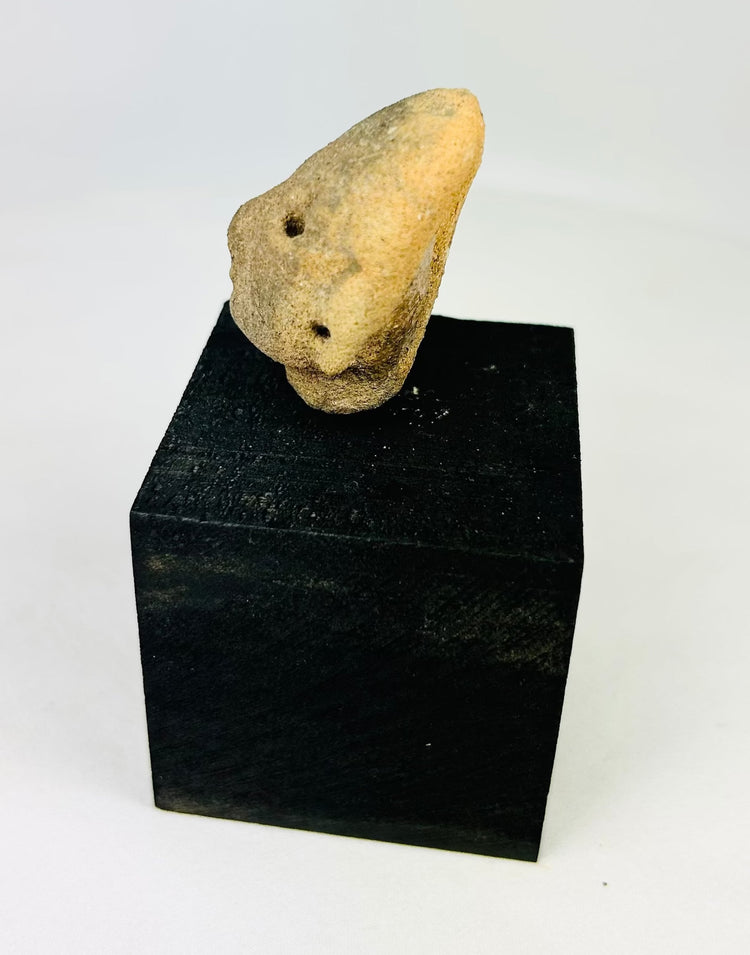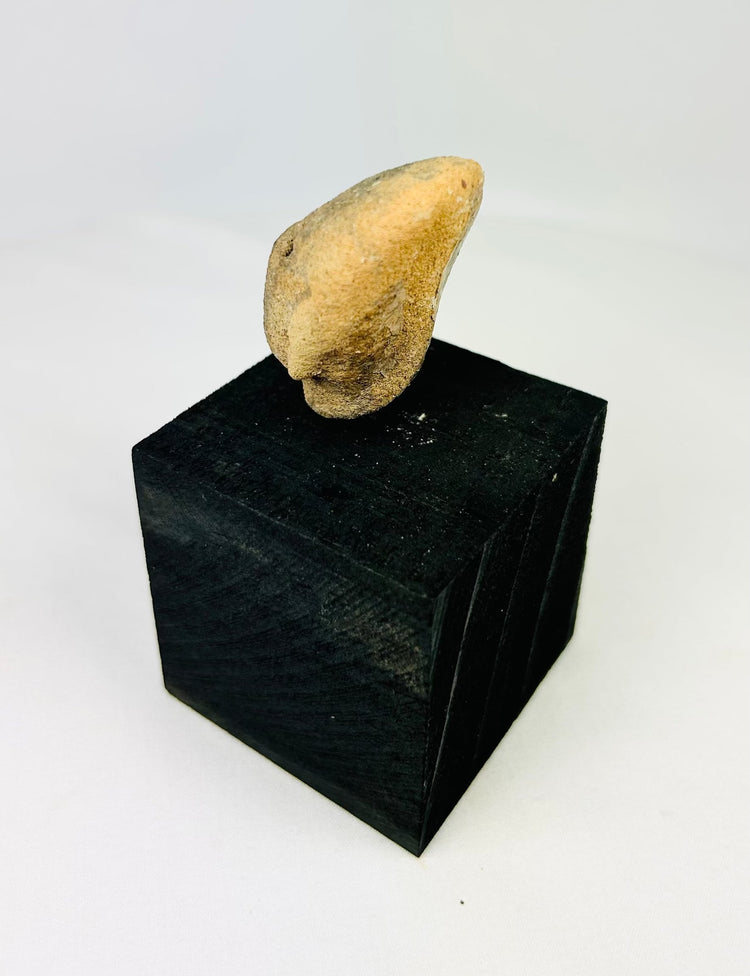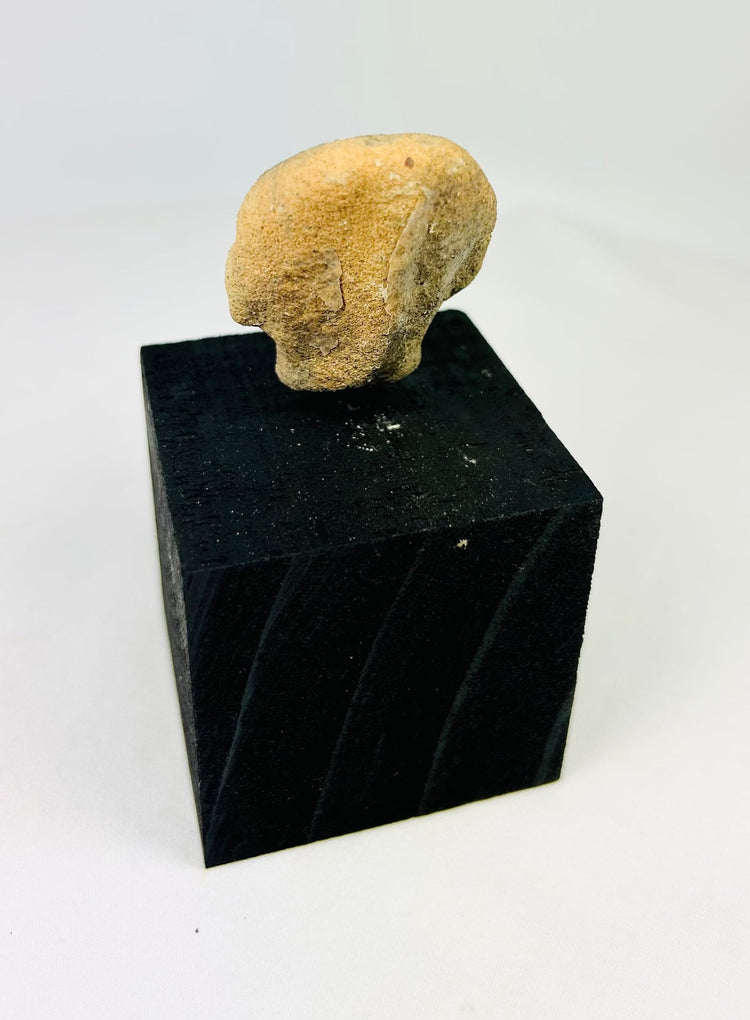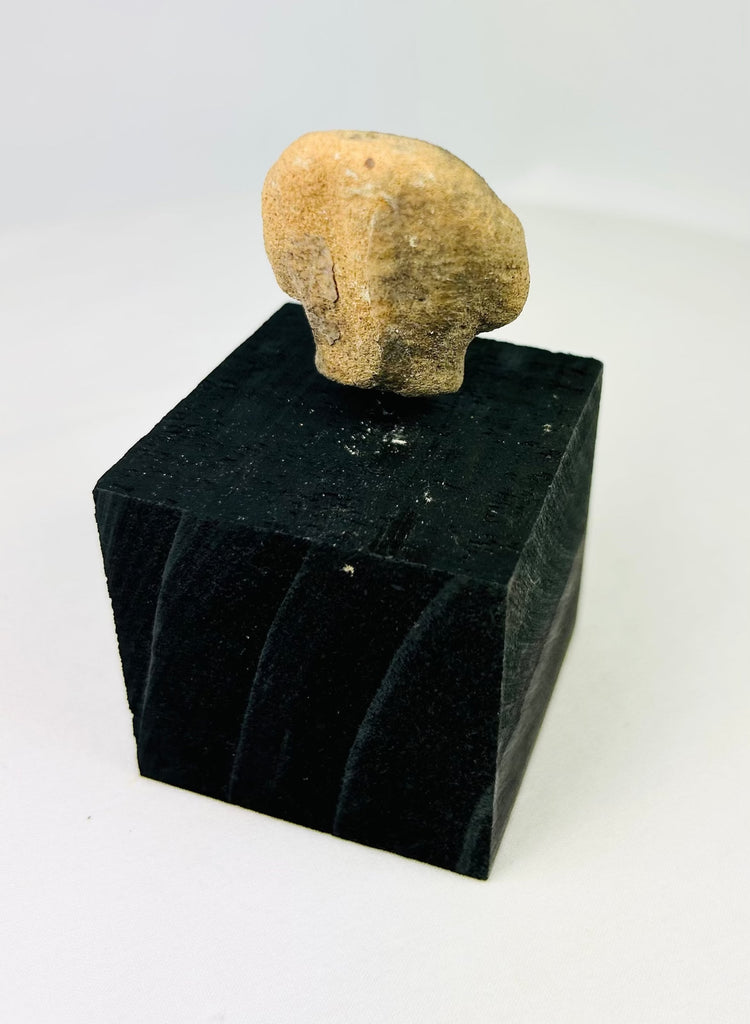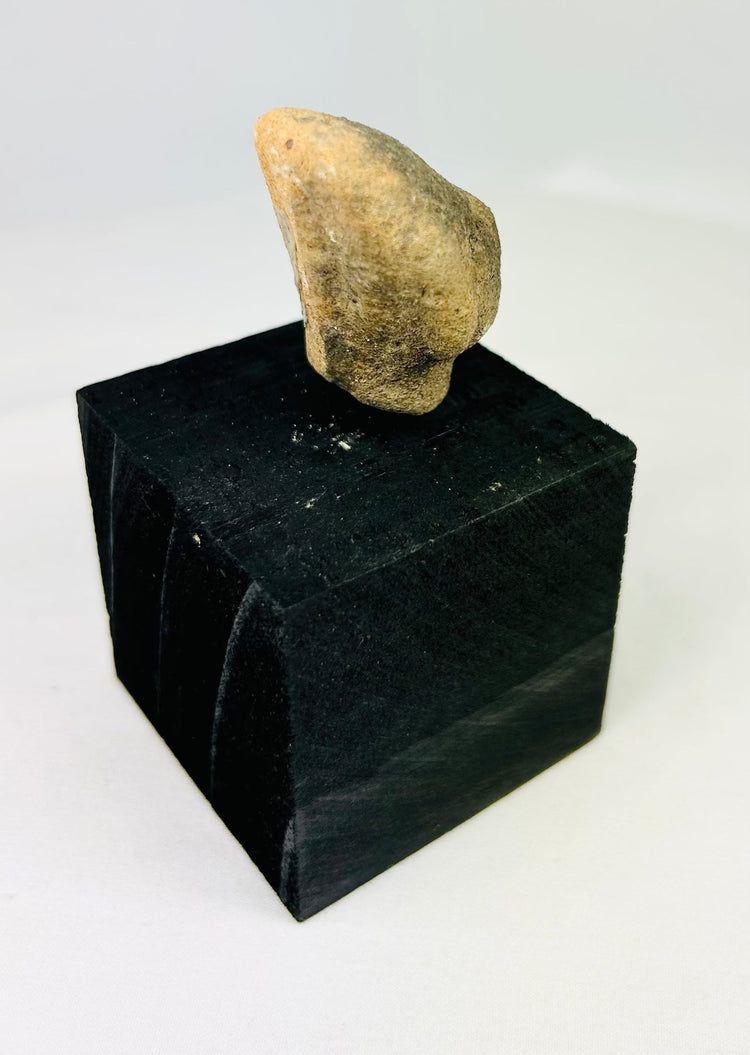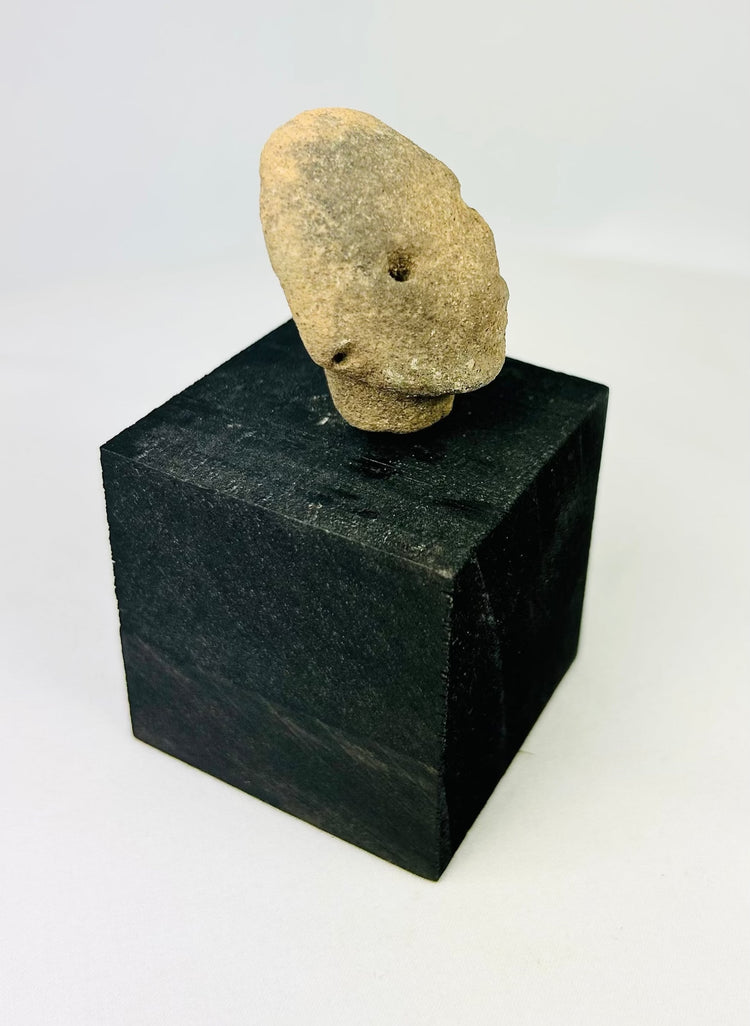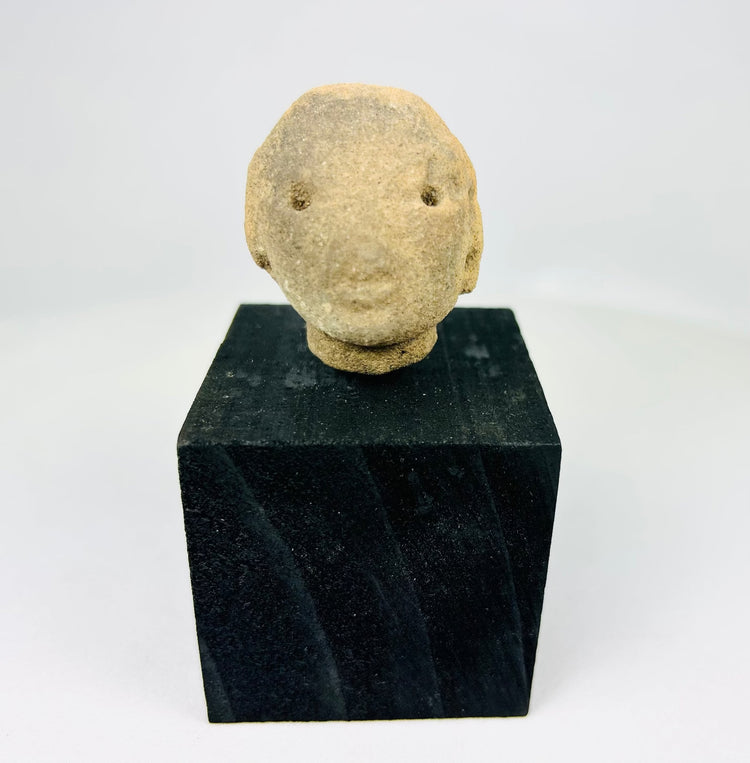
Tête anthropomorphe précolombienne en terre cuite | Ouest du Mexique | 300 av. J.-C. – 300 apr. J.-C.

Prix habituel
$300.00
Prix soldé
$300.00
Prix habituel
Frais de port calculés à la caisse.
Small Pre-Columbian terracotta head fragment with drilled eyes, rounded features, and subtle mouth, mounted on a black display stand, from West Mexico (Nayarit or Jalisco), circa 300 BCE–300 CE
Video of Small Pre-Columbian terracotta head fragment from West Mexico with drilled eyes, rounded features, and subtle mouth, mounted on black stand, 300 BCE–300 CE
West Mexican Pre-Columbian terracotta head fragment, circa 300 BCE–300 CE, featuring drilled eyes and gentle facial features on a display stand
Terracotta head fragment from Nayarit or Jalisco, Pre-Columbian, with subtle mouth and drilled eyes, mounted for display, 300 BCE–300 CE
Early Pre-Columbian terracotta head fragment with rounded facial features and drilled eyes, West Mexico, displayed on black stand, 300 BCE–300 CE
Small Pre-Columbian terracotta head from Nayarit or Jalisco, mounted, with rounded features and drilled eyes, 300 BCE–300 CE
Terracotta head fragment, West Mexico, Pre-Columbian era, with drilled eyes and soft facial features, circa 300 BCE–300 CE, on black display stand
Ancient West Mexican terracotta head fragment from Nayarit or Jalisco, Pre-Columbian artifact, circa 300 BCE–300 CE, mounted for display
Pre-Columbian terracotta head from West Mexico, Nayarit or Jalisco, small collectible fragment with drilled eyes, rounded features, 300 BCE–300 CE
Nayarit terracotta head fragment, West Mexico, early Pre-Columbian artifact with subtle mouth and drilled eyes, displayed on black stand, 300 BCE–300 CE
West Mexican Pre-Columbian terracotta figurine head, ancient artifact from 300 BCE–300 CE, with rounded facial features and drilled eyes
Small Pre-Columbian Nayarit or Jalisco terracotta head, ancient West Mexican collectible with drilled eyes and soft features, circa 300 BCE–300 CE
Pre-Columbian terracotta head fragment from West Mexico, Nayarit or Jalisco, archaeological artifact with drilled eyes and subtle mouth, mounted for display
Ancient Pre-Columbian terracotta head, West Mexico, small collectible fragment from Nayarit or Jalisco, circa 300 BCE–300 CE, on black display stand
Pre-Columbian terracotta head fragment, West Mexico, drilled eyes, rounded features, Nayarit or Jalisco, 300 BCE–300 CE
Ancient West Mexican terracotta head, Pre-Columbian collectible, small fragment with subtle mouth and drilled eyes
  • Small Pre-Columbian terracotta head fragment with drilled eyes, rounded features, and subtle mouth, mounted on a black display stand, from West Mexico (Nayarit or Jalisco), circa 300 BCE–300 CE
  • Video of Small Pre-Columbian terracotta head fragment from West Mexico with drilled eyes, rounded features, and subtle mouth, mounted on black stand, 300 BCE–300 CE
  • West Mexican Pre-Columbian terracotta head fragment, circa 300 BCE–300 CE, featuring drilled eyes and gentle facial features on a display stand
  • Terracotta head fragment from Nayarit or Jalisco, Pre-Columbian, with subtle mouth and drilled eyes, mounted for display, 300 BCE–300 CE
  • Early Pre-Columbian terracotta head fragment with rounded facial features and drilled eyes, West Mexico, displayed on black stand, 300 BCE–300 CE
  • Small Pre-Columbian terracotta head from Nayarit or Jalisco, mounted, with rounded features and drilled eyes, 300 BCE–300 CE
  • Terracotta head fragment, West Mexico, Pre-Columbian era, with drilled eyes and soft facial features, circa 300 BCE–300 CE, on black display stand
  • Ancient West Mexican terracotta head fragment from Nayarit or Jalisco, Pre-Columbian artifact, circa 300 BCE–300 CE, mounted for display
  • Pre-Columbian terracotta head from West Mexico, Nayarit or Jalisco, small collectible fragment with drilled eyes, rounded features, 300 BCE–300 CE
  • Nayarit terracotta head fragment, West Mexico, early Pre-Columbian artifact with subtle mouth and drilled eyes, displayed on black stand, 300 BCE–300 CE
  • West Mexican Pre-Columbian terracotta figurine head, ancient artifact from 300 BCE–300 CE, with rounded facial features and drilled eyes
  • Small Pre-Columbian Nayarit or Jalisco terracotta head, ancient West Mexican collectible with drilled eyes and soft features, circa 300 BCE–300 CE
  • Pre-Columbian terracotta head fragment from West Mexico, Nayarit or Jalisco, archaeological artifact with drilled eyes and subtle mouth, mounted for display
  • Ancient Pre-Columbian terracotta head, West Mexico, small collectible fragment from Nayarit or Jalisco, circa 300 BCE–300 CE, on black display stand
  • Pre-Columbian terracotta head fragment, West Mexico, drilled eyes, rounded features, Nayarit or Jalisco, 300 BCE–300 CE
  • Ancient West Mexican terracotta head, Pre-Columbian collectible, small fragment with subtle mouth and drilled eyes
Small Pre-Columbian terracotta head fragment with drilled eyes, rounded features, and subtle mouth, mounted on a black display stand, from West Mexico (Nayarit or Jalisco), circa 300 BCE–300 CE
Video of Small Pre-Columbian terracotta head fragment from West Mexico with drilled eyes, rounded features, and subtle mouth, mounted on black stand, 300 BCE–300 CE
West Mexican Pre-Columbian terracotta head fragment, circa 300 BCE–300 CE, featuring drilled eyes and gentle facial features on a display stand
Terracotta head fragment from Nayarit or Jalisco, Pre-Columbian, with subtle mouth and drilled eyes, mounted for display, 300 BCE–300 CE
Early Pre-Columbian terracotta head fragment with rounded facial features and drilled eyes, West Mexico, displayed on black stand, 300 BCE–300 CE
Small Pre-Columbian terracotta head from Nayarit or Jalisco, mounted, with rounded features and drilled eyes, 300 BCE–300 CE
Terracotta head fragment, West Mexico, Pre-Columbian era, with drilled eyes and soft facial features, circa 300 BCE–300 CE, on black display stand
Ancient West Mexican terracotta head fragment from Nayarit or Jalisco, Pre-Columbian artifact, circa 300 BCE–300 CE, mounted for display
Pre-Columbian terracotta head from West Mexico, Nayarit or Jalisco, small collectible fragment with drilled eyes, rounded features, 300 BCE–300 CE
Nayarit terracotta head fragment, West Mexico, early Pre-Columbian artifact with subtle mouth and drilled eyes, displayed on black stand, 300 BCE–300 CE
West Mexican Pre-Columbian terracotta figurine head, ancient artifact from 300 BCE–300 CE, with rounded facial features and drilled eyes
Small Pre-Columbian Nayarit or Jalisco terracotta head, ancient West Mexican collectible with drilled eyes and soft features, circa 300 BCE–300 CE
Pre-Columbian terracotta head fragment from West Mexico, Nayarit or Jalisco, archaeological artifact with drilled eyes and subtle mouth, mounted for display
Ancient Pre-Columbian terracotta head, West Mexico, small collectible fragment from Nayarit or Jalisco, circa 300 BCE–300 CE, on black display stand
Pre-Columbian terracotta head fragment, West Mexico, drilled eyes, rounded features, Nayarit or Jalisco, 300 BCE–300 CE
Ancient West Mexican terracotta head, Pre-Columbian collectible, small fragment with subtle mouth and drilled eyes
Authenticity and secure checkout guarantee

Tête anthropomorphe précolombienne en terre cuite | Ouest du Mexique | 300 av. J.-C. – 300 apr. J.-C.

Description

Contexte historique et origine

Région : Ouest du Mexique, probablement Nayarit ou Jalisco
Matériau : Terre cuite
Période : environ 300 avant notre ère – 300 de notre ère

Description
Fragment de tête en terre cuite d'une petite figurine précolombienne, finement modelé avec des traits arrondis. Le visage se caractérise par des orbites percées, un nez aux contours doux et une bouche discrète, reflétant le style expressif propre à l'art des tombes à puits. Faisant probablement partie d'une figurine anthropomorphe plus grande, ce fragment était utilisé dans un contexte rituel ou funéraire, comme offrande ou représentation ancestrale.

Caractéristiques

- Représentation faciale simplifiée mais expressive

- Orbites oculaires percées pour plus de définition et de profondeur

- Nez et bouche subtilement modelés

- Traces d'usure ancienne et dépôts minéraux

- Des indices funéraires compatibles avec des artefacts de tombe à puits

Importance culturelle
Dans l'ouest du Mexique, des figurines en terre cuite étaient fréquemment placées dans les tombes à puits, où elles représentaient des ancêtres, des divinités ou des assistants cérémoniels. Ces objets servaient de protecteurs spirituels et de compagnons symboliques pour le défunt, reflétant à la fois son identité personnelle et des pratiques rituelles plus larges au sein de la culture mésoaméricaine ancienne.

Condition
Tête fragmentaire uniquement, présentant des traces d'altération, des incrustations et des dépôts de terre dus à l'enfouissement. Stable, sans restauration moderne. Montée sur un socle d'exposition sur mesure de style muséal.

Dimensions (approximatives)
Hauteur : 10 cm
Largeur : 2 pouces
Profondeur : 5 cm

Âge
Environ 2 300 à 1 700 ans (environ 300 avant notre ère à 300 de notre ère)

Apprendre encore plus

Explorez l'art précolombien grâce à ce guide complet du collectionneur : Art précolombien — Un nouveau guide du collectionneur

Découvrez notre sélection complète d'objets précolombiens : collections précolombiennes

Description

Contexte historique et origine

Région : Ouest du Mexique, probablement Nayarit ou Jalisco
Matériau : Terre cuite
Période : environ 300 avant notre ère – 300 de notre ère

Description
Fragment de tête en terre cuite d'une petite figurine précolombienne, finement modelé avec des traits arrondis. Le visage se caractérise par des orbites percées, un nez aux contours doux et une bouche discrète, reflétant le style expressif propre à l'art des tombes à puits. Faisant probablement partie d'une figurine anthropomorphe plus grande, ce fragment était utilisé dans un contexte rituel ou funéraire, comme offrande ou représentation ancestrale.

Caractéristiques

- Représentation faciale simplifiée mais expressive

- Orbites oculaires percées pour plus de définition et de profondeur

- Nez et bouche subtilement modelés

- Traces d'usure ancienne et dépôts minéraux

- Des indices funéraires compatibles avec des artefacts de tombe à puits

Importance culturelle
Dans l'ouest du Mexique, des figurines en terre cuite étaient fréquemment placées dans les tombes à puits, où elles représentaient des ancêtres, des divinités ou des assistants cérémoniels. Ces objets servaient de protecteurs spirituels et de compagnons symboliques pour le défunt, reflétant à la fois son identité personnelle et des pratiques rituelles plus larges au sein de la culture mésoaméricaine ancienne.

Condition
Tête fragmentaire uniquement, présentant des traces d'altération, des incrustations et des dépôts de terre dus à l'enfouissement. Stable, sans restauration moderne. Montée sur un socle d'exposition sur mesure de style muséal.

Dimensions (approximatives)
Hauteur : 10 cm
Largeur : 2 pouces
Profondeur : 5 cm

Âge
Environ 2 300 à 1 700 ans (environ 300 avant notre ère à 300 de notre ère)

Apprendre encore plus

Explorez l'art précolombien grâce à ce guide complet du collectionneur : Art précolombien — Un nouveau guide du collectionneur

Découvrez notre sélection complète d'objets précolombiens : collections précolombiennes

Vous aimerez peut-être aussi