

Tibétain | Peint à la main | Style Thangka sur soie | Peinture dévotionnelle | Circa XVIIIe-XIXe siècle
- Prix habituel
- $1,200.00
- Prix soldé
- $1,200.00
- Prix habituel
Impossible de charger la disponibilité du service de retrait


Tibétain | Peint à la main | Style Thangka sur soie | Peinture dévotionnelle | Circa XVIIIe-XIXe siècle
Description
Plus
Moins
Contexte historique et origine
Région : Tibet / Région himalayenne (probablement atelier tibétain ou sino-tibétain)
Matériau : Pigments peints à la main sur soie avec monture en brocart de soie et cadre en bois
Période : Circa XVIIIe-XIXe siècle (selon l'attribution du certificat)
Description
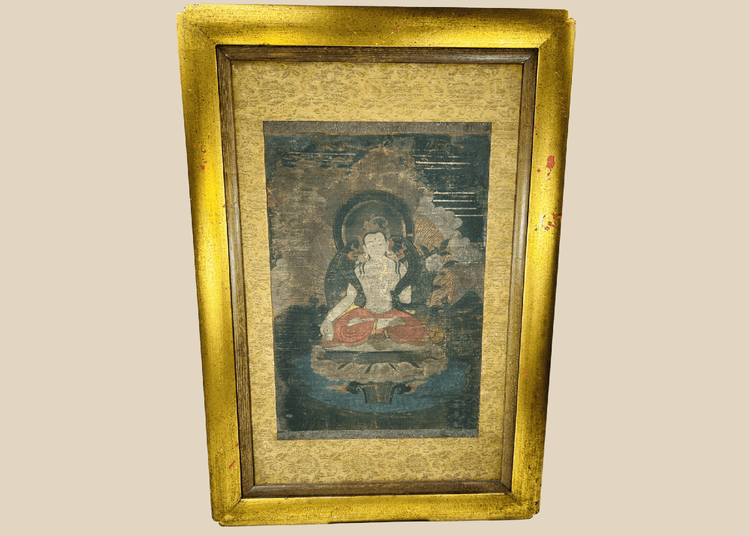
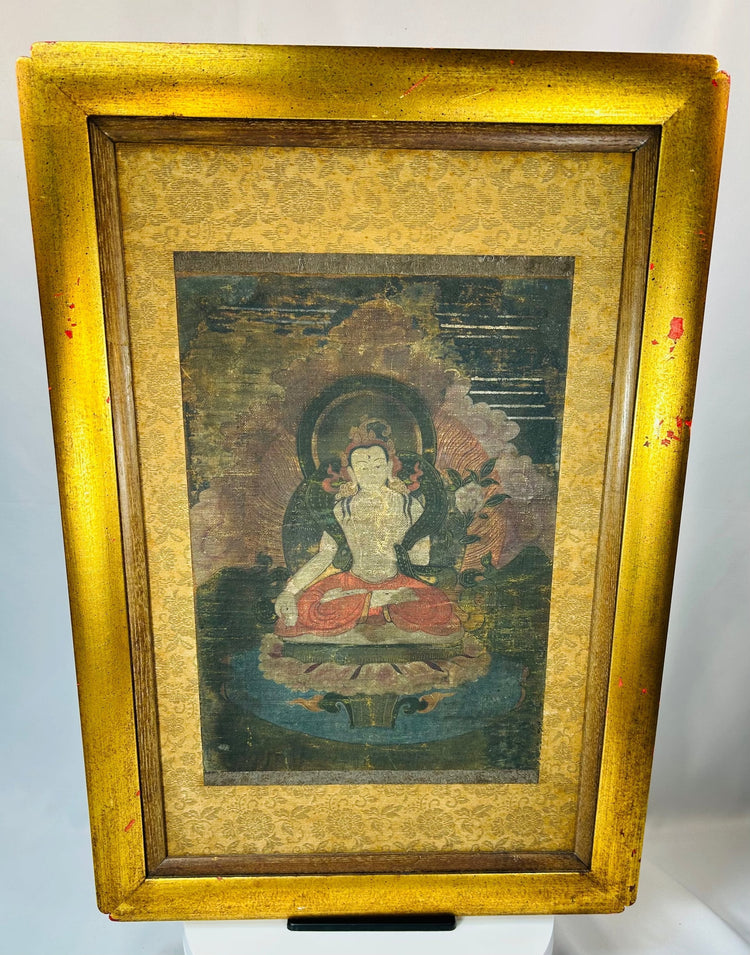
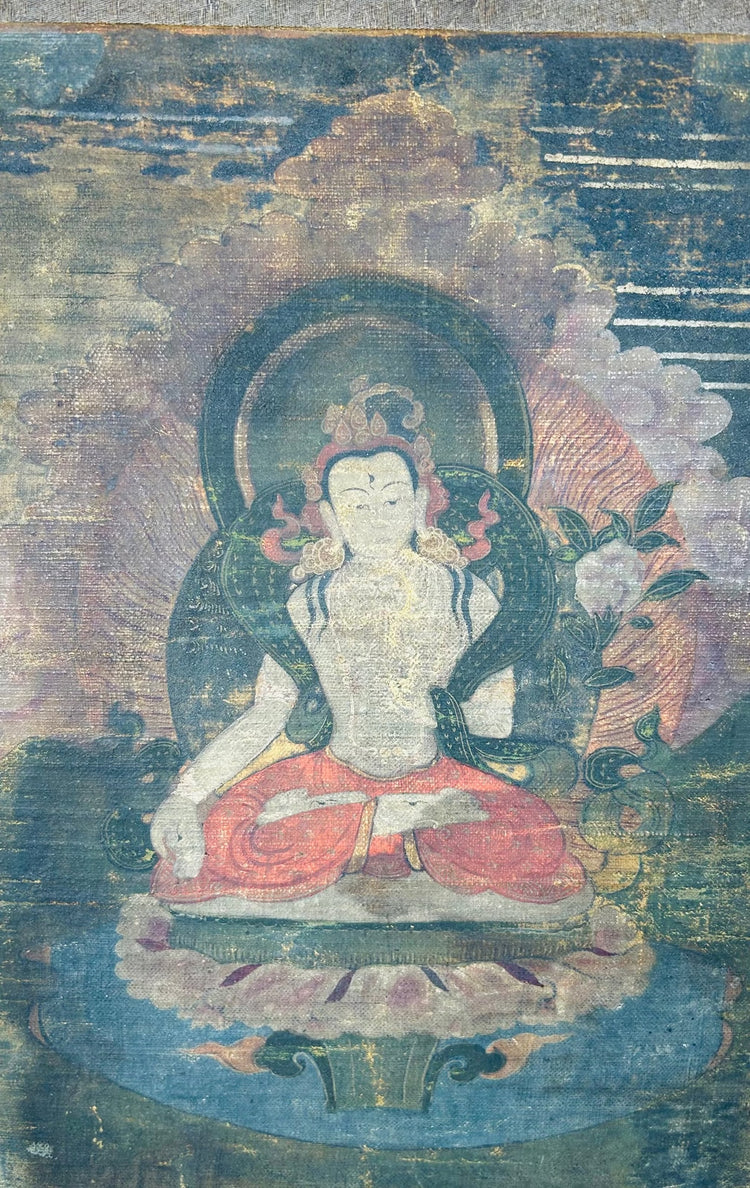
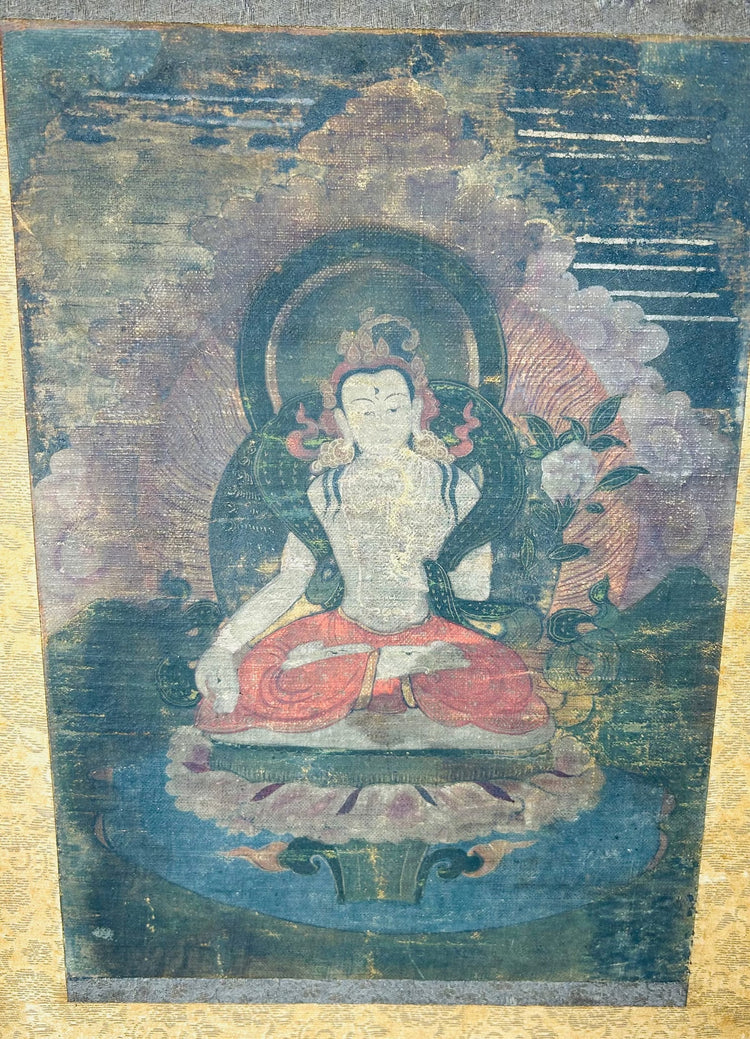
Cette image dévotionnelle en soie, finement présentée et peinte à la main, représente une figure bouddhiste assise, rendue dans le style himalayen traditionnel, représentant probablement un Bouddha ou un Bodhisattva tibétain en méditation. La figure est représentée assise en tailleur sur un trône de lotus, symbole de pureté spirituelle et d'illumination, sur un fond sombre et atmosphérique, enrichi de formations nuageuses stylisées et de motifs floraux.
La composition reflète l'iconographie classique inspirée des thangkas, avec la figure centrale encadrée par une auréole et un nimbe, soulignant la présence divine et la transcendance. L'application délicate des pigments sur la soie, maintenant adoucie par l'âge, révèle des détails soignés dans les traits du visage, les vêtements et les éléments ornementaux.
L'œuvre est montée dans une bordure en damas de soie à motifs qui complète la composition originale et est logée dans un cadre en bois doré, rehaussant sa présence visuelle et son exposition.
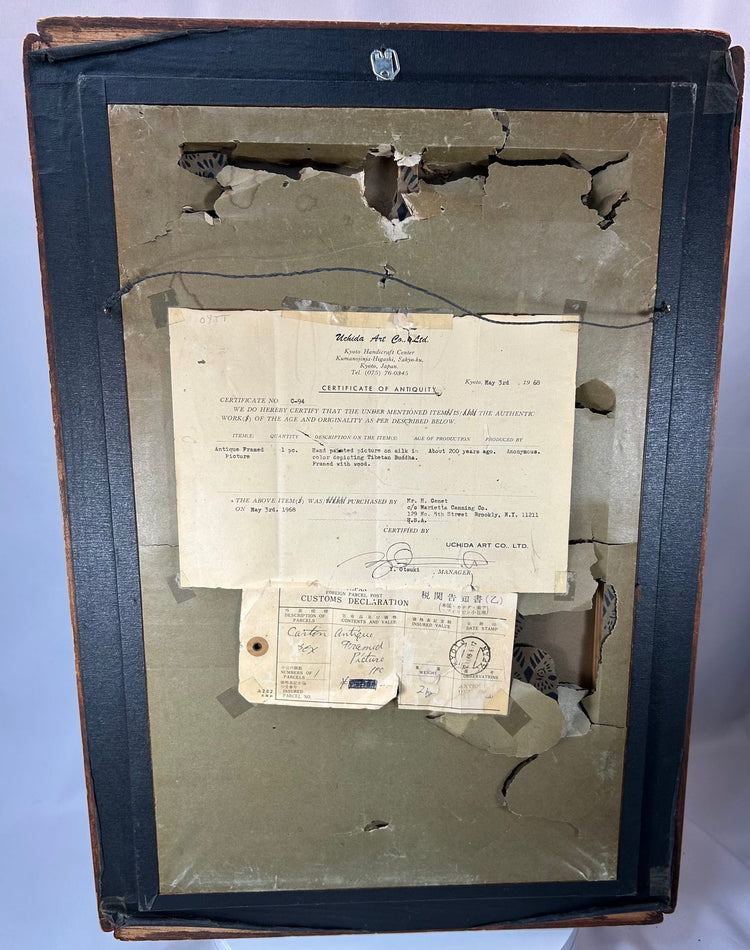
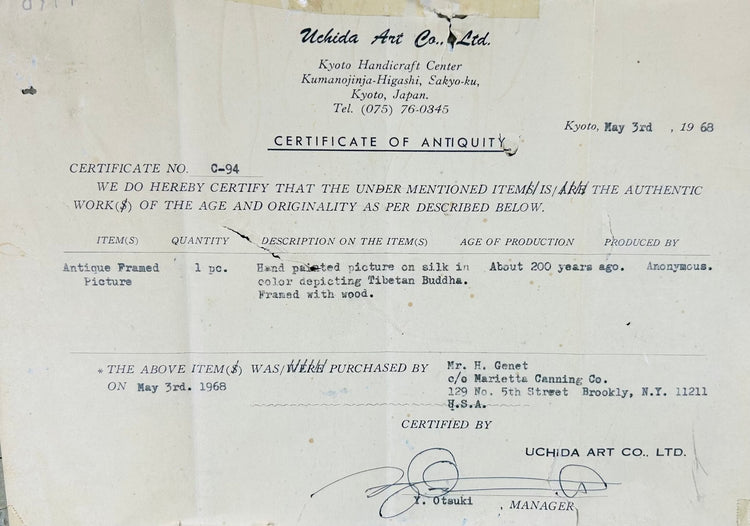
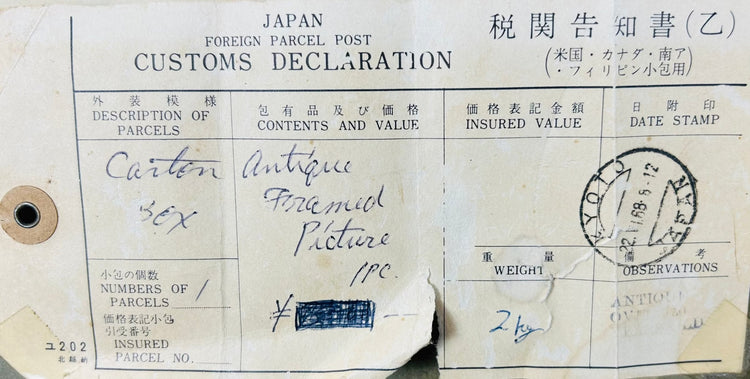
Il est à noter que le revers conserve un certificat d'ancienneté délivré par Uchida Art Co. Ltd. (Kyoto, Japon), daté du 3 mai 1968, identifiant l'œuvre comme une image en soie peinte à la main d'un Bouddha tibétain et lui attribuant un âge d'environ 200 ans au moment de la certification. Une étiquette de déclaration en douane japonaise d'époque reste également apposée, fournissant un contexte historique supplémentaire concernant son exportation et son historique de propriété précoce.
Caractéristiques
- Image dévotionnelle peinte à la main sur soie
- Sujet bouddhiste tibétain / himalayen traditionnel
- Figure assise sur trône de lotus avec auréole et nimbe
- Montée dans une bordure décorative en damas de soie
- Cadre en bois doré
- Comprend le certificat d'ancienneté Uchida Art Co. Ltd. de 1968
- Conserve l'étiquette de déclaration en douane japonaise d'origine
- Forte présence décorative et spirituelle
Signification culturelle
Les peintures de cette nature sont enracinées dans les traditions artistiques bouddhistes du Tibet et des régions himalayennes, où l'imagerie sacrée sert à la fois à des fins dévotionnelles et méditatives. Ces œuvres étaient souvent utilisées dans des sanctuaires privés ou des contextes monastiques, fonctionnant comme des aides visuelles pour la contemplation et la pratique spirituelle.
L'intégration d'une composition inspirée des thangkas avec un montage en soie reflète une tradition plus large de conservation et de présentation de l'imagerie sacrée, faisant le pont entre la fonction religieuse et une présentation artistique raffinée.
Condition
Bon état général, conforme à l'âge. Estompage visible, usure de surface et légère décoloration de la peinture sur soie. Le cadre présente de l'usure, des éraflures et de légères pertes de dorure. Le papier de fond est déchiré et fragile, les documents originaux sont intacts mais vieillis et délicats.
Dimensions (approximatives)
Hauteur : 23,5 pouces (59,7 cm)
Largeur : 16,5 pouces (41,9 cm)
Profondeur : 1 pouce (2,5 cm)
Âge (approximatif)
250-260 ans
En savoir plus
Approfondissez vos connaissances sur les traditions de la peinture thangka himalayenne grâce à The Himalayan Art Council
Parcourez notre collection d'art historique : peintures rares et objets de collection
Description
Contexte historique et origine
Région : Tibet / Région himalayenne (probablement atelier tibétain ou sino-tibétain)
Matériau : Pigments peints à la main sur soie avec monture en brocart de soie et cadre en bois
Période : Circa XVIIIe-XIXe siècle (selon l'attribution du certificat)
Description
Cette image dévotionnelle en soie, finement présentée et peinte à la main, représente une figure bouddhiste assise, rendue dans le style himalayen traditionnel, représentant probablement un Bouddha ou un Bodhisattva tibétain en méditation. La figure est représentée assise en tailleur sur un trône de lotus, symbole de pureté spirituelle et d'illumination, sur un fond sombre et atmosphérique, enrichi de formations nuageuses stylisées et de motifs floraux.
La composition reflète l'iconographie classique inspirée des thangkas, avec la figure centrale encadrée par une auréole et un nimbe, soulignant la présence divine et la transcendance. L'application délicate des pigments sur la soie, maintenant adoucie par l'âge, révèle des détails soignés dans les traits du visage, les vêtements et les éléments ornementaux.
L'œuvre est montée dans une bordure en damas de soie à motifs qui complète la composition originale et est logée dans un cadre en bois doré, rehaussant sa présence visuelle et son exposition.
Il est à noter que le revers conserve un certificat d'ancienneté délivré par Uchida Art Co. Ltd. (Kyoto, Japon), daté du 3 mai 1968, identifiant l'œuvre comme une image en soie peinte à la main d'un Bouddha tibétain et lui attribuant un âge d'environ 200 ans au moment de la certification. Une étiquette de déclaration en douane japonaise d'époque reste également apposée, fournissant un contexte historique supplémentaire concernant son exportation et son historique de propriété précoce.
Caractéristiques
- Image dévotionnelle peinte à la main sur soie
- Sujet bouddhiste tibétain / himalayen traditionnel
- Figure assise sur trône de lotus avec auréole et nimbe
- Montée dans une bordure décorative en damas de soie
- Cadre en bois doré
- Comprend le certificat d'ancienneté Uchida Art Co. Ltd. de 1968
- Conserve l'étiquette de déclaration en douane japonaise d'origine
- Forte présence décorative et spirituelle
Signification culturelle
Les peintures de cette nature sont enracinées dans les traditions artistiques bouddhistes du Tibet et des régions himalayennes, où l'imagerie sacrée sert à la fois à des fins dévotionnelles et méditatives. Ces œuvres étaient souvent utilisées dans des sanctuaires privés ou des contextes monastiques, fonctionnant comme des aides visuelles pour la contemplation et la pratique spirituelle.
L'intégration d'une composition inspirée des thangkas avec un montage en soie reflète une tradition plus large de conservation et de présentation de l'imagerie sacrée, faisant le pont entre la fonction religieuse et une présentation artistique raffinée.
Condition
Bon état général, conforme à l'âge. Estompage visible, usure de surface et légère décoloration de la peinture sur soie. Le cadre présente de l'usure, des éraflures et de légères pertes de dorure. Le papier de fond est déchiré et fragile, les documents originaux sont intacts mais vieillis et délicats.
Dimensions (approximatives)
Hauteur : 23,5 pouces (59,7 cm)
Largeur : 16,5 pouces (41,9 cm)
Profondeur : 1 pouce (2,5 cm)
Âge (approximatif)
250-260 ans
En savoir plus
Approfondissez vos connaissances sur les traditions de la peinture thangka himalayenne grâce à The Himalayan Art Council
Parcourez notre collection d'art historique : peintures rares et objets de collection
Vous aimerez peut-être aussi
