
Masque tribal sculpté à la main | Afrique de l'Ouest | Traces de pigments | Début du XXe siècle
- Prix habituel
- $350.00
- Prix soldé
- $350.00
- Prix habituel
Impossible de charger la disponibilité du service de retrait


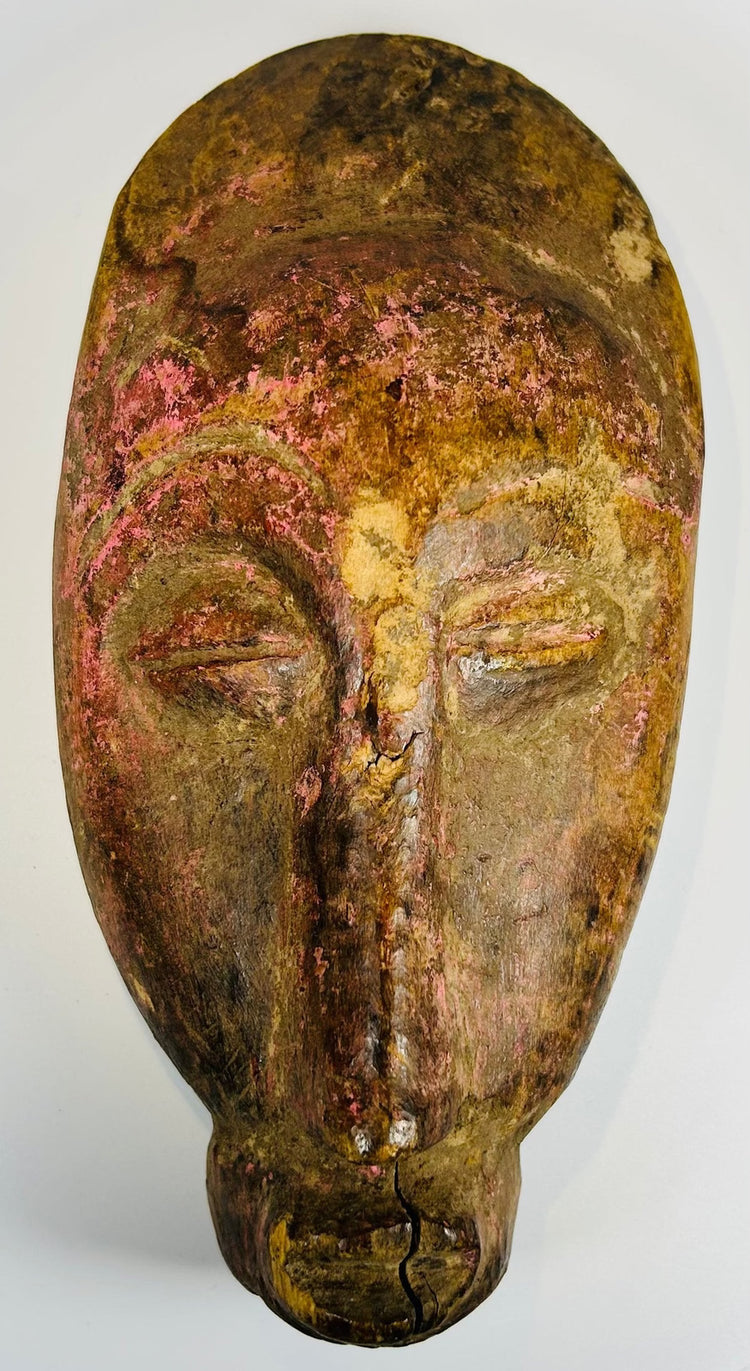
Masque tribal sculpté à la main | Afrique de l'Ouest | Traces de pigments | Début du XXe siècle
Description
Plus
Moins
Contexte historique et origine
Région : Afrique de l'Ouest (probablement la région de la Côte d'Ivoire)
Matériau : Bois sculpté à la main avec pigment
Période : Tradition de l'art tribal du 20e siècle
Description
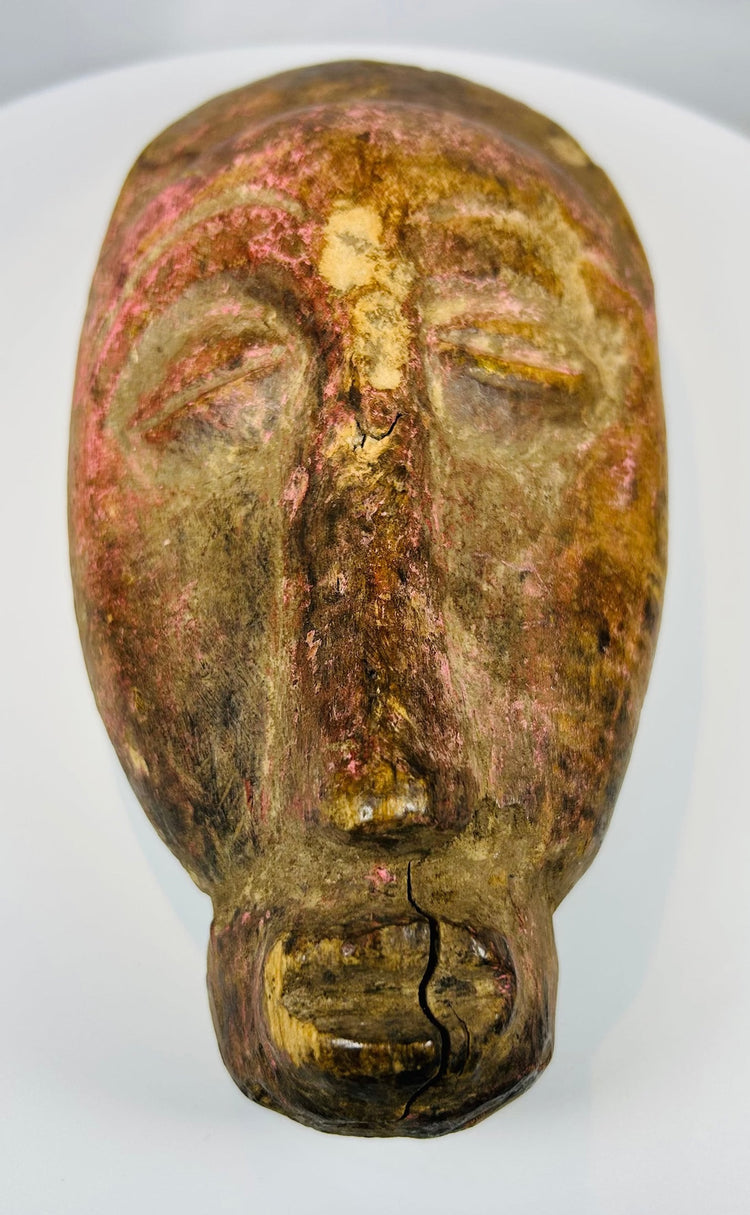
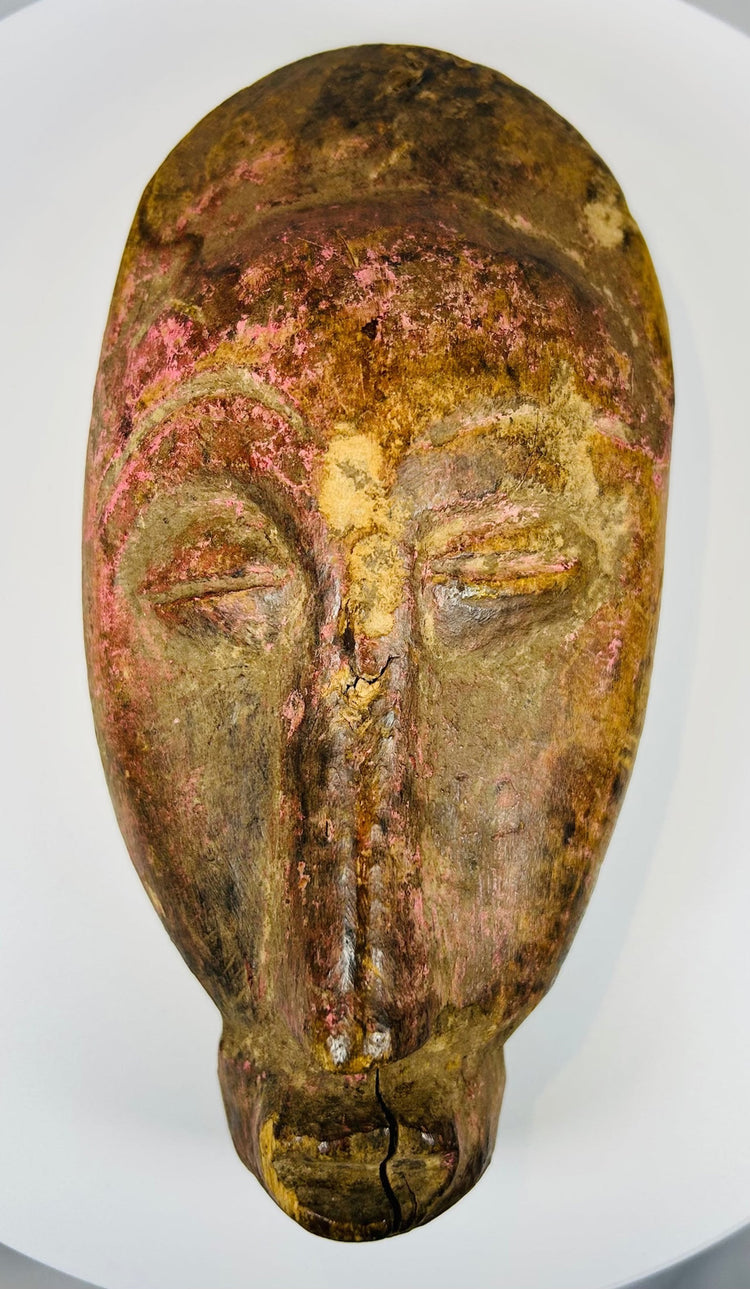
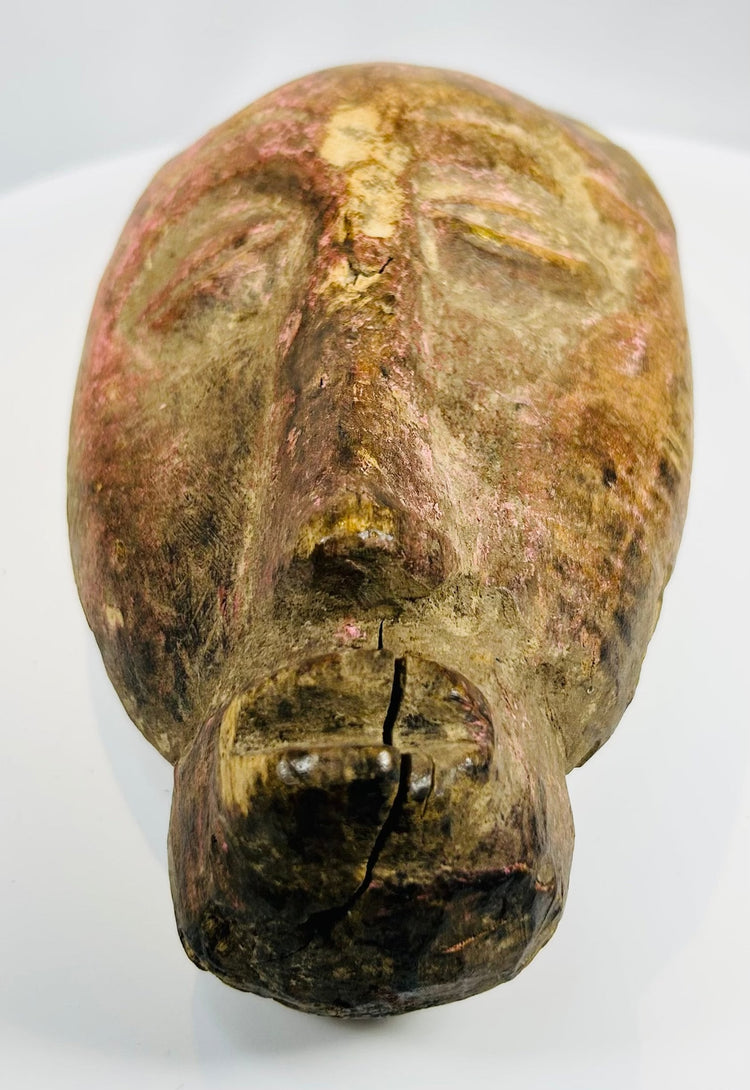
Ce masque en bois sculpté à la main reflète les traditions sculpturales de l'art tribal d'Afrique de l'Ouest, en particulier celles associées aux Baoulé et aux groupes culturels apparentés de Côte d'Ivoire. Le masque présente un long visage ovale avec une symétrie raffinée, des yeux étroits en amande et une arête nasale centrale proéminente qui descend vers la bouche. L'expression sereine et les traits faciaux simplifiés soulignent l'équilibre et le calme spirituel, des caractéristiques que l'on retrouve couramment dans les masques portraits traditionnels baoulé.
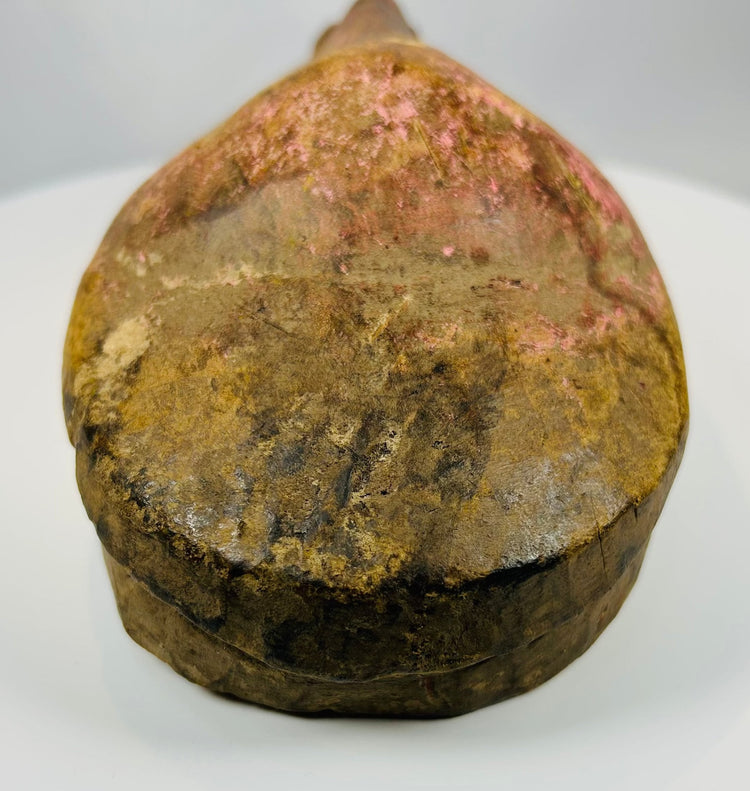
La surface conserve des restes de pigment, y compris des traces de coloration rouge et rose sur le front et les contours du visage, suggérant que le masque était autrefois plus vivement peint. L'usure naturelle, la patine de surface et les fissures liées à l'âge contribuent au caractère authentique et à la profondeur visuelle de l'objet.
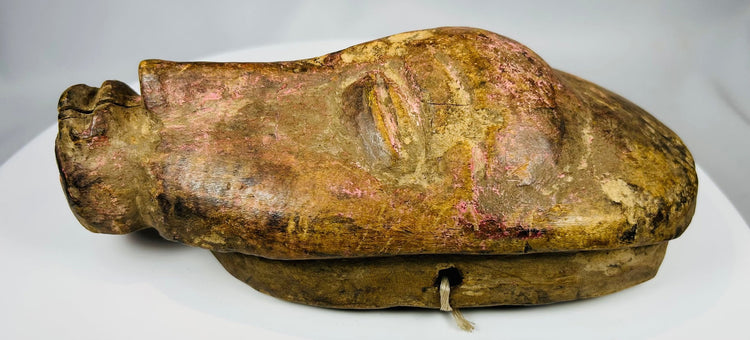
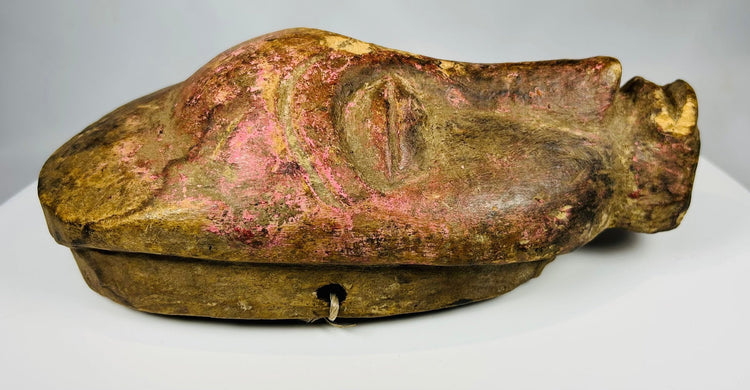
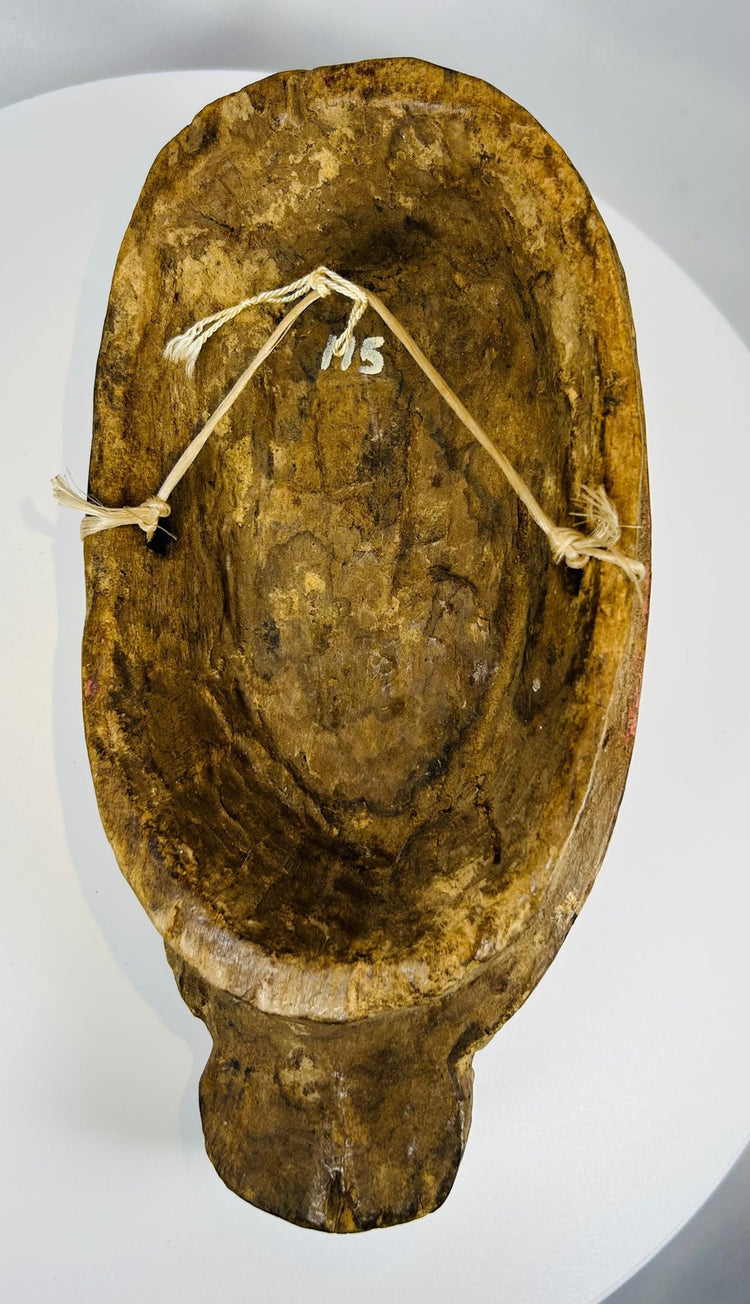
L'intérieur est creusé, avec de petits trous pour cordon permettant au masque d'être monté ou fixé pour un usage ou un affichage cérémoniel. Des masques comme celui-ci étaient traditionnellement utilisés dans les performances rituelles, les cérémonies communautaires, ou comme représentations symboliques des esprits ancestraux et de l'identité culturelle.
Caractéristiques
- Masque en bois sculpté à la main d'Afrique de l'Ouest
- Forme faciale ovale allongée avec des traits stylisés
- Yeux étroits en amande et arête nasale prononcée
- Traces de pigment traditionnel sur toute la surface
- Intérieur creusé avec des trous pour cordon pour le montage ou le port
- Forte patine de surface due à l'âge et à la manipulation
Signification culturelle
Les masques occupent une place centrale dans de nombreuses cultures d'Afrique de l'Ouest, servant d'objets spirituels utilisés dans les danses cérémonielles, les rituels communautaires et la vénération des ancêtres. Dans les traditions baoulé, les masques représentent souvent la beauté humaine idéalisée, les esprits ancestraux ou les forces protectrices qui relient les vivants au monde spirituel. Les traits calmes et symétriques que l'on voit ici reflètent les valeurs esthétiques associées à l'harmonie, à la dignité et à la présence spirituelle.
État
Bon état d'art tribal avec une usure liée à l'âge, des abrasions de surface, une perte de pigment et une fissure visible le long du menton, conformes au vieillissement naturel du bois sculpté. L'intérieur reste creusé et intact.
Dimensions (approximatives)
Hauteur : 22,2 cm
Largeur : 11,4 cm
Profondeur : 7,6 cm
Âge (approximatif)
60-90 ans
Provenance
D'une collection privée à Hollywood, Floride, USA.
En savoir plus
Découvrez le rôle culturel des masques et des mascarades en Afrique de l'Ouest grâce à cette ressource du Minneapolis Institute of Art
Découvrez notre Collection de Reliques Ethnographiques & Artefacts Culturels
Description
Contexte historique et origine
Région : Afrique de l'Ouest (probablement la région de la Côte d'Ivoire)
Matériau : Bois sculpté à la main avec pigment
Période : Tradition de l'art tribal du 20e siècle
Description
Ce masque en bois sculpté à la main reflète les traditions sculpturales de l'art tribal d'Afrique de l'Ouest, en particulier celles associées aux Baoulé et aux groupes culturels apparentés de Côte d'Ivoire. Le masque présente un long visage ovale avec une symétrie raffinée, des yeux étroits en amande et une arête nasale centrale proéminente qui descend vers la bouche. L'expression sereine et les traits faciaux simplifiés soulignent l'équilibre et le calme spirituel, des caractéristiques que l'on retrouve couramment dans les masques portraits traditionnels baoulé.
La surface conserve des restes de pigment, y compris des traces de coloration rouge et rose sur le front et les contours du visage, suggérant que le masque était autrefois plus vivement peint. L'usure naturelle, la patine de surface et les fissures liées à l'âge contribuent au caractère authentique et à la profondeur visuelle de l'objet.
L'intérieur est creusé, avec de petits trous pour cordon permettant au masque d'être monté ou fixé pour un usage ou un affichage cérémoniel. Des masques comme celui-ci étaient traditionnellement utilisés dans les performances rituelles, les cérémonies communautaires, ou comme représentations symboliques des esprits ancestraux et de l'identité culturelle.
Caractéristiques
- Masque en bois sculpté à la main d'Afrique de l'Ouest
- Forme faciale ovale allongée avec des traits stylisés
- Yeux étroits en amande et arête nasale prononcée
- Traces de pigment traditionnel sur toute la surface
- Intérieur creusé avec des trous pour cordon pour le montage ou le port
- Forte patine de surface due à l'âge et à la manipulation
Signification culturelle
Les masques occupent une place centrale dans de nombreuses cultures d'Afrique de l'Ouest, servant d'objets spirituels utilisés dans les danses cérémonielles, les rituels communautaires et la vénération des ancêtres. Dans les traditions baoulé, les masques représentent souvent la beauté humaine idéalisée, les esprits ancestraux ou les forces protectrices qui relient les vivants au monde spirituel. Les traits calmes et symétriques que l'on voit ici reflètent les valeurs esthétiques associées à l'harmonie, à la dignité et à la présence spirituelle.
État
Bon état d'art tribal avec une usure liée à l'âge, des abrasions de surface, une perte de pigment et une fissure visible le long du menton, conformes au vieillissement naturel du bois sculpté. L'intérieur reste creusé et intact.
Dimensions (approximatives)
Hauteur : 22,2 cm
Largeur : 11,4 cm
Profondeur : 7,6 cm
Âge (approximatif)
60-90 ans
Provenance
D'une collection privée à Hollywood, Floride, USA.
En savoir plus
Découvrez le rôle culturel des masques et des mascarades en Afrique de l'Ouest grâce à cette ressource du Minneapolis Institute of Art
Découvrez notre Collection de Reliques Ethnographiques & Artefacts Culturels
Vous aimerez peut-être aussi
