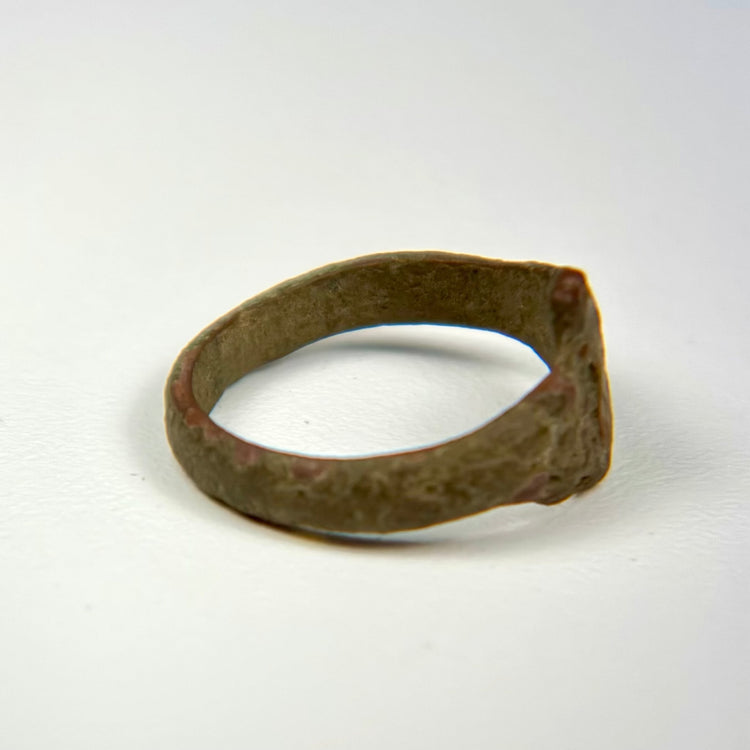
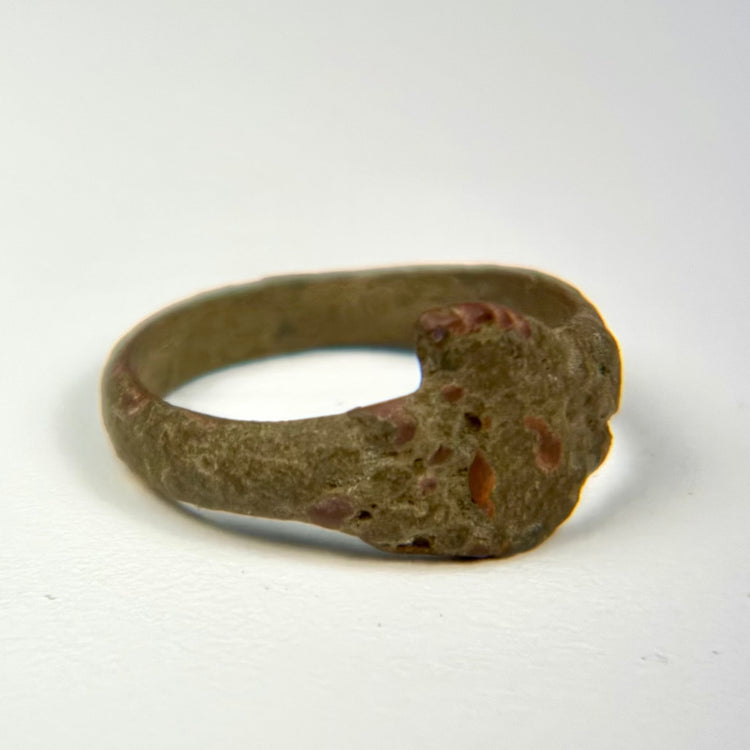
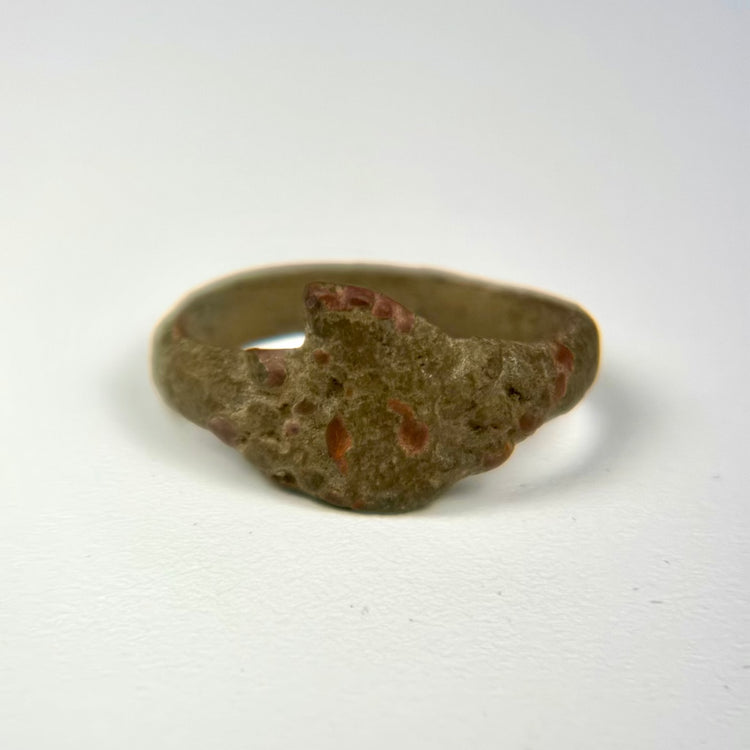
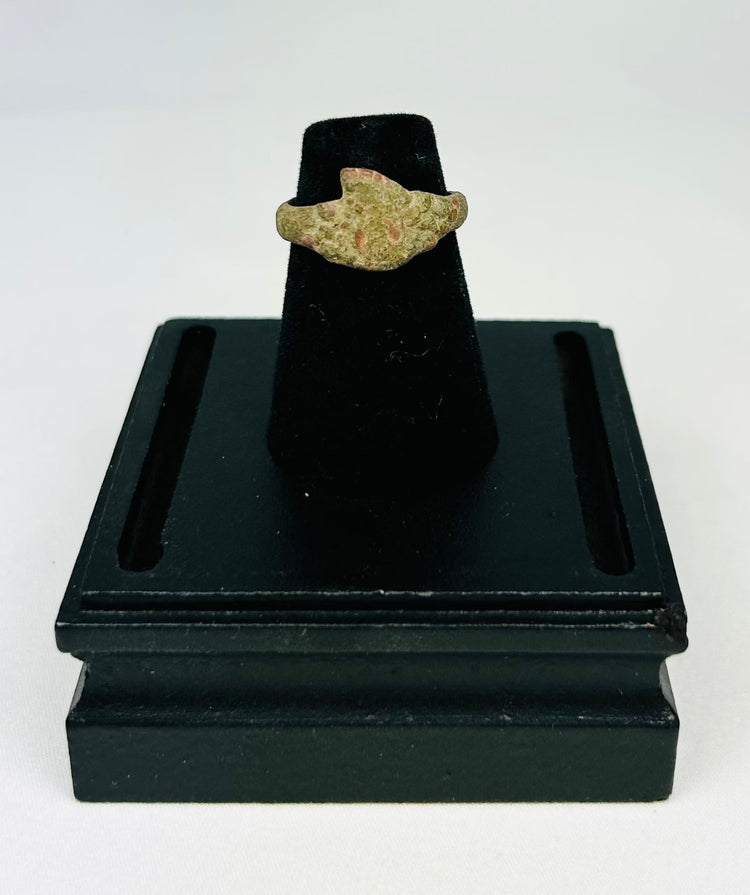
Bague en bronze antique | Vers le Ier au Ve siècle de notre ère

Historique de provenance et de propriété

Anciennement détenue dans une collection privée à Armadale, Victoria, Australie.

Prix habituel
$350.00
Prix soldé
$350.00
Prix habituel
Frais de port calculés à la caisse.

This is a one-of-a-kind historical object. Once sold, this exact piece will not be restocked.

Questions before acquiring? Additional photographs, condition details, documentation, shipping information or a private viewing are available upon request.
Ancient bronze ring with wide bezel and green patina
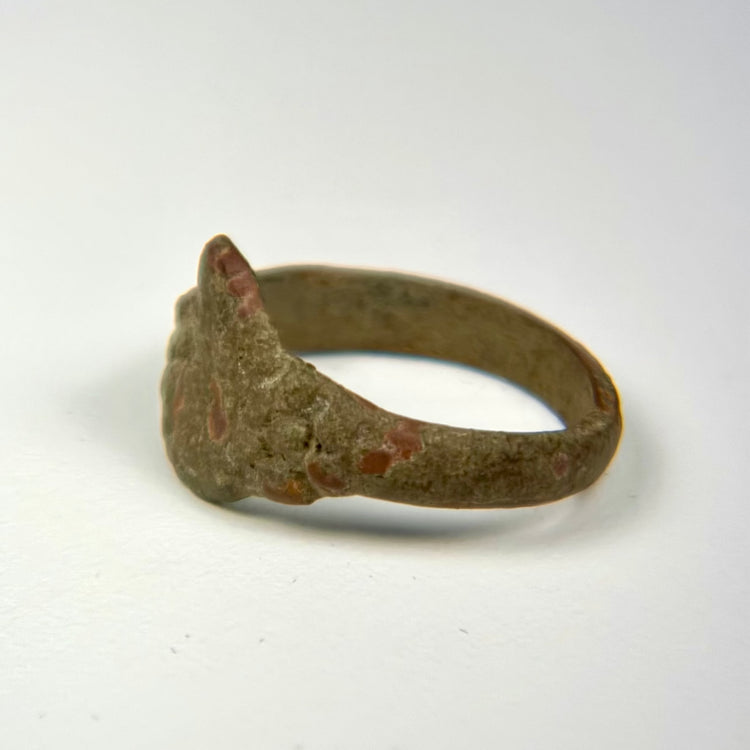
Ancient bronze ring with broad shield-shaped face and green-brown patina, shown rotating to reveal its form, surface texture, and archaeological wear.
Ancient bronze ring with bold bezel design and naturally developed archaeological patina, circa 1st–5th century CE
Mediterranean or Middle Eastern bronze finger ring with weathered bezel and centuries-old surface patina
Ancient bronze ring featuring a robust circular band and simple geometric bezel form
Early centuries CE bronze ring with minimalist design and age-related burial patination
Ancient bronze jewelry with distinctive bezel, worn surface texture, and preserved historic character
Mediterranean bronze ring with clean bezel lines and naturally aged green-brown patina
Ancient Middle Eastern bronze ring showing centuries of wear, oxidation, and surface weathering
Historic bronze finger ring with substantial band, simple bezel, and archaeological patina
Ancient bronze ring from the 1st–5th century CE with balanced form and weathered surface finish
Antique Mediterranean or Middle Eastern bronze ring with preserved bezel and natural age-related patination
Museum-style photograph of an ancient bronze ring with natural green and brown patina
  • Ancient bronze ring with wide bezel and green patina
  • Ancient bronze ring with broad shield-shaped face and green-brown patina, shown rotating to reveal its form, surface texture, and archaeological wear.
  • Ancient bronze ring with bold bezel design and naturally developed archaeological patina, circa 1st–5th century CE
  • Mediterranean or Middle Eastern bronze finger ring with weathered bezel and centuries-old surface patina
  • Ancient bronze ring featuring a robust circular band and simple geometric bezel form
  • Early centuries CE bronze ring with minimalist design and age-related burial patination
  • Ancient bronze jewelry with distinctive bezel, worn surface texture, and preserved historic character
  • Mediterranean bronze ring with clean bezel lines and naturally aged green-brown patina
  • Ancient Middle Eastern bronze ring showing centuries of wear, oxidation, and surface weathering
  • Historic bronze finger ring with substantial band, simple bezel, and archaeological patina
  • Ancient bronze ring from the 1st–5th century CE with balanced form and weathered surface finish
  • Antique Mediterranean or Middle Eastern bronze ring with preserved bezel and natural age-related patination
  • Museum-style photograph of an ancient bronze ring with natural green and brown patina
Ancient bronze ring with wide bezel and green patina
Ancient bronze ring with broad shield-shaped face and green-brown patina, shown rotating to reveal its form, surface texture, and archaeological wear.
Ancient bronze ring with bold bezel design and naturally developed archaeological patina, circa 1st–5th century CE
Mediterranean or Middle Eastern bronze finger ring with weathered bezel and centuries-old surface patina
Ancient bronze ring featuring a robust circular band and simple geometric bezel form
Early centuries CE bronze ring with minimalist design and age-related burial patination
Ancient bronze jewelry with distinctive bezel, worn surface texture, and preserved historic character
Mediterranean bronze ring with clean bezel lines and naturally aged green-brown patina
Ancient Middle Eastern bronze ring showing centuries of wear, oxidation, and surface weathering
Historic bronze finger ring with substantial band, simple bezel, and archaeological patina
Ancient bronze ring from the 1st–5th century CE with balanced form and weathered surface finish
Antique Mediterranean or Middle Eastern bronze ring with preserved bezel and natural age-related patination
Museum-style photograph of an ancient bronze ring with natural green and brown patina
Authenticity and secure checkout guarantee

Bague en bronze antique | Vers le Ier au Ve siècle de notre ère

Description

Contexte historique et origine

Région : Méditerranée ou Moyen-Orient
Matériau : Bronze
Période : 1er-5e siècle de notre ère

Description

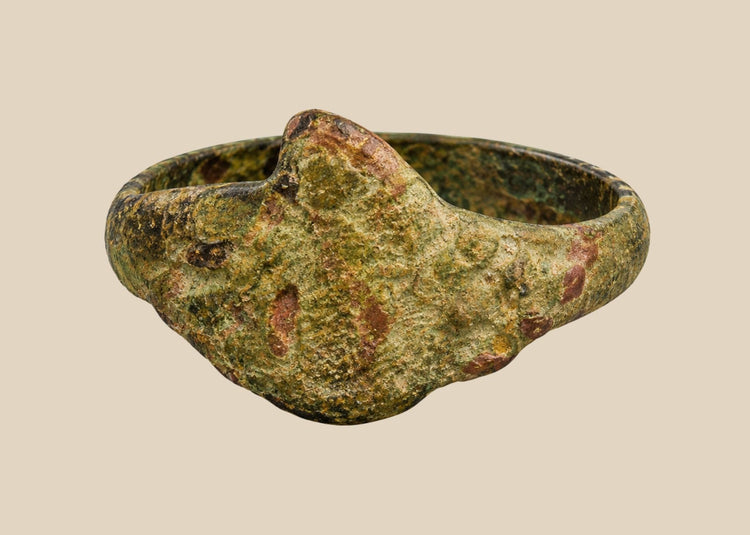
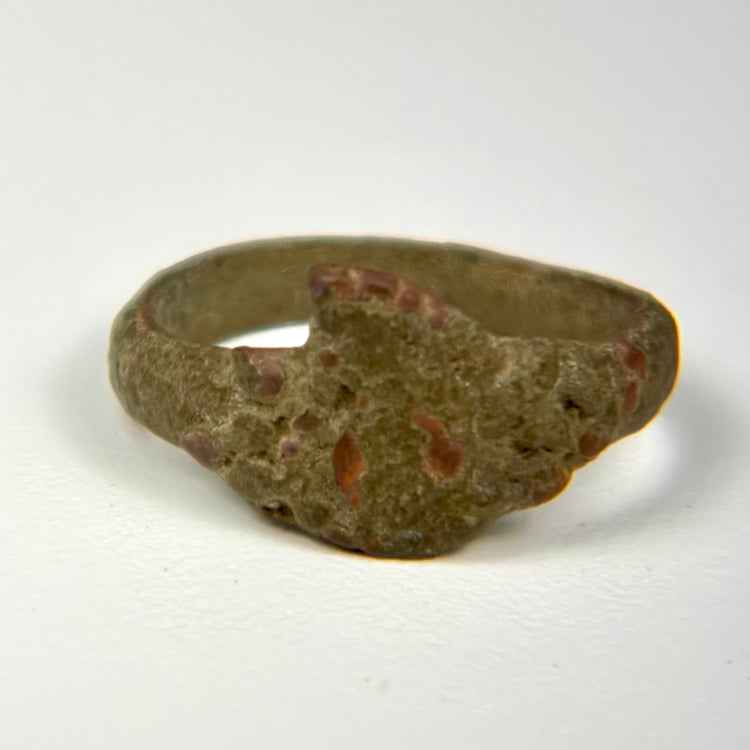
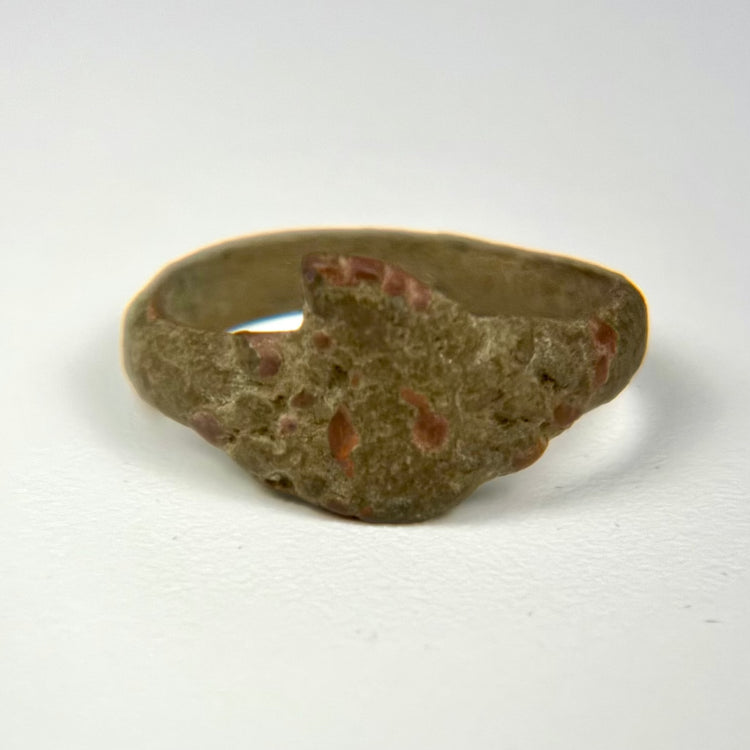
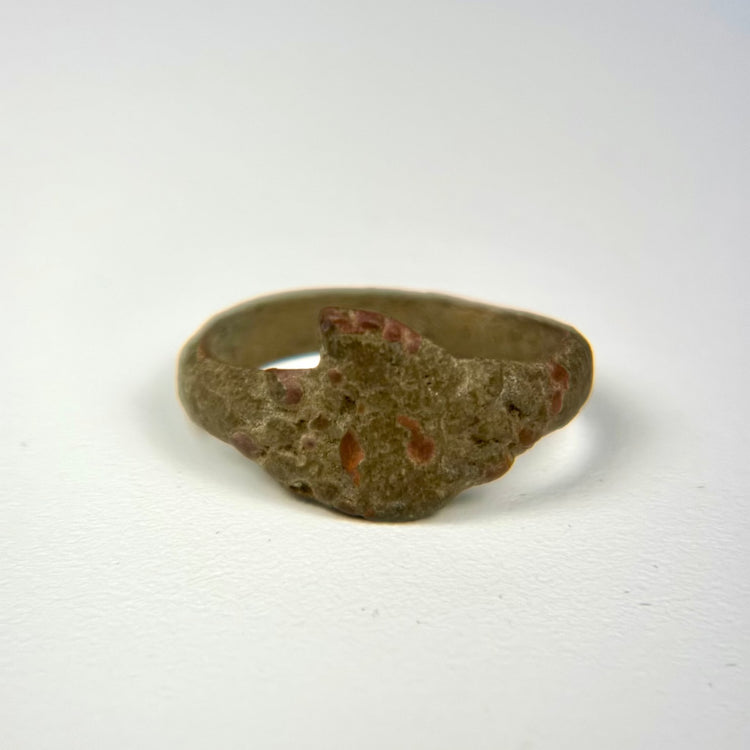
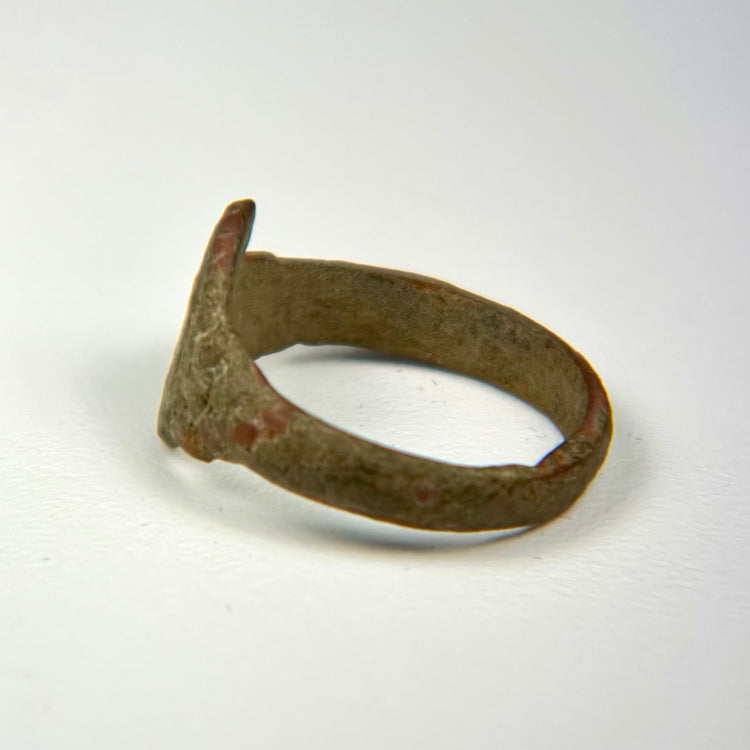
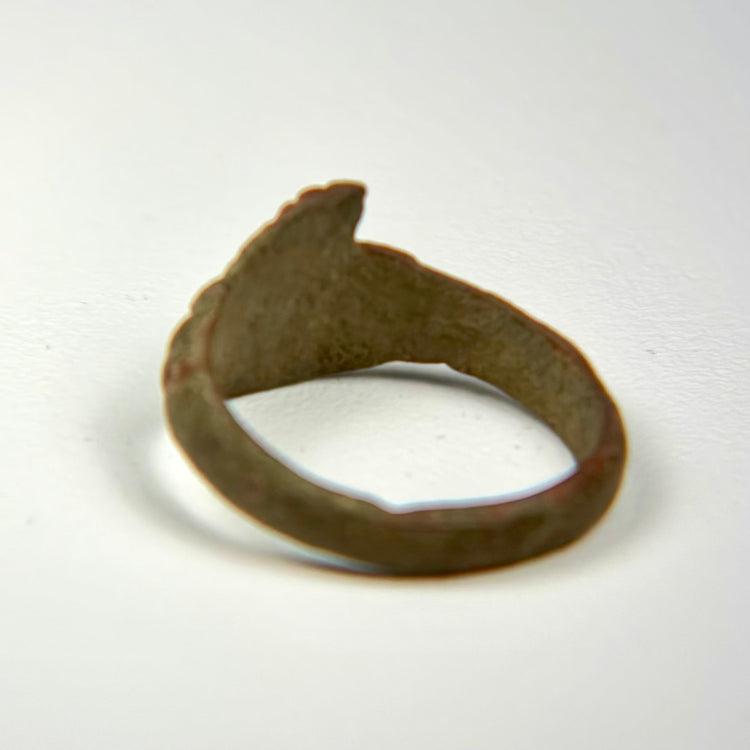
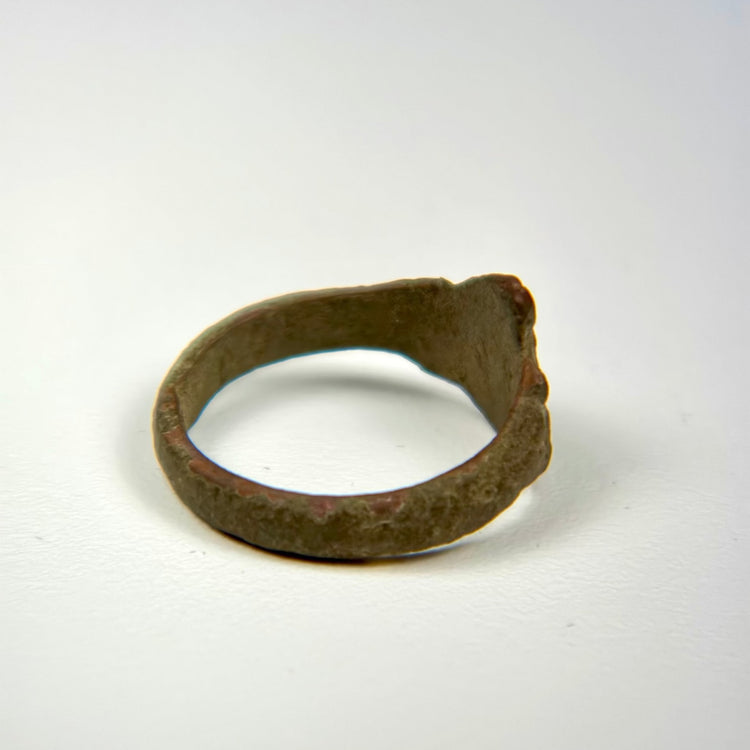
Cette ancienne bague en bronze présente un motif de chaton audacieux et une riche patine naturelle développée au fil des siècles, reflétant son âge et son authenticité. Probablement originaire des régions méditerranéennes ou du Moyen-Orient, la bague incarne l'artisanat des cultures antiques, combinant élégance et fonctionnalité pratique. Sa simplicité de forme souligne le savoir-faire raffiné de l'époque, tandis que la surface patinée raconte une histoire de siècles passés.

Caractéristiques

- Chaton distinctif aux lignes épurées et minimales

- Patine naturelle due à des siècles d'âge et d'enfouissement

- Construction en bronze robuste assurant durabilité et préservation

- Design équilibré reflétant à la fois l'élégance et l'utilité

Signification culturelle

Dans l'Antiquité, les bagues n'étaient pas de simples ornements, mais avaient une signification symbolique et pratique. Elles pouvaient servir de sceaux pour marquer des documents, de symboles de statut reflétant le rang social, ou de jetons personnels liés à des croyances culturelles ou spirituelles. Cette bague illustre le double rôle des bijoux dans les sociétés anciennes – à la fois ornement personnel et représentation de l'identité et de l'autorité.

État

La bague présente une patine naturelle et une usure de surface conforme à son grand âge. La finition patinée accentue son authenticité, offrant un lien tangible avec le monde antique.

Dimensions (approximatives)

Taille de la bague : 6,75 US

Âge

1 500 à 2 000 ans

Provenance

Anciennement détenue dans une collection privée à Armadale, Victoria, Australie.

En savoir plus

Découvrez les origines et la symbolique des bagues dans le monde antique

Parcourez notre collection de bagues antiques

Description

Contexte historique et origine

Région : Méditerranée ou Moyen-Orient
Matériau : Bronze
Période : 1er-5e siècle de notre ère

Description

Cette ancienne bague en bronze présente un motif de chaton audacieux et une riche patine naturelle développée au fil des siècles, reflétant son âge et son authenticité. Probablement originaire des régions méditerranéennes ou du Moyen-Orient, la bague incarne l'artisanat des cultures antiques, combinant élégance et fonctionnalité pratique. Sa simplicité de forme souligne le savoir-faire raffiné de l'époque, tandis que la surface patinée raconte une histoire de siècles passés.

Caractéristiques

- Chaton distinctif aux lignes épurées et minimales

- Patine naturelle due à des siècles d'âge et d'enfouissement

- Construction en bronze robuste assurant durabilité et préservation

- Design équilibré reflétant à la fois l'élégance et l'utilité

Signification culturelle

Dans l'Antiquité, les bagues n'étaient pas de simples ornements, mais avaient une signification symbolique et pratique. Elles pouvaient servir de sceaux pour marquer des documents, de symboles de statut reflétant le rang social, ou de jetons personnels liés à des croyances culturelles ou spirituelles. Cette bague illustre le double rôle des bijoux dans les sociétés anciennes – à la fois ornement personnel et représentation de l'identité et de l'autorité.

État

La bague présente une patine naturelle et une usure de surface conforme à son grand âge. La finition patinée accentue son authenticité, offrant un lien tangible avec le monde antique.

Dimensions (approximatives)

Taille de la bague : 6,75 US

Âge

1 500 à 2 000 ans

Provenance

Anciennement détenue dans une collection privée à Armadale, Victoria, Australie.

En savoir plus

Découvrez les origines et la symbolique des bagues dans le monde antique

Parcourez notre collection de bagues antiques

Vous aimerez peut-être aussi