


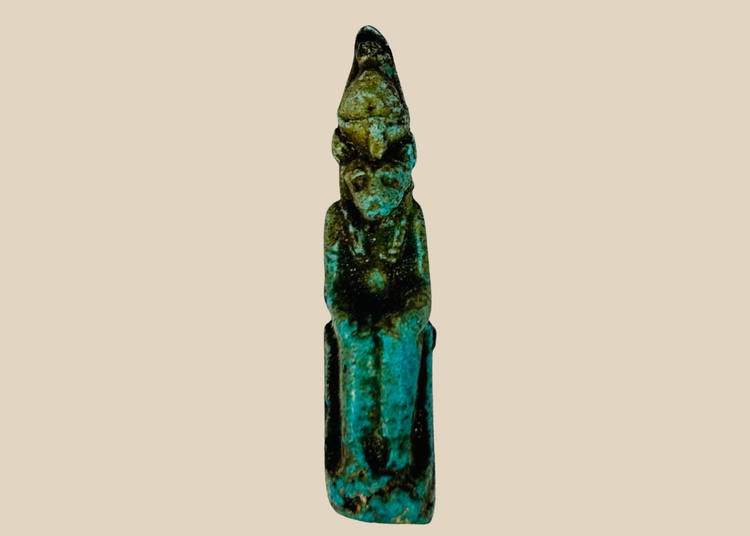
Égypte antique | Amulette en faïence représentant une divinité assise | Vers 664–332 av. J.-C.
- Prix habituel
- $400.00
- Prix soldé
- $400.00
- Prix habituel
Impossible de charger la disponibilité du service de retrait


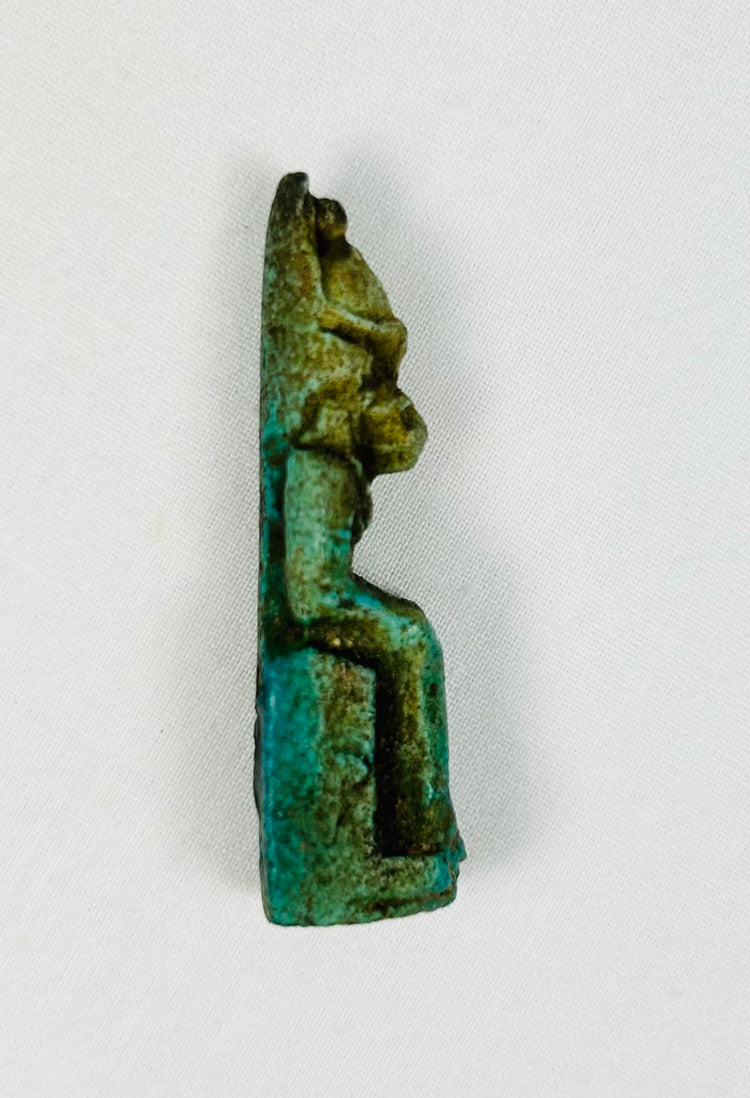
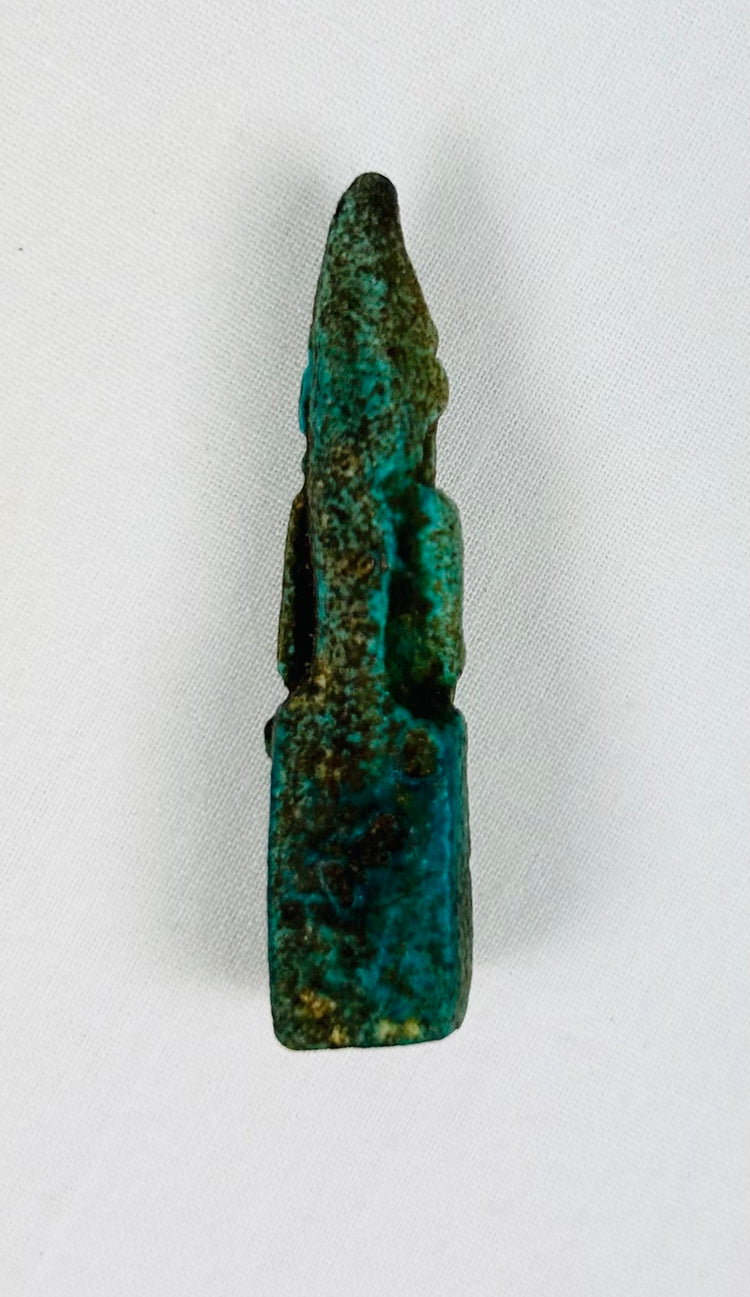
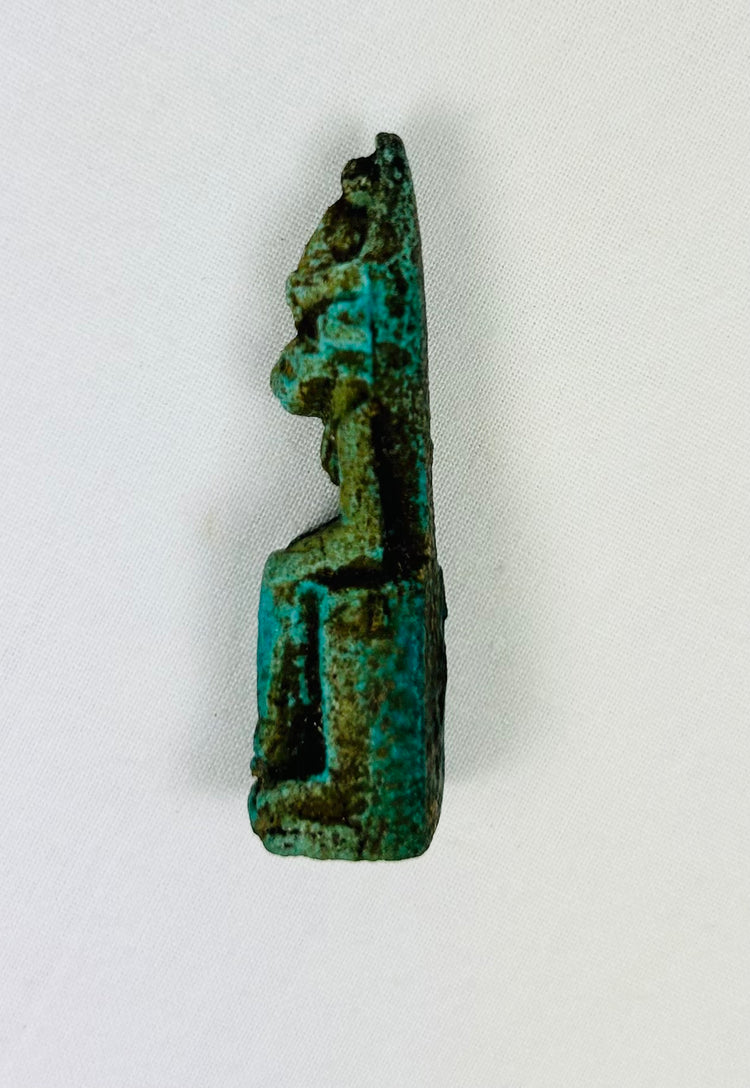
Égypte antique | Amulette en faïence représentant une divinité assise | Vers 664–332 av. J.-C.
Description
Plus
Moins
Contexte historique et origine
Région : Égypte
Période : Basse Époque à Époque ptolémaïque, vers 664-332 av. J.-C.
Matière : Faïence vert turquoise présentant des signes de vieillissement en surface et de légères incrustations.
Description
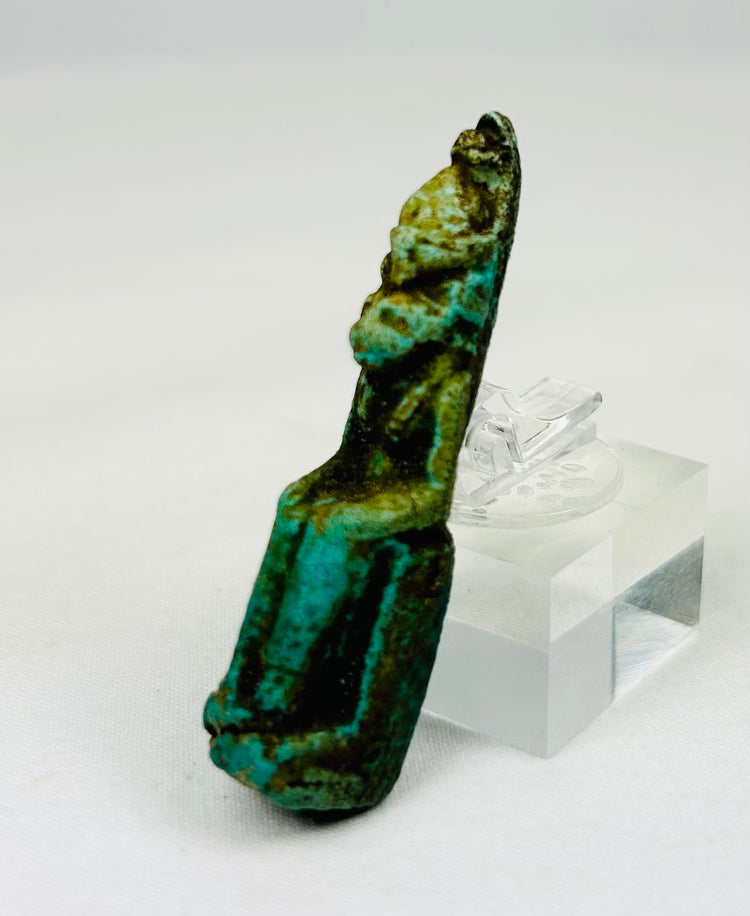
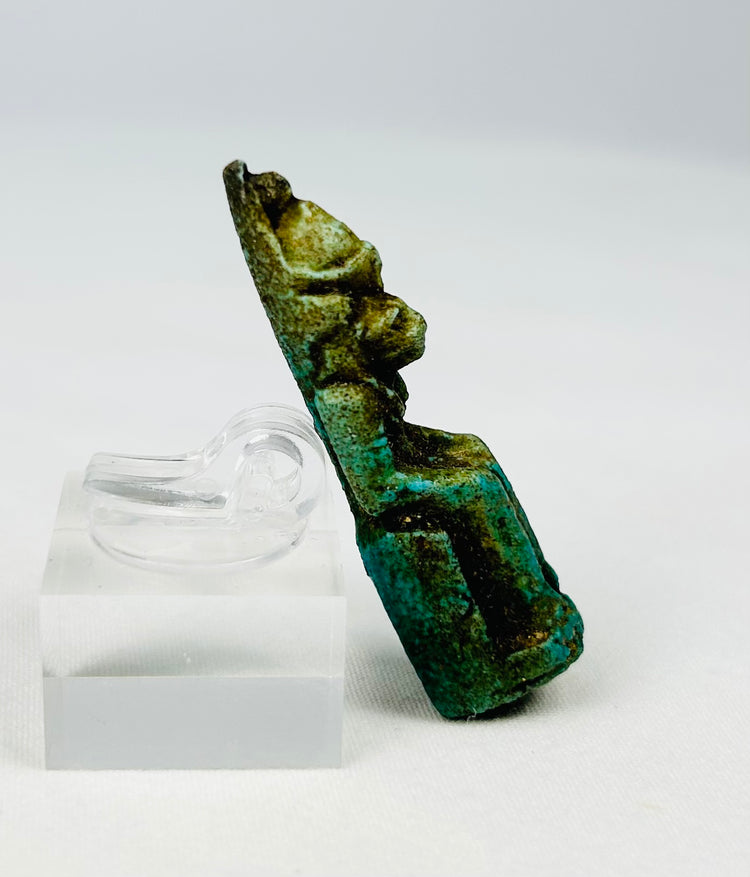
Cette amulette en faïence, magnifiquement conservée, représente une divinité égyptienne assise, dans la glaçure turquoise-vert classique caractéristique de la Basse Époque. La figure arbore une posture verticale raffinée, une coiffe distinctive et des détails du visage et du vêtement légèrement modelés, adoucis par des siècles de manipulation et d'enfouissement.
Ces amulettes étaient portées sur le corps ou placées dans les bandelettes des momies pour invoquer la protection divine, la renaissance et la guidance spirituelle. Leur teinte bleu-vert lumineuse symbolisait la régénération et était étroitement liée aux pouvoirs sacrés de divinités telles qu'Osiris, Hathor et d'autres figures protectrices du panthéon égyptien.
Caractéristiques
- Patine de faïence turquoise et vert foncé distincte
- Personnage assis dans une pose égyptienne traditionnelle
- Coiffe et contour corporel clairement définis
- Minéralisation de surface et dépôts d'enfouissement confirmant l'âge
- Format compact idéal pour l'exposition ou l'intégration de bijoux
Importance culturelle
Les amulettes en faïence occupaient une place centrale dans les pratiques religieuses égyptiennes. Leur couleur éclatante symbolisait la vie éternelle, la fertilité et la faveur divine, ce qui les rendait essentielles tant dans la dévotion quotidienne que dans les rites funéraires. Intermédiaires symboliques auprès des dieux, ces amulettes protégeaient les individus de leur vivant et continuaient de les préserver dans l'au-delà.
Condition
Excellente conservation pour son âge.
Légères érosions superficielles et incrustations typiques de la faïence archéologique.
Aucune trace de restauration moderne.
Dimensions (approximatives)
Hauteur : 1,75 po
Largeur : 0,5 pouce
Âge
Vers 664–332 av. J.-C.
(Période tardive – Ptolémée)
Apprendre encore plus
Explorez les matériaux, le symbolisme et le savoir-faire de la faïence égyptienne antique : Faïence égyptienne : Technologie et production – Musée du Metropolitan Museum of Art
Découvrez notre collection exclusive d'authentiques artefacts, objets funéraires et pièces de dévotion égyptiennes : Momies et artefacts de l'Égypte antique – Reliques et raretés
Description
Contexte historique et origine
Région : Égypte
Période : Basse Époque à Époque ptolémaïque, vers 664-332 av. J.-C.
Matière : Faïence vert turquoise présentant des signes de vieillissement en surface et de légères incrustations.
Description
Cette amulette en faïence, magnifiquement conservée, représente une divinité égyptienne assise, dans la glaçure turquoise-vert classique caractéristique de la Basse Époque. La figure arbore une posture verticale raffinée, une coiffe distinctive et des détails du visage et du vêtement légèrement modelés, adoucis par des siècles de manipulation et d'enfouissement.
Ces amulettes étaient portées sur le corps ou placées dans les bandelettes des momies pour invoquer la protection divine, la renaissance et la guidance spirituelle. Leur teinte bleu-vert lumineuse symbolisait la régénération et était étroitement liée aux pouvoirs sacrés de divinités telles qu'Osiris, Hathor et d'autres figures protectrices du panthéon égyptien.
Caractéristiques
- Patine de faïence turquoise et vert foncé distincte
- Personnage assis dans une pose égyptienne traditionnelle
- Coiffe et contour corporel clairement définis
- Minéralisation de surface et dépôts d'enfouissement confirmant l'âge
- Format compact idéal pour l'exposition ou l'intégration de bijoux
Importance culturelle
Les amulettes en faïence occupaient une place centrale dans les pratiques religieuses égyptiennes. Leur couleur éclatante symbolisait la vie éternelle, la fertilité et la faveur divine, ce qui les rendait essentielles tant dans la dévotion quotidienne que dans les rites funéraires. Intermédiaires symboliques auprès des dieux, ces amulettes protégeaient les individus de leur vivant et continuaient de les préserver dans l'au-delà.
Condition
Excellente conservation pour son âge.
Légères érosions superficielles et incrustations typiques de la faïence archéologique.
Aucune trace de restauration moderne.
Dimensions (approximatives)
Hauteur : 1,75 po
Largeur : 0,5 pouce
Âge
Vers 664–332 av. J.-C.
(Période tardive – Ptolémée)
Apprendre encore plus
Explorez les matériaux, le symbolisme et le savoir-faire de la faïence égyptienne antique : Faïence égyptienne : Technologie et production – Musée du Metropolitan Museum of Art
Découvrez notre collection exclusive d'authentiques artefacts, objets funéraires et pièces de dévotion égyptiennes : Momies et artefacts de l'Égypte antique – Reliques et raretés
Vous aimerez peut-être aussi
