



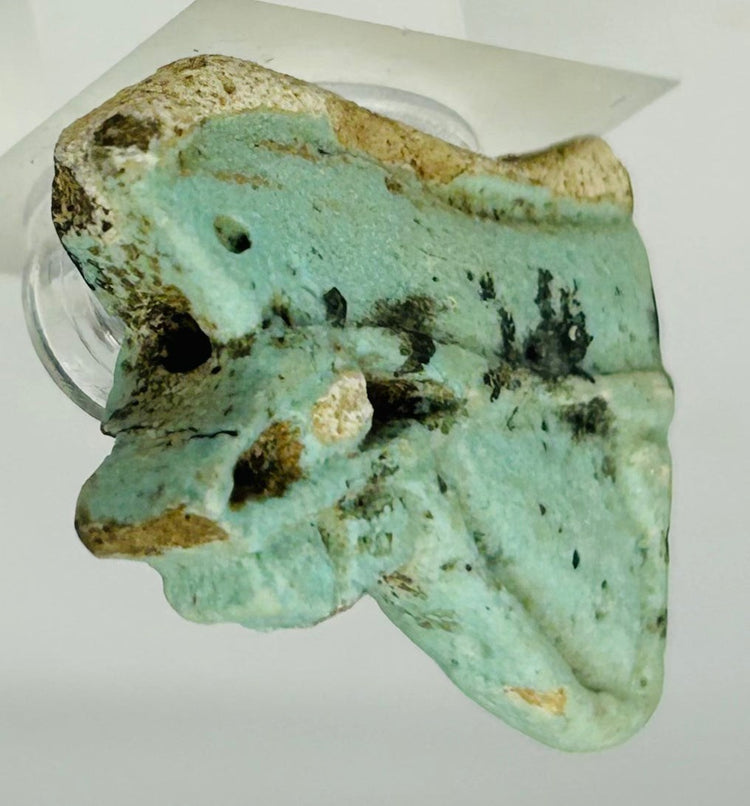
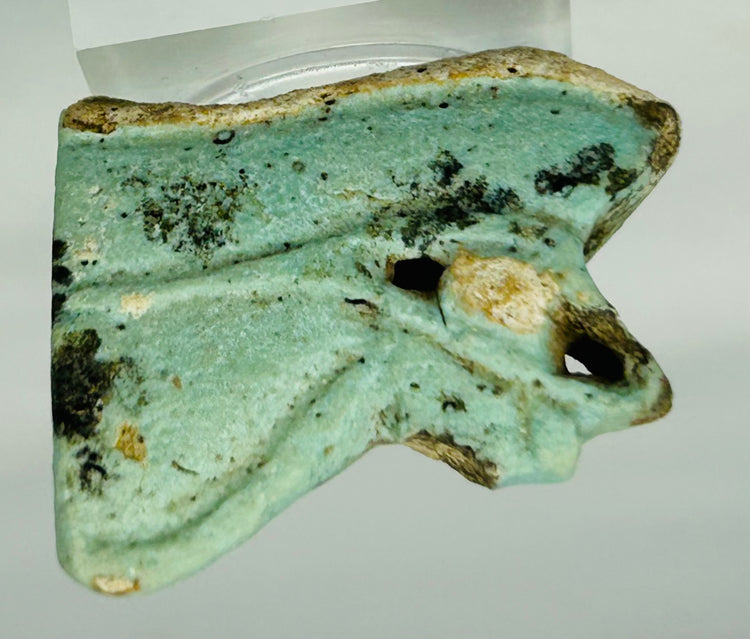
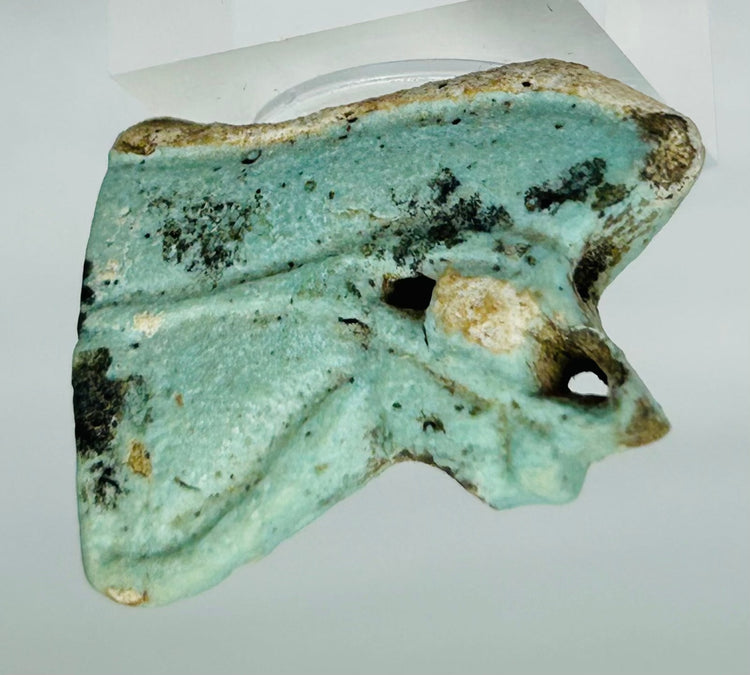
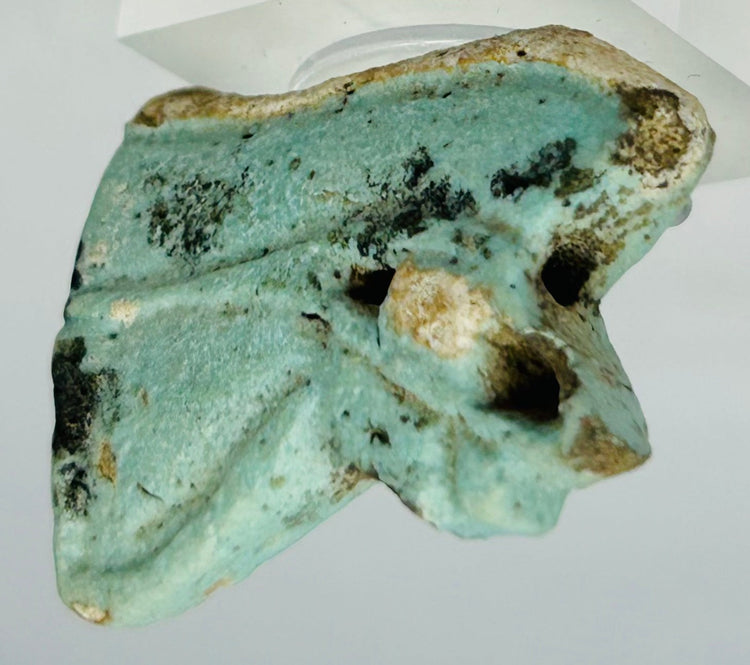
Égypte antique | Amulette en faïence | avec piercing de suspension | Vers 664–332 av. J.-C.
- Prix habituel
- $350.00
- Prix soldé
- $350.00
- Prix habituel
Impossible de charger la disponibilité du service de retrait


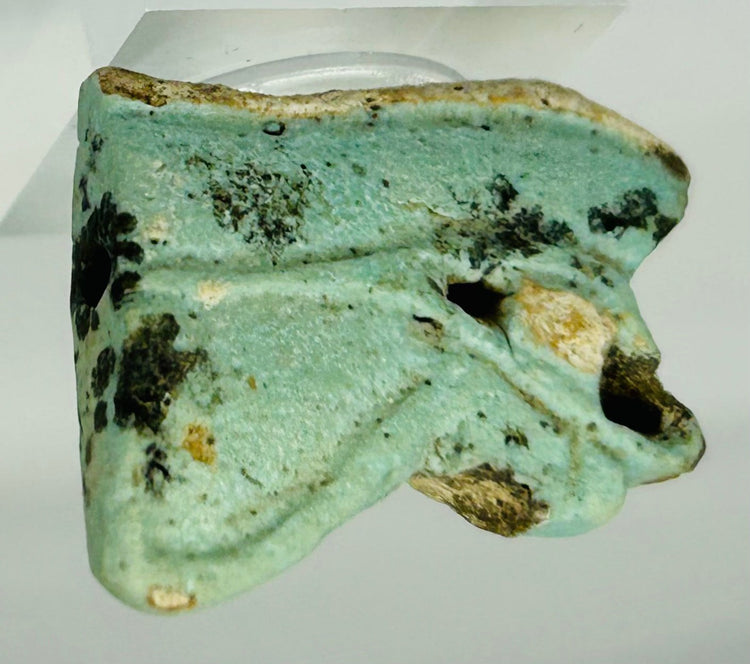
Égypte antique | Amulette en faïence | avec piercing de suspension | Vers 664–332 av. J.-C.
Description
Plus
Moins
Contexte historique et origine
Région : Égypte ancienne
Matériau : Faïence bleu-vert avec dépôts funéraires en terre
Période : Basse époque à Ptolémaïque, vers 664-332 av. J.-C.
Description
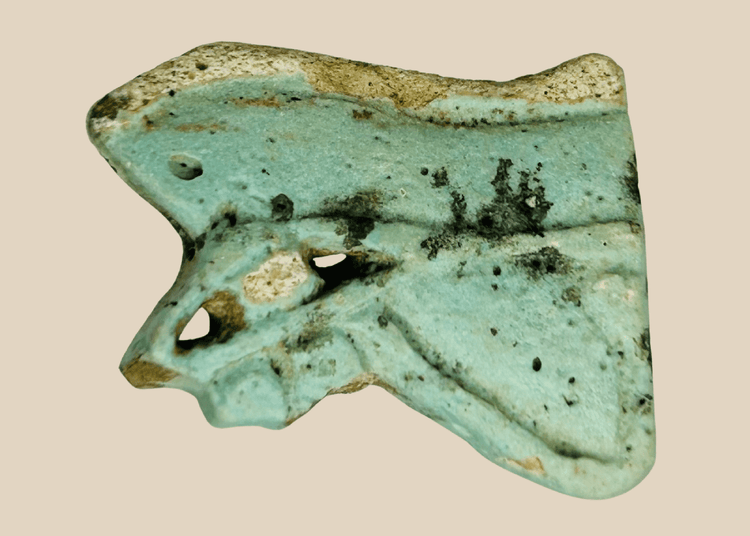
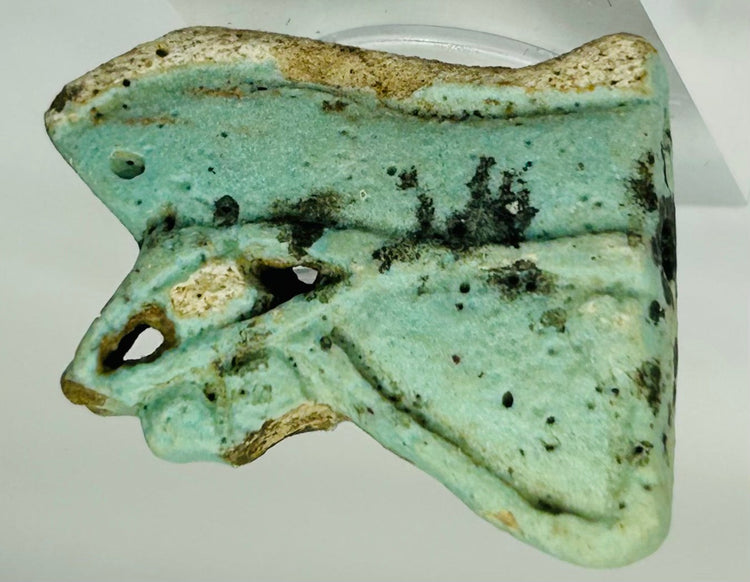
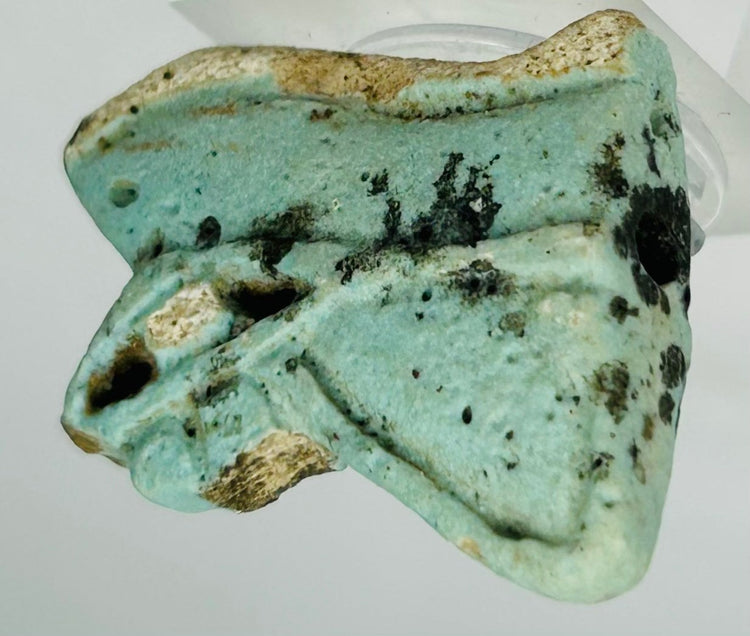
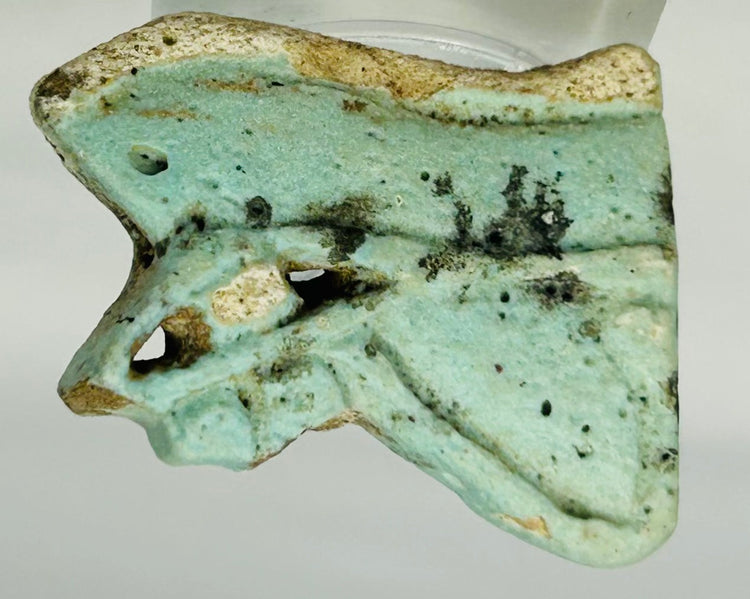
Un fragment magnifiquement conservé d'une amulette Oudjat (Œil d'Horus) en faïence égyptienne antique, faisant à l'origine partie d'un talisman protecteur plus grand porté pour la sauvegarde spirituelle. La pièce conserve une grande partie de son glaçage bleu-vert d'origine avec une attrayante incrustation de surface et une patine terreuse développée au cours de millénaires d'enfouissement. Un canal de suspension percé est toujours présent, indiquant qu'il était autrefois suspendu comme un charme protecteur personnel.
L'Œil d'Horus était l'un des symboles les plus importants de la culture égyptienne, censé procurer guérison, force, protection divine et renaissance par son association avec le dieu Horus.
Caractéristiques
- Fragment authentique d'amulette égyptienne antique en faïence représentant l'Œil d'Horus
- Conserve des détails sculptés distincts et des éléments reconnaissables de la forme Oudjat
- Glaçure en faïence turquoise classique avec d'anciens dépôts funéraires
- Perforation de suspension toujours visible
Signification culturelle
L'œil Oudjat symbolisait la protection, la santé et la restauration. Les Égyptiens portaient ces amulettes de leur vivant et les plaçaient dans les tombes pour protéger le défunt lors de son voyage vers l'au-delà. Elles font partie des artefacts les plus emblématiques et spirituellement significatifs de l'Égypte ancienne.
Condition
Fragmentaire tel qu'excavé, avec l'usure due à l'âge, les pertes de glaçure et les dépôts de surface attendus, conformes à la faïence antique authentique. Présentation magnifique.
Dimensions (approximatives)
Longueur : 2,5 cm
Hauteur : 2 cm
Âge (approximatif)
Entre 2 350 et 2 700 ans
En savoir plus
Découvrez la symbolique de l'Œil d'Horus à travers Encyclopædia Britannica
Découvrez notre collection de momies et d'artefacts égyptiens antiques
Description
Contexte historique et origine
Région : Égypte ancienne
Matériau : Faïence bleu-vert avec dépôts funéraires en terre
Période : Basse époque à Ptolémaïque, vers 664-332 av. J.-C.
Description
Un fragment magnifiquement conservé d'une amulette Oudjat (Œil d'Horus) en faïence égyptienne antique, faisant à l'origine partie d'un talisman protecteur plus grand porté pour la sauvegarde spirituelle. La pièce conserve une grande partie de son glaçage bleu-vert d'origine avec une attrayante incrustation de surface et une patine terreuse développée au cours de millénaires d'enfouissement. Un canal de suspension percé est toujours présent, indiquant qu'il était autrefois suspendu comme un charme protecteur personnel.
L'Œil d'Horus était l'un des symboles les plus importants de la culture égyptienne, censé procurer guérison, force, protection divine et renaissance par son association avec le dieu Horus.
Caractéristiques
- Fragment authentique d'amulette égyptienne antique en faïence représentant l'Œil d'Horus
- Conserve des détails sculptés distincts et des éléments reconnaissables de la forme Oudjat
- Glaçure en faïence turquoise classique avec d'anciens dépôts funéraires
- Perforation de suspension toujours visible
Signification culturelle
L'œil Oudjat symbolisait la protection, la santé et la restauration. Les Égyptiens portaient ces amulettes de leur vivant et les plaçaient dans les tombes pour protéger le défunt lors de son voyage vers l'au-delà. Elles font partie des artefacts les plus emblématiques et spirituellement significatifs de l'Égypte ancienne.
Condition
Fragmentaire tel qu'excavé, avec l'usure due à l'âge, les pertes de glaçure et les dépôts de surface attendus, conformes à la faïence antique authentique. Présentation magnifique.
Dimensions (approximatives)
Longueur : 2,5 cm
Hauteur : 2 cm
Âge (approximatif)
Entre 2 350 et 2 700 ans
En savoir plus
Découvrez la symbolique de l'Œil d'Horus à travers Encyclopædia Britannica
Découvrez notre collection de momies et d'artefacts égyptiens antiques
Vous aimerez peut-être aussi
