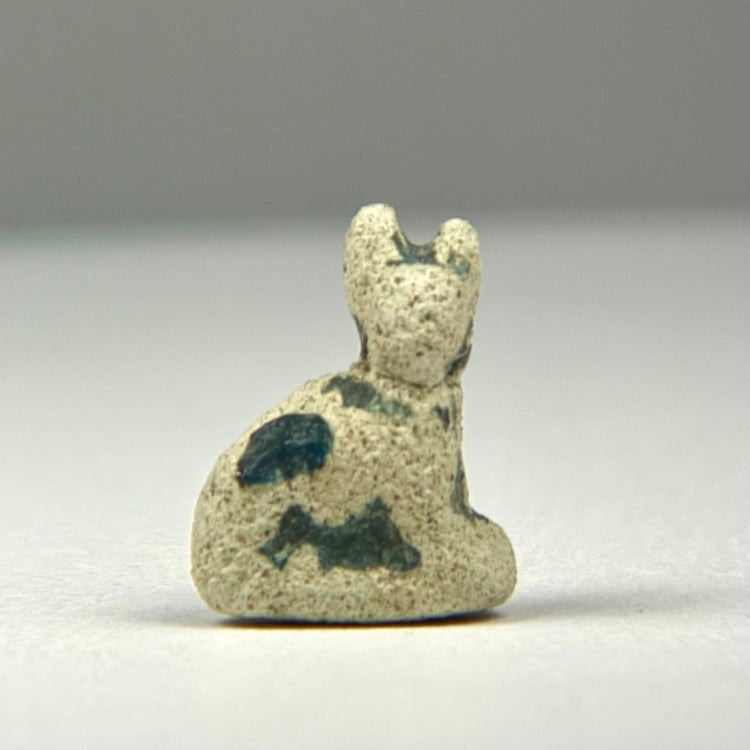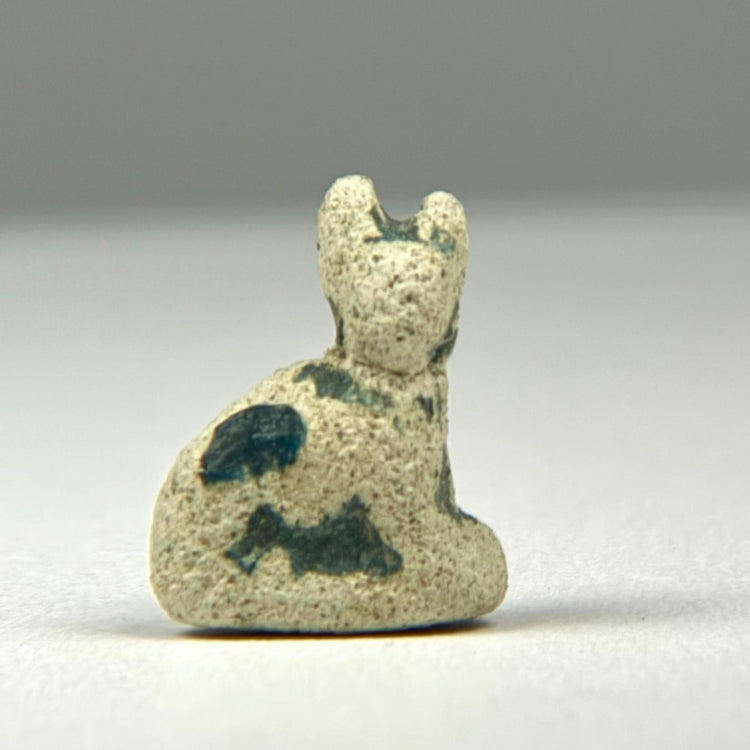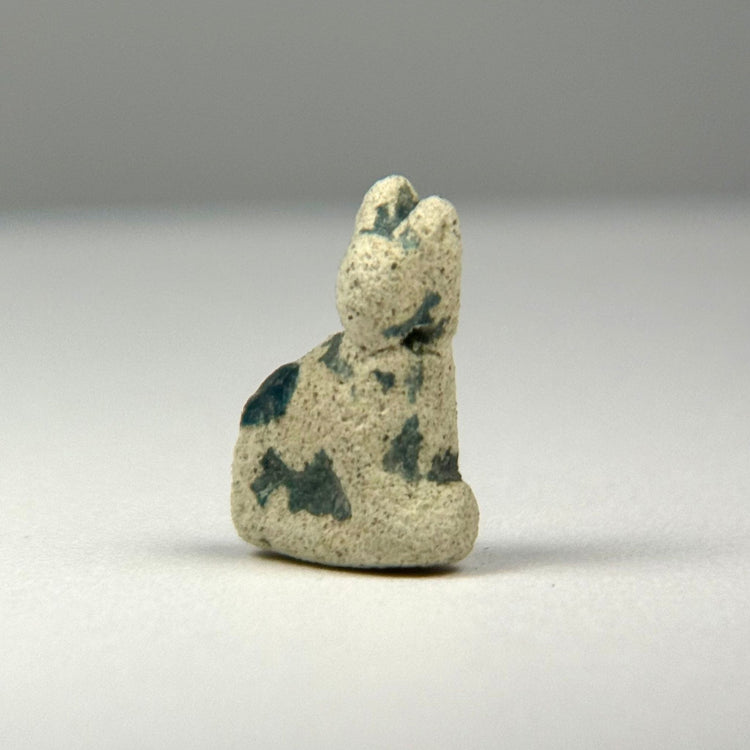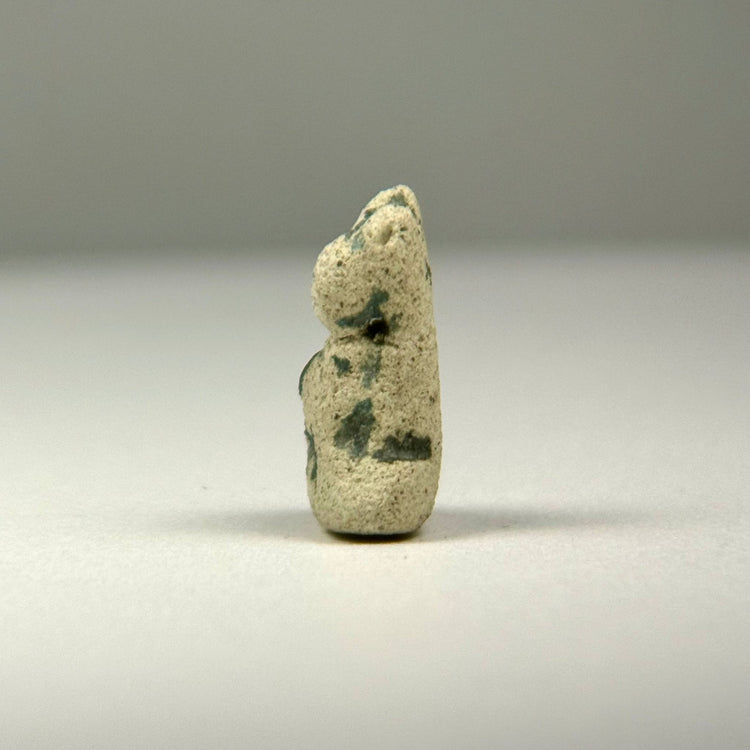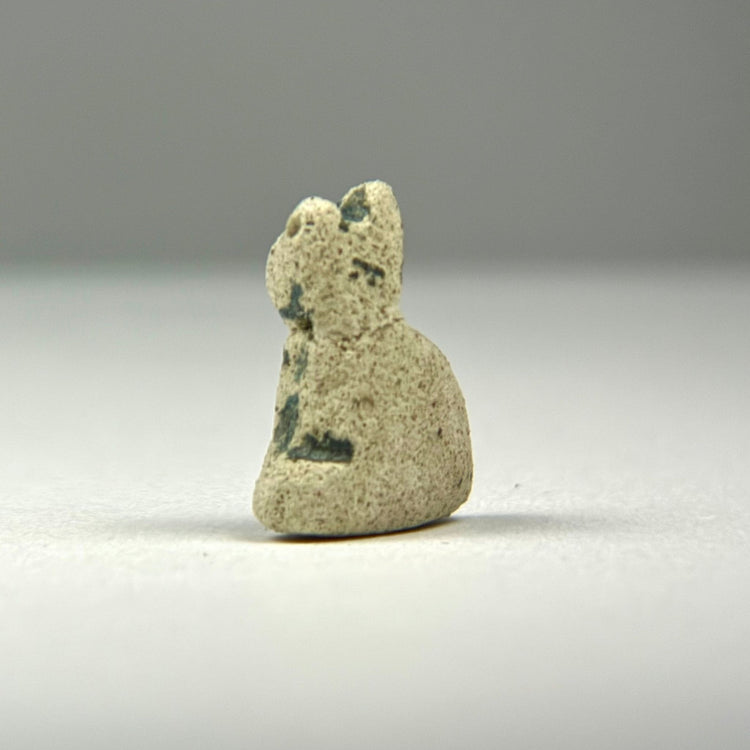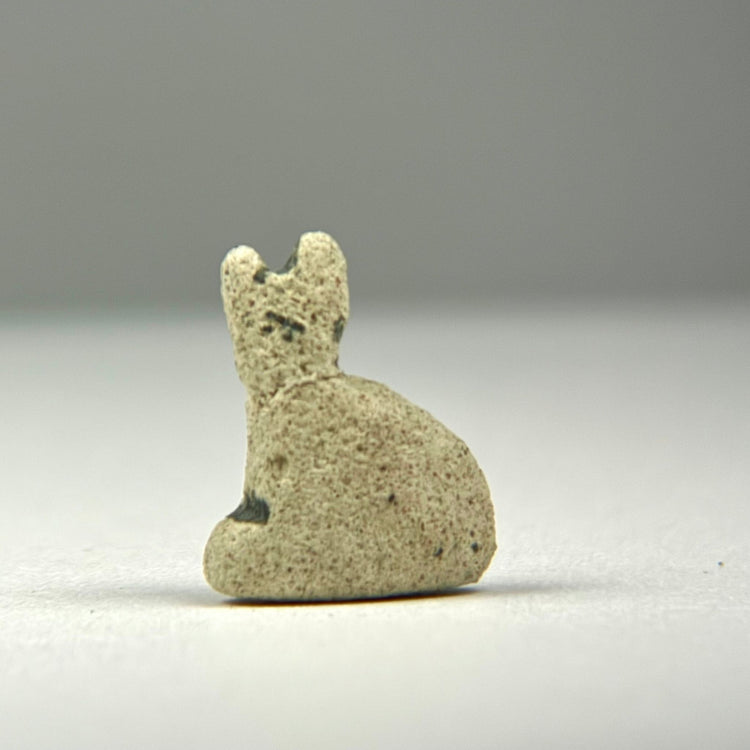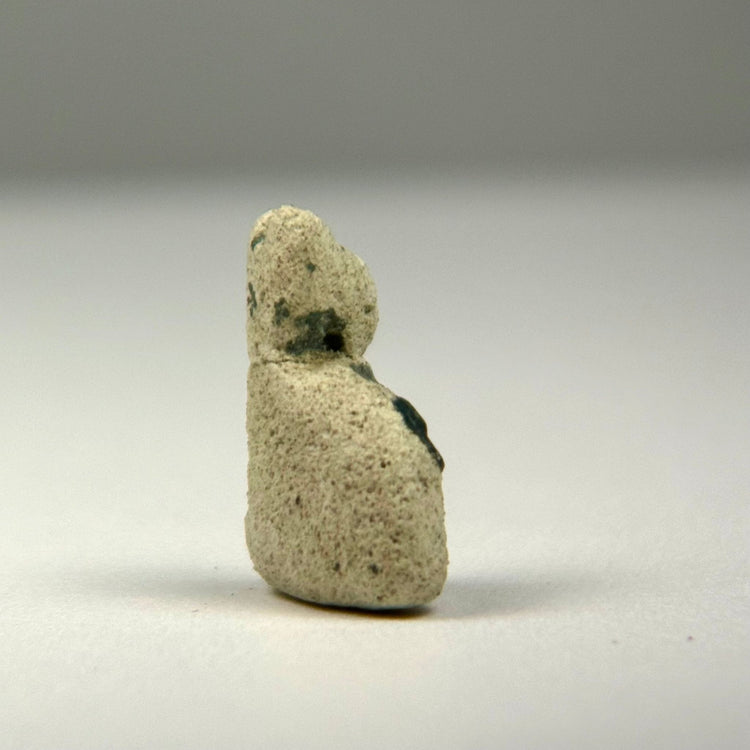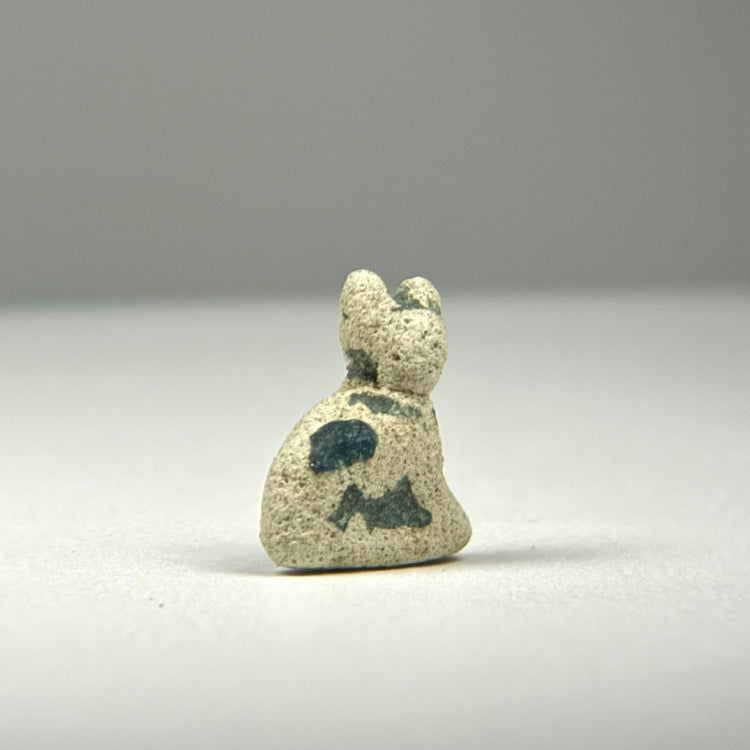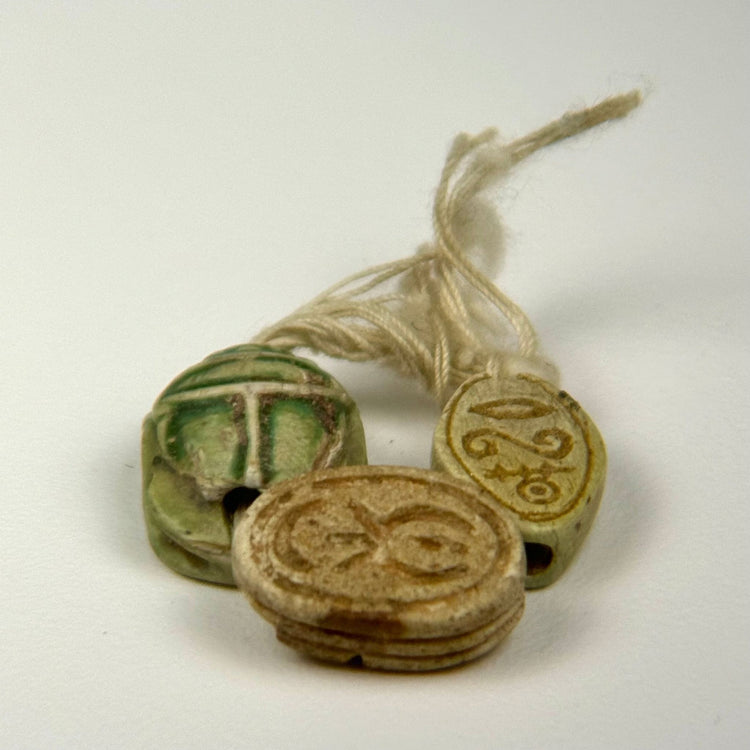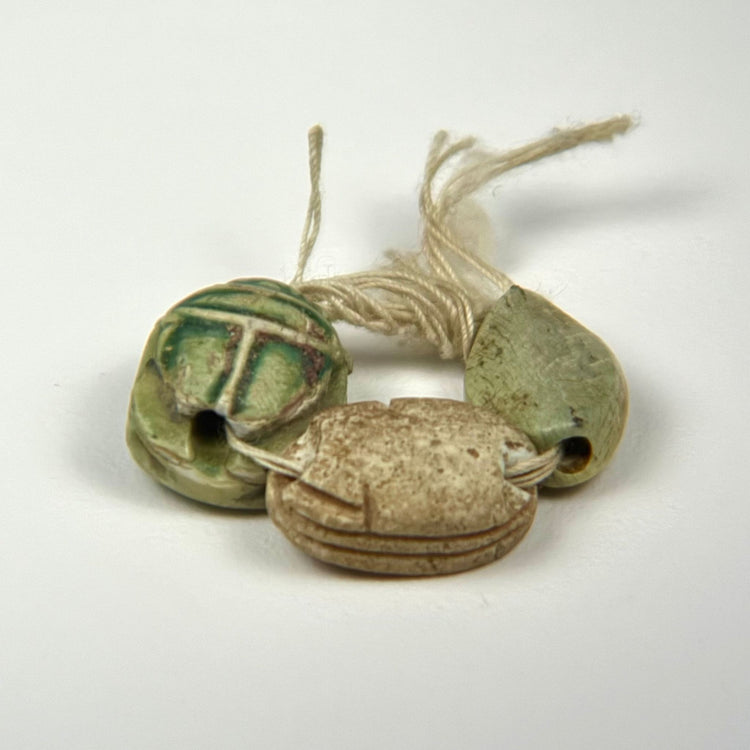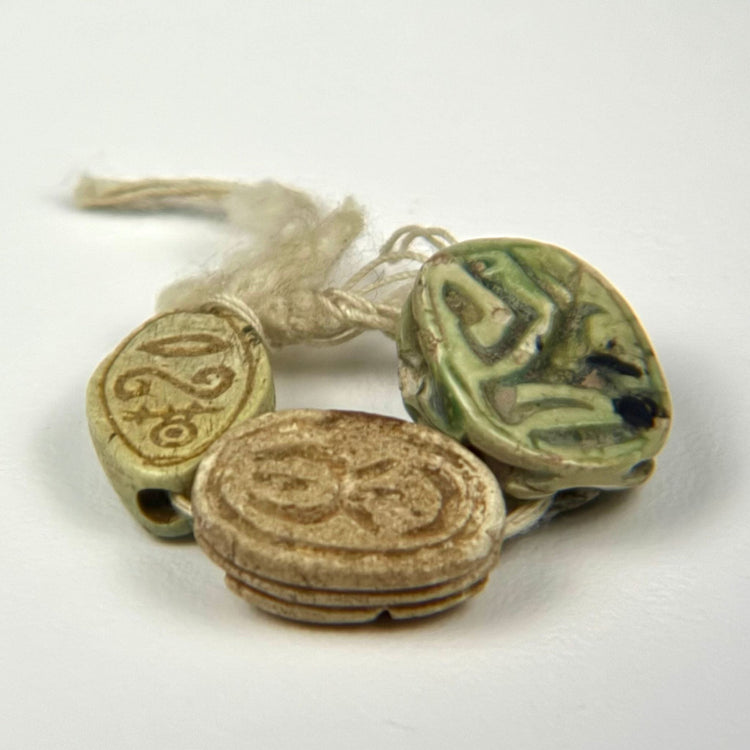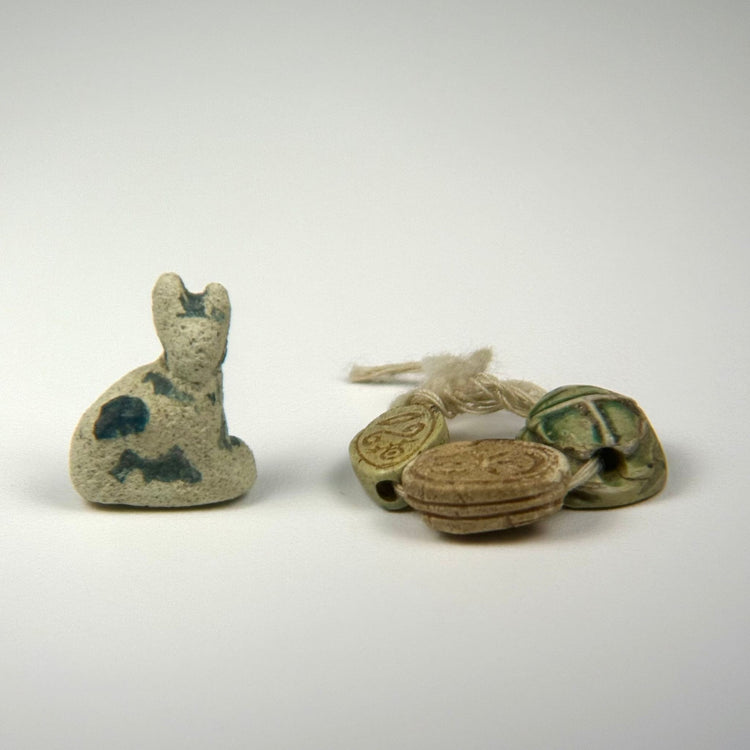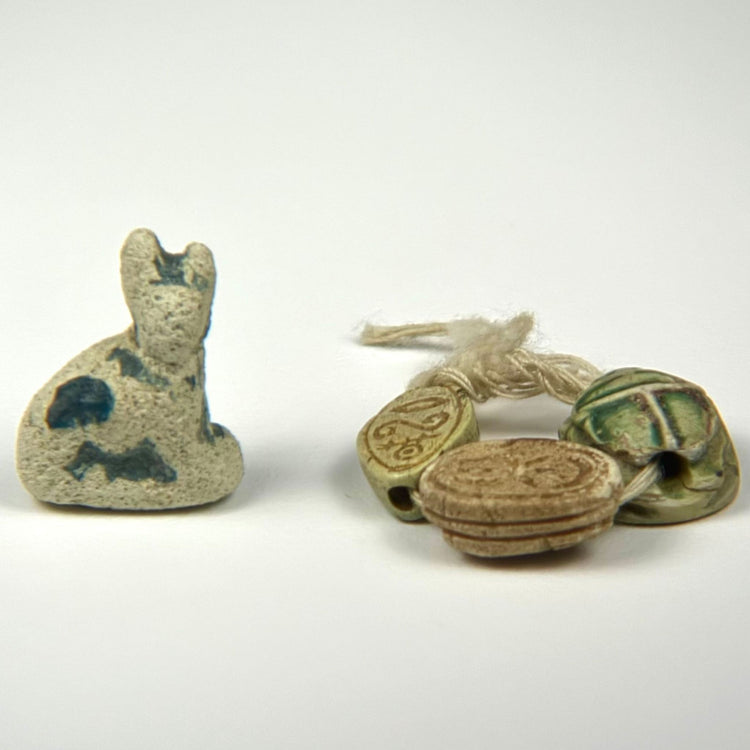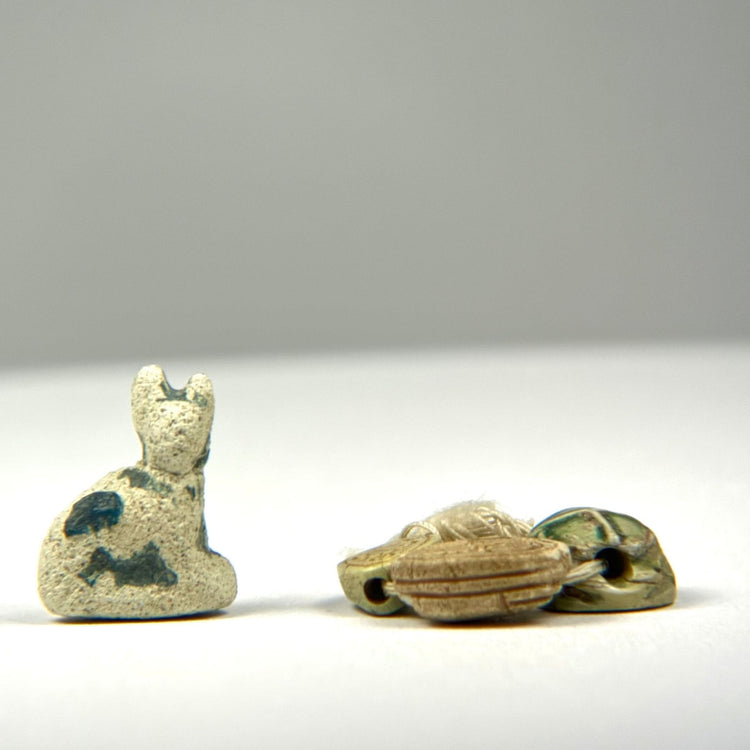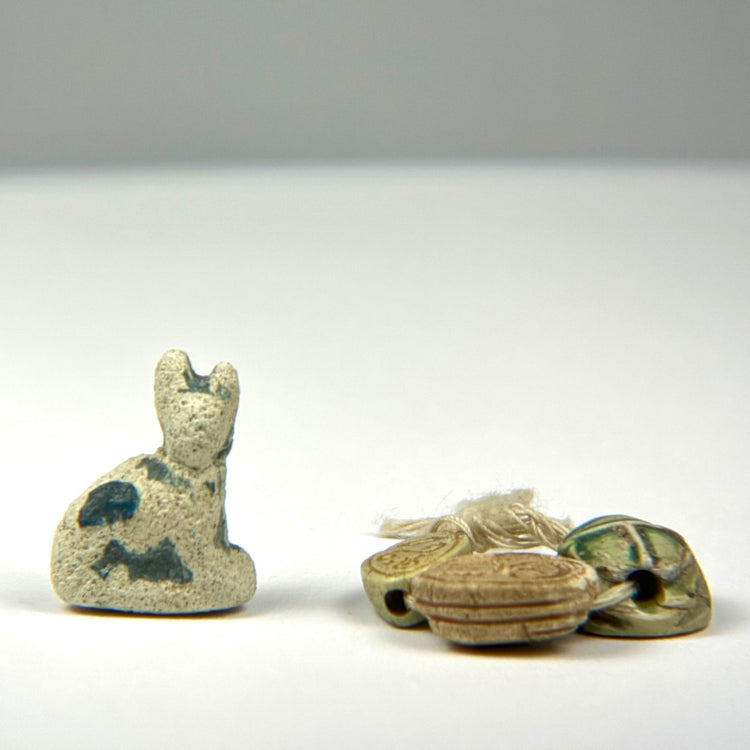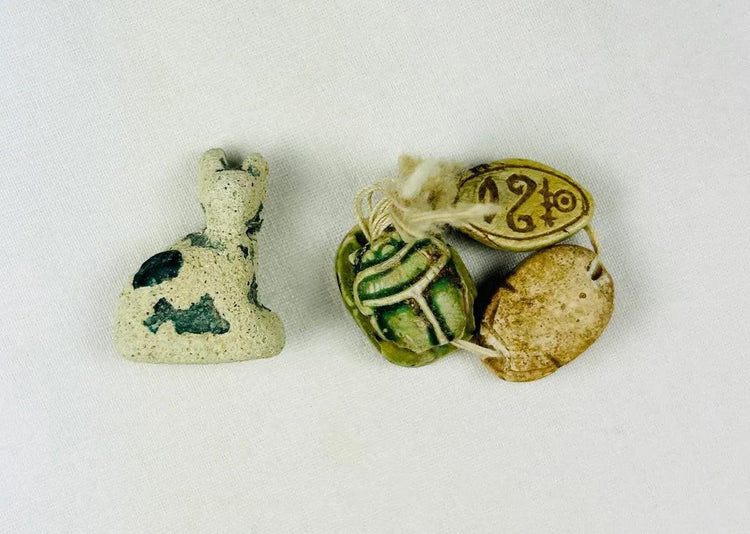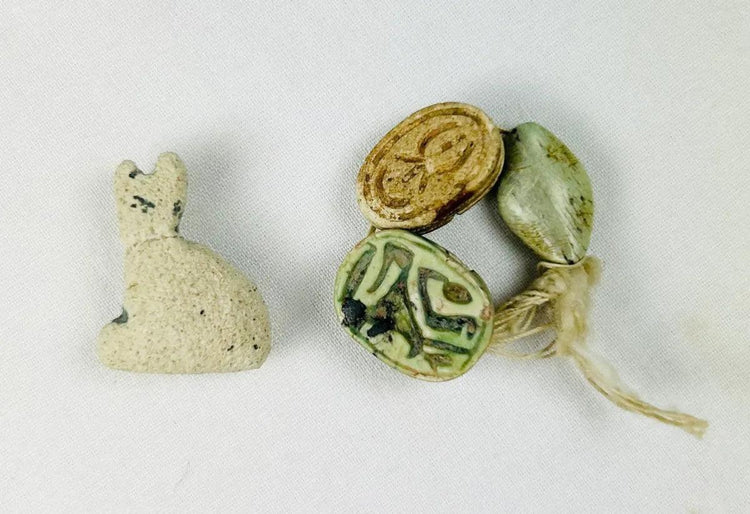
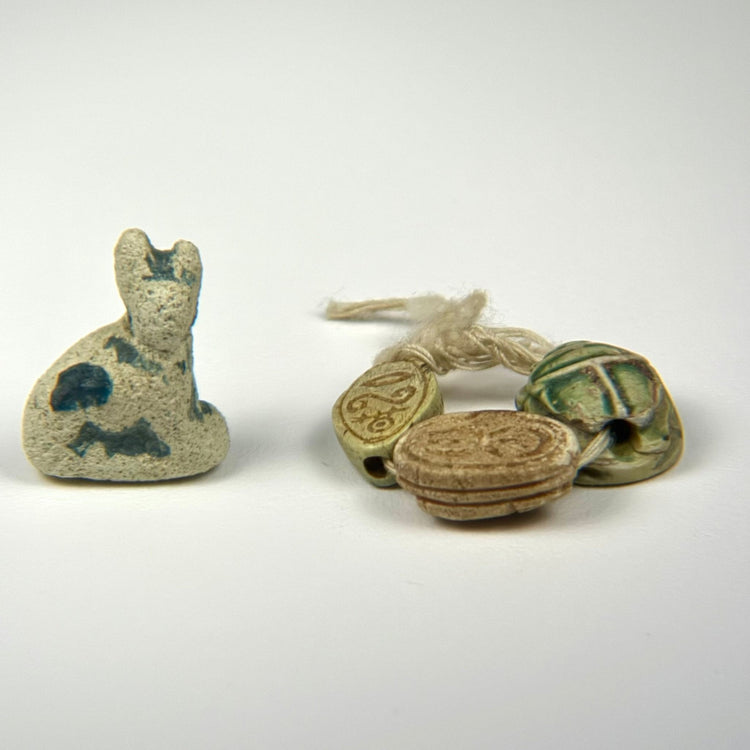
Collection d'amulettes égyptiennes | Chatte Bastet en faïence et trois scarabées | 600–200 av. J.-C.
Historique de provenance et de propriété

Anciennement issue d'une collection de succession à New York, New York, États-Unis. Par la suite conservée dans une collection privée à Astoria, New York, États-Unis.

Prix habituel
$500.00
Prix soldé
$500.00
Prix habituel
Frais de port calculés à la caisse.

This is a one-of-a-kind historical object. Once sold, this exact piece will not be restocked.

Questions before acquiring? Additional photographs, condition details, documentation, shipping information or a private viewing are available upon request.
Ancient Egyptian faience cat amulet with traces of blue-green glaze, shown alongside three scarabs in varied materials, on a white background.
Rotating view of ancient Egyptian faience cat amulet of Bastet and three scarabs from the Late Period to Ptolemaic era
Ancient Egyptian faience cat amulet representing Bastet, with seated form and traces of blue-green glaze, circa 600–200 BCE.
Small Ancient Egyptian Bastet cat amulet in faience with worn blue-green glaze and age-related surface encrustations.
Ancient Egyptian seated cat amulet associated with the goddess Bastet, preserving remnants of its original turquoise-green glaze.
Late Period to Ptolemaic Egyptian faience cat amulet with upright ears, seated posture, and naturally weathered surface.
Ancient Egyptian protective cat amulet depicting Bastet, goddess of fertility, home, and divine guardianship.
Small faience Bastet amulet from Ancient Egypt with textured earthen deposits and surviving areas of blue-green glazing.
Ancient Egyptian seated cat charm in glazed faience, dating to approximately 600–200 BCE and showing age-related glaze loss.
Close detail of an Ancient Egyptian Bastet cat amulet with modeled feline features, mineral deposits, and worn ancient glaze.
Group of three Ancient Egyptian scarab amulets in steatite and glazed composition, including incised hieroglyphic and green-glazed examples.
Three Ancient Egyptian scarab charms with varied surface preservation, carved details, hieroglyphic markings, and traces of green glaze.
Ancient Egyptian scarab amulet group dating circa 600–200 BCE, representing rebirth, regeneration, and spiritual protection.
Ancient Egyptian faience Bastet cat amulet displayed with three scarab charms, dating from the Late Period to Ptolemaic Period.
Collection of Ancient Egyptian amulets featuring a seated faience cat and three carved scarabs with surviving glaze and incised decoration.
Ancient Egyptian Bastet cat amulet alongside three scarab amulets representing protection, rebirth, and personal devotion, circa 600–200 BCE.
Group of Ancient Egyptian protective charms including a blue-green faience cat amulet and three individually carved scarabs.
Ancient Egyptian amulet collection with seated Bastet cat and three scarabs in faience, steatite, and glazed composition.
Ancient Egyptian faience cat amulet of Bastet with three scarab amulets, Late Period to Ptolemaic, 600–200 BCE
Faience Bastet cat amulet and group of three ancient Egyptian scarabs with glaze and hieroglyphic bases
  • Ancient Egyptian faience cat amulet with traces of blue-green glaze, shown alongside three scarabs in varied materials, on a white background.
  • Rotating view of ancient Egyptian faience cat amulet of Bastet and three scarabs from the Late Period to Ptolemaic era
  • Ancient Egyptian faience cat amulet representing Bastet, with seated form and traces of blue-green glaze, circa 600–200 BCE.
  • Small Ancient Egyptian Bastet cat amulet in faience with worn blue-green glaze and age-related surface encrustations.
  • Ancient Egyptian seated cat amulet associated with the goddess Bastet, preserving remnants of its original turquoise-green glaze.
  • Late Period to Ptolemaic Egyptian faience cat amulet with upright ears, seated posture, and naturally weathered surface.
  • Ancient Egyptian protective cat amulet depicting Bastet, goddess of fertility, home, and divine guardianship.
  • Small faience Bastet amulet from Ancient Egypt with textured earthen deposits and surviving areas of blue-green glazing.
  • Ancient Egyptian seated cat charm in glazed faience, dating to approximately 600–200 BCE and showing age-related glaze loss.
  • Close detail of an Ancient Egyptian Bastet cat amulet with modeled feline features, mineral deposits, and worn ancient glaze.
  • Group of three Ancient Egyptian scarab amulets in steatite and glazed composition, including incised hieroglyphic and green-glazed examples.
  • Three Ancient Egyptian scarab charms with varied surface preservation, carved details, hieroglyphic markings, and traces of green glaze.
  • Ancient Egyptian scarab amulet group dating circa 600–200 BCE, representing rebirth, regeneration, and spiritual protection.
  • Ancient Egyptian faience Bastet cat amulet displayed with three scarab charms, dating from the Late Period to Ptolemaic Period.
  • Collection of Ancient Egyptian amulets featuring a seated faience cat and three carved scarabs with surviving glaze and incised decoration.
  • Ancient Egyptian Bastet cat amulet alongside three scarab amulets representing protection, rebirth, and personal devotion, circa 600–200 BCE.
  • Group of Ancient Egyptian protective charms including a blue-green faience cat amulet and three individually carved scarabs.
  • Ancient Egyptian amulet collection with seated Bastet cat and three scarabs in faience, steatite, and glazed composition.
  • Ancient Egyptian faience cat amulet of Bastet with three scarab amulets, Late Period to Ptolemaic, 600–200 BCE
  • Faience Bastet cat amulet and group of three ancient Egyptian scarabs with glaze and hieroglyphic bases
Ancient Egyptian faience cat amulet with traces of blue-green glaze, shown alongside three scarabs in varied materials, on a white background.
Rotating view of ancient Egyptian faience cat amulet of Bastet and three scarabs from the Late Period to Ptolemaic era
Ancient Egyptian faience cat amulet representing Bastet, with seated form and traces of blue-green glaze, circa 600–200 BCE.
Small Ancient Egyptian Bastet cat amulet in faience with worn blue-green glaze and age-related surface encrustations.
Ancient Egyptian seated cat amulet associated with the goddess Bastet, preserving remnants of its original turquoise-green glaze.
Late Period to Ptolemaic Egyptian faience cat amulet with upright ears, seated posture, and naturally weathered surface.
Ancient Egyptian protective cat amulet depicting Bastet, goddess of fertility, home, and divine guardianship.
Small faience Bastet amulet from Ancient Egypt with textured earthen deposits and surviving areas of blue-green glazing.
Ancient Egyptian seated cat charm in glazed faience, dating to approximately 600–200 BCE and showing age-related glaze loss.
Close detail of an Ancient Egyptian Bastet cat amulet with modeled feline features, mineral deposits, and worn ancient glaze.
Group of three Ancient Egyptian scarab amulets in steatite and glazed composition, including incised hieroglyphic and green-glazed examples.
Three Ancient Egyptian scarab charms with varied surface preservation, carved details, hieroglyphic markings, and traces of green glaze.
Ancient Egyptian scarab amulet group dating circa 600–200 BCE, representing rebirth, regeneration, and spiritual protection.
Ancient Egyptian faience Bastet cat amulet displayed with three scarab charms, dating from the Late Period to Ptolemaic Period.
Collection of Ancient Egyptian amulets featuring a seated faience cat and three carved scarabs with surviving glaze and incised decoration.
Ancient Egyptian Bastet cat amulet alongside three scarab amulets representing protection, rebirth, and personal devotion, circa 600–200 BCE.
Group of Ancient Egyptian protective charms including a blue-green faience cat amulet and three individually carved scarabs.
Ancient Egyptian amulet collection with seated Bastet cat and three scarabs in faience, steatite, and glazed composition.
Ancient Egyptian faience cat amulet of Bastet with three scarab amulets, Late Period to Ptolemaic, 600–200 BCE
Faience Bastet cat amulet and group of three ancient Egyptian scarabs with glaze and hieroglyphic bases
Authenticity and secure checkout guarantee

Collection d'amulettes égyptiennes | Chatte Bastet en faïence et trois scarabées | 600–200 av. J.-C.

Description

Contexte historique et origine

Région : Égypte ancienne
Matériau : Faïence, stéatite (scarabées), composition émaillée
Période : Basse époque à la période ptolémaïque, environ 600-200 av. J.-C.

Description

Ce lot se compose de deux exemples complémentaires de l'artisanat égyptien ancien :

  • Amulette de chat en faïence – Une amulette finement modelée en forme de chat assis, représentant Bastet, la déesse du foyer, de la fertilité et de la protection. La pièce conserve des zones de son glaçure bleu-vert d'origine, maintenant usée par le temps, donnant à la surface une qualité texturée et terreuse. Les chats étaient vénérés dans l'Égypte ancienne, et des amulettes comme celle-ci étaient portées pour protéger le porteur du malheur et invoquer la bénédiction divine.

  • Groupe de trois scarabées – Une collection de trois scarabées dans des matériaux variés et des états de conservation différents. L'un est incisé d'hiéroglyphes sur sa base, un autre est émaillé de vert avec des motifs décoratifs linéaires, et le troisième est un exemple plus usé. Les scarabées symbolisaient la renaissance, la régénération et la protection, tandis que leurs dessous incisés reflètent des fonctions rituelles et administratives dans la société ancienne.

Caractéristiques

- Amulette en faïence authentique représentant Bastet, déesse-chat assise

- Trois scarabées aux caractéristiques distinctes : base hiéroglyphique, décoration émaillée verte et un spécimen usé

- Détails finement incisés et traces de glaçure d'origine préservées

- Monté ou enfilé pour l'étude et l'exposition

Signification culturelle

L'amulette de chat incarne le pouvoir protecteur de Bastet, une déesse profondément liée à la fertilité, à l'harmonie domestique et à la protection divine. Les scarabées, associés au dieu soleil Râ et au cycle éternel de la renaissance, étaient les amulettes les plus courantes et les plus durables de l'Égypte ancienne. Ensemble, ces pièces reflètent la dévotion personnelle, la croyance spirituelle et l'art symbolique de la vie quotidienne et funéraire égyptienne ancienne.

État

  • Amulette de chat : Intacte, avec des incrustations et une perte de glaçure compatibles avec l'ancienneté

  • Scarabées : Préservation variable, des détails incisés nets aux surfaces adoucies ; certains conservent des traces de glaçure. Tous présentent une usure appropriée à l'âge

Dimensions (approximatives)

Hauteur (amulette de chat) : 0,75 po
Longueur (scarabées) : 0,6 à 0,8 po chacun

Âge (approximatif)

2 225 à 2 625 ans

Provenance

Anciennement d'une collection immobilière à New York, New York, États-Unis. Ensuite conservée dans une collection privée à Astoria, New York, États-Unis.

En savoir plus

Découvrez un artefact égyptien ancien de la Collection d'antiquités de la Bibliotheca Alexandrina

Parcourez notre Collection de momies et artefacts égyptiens anciens

Description

Contexte historique et origine

Région : Égypte ancienne
Matériau : Faïence, stéatite (scarabées), composition émaillée
Période : Basse époque à la période ptolémaïque, environ 600-200 av. J.-C.

Description

Ce lot se compose de deux exemples complémentaires de l'artisanat égyptien ancien :

  • Amulette de chat en faïence – Une amulette finement modelée en forme de chat assis, représentant Bastet, la déesse du foyer, de la fertilité et de la protection. La pièce conserve des zones de son glaçure bleu-vert d'origine, maintenant usée par le temps, donnant à la surface une qualité texturée et terreuse. Les chats étaient vénérés dans l'Égypte ancienne, et des amulettes comme celle-ci étaient portées pour protéger le porteur du malheur et invoquer la bénédiction divine.

  • Groupe de trois scarabées – Une collection de trois scarabées dans des matériaux variés et des états de conservation différents. L'un est incisé d'hiéroglyphes sur sa base, un autre est émaillé de vert avec des motifs décoratifs linéaires, et le troisième est un exemple plus usé. Les scarabées symbolisaient la renaissance, la régénération et la protection, tandis que leurs dessous incisés reflètent des fonctions rituelles et administratives dans la société ancienne.

Caractéristiques

- Amulette en faïence authentique représentant Bastet, déesse-chat assise

- Trois scarabées aux caractéristiques distinctes : base hiéroglyphique, décoration émaillée verte et un spécimen usé

- Détails finement incisés et traces de glaçure d'origine préservées

- Monté ou enfilé pour l'étude et l'exposition

Signification culturelle

L'amulette de chat incarne le pouvoir protecteur de Bastet, une déesse profondément liée à la fertilité, à l'harmonie domestique et à la protection divine. Les scarabées, associés au dieu soleil Râ et au cycle éternel de la renaissance, étaient les amulettes les plus courantes et les plus durables de l'Égypte ancienne. Ensemble, ces pièces reflètent la dévotion personnelle, la croyance spirituelle et l'art symbolique de la vie quotidienne et funéraire égyptienne ancienne.

État

  • Amulette de chat : Intacte, avec des incrustations et une perte de glaçure compatibles avec l'ancienneté

  • Scarabées : Préservation variable, des détails incisés nets aux surfaces adoucies ; certains conservent des traces de glaçure. Tous présentent une usure appropriée à l'âge

Dimensions (approximatives)

Hauteur (amulette de chat) : 0,75 po
Longueur (scarabées) : 0,6 à 0,8 po chacun

Âge (approximatif)

2 225 à 2 625 ans

Provenance

Anciennement d'une collection immobilière à New York, New York, États-Unis. Ensuite conservée dans une collection privée à Astoria, New York, États-Unis.

En savoir plus

Découvrez un artefact égyptien ancien de la Collection d'antiquités de la Bibliotheca Alexandrina

Parcourez notre Collection de momies et artefacts égyptiens anciens

Vous aimerez peut-être aussi