

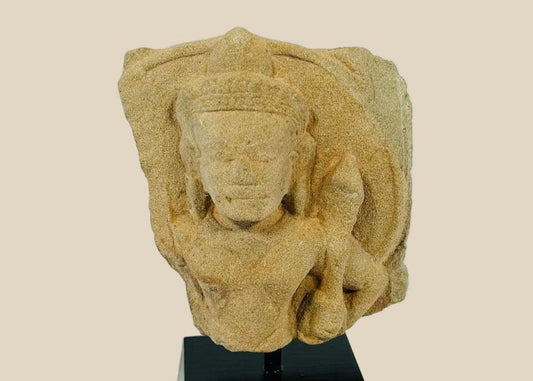

Ancient Egyptian | Limestone Votive Vessel | Depicting Sacred Primate Figure | Late Period | Circa 664–30 B.C
- Prix habituel
- $500.00
- Prix soldé
- $500.00
- Prix habituel
Impossible de charger la disponibilité du service de retrait


Ancient Egyptian | Limestone Votive Vessel | Depicting Sacred Primate Figure | Late Period | Circa 664–30 B.C
Description
Plus
Moins
Historical Context & Origin
Region: Egypt
Material: Carved limestone (likely calcite-rich stone)
Period: Late Period to Ptolemaic Period, circa 664–30 B.C.
Description
A finely carved ancient Egyptian baboon-form votive vessel depicting a seated baboon positioned behind a small hollowed basin or cup. The animal sits upright with bent legs and forearms resting against the vessel, forming a unified sculptural composition that combines symbolic animal imagery with practical ritual use.
The baboon was sacred to the god Thoth, deity of wisdom, writing, and the moon. Votive baboon figures were commonly dedicated in temples as devotional offerings. The recessed basin likely functioned as a small container for ritual substances such as incense, oils, pigments, or other ceremonial materials.
Features
- Hand-carved baboon figure associated with the god Thoth
- Integrated shallow vessel or offering basin
- Compact devotional sculpture typical of Late Period temple offerings
- Warm beige limestone with natural age patina and mineral deposits
Cultural Significance
In ancient Egyptian religion, baboons were closely associated with Thoth, the divine patron of knowledge, writing, and sacred order. Baboons were believed to greet the rising sun with their cries and were therefore linked to solar worship and cosmic harmony.
Small votive sculptures such as this were often placed in temples as devotional offerings or used within ritual contexts. Objects combining animal symbolism with functional elements—such as small offering basins—reflect the integration of daily ritual practice with sacred imagery in Egyptian religious life.
Condition
Good ancient condition overall. Surface wear, mineral deposits, and minor losses consistent with age and burial conditions. Small chips and natural weathering visible along edges and upper surfaces. No visible modern restoration.
Dimensions (Approximate)
Height: 1.88 in
Width: 1.25 in
Depth: 0.88 in
Age (Approximate)
2,000–2,600 years old
Learn More
Consider comparable Perfume Vessel in the Shape of a Monkey in The Metropolitan Museum of Art Collection
View additional examples in our Ancient Egyptian Artifacts Collection.
Description
Historical Context & Origin
Region: Egypt
Material: Carved limestone (likely calcite-rich stone)
Period: Late Period to Ptolemaic Period, circa 664–30 B.C.
Description
A finely carved ancient Egyptian baboon-form votive vessel depicting a seated baboon positioned behind a small hollowed basin or cup. The animal sits upright with bent legs and forearms resting against the vessel, forming a unified sculptural composition that combines symbolic animal imagery with practical ritual use.
The baboon was sacred to the god Thoth, deity of wisdom, writing, and the moon. Votive baboon figures were commonly dedicated in temples as devotional offerings. The recessed basin likely functioned as a small container for ritual substances such as incense, oils, pigments, or other ceremonial materials.
Features
- Hand-carved baboon figure associated with the god Thoth
- Integrated shallow vessel or offering basin
- Compact devotional sculpture typical of Late Period temple offerings
- Warm beige limestone with natural age patina and mineral deposits
Cultural Significance
In ancient Egyptian religion, baboons were closely associated with Thoth, the divine patron of knowledge, writing, and sacred order. Baboons were believed to greet the rising sun with their cries and were therefore linked to solar worship and cosmic harmony.
Small votive sculptures such as this were often placed in temples as devotional offerings or used within ritual contexts. Objects combining animal symbolism with functional elements—such as small offering basins—reflect the integration of daily ritual practice with sacred imagery in Egyptian religious life.
Condition
Good ancient condition overall. Surface wear, mineral deposits, and minor losses consistent with age and burial conditions. Small chips and natural weathering visible along edges and upper surfaces. No visible modern restoration.
Dimensions (Approximate)
Height: 1.88 in
Width: 1.25 in
Depth: 0.88 in
Age (Approximate)
2,000–2,600 years old
Learn More
Consider comparable Perfume Vessel in the Shape of a Monkey in The Metropolitan Museum of Art Collection
View additional examples in our Ancient Egyptian Artifacts Collection.
Vous aimerez peut-être aussi
