

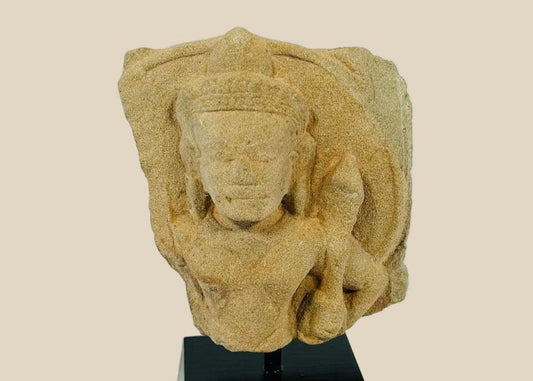

Ancient Egyptian Polychrome Cartonnage Fragment of Anubis | Linen & Gesso Funerary Panel | Late Period–Ptolemaic | Circa 2nd–1st Century BCE
- Prix habituel
- $1,750.00
- Prix soldé
- $1,750.00
- Prix habituel
Impossible de charger la disponibilité du service de retrait


Ancient Egyptian Polychrome Cartonnage Fragment of Anubis | Linen & Gesso Funerary Panel | Late Period–Ptolemaic | Circa 2nd–1st Century BCE
Description
Plus
Moins
Historical Context & Origin
Region: Ancient Egypt
Material: Linen cartonnage with gesso and polychrome mineral pigments
Period: Late Period to Ptolemaic Period, circa 2nd–1st Century BCE
Description
This striking Ancient Egyptian cartonnage fragment depicts the jackal-headed deity Anubis, one of the most important gods in Egyptian funerary belief. Rendered in profile, the figure displays the characteristic elongated snout and upright ears of the sacred jackal, combined with a human body adorned in traditional garments.
The fragment is constructed from layered linen stiffened with gesso and finished with vivid polychrome decoration. Rich surviving pigments—including red ochre, yellow, black, and traces of blue—highlight the refined craftsmanship of ancient Egyptian artisans.
Originally forming part of a larger funerary object such as a mummy cartonnage casing or coffin panel, this fragment would have served both symbolic and protective purposes, ensuring safe passage into the afterlife under the guardianship of Anubis.
Features
- Depicts Anubis, god of mummification and the afterlife
- Original Ancient Egyptian cartonnage construction (linen + gesso)
- Surviving polychrome pigments with strong visual contrast
- Classic Egyptian profile and iconography
- Professionally framed for display and preservation
Cultural Significance
Anubis played a central role in Egyptian funerary rituals, overseeing embalming and guiding souls through the underworld. His image was frequently depicted on coffins, cartonnage, and tomb walls as a protector of the deceased.
Fragments such as this provide a tangible connection to ancient burial practices, reflecting the deep spiritual beliefs surrounding death, rebirth, and eternal life in ancient Egypt.
Condition
Fragmentary as expected. Surface wear, pigment loss, and edge deterioration are consistent with age and burial conditions. Some areas of pigment remain well-preserved, particularly in the torso and garment. Mounted and stabilized within a modern display frame.
Dimensions (Approximate)
Fragment
Height: 3.25 in
Frame
Width: 9 in
Height: 7 in
Age (Approximate)
2,000–2,200 years old
Learn More
Explore a museum example of an Egyptian cartonnage panel depicting Anubis at The Metropolitan Museum of Art
Browse our Collection of Ancient Egyptian Artifacts
Description
Historical Context & Origin
Region: Ancient Egypt
Material: Linen cartonnage with gesso and polychrome mineral pigments
Period: Late Period to Ptolemaic Period, circa 2nd–1st Century BCE
Description
This striking Ancient Egyptian cartonnage fragment depicts the jackal-headed deity Anubis, one of the most important gods in Egyptian funerary belief. Rendered in profile, the figure displays the characteristic elongated snout and upright ears of the sacred jackal, combined with a human body adorned in traditional garments.
The fragment is constructed from layered linen stiffened with gesso and finished with vivid polychrome decoration. Rich surviving pigments—including red ochre, yellow, black, and traces of blue—highlight the refined craftsmanship of ancient Egyptian artisans.
Originally forming part of a larger funerary object such as a mummy cartonnage casing or coffin panel, this fragment would have served both symbolic and protective purposes, ensuring safe passage into the afterlife under the guardianship of Anubis.
Features
- Depicts Anubis, god of mummification and the afterlife
- Original Ancient Egyptian cartonnage construction (linen + gesso)
- Surviving polychrome pigments with strong visual contrast
- Classic Egyptian profile and iconography
- Professionally framed for display and preservation
Cultural Significance
Anubis played a central role in Egyptian funerary rituals, overseeing embalming and guiding souls through the underworld. His image was frequently depicted on coffins, cartonnage, and tomb walls as a protector of the deceased.
Fragments such as this provide a tangible connection to ancient burial practices, reflecting the deep spiritual beliefs surrounding death, rebirth, and eternal life in ancient Egypt.
Condition
Fragmentary as expected. Surface wear, pigment loss, and edge deterioration are consistent with age and burial conditions. Some areas of pigment remain well-preserved, particularly in the torso and garment. Mounted and stabilized within a modern display frame.
Dimensions (Approximate)
Fragment
Height: 3.25 in
Frame
Width: 9 in
Height: 7 in
Age (Approximate)
2,000–2,200 years old
Learn More
Explore a museum example of an Egyptian cartonnage panel depicting Anubis at The Metropolitan Museum of Art
Browse our Collection of Ancient Egyptian Artifacts
Vous aimerez peut-être aussi
