

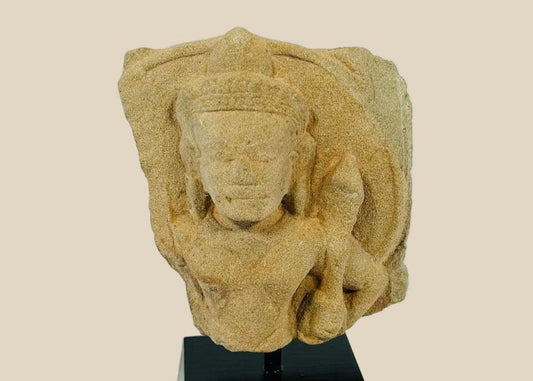

Ancient Egyptian Polychrome Sarcophagus Fragments (Pair) | Linen & Gesso Cartonnage Panels | Late Period–Ptolemaic | Circa 664–30 BCE
- Prix habituel
- $1,500.00
- Prix soldé
- $1,500.00
- Prix habituel
Impossible de charger la disponibilité du service de retrait


Ancient Egyptian Polychrome Sarcophagus Fragments (Pair) | Linen & Gesso Cartonnage Panels | Late Period–Ptolemaic | Circa 664–30 BCE
Description
Plus
Moins
Historical Context & Origin
Region: Ancient Egypt
Material: Linen textile with gesso and polychrome mineral pigments
Period: Late Period to Ptolemaic Period, circa 664–30 BCE
Description
This exceptional pair of Ancient Egyptian polychrome coffin fragments represents rare surviving elements from a decorated funerary assemblage, likely originating from a wooden coffin or cartonnage casing. Each fragment preserves vivid traces of original painted decoration applied over a prepared gesso ground atop woven linen—a hallmark of Egyptian funerary craftsmanship.
The larger fragment depicts a finely rendered profile figure with characteristic Egyptian stylistic conventions, including a striated wig, bold eye outline, and structured linear framing. The second fragment presents a seated or stylized figure enclosed within a bordered panel, rendered in rich ochre, red, and black pigments.
Both pieces exhibit layered construction typical of Egyptian funerary materials, where linen was coated in plaster (gesso) and painted to create symbolic and protective imagery intended to accompany the deceased into the afterlife.
Mounted within a custom display frame, the fragments are suspended to allow visibility of both the painted surfaces and the reverse textile structure—offering a compelling presentation that highlights their archaeological integrity.
Features
- Authentic Ancient Egyptian painted coffin/cartonnage fragments
- Visible linen backing and gesso preparation layers
- Original polychrome pigments with strong surviving coloration
- Classic Egyptian profile and funerary iconography
- Custom double-sided display mounting
- Rare survival of textile-based funerary material
Cultural Significance
Fragments such as these formed part of elaborate funerary systems designed to ensure safe passage into the afterlife. Painted imagery on coffins and cartonnage often depicted protective deities, idealized portraits of the deceased, and symbolic motifs tied to rebirth, eternity, and divine protection.
The use of linen and gesso reflects traditional Egyptian funerary techniques, bridging sculpture and painting into a unified ritual object. Surviving fragments provide invaluable insight into burial practices, artistic conventions, and religious beliefs of ancient Egypt.
Condition
Fragmentary as expected with age. Surface wear, pigment loss, flaking, and edge deterioration are consistent with an ancient burial environment and archaeological recovery. Linen backing remains visible and intact in areas, with expected fraying and losses. Mounted for preservation and display.
Dimensions (Approximate)
Individual Fragments
Width: 3 in
Height: 2 in
Framed Display
Width: 9 in
Height: 7 in
Age (Approximate)
2,000–2,600 years old
Learn More
Study the funerary symbolism of Egyptian Sarcophagus Fragments at National Museums Liverpool
Browse our Ancient Egyptian Artifacts Collection
Description
Historical Context & Origin
Region: Ancient Egypt
Material: Linen textile with gesso and polychrome mineral pigments
Period: Late Period to Ptolemaic Period, circa 664–30 BCE
Description
This exceptional pair of Ancient Egyptian polychrome coffin fragments represents rare surviving elements from a decorated funerary assemblage, likely originating from a wooden coffin or cartonnage casing. Each fragment preserves vivid traces of original painted decoration applied over a prepared gesso ground atop woven linen—a hallmark of Egyptian funerary craftsmanship.
The larger fragment depicts a finely rendered profile figure with characteristic Egyptian stylistic conventions, including a striated wig, bold eye outline, and structured linear framing. The second fragment presents a seated or stylized figure enclosed within a bordered panel, rendered in rich ochre, red, and black pigments.
Both pieces exhibit layered construction typical of Egyptian funerary materials, where linen was coated in plaster (gesso) and painted to create symbolic and protective imagery intended to accompany the deceased into the afterlife.
Mounted within a custom display frame, the fragments are suspended to allow visibility of both the painted surfaces and the reverse textile structure—offering a compelling presentation that highlights their archaeological integrity.
Features
- Authentic Ancient Egyptian painted coffin/cartonnage fragments
- Visible linen backing and gesso preparation layers
- Original polychrome pigments with strong surviving coloration
- Classic Egyptian profile and funerary iconography
- Custom double-sided display mounting
- Rare survival of textile-based funerary material
Cultural Significance
Fragments such as these formed part of elaborate funerary systems designed to ensure safe passage into the afterlife. Painted imagery on coffins and cartonnage often depicted protective deities, idealized portraits of the deceased, and symbolic motifs tied to rebirth, eternity, and divine protection.
The use of linen and gesso reflects traditional Egyptian funerary techniques, bridging sculpture and painting into a unified ritual object. Surviving fragments provide invaluable insight into burial practices, artistic conventions, and religious beliefs of ancient Egypt.
Condition
Fragmentary as expected with age. Surface wear, pigment loss, flaking, and edge deterioration are consistent with an ancient burial environment and archaeological recovery. Linen backing remains visible and intact in areas, with expected fraying and losses. Mounted for preservation and display.
Dimensions (Approximate)
Individual Fragments
Width: 3 in
Height: 2 in
Framed Display
Width: 9 in
Height: 7 in
Age (Approximate)
2,000–2,600 years old
Learn More
Study the funerary symbolism of Egyptian Sarcophagus Fragments at National Museums Liverpool
Browse our Ancient Egyptian Artifacts Collection
Vous aimerez peut-être aussi
