

Bague romaine antique | Ier - IVe siècle
- Prix habituel
- $350.00
- Prix soldé
- $350.00
- Prix habituel
Impossible de charger la disponibilité du service de retrait


Bague romaine antique | Ier - IVe siècle
Description
Plus
Moins
Contexte historique et origine
Région : Empire romain
Matériau : Bronze avec décor gravé
Période : Période impériale, 1er-4e siècle de notre ère
Description
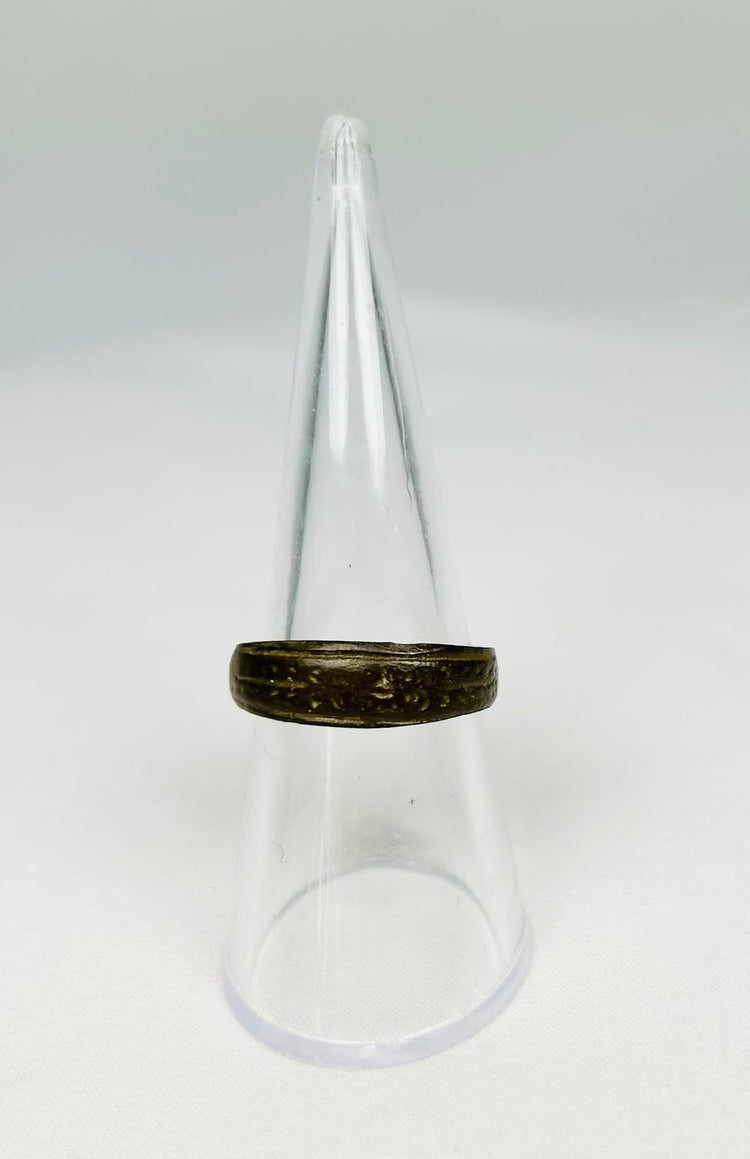
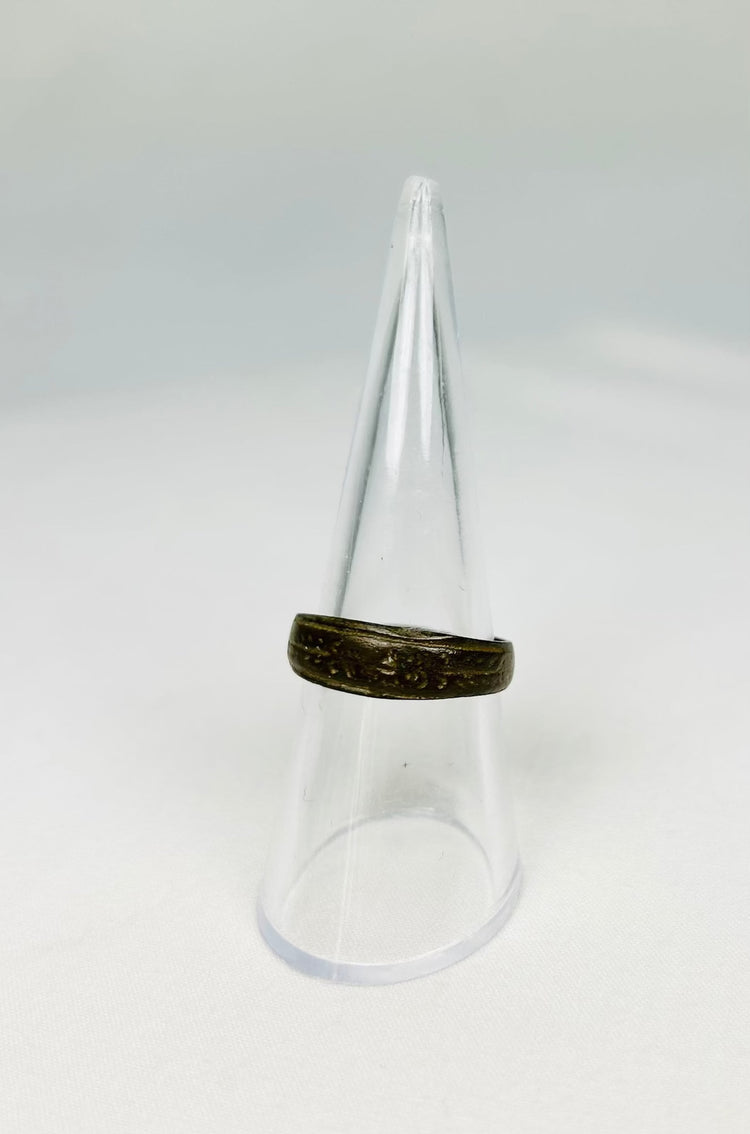
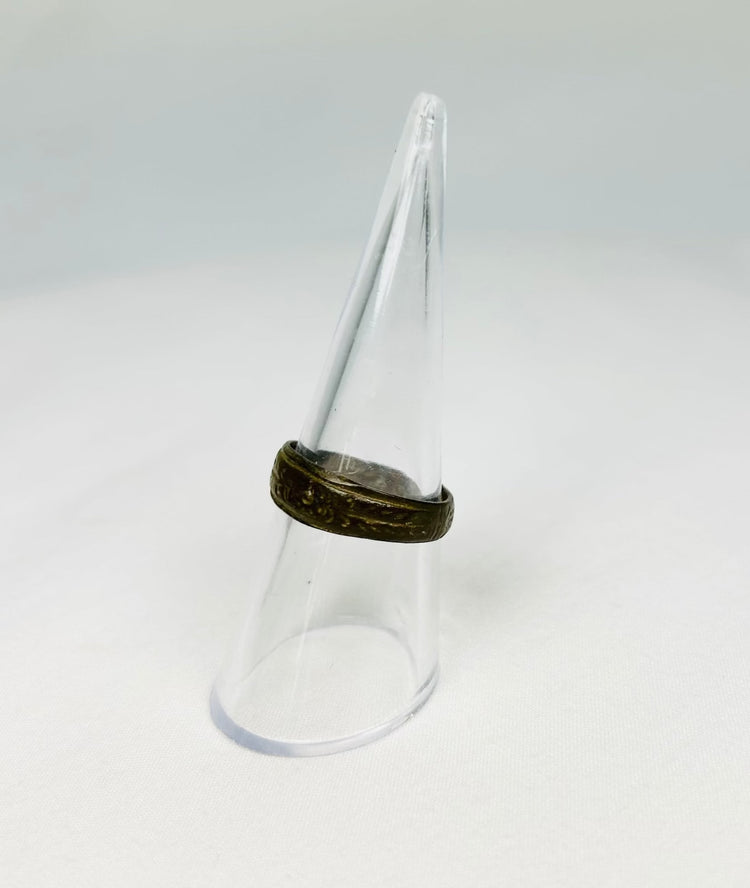
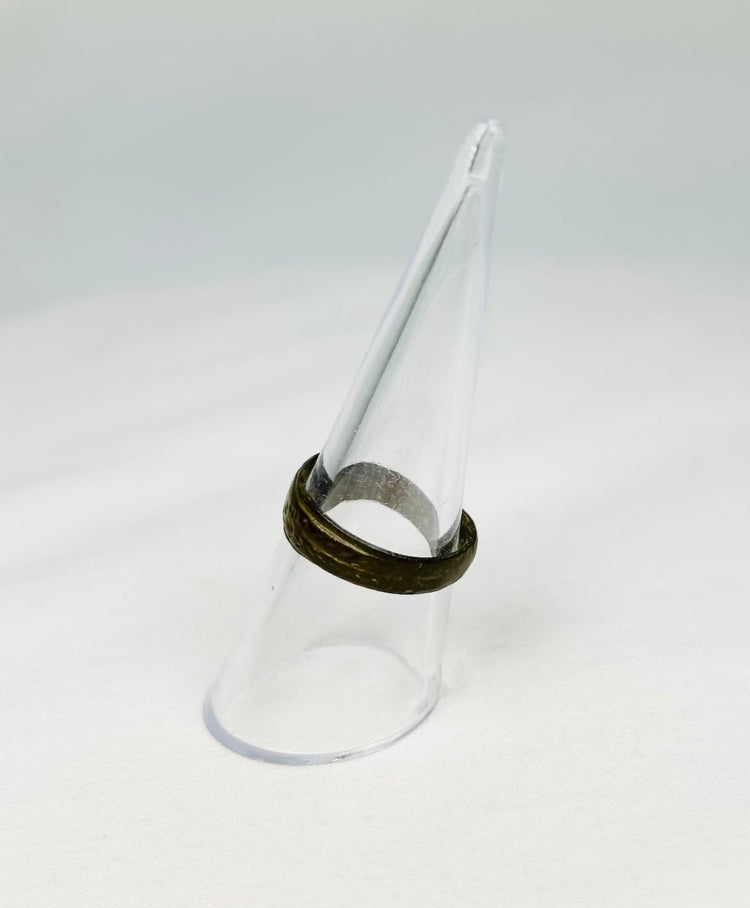
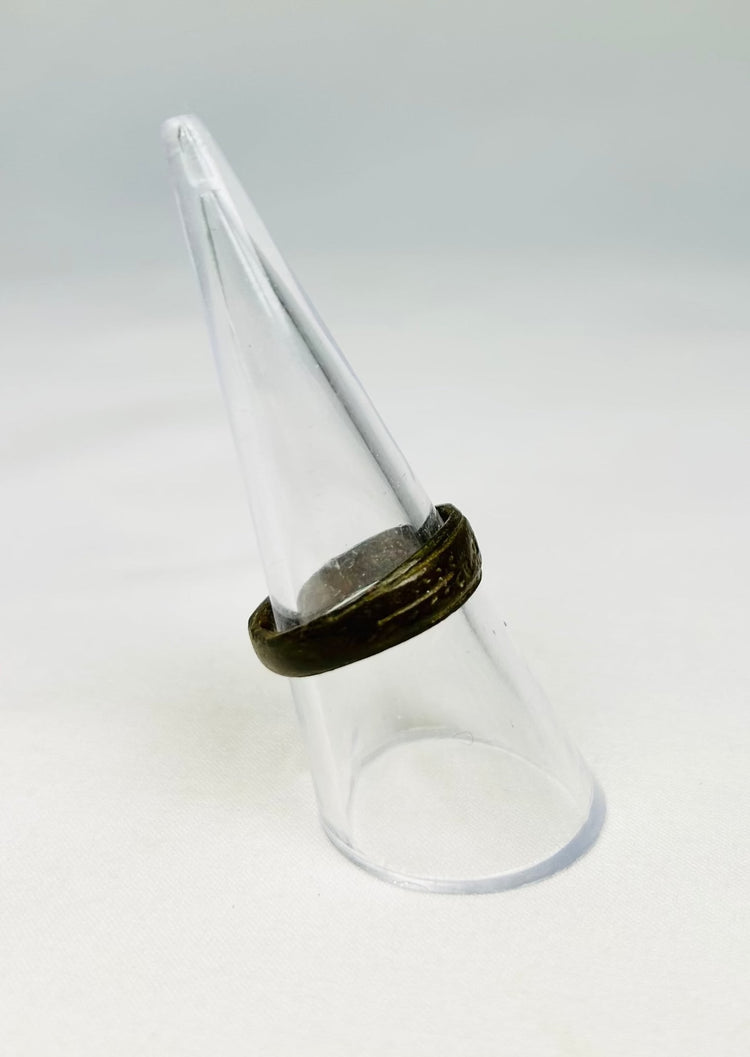
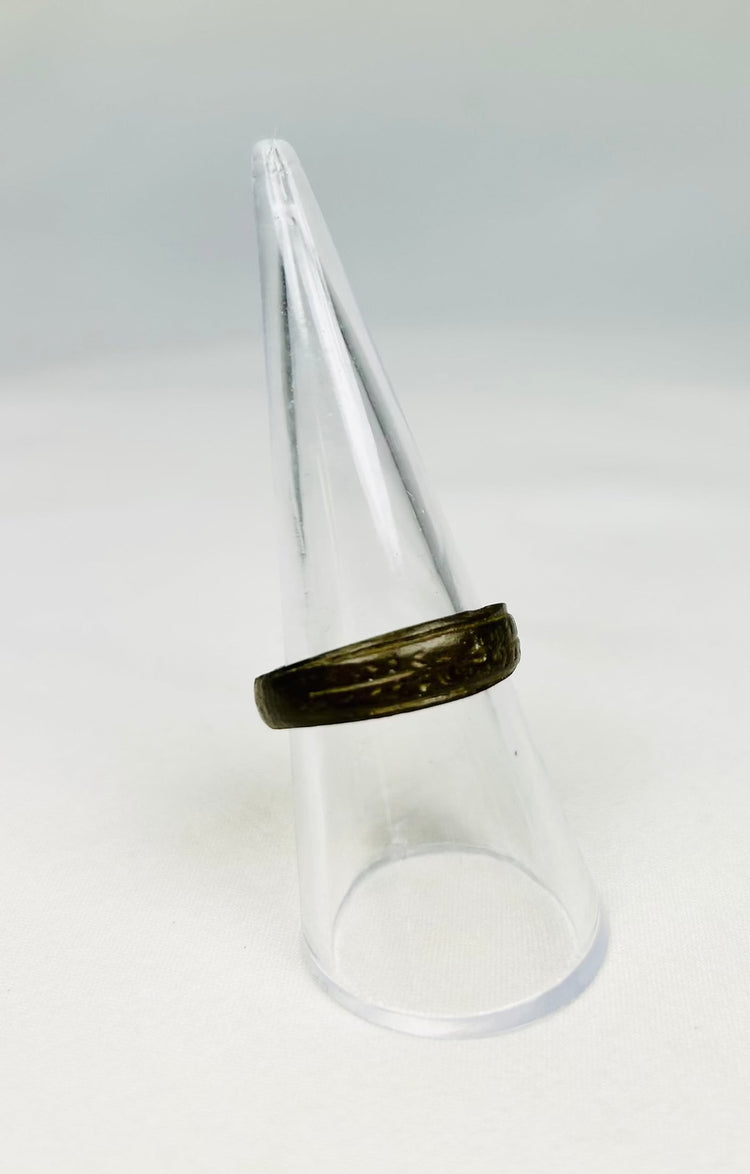
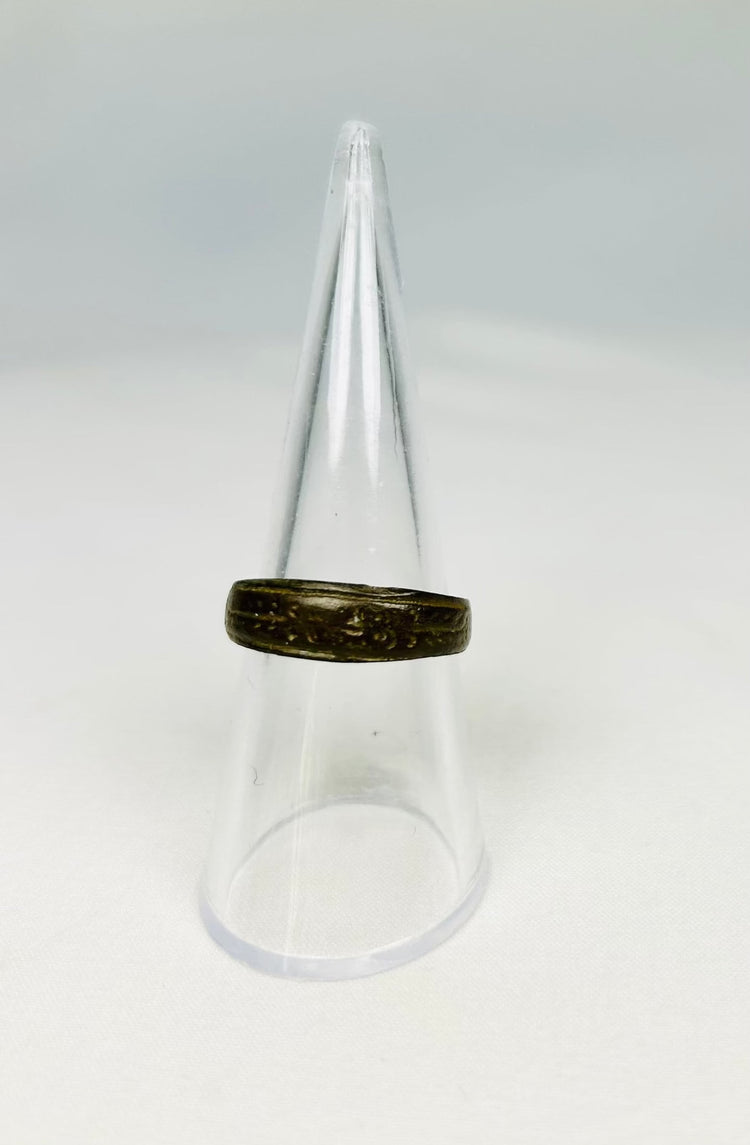
Cette ancienne bague romaine est un bel exemple de l'artisanat et du symbolisme impériaux. L'anneau se rétrécit légèrement vers le chaton, avec des lignes décoratives en forme de vigne encadrant un motif central de soleil. Son design raffiné reflète le double objectif des bagues romaines : à la fois parure personnelle et porteuses de sens spirituel ou protecteur.
Caractéristiques
- Motif solaire central, représentant probablement Sol Invictus
- Gravures latérales en forme de vigne symbolisant la fertilité et le renouveau
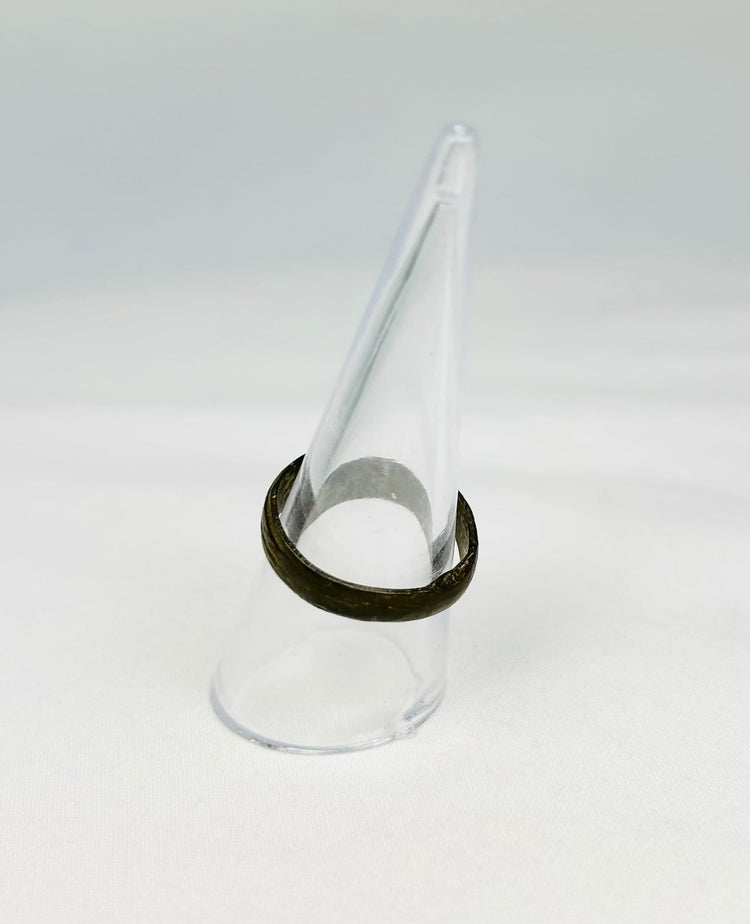
- Anneau en bronze aminci aux proportions élégantes
- Patine vieillie naturelle rehaussant l'authenticité
Signification culturelle
Le symbole solaire était fortement lié au culte de Sol Invictus, vénéré comme le « Soleil invaincu » et officiellement promu sous l'empereur Aurélien au 3ème siècle de notre ère. Il incarnait la protection divine, le pouvoir impérial et la victoire. Les motifs de vigne environnants renforçaient probablement les thèmes de la fertilité, du renouveau et de la force vivifiante du soleil – des idées profondément enracinées dans la religion et la vie quotidienne romaines. Des bagues comme celle-ci servaient non seulement d'ornements personnels mais aussi d'amulettes incarnant un symbolisme sacré et impérial.
État
La bague est bien conservée pour son âge, avec les motifs gravés clairement visibles. L'anneau présente une usure de surface et une patine attendues dues à l'enfouissement et à des siècles d'âge, contribuant à son authenticité et à son caractère historique.
Dimensions (approximatives)
Taille de la bague : 7,5 US
Âge (approximatif)
1 625–1 925 ans
Provenance
Anciennement détenue dans une collection privée à Armadale, Victoria, Australie.
En savoir plus
Étudiez le symbolisme et le savoir-faire de l'histoire des bijoux et de la conception des bagues romaines
Parcourez notre collection de bagues anciennes et de bijoux historiques
Description
Contexte historique et origine
Région : Empire romain
Matériau : Bronze avec décor gravé
Période : Période impériale, 1er-4e siècle de notre ère
Description
Cette ancienne bague romaine est un bel exemple de l'artisanat et du symbolisme impériaux. L'anneau se rétrécit légèrement vers le chaton, avec des lignes décoratives en forme de vigne encadrant un motif central de soleil. Son design raffiné reflète le double objectif des bagues romaines : à la fois parure personnelle et porteuses de sens spirituel ou protecteur.
Caractéristiques
- Motif solaire central, représentant probablement Sol Invictus
- Gravures latérales en forme de vigne symbolisant la fertilité et le renouveau
- Anneau en bronze aminci aux proportions élégantes
- Patine vieillie naturelle rehaussant l'authenticité
Signification culturelle
Le symbole solaire était fortement lié au culte de Sol Invictus, vénéré comme le « Soleil invaincu » et officiellement promu sous l'empereur Aurélien au 3ème siècle de notre ère. Il incarnait la protection divine, le pouvoir impérial et la victoire. Les motifs de vigne environnants renforçaient probablement les thèmes de la fertilité, du renouveau et de la force vivifiante du soleil – des idées profondément enracinées dans la religion et la vie quotidienne romaines. Des bagues comme celle-ci servaient non seulement d'ornements personnels mais aussi d'amulettes incarnant un symbolisme sacré et impérial.
État
La bague est bien conservée pour son âge, avec les motifs gravés clairement visibles. L'anneau présente une usure de surface et une patine attendues dues à l'enfouissement et à des siècles d'âge, contribuant à son authenticité et à son caractère historique.
Dimensions (approximatives)
Taille de la bague : 7,5 US
Âge (approximatif)
1 625–1 925 ans
Provenance
Anciennement détenue dans une collection privée à Armadale, Victoria, Australie.
En savoir plus
Étudiez le symbolisme et le savoir-faire de l'histoire des bijoux et de la conception des bagues romaines
Parcourez notre collection de bagues anciennes et de bijoux historiques
Vous aimerez peut-être aussi
