



Terre cuite romaine antique | Symbole de fertilité, de protection et de prospérité | Ier-IIIe siècle ap. J.-C.
- Prix habituel
- $600.00
- Prix soldé
- $600.00
- Prix habituel
Impossible de charger la disponibilité du service de retrait






Terre cuite romaine antique | Symbole de fertilité, de protection et de prospérité | Ier-IIIe siècle ap. J.-C.
Description
Plus
Moins
Contexte historique et origine
Région : Rome antique
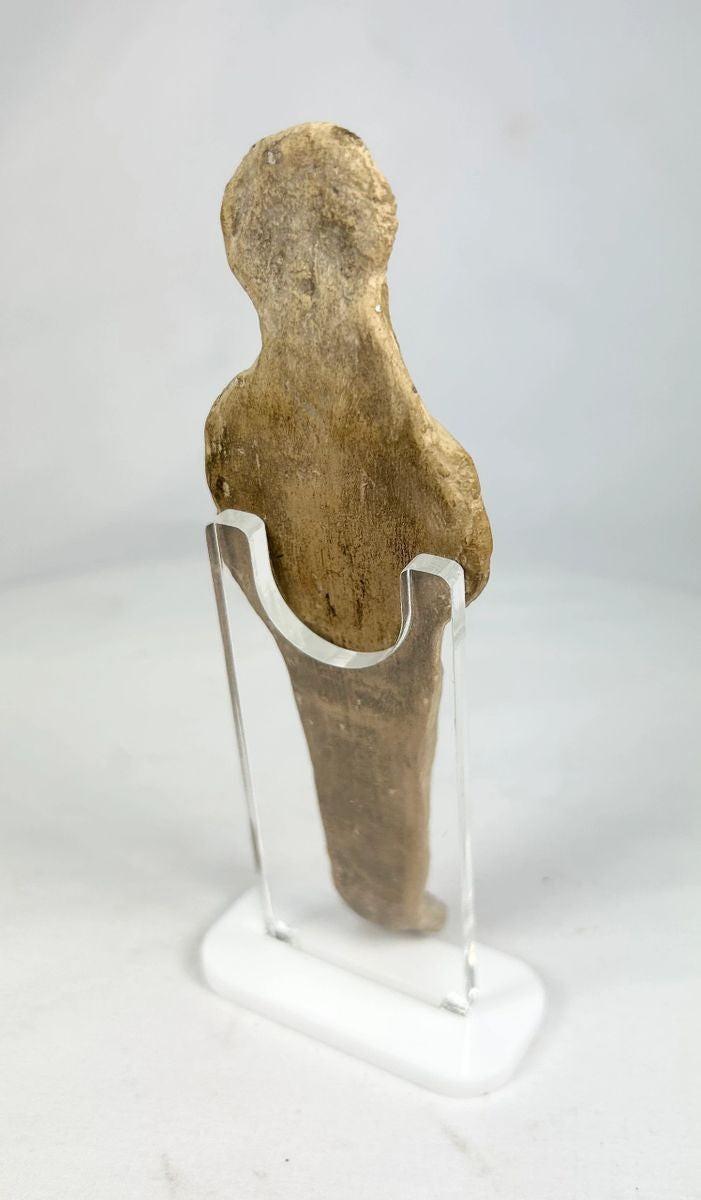
Matériau : Terre cuite façonnée à la main
Période : Ier-IIIe siècle de notre ère
Description
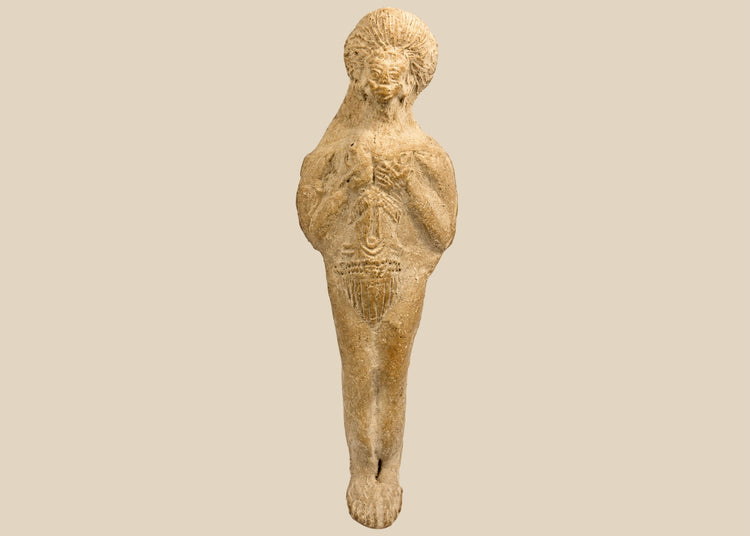
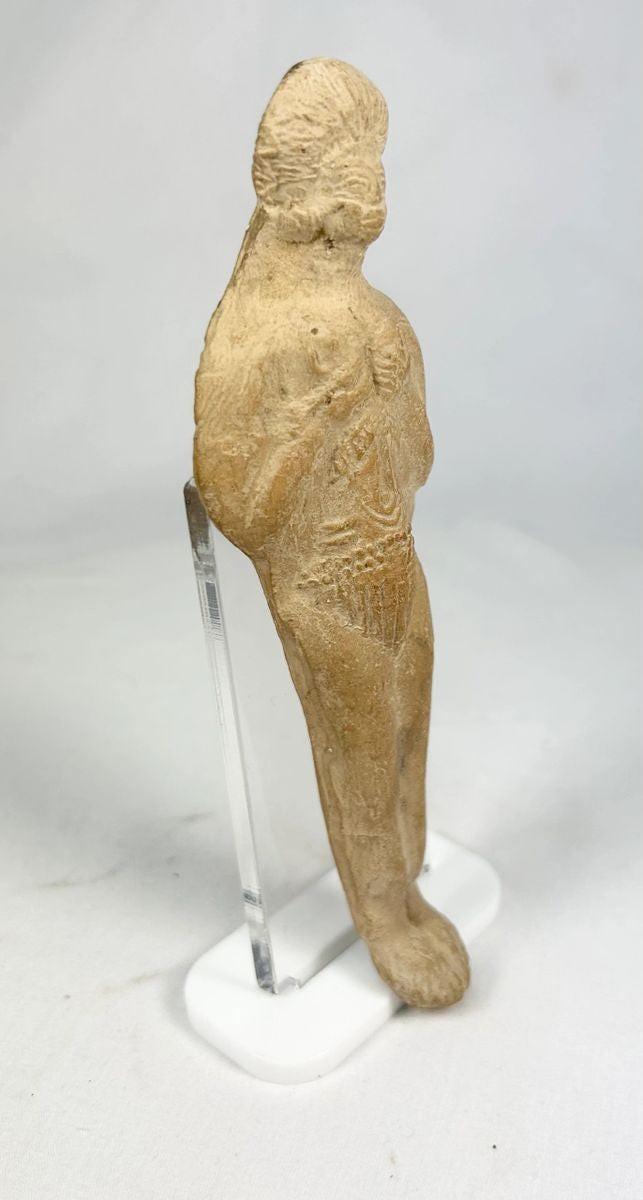
Cette figurine en terre cuite est un bel exemple d'art dévotionnel romain, créé à une époque où la fertilité, la prospérité et la protection divine étaient centrales dans la vie quotidienne et la pratique religieuse. De telles figures étaient placées dans des sanctuaires domestiques, des temples ou des tombes comme offrandes votives, invoquant des bénédictions pour un accouchement sans danger, une abondance agricole et le bien-être familial. L'artisanat reflète la tradition romaine de représenter des divinités de la fertilité telles que Vénus, Cérès ou Isis, soulignant l'énergie vitale associée à l'intervention divine. Les bras levés de la figure et les détails stylisés suggèrent un geste d'invocation ou d'offrande, soulignant son importance cérémonielle.
Caractéristiques
- Expression faciale détaillée avec des cheveux stylisés, typiques des déesses romaines de la fertilité
- Détails incisés complexes sur le torse, représentant peut-être des vêtements rituels ou des parures
- Bras levés avec des doigts sculptés dans un geste d'offrande ou d'invocation
- Dépôts minéraux naturels et patine terreuse dus à des siècles d'enfouissement
- Forme compacte adaptée aux sanctuaires domestiques ou à l'usage dans les temples
Signification culturelle
Les figures de fertilité romaines jouaient un rôle vital dans le culte public et privé, servant d'amulettes protectrices et d'objets rituels. Leur présence dans les foyers symbolisait la garde divine, tandis que leur utilisation dans les temples et les tombes reflétait des prières pour la prospérité, la fertilité et un passage sûr dans l'au-delà. Accessibles aux élites comme aux citoyens ordinaires, ces figures illustrent la dévotion généralisée aux cultes de la fertilité et l'importance de la prospérité agricole et familiale dans la société romaine.
État
La figurine présente un vieillissement naturel, avec une légère usure de surface et des altérations conformes à un enfouissement prolongé. Des dépôts minéraux et une patine terreuse vieillie en renforcent l'authenticité. Malgré des siècles d'âge, la pièce reste structurellement stable avec des détails sculptés bien conservés, conservant sa puissance expressive et sa résonance spirituelle.
Dimensions (approximatives)
Hauteur : 14 cm
Âge (approximatif)
1 700-1 900 ans
Provenance
Anciennement détenue dans une importante collection privée de longue date à Tavares, Floride, États-Unis.
En savoir plus
Explorez l'histoire des divinités de la fertilité sur Divinités féminines de la fertilité dans la religion antique
Parcourez notre Collection d'antiquités romaines et grecques
Description
Contexte historique et origine
Région : Rome antique
Matériau : Terre cuite façonnée à la main
Période : Ier-IIIe siècle de notre ère
Description
Cette figurine en terre cuite est un bel exemple d'art dévotionnel romain, créé à une époque où la fertilité, la prospérité et la protection divine étaient centrales dans la vie quotidienne et la pratique religieuse. De telles figures étaient placées dans des sanctuaires domestiques, des temples ou des tombes comme offrandes votives, invoquant des bénédictions pour un accouchement sans danger, une abondance agricole et le bien-être familial. L'artisanat reflète la tradition romaine de représenter des divinités de la fertilité telles que Vénus, Cérès ou Isis, soulignant l'énergie vitale associée à l'intervention divine. Les bras levés de la figure et les détails stylisés suggèrent un geste d'invocation ou d'offrande, soulignant son importance cérémonielle.
Caractéristiques
- Expression faciale détaillée avec des cheveux stylisés, typiques des déesses romaines de la fertilité
- Détails incisés complexes sur le torse, représentant peut-être des vêtements rituels ou des parures
- Bras levés avec des doigts sculptés dans un geste d'offrande ou d'invocation
- Dépôts minéraux naturels et patine terreuse dus à des siècles d'enfouissement
- Forme compacte adaptée aux sanctuaires domestiques ou à l'usage dans les temples
Signification culturelle
Les figures de fertilité romaines jouaient un rôle vital dans le culte public et privé, servant d'amulettes protectrices et d'objets rituels. Leur présence dans les foyers symbolisait la garde divine, tandis que leur utilisation dans les temples et les tombes reflétait des prières pour la prospérité, la fertilité et un passage sûr dans l'au-delà. Accessibles aux élites comme aux citoyens ordinaires, ces figures illustrent la dévotion généralisée aux cultes de la fertilité et l'importance de la prospérité agricole et familiale dans la société romaine.
État
La figurine présente un vieillissement naturel, avec une légère usure de surface et des altérations conformes à un enfouissement prolongé. Des dépôts minéraux et une patine terreuse vieillie en renforcent l'authenticité. Malgré des siècles d'âge, la pièce reste structurellement stable avec des détails sculptés bien conservés, conservant sa puissance expressive et sa résonance spirituelle.
Dimensions (approximatives)
Hauteur : 14 cm
Âge (approximatif)
1 700-1 900 ans
Provenance
Anciennement détenue dans une importante collection privée de longue date à Tavares, Floride, États-Unis.
En savoir plus
Explorez l'histoire des divinités de la fertilité sur Divinités féminines de la fertilité dans la religion antique
Parcourez notre Collection d'antiquités romaines et grecques
Vous aimerez peut-être aussi
