

Fragment de figurine de tête en terre cuite antique | Artefact romain/méditerranéen | Ier-IIe siècle
- Prix habituel
- $400.00
- Prix soldé
- $400.00
- Prix habituel
Impossible de charger la disponibilité du service de retrait


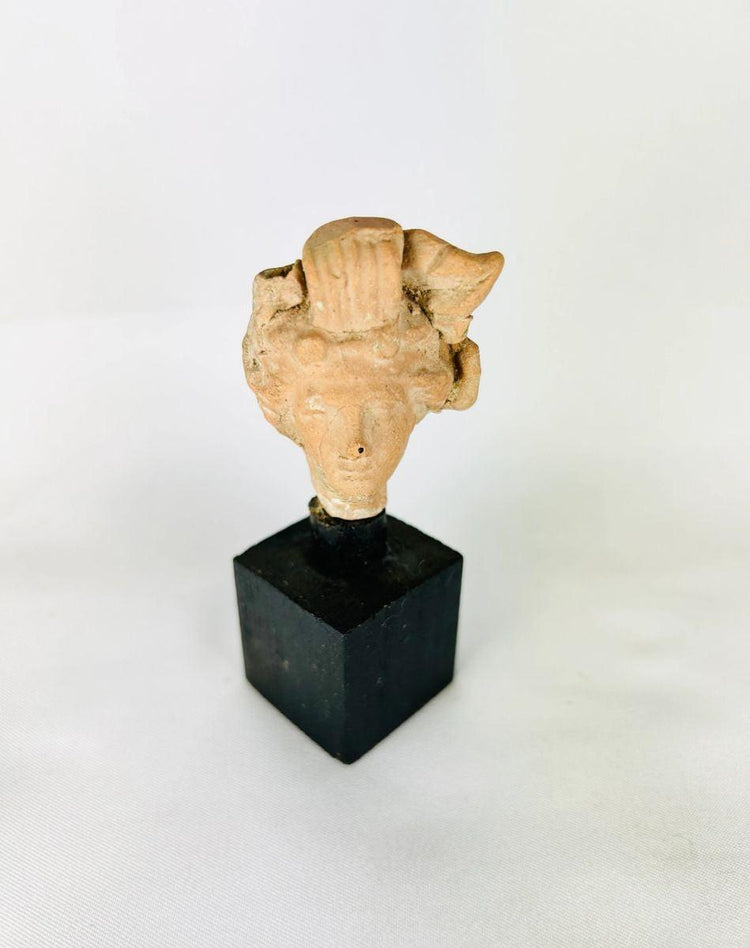


Fragment de figurine de tête en terre cuite antique | Artefact romain/méditerranéen | Ier-IIe siècle
Description
Plus
Moins
Contexte historique et origine
Région : Monde gréco-romain (probablement le bassin méditerranéen)
Matériau : Terre cuite
Période : Hellénistique à gréco-romaine, vers le IVe-Ier siècle av. J.-C.
Description
Ce fragment de tête en terre cuite élégant, mesurant environ 8,9 cm de hauteur, illustre l'art raffiné et l'esthétique classique du monde méditerranéen antique. Probablement partie d'une figurine plus grande ou d'une statue votive, le fragment pourrait avoir représenté une divinité, une figure noble ou un individu idéalisé. Malgré l'usure de la surface, les contours délicats du visage et les vestiges d'une coiffure ou d'un couvre-chef élaboré conservent une qualité expressive et naturaliste qui reflète la maîtrise sculpturale des périodes hellénistique et gréco-romaine. Monté sur une base noire moderne, il est magnifiquement exposé en tant qu'artefact et œuvre d'art classique.
Caractéristiques
- Détails faciaux expressifs dans le style naturaliste hellénistique
- Coiffure ou couvre-chef élaboré suggérant une signification sociale ou divine
- Fabrication en terre cuite, un matériau privilégié pour les figurines votives et funéraires
- Patine naturelle et usure de surface cohérentes avec l'enterrement ancien et l'âge
- Monté sur une base noire moderne pour un affichage sécurisé
Signification culturelle
La sculpture hellénistique a marqué un tournant dans l'art antique, mettant l'accent sur le naturalisme, l'individualité et l'émotion. Les figurines en terre cuite étaient largement produites dans le monde gréco-romain, servant des fins religieuses, décoratives et funéraires. Ce fragment incarne cette synthèse culturelle – combinant des formes grecques expressives avec l'adoption romaine généralisée de la terre cuite comme matériau. De tels artefacts offrent un aperçu inestimable des traditions artistiques anciennes, des pratiques dévotionnelles et de l'esthétique partagée du monde classique.
Condition
Fragment bien conservé avec usure de surface et patine naturelle. Monté pour la stabilité et l'affichage.
Dimensions (approximatives)
Hauteur : 8,9 cm
Âge (approximatif)
2 025–2 425 ans
En savoir plus
Explorez le Monde de la Grèce et de Rome antiques
Description
Contexte historique et origine
Région : Monde gréco-romain (probablement le bassin méditerranéen)
Matériau : Terre cuite
Période : Hellénistique à gréco-romaine, vers le IVe-Ier siècle av. J.-C.
Description
Ce fragment de tête en terre cuite élégant, mesurant environ 8,9 cm de hauteur, illustre l'art raffiné et l'esthétique classique du monde méditerranéen antique. Probablement partie d'une figurine plus grande ou d'une statue votive, le fragment pourrait avoir représenté une divinité, une figure noble ou un individu idéalisé. Malgré l'usure de la surface, les contours délicats du visage et les vestiges d'une coiffure ou d'un couvre-chef élaboré conservent une qualité expressive et naturaliste qui reflète la maîtrise sculpturale des périodes hellénistique et gréco-romaine. Monté sur une base noire moderne, il est magnifiquement exposé en tant qu'artefact et œuvre d'art classique.
Caractéristiques
- Détails faciaux expressifs dans le style naturaliste hellénistique
- Coiffure ou couvre-chef élaboré suggérant une signification sociale ou divine
- Fabrication en terre cuite, un matériau privilégié pour les figurines votives et funéraires
- Patine naturelle et usure de surface cohérentes avec l'enterrement ancien et l'âge
- Monté sur une base noire moderne pour un affichage sécurisé
Signification culturelle
La sculpture hellénistique a marqué un tournant dans l'art antique, mettant l'accent sur le naturalisme, l'individualité et l'émotion. Les figurines en terre cuite étaient largement produites dans le monde gréco-romain, servant des fins religieuses, décoratives et funéraires. Ce fragment incarne cette synthèse culturelle – combinant des formes grecques expressives avec l'adoption romaine généralisée de la terre cuite comme matériau. De tels artefacts offrent un aperçu inestimable des traditions artistiques anciennes, des pratiques dévotionnelles et de l'esthétique partagée du monde classique.
Condition
Fragment bien conservé avec usure de surface et patine naturelle. Monté pour la stabilité et l'affichage.
Dimensions (approximatives)
Hauteur : 8,9 cm
Âge (approximatif)
2 025–2 425 ans
En savoir plus
Explorez le Monde de la Grèce et de Rome antiques
Vous aimerez peut-être aussi
