

Vessel à Lait Ancien de l'Himalaya | en Bois Sculpté avec Poignée en Corde | Tibet / Népal | XIXe Siècle
- Prix habituel
- $500.00
- Prix soldé
- $500.00
- Prix habituel
Impossible de charger la disponibilité du service de retrait


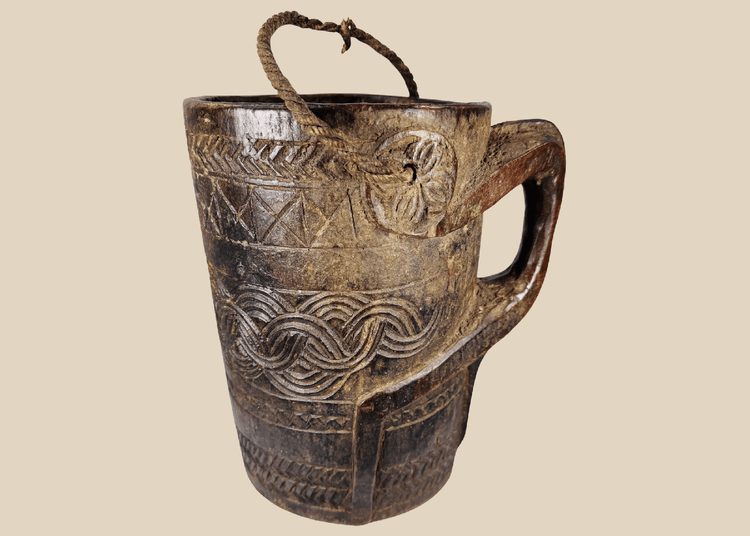
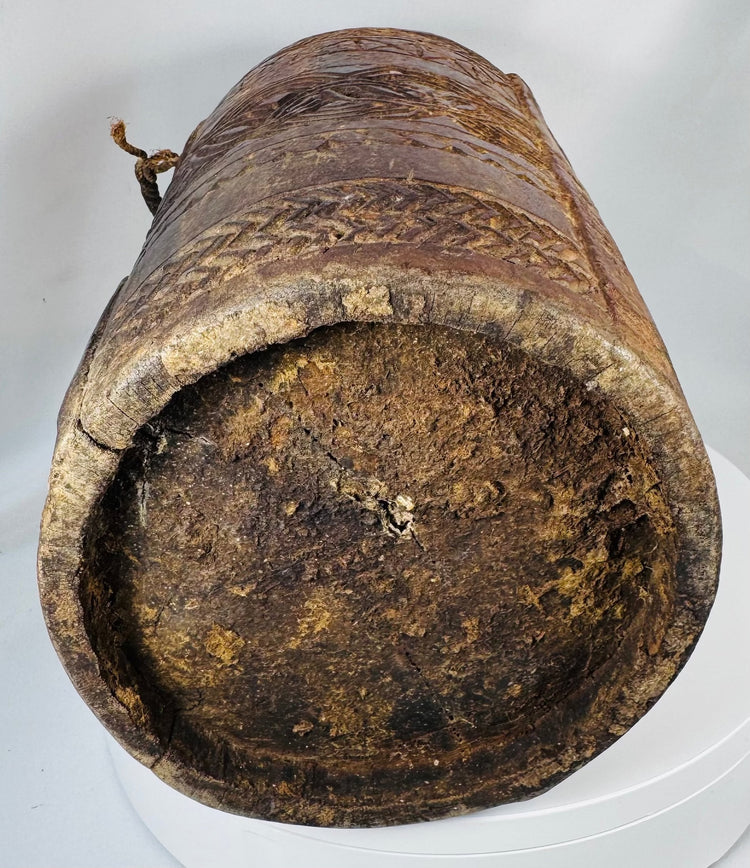
Vessel à Lait Ancien de l'Himalaya | en Bois Sculpté avec Poignée en Corde | Tibet / Népal | XIXe Siècle
Description
Plus
Moins
Contexte historique et origine
Région : Région de l'Himalaya / Tibet ou Népal
Matériau : Bois dur sculpté à la main avec poignée en cordon de fibre
Période : Probablement du XIXe au début du XXe siècle
Description
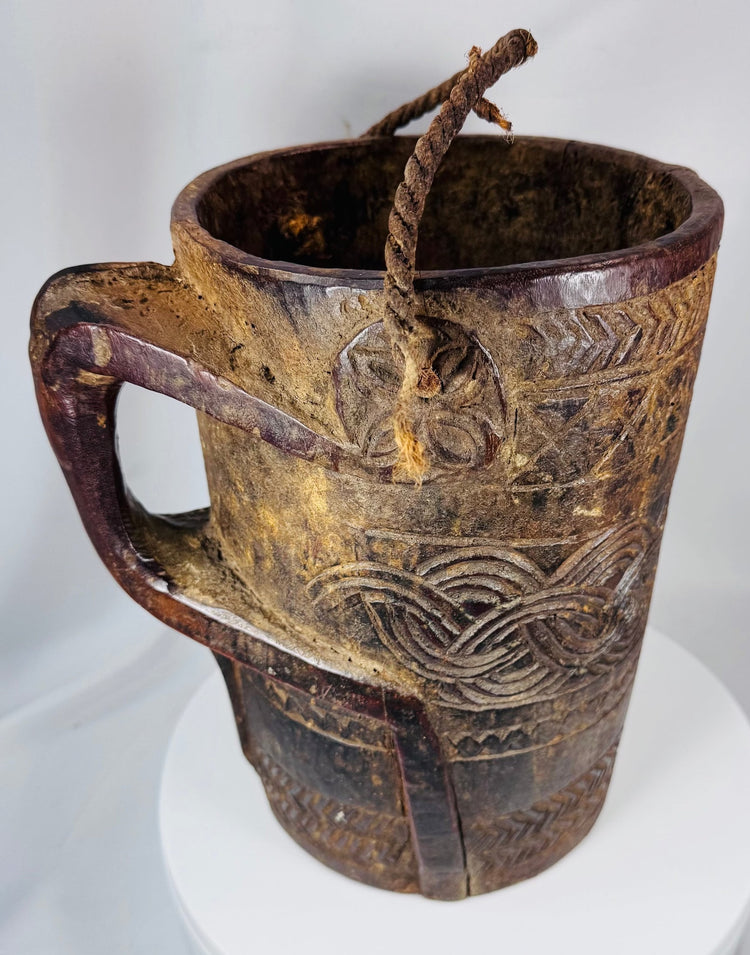
Ce grand récipient en bois sculpté provient probablement de la région himalayenne, peut-être du Tibet ou du Népal, et semble être un récipient utilitaire traditionnel associé à un usage pastoral ou domestique. La forme, les motifs décoratifs sculptés, la construction en bois dur épais et la poignée de suspension en corde ressemblent fortement aux récipients laitiers et de stockage himalayens traditionnellement utilisés dans les communautés montagnardes.
Bien que des formes similaires soient parfois associées aux récipients de lait ou de beurre de yak, cet exemple semble plus précisément être un récipient de transport ou de stockage en bois sculpté utilisé pour les produits laitiers, les liquides, les céréales ou les provisions ménagères. Les motifs géométriques et entrelacés profondément sculptés sont très caractéristiques des traditions de sculpture folklorique himalayenne et reflètent le langage décoratif des objets domestiques régionaux.
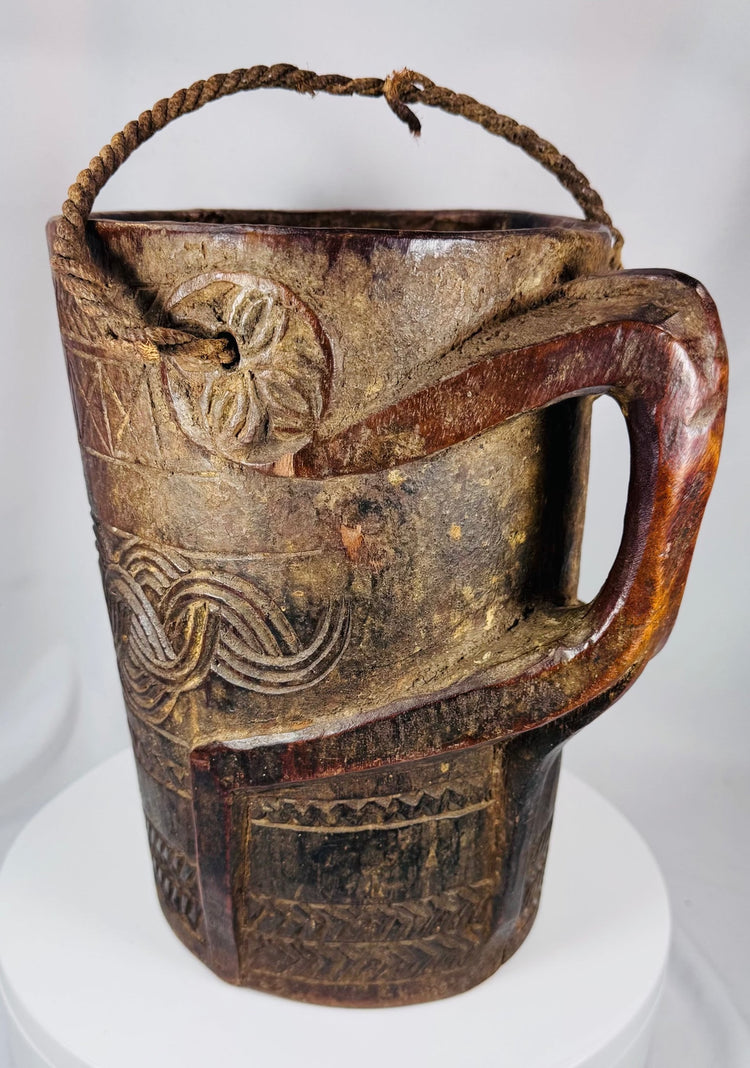
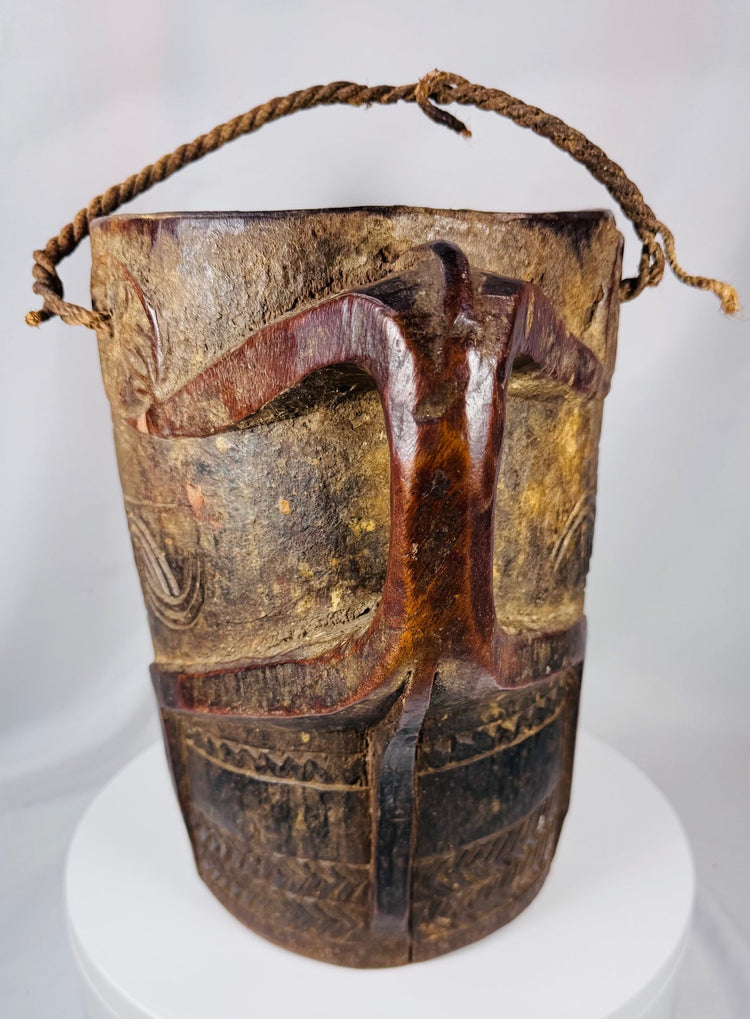
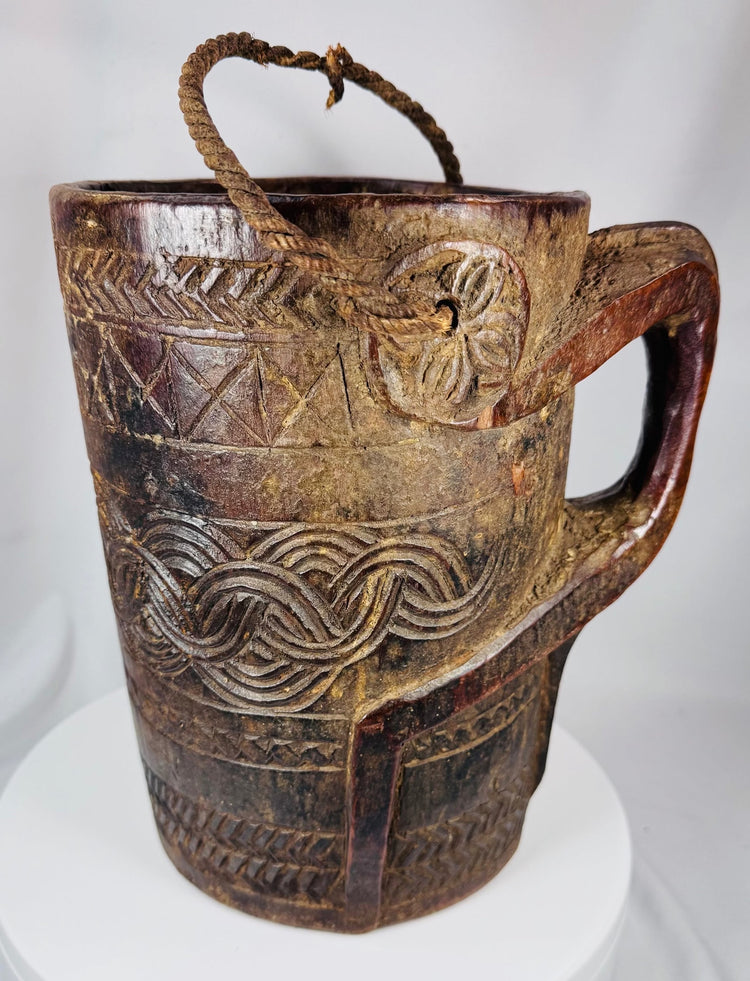
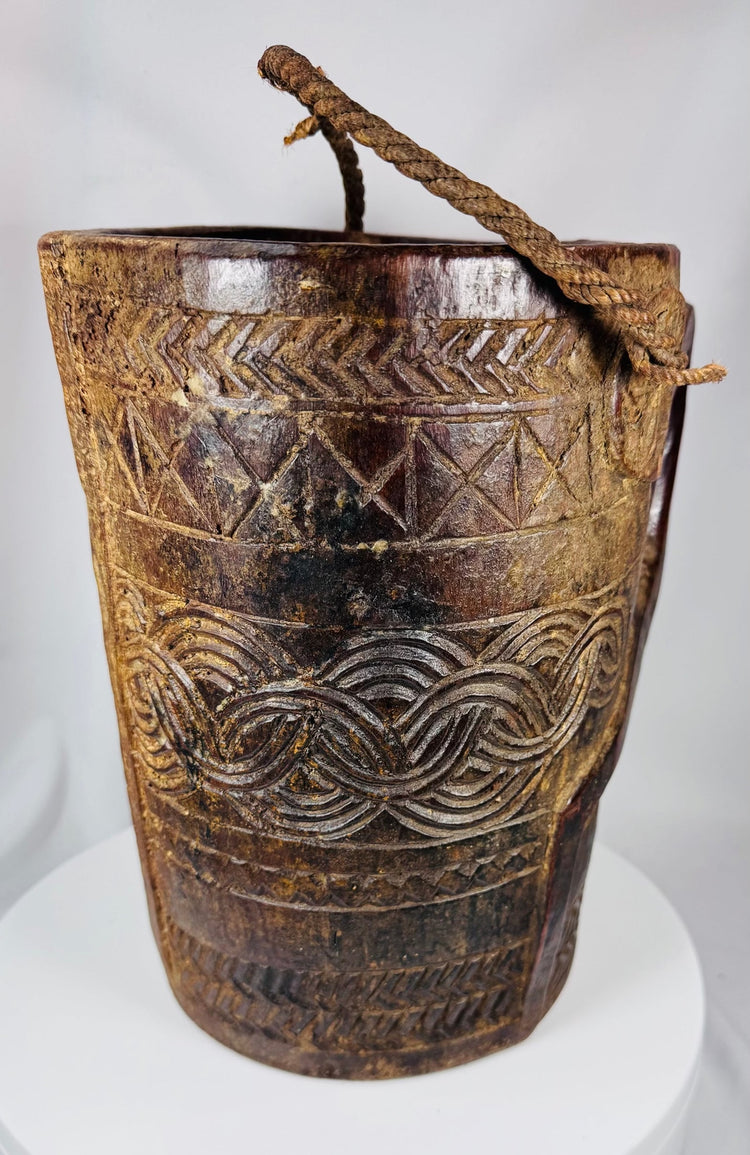
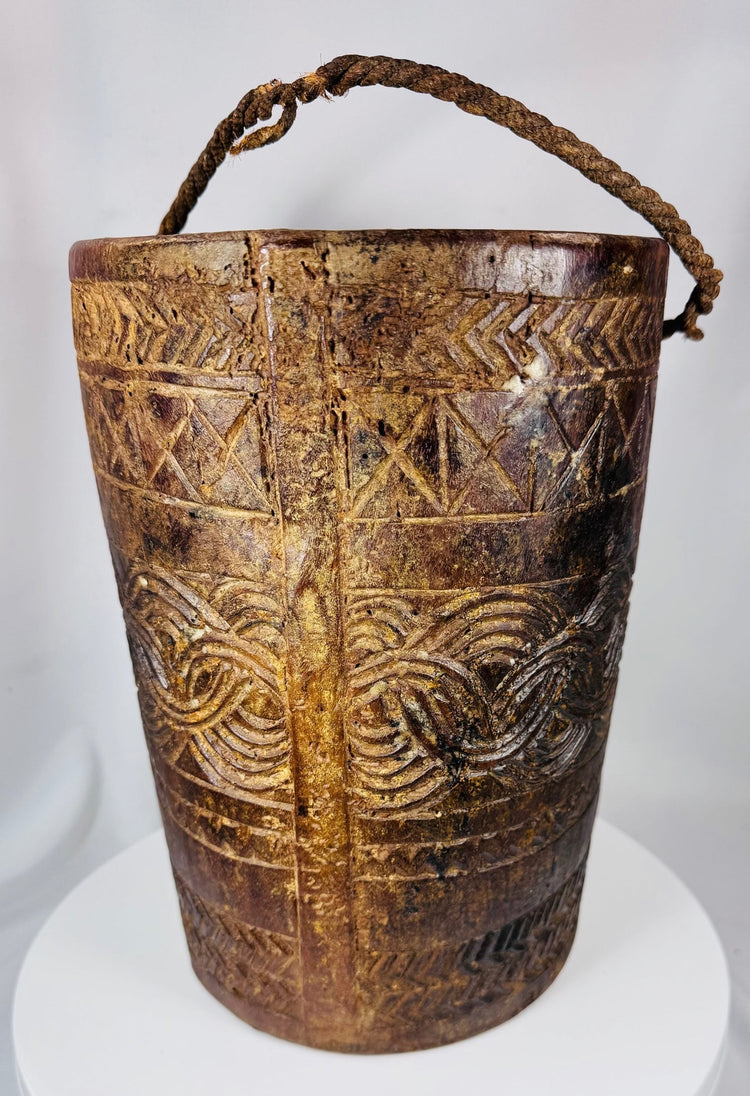
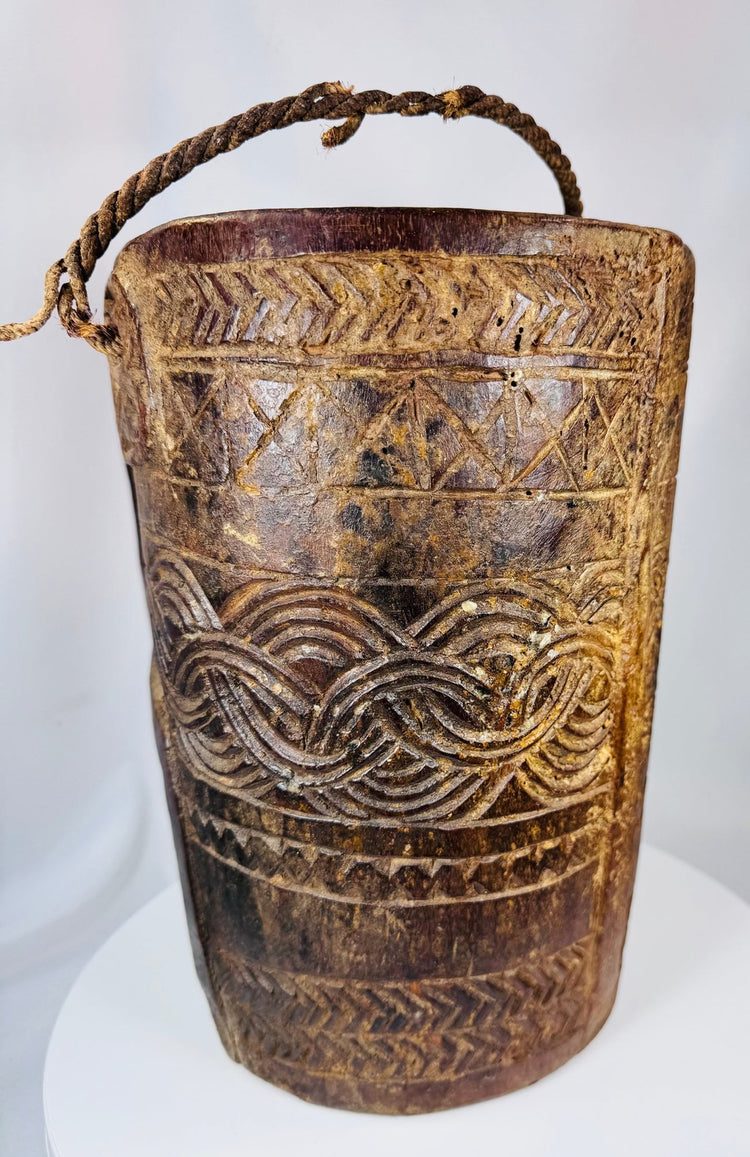
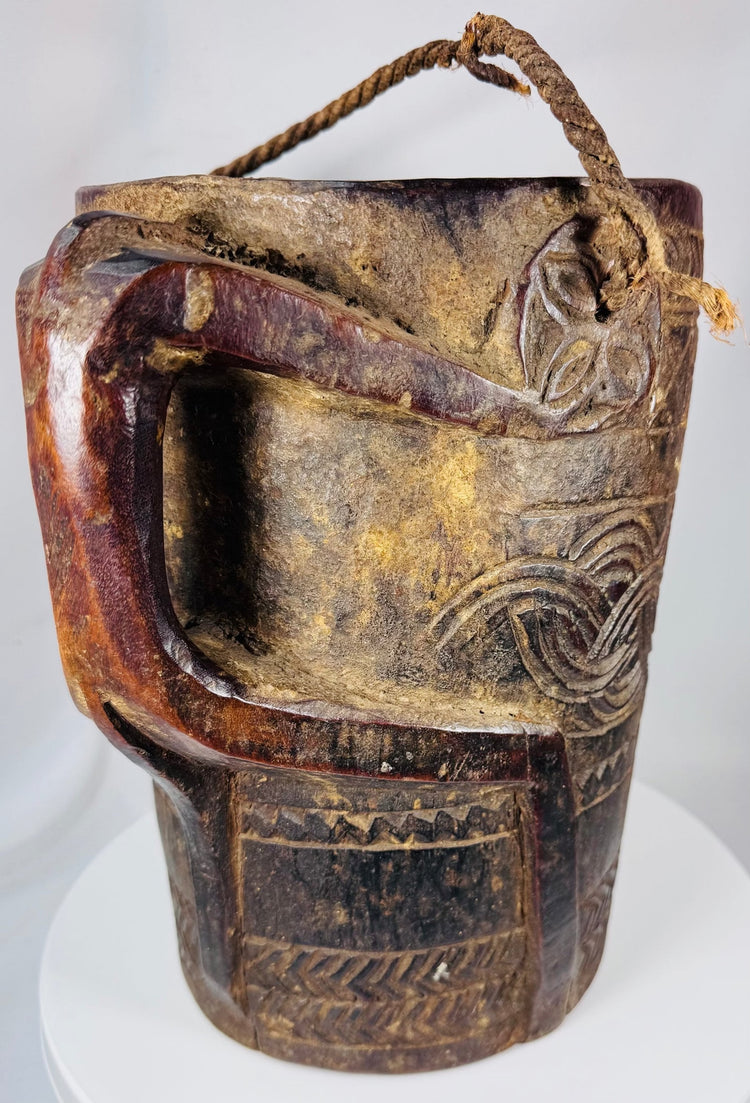
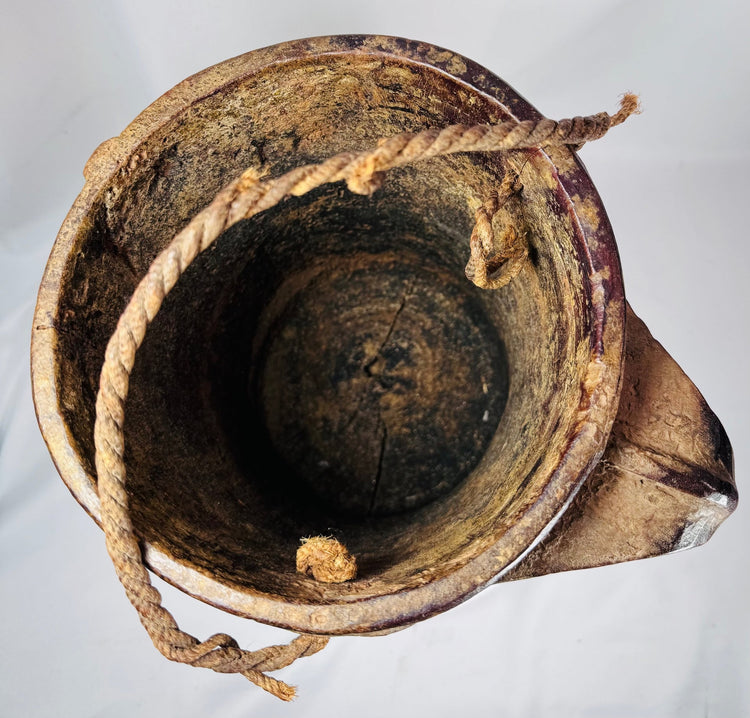
Le corps cylindrique est sculpté dans une épaisse section de bois dur et présente une poignée latérale intégrée sculpturale avec un cordon de suspension en fibre torsadée enfilé à travers des points d'attache circulaires sculptés. La surface sculptée présente des bordures géométriques répétées, des motifs d'entrelacs tressés et des bandes de motifs triangulaires exécutés avec une forte profondeur sculptée à la main et une texture visuelle.
Le récipient présente une usure importante liée à l'âge, une oxydation, une patine assombrie, des fissures de surface, d'anciennes activités d'insectes, des abrasions et une usure d'usage cohérente avec un âge prolongé et une manipulation traditionnelle. L'intérieur présente un assombrissement et une usure importants dus à une utilisation historique.
Les objets de cette nature étaient des articles ménagers essentiels dans toutes les communautés himalayennes où les récipients en bois sculpté jouaient un rôle pratique dans le transport et le stockage des produits laitiers, de l'eau, des boissons fermentées, du beurre et des denrées alimentaires dans des environnements montagneux accidentés.
Caractéristiques
- Grand récipient en bois dur himalayen sculpté à la main
- Motifs géométriques et entrelacés profondément sculptés
- Poignée de transport latérale intégrée sculpturale
- Poignée de suspension en corde de fibre torsadée originale
- Riche patine vieillie et usure traditionnelle partout
- Construction tribale rustique et robuste
- Forte présence ethnographique et décorative
Importance culturelle
Les récipients domestiques traditionnels en bois sculpté ont joué un rôle important dans les cultures pastorales himalayennes où des récipients durables fabriqués à la main étaient utilisés quotidiennement pour transporter et stocker les provisions essentielles. La sculpture décorative reflétait souvent les traditions artistiques locales, l'identité régionale et le savoir-faire pratique transmis par des générations d'artisans villageois.
État
Présente une usure importante liée à l'âge, des abrasions de surface, des fissures, des pertes éparses, des traces d'insectes, une patine assombrie et des irrégularités conformes à l'âge et à l'utilisation traditionnelle. La poignée en corde présente des effilochages et une usure due à l'âge. Dans l'ensemble, il présente exceptionnellement bien avec un caractère authentique fort et une présence visuelle.
Dimensions (Approximatives)
Hauteur : 28 cm
Largeur : 25 cm
Âge (Approximatif)
100 à 150 ans
Provenance
D'une collection privée à Philadelphie, Pennsylvanie, États-Unis. Le collectionneur était un voyageur invétéré dans les régions himalayennes et tibétaines, assemblant une collection soigneusement sélectionnée d'objets ethnographiques, religieux et culturels acquis au cours de ses nombreux voyages.
En savoir plus
Découvrez la culture matérielle traditionnelle des communautés montagnardes himalayennes grâce à Himalayan Art Resources
Découvrez notre collection d'artefacts culturels et ethnographiques
Description
Contexte historique et origine
Région : Région de l'Himalaya / Tibet ou Népal
Matériau : Bois dur sculpté à la main avec poignée en cordon de fibre
Période : Probablement du XIXe au début du XXe siècle
Description
Ce grand récipient en bois sculpté provient probablement de la région himalayenne, peut-être du Tibet ou du Népal, et semble être un récipient utilitaire traditionnel associé à un usage pastoral ou domestique. La forme, les motifs décoratifs sculptés, la construction en bois dur épais et la poignée de suspension en corde ressemblent fortement aux récipients laitiers et de stockage himalayens traditionnellement utilisés dans les communautés montagnardes.
Bien que des formes similaires soient parfois associées aux récipients de lait ou de beurre de yak, cet exemple semble plus précisément être un récipient de transport ou de stockage en bois sculpté utilisé pour les produits laitiers, les liquides, les céréales ou les provisions ménagères. Les motifs géométriques et entrelacés profondément sculptés sont très caractéristiques des traditions de sculpture folklorique himalayenne et reflètent le langage décoratif des objets domestiques régionaux.
Le corps cylindrique est sculpté dans une épaisse section de bois dur et présente une poignée latérale intégrée sculpturale avec un cordon de suspension en fibre torsadée enfilé à travers des points d'attache circulaires sculptés. La surface sculptée présente des bordures géométriques répétées, des motifs d'entrelacs tressés et des bandes de motifs triangulaires exécutés avec une forte profondeur sculptée à la main et une texture visuelle.
Le récipient présente une usure importante liée à l'âge, une oxydation, une patine assombrie, des fissures de surface, d'anciennes activités d'insectes, des abrasions et une usure d'usage cohérente avec un âge prolongé et une manipulation traditionnelle. L'intérieur présente un assombrissement et une usure importants dus à une utilisation historique.
Les objets de cette nature étaient des articles ménagers essentiels dans toutes les communautés himalayennes où les récipients en bois sculpté jouaient un rôle pratique dans le transport et le stockage des produits laitiers, de l'eau, des boissons fermentées, du beurre et des denrées alimentaires dans des environnements montagneux accidentés.
Caractéristiques
- Grand récipient en bois dur himalayen sculpté à la main
- Motifs géométriques et entrelacés profondément sculptés
- Poignée de transport latérale intégrée sculpturale
- Poignée de suspension en corde de fibre torsadée originale
- Riche patine vieillie et usure traditionnelle partout
- Construction tribale rustique et robuste
- Forte présence ethnographique et décorative
Importance culturelle
Les récipients domestiques traditionnels en bois sculpté ont joué un rôle important dans les cultures pastorales himalayennes où des récipients durables fabriqués à la main étaient utilisés quotidiennement pour transporter et stocker les provisions essentielles. La sculpture décorative reflétait souvent les traditions artistiques locales, l'identité régionale et le savoir-faire pratique transmis par des générations d'artisans villageois.
État
Présente une usure importante liée à l'âge, des abrasions de surface, des fissures, des pertes éparses, des traces d'insectes, une patine assombrie et des irrégularités conformes à l'âge et à l'utilisation traditionnelle. La poignée en corde présente des effilochages et une usure due à l'âge. Dans l'ensemble, il présente exceptionnellement bien avec un caractère authentique fort et une présence visuelle.
Dimensions (Approximatives)
Hauteur : 28 cm
Largeur : 25 cm
Âge (Approximatif)
100 à 150 ans
Provenance
D'une collection privée à Philadelphie, Pennsylvanie, États-Unis. Le collectionneur était un voyageur invétéré dans les régions himalayennes et tibétaines, assemblant une collection soigneusement sélectionnée d'objets ethnographiques, religieux et culturels acquis au cours de ses nombreux voyages.
En savoir plus
Découvrez la culture matérielle traditionnelle des communautés montagnardes himalayennes grâce à Himalayan Art Resources
Découvrez notre collection d'artefacts culturels et ethnographiques
Vous aimerez peut-être aussi
