



Himalaya ancien | Récipient cérémoniel en bois sculpté à la main | Fin du XIXe - Début du XXe siècle
- Prix habituel
- $250.00
- Prix soldé
- $250.00
- Prix habituel
Impossible de charger la disponibilité du service de retrait


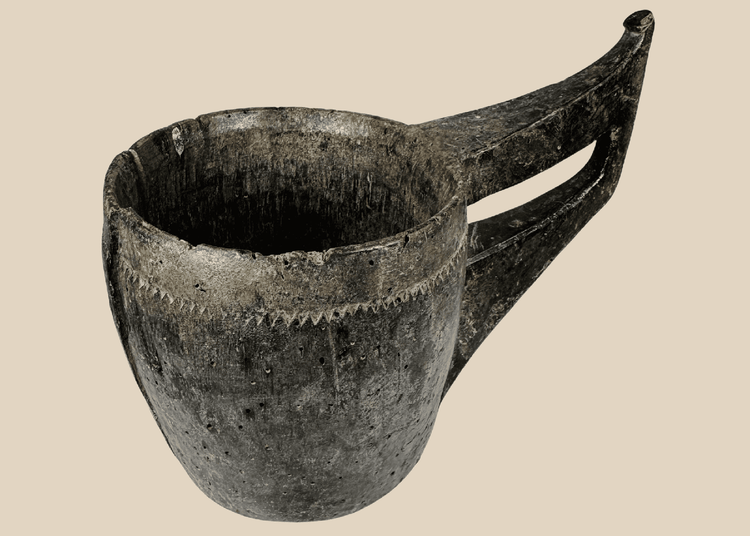
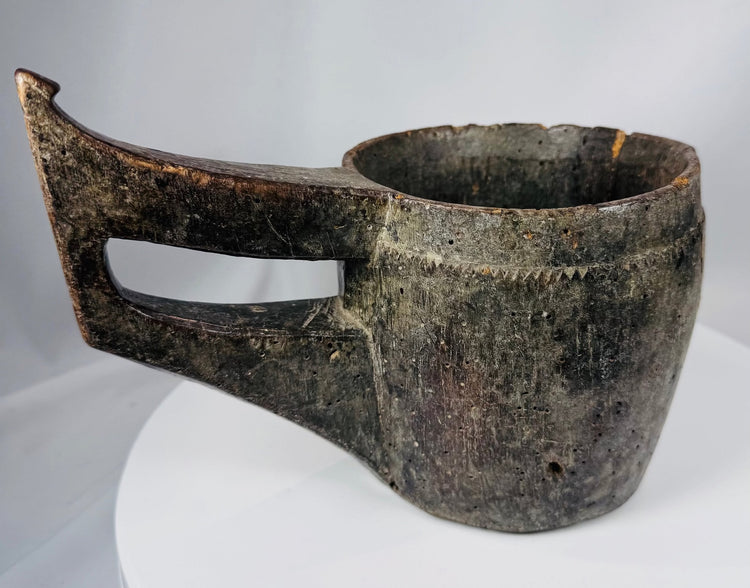
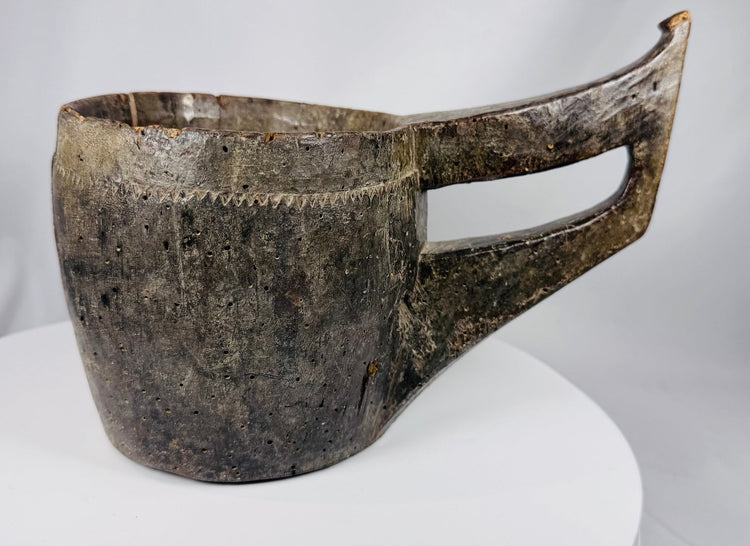
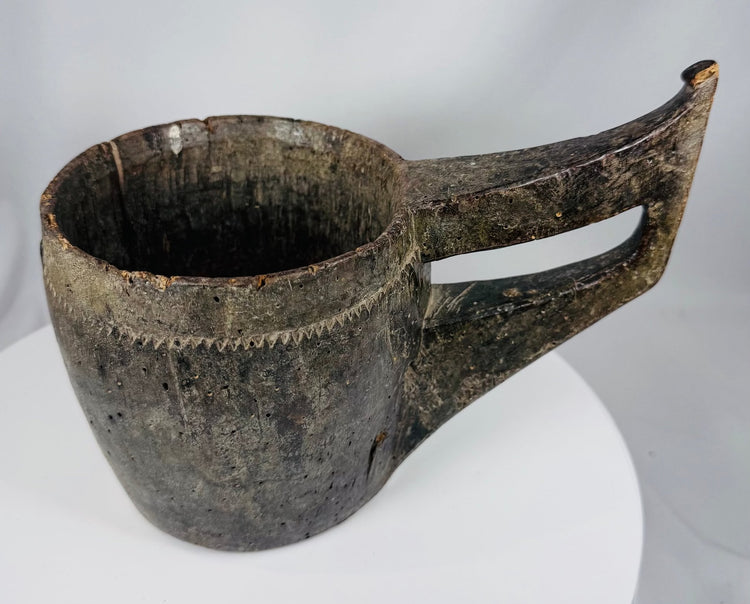
Himalaya ancien | Récipient cérémoniel en bois sculpté à la main | Fin du XIXe - Début du XXe siècle
Description
Plus
Moins
Contexte historique et origine
Région : Région himalayenne (Népal, Tibet, Bhoutan ou environs)
Matériau : Bois dur sculpté à la main
Période : Fin du XIXe - Début du XXe siècle
Description
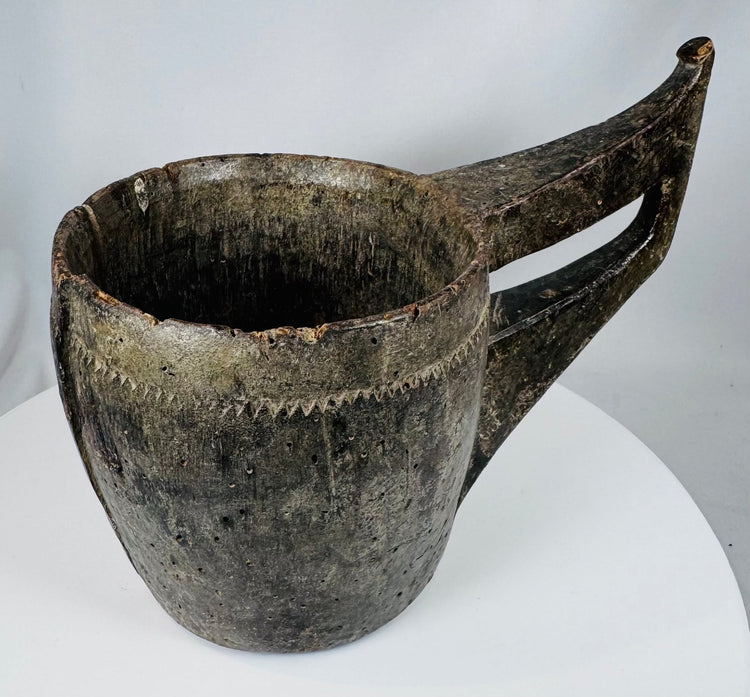
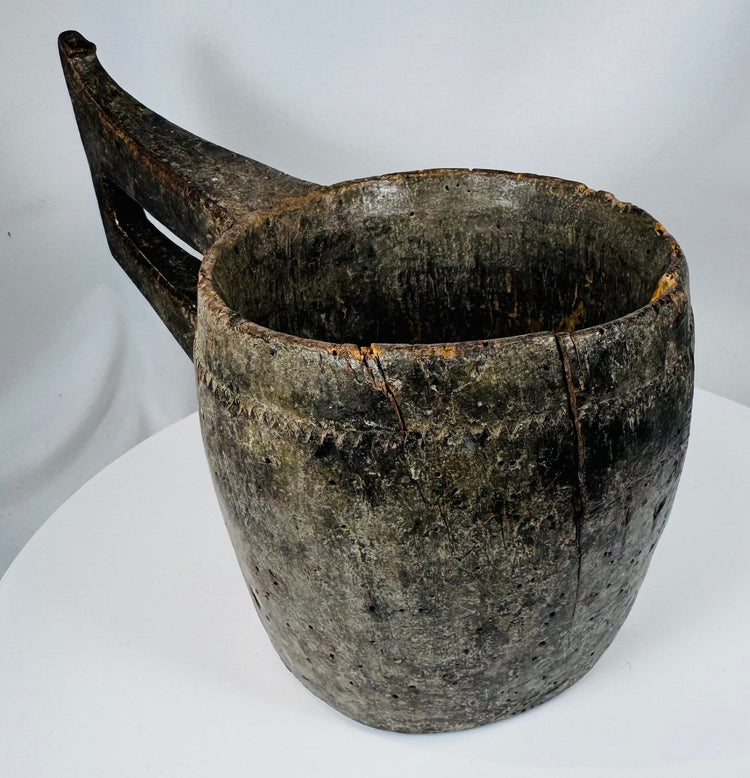
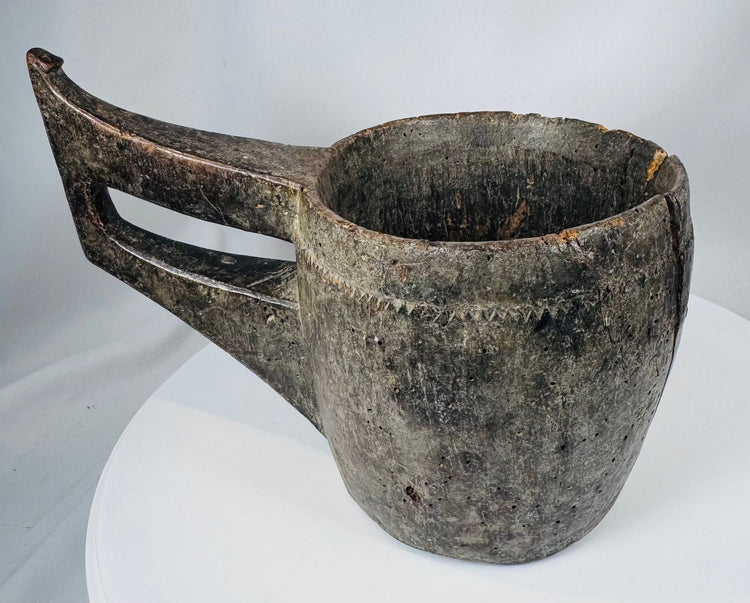
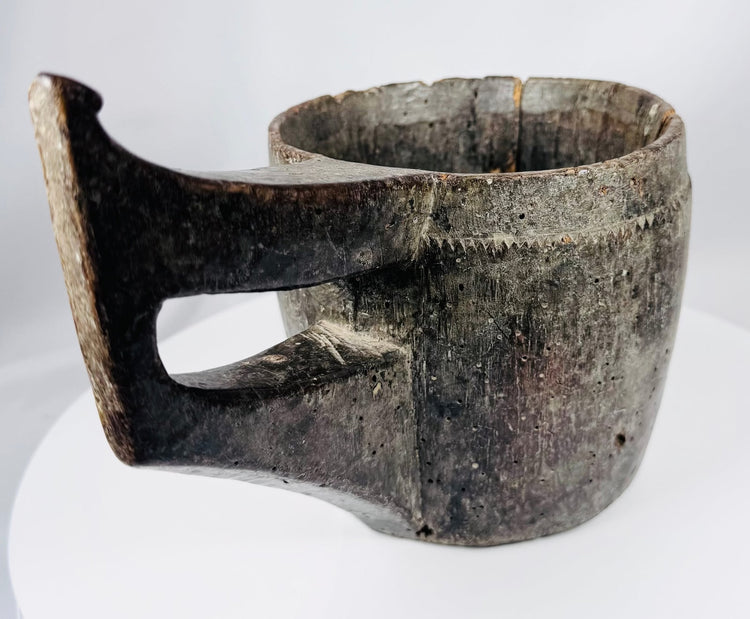
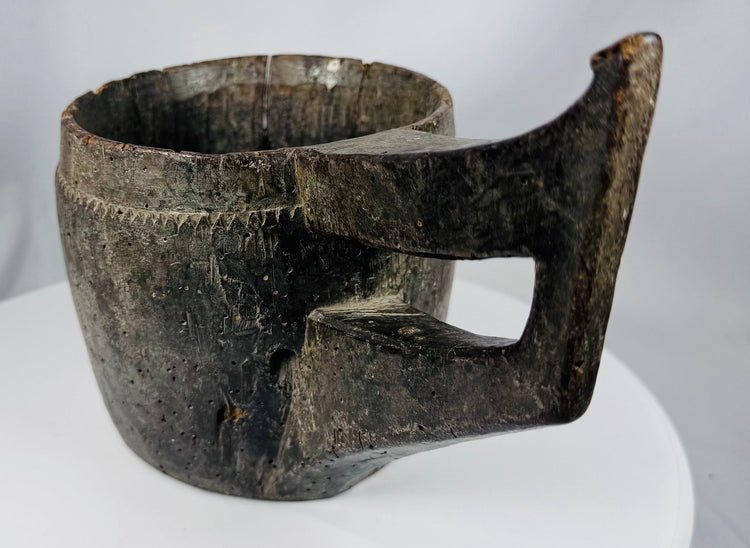
Ce remarquable récipient en bois sculpté à la main est un récipient ethnographique himalayen traditionnel ou un récipient en forme de cuillère cérémonielle, sculpté dans une seule section de bois dur creusée. La pièce présente un bassin profond et arrondi avec une poignée allongée intégrée se terminant par une forme de fleuron courbé vers le haut, donnant à l'objet une apparence très sculpturale et architecturale.
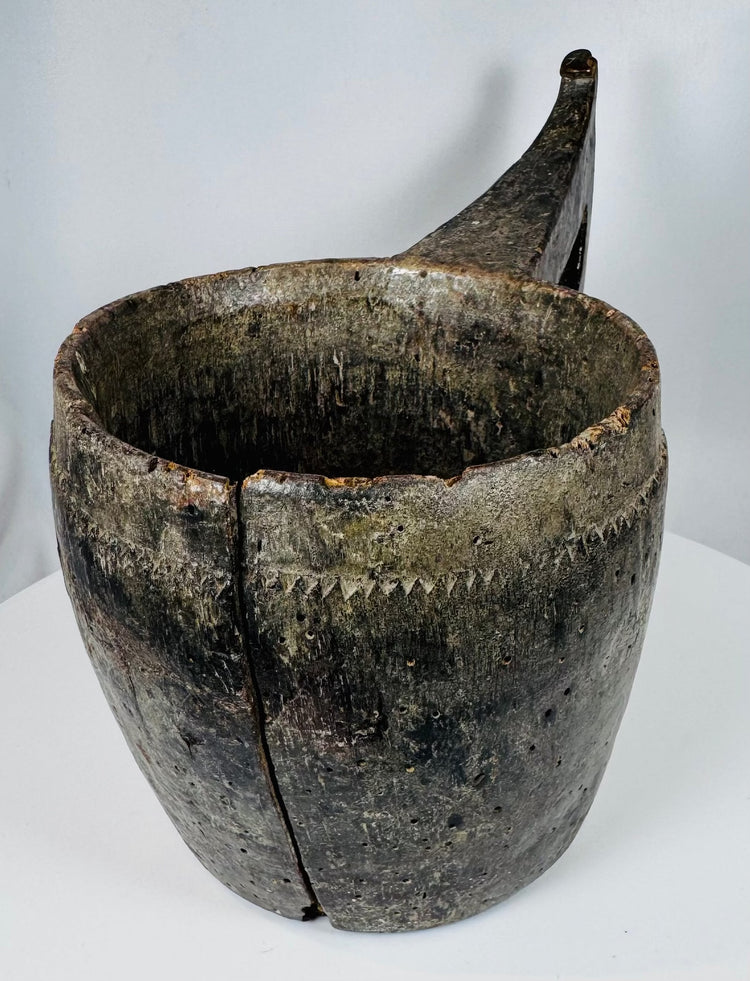
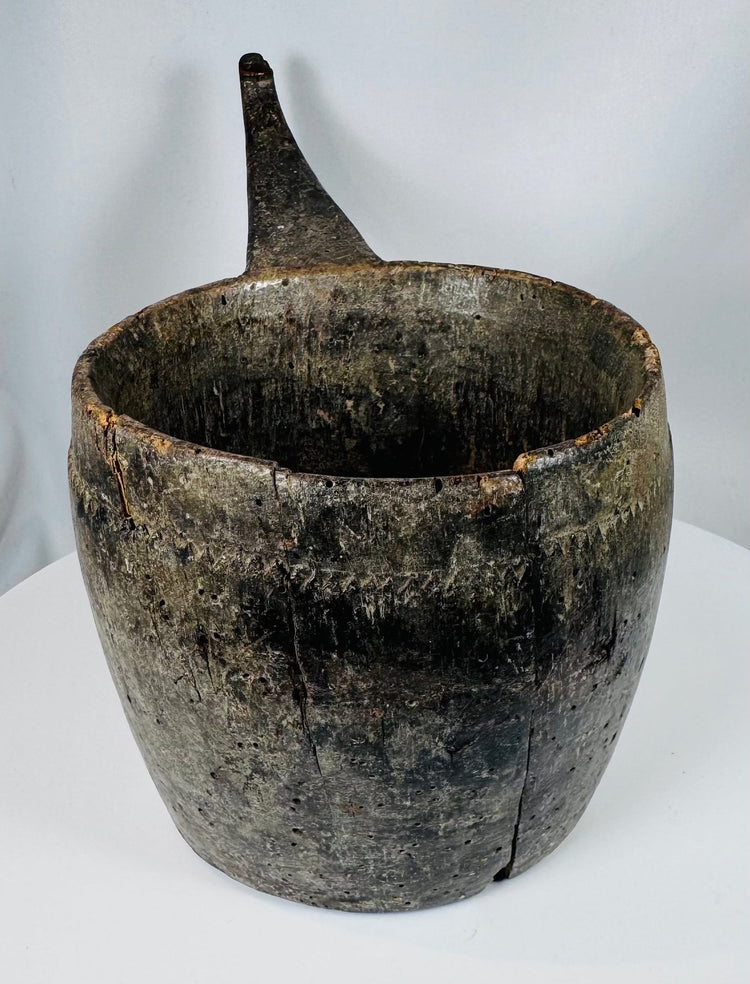
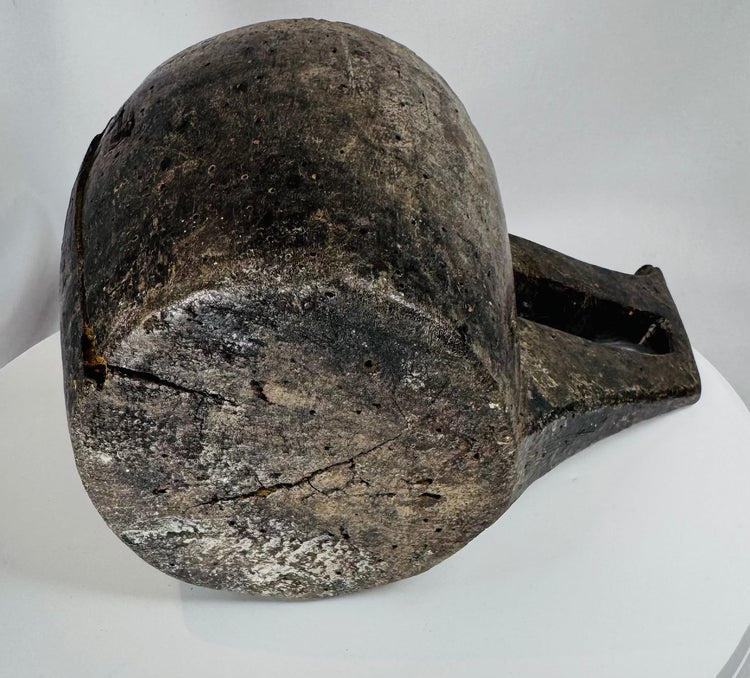
Le récipient présente une vaste patine de surface liée à l'âge, une oxydation, des fissures de retrait, une usure due aux insectes et une altération conforme à un âge prolongé et à une utilisation traditionnelle. Autour du périmètre supérieur se trouve une bordure à motif triangulaire finement sculptée, servant probablement à la fois à des fins décoratives et symboliques au sein des traditions artistiques populaires ou tribales himalayennes.
La forme générale ressemble étroitement aux récipients domestiques et cérémoniels traditionnels en bois sculpté associés aux cultures montagnardes himalayennes, où les récipients en bois dur fabriqués à la main étaient historiquement utilisés pour le stockage des céréales, la préparation des aliments, les offrandes rituelles, le traitement du beurre, le service communautaire ou l'utilité ménagère. La construction distinctive de la poignée allongée a pu également permettre de transporter, de suspendre ou d'utiliser le récipient lors de fonctions cérémonielles.
La surface fortement usée et la patine profondément vieillie confèrent une authenticité visuelle et un caractère substantiels. Les marques d'outils manuels, l'asymétrie organique et les années d'usure liée à l'utilisation renforcent l'origine artisanale traditionnelle et l'importance ethnographique de l'objet.
Avec sa forme primitive puissante et sa forte présence sculpturale, ce récipient se présente exceptionnellement bien à la fois comme un artefact ethnographique himalayen et un objet d'art tribal décoratif.
Caractéristiques
- Sculpté à la main dans une seule section de bois dur
- Poignée sculpturale allongée intégrée
- Motif de bordure triangulaire sculpté décoratif
- Bassin intérieur profond et creusé
- Riche patine vieillie et surface altérée
- Forte esthétique tribale et ethnographique himalayenne
- Excellente présence sculpturale d'exposition
Signification culturelle
Les récipients en bois de ce type ont joué un rôle important dans la vie des villages himalayens et des communautés montagnardes. Selon la région et la culture, de tels récipients auraient pu être associés à la préparation communautaire des aliments, aux offrandes cérémonielles, au stockage des céréales ou des produits laitiers, aux fonctions rituelles ou à l'utilité domestique quotidienne. Les motifs décoratifs sculptés étaient souvent incorporés pour leur signification symbolique, protectrice ou culturelle au sein des traditions artistiques locales.
État
Présente une forte usure liée à l'âge, une altération de la surface, des fissures de retrait, des trous d'insectes, des abrasions, une érosion de la surface et des pertes conformes à l'âge et à l'utilisation traditionnelle. Structurellement stable dans l'ensemble avec un fort caractère vieilli authentique et une patine partout.
Dimensions (Approximatives)
Hauteur : 6,5 pouces
Largeur : 8,75 pouces
Âge (Approximatif)
100–150 ans
Provenance
D'une collection privée à Philadelphie, Pennsylvanie, États-Unis. Le collectionneur était un voyageur toute sa vie à travers les régions himalayennes et tibétaines, assemblant une collection soigneusement organisée d'objets ethnographiques, religieux et culturels acquis au cours de ses vastes voyages.
En savoir plus
Découvrez le patrimoine culturel et les traditions durables de la région himalayenne sur Patrimoine culturel de l'Himalaya
Explorez notre Collection d'artefacts culturels et ethnographiques
Description
Contexte historique et origine
Région : Région himalayenne (Népal, Tibet, Bhoutan ou environs)
Matériau : Bois dur sculpté à la main
Période : Fin du XIXe - Début du XXe siècle
Description
Ce remarquable récipient en bois sculpté à la main est un récipient ethnographique himalayen traditionnel ou un récipient en forme de cuillère cérémonielle, sculpté dans une seule section de bois dur creusée. La pièce présente un bassin profond et arrondi avec une poignée allongée intégrée se terminant par une forme de fleuron courbé vers le haut, donnant à l'objet une apparence très sculpturale et architecturale.
Le récipient présente une vaste patine de surface liée à l'âge, une oxydation, des fissures de retrait, une usure due aux insectes et une altération conforme à un âge prolongé et à une utilisation traditionnelle. Autour du périmètre supérieur se trouve une bordure à motif triangulaire finement sculptée, servant probablement à la fois à des fins décoratives et symboliques au sein des traditions artistiques populaires ou tribales himalayennes.
La forme générale ressemble étroitement aux récipients domestiques et cérémoniels traditionnels en bois sculpté associés aux cultures montagnardes himalayennes, où les récipients en bois dur fabriqués à la main étaient historiquement utilisés pour le stockage des céréales, la préparation des aliments, les offrandes rituelles, le traitement du beurre, le service communautaire ou l'utilité ménagère. La construction distinctive de la poignée allongée a pu également permettre de transporter, de suspendre ou d'utiliser le récipient lors de fonctions cérémonielles.
La surface fortement usée et la patine profondément vieillie confèrent une authenticité visuelle et un caractère substantiels. Les marques d'outils manuels, l'asymétrie organique et les années d'usure liée à l'utilisation renforcent l'origine artisanale traditionnelle et l'importance ethnographique de l'objet.
Avec sa forme primitive puissante et sa forte présence sculpturale, ce récipient se présente exceptionnellement bien à la fois comme un artefact ethnographique himalayen et un objet d'art tribal décoratif.
Caractéristiques
- Sculpté à la main dans une seule section de bois dur
- Poignée sculpturale allongée intégrée
- Motif de bordure triangulaire sculpté décoratif
- Bassin intérieur profond et creusé
- Riche patine vieillie et surface altérée
- Forte esthétique tribale et ethnographique himalayenne
- Excellente présence sculpturale d'exposition
Signification culturelle
Les récipients en bois de ce type ont joué un rôle important dans la vie des villages himalayens et des communautés montagnardes. Selon la région et la culture, de tels récipients auraient pu être associés à la préparation communautaire des aliments, aux offrandes cérémonielles, au stockage des céréales ou des produits laitiers, aux fonctions rituelles ou à l'utilité domestique quotidienne. Les motifs décoratifs sculptés étaient souvent incorporés pour leur signification symbolique, protectrice ou culturelle au sein des traditions artistiques locales.
État
Présente une forte usure liée à l'âge, une altération de la surface, des fissures de retrait, des trous d'insectes, des abrasions, une érosion de la surface et des pertes conformes à l'âge et à l'utilisation traditionnelle. Structurellement stable dans l'ensemble avec un fort caractère vieilli authentique et une patine partout.
Dimensions (Approximatives)
Hauteur : 6,5 pouces
Largeur : 8,75 pouces
Âge (Approximatif)
100–150 ans
Provenance
D'une collection privée à Philadelphie, Pennsylvanie, États-Unis. Le collectionneur était un voyageur toute sa vie à travers les régions himalayennes et tibétaines, assemblant une collection soigneusement organisée d'objets ethnographiques, religieux et culturels acquis au cours de ses vastes voyages.
En savoir plus
Découvrez le patrimoine culturel et les traditions durables de la région himalayenne sur Patrimoine culturel de l'Himalaya
Explorez notre Collection d'artefacts culturels et ethnographiques
Vous aimerez peut-être aussi
