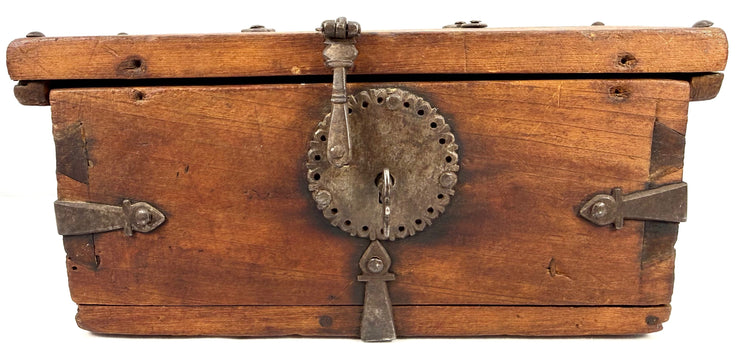
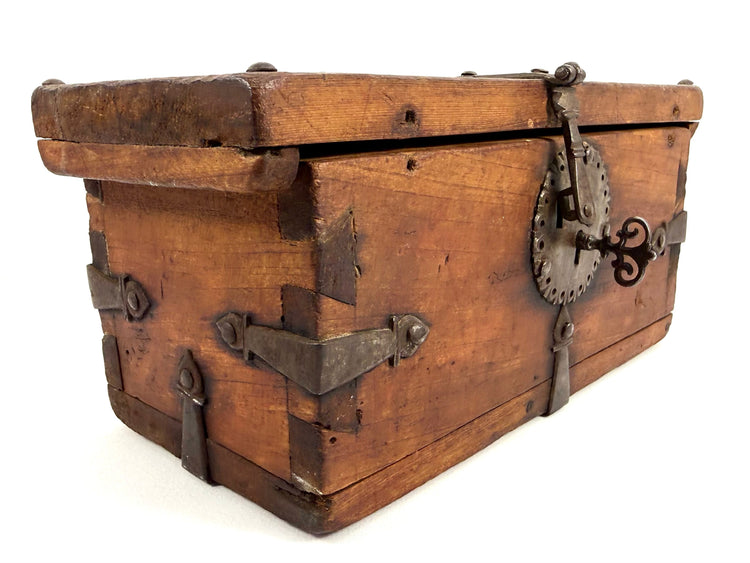
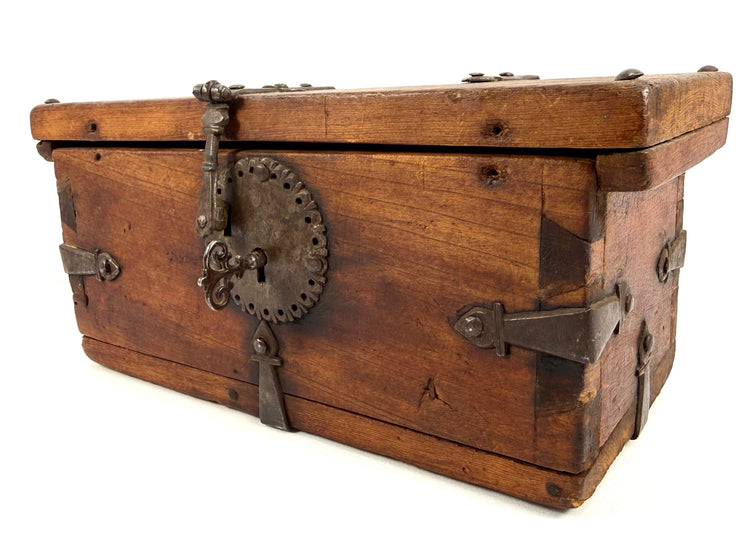
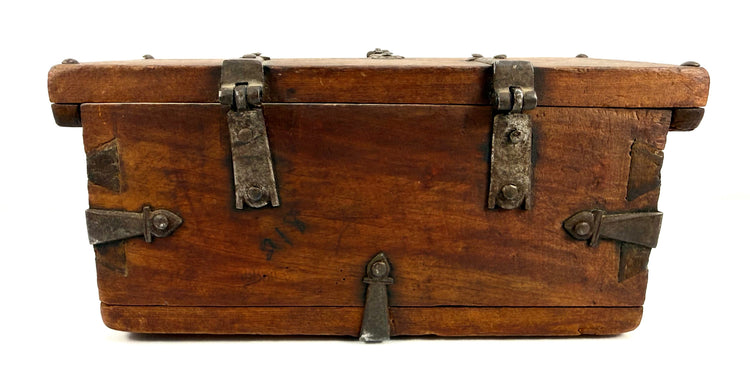
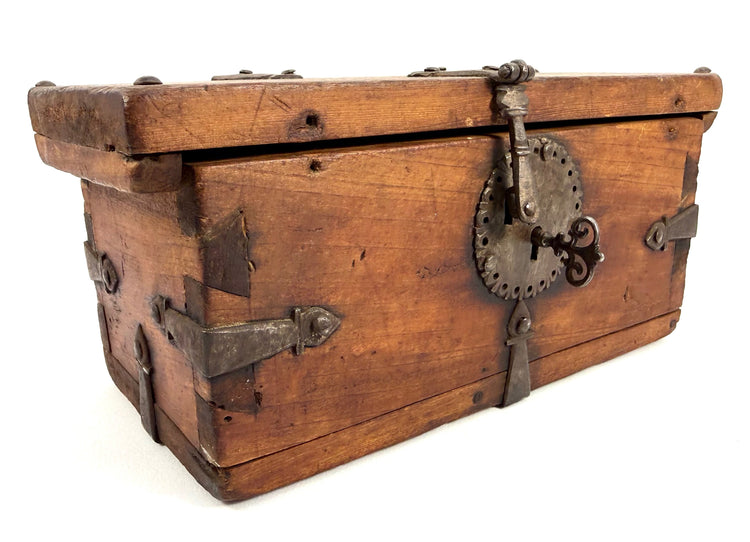
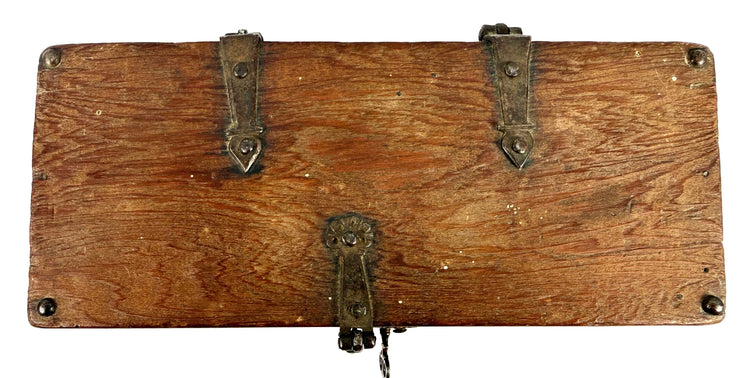
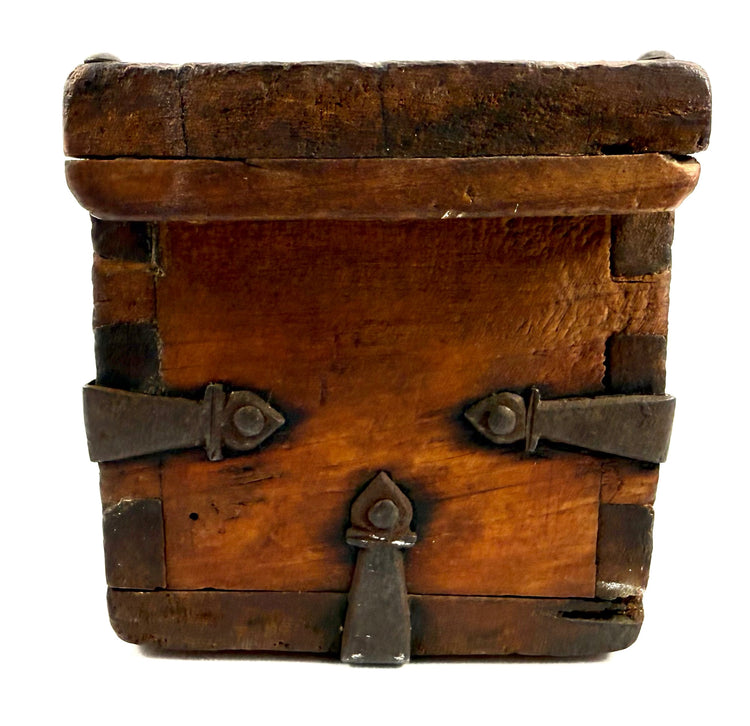
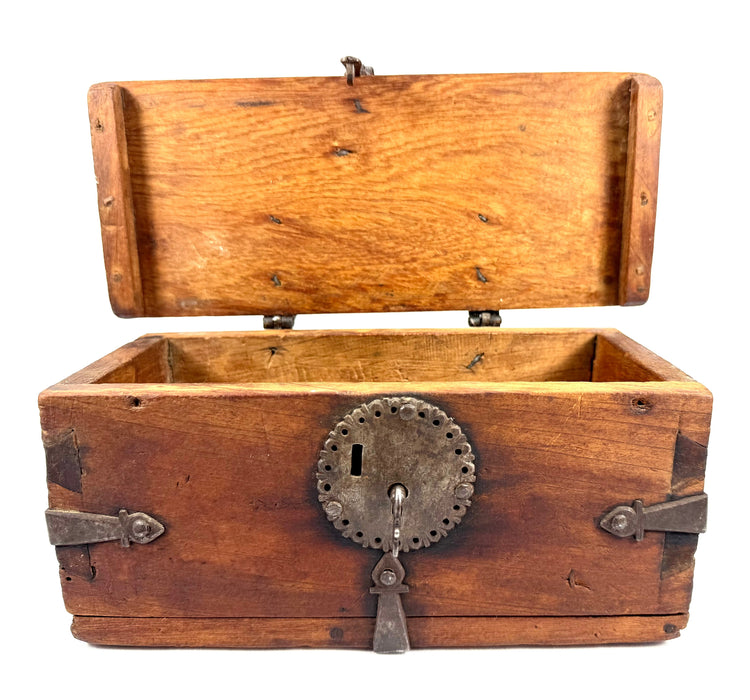
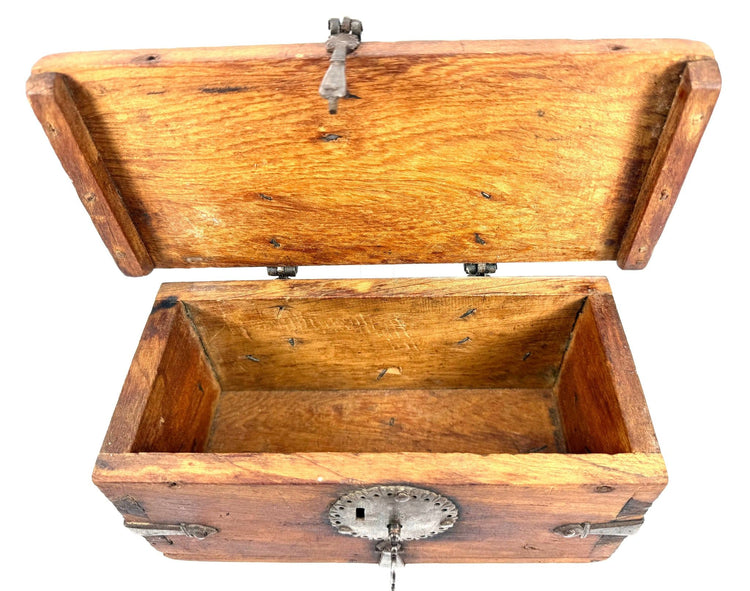
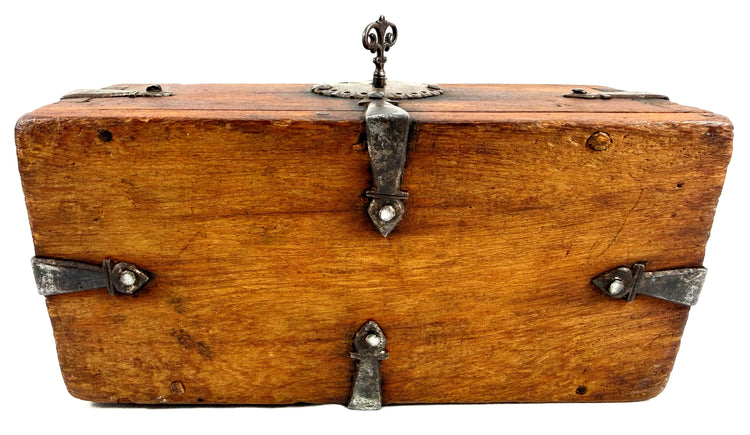
Ancienne malle-forte himalayenne de marchand en fer forgé et sa clé | Circa 1780 - 1820

Historique de provenance et de propriété

Anciennement détenue dans une collection privée à Bangor, Maine, États-Unis. Ensuite gérée par Thomaston Place Auction Galleries en 2025, puis acquise par un collectionneur privé à Toronto, Ontario, Canada.

Prix habituel
$1,000.00
Prix soldé
$1,000.00
Prix habituel
Frais de port calculés à la caisse.

This is a one-of-a-kind historical object. Once sold, this exact piece will not be restocked.

Questions before acquiring? Additional photographs, condition details, documentation, shipping information or a private viewing are available upon request.
Antique Himalayan merchant strongbox with hand-forged iron corner reinforcements and ornate scrollwork key
Antique Himalayan elmwood and hand-forged iron lockbox, circa 1780–1820, featuring a decorative circular hasp plate, reinforced iron fittings, original working lock and ornate key.
Frontal view of elmwood lockbox with heavy dark iron hardware, strap hinges, and central locking mechanism
Antique Himalayan Merchant Strongbox with hand-forged iron corner straps and ornate scroll-key in lock
Side view of elmwood strongbox showing heavy iron bracing, strap hinges, and decorative circular lock escutcheon
Historic Himalayan wooden lockbox with hand-forged iron hinges, heavy metal straps, and traditional dovetail joinery.
Frontal view of antique wooden strongbox with warm brown finish, iron corner straps, and large hasp plate
Bottom view of antique wooden strongbox displaying natural wood grain and four rounded iron foot studs
Antique Himalayan storage box with heavy hand-forged iron reinforcements, aged timber, and decorative metalwork.
Antique wooden travel chest with original wrought iron fittings, visible craftsmanship, and naturally aged surface texture.
Historic Himalayan lockbox featuring a solid elmwood body, sturdy iron hinges, and decorative metal strapping.
Rear view of antique chest featuring central vertical iron latch with fleur-de-lis finial and horizontal bands
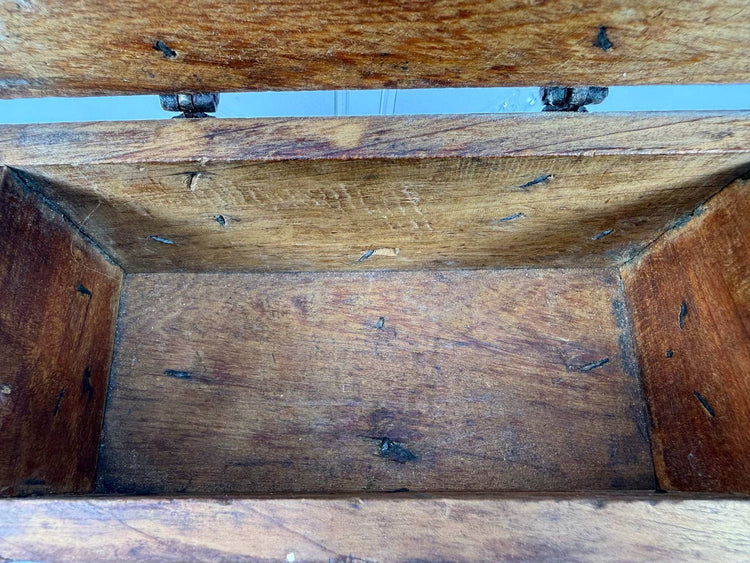
Antique elmwood lockbox with an intact wooden interior, aged construction, and traditional hand-forged iron fittings.
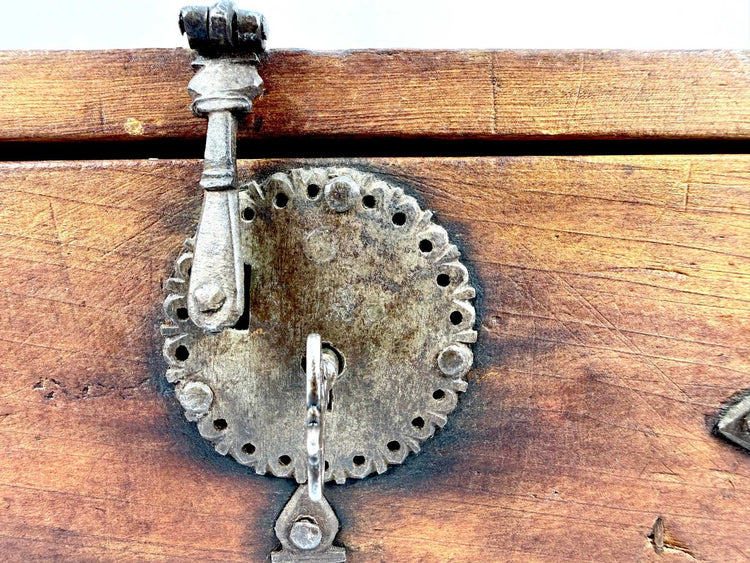
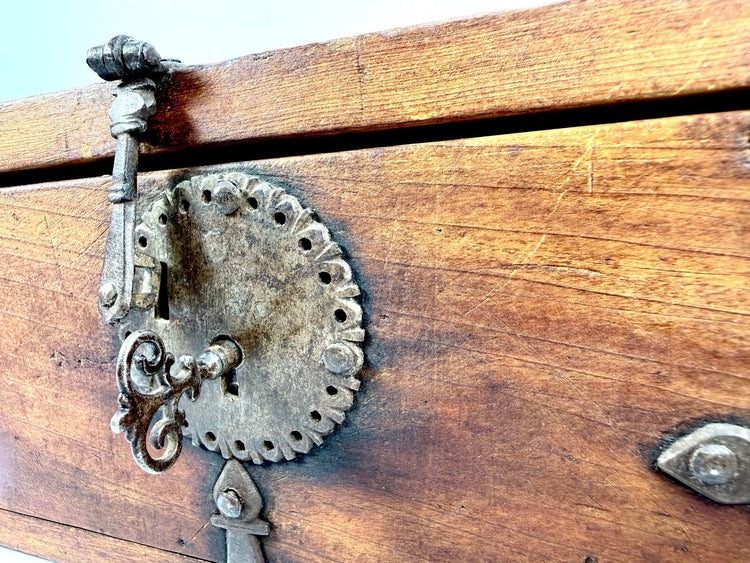
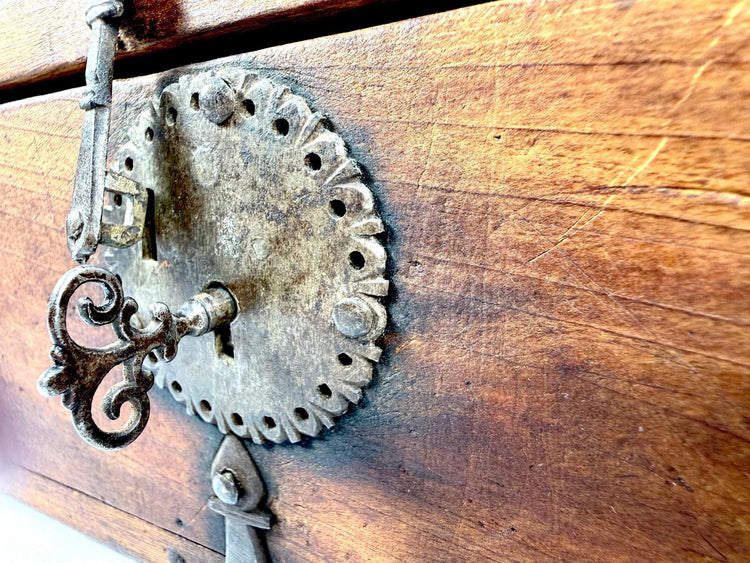
Close-up of circular hand-forged iron lock plate with scalloped edge and raised metal slide bolt mechanism
Antique Asian wooden lockbox with an original functional iron lock, elaborate metal hardware, and aged elmwood construction.
Macro shot of ornate dark iron key with scrolled bow inserted into perforated lock plate on elmwood box
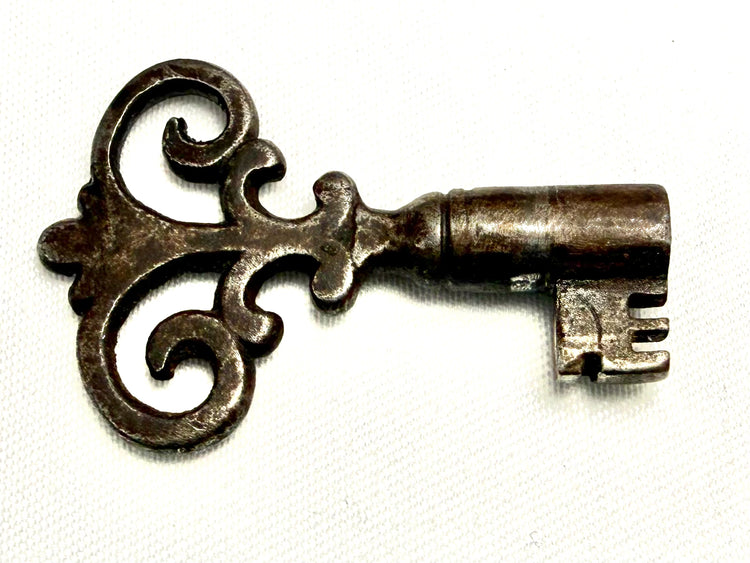
Close-up of ornate hand-forged iron skeleton key with intricate scrollwork bow and bitted end
  • Antique Himalayan merchant strongbox with hand-forged iron corner reinforcements and ornate scrollwork key
  • Antique Himalayan elmwood and hand-forged iron lockbox, circa 1780–1820, featuring a decorative circular hasp plate, reinforced iron fittings, original working lock and ornate key.
  • Frontal view of elmwood lockbox with heavy dark iron hardware, strap hinges, and central locking mechanism
  • Antique Himalayan Merchant Strongbox with hand-forged iron corner straps and ornate scroll-key in lock
  • Side view of elmwood strongbox showing heavy iron bracing, strap hinges, and decorative circular lock escutcheon
  • Historic Himalayan wooden lockbox with hand-forged iron hinges, heavy metal straps, and traditional dovetail joinery.
  • Frontal view of antique wooden strongbox with warm brown finish, iron corner straps, and large hasp plate
  • Bottom view of antique wooden strongbox displaying natural wood grain and four rounded iron foot studs
  • Antique Himalayan storage box with heavy hand-forged iron reinforcements, aged timber, and decorative metalwork.
  • Antique wooden travel chest with original wrought iron fittings, visible craftsmanship, and naturally aged surface texture.
  • Historic Himalayan lockbox featuring a solid elmwood body, sturdy iron hinges, and decorative metal strapping.
  • Rear view of antique chest featuring central vertical iron latch with fleur-de-lis finial and horizontal bands
  • Antique elmwood lockbox with an intact wooden interior, aged construction, and traditional hand-forged iron fittings.
  • Close-up of circular hand-forged iron lock plate with scalloped edge and raised metal slide bolt mechanism
  • Antique Asian wooden lockbox with an original functional iron lock, elaborate metal hardware, and aged elmwood construction.
  • Macro shot of ornate dark iron key with scrolled bow inserted into perforated lock plate on elmwood box
  • Close-up of ornate hand-forged iron skeleton key with intricate scrollwork bow and bitted end
Antique Himalayan merchant strongbox with hand-forged iron corner reinforcements and ornate scrollwork key
Antique Himalayan elmwood and hand-forged iron lockbox, circa 1780–1820, featuring a decorative circular hasp plate, reinforced iron fittings, original working lock and ornate key.
Frontal view of elmwood lockbox with heavy dark iron hardware, strap hinges, and central locking mechanism
Antique Himalayan Merchant Strongbox with hand-forged iron corner straps and ornate scroll-key in lock
Side view of elmwood strongbox showing heavy iron bracing, strap hinges, and decorative circular lock escutcheon
Historic Himalayan wooden lockbox with hand-forged iron hinges, heavy metal straps, and traditional dovetail joinery.
Frontal view of antique wooden strongbox with warm brown finish, iron corner straps, and large hasp plate
Bottom view of antique wooden strongbox displaying natural wood grain and four rounded iron foot studs
Antique Himalayan storage box with heavy hand-forged iron reinforcements, aged timber, and decorative metalwork.
Antique wooden travel chest with original wrought iron fittings, visible craftsmanship, and naturally aged surface texture.
Historic Himalayan lockbox featuring a solid elmwood body, sturdy iron hinges, and decorative metal strapping.
Rear view of antique chest featuring central vertical iron latch with fleur-de-lis finial and horizontal bands
Antique elmwood lockbox with an intact wooden interior, aged construction, and traditional hand-forged iron fittings.
Close-up of circular hand-forged iron lock plate with scalloped edge and raised metal slide bolt mechanism
Antique Asian wooden lockbox with an original functional iron lock, elaborate metal hardware, and aged elmwood construction.
Macro shot of ornate dark iron key with scrolled bow inserted into perforated lock plate on elmwood box
Close-up of ornate hand-forged iron skeleton key with intricate scrollwork bow and bitted end
Authenticity and secure checkout guarantee

Ancienne malle-forte himalayenne de marchand en fer forgé et sa clé | Circa 1780 - 1820

Description

Contexte historique et origine

Région : Nord de l'Inde, Népal ou Tibet
Matériaux : Bois d'orme et fer forgé à la main
Période : Fin du XVIIIe - début du XIXe siècle (env. 1780–1820)

Description

Ce coffre à serrures exceptionnellement bien conservé est fabriqué en bois d'orme massif, renforcé par des montures et ferrures en fer forgé à la main. Le coffre est doté d'une grande plaque de moraillon circulaire avec un rebord perforé, de solides renforts d'angle et de son mécanisme de verrouillage d'origine, complet avec une clé en fer ornée. Construit à la fois pour la solidité et la mobilité, le coffre témoigne d'un savoir-faire méticuleux, avec des marques d'outils visibles et une riche patine vieillie sur les surfaces en bois et en fer. Les coffres de ce type étaient traditionnellement utilisés par les marchands, les moines ou les fonctionnaires pour protéger les objets de valeur, les objets sacrés et les documents importants lors de leurs déplacements sur les routes commerciales de l'Himalaya et de l'Asie centrale.

Caractéristiques

- Fabriqué en bois d'orme massif avec assemblage à queue d'aronde

- Toute la quincaillerie d'origine en fer forgé à la main, y compris les charnières, les sangles et la serrure

- Grande plaque de moraillon circulaire avec perforations décoratives

- Serrure fonctionnelle d'origine avec clé en fer ornée

- Intérieur inchangé, propre et intact

- Belle patine naturelle sur le bois et le fer

Signification culturelle

Les coffres de voyage et les coffres à serrures servaient de récipients essentiels de rangement et de sécurité à travers l'Asie du Sud et centrale. Au-delà de leur fonction utilitaire, ils symbolisaient la confiance et l'autorité, accompagnant souvent les marchands lors de leurs expéditions commerciales ou protégeant des objets religieux dans les monastères. La survie de cet exemple avec sa clé intacte reflète non seulement la durabilité, mais aussi la révérence accordée aux coffres de protection bien fabriqués des XVIIIe et XIXe siècles.

État

Excellent état antique sans réparations modernes. Usure de surface, oxydation du fer et marques mineures conformes à l'âge et à l'usage. La serrure reste fonctionnelle avec la clé d'origine.

Dimensions (Approximatives)

Largeur : 24,1 cm
Profondeur : 11,4 cm

Âge (Approximatif)

206-246 ans

Provenance

Anciennement dans une collection privée à Bangor, Maine, États-Unis. Ensuite, vendu par Thomaston Place Auction Galleries en 2025, puis acquis par un collectionneur privé à Toronto, Ontario, Canada.

En savoir plus

Découvrez les origines de l'ancienne forge sur Origines de la Forge

Explorez notre Collection d'Outils Anciens et d'Instruments Artisanaux

Description

Contexte historique et origine

Région : Nord de l'Inde, Népal ou Tibet
Matériaux : Bois d'orme et fer forgé à la main
Période : Fin du XVIIIe - début du XIXe siècle (env. 1780–1820)

Description

Ce coffre à serrures exceptionnellement bien conservé est fabriqué en bois d'orme massif, renforcé par des montures et ferrures en fer forgé à la main. Le coffre est doté d'une grande plaque de moraillon circulaire avec un rebord perforé, de solides renforts d'angle et de son mécanisme de verrouillage d'origine, complet avec une clé en fer ornée. Construit à la fois pour la solidité et la mobilité, le coffre témoigne d'un savoir-faire méticuleux, avec des marques d'outils visibles et une riche patine vieillie sur les surfaces en bois et en fer. Les coffres de ce type étaient traditionnellement utilisés par les marchands, les moines ou les fonctionnaires pour protéger les objets de valeur, les objets sacrés et les documents importants lors de leurs déplacements sur les routes commerciales de l'Himalaya et de l'Asie centrale.

Caractéristiques

- Fabriqué en bois d'orme massif avec assemblage à queue d'aronde

- Toute la quincaillerie d'origine en fer forgé à la main, y compris les charnières, les sangles et la serrure

- Grande plaque de moraillon circulaire avec perforations décoratives

- Serrure fonctionnelle d'origine avec clé en fer ornée

- Intérieur inchangé, propre et intact

- Belle patine naturelle sur le bois et le fer

Signification culturelle

Les coffres de voyage et les coffres à serrures servaient de récipients essentiels de rangement et de sécurité à travers l'Asie du Sud et centrale. Au-delà de leur fonction utilitaire, ils symbolisaient la confiance et l'autorité, accompagnant souvent les marchands lors de leurs expéditions commerciales ou protégeant des objets religieux dans les monastères. La survie de cet exemple avec sa clé intacte reflète non seulement la durabilité, mais aussi la révérence accordée aux coffres de protection bien fabriqués des XVIIIe et XIXe siècles.

État

Excellent état antique sans réparations modernes. Usure de surface, oxydation du fer et marques mineures conformes à l'âge et à l'usage. La serrure reste fonctionnelle avec la clé d'origine.

Dimensions (Approximatives)

Largeur : 24,1 cm
Profondeur : 11,4 cm

Âge (Approximatif)

206-246 ans

Provenance

Anciennement dans une collection privée à Bangor, Maine, États-Unis. Ensuite, vendu par Thomaston Place Auction Galleries en 2025, puis acquis par un collectionneur privé à Toronto, Ontario, Canada.

En savoir plus

Découvrez les origines de l'ancienne forge sur Origines de la Forge

Explorez notre Collection d'Outils Anciens et d'Instruments Artisanaux

Vous aimerez peut-être aussi