


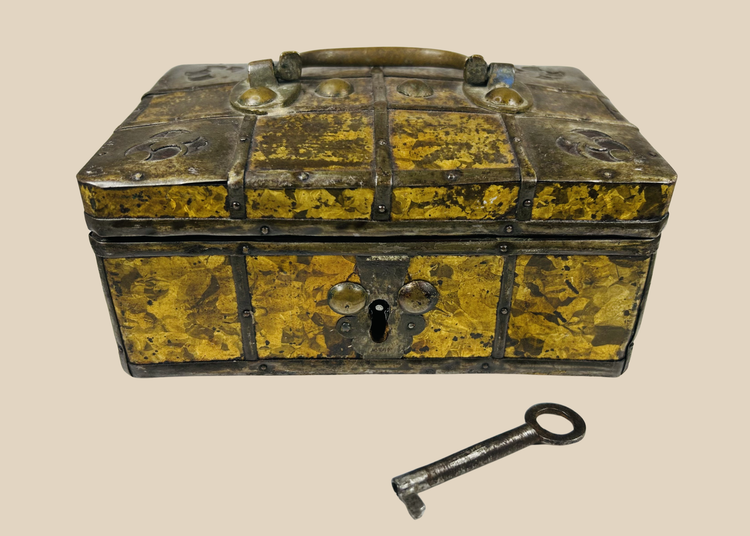
Antique Locking Casket with Original Key | Decorative Metal Treasure Box | Circa Early 19th Century
- Prix habituel
- $750.00
- Prix soldé
- $750.00
- Prix habituel
Impossible de charger la disponibilité du service de retrait


Antique Locking Casket with Original Key | Decorative Metal Treasure Box | Circa Early 19th Century
Description
Plus
Moins
Historical Context & Origin
Region: Eastern Europe
Material: Iron straps and fittings over wood core with gilt metal “frost” patterned panels, textile-lined interior
Period: Early 19th Century, circa 1800–1830
Description
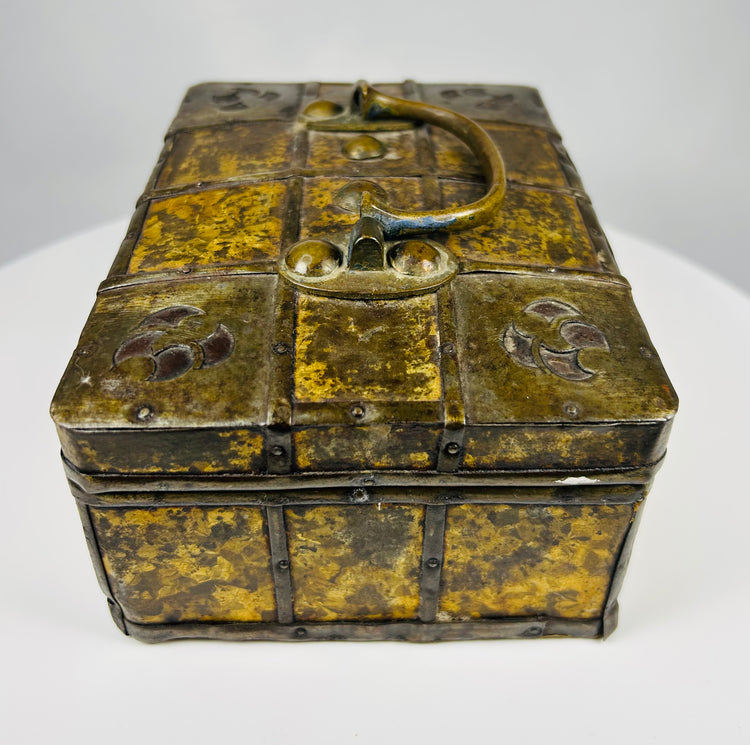
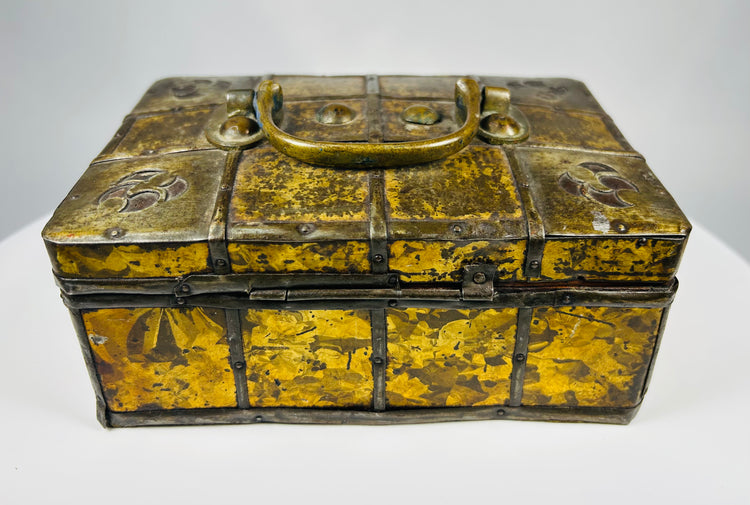
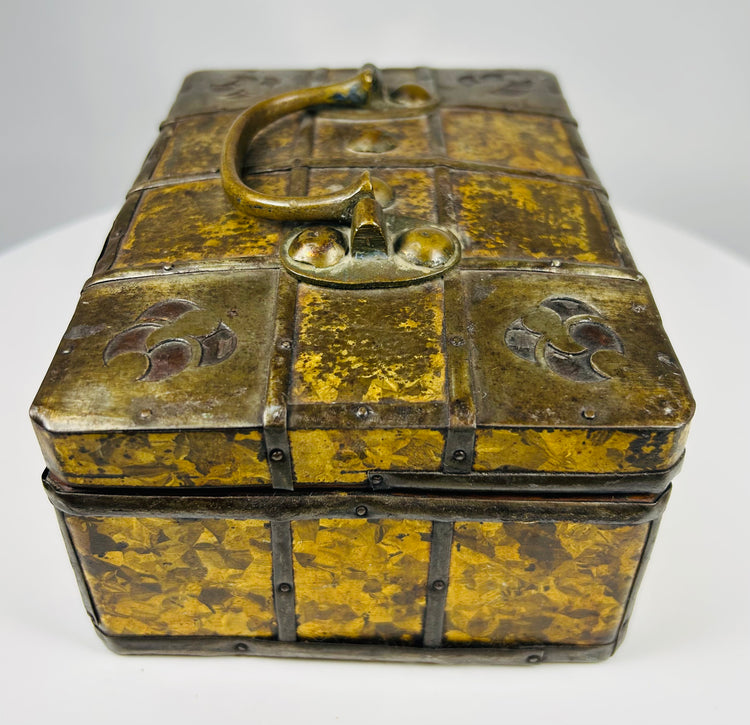
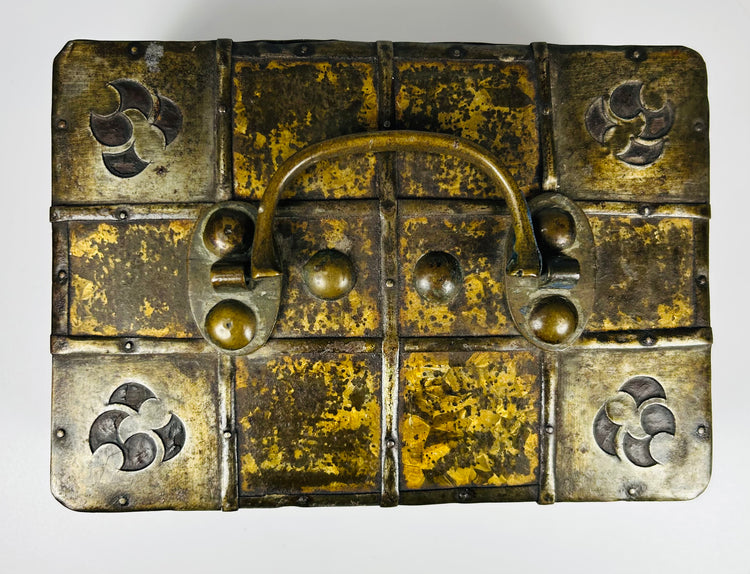
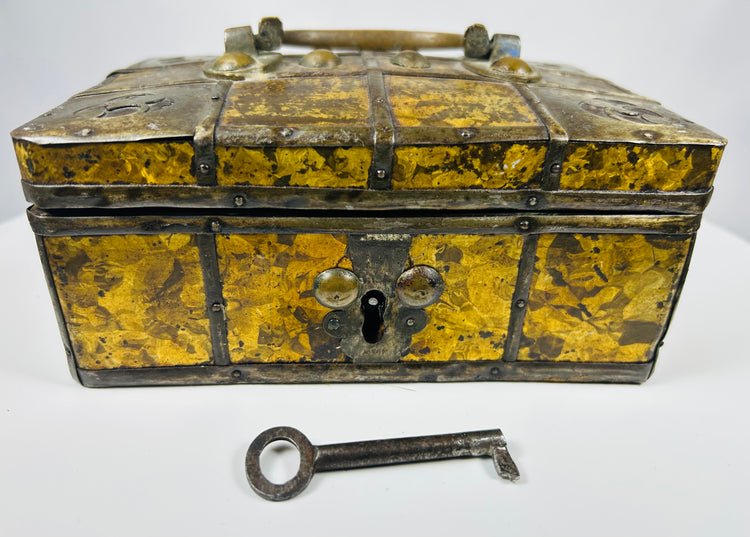
A striking and rare early 19th-century Eastern European iron-bound casket, constructed with a wooden core reinforced by hand-forged iron straps and decorative rivets. The exterior is clad in distinctive gilt metal panels displaying a mottled “frost” or tortoiseshell-style pattern, giving the chest a rich golden appearance with natural age patina.
The lid is fitted with a substantial arched carrying handle mounted on iron brackets, while the front features a traditional keyhole escutcheon and working lock mechanism. The box retains its original iron key, and the lock functions properly.
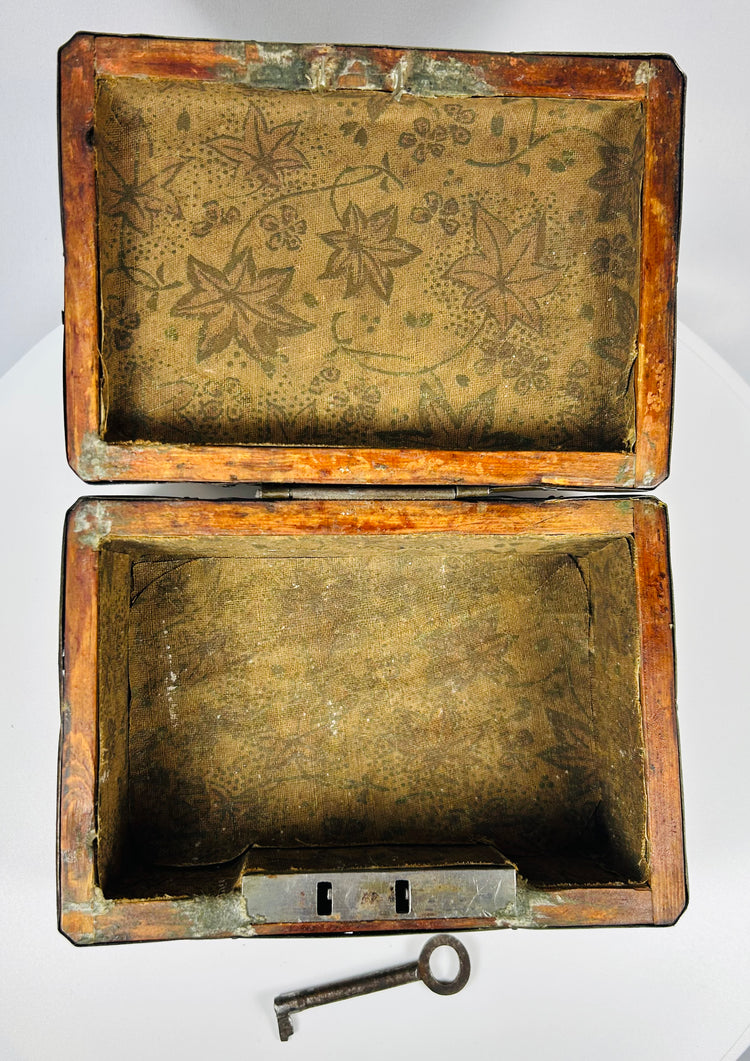
Decorative pierced metal corner motifs embellish the lid panels, adding an additional layer of craftsmanship and visual interest. Inside, the box retains remnants of its original patterned textile lining, further suggesting its use as a jewelry casket, valuables chest, or personal strongbox.
Boxes of this form were commonly used throughout Central and Eastern Europe in the early 19th century to safeguard personal possessions, documents, coins, or family heirlooms. Their durable iron construction and decorative metal coverings made them both practical and aesthetically impressive household objects.
Features
- Decorated with gilt mottled “frost” pattern metal panels
- Hand-forged iron straps and riveted construction
- Decorative pierced metal motifs on lid panels
- Original iron key included
- Working lock mechanism
- Interior retains period textile lining
- Attractive aged patina and historic character
Cultural Significance
Iron-bound chests and caskets were widely used across Europe from the 17th through 19th centuries as secure containers for valuables. In Eastern Europe, smaller portable versions such as this were commonly used for jewelry, dowry items, coins, or important documents. Their heavy iron reinforcement provided security, while decorative metal panels reflected the regional metalworking traditions of the period.
Condition
Very good antique condition. The box shows expected wear and patina consistent with age, including oxidation to the iron fittings and natural aging to the gilt metal panels. The interior textile lining shows age-related wear. The lock remains functional and the original key is present.
Dimensions (Approximate)
Width: 6 in
Depth: 4 in
Height: 3 in
Age (Approximate)
190–220 years old
Learn More
Discover historic European decorative arts and metalwork through the Metropolitan Museum of Art Collection
Explore our curated 19th Century Artifacts Collection
Description
Historical Context & Origin
Region: Eastern Europe
Material: Iron straps and fittings over wood core with gilt metal “frost” patterned panels, textile-lined interior
Period: Early 19th Century, circa 1800–1830
Description
A striking and rare early 19th-century Eastern European iron-bound casket, constructed with a wooden core reinforced by hand-forged iron straps and decorative rivets. The exterior is clad in distinctive gilt metal panels displaying a mottled “frost” or tortoiseshell-style pattern, giving the chest a rich golden appearance with natural age patina.
The lid is fitted with a substantial arched carrying handle mounted on iron brackets, while the front features a traditional keyhole escutcheon and working lock mechanism. The box retains its original iron key, and the lock functions properly.
Decorative pierced metal corner motifs embellish the lid panels, adding an additional layer of craftsmanship and visual interest. Inside, the box retains remnants of its original patterned textile lining, further suggesting its use as a jewelry casket, valuables chest, or personal strongbox.
Boxes of this form were commonly used throughout Central and Eastern Europe in the early 19th century to safeguard personal possessions, documents, coins, or family heirlooms. Their durable iron construction and decorative metal coverings made them both practical and aesthetically impressive household objects.
Features
- Decorated with gilt mottled “frost” pattern metal panels
- Hand-forged iron straps and riveted construction
- Decorative pierced metal motifs on lid panels
- Original iron key included
- Working lock mechanism
- Interior retains period textile lining
- Attractive aged patina and historic character
Cultural Significance
Iron-bound chests and caskets were widely used across Europe from the 17th through 19th centuries as secure containers for valuables. In Eastern Europe, smaller portable versions such as this were commonly used for jewelry, dowry items, coins, or important documents. Their heavy iron reinforcement provided security, while decorative metal panels reflected the regional metalworking traditions of the period.
Condition
Very good antique condition. The box shows expected wear and patina consistent with age, including oxidation to the iron fittings and natural aging to the gilt metal panels. The interior textile lining shows age-related wear. The lock remains functional and the original key is present.
Dimensions (Approximate)
Width: 6 in
Depth: 4 in
Height: 3 in
Age (Approximate)
190–220 years old
Learn More
Discover historic European decorative arts and metalwork through the Metropolitan Museum of Art Collection
Explore our curated 19th Century Artifacts Collection
Vous aimerez peut-être aussi
