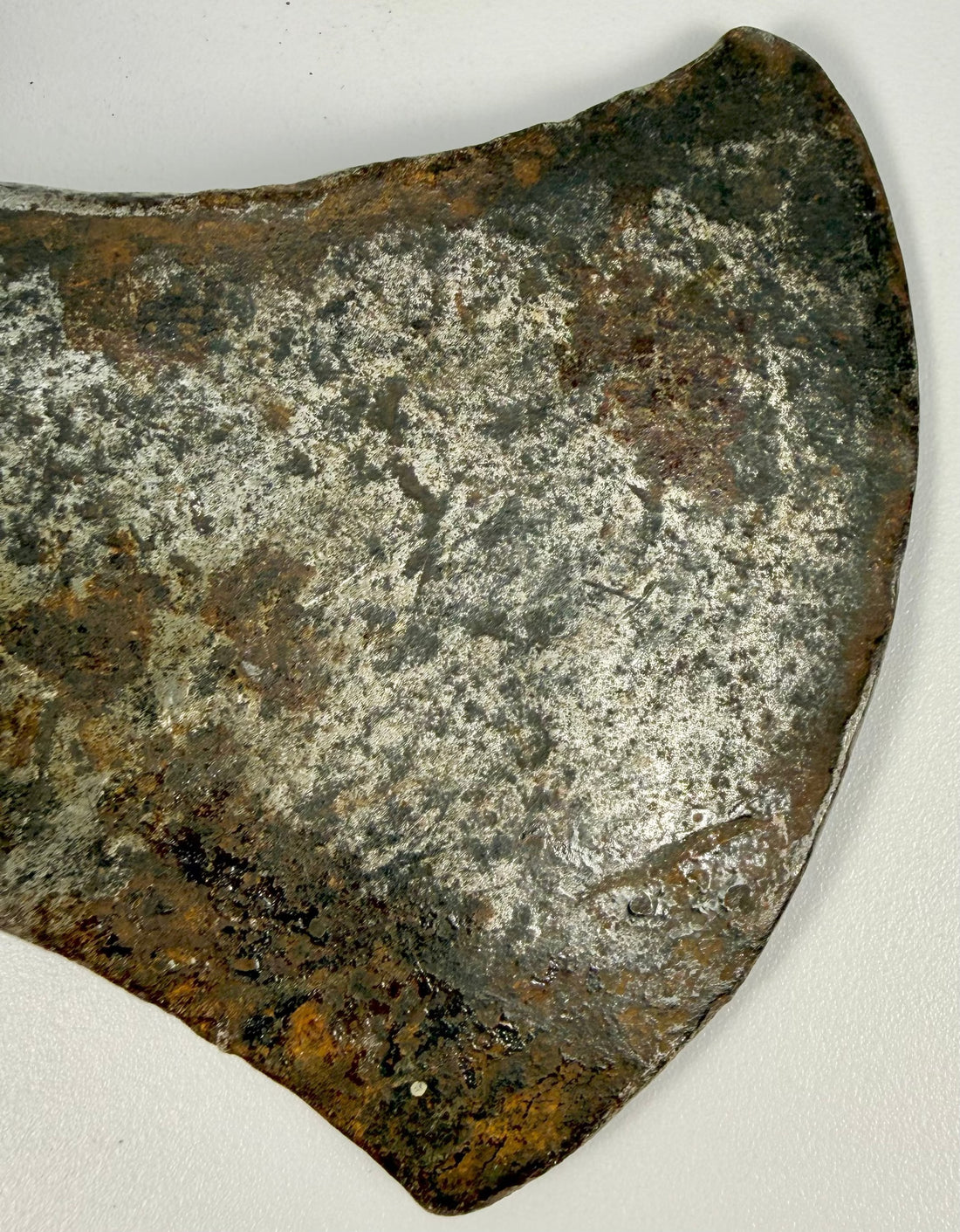
Tête de hache de l'époque de la frontière | Outil de coupe du bois en fer forgé à la main | Amérique du Nord du XIXe siècle

Historique de provenance et de propriété

Anciennement dans une collection privée à Los Angeles, Californie, États-Unis.

Prix habituel
$225.00
Prix soldé
$225.00
Prix habituel
Frais de port calculés à la caisse.

This is a one-of-a-kind historical object. Once sold, this exact piece will not be restocked.

Questions before acquiring? Additional photographs, condition details, documentation, shipping information or a private viewing are available upon request.
Antique 19th-century North American axe head, hand-forged iron with weathered patina and signs of historic use.
360-degree rotating view of a 19th-century North American frontier-era axe head, highlighting its hand-forged iron construction, distinctive cutting blade, weathered metal surface, and traditional blacksmith craftsmanship from multiple angles.
Antique 19th-century North American forged iron axe head with a tapered cutting edge and naturally aged patina.
Historic North American iron axe head from the 1800s featuring traditional blacksmith craftsmanship and sturdy construction.
Nineteenth-century hand-forged iron axe head with a compact design and distinctive eye socket for a wooden handle.
Antique North American frontier axe head featuring a tapered blade, weathered iron surface, and traditional craftsmanship.
Historic 1800s forged iron woodworking axe head with natural surface pitting and a rich dark patina.
Antique North American iron axe head featuring hand-forged construction and a traditional timber-cutting design.
Nineteenth-century frontier-era axe head crafted from forged iron with a reinforced socket and aged metal surface.
Historic North American blacksmith-made axe head featuring a tapered cutting edge and signs of prolonged use.
Antique 19th-century forged iron axe head with traditional eye socket construction and weathered surface texture.
North American frontier-era iron axe head displaying historic wear, natural oxidation, and practical hand-forged design.
Antique forged iron axe head from the 1800s featuring a compact profile, sturdy body, and aged patina.
Historic 19th-century North American timber-working axe head with a tapered blade and traditional iron construction.
Antique hand-forged iron axe head featuring a darkened surface, scattered pitting, and traditional blacksmith detailing.
  • Antique 19th-century North American axe head, hand-forged iron with weathered patina and signs of historic use.
  • 360-degree rotating view of a 19th-century North American frontier-era axe head, highlighting its hand-forged iron construction, distinctive cutting blade, weathered metal surface, and traditional blacksmith craftsmanship from multiple angles.
  • Antique 19th-century North American forged iron axe head with a tapered cutting edge and naturally aged patina.
  • Historic North American iron axe head from the 1800s featuring traditional blacksmith craftsmanship and sturdy construction.
  • Nineteenth-century hand-forged iron axe head with a compact design and distinctive eye socket for a wooden handle.
  • Antique North American frontier axe head featuring a tapered blade, weathered iron surface, and traditional craftsmanship.
  • Historic 1800s forged iron woodworking axe head with natural surface pitting and a rich dark patina.
  • Antique North American iron axe head featuring hand-forged construction and a traditional timber-cutting design.
  • Nineteenth-century frontier-era axe head crafted from forged iron with a reinforced socket and aged metal surface.
  • Historic North American blacksmith-made axe head featuring a tapered cutting edge and signs of prolonged use.
  • Antique 19th-century forged iron axe head with traditional eye socket construction and weathered surface texture.
  • North American frontier-era iron axe head displaying historic wear, natural oxidation, and practical hand-forged design.
  • Antique forged iron axe head from the 1800s featuring a compact profile, sturdy body, and aged patina.
  • Historic 19th-century North American timber-working axe head with a tapered blade and traditional iron construction.
  • Antique hand-forged iron axe head featuring a darkened surface, scattered pitting, and traditional blacksmith detailing.
Antique 19th-century North American axe head, hand-forged iron with weathered patina and signs of historic use.
360-degree rotating view of a 19th-century North American frontier-era axe head, highlighting its hand-forged iron construction, distinctive cutting blade, weathered metal surface, and traditional blacksmith craftsmanship from multiple angles.
Antique 19th-century North American forged iron axe head with a tapered cutting edge and naturally aged patina.
Historic North American iron axe head from the 1800s featuring traditional blacksmith craftsmanship and sturdy construction.
Nineteenth-century hand-forged iron axe head with a compact design and distinctive eye socket for a wooden handle.
Antique North American frontier axe head featuring a tapered blade, weathered iron surface, and traditional craftsmanship.
Historic 1800s forged iron woodworking axe head with natural surface pitting and a rich dark patina.
Antique North American iron axe head featuring hand-forged construction and a traditional timber-cutting design.
Nineteenth-century frontier-era axe head crafted from forged iron with a reinforced socket and aged metal surface.
Historic North American blacksmith-made axe head featuring a tapered cutting edge and signs of prolonged use.
Antique 19th-century forged iron axe head with traditional eye socket construction and weathered surface texture.
North American frontier-era iron axe head displaying historic wear, natural oxidation, and practical hand-forged design.
Antique forged iron axe head from the 1800s featuring a compact profile, sturdy body, and aged patina.
Historic 19th-century North American timber-working axe head with a tapered blade and traditional iron construction.
Antique hand-forged iron axe head featuring a darkened surface, scattered pitting, and traditional blacksmith detailing.
Authenticity and secure checkout guarantee

Tête de hache de l'époque de la frontière | Outil de coupe du bois en fer forgé à la main | Amérique du Nord du XIXe siècle

Description

Contexte historique et origine

Région : Amérique du Nord
Matériau : Fer forgé
Période : XIXe siècle (env. 1800)

Description

Cette authentique tête de hache en fer forgé date du XIXe siècle, une période où les colons et les travailleurs d’Amérique du Nord dépendaient fortement d’outils durables pour assurer leur subsistance dans la frontière. Probablement utilisée pour couper du bois, l’agriculture et la construction, cette tête de hache incarne la résilience et l’ingéniosité des premiers colons qui ont défriché les forêts, bâti des maisons et cultivé la terre. Sa forme — un tranchant effilé avec un œil forgé à la main — représente le savoir-faire pratique des forgerons ruraux, dont le travail était essentiel à la survie quotidienne.

Caractéristiques

- Forgée à la main avec un tranchant effilé pour une coupe efficace

- Œil distinct conçu pour fixer un manche en bois

- Construction compacte mais robuste typique des outils de la frontière du XIXe siècle

- Surface vieillie avec des piqûres et une patine dues à une utilisation intensive

Signification culturelle

Au-delà de son rôle utilitaire, cette tête de hache symbolise l’esprit de la vie pionnière nord-américaine. Les forgerons fournissaient des outils comme ceux-ci, essentiels à la colonisation, à l’agriculture et à la construction. Chaque marque d’usure témoigne de son rôle dans le façonnement des premières communautés du XIXe siècle.

Condition

La tête de hache est dans un état antique stable avec une patine riche et foncée et des piqûres éparses conformes à son âge. Des marques d’usure dues à une utilisation répétée sont visibles le long du tranchant et du corps, renforçant son authenticité en tant qu’outil de travail de l’époque. Malgré sa longue durée de vie, elle reste structurellement saine, sans réparations modernes.

Dimensions (approximatives)

Longueur : 5 po

Âge (approximatif)

150 à 200 ans

Provenance

Anciennement détenue dans une collection privée à Los Angeles, Californie, États-Unis.

En savoir plus

Découvrez L'histoire insoupçonnée de la hache à travers les âges

Parcourez notre Collection de haches historiques

Description

Contexte historique et origine

Région : Amérique du Nord
Matériau : Fer forgé
Période : XIXe siècle (env. 1800)

Description

Cette authentique tête de hache en fer forgé date du XIXe siècle, une période où les colons et les travailleurs d’Amérique du Nord dépendaient fortement d’outils durables pour assurer leur subsistance dans la frontière. Probablement utilisée pour couper du bois, l’agriculture et la construction, cette tête de hache incarne la résilience et l’ingéniosité des premiers colons qui ont défriché les forêts, bâti des maisons et cultivé la terre. Sa forme — un tranchant effilé avec un œil forgé à la main — représente le savoir-faire pratique des forgerons ruraux, dont le travail était essentiel à la survie quotidienne.

Caractéristiques

- Forgée à la main avec un tranchant effilé pour une coupe efficace

- Œil distinct conçu pour fixer un manche en bois

- Construction compacte mais robuste typique des outils de la frontière du XIXe siècle

- Surface vieillie avec des piqûres et une patine dues à une utilisation intensive

Signification culturelle

Au-delà de son rôle utilitaire, cette tête de hache symbolise l’esprit de la vie pionnière nord-américaine. Les forgerons fournissaient des outils comme ceux-ci, essentiels à la colonisation, à l’agriculture et à la construction. Chaque marque d’usure témoigne de son rôle dans le façonnement des premières communautés du XIXe siècle.

Condition

La tête de hache est dans un état antique stable avec une patine riche et foncée et des piqûres éparses conformes à son âge. Des marques d’usure dues à une utilisation répétée sont visibles le long du tranchant et du corps, renforçant son authenticité en tant qu’outil de travail de l’époque. Malgré sa longue durée de vie, elle reste structurellement saine, sans réparations modernes.

Dimensions (approximatives)

Longueur : 5 po

Âge (approximatif)

150 à 200 ans

Provenance

Anciennement détenue dans une collection privée à Los Angeles, Californie, États-Unis.

En savoir plus

Découvrez L'histoire insoupçonnée de la hache à travers les âges

Parcourez notre Collection de haches historiques

Vous aimerez peut-être aussi