



Sassanide antique | Argent Cornaline | Bague à chaton à monogramme | Circa 224 – 651 après J.-C.
- Prix habituel
- $600.00
- Prix soldé
- $600.00
- Prix habituel
Impossible de charger la disponibilité du service de retrait


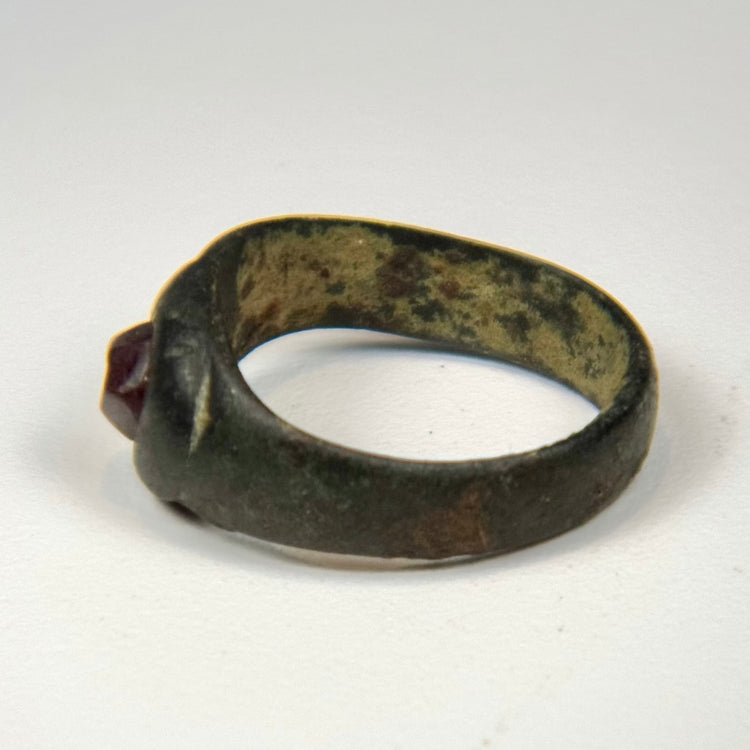

Sassanide antique | Argent Cornaline | Bague à chaton à monogramme | Circa 224 – 651 après J.-C.
Description
Plus
Moins
Contexte historique et origine
Région : Perse antique (Empire sassanide)
Matériau : Argent avec intaille en cornaline
Période : 224–651 de notre ère
Description
Cette exquise bague en argent, ornée d'une pierre de cornaline comportant un possible monogramme ou un motif en intaille, provient de l'Empire sassanide, une dynastie réputée pour ses réalisations culturelles, artistiques et architecturales. Les bagues comme celle-ci étaient plus que de simples ornements – elles remplissaient des fonctions à la fois décoratives et pratiques, souvent utilisées comme sceaux pour marquer la propriété ou authentifier des documents.
Caractéristiques
- Pierre intaille en cornaline avec un motif gravé, représentant probablement l'identité ou l'autorité
- Bande d'argent fabriquée avec une finition raffinée, polie, et des détails subtils
- Teintes chaudes rouge-orange de la cornaline, une pierre précieuse très estimée dans le monde antique
- Fonctionnelle à la fois comme bijou et comme sceau personnel
Signification culturelle
Dans l'Empire sassanide, les bagues avaient une signification profonde, mêlant l'art à l'utilité. Les gemmes intailles étaient des symboles d'identité personnelle ou officielle, tandis que la cornaline elle-même était censée offrir protection et vitalité. Ainsi, cette pièce aurait signifié à la fois le statut et la connexion spirituelle, reflétant la grande valeur accordée aux bijoux dans la société perse.
État
La bague présente une usure naturelle liée à l'âge, avec une patine développée et des abrasions superficielles mineures conformes à son antiquité. Malgré des siècles d'utilisation, le motif en intaille reste discernable, préservant son caractère historique et symbolique.
Dimensions (approximatives)
Taille de bague : 6.75 US
Âge (approximatif)
1 375–1 800 ans
Provenance
Faisait auparavant partie de la collection BC Galleries, Melbourne, Australie. Fondée en 1976, BC Galleries était un important marchand australien indépendant spécialisé dans l'art et les antiquités anciennes, l'art tribal, l'ethnographie et les objets historiques issus d'un large éventail de cultures. Par la suite, détenue dans une collection privée à Armadale, Victoria, Australie.
En savoir plus
Explorez l'Empire sassanide – The Metropolitan Museum of Art
Parcourez notre collection de bagues historiques
Description
Contexte historique et origine
Région : Perse antique (Empire sassanide)
Matériau : Argent avec intaille en cornaline
Période : 224–651 de notre ère
Description
Cette exquise bague en argent, ornée d'une pierre de cornaline comportant un possible monogramme ou un motif en intaille, provient de l'Empire sassanide, une dynastie réputée pour ses réalisations culturelles, artistiques et architecturales. Les bagues comme celle-ci étaient plus que de simples ornements – elles remplissaient des fonctions à la fois décoratives et pratiques, souvent utilisées comme sceaux pour marquer la propriété ou authentifier des documents.
Caractéristiques
- Pierre intaille en cornaline avec un motif gravé, représentant probablement l'identité ou l'autorité
- Bande d'argent fabriquée avec une finition raffinée, polie, et des détails subtils
- Teintes chaudes rouge-orange de la cornaline, une pierre précieuse très estimée dans le monde antique
- Fonctionnelle à la fois comme bijou et comme sceau personnel
Signification culturelle
Dans l'Empire sassanide, les bagues avaient une signification profonde, mêlant l'art à l'utilité. Les gemmes intailles étaient des symboles d'identité personnelle ou officielle, tandis que la cornaline elle-même était censée offrir protection et vitalité. Ainsi, cette pièce aurait signifié à la fois le statut et la connexion spirituelle, reflétant la grande valeur accordée aux bijoux dans la société perse.
État
La bague présente une usure naturelle liée à l'âge, avec une patine développée et des abrasions superficielles mineures conformes à son antiquité. Malgré des siècles d'utilisation, le motif en intaille reste discernable, préservant son caractère historique et symbolique.
Dimensions (approximatives)
Taille de bague : 6.75 US
Âge (approximatif)
1 375–1 800 ans
Provenance
Faisait auparavant partie de la collection BC Galleries, Melbourne, Australie. Fondée en 1976, BC Galleries était un important marchand australien indépendant spécialisé dans l'art et les antiquités anciennes, l'art tribal, l'ethnographie et les objets historiques issus d'un large éventail de cultures. Par la suite, détenue dans une collection privée à Armadale, Victoria, Australie.
En savoir plus
Explorez l'Empire sassanide – The Metropolitan Museum of Art
Parcourez notre collection de bagues historiques
Vous aimerez peut-être aussi
