



Tête en terre cuite du Proche-Orient ancien | Fragment d'homme barbu à la coiffure définie | Circa Ier millénaire avant notre ère
- Prix habituel
- $300.00
- Prix soldé
- $300.00
- Prix habituel
Impossible de charger la disponibilité du service de retrait







Tête en terre cuite du Proche-Orient ancien | Fragment d'homme barbu à la coiffure définie | Circa Ier millénaire avant notre ère
Description
Plus
Moins
Contexte Historique et Origine
Région : Proche-Orient / Méditerranée orientale
Matériau : Terre cuite
Période : Circa 1er millénaire avant notre ère
Description
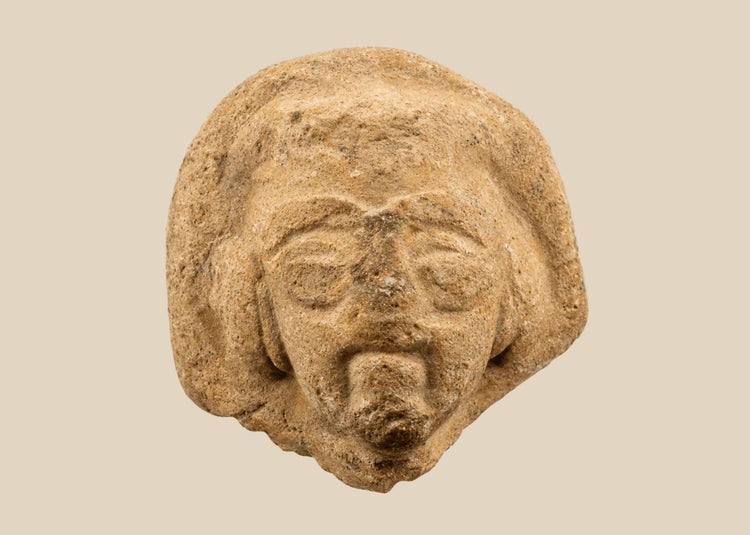
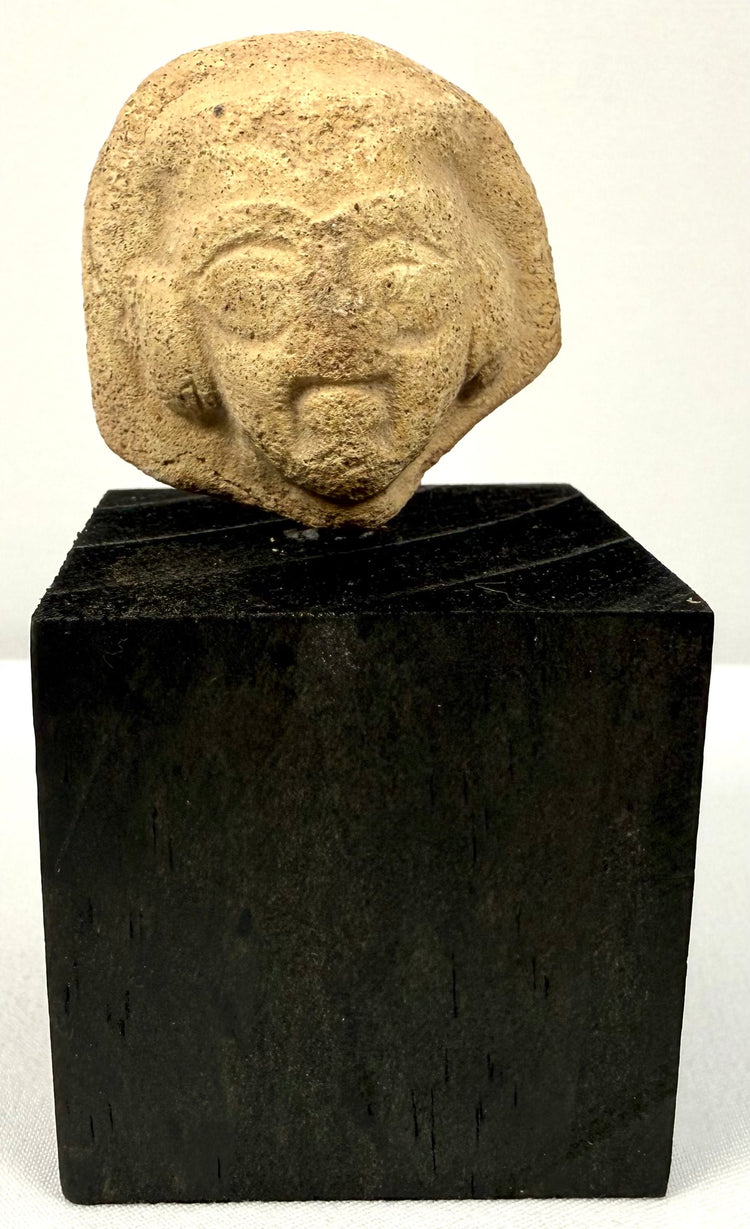
Cet artefact est une tête fragmentaire en terre cuite, sculptée avec des traits stylisés, notamment des sourcils arqués, des yeux en amande, ainsi qu'une barbe et une moustache définies. La chevelure volumineuse encadre le visage avec un détail délibéré, reflétant le savoir-faire des anciens artisans de la terre cuite malgré sa petite taille. Probablement partie d'une plus grande figure votive ou d'une idole domestique, la pièce aurait été utilisée dans des contextes rituels ou dévotionnels. Désormais montée sur une base d'exposition personnalisée, le fragment est un exemple évocateur de la portraiture céramique ancienne.
Caractéristiques
- Tête fragmentaire en terre cuite avec modelage facial expressif
- Barbe, moustache et coiffure stylisée bien définies
- Montée sur une base d'exposition en bois noir sur mesure
- Faisait probablement partie d'une figure votive ou rituelle
Signification culturelle
Les figurines en terre cuite étaient largement produites dans l'ensemble de la Méditerranée antique et du Proche-Orient pour être utilisées dans les sanctuaires, les temples et les sépultures. Abordables et symboliques, elles reflétaient la dévotion personnelle ainsi que des traditions culturelles et religieuses plus larges. Bien que fragmentaire, cette tête conserve le style expressif de son atelier et offre un aperçu des pratiques spirituelles et artistiques du 1er millénaire avant notre ère.
État
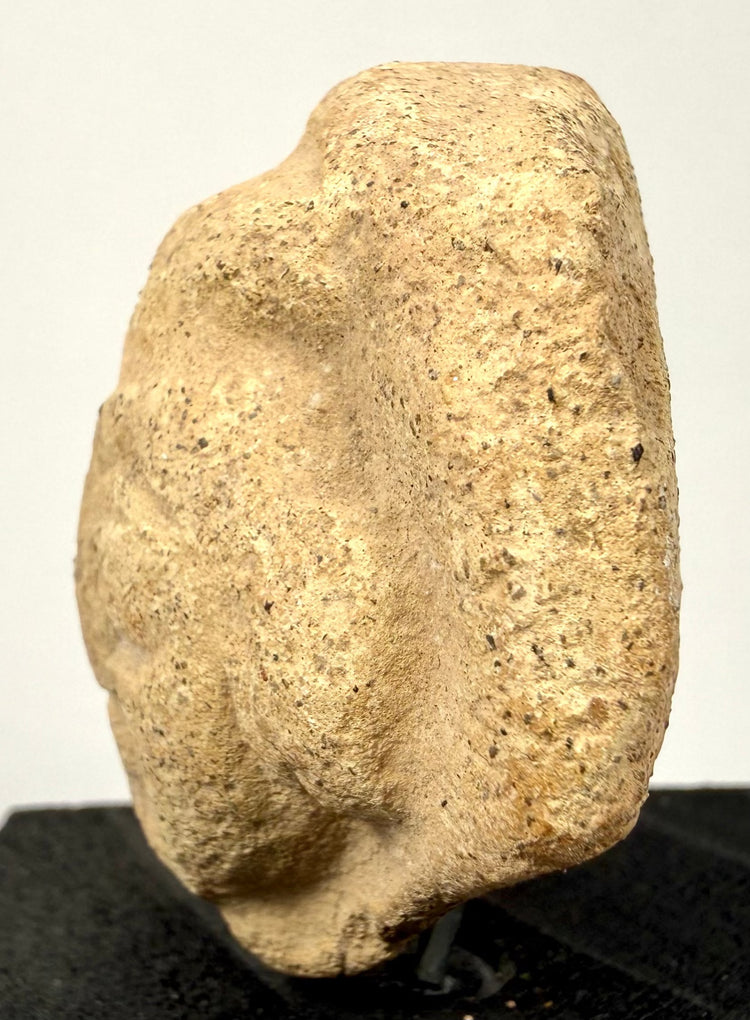
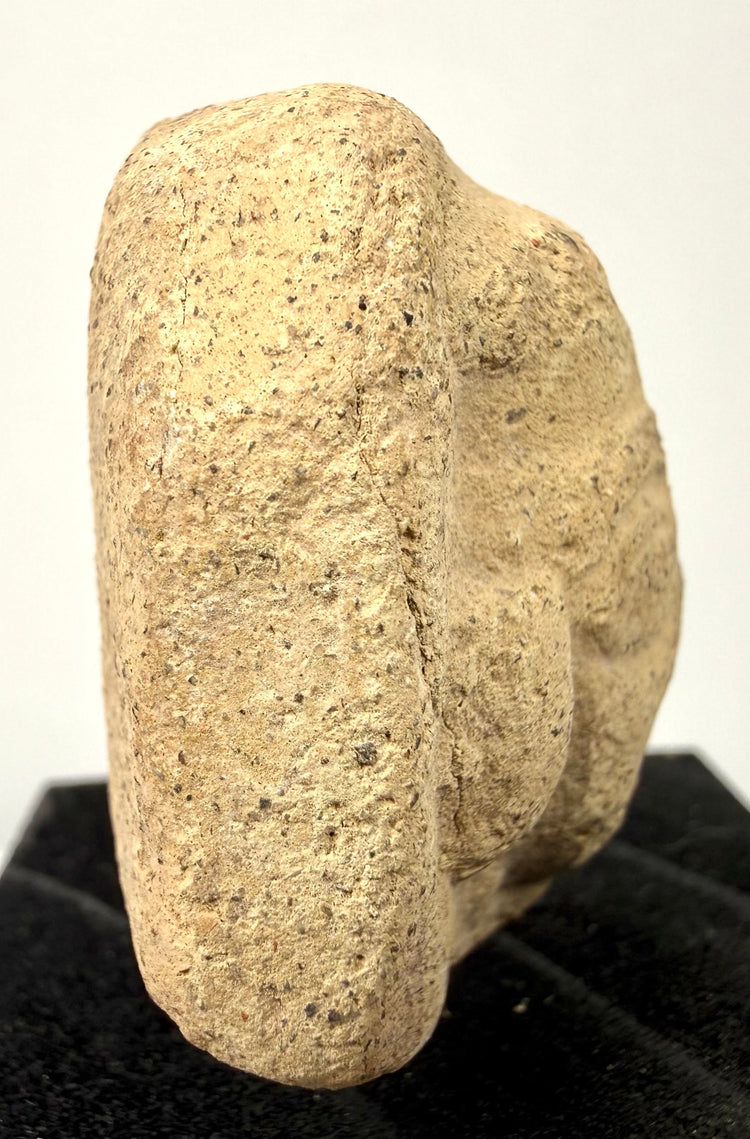
Fragmentaire (tête seulement). La surface présente une érosion naturelle, des incrustations et des abrasions mineures, conformes à l'âge et à l'enfouissement. Les caractéristiques restent lisibles. Professionnellement monté pour la stabilité et l'exposition.
Dimensions (Approximatives)
Hauteur : 8,9 cm
Largeur : 5,1 cm
Profondeur : 5,1 cm
Âge (Approximatif)
2 025 à 3 025 ans
Provenance
Issue d'une collection privée à Ottawa, Ontario. Le propriétaire était un collectionneur passionné d'art et d'artefacts précolombiens qui a beaucoup voyagé en Amérique du Sud. Après son décès, la collection a été liquidée par la famille.
En savoir plus
Découvrez des informations sur la collection d'artefacts du Proche-Orient ancien grâce à Christie’s
Parcourez notre collection de statues, de figures et de sculptures
Description
Contexte Historique et Origine
Région : Proche-Orient / Méditerranée orientale
Matériau : Terre cuite
Période : Circa 1er millénaire avant notre ère
Description
Cet artefact est une tête fragmentaire en terre cuite, sculptée avec des traits stylisés, notamment des sourcils arqués, des yeux en amande, ainsi qu'une barbe et une moustache définies. La chevelure volumineuse encadre le visage avec un détail délibéré, reflétant le savoir-faire des anciens artisans de la terre cuite malgré sa petite taille. Probablement partie d'une plus grande figure votive ou d'une idole domestique, la pièce aurait été utilisée dans des contextes rituels ou dévotionnels. Désormais montée sur une base d'exposition personnalisée, le fragment est un exemple évocateur de la portraiture céramique ancienne.
Caractéristiques
- Tête fragmentaire en terre cuite avec modelage facial expressif
- Barbe, moustache et coiffure stylisée bien définies
- Montée sur une base d'exposition en bois noir sur mesure
- Faisait probablement partie d'une figure votive ou rituelle
Signification culturelle
Les figurines en terre cuite étaient largement produites dans l'ensemble de la Méditerranée antique et du Proche-Orient pour être utilisées dans les sanctuaires, les temples et les sépultures. Abordables et symboliques, elles reflétaient la dévotion personnelle ainsi que des traditions culturelles et religieuses plus larges. Bien que fragmentaire, cette tête conserve le style expressif de son atelier et offre un aperçu des pratiques spirituelles et artistiques du 1er millénaire avant notre ère.
État
Fragmentaire (tête seulement). La surface présente une érosion naturelle, des incrustations et des abrasions mineures, conformes à l'âge et à l'enfouissement. Les caractéristiques restent lisibles. Professionnellement monté pour la stabilité et l'exposition.
Dimensions (Approximatives)
Hauteur : 8,9 cm
Largeur : 5,1 cm
Profondeur : 5,1 cm
Âge (Approximatif)
2 025 à 3 025 ans
Provenance
Issue d'une collection privée à Ottawa, Ontario. Le propriétaire était un collectionneur passionné d'art et d'artefacts précolombiens qui a beaucoup voyagé en Amérique du Sud. Après son décès, la collection a été liquidée par la famille.
En savoir plus
Découvrez des informations sur la collection d'artefacts du Proche-Orient ancien grâce à Christie’s
Parcourez notre collection de statues, de figures et de sculptures
Vous aimerez peut-être aussi
