


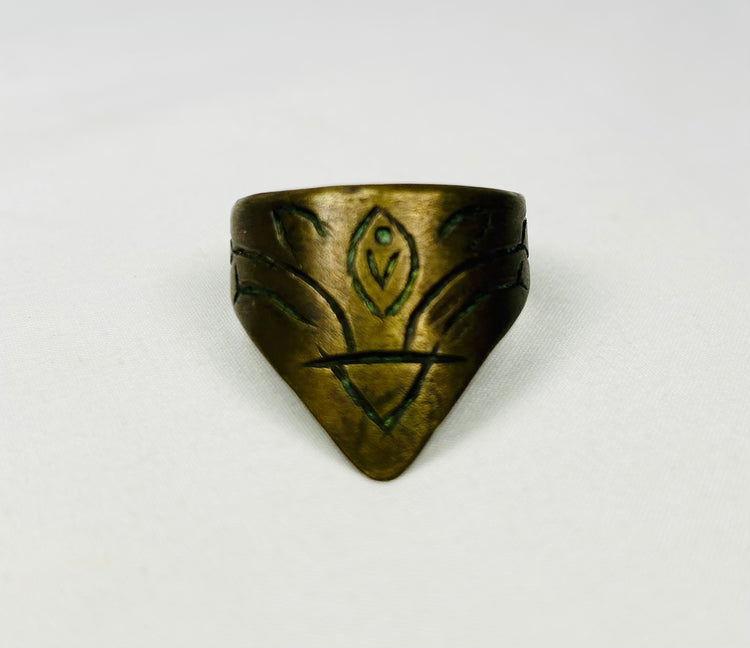
Bague d'archer en laiton à motifs gravés | Tradition d'Asie centrale/perse | XVIIe-XIXe siècle
- Prix habituel
- $350.00
- Prix soldé
- $350.00
- Prix habituel
Impossible de charger la disponibilité du service de retrait




Bague d'archer en laiton à motifs gravés | Tradition d'Asie centrale/perse | XVIIe-XIXe siècle
Description
Plus
Moins
Contexte historique et origine
Région : Asie centrale / Sphère culturelle perse
Matériau : Laiton coulé ou alliage de cuivre avec patine naturelle vieillie
Période : XVIIe-XIXe siècle environ
Description
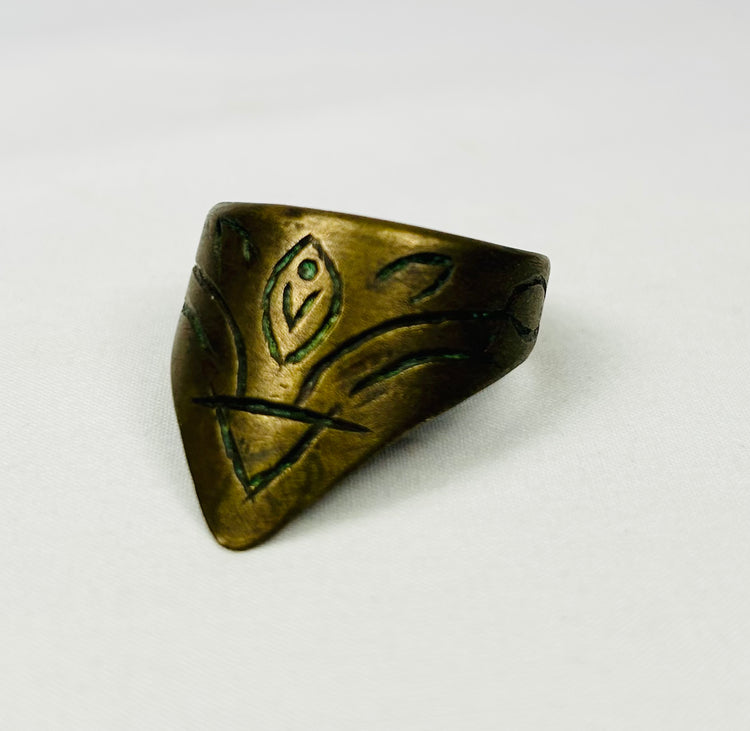
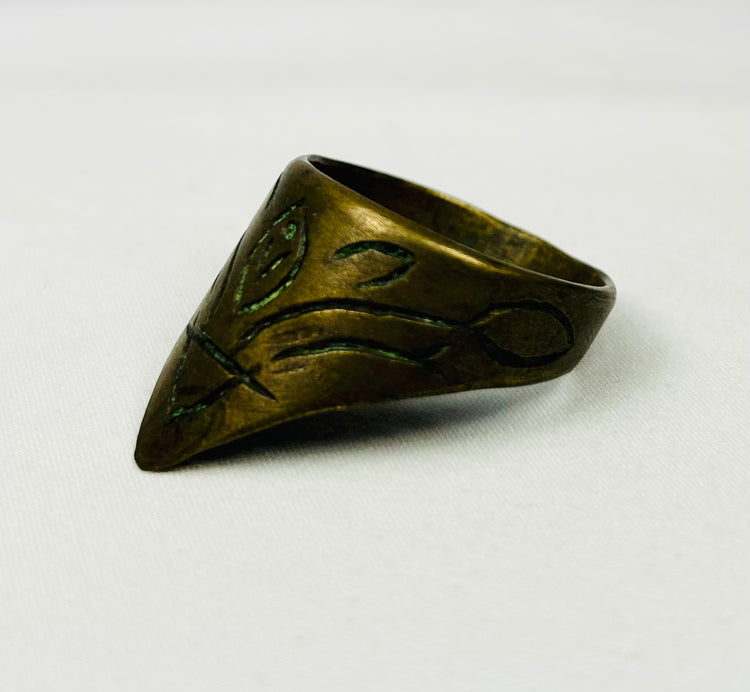
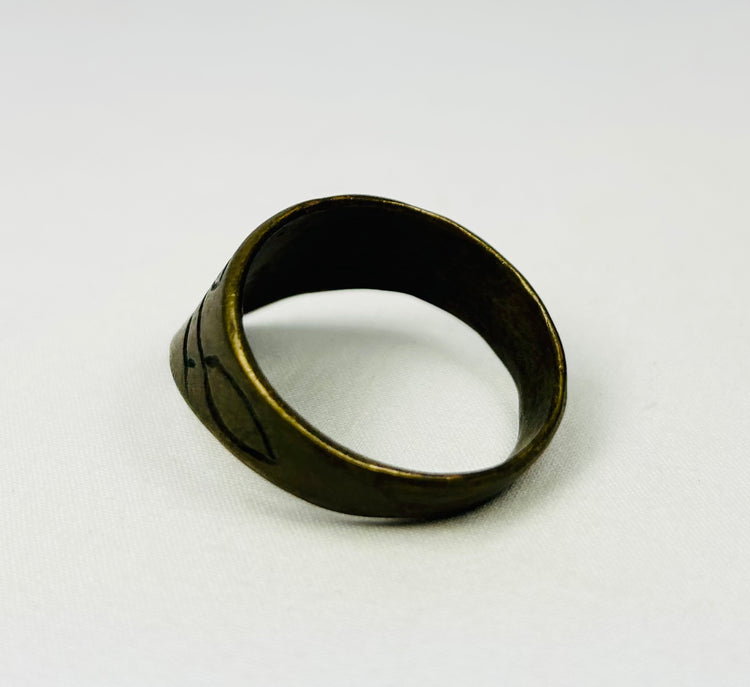
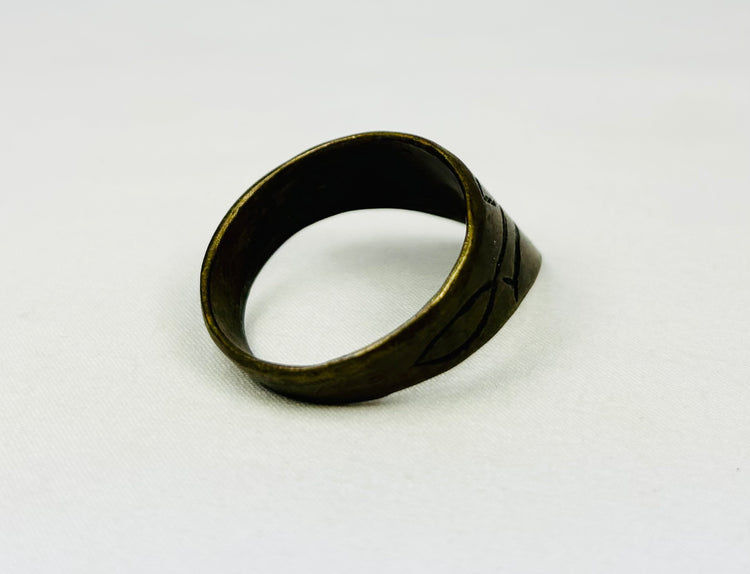
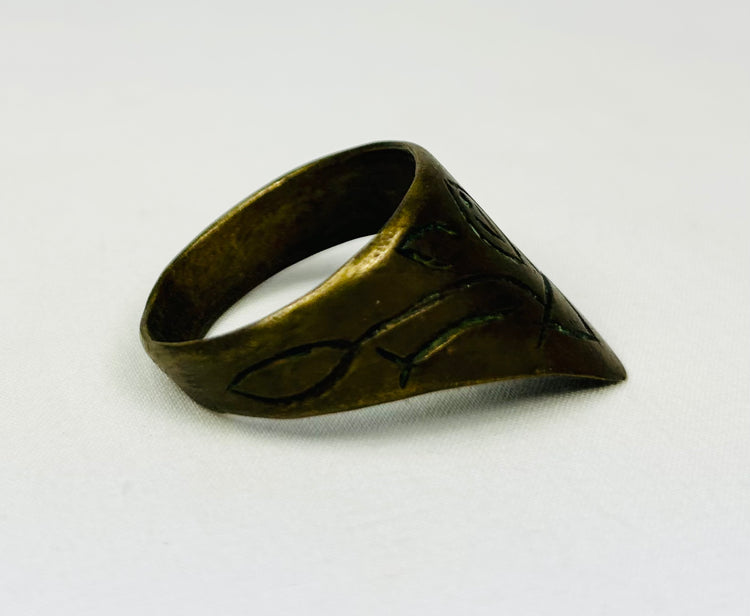
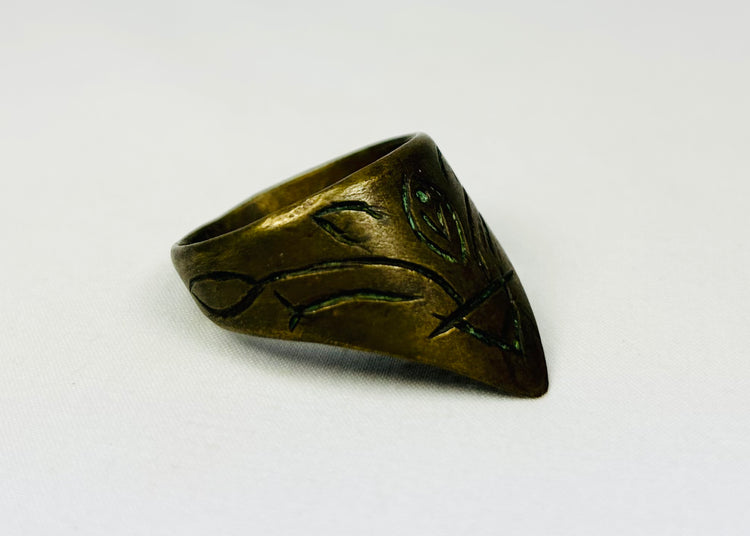
Cette pièce en laiton, d'une taille inhabituelle et à l'aspect sculptural, est une bague de pouce d'archer, traditionnellement utilisée en Asie centrale et en Perse par les archers montés utilisant la technique de tir à l'arc « mongole ». Contrairement à une bague de doigt standard, son large rebord évasé et sa face élargie ont été conçus pour protéger le pouce de l'archer des fortes tensions et des relâchements de la corde de l'arc.
L'extérieur conserve des motifs végétaux et abstraits gravés à la main, adoucis par des siècles d'usure et présentant une oxydation vert foncé dans les creux. Sa riche patine brun olive, ses surfaces lissées et son vieillissement texturé naturel sont parfaitement cohérents avec une utilisation prolongée et un enfouissement ou un stockage de longue durée.
Cet exemple est particulièrement frappant, se dressant en une forme pointue semblable à un bouclier qui allie fonctionnalité martiale et présence sculpturale audacieuse.
Caractéristiques
- Large rebord protecteur typique des anneaux de tir à l'arc traditionnels à tirage par le pouce
- Motifs gravés à la main avec des creux noircis par le temps
- Construction en fonte épaisse et lourde
- Une magnifique patine naturelle allant de l'olive au brun foncé
- Une présence visuelle impressionnante, empreinte d'un fort caractère culturel et historique.
Importance culturelle
Les bagues de pouce étaient des outils essentiels pour les archers traditionnels du Proche-Orient et d'Asie centrale, où la cavalerie et l'archerie d'élite ont façonné l'art de la guerre pendant des siècles. Ces bagues servaient à la fois d'équipement fonctionnel et de symbole de rang ou de prouesse martiale. Nombre d'entre elles étaient finement décorées, alliant art et utilité.
Aujourd'hui, ils sont prisés comme objets d'art liés aux armes et comme sculptures incarnant une longue tradition martiale.
Condition
Bon état archéologique, avec usure de surface, patine et léger ramollissement des bords conformes à l'âge. Aucune restauration moderne n'a été observée.
Dimensions (approximatives)
Diamètre intérieur : taille de bague américaine ~17
Largeur au niveau du rebord : 1,4 po (environ)
Âge
XVIIe-XIXe siècle apr. J.-C.
Apprendre encore plus
Explorez le patrimoine, l'art et le contexte culturel des armes et objets persans et d'Asie centrale : Perse : Trente siècles d'art et de culture – Musée Getty
Découvrez davantage de bagues anciennes, de bijoux et d'objets historiques disponibles dans notre galerie : Bagues anciennes et bijoux historiques – Collection Reliques et Raretés
Description
Contexte historique et origine
Région : Asie centrale / Sphère culturelle perse
Matériau : Laiton coulé ou alliage de cuivre avec patine naturelle vieillie
Période : XVIIe-XIXe siècle environ
Description
Cette pièce en laiton, d'une taille inhabituelle et à l'aspect sculptural, est une bague de pouce d'archer, traditionnellement utilisée en Asie centrale et en Perse par les archers montés utilisant la technique de tir à l'arc « mongole ». Contrairement à une bague de doigt standard, son large rebord évasé et sa face élargie ont été conçus pour protéger le pouce de l'archer des fortes tensions et des relâchements de la corde de l'arc.
L'extérieur conserve des motifs végétaux et abstraits gravés à la main, adoucis par des siècles d'usure et présentant une oxydation vert foncé dans les creux. Sa riche patine brun olive, ses surfaces lissées et son vieillissement texturé naturel sont parfaitement cohérents avec une utilisation prolongée et un enfouissement ou un stockage de longue durée.
Cet exemple est particulièrement frappant, se dressant en une forme pointue semblable à un bouclier qui allie fonctionnalité martiale et présence sculpturale audacieuse.
Caractéristiques
- Large rebord protecteur typique des anneaux de tir à l'arc traditionnels à tirage par le pouce
- Motifs gravés à la main avec des creux noircis par le temps
- Construction en fonte épaisse et lourde
- Une magnifique patine naturelle allant de l'olive au brun foncé
- Une présence visuelle impressionnante, empreinte d'un fort caractère culturel et historique.
Importance culturelle
Les bagues de pouce étaient des outils essentiels pour les archers traditionnels du Proche-Orient et d'Asie centrale, où la cavalerie et l'archerie d'élite ont façonné l'art de la guerre pendant des siècles. Ces bagues servaient à la fois d'équipement fonctionnel et de symbole de rang ou de prouesse martiale. Nombre d'entre elles étaient finement décorées, alliant art et utilité.
Aujourd'hui, ils sont prisés comme objets d'art liés aux armes et comme sculptures incarnant une longue tradition martiale.
Condition
Bon état archéologique, avec usure de surface, patine et léger ramollissement des bords conformes à l'âge. Aucune restauration moderne n'a été observée.
Dimensions (approximatives)
Diamètre intérieur : taille de bague américaine ~17
Largeur au niveau du rebord : 1,4 po (environ)
Âge
XVIIe-XIXe siècle apr. J.-C.
Apprendre encore plus
Explorez le patrimoine, l'art et le contexte culturel des armes et objets persans et d'Asie centrale : Perse : Trente siècles d'art et de culture – Musée Getty
Découvrez davantage de bagues anciennes, de bijoux et d'objets historiques disponibles dans notre galerie : Bagues anciennes et bijoux historiques – Collection Reliques et Raretés
Vous aimerez peut-être aussi
