Dent d'hippopotame africaine sculptée | Début du XXe siècle

Prix habituel
$1,200.00
Prix soldé
$1,200.00
Prix habituel
Frais de port calculés à la caisse.
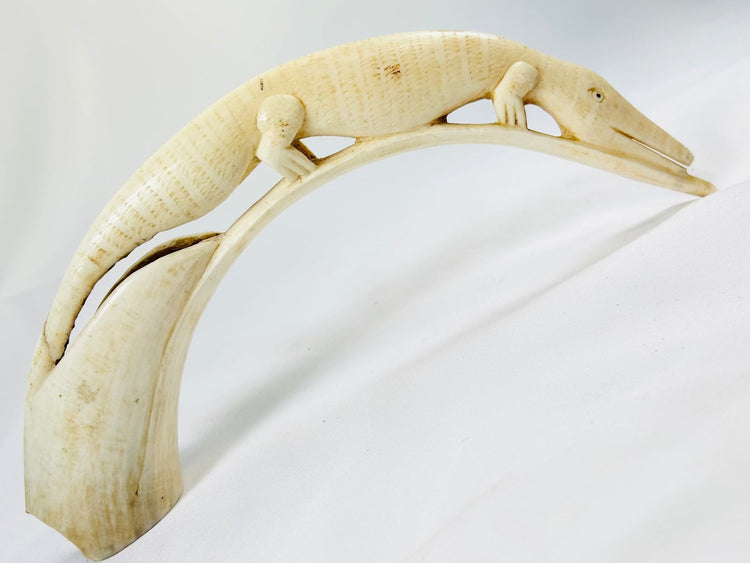
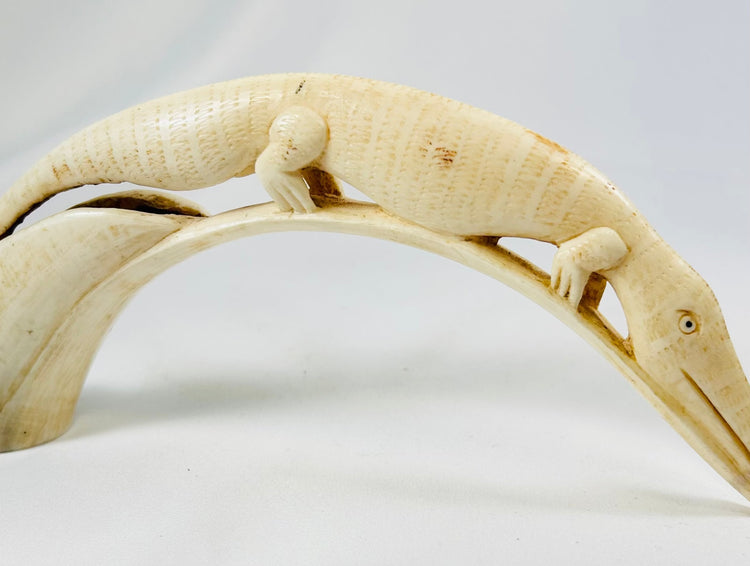
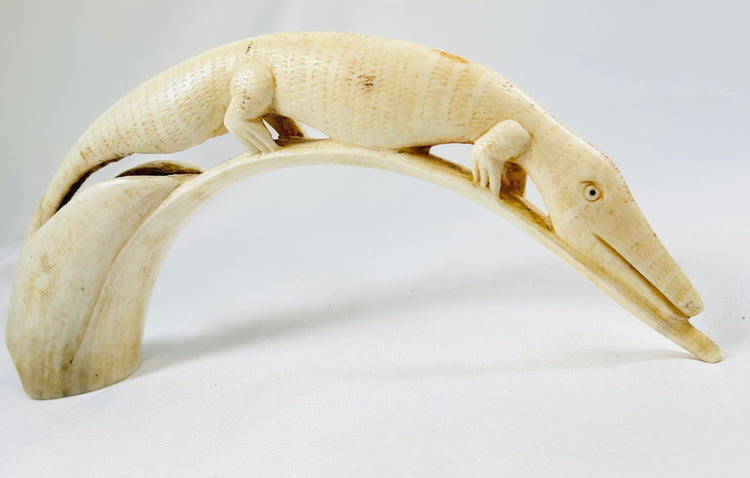
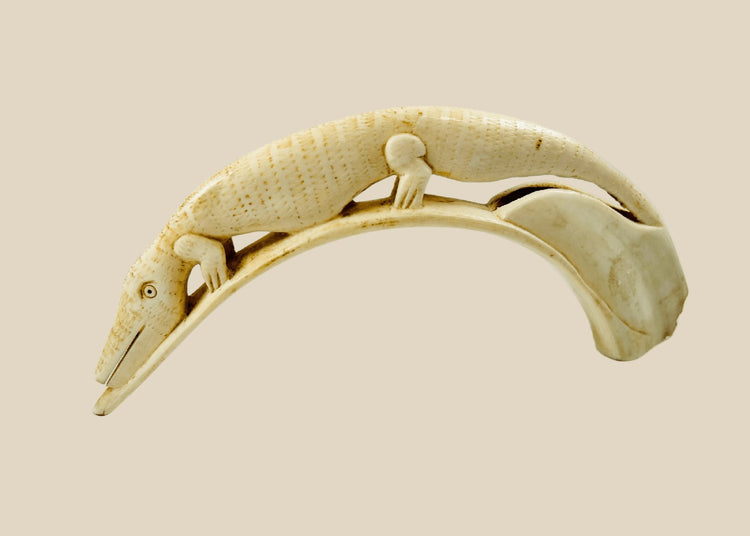
Hand-carved African hippopotamus incisor tusk featuring an intricately detailed crocodile in high relief along the natural curvature, polished with rich patina, displayed on a white background.
Rotating view of an intricately carved African hippopotamus tooth from the early 20th century, featuring detailed animal motifs and polished ivory surface.
Carved African hippopotamus tooth featuring an intricately sculpted crocodile motif, early 20th-century tribal ivory artwork displayed on white background.
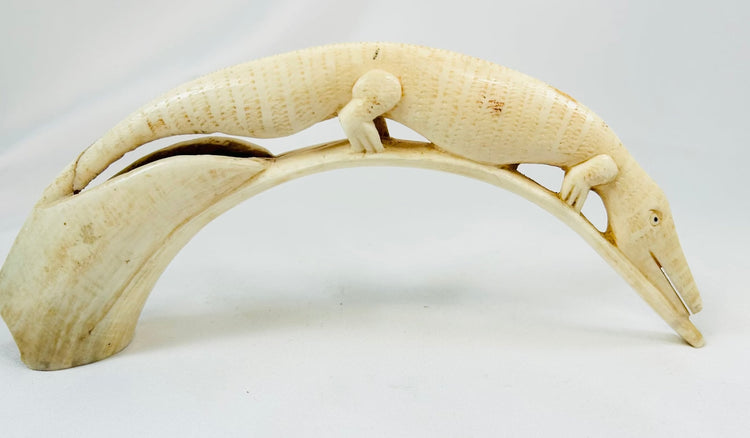
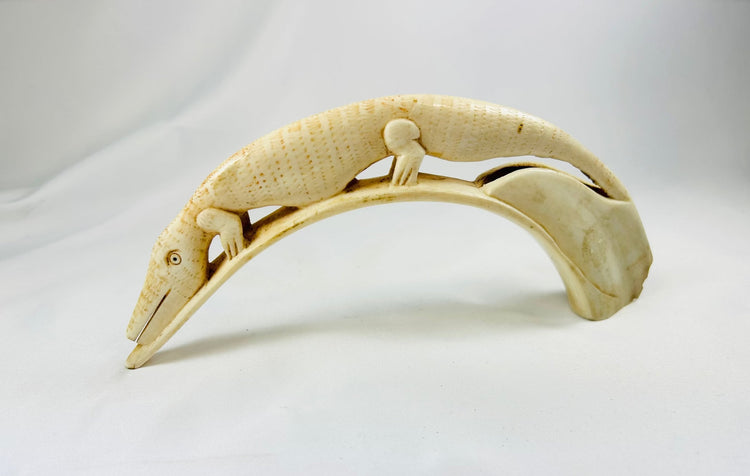
Side view of a carved African hippopotamus tooth featuring a crocodile design, early 20th-century tribal ivory artwork displayed on a white background.
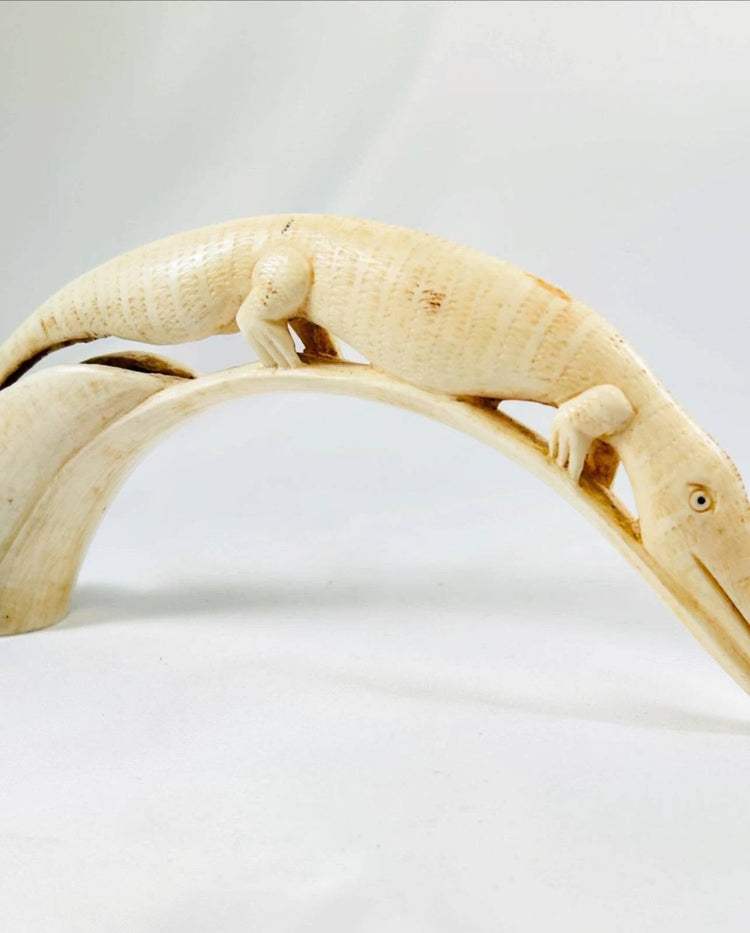
Close-up of early 20th-century African hippopotamus tooth carving depicting a crocodile motif with detailed scales, traditional tribal ivory artwork on white background.
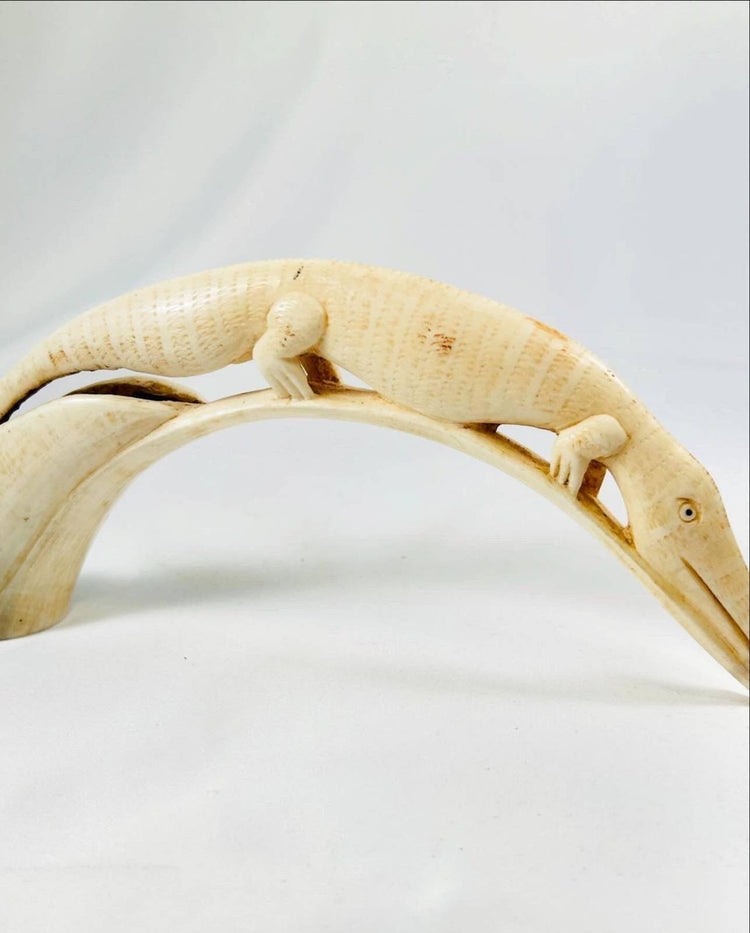
Side profile of a carved African hippopotamus tooth depicting a crocodile in relief, early 20th-century tribal ivory artwork showcasing fine craftsmanship and natural patina.
Detailed view of an African hippopotamus tooth carving depicting a crocodile motif, handcrafted early 20th-century ivory artwork displayed on a white background.
Angled view of a carved African hippopotamus tooth featuring a crocodile motif, early 20th-century tribal ivory artwork with intricate detail and natural patina on white background.
From Ivory to Art — video showcasing an early 20th-century African hippopotamus tooth carving transformed into tribal art, highlighting craftsmanship, cultural symbolism, and preservation.
  • Hand-carved African hippopotamus incisor tusk featuring an intricately detailed crocodile in high relief along the natural curvature, polished with rich patina, displayed on a white background.
  • Rotating view of an intricately carved African hippopotamus tooth from the early 20th century, featuring detailed animal motifs and polished ivory surface.
  • Carved African hippopotamus tooth featuring an intricately sculpted crocodile motif, early 20th-century tribal ivory artwork displayed on white background.
  • Side view of a carved African hippopotamus tooth featuring a crocodile design, early 20th-century tribal ivory artwork displayed on a white background.
  • Close-up of early 20th-century African hippopotamus tooth carving depicting a crocodile motif with detailed scales, traditional tribal ivory artwork on white background.
  • Side profile of a carved African hippopotamus tooth depicting a crocodile in relief, early 20th-century tribal ivory artwork showcasing fine craftsmanship and natural patina.
  • Detailed view of an African hippopotamus tooth carving depicting a crocodile motif, handcrafted early 20th-century ivory artwork displayed on a white background.
  • Detailed view of an African hippopotamus tooth carving depicting a crocodile motif, handcrafted early 20th-century ivory artwork displayed on a white background.
  • Angled view of a carved African hippopotamus tooth featuring a crocodile motif, early 20th-century tribal ivory artwork with intricate detail and natural patina on white background.
  • From Ivory to Art — video showcasing an early 20th-century African hippopotamus tooth carving transformed into tribal art, highlighting craftsmanship, cultural symbolism, and preservation.
Hand-carved African hippopotamus incisor tusk featuring an intricately detailed crocodile in high relief along the natural curvature, polished with rich patina, displayed on a white background.
Rotating view of an intricately carved African hippopotamus tooth from the early 20th century, featuring detailed animal motifs and polished ivory surface.
Carved African hippopotamus tooth featuring an intricately sculpted crocodile motif, early 20th-century tribal ivory artwork displayed on white background.
Side view of a carved African hippopotamus tooth featuring a crocodile design, early 20th-century tribal ivory artwork displayed on a white background.
Close-up of early 20th-century African hippopotamus tooth carving depicting a crocodile motif with detailed scales, traditional tribal ivory artwork on white background.
Side profile of a carved African hippopotamus tooth depicting a crocodile in relief, early 20th-century tribal ivory artwork showcasing fine craftsmanship and natural patina.
Detailed view of an African hippopotamus tooth carving depicting a crocodile motif, handcrafted early 20th-century ivory artwork displayed on a white background.
Angled view of a carved African hippopotamus tooth featuring a crocodile motif, early 20th-century tribal ivory artwork with intricate detail and natural patina on white background.
From Ivory to Art — video showcasing an early 20th-century African hippopotamus tooth carving transformed into tribal art, highlighting craftsmanship, cultural symbolism, and preservation.

Dent d'hippopotame africaine sculptée | Début du XXe siècle

Description

Contexte historique et origine

Région : Afrique
Matériau : Défense d'incisive inférieure d'hippopotame sculptée à la main
Période : XXe siècle

Description
Magnifique exemple d'artisanat africain, cette défense d'hippopotame sculptée à la main représente un crocodile aux détails complexes, rendu avec un réalisme remarquable. La figure est sculptée en haut-relief suivant la courbure naturelle de la défense, ses écailles, sa musculature et sa posture posée étant capturées avec une précision expressive. Mesurant 30 cm de long, la sculpture illustre l'union harmonieuse entre la matière naturelle et l'art culturel.

Caractéristiques

- Véritable défense d'incisive d'hippopotame, matériau dense et très prisé

- Crocodile finement sculpté avec des écailles détaillées et une présence réaliste

- La courbure naturelle des défenses améliore la sensation de mouvement et de fluidité

- Surface lisse et polie avec une riche patine naturelle

- Fort impact visuel, conçu à la fois comme une œuvre d'art et une expression culturelle

Importance culturelle
Depuis des siècles, les artisans africains intègrent la faune sauvage à leurs créations, célébrant ainsi la profonde relation entre l'homme et la nature. L'ivoire d'hippopotame était historiquement apprécié pour sa durabilité et sa finition lisse, souvent utilisé dans les sculptures cérémonielles et décoratives. Le crocodile, vénéré et craint dans toutes les cultures africaines, symbolise la survie, l'adaptabilité et la force primitive, des qualités essentielles à la mythologie et aux croyances traditionnelles.

Condition
Excellent état, avec de fins détails de sculpture préservés. Légères usures superficielles et variations naturelles de la défense, conformes à son âge et à son authenticité.

Dimensions (approximatives)
Longueur : 12 po

Âge
20e siècle

Description

Contexte historique et origine

Région : Afrique
Matériau : Défense d'incisive inférieure d'hippopotame sculptée à la main
Période : XXe siècle

Description
Magnifique exemple d'artisanat africain, cette défense d'hippopotame sculptée à la main représente un crocodile aux détails complexes, rendu avec un réalisme remarquable. La figure est sculptée en haut-relief suivant la courbure naturelle de la défense, ses écailles, sa musculature et sa posture posée étant capturées avec une précision expressive. Mesurant 30 cm de long, la sculpture illustre l'union harmonieuse entre la matière naturelle et l'art culturel.

Caractéristiques

- Véritable défense d'incisive d'hippopotame, matériau dense et très prisé

- Crocodile finement sculpté avec des écailles détaillées et une présence réaliste

- La courbure naturelle des défenses améliore la sensation de mouvement et de fluidité

- Surface lisse et polie avec une riche patine naturelle

- Fort impact visuel, conçu à la fois comme une œuvre d'art et une expression culturelle

Importance culturelle
Depuis des siècles, les artisans africains intègrent la faune sauvage à leurs créations, célébrant ainsi la profonde relation entre l'homme et la nature. L'ivoire d'hippopotame était historiquement apprécié pour sa durabilité et sa finition lisse, souvent utilisé dans les sculptures cérémonielles et décoratives. Le crocodile, vénéré et craint dans toutes les cultures africaines, symbolise la survie, l'adaptabilité et la force primitive, des qualités essentielles à la mythologie et aux croyances traditionnelles.
Condition
Excellent état, avec de fins détails de sculpture préservés. Légères usures superficielles et variations naturelles de la défense, conformes à son âge et à son authenticité.

Dimensions (approximatives)
Longueur : 12 po

Âge
20e siècle

Vous aimerez peut-être aussi