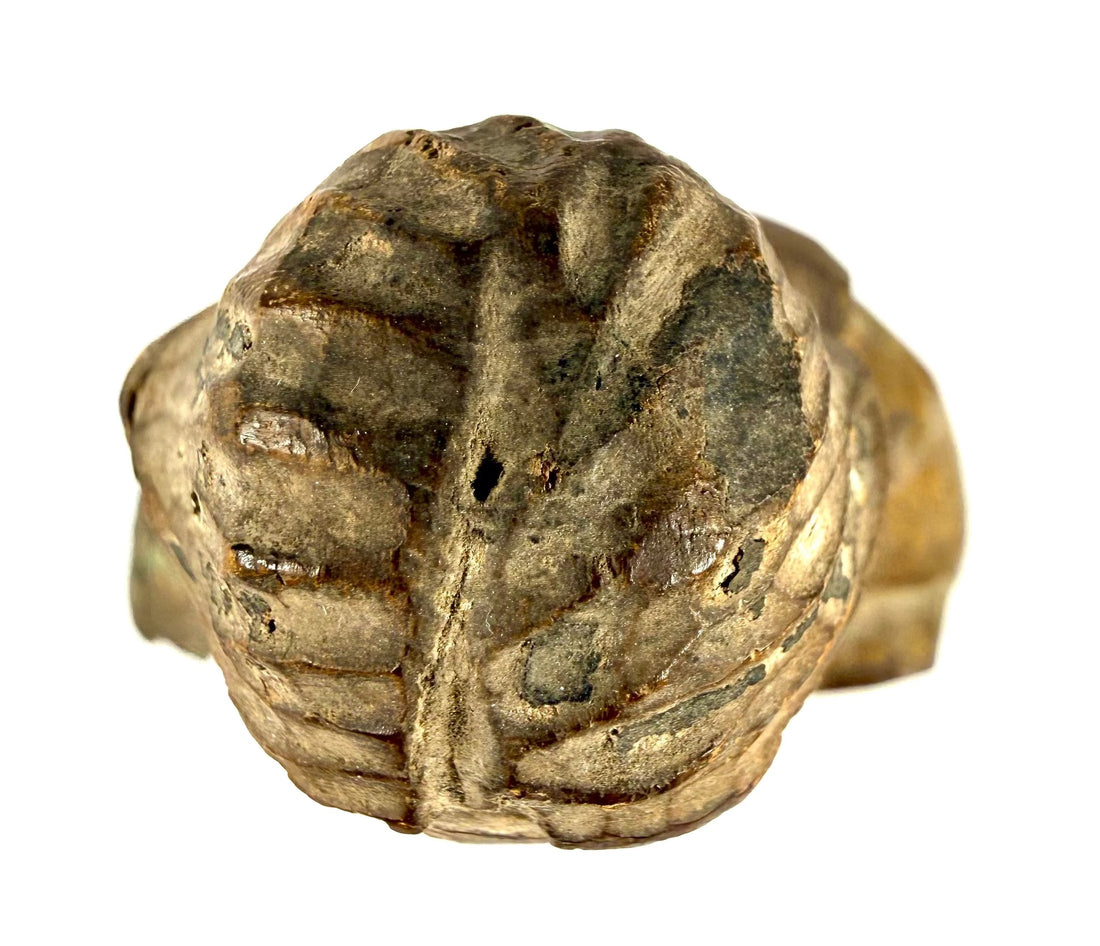
Saint espagnol colonial ou européen | Saint en bois sculpté à la main avec des traces de polychromie | XVIIe-XVIIIe siècle

Historique de provenance et de propriété

Anciennement détenue par une collection privée à Norfolk, Virginie, États-Unis, axée sur les santos, les figurines de dévotion catholiques et les objets religieux.

Prix habituel
$600.00
Prix soldé
$600.00
Prix habituel
Frais de port calculés à la caisse.

This is a one-of-a-kind historical object. Once sold, this exact piece will not be restocked.

Questions before acquiring? Additional photographs, condition details, documentation, shipping information or a private viewing are available upon request.
17th-century hand-carved wooden Santo statue with faded polychrome paint and flowing drapery
360-degree rotating view of an antique hand-carved wooden Santo saint statue, dating to the 17th–18th century, featuring draped robes, remnants of original polychrome paint, and an aged patina. A Spanish Colonial or European religious sculpture from Relic And Rarity.
Antique 17th–18th century hand-carved wooden santo statue depicting a religious figure with flowing robes and remnants of original polychrome paint.
Spanish Colonial or European wooden saint figure featuring a serene facial expression, delicately carved features, and traditional devotional craftsmanship.
Historic Catholic devotional statue displaying faded red, green, and gold polychrome decoration across its hand-carved wooden surface.
Antique wooden religious figure with sculpted drapery, natural surface cracks, and a weathered patina developed over centuries.
17th–18th century carved wooden santo sculpture featuring a missing arm, worn painted surfaces, and traditional Spanish Colonial religious styling.
Early religious wood carving depicting a standing saint with expressive facial details and flowing garments characteristic of European devotional art.
Antique Spanish Colonial-style santo figure retaining traces of its original painted finish and visible evidence of traditional hand-carving techniques.
Historic wooden Catholic saint statue featuring weathered polychrome surfaces, aged wood grain, and intricate folds in its sculpted robes.
Hand-carved antique religious sculpture measuring approximately 11 inches tall, with faded decorative pigments and signs of historical devotional use.
Rare 225–325-year-old wooden santo figure attributed to Spanish Colonial Latin America or Europe, displaying aged polychrome decoration and traditional religious craftsmanship.
  • 17th-century hand-carved wooden Santo statue with faded polychrome paint and flowing drapery
  • 360-degree rotating view of an antique hand-carved wooden Santo saint statue, dating to the 17th–18th century, featuring draped robes, remnants of original polychrome paint, and an aged patina. A Spanish Colonial or European religious sculpture from Relic And Rarity.
  • Antique 17th–18th century hand-carved wooden santo statue depicting a religious figure with flowing robes and remnants of original polychrome paint.
  • Spanish Colonial or European wooden saint figure featuring a serene facial expression, delicately carved features, and traditional devotional craftsmanship.
  • Historic Catholic devotional statue displaying faded red, green, and gold polychrome decoration across its hand-carved wooden surface.
  • Antique wooden religious figure with sculpted drapery, natural surface cracks, and a weathered patina developed over centuries.
  • 17th–18th century carved wooden santo sculpture featuring a missing arm, worn painted surfaces, and traditional Spanish Colonial religious styling.
  • Early religious wood carving depicting a standing saint with expressive facial details and flowing garments characteristic of European devotional art.
  • Antique Spanish Colonial-style santo figure retaining traces of its original painted finish and visible evidence of traditional hand-carving techniques.
  • Historic wooden Catholic saint statue featuring weathered polychrome surfaces, aged wood grain, and intricate folds in its sculpted robes.
  • Hand-carved antique religious sculpture measuring approximately 11 inches tall, with faded decorative pigments and signs of historical devotional use.
  • Rare 225–325-year-old wooden santo figure attributed to Spanish Colonial Latin America or Europe, displaying aged polychrome decoration and traditional religious craftsmanship.
17th-century hand-carved wooden Santo statue with faded polychrome paint and flowing drapery
360-degree rotating view of an antique hand-carved wooden Santo saint statue, dating to the 17th–18th century, featuring draped robes, remnants of original polychrome paint, and an aged patina. A Spanish Colonial or European religious sculpture from Relic And Rarity.
Antique 17th–18th century hand-carved wooden santo statue depicting a religious figure with flowing robes and remnants of original polychrome paint.
Spanish Colonial or European wooden saint figure featuring a serene facial expression, delicately carved features, and traditional devotional craftsmanship.
Historic Catholic devotional statue displaying faded red, green, and gold polychrome decoration across its hand-carved wooden surface.
Antique wooden religious figure with sculpted drapery, natural surface cracks, and a weathered patina developed over centuries.
17th–18th century carved wooden santo sculpture featuring a missing arm, worn painted surfaces, and traditional Spanish Colonial religious styling.
Early religious wood carving depicting a standing saint with expressive facial details and flowing garments characteristic of European devotional art.
Antique Spanish Colonial-style santo figure retaining traces of its original painted finish and visible evidence of traditional hand-carving techniques.
Historic wooden Catholic saint statue featuring weathered polychrome surfaces, aged wood grain, and intricate folds in its sculpted robes.
Hand-carved antique religious sculpture measuring approximately 11 inches tall, with faded decorative pigments and signs of historical devotional use.
Rare 225–325-year-old wooden santo figure attributed to Spanish Colonial Latin America or Europe, displaying aged polychrome decoration and traditional religious craftsmanship.
Authenticity and secure checkout guarantee

Saint espagnol colonial ou européen | Saint en bois sculpté à la main avec des traces de polychromie | XVIIe-XVIIIe siècle

Description

Contexte historique et origine

Région : Amérique latine coloniale espagnole ou Europe
Matériau : Bois sculpté à la main avec des vestiges de peinture polychrome
Période : XVIIe-XVIIIe siècle

Description

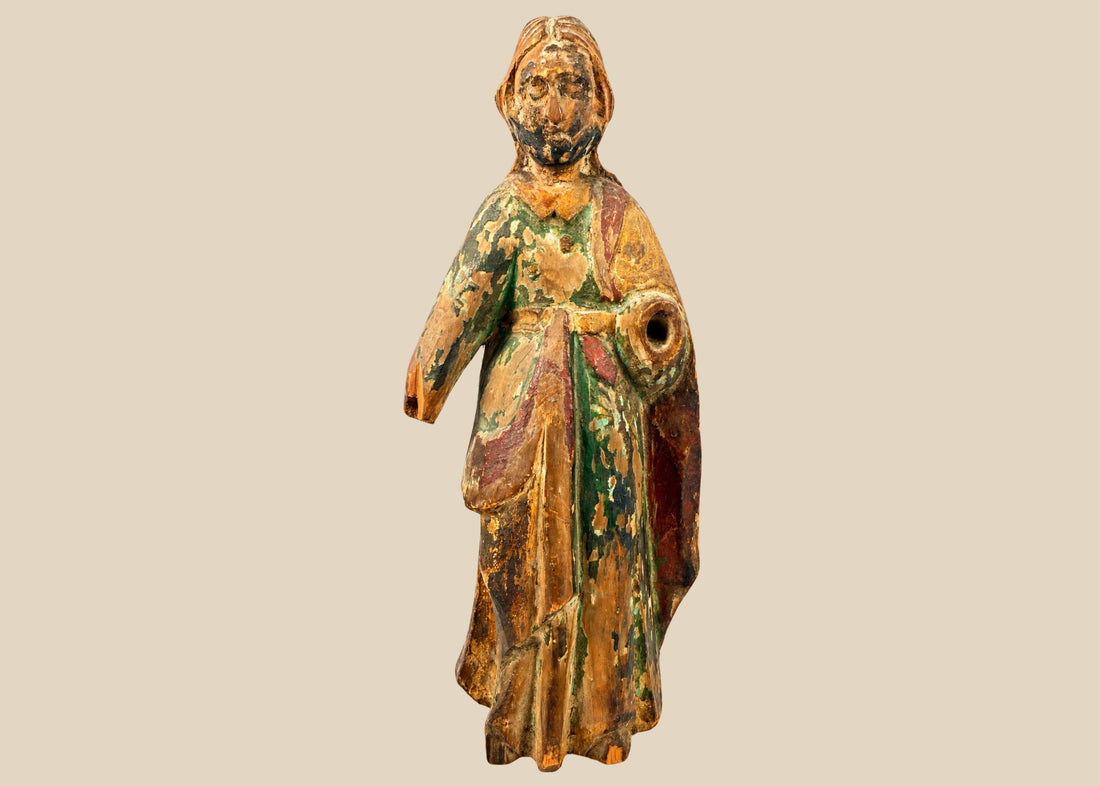
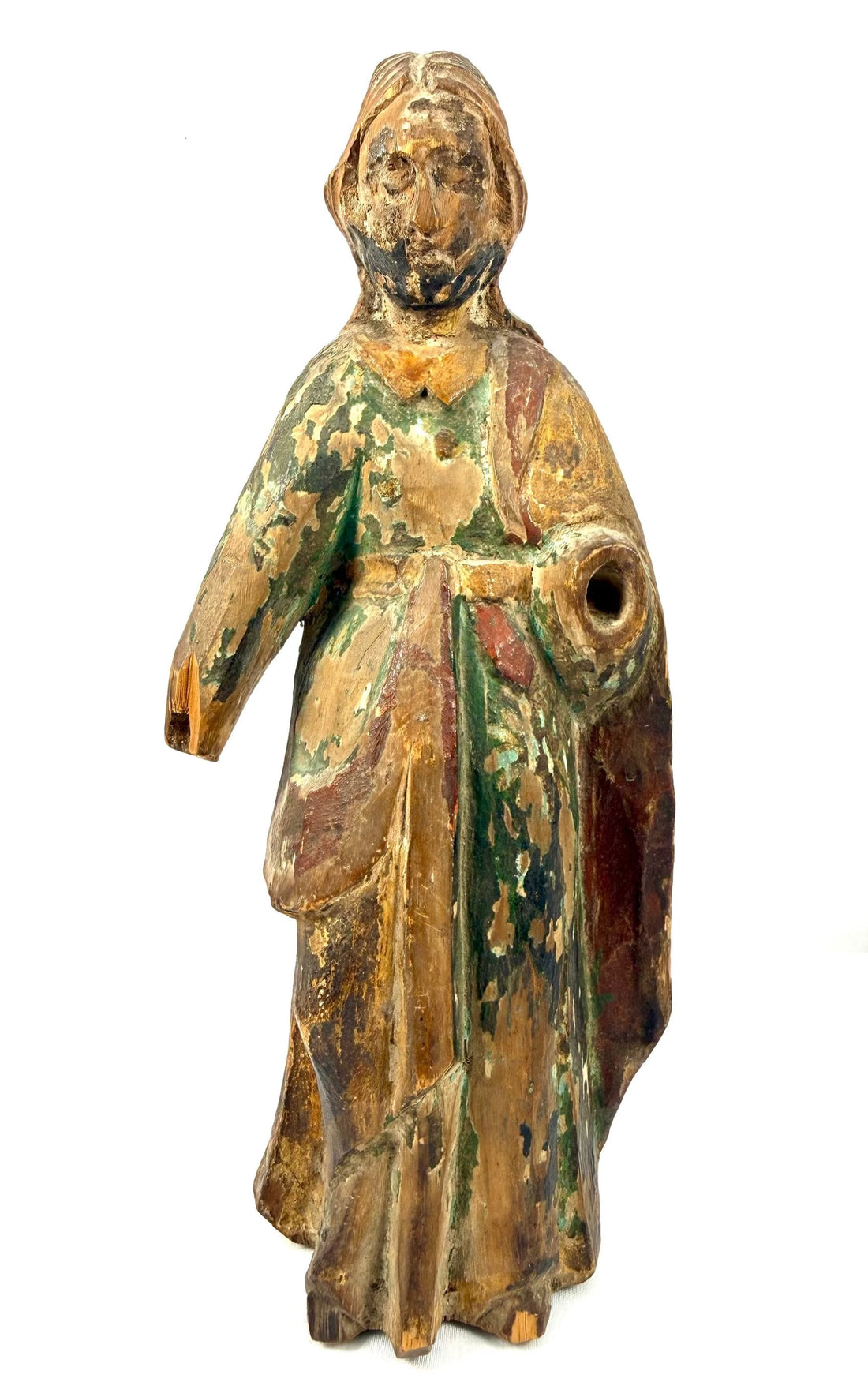
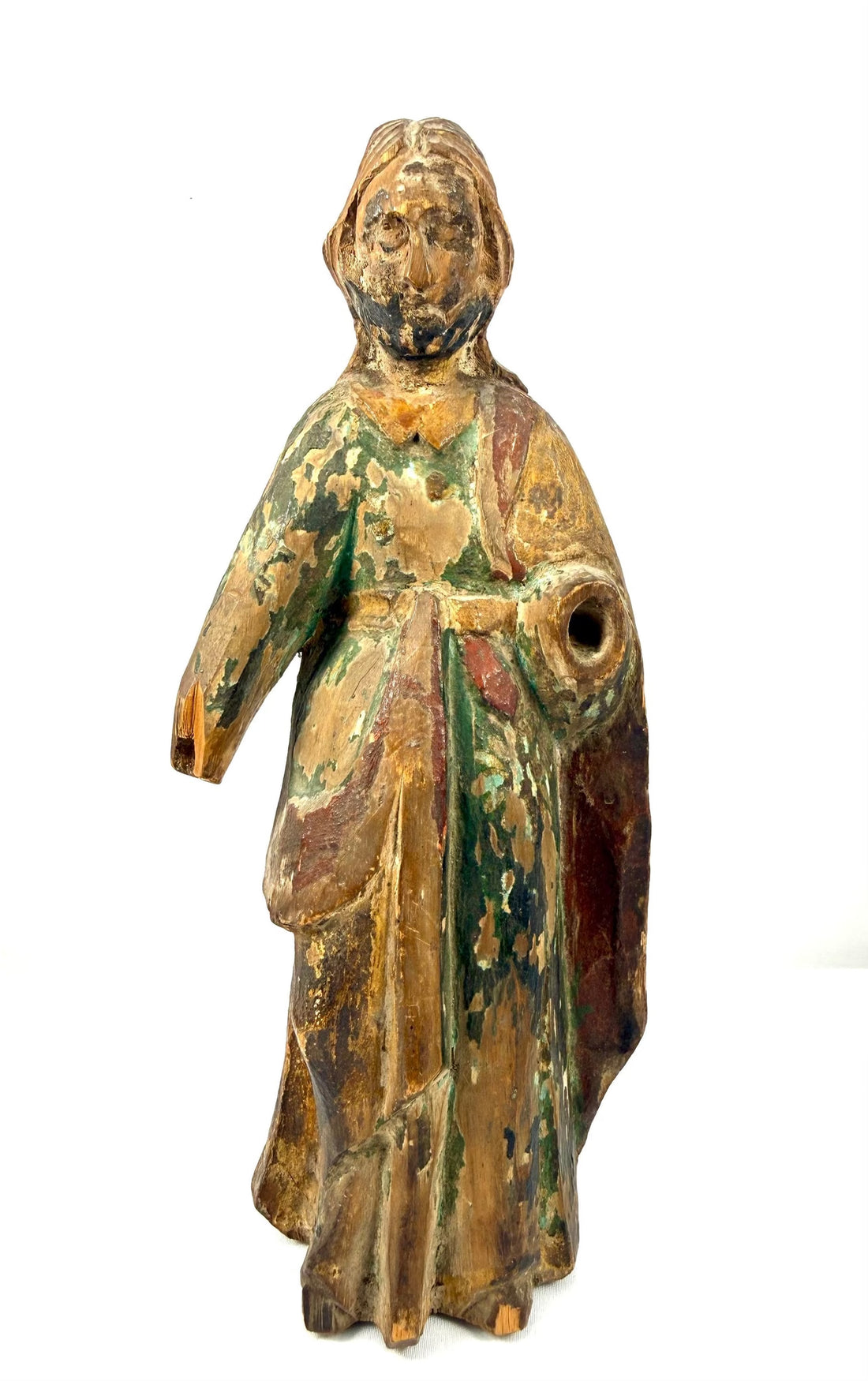
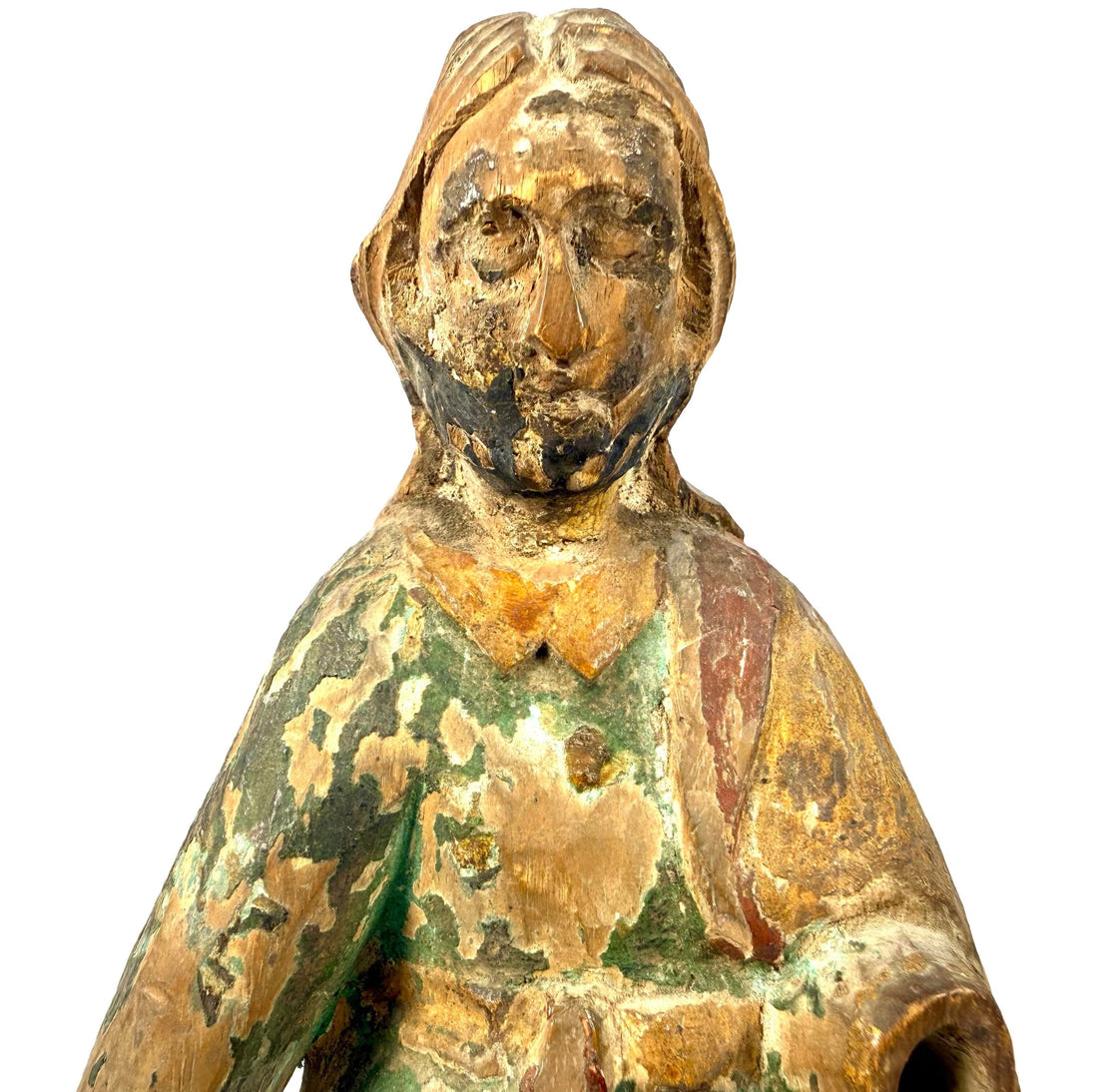
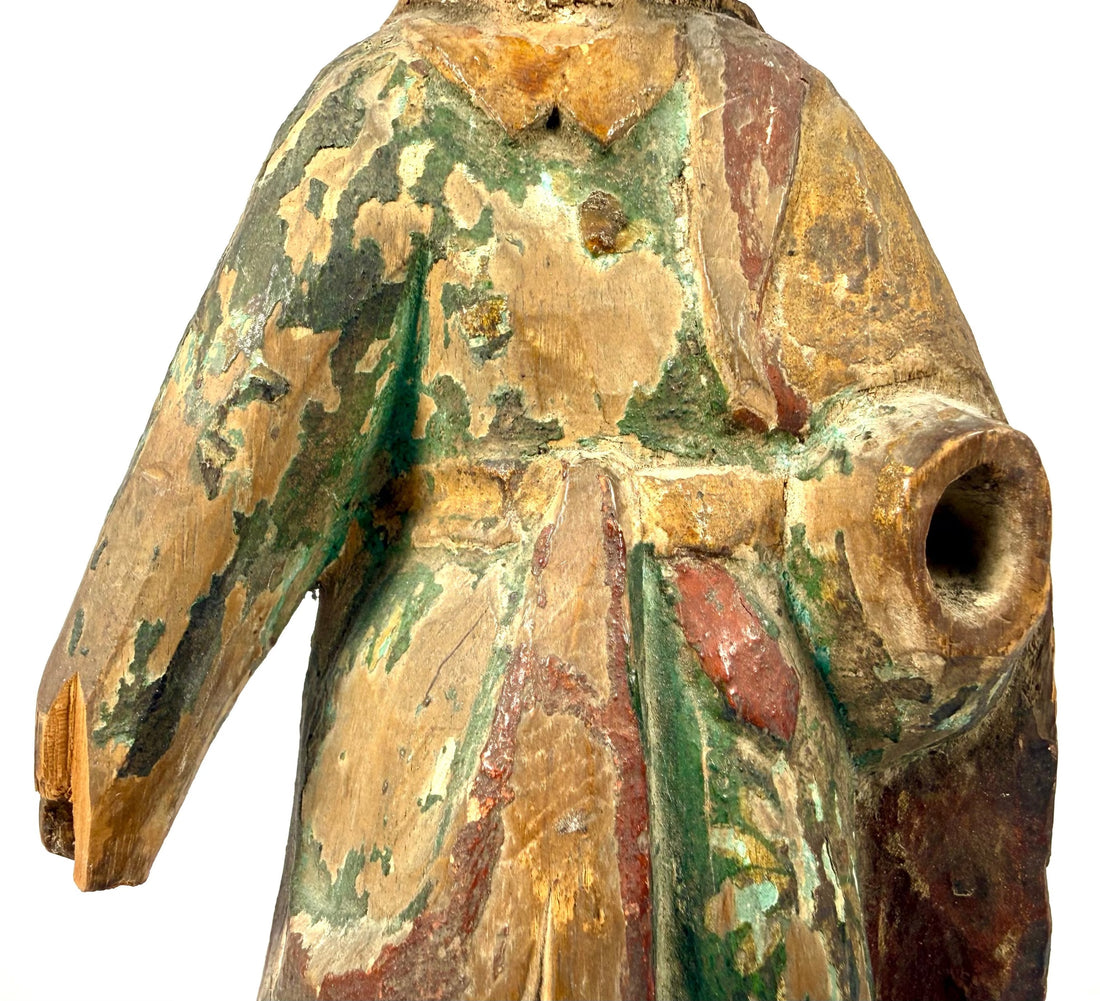
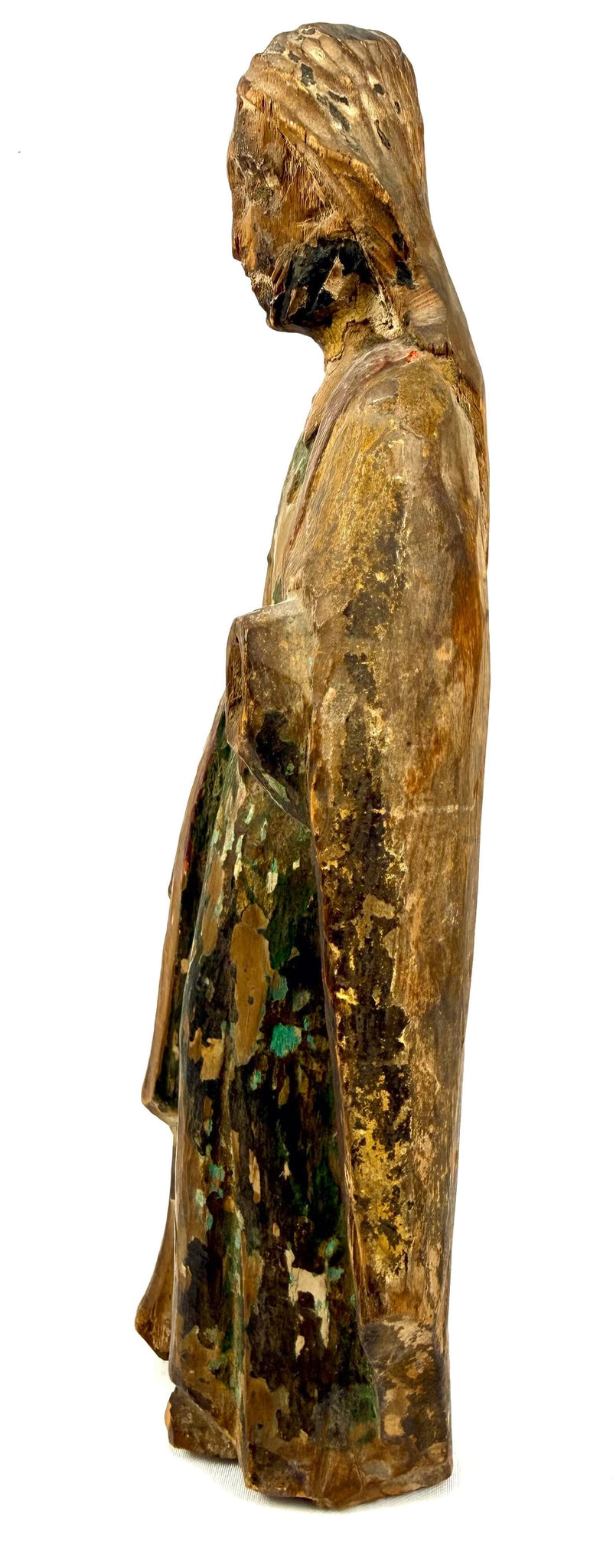
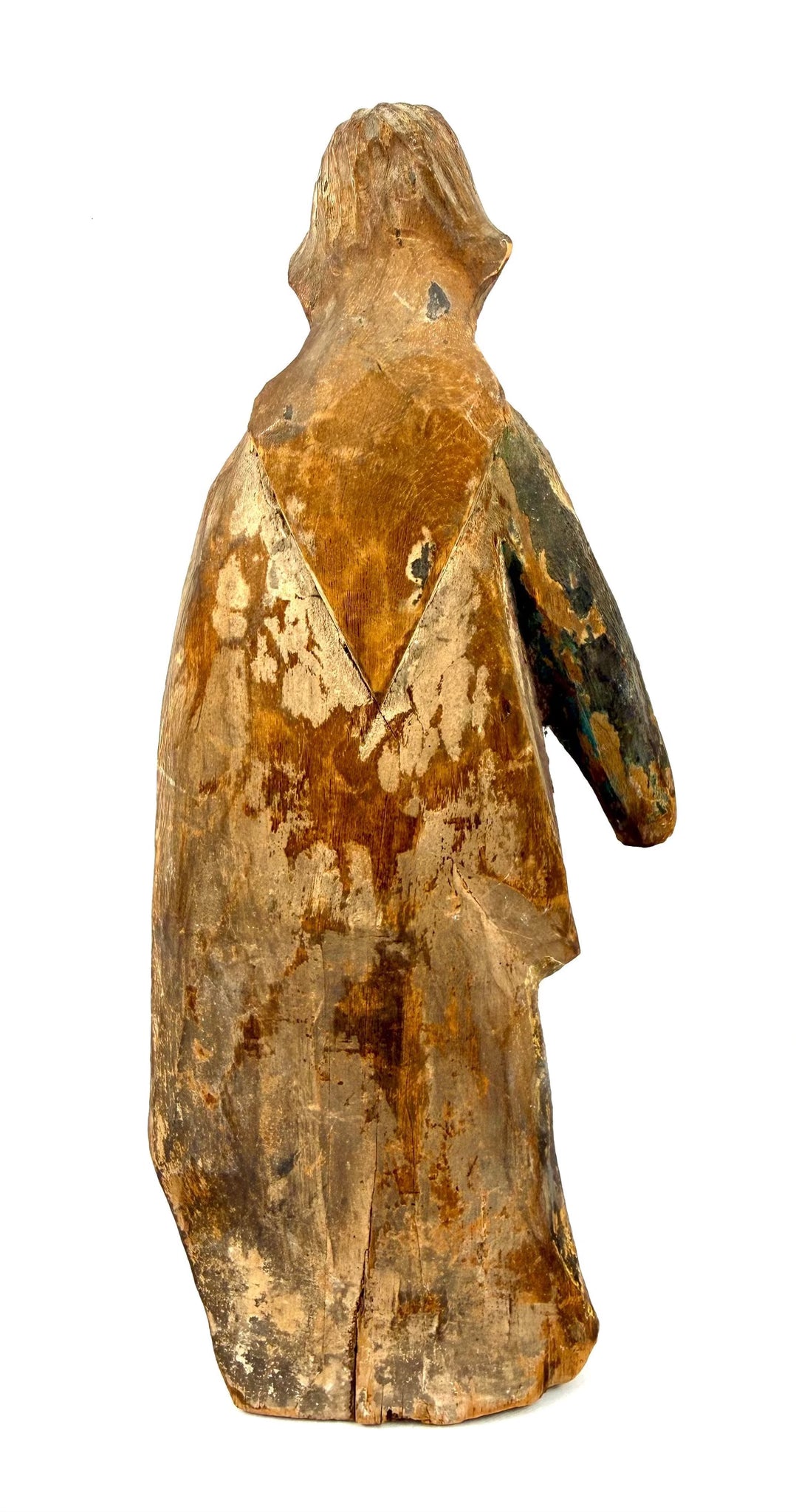
Cette charmante statue antique en bois représente un saint ou un personnage religieux, un sujet fréquemment représenté dans l'art religieux colonial espagnol et européen. La figure est sculptée avec un détail expressif, présentant un visage serein et des drapés fluides qui évoquent la dévotion et la spiritualité. Bien qu'une grande partie de la décoration polychrome d'origine se soit estompée avec le temps, des traces discrètes de verts, de rouges et d'ors subsistent, renforçant son authenticité. Le bras manquant de la statue et l'usure de sa surface reflètent davantage sa longue utilisation dévotionnelle, probablement dans des églises, des chapelles ou des autels privés.

Caractéristiques

- Bois sculpté à la main avec une expression faciale détaillée et des robes drapées

- Vestiges de décoration polychrome originale dans des tons discrets

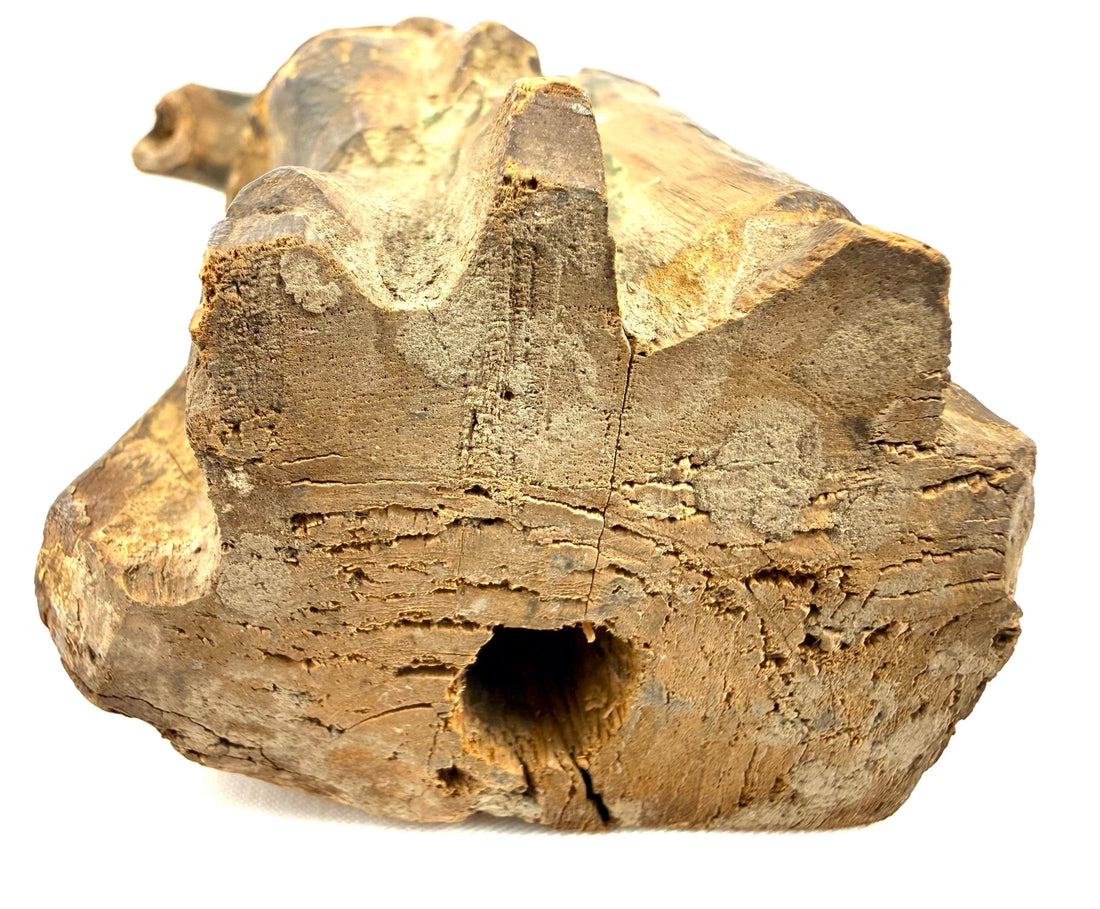
- Usure de la surface, fissures et patine vieillie dues à des siècles d'utilisation dévotionnelle

- Bras manquant, conforme à l'âge et à la manipulation au fil des générations

Signification culturelle

Les statues religieuses comme celle-ci faisaient partie intégrante des pratiques dévotionnelles coloniales espagnoles, servant à la fois d'objets de prière et d'expressions visuelles de la foi. Leur création reflétait un mélange de traditions religieuses européennes et d'artisanat local, aboutissant à une forme unique d'art populaire. Cette pièce témoigne du rôle des saints et des figures saintes dans le culte quotidien, ainsi que de l'héritage durable de l'art religieux colonial.

État

Bon état antique avec une usure correspondant à l'âge. Des fissures visibles à la surface, une polychromie usée et un bras manquant contribuent à son authenticité et à son charme historique.

Dimensions (approximatives)

Hauteur : 27,9 cm
Largeur : 11,4 cm
Profondeur : 7,6 cm

Âge (approximatif)

225–325 ans

Provenance

Anciennement détenue dans une collection privée à Norfolk, Virginie, États-Unis, axée sur les santos, les figures dévotionnelles catholiques et les objets religieux.

En savoir plus

Étudiez L'art de la Renaissance espagnole et son influence à travers le Metropolitan Museum of Art

Parcourez notre Collection de figures de Santo et d'artefacts connexes

Description

Contexte historique et origine

Région : Amérique latine coloniale espagnole ou Europe
Matériau : Bois sculpté à la main avec des vestiges de peinture polychrome
Période : XVIIe-XVIIIe siècle

Description

Cette charmante statue antique en bois représente un saint ou un personnage religieux, un sujet fréquemment représenté dans l'art religieux colonial espagnol et européen. La figure est sculptée avec un détail expressif, présentant un visage serein et des drapés fluides qui évoquent la dévotion et la spiritualité. Bien qu'une grande partie de la décoration polychrome d'origine se soit estompée avec le temps, des traces discrètes de verts, de rouges et d'ors subsistent, renforçant son authenticité. Le bras manquant de la statue et l'usure de sa surface reflètent davantage sa longue utilisation dévotionnelle, probablement dans des églises, des chapelles ou des autels privés.

Caractéristiques

- Bois sculpté à la main avec une expression faciale détaillée et des robes drapées

- Vestiges de décoration polychrome originale dans des tons discrets

- Usure de la surface, fissures et patine vieillie dues à des siècles d'utilisation dévotionnelle

- Bras manquant, conforme à l'âge et à la manipulation au fil des générations

Signification culturelle

Les statues religieuses comme celle-ci faisaient partie intégrante des pratiques dévotionnelles coloniales espagnoles, servant à la fois d'objets de prière et d'expressions visuelles de la foi. Leur création reflétait un mélange de traditions religieuses européennes et d'artisanat local, aboutissant à une forme unique d'art populaire. Cette pièce témoigne du rôle des saints et des figures saintes dans le culte quotidien, ainsi que de l'héritage durable de l'art religieux colonial.

État

Bon état antique avec une usure correspondant à l'âge. Des fissures visibles à la surface, une polychromie usée et un bras manquant contribuent à son authenticité et à son charme historique.

Dimensions (approximatives)

Hauteur : 27,9 cm
Largeur : 11,4 cm
Profondeur : 7,6 cm

Âge (approximatif)

225–325 ans

Provenance

Anciennement détenue dans une collection privée à Norfolk, Virginie, États-Unis, axée sur les santos, les figures dévotionnelles catholiques et les objets religieux.

En savoir plus

Étudiez L'art de la Renaissance espagnole et son influence à travers le Metropolitan Museum of Art

Parcourez notre Collection de figures de Santo et d'artefacts connexes

Vous aimerez peut-être aussi