

Sphinx sculpté sur socle en bois | Art décoratif égyptomantique | Début-milieu du XXe siècle
- Prix habituel
- $500.00
- Prix soldé
- $500.00
- Prix habituel
Impossible de charger la disponibilité du service de retrait


Sphinx sculpté sur socle en bois | Art décoratif égyptomantique | Début-milieu du XXe siècle
Description
Plus
Moins
Contexte historique et origine
Région : Égypte (inspiré, probablement produit ailleurs pour le marché des antiquités)
Matériau : Matériau naturel sculpté, monté sur une base en bois noir
Période : Début-milieu du XXe siècle
Description
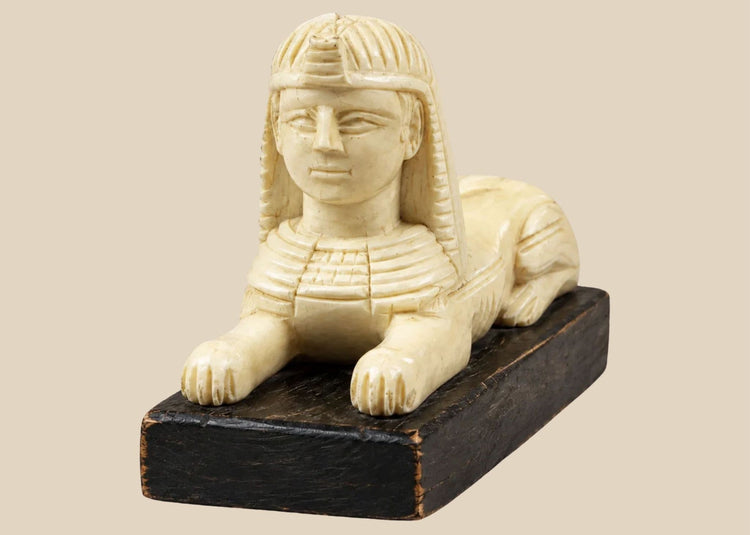
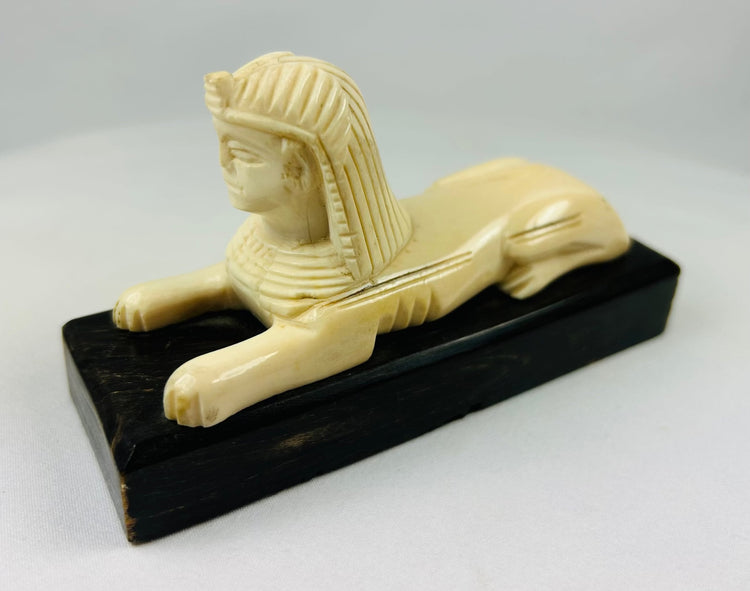
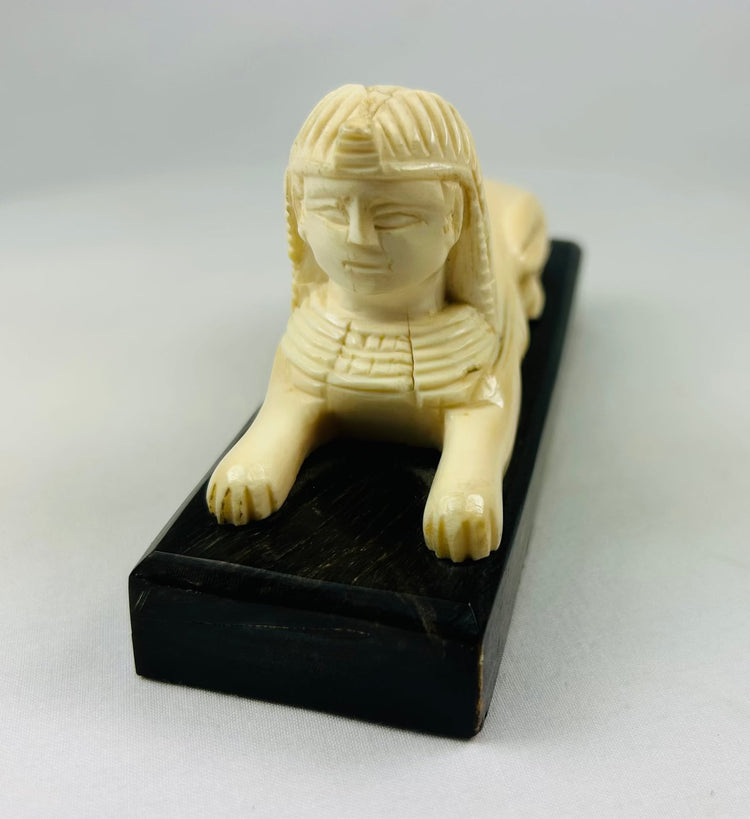
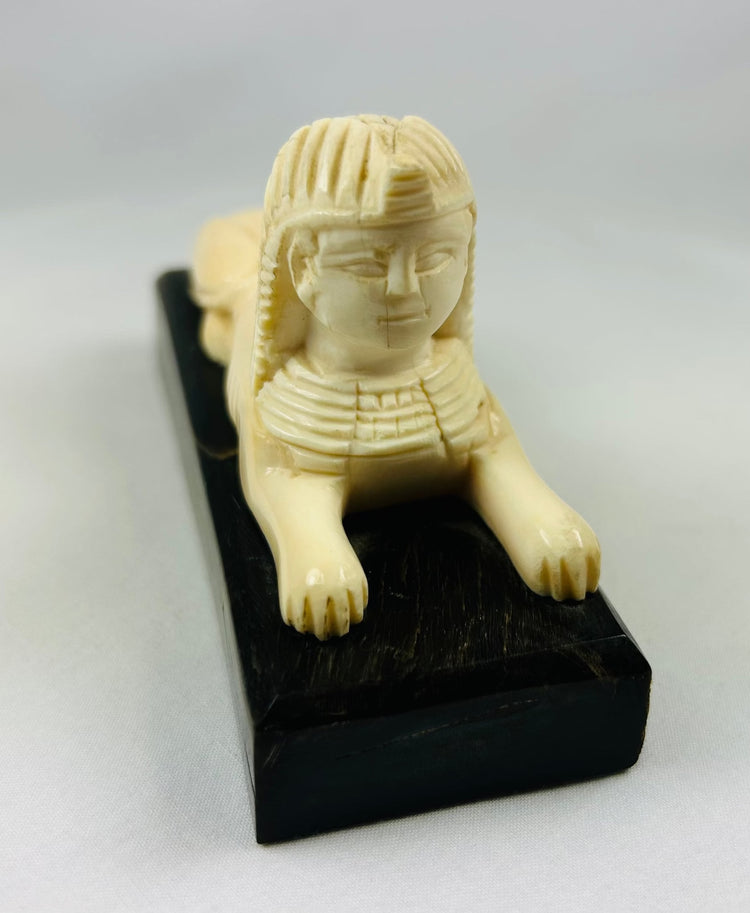
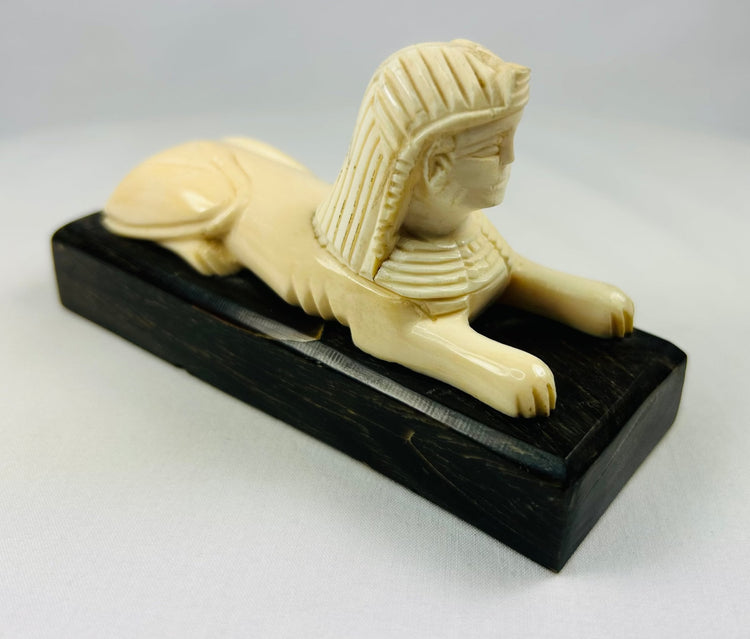
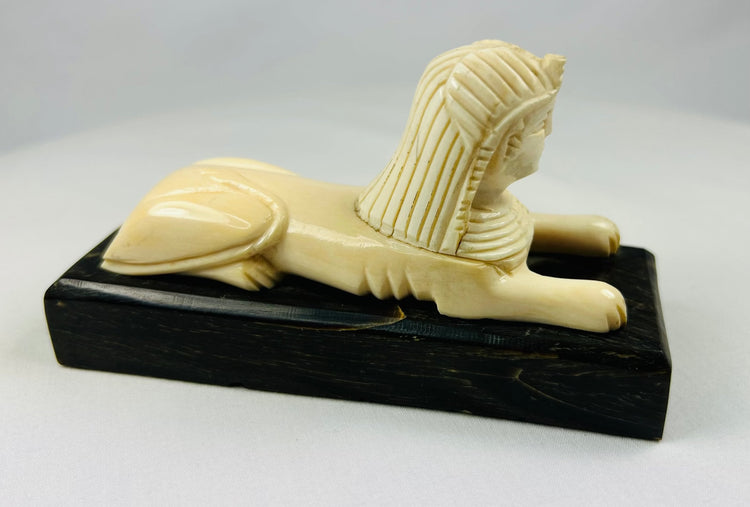
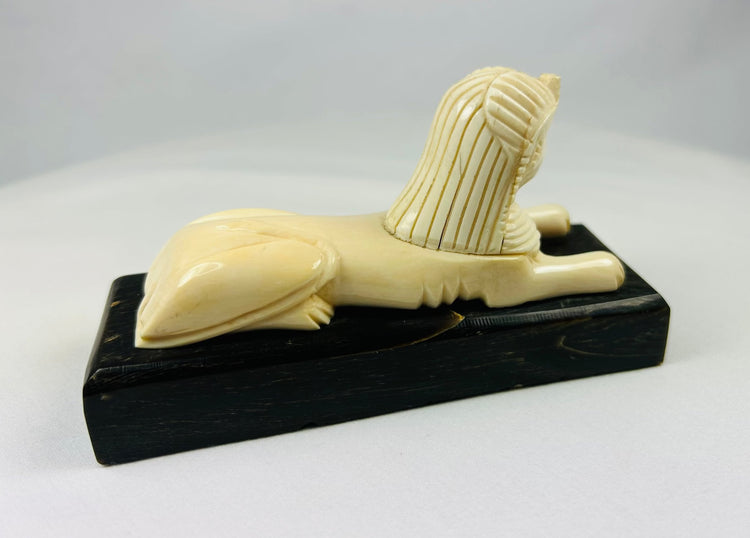
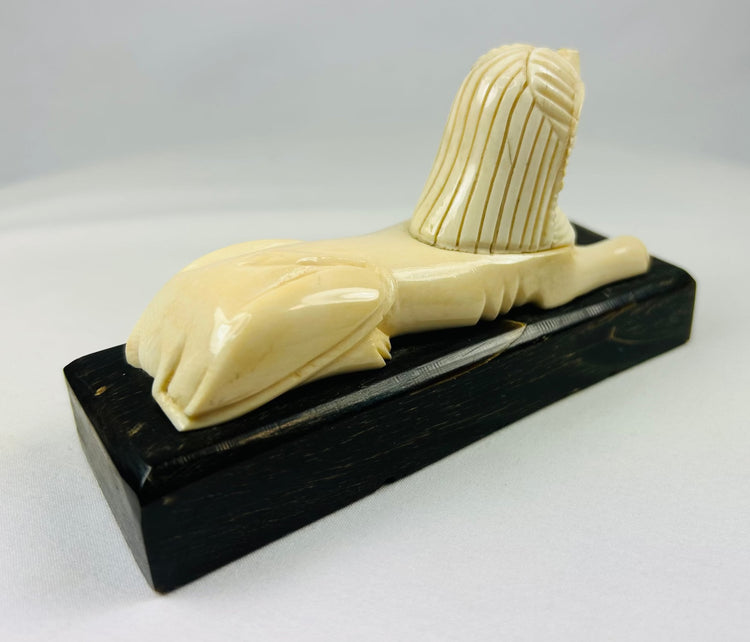
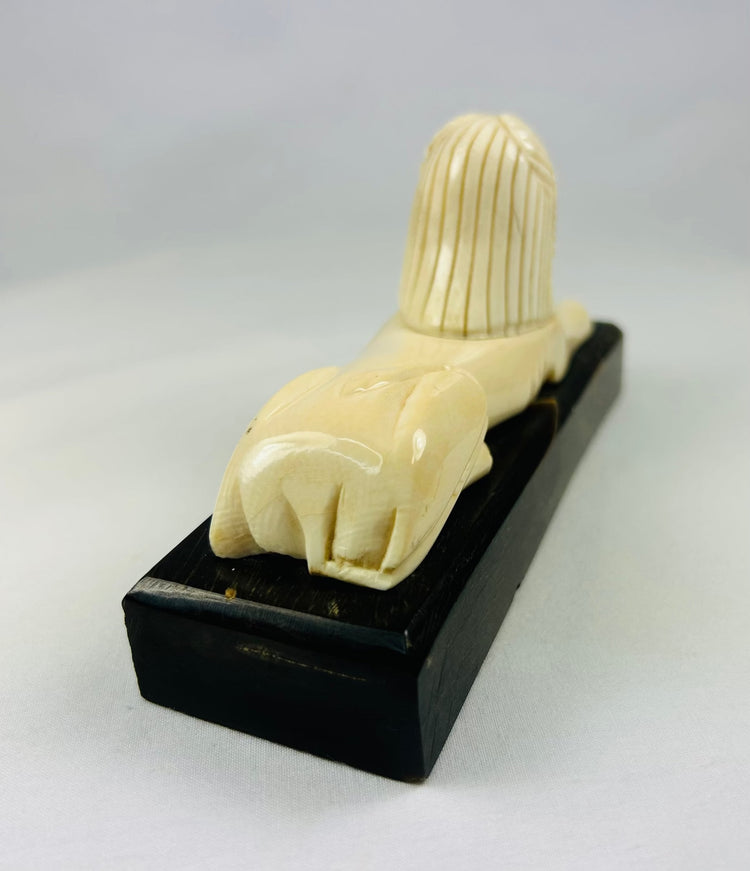
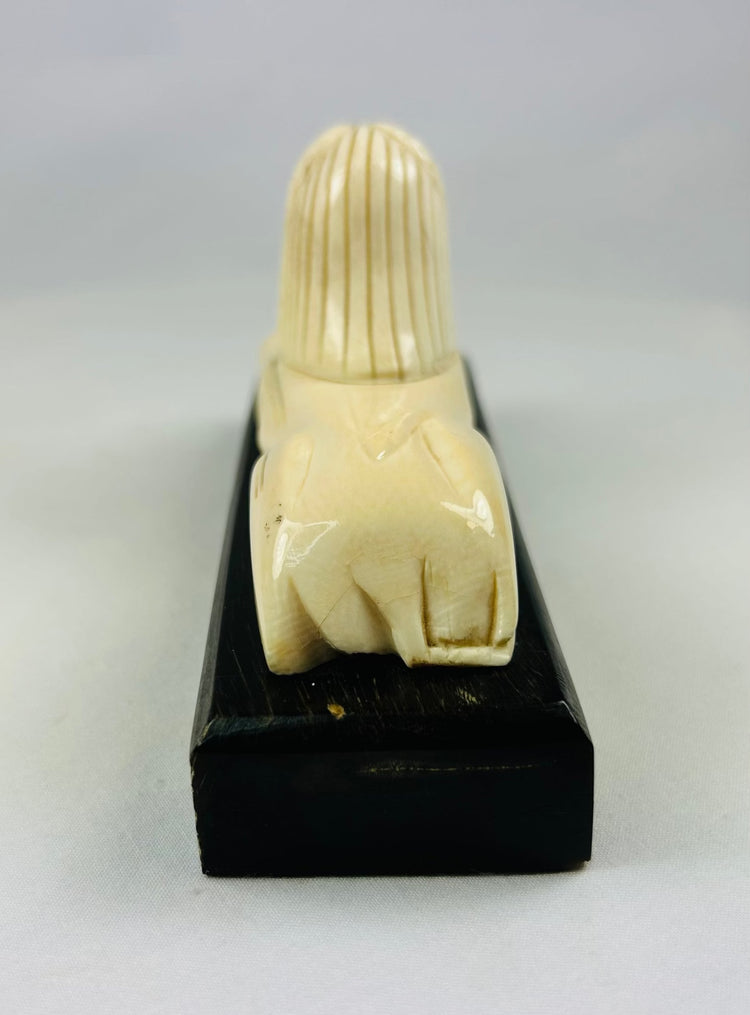
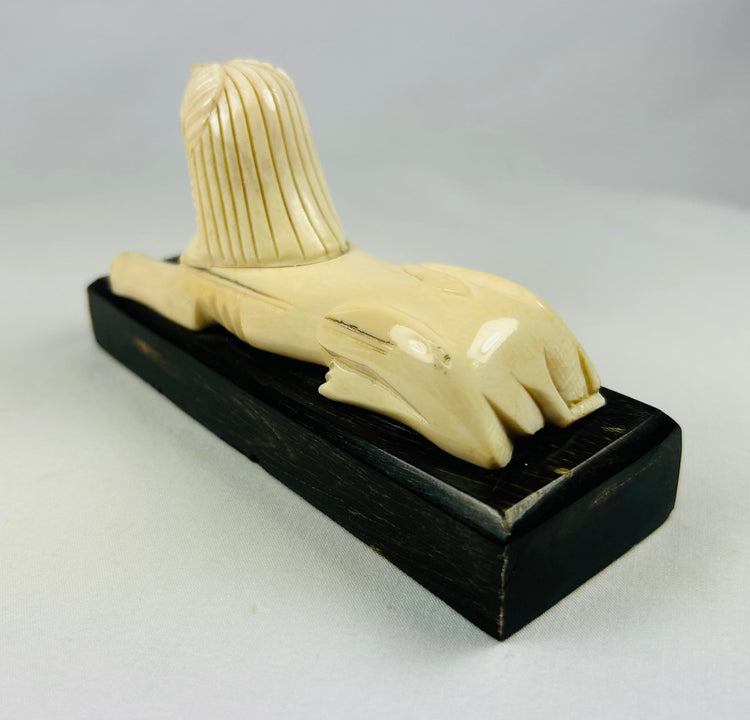
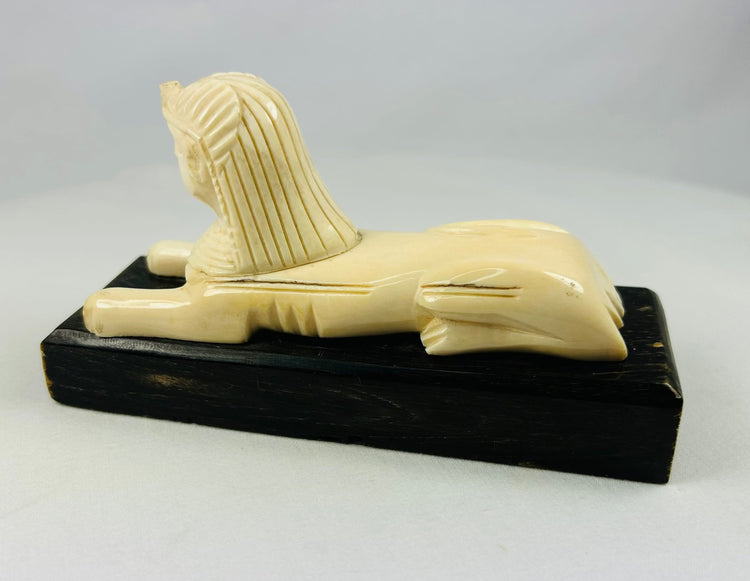
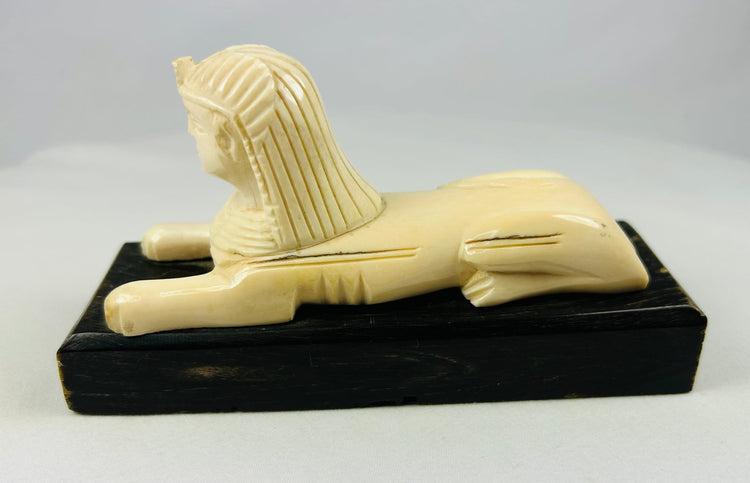
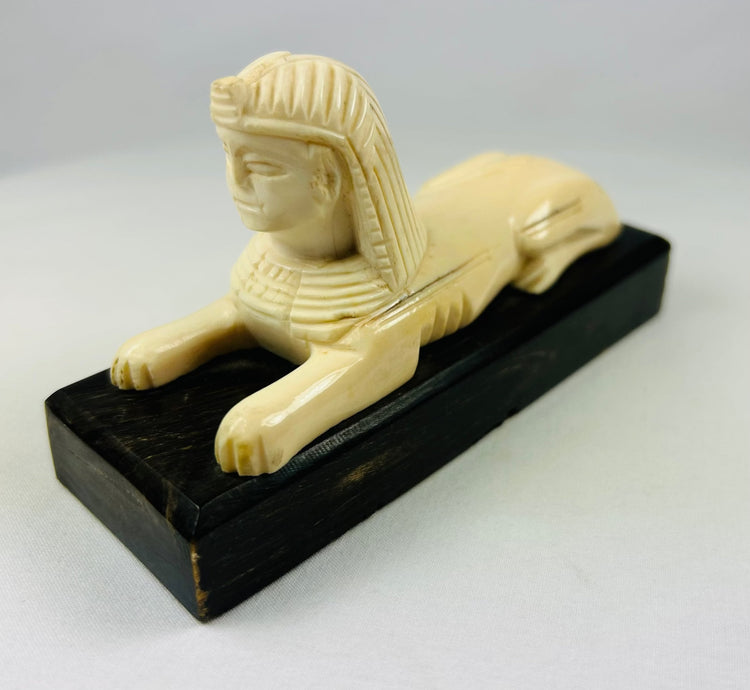
Cette figure de Sphinx finement sculptée reflète la fascination durable pour l'Égypte ancienne qui a balayé l'Europe et l'Amérique du Nord au début du XXe siècle. Représentée dans la pose couchée traditionnelle, la figure combine un corps léonin avec une tête pharaonique ornée de la coiffe némès striée. La surface crémeuse couleur ivoire a été polie pour un fini lisse, et la pièce repose sur sa base d'origine en bois noir à degrés, rehaussant sa présence visuelle. La forme stylisée s'inspire de l'imagerie pharaonique classique tout en incarnant le renouveau de l'égyptomanie dans les arts décoratifs après la découverte du tombeau de Toutankhamon en 1922.
Caractéristiques
- Matériau naturel sculpté à la main avec une finition lisse et polie
- Sphinx couché avec un corps de lion et une tête pharaonique
- Coiffe némès traditionnelle avec des traits sereins
- Monté sur une base originale en bois noir à degrés
- Compact et élégant, adapté pour une vitrine ou un bureau
Signification culturelle
Le Sphinx est l'un des symboles les plus reconnaissables de l'Égypte ancienne, incarnant la sagesse divine, la garde et la force. Les sculptures décoratives du début du XXe siècle, comme celle-ci, reflètent le renouveau des motifs égyptiens dans l'art et le design occidentaux, ramenant des échos de la grandeur antique dans les maisons modernes. Elles illustrent comment l'archéologie et la fascination populaire ont façonné l'esthétique des arts décoratifs pendant la période de l'égyptomanie.
État
Bon état avec une légère usure de surface et un poli conformes à l'âge. Léger frottement à la base. Aucune perte ou restauration majeure observée.
Dimensions (Approximatives)
Hauteur : 7 cm
Largeur : 12 cm
Profondeur : 4,5 cm
Âge (Approximatif)
80–120 ans
Provenance
D'une collection privée à York, Pennsylvanie, États-Unis.
En savoir plus
Explorez un exemple comparable dans la collection de sculptures du Metropolitan Museum of Art
Explorez notre collection de statues, figures et sculptures anciennes
Description
Contexte historique et origine
Région : Égypte (inspiré, probablement produit ailleurs pour le marché des antiquités)
Matériau : Matériau naturel sculpté, monté sur une base en bois noir
Période : Début-milieu du XXe siècle
Description
Cette figure de Sphinx finement sculptée reflète la fascination durable pour l'Égypte ancienne qui a balayé l'Europe et l'Amérique du Nord au début du XXe siècle. Représentée dans la pose couchée traditionnelle, la figure combine un corps léonin avec une tête pharaonique ornée de la coiffe némès striée. La surface crémeuse couleur ivoire a été polie pour un fini lisse, et la pièce repose sur sa base d'origine en bois noir à degrés, rehaussant sa présence visuelle. La forme stylisée s'inspire de l'imagerie pharaonique classique tout en incarnant le renouveau de l'égyptomanie dans les arts décoratifs après la découverte du tombeau de Toutankhamon en 1922.
Caractéristiques
- Matériau naturel sculpté à la main avec une finition lisse et polie
- Sphinx couché avec un corps de lion et une tête pharaonique
- Coiffe némès traditionnelle avec des traits sereins
- Monté sur une base originale en bois noir à degrés
- Compact et élégant, adapté pour une vitrine ou un bureau
Signification culturelle
Le Sphinx est l'un des symboles les plus reconnaissables de l'Égypte ancienne, incarnant la sagesse divine, la garde et la force. Les sculptures décoratives du début du XXe siècle, comme celle-ci, reflètent le renouveau des motifs égyptiens dans l'art et le design occidentaux, ramenant des échos de la grandeur antique dans les maisons modernes. Elles illustrent comment l'archéologie et la fascination populaire ont façonné l'esthétique des arts décoratifs pendant la période de l'égyptomanie.
État
Bon état avec une légère usure de surface et un poli conformes à l'âge. Léger frottement à la base. Aucune perte ou restauration majeure observée.
Dimensions (Approximatives)
Hauteur : 7 cm
Largeur : 12 cm
Profondeur : 4,5 cm
Âge (Approximatif)
80–120 ans
Provenance
D'une collection privée à York, Pennsylvanie, États-Unis.
En savoir plus
Explorez un exemple comparable dans la collection de sculptures du Metropolitan Museum of Art
Explorez notre collection de statues, figures et sculptures anciennes
Vous aimerez peut-être aussi
