


Chinese Carved Head of a Buddhist Arhat | Antique Temple Sculpture on Display Stand | Circa 18th–19th Century
- Prix habituel
- $1,000.00
- Prix soldé
- $1,000.00
- Prix habituel
Impossible de charger la disponibilité du service de retrait


Chinese Carved Head of a Buddhist Arhat | Antique Temple Sculpture on Display Stand | Circa 18th–19th Century
Description
Plus
Moins
Historical Context & Origin
Region: China
Material: Carved stone with traces of polychrome pigment; later metal display stand
Period: Qing Dynasty, circa 18th–19th century
Description
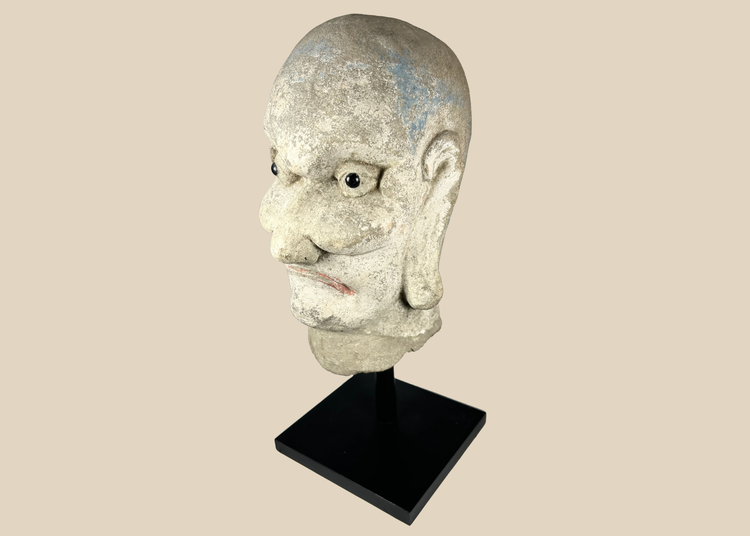
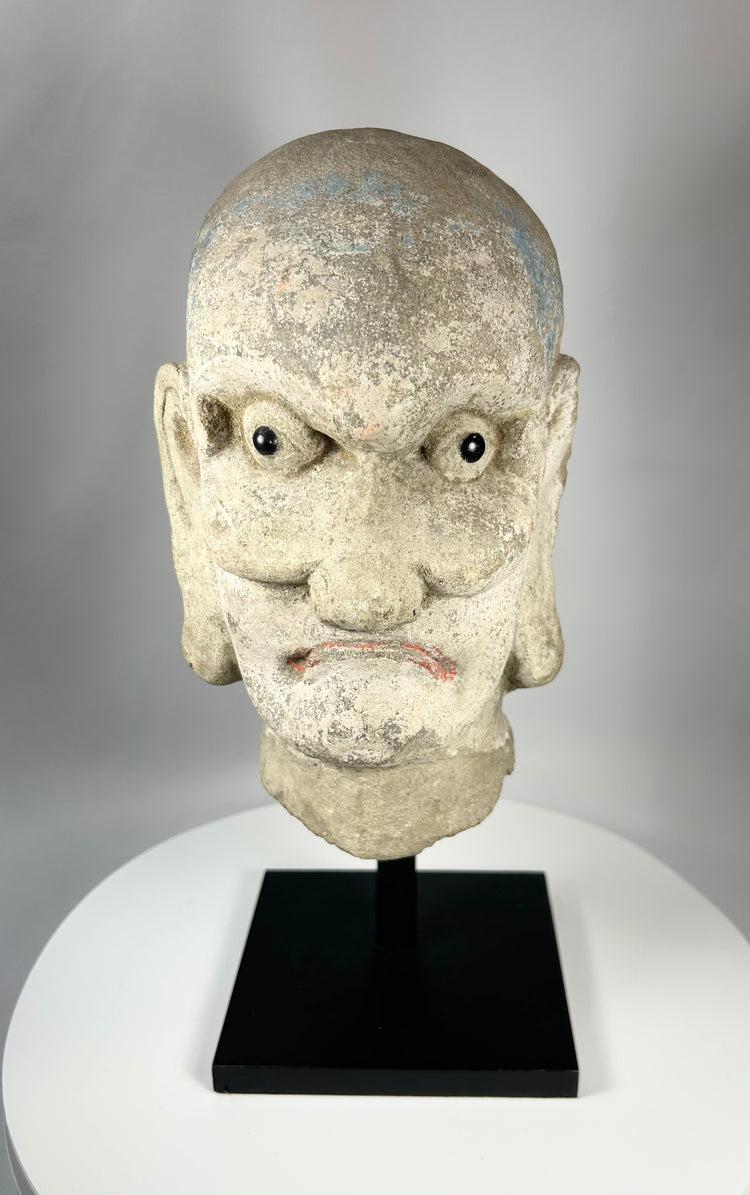
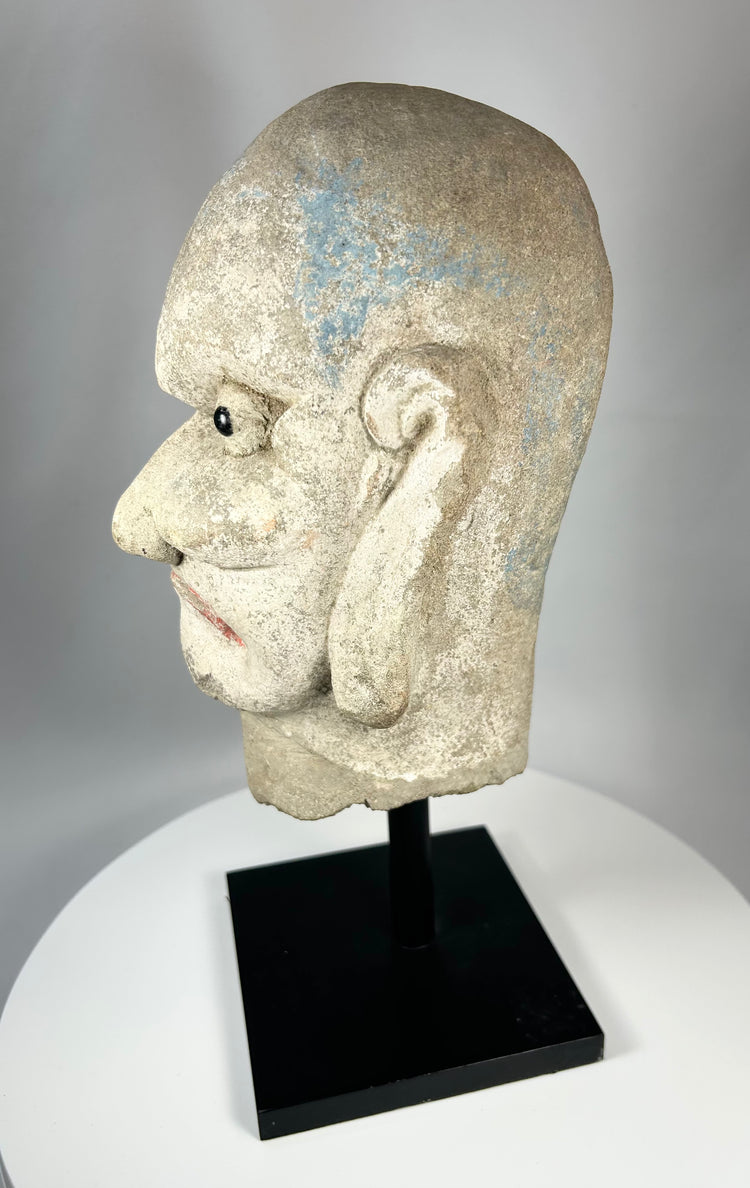
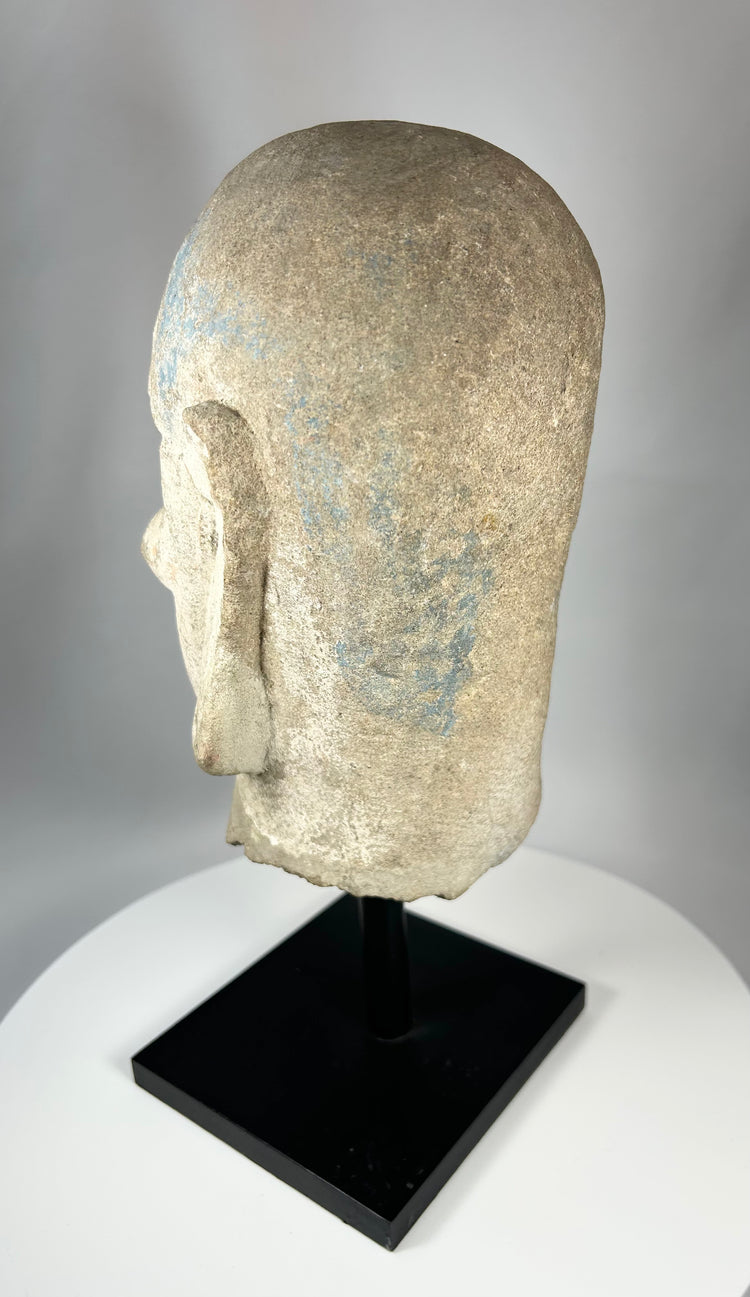
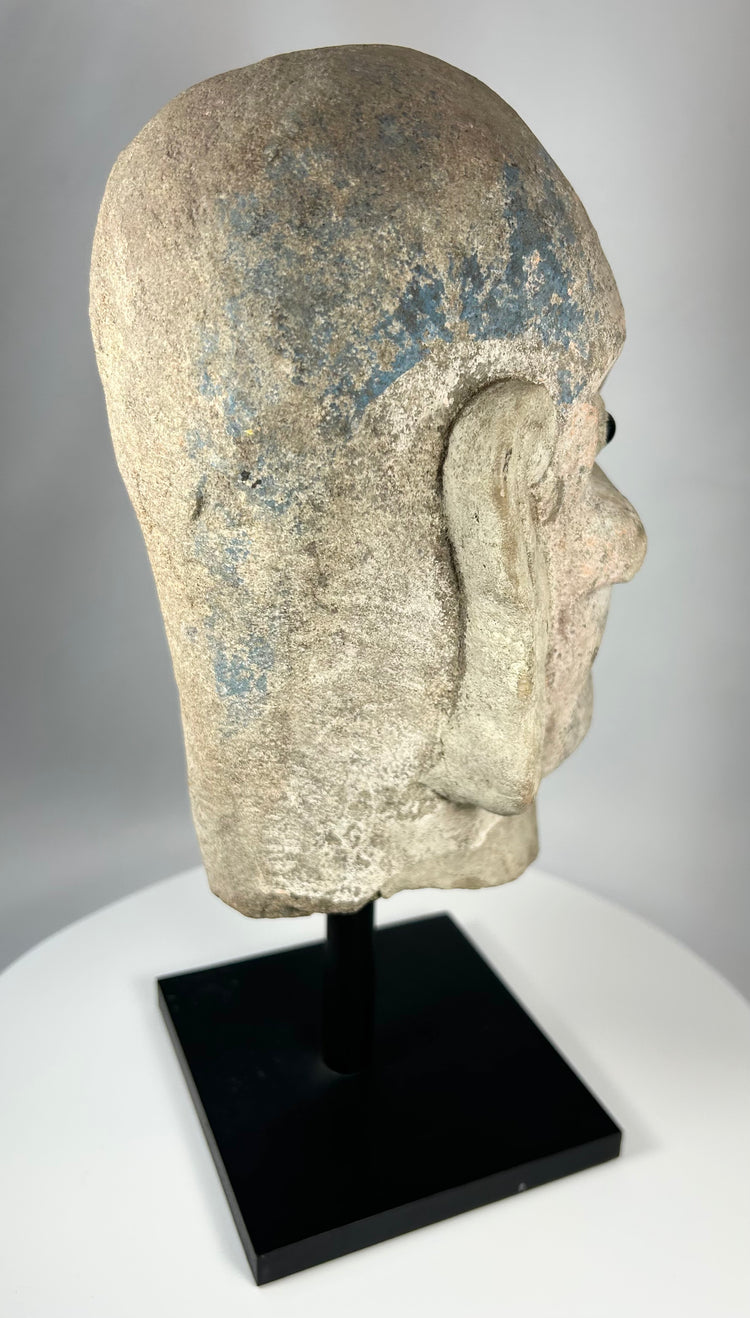
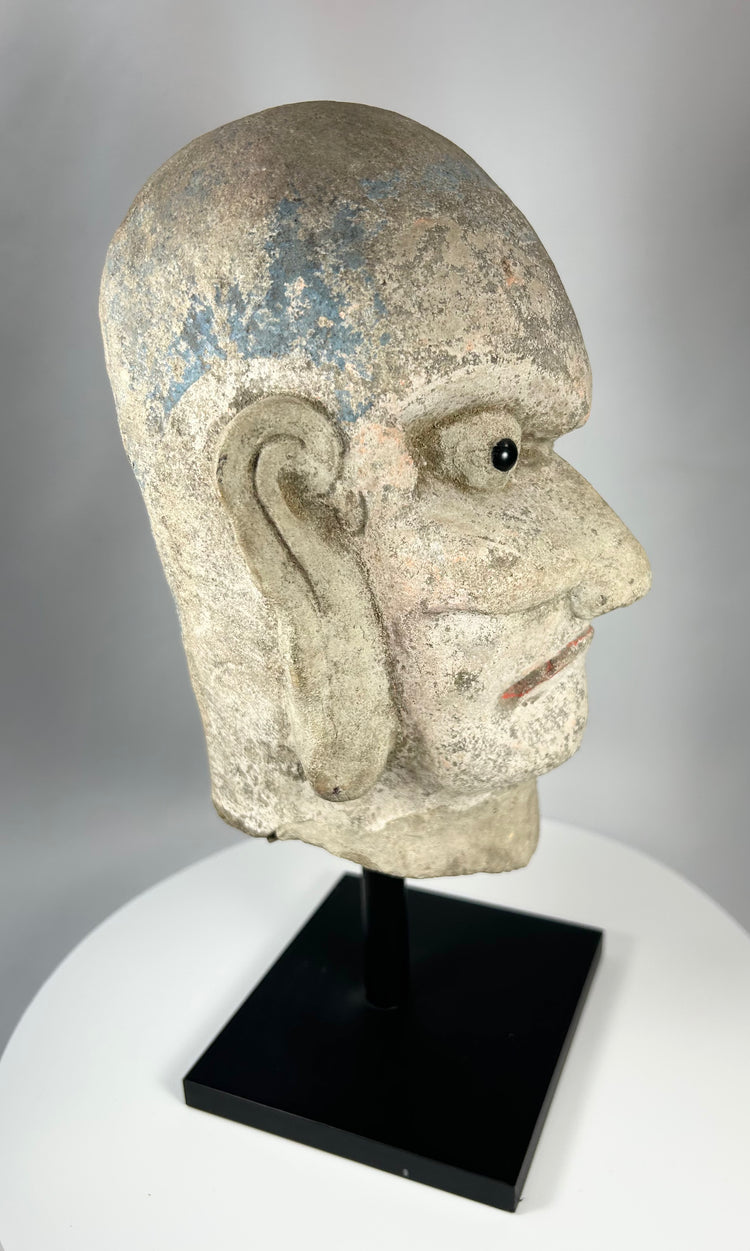
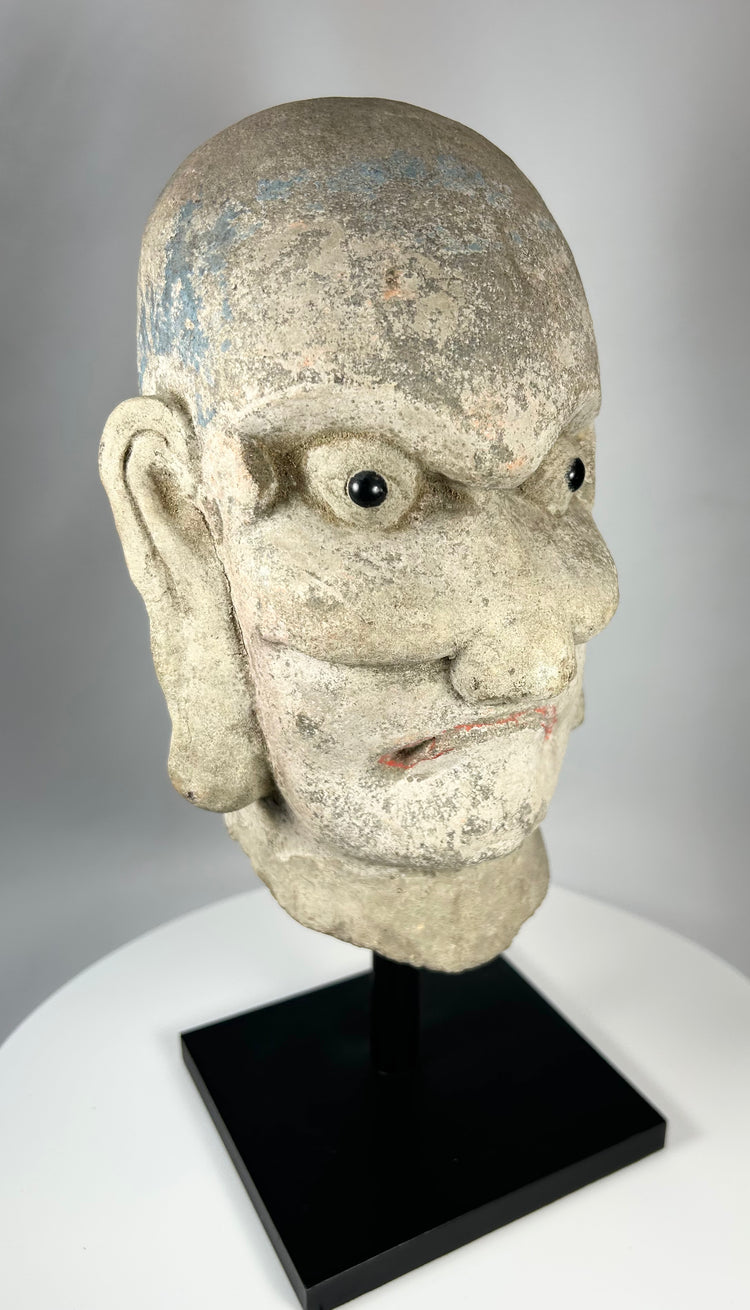
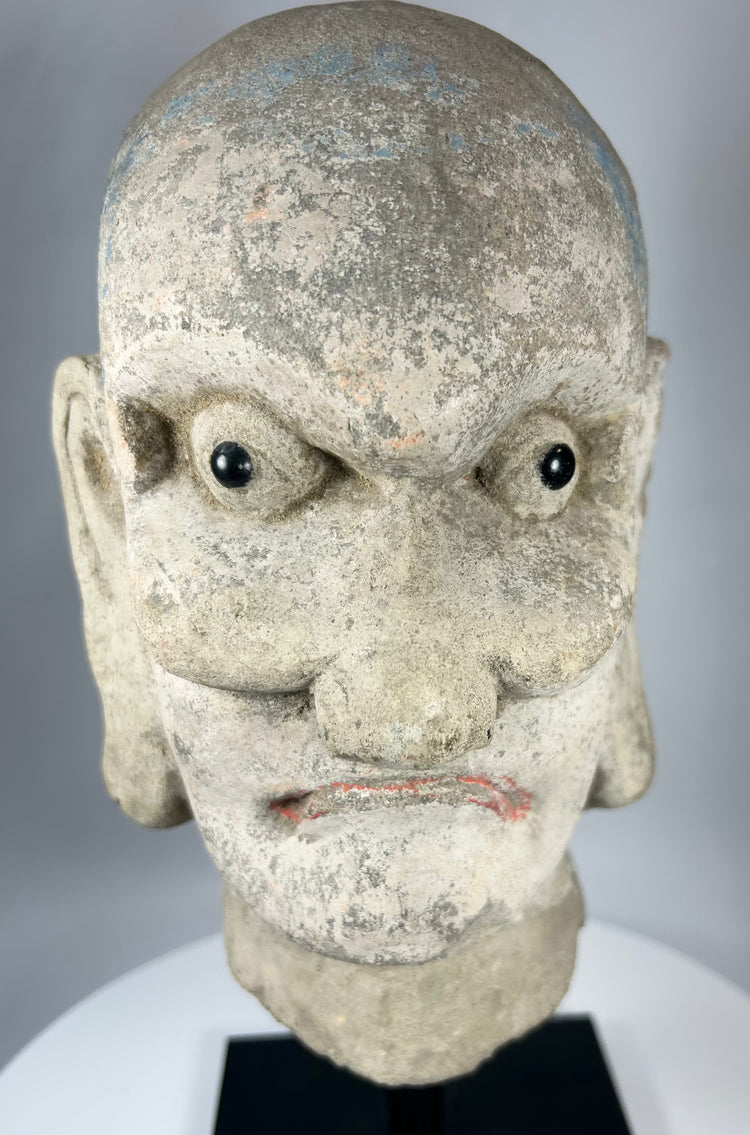
A striking carved Chinese stone head depicting a Luohan (Arhat), one of the enlightened disciples of the Buddha revered in Buddhist tradition. The sculpture features strongly modeled facial characteristics, including pronounced brows, rounded cheeks, elongated ears, and an expressive mouth, reflecting the lively and individualized character commonly associated with Luohan figures in Chinese Buddhist art.
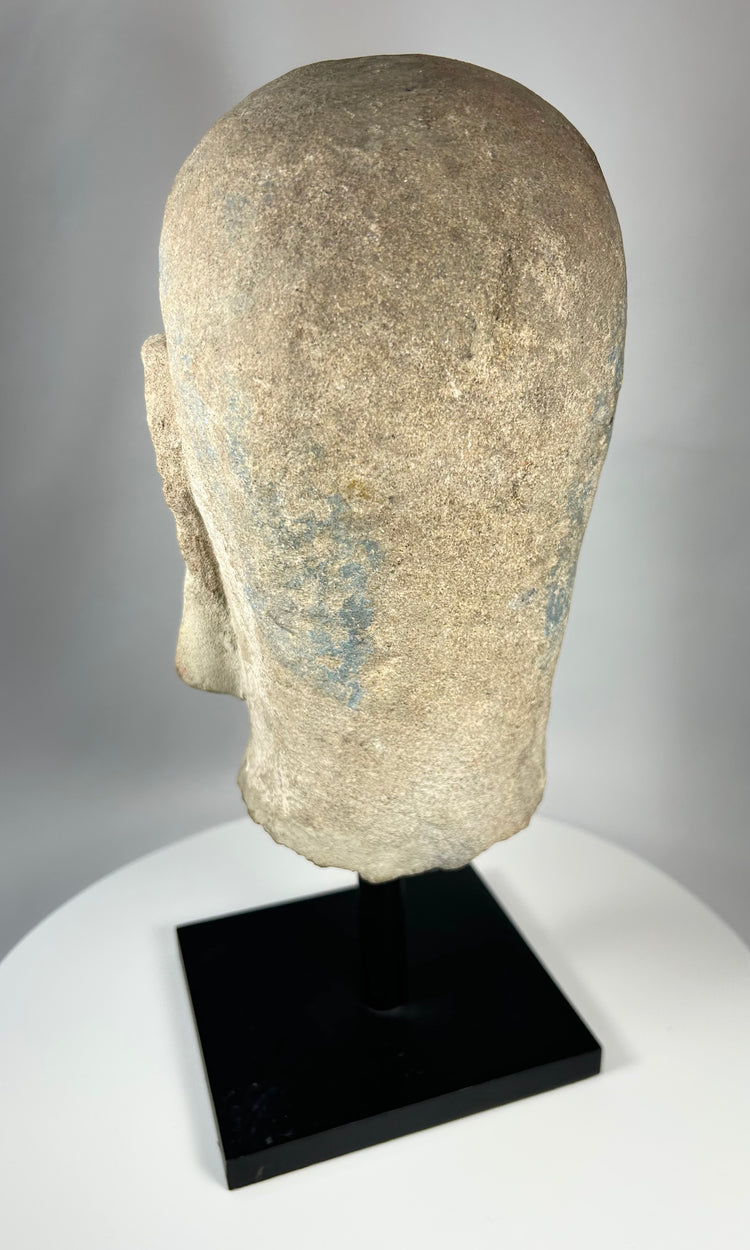
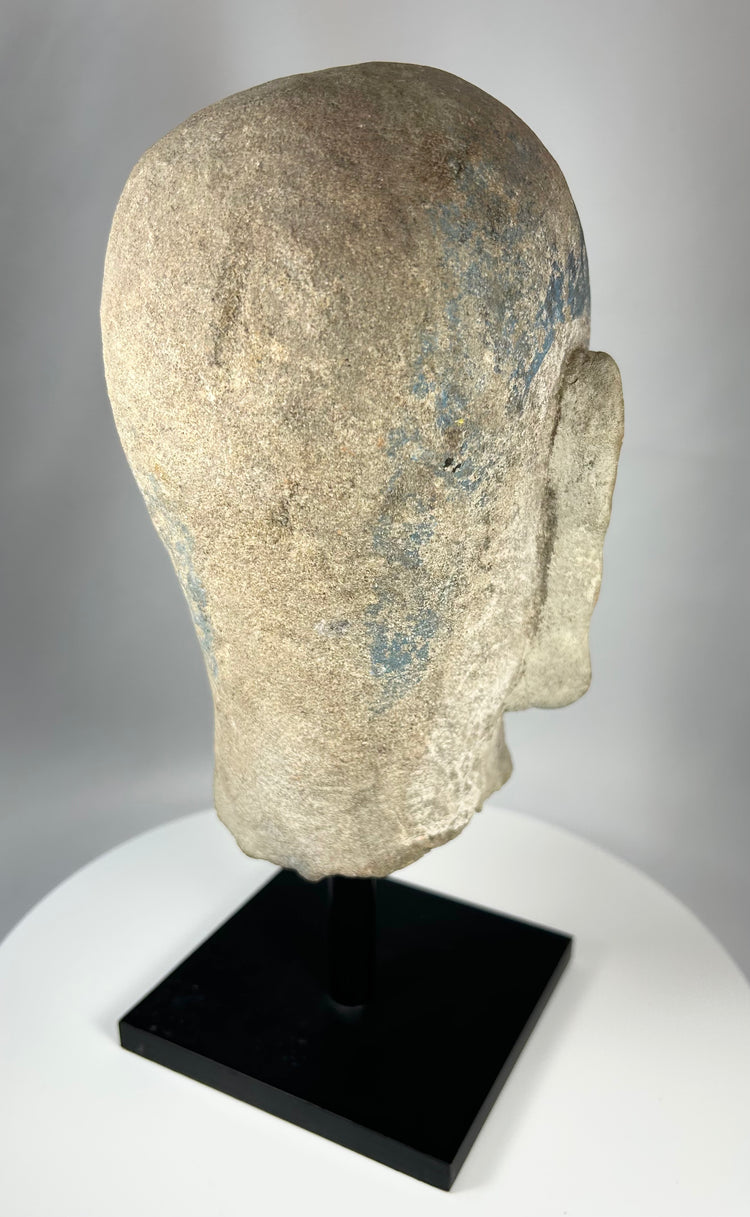
The head is carved from solid stone and retains scattered traces of its original polychrome decoration, including faint blue pigment across the crown and remnants of red pigment around the lips. Such painted surfaces were typical of temple sculpture and devotional statuary, which were originally brightly colored.
The sculpture has been mounted on a later black metal display stand.
Features
- Hand-carved stone sculpture
- Depiction of a Luohan (Arhat), enlightened disciple of Buddha
- Expressive facial features with exaggerated brows and elongated ears
- Traces of original painted decoration remain visible
- Mounted on a later metal display stand
- A distinctive example of Chinese Buddhist sculpture
Cultural Significance
In Chinese Buddhism, Luohans (Arhats) are enlightened disciples who have achieved liberation from the cycle of rebirth. They are often represented in temple sculpture and paintings, each figure portrayed with distinctive facial expressions and personalities to symbolize wisdom, spiritual discipline, and enlightenment. Sculptures of Luohans were widely displayed in temples and monasteries throughout China as devotional and symbolic figures.
Condition
With scattered traces of polychrome decoration. General wear, rubbing, and surface scratches consistent with age. The stone surface shows natural weathering. Mounted on a later display stand.
Dimensions (Approximate)
Overall height: 12.25 in
Width: 5 in
Depth: 4.5 in
Age (Approximate)
150–250 years old
Learn More
Discover the history and spiritual significance of Luohan Temple in Chongqing
View our curated Ancient Chinese Artifacts & Imperial Relics Collection
Description
Historical Context & Origin
Region: China
Material: Carved stone with traces of polychrome pigment; later metal display stand
Period: Qing Dynasty, circa 18th–19th century
Description
A striking carved Chinese stone head depicting a Luohan (Arhat), one of the enlightened disciples of the Buddha revered in Buddhist tradition. The sculpture features strongly modeled facial characteristics, including pronounced brows, rounded cheeks, elongated ears, and an expressive mouth, reflecting the lively and individualized character commonly associated with Luohan figures in Chinese Buddhist art.
The head is carved from solid stone and retains scattered traces of its original polychrome decoration, including faint blue pigment across the crown and remnants of red pigment around the lips. Such painted surfaces were typical of temple sculpture and devotional statuary, which were originally brightly colored.
The sculpture has been mounted on a later black metal display stand.
Features
- Hand-carved stone sculpture
- Depiction of a Luohan (Arhat), enlightened disciple of Buddha
- Expressive facial features with exaggerated brows and elongated ears
- Traces of original painted decoration remain visible
- Mounted on a later metal display stand
- A distinctive example of Chinese Buddhist sculpture
Cultural Significance
In Chinese Buddhism, Luohans (Arhats) are enlightened disciples who have achieved liberation from the cycle of rebirth. They are often represented in temple sculpture and paintings, each figure portrayed with distinctive facial expressions and personalities to symbolize wisdom, spiritual discipline, and enlightenment. Sculptures of Luohans were widely displayed in temples and monasteries throughout China as devotional and symbolic figures.
Condition
With scattered traces of polychrome decoration. General wear, rubbing, and surface scratches consistent with age. The stone surface shows natural weathering. Mounted on a later display stand.
Dimensions (Approximate)
Overall height: 12.25 in
Width: 5 in
Depth: 4.5 in
Age (Approximate)
150–250 years old
Learn More
Discover the history and spiritual significance of Luohan Temple in Chongqing
View our curated Ancient Chinese Artifacts & Imperial Relics Collection
Vous aimerez peut-être aussi
