

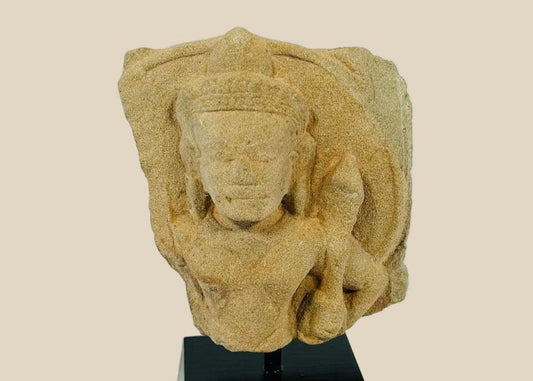

Chinese Inscribed Fragment | Auspicious Character Panel | Circa Ming–Qing Period (14th–19th Century)
- Prix habituel
- $350.00
- Prix soldé
- $350.00
- Prix habituel
Impossible de charger la disponibilité du service de retrait


Chinese Inscribed Fragment | Auspicious Character Panel | Circa Ming–Qing Period (14th–19th Century)
Description
Plus
Moins
Historical Context & Origin
Region: China
Material: Ceramic / stoneware fragment mounted on backing
Period: Likely late Imperial period (possibly Ming–Qing Dynasty, c. 14th–19th century) — attribution requires further study
Description
This intriguing inscribed fragment presents what appears to be a section of a larger Chinese ceramic or architectural element, now mounted for display. The surface features a grid-like arrangement of carved or impressed panels, each containing stylized Chinese characters and symbolic motifs.
The script appears to be rendered in a formal, possibly seal-inspired style, suggesting a decorative, ritual, or commemorative function rather than purely utilitarian use. The structured layout—divided into rectangular compartments—may indicate it was part of a larger narrative, inscription panel, or symbolic program.
The fragment shows clear signs of age and breakage, with irregular edges consistent with having been separated from a larger original piece. Its mounting on a neutral backing enhances both visibility and preservation, allowing the incised characters and surface texture to be appreciated as a standalone artifact.
A small mark or stamp is present on the reverse lower corner of the backing, likely associated with mounting or a previous collection reference rather than the original artifact itself.
Such fragments can originate from a variety of contexts including architectural decoration, funerary assemblages, or later commemorative works.
Features
- Inscribed Chinese fragment with grid-panel composition
- Stylized characters and symbolic motifs throughout
- Mounted on backing for display and preservation
- Visible age, wear, and break consistent with antiquity
- Reverse corner mark present
- Unique decorative and cultural artifact
Cultural Significance
Fragments such as this offer a rare glimpse into historical Chinese visual language, where characters and symbols often carried layered meanings—ranging from blessings and protection to status and identity. Whether architectural, funerary, or decorative in origin, inscribed works like this reflect the importance of written symbolism in Chinese cultural expression.
Condition
Fragmentary condition with visible breaks, edge loss, and surface wear consistent with age. Mounted on a later backing. Characters remain partially legible and visually distinct.
Dimensions (Approximate)
Length: 7.25 in
Width: 4.25 in
Age (Approximate)
200–600+ years old
Learn More
Discover the history and cultural significance of the Ming and Qing dynasties
View our Ancient Chinese Artifacts & Imperial Relics Collection
Description
Historical Context & Origin
Region: China
Material: Ceramic / stoneware fragment mounted on backing
Period: Likely late Imperial period (possibly Ming–Qing Dynasty, c. 14th–19th century) — attribution requires further study
Description
This intriguing inscribed fragment presents what appears to be a section of a larger Chinese ceramic or architectural element, now mounted for display. The surface features a grid-like arrangement of carved or impressed panels, each containing stylized Chinese characters and symbolic motifs.
The script appears to be rendered in a formal, possibly seal-inspired style, suggesting a decorative, ritual, or commemorative function rather than purely utilitarian use. The structured layout—divided into rectangular compartments—may indicate it was part of a larger narrative, inscription panel, or symbolic program.
The fragment shows clear signs of age and breakage, with irregular edges consistent with having been separated from a larger original piece. Its mounting on a neutral backing enhances both visibility and preservation, allowing the incised characters and surface texture to be appreciated as a standalone artifact.
A small mark or stamp is present on the reverse lower corner of the backing, likely associated with mounting or a previous collection reference rather than the original artifact itself.
Such fragments can originate from a variety of contexts including architectural decoration, funerary assemblages, or later commemorative works.
Features
- Inscribed Chinese fragment with grid-panel composition
- Stylized characters and symbolic motifs throughout
- Mounted on backing for display and preservation
- Visible age, wear, and break consistent with antiquity
- Reverse corner mark present
- Unique decorative and cultural artifact
Cultural Significance
Fragments such as this offer a rare glimpse into historical Chinese visual language, where characters and symbols often carried layered meanings—ranging from blessings and protection to status and identity. Whether architectural, funerary, or decorative in origin, inscribed works like this reflect the importance of written symbolism in Chinese cultural expression.
Condition
Fragmentary condition with visible breaks, edge loss, and surface wear consistent with age. Mounted on a later backing. Characters remain partially legible and visually distinct.
Dimensions (Approximate)
Length: 7.25 in
Width: 4.25 in
Age (Approximate)
200–600+ years old
Learn More
Discover the history and cultural significance of the Ming and Qing dynasties
View our Ancient Chinese Artifacts & Imperial Relics Collection
Vous aimerez peut-être aussi
