

Musicienne de cour en terre cuite de la dynastie Tang | Figure féminine avec flûte de Pan et traces de pigment | Vers le VIIe-IXe siècle
- Prix habituel
- $1,000.00
- Prix soldé
- $1,000.00
- Prix habituel
Impossible de charger la disponibilité du service de retrait


Musicienne de cour en terre cuite de la dynastie Tang | Figure féminine avec flûte de Pan et traces de pigment | Vers le VIIe-IXe siècle
Description
Plus
Moins
Contexte historique et origine
Région : Chine
Matériau : Terre cuite avec des traces de pigment d'origine
Période : Dynastie Tang (vers 618–907 apr. J.-C.)
Description
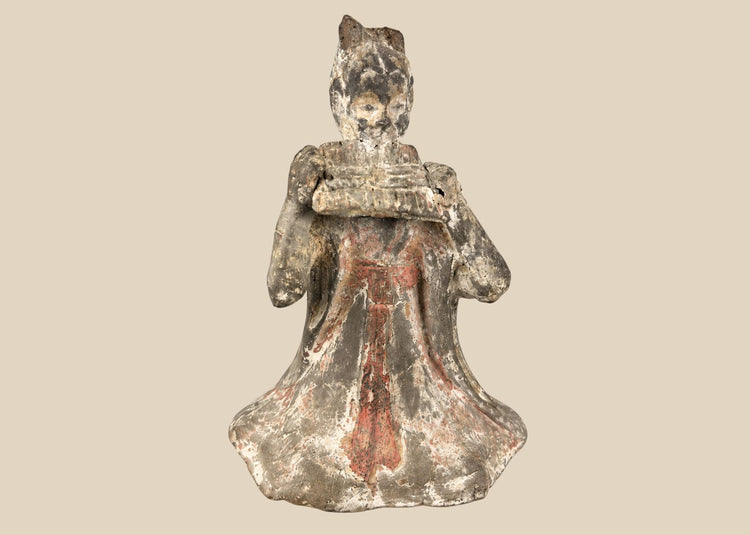
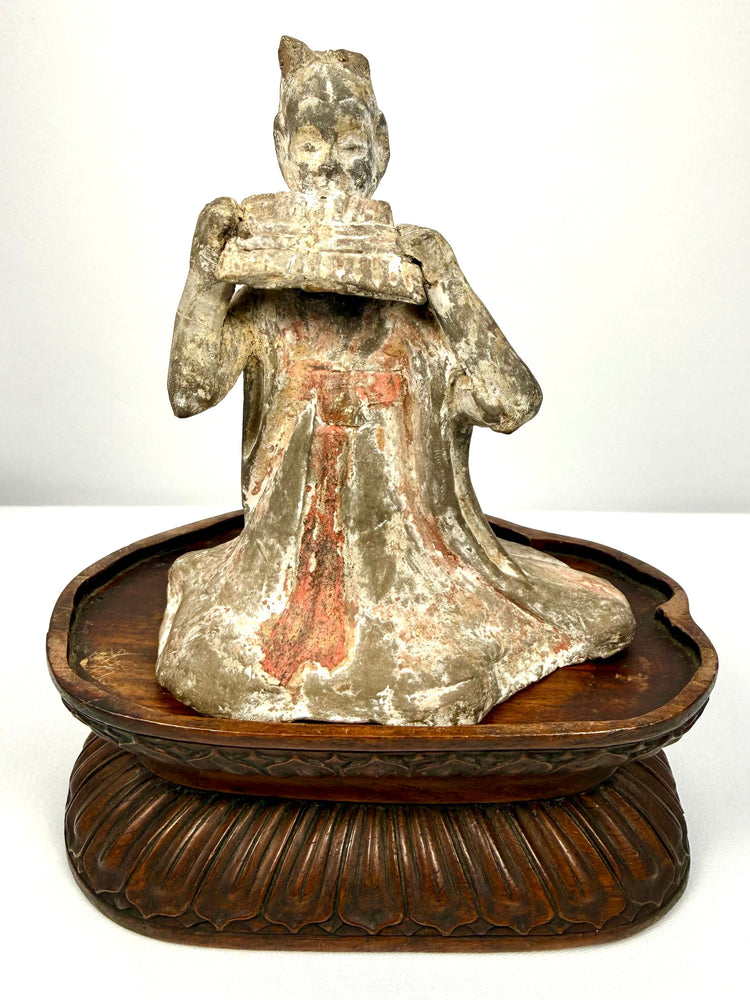
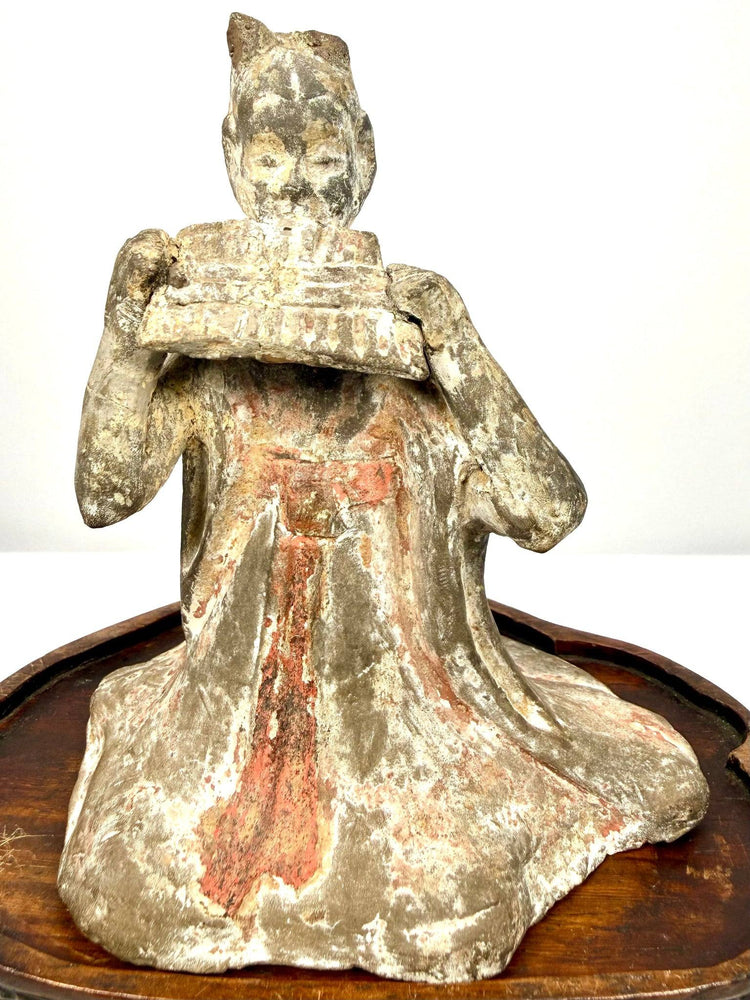
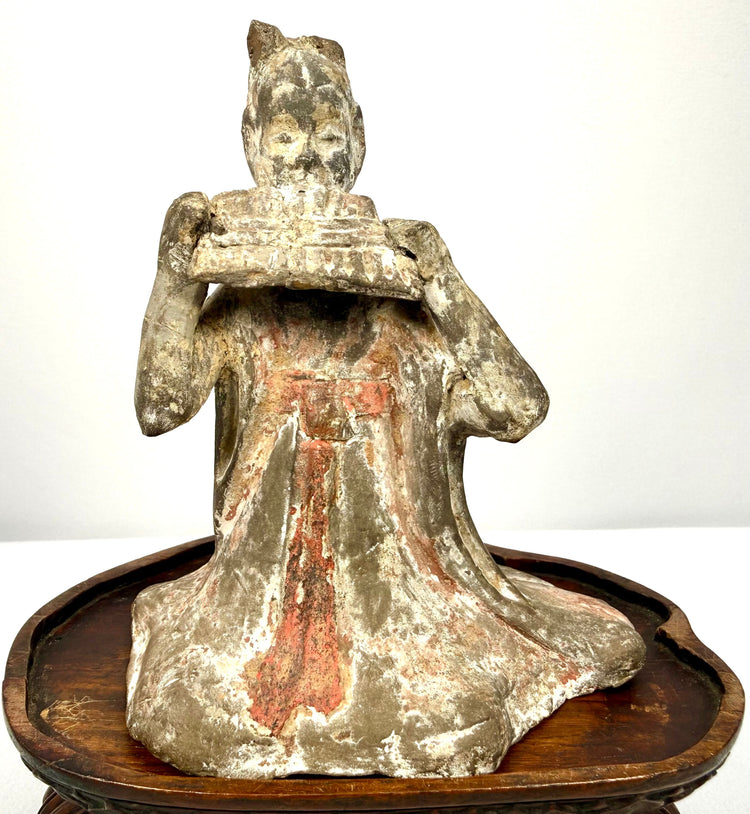
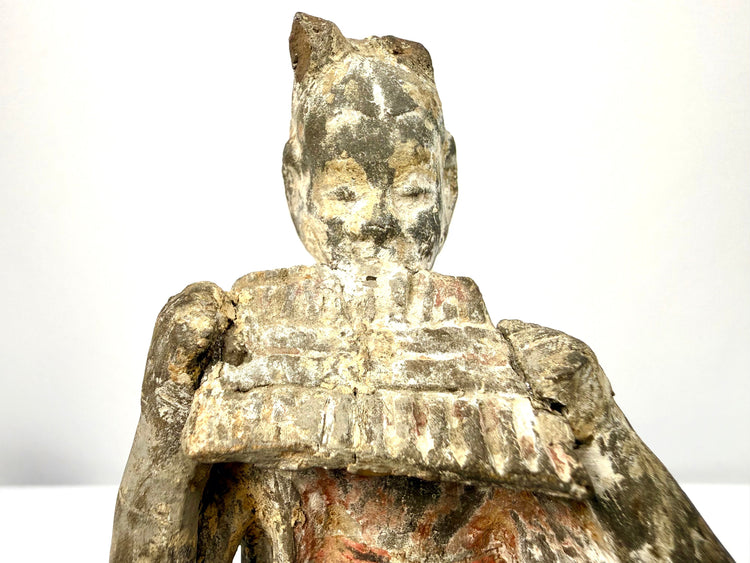
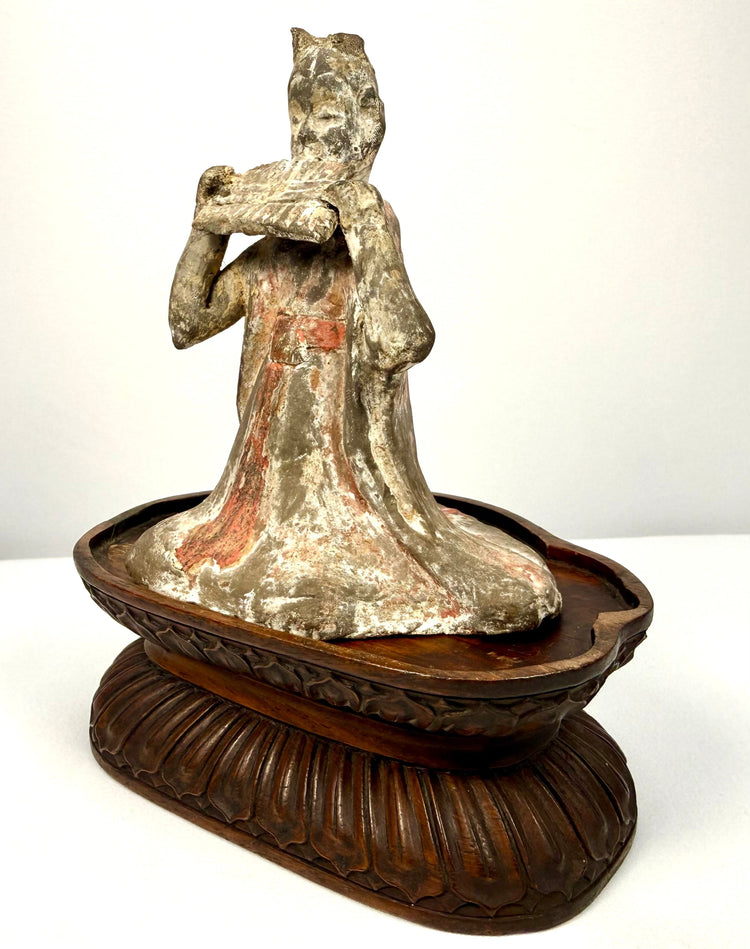
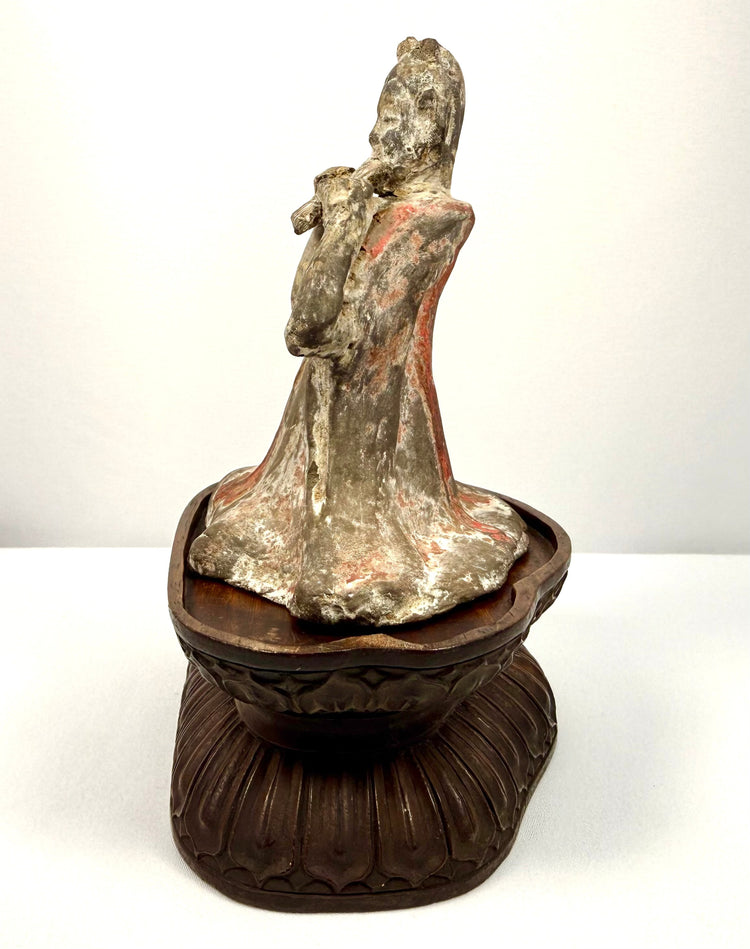
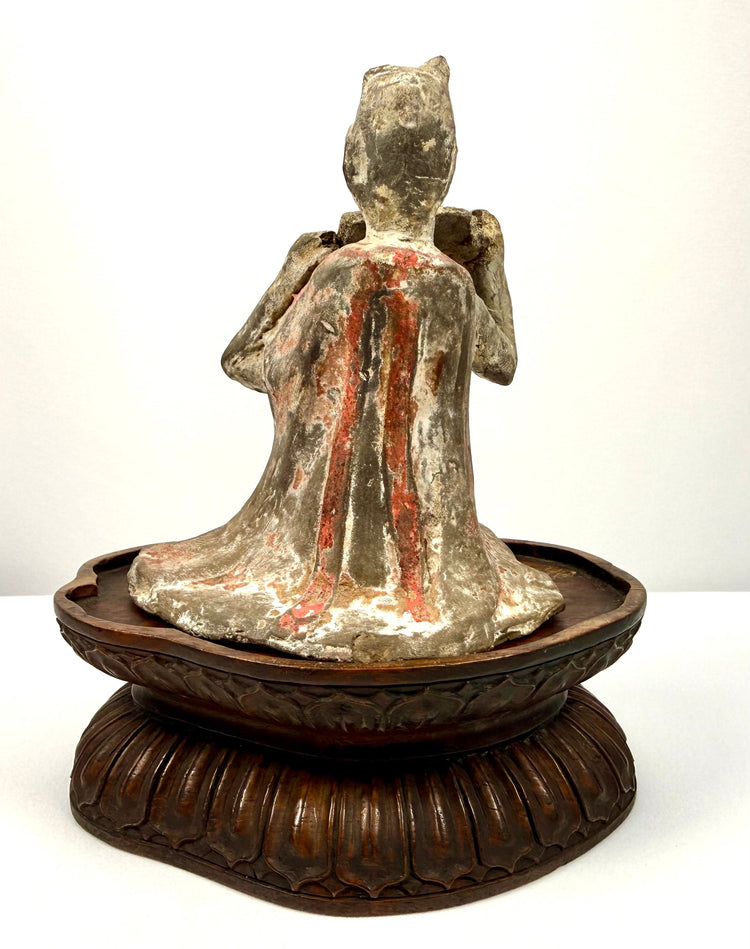
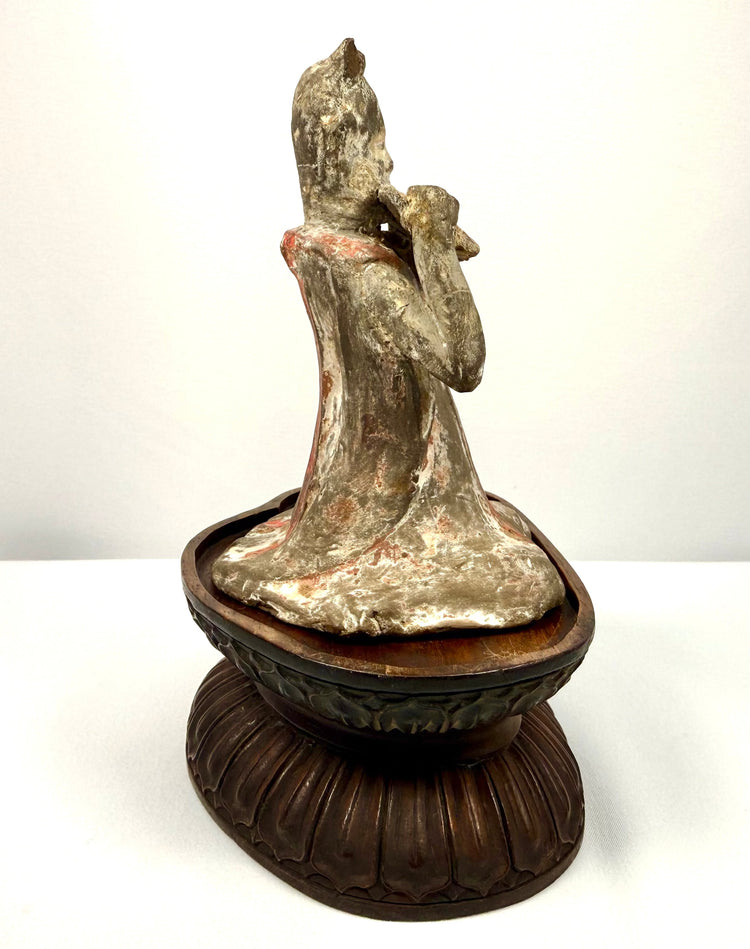
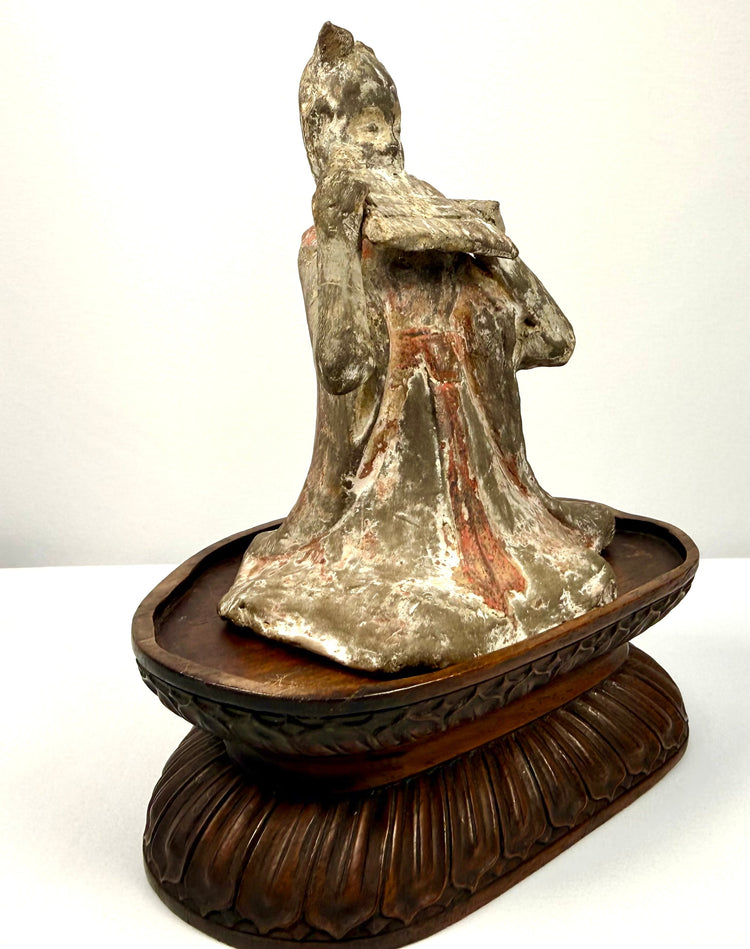
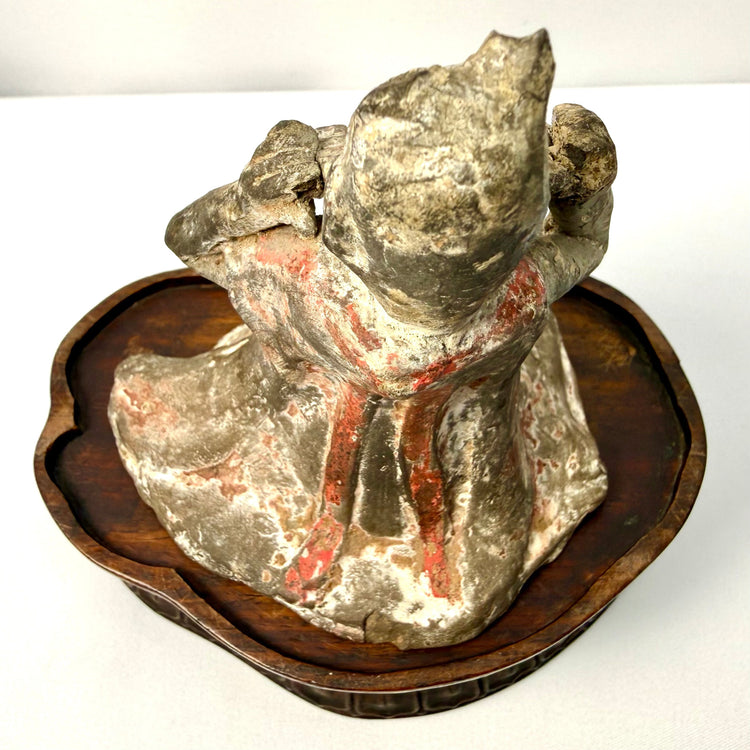
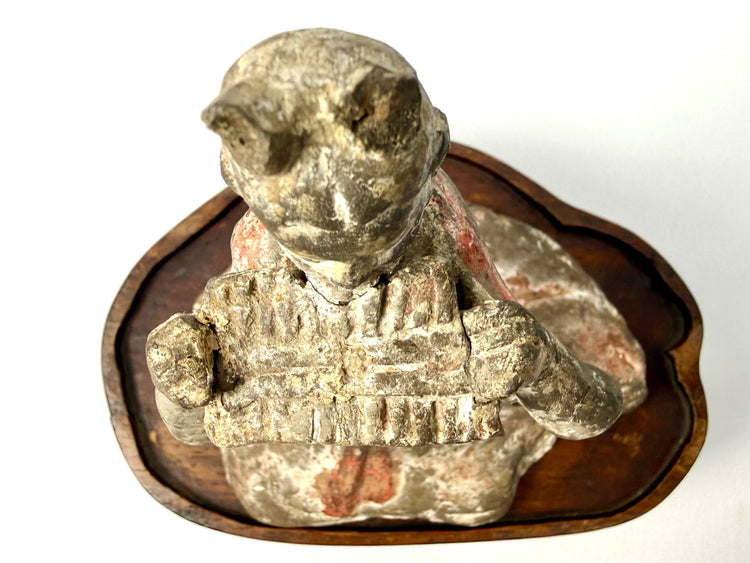
Cette authentique figurine en terre cuite de la dynastie Tang, vieillie, représente une musicienne de cour assise jouant d'une flûte de Pan chinoise traditionnelle. La figurine est sculptée dans des robes fluides, avec des traces visibles de pigments minéraux rouges et blancs, typiques de l'art funéraire Tang. Son visage serein et sa coiffure finement détaillée reflètent les standards de beauté raffinés de la cour impériale Tang. Assise gracieusement, elle tient délicatement la flûte de Pan à plusieurs tuyaux à ses lèvres, symbolisant l'importance de la musique dans les rituels, les divertissements et la vie quotidienne des Tang. Cette sculpture a très probablement fonctionné comme un mingqi, ou figurine d'accompagnateur de tombe, conçue pour offrir compagnie et raffinement culturel au défunt dans l'au-delà.
Caractéristiques
- Représentation rare d'une musicienne avec des traces de pigments originaux
- Coiffure Tang traditionnelle et détails de robe drapée
- Flûte de Pan rendue avec une grande précision sculpturale
- Construction à corps creux conforme aux pratiques funéraires Tang
- Exposée sur un socle en bois sculpté ajouté ultérieurement
Signification culturelle
Les figurines en terre cuite de musiciens, danseurs et serviteurs étaient largement utilisées pendant la dynastie Tang comme mobilier funéraire, reflétant la richesse, la sophistication et la culture artistique du défunt. La musique était essentielle à la vie de la cour Tang, et les femmes interprètes jouaient un rôle célébré dans le divertissement et le rituel. Cette figurine capture l'élégance et la vitalité culturelle de l'âge d'or de la Chine, offrant un aperçu précieux de son art et de ses traditions cérémonielles.
État
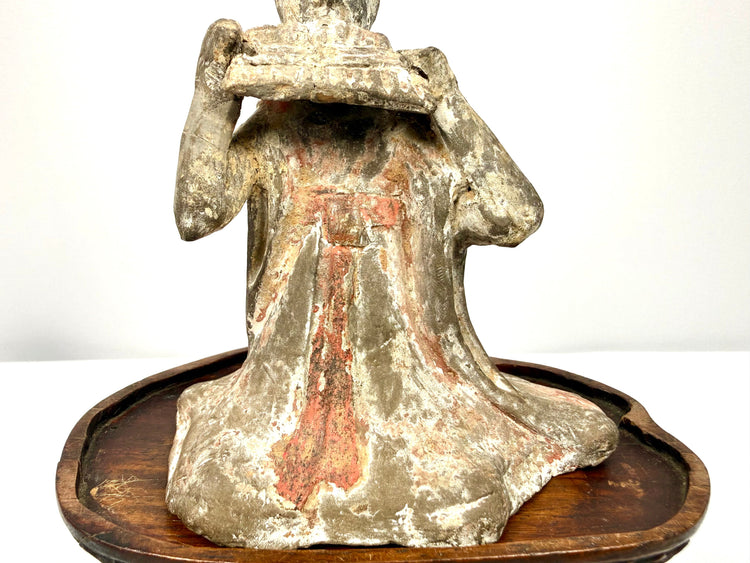
Bon état pour son âge, avec usure de surface, perte de pigment et dépôts minéraux conformes au contexte d'enfouissement. Éclats mineurs le long des bords et des extrémités. Stable dans l'ensemble sans preuve de réparations modernes. La base en bois personnalisée n'est pas d'origine mais améliore l'affichage.
Dimensions (approximatives)
Hauteur (avec la base) : 15,88 cm
Hauteur (figurine seule) : 10,80 cm
Largeur : 10,16 cm
Âge (approximatif)
1 100 à 1 400 ans
Provenance
D'une collection privée à Saint Petersburg, Floride, États-Unis.
En savoir plus
Découvrez les figurines de cour en terre cuite de la dynastie Tang au Art Institute of Chicago
Explorez notre collection d'artefacts chinois anciens et de reliques impériales
Description
Contexte historique et origine
Région : Chine
Matériau : Terre cuite avec des traces de pigment d'origine
Période : Dynastie Tang (vers 618–907 apr. J.-C.)
Description
Cette authentique figurine en terre cuite de la dynastie Tang, vieillie, représente une musicienne de cour assise jouant d'une flûte de Pan chinoise traditionnelle. La figurine est sculptée dans des robes fluides, avec des traces visibles de pigments minéraux rouges et blancs, typiques de l'art funéraire Tang. Son visage serein et sa coiffure finement détaillée reflètent les standards de beauté raffinés de la cour impériale Tang. Assise gracieusement, elle tient délicatement la flûte de Pan à plusieurs tuyaux à ses lèvres, symbolisant l'importance de la musique dans les rituels, les divertissements et la vie quotidienne des Tang. Cette sculpture a très probablement fonctionné comme un mingqi, ou figurine d'accompagnateur de tombe, conçue pour offrir compagnie et raffinement culturel au défunt dans l'au-delà.
Caractéristiques
- Représentation rare d'une musicienne avec des traces de pigments originaux
- Coiffure Tang traditionnelle et détails de robe drapée
- Flûte de Pan rendue avec une grande précision sculpturale
- Construction à corps creux conforme aux pratiques funéraires Tang
- Exposée sur un socle en bois sculpté ajouté ultérieurement
Signification culturelle
Les figurines en terre cuite de musiciens, danseurs et serviteurs étaient largement utilisées pendant la dynastie Tang comme mobilier funéraire, reflétant la richesse, la sophistication et la culture artistique du défunt. La musique était essentielle à la vie de la cour Tang, et les femmes interprètes jouaient un rôle célébré dans le divertissement et le rituel. Cette figurine capture l'élégance et la vitalité culturelle de l'âge d'or de la Chine, offrant un aperçu précieux de son art et de ses traditions cérémonielles.
État
Bon état pour son âge, avec usure de surface, perte de pigment et dépôts minéraux conformes au contexte d'enfouissement. Éclats mineurs le long des bords et des extrémités. Stable dans l'ensemble sans preuve de réparations modernes. La base en bois personnalisée n'est pas d'origine mais améliore l'affichage.
Dimensions (approximatives)
Hauteur (avec la base) : 15,88 cm
Hauteur (figurine seule) : 10,80 cm
Largeur : 10,16 cm
Âge (approximatif)
1 100 à 1 400 ans
Provenance
D'une collection privée à Saint Petersburg, Floride, États-Unis.
En savoir plus
Découvrez les figurines de cour en terre cuite de la dynastie Tang au Art Institute of Chicago
Explorez notre collection d'artefacts chinois anciens et de reliques impériales
Vous aimerez peut-être aussi
