


Tête de statue de temple chinoise polychrome avec sceau d'exportation | XIXe – début XXe siècle
- Prix habituel
- $3,000.00
- Prix soldé
- $3,000.00
- Prix habituel
Impossible de charger la disponibilité du service de retrait



Tête de statue de temple chinoise polychrome avec sceau d'exportation | XIXe – début XXe siècle
Description
Plus
Moins
Contexte historique et origine
Région : Chine
Matériau : Terre cuite modelée à la main avec pigments minéraux et traces de laque
Période : Fin de la dynastie Qing au début de la période républicaine, vers la fin du XIXe – début du XXe siècle
Description
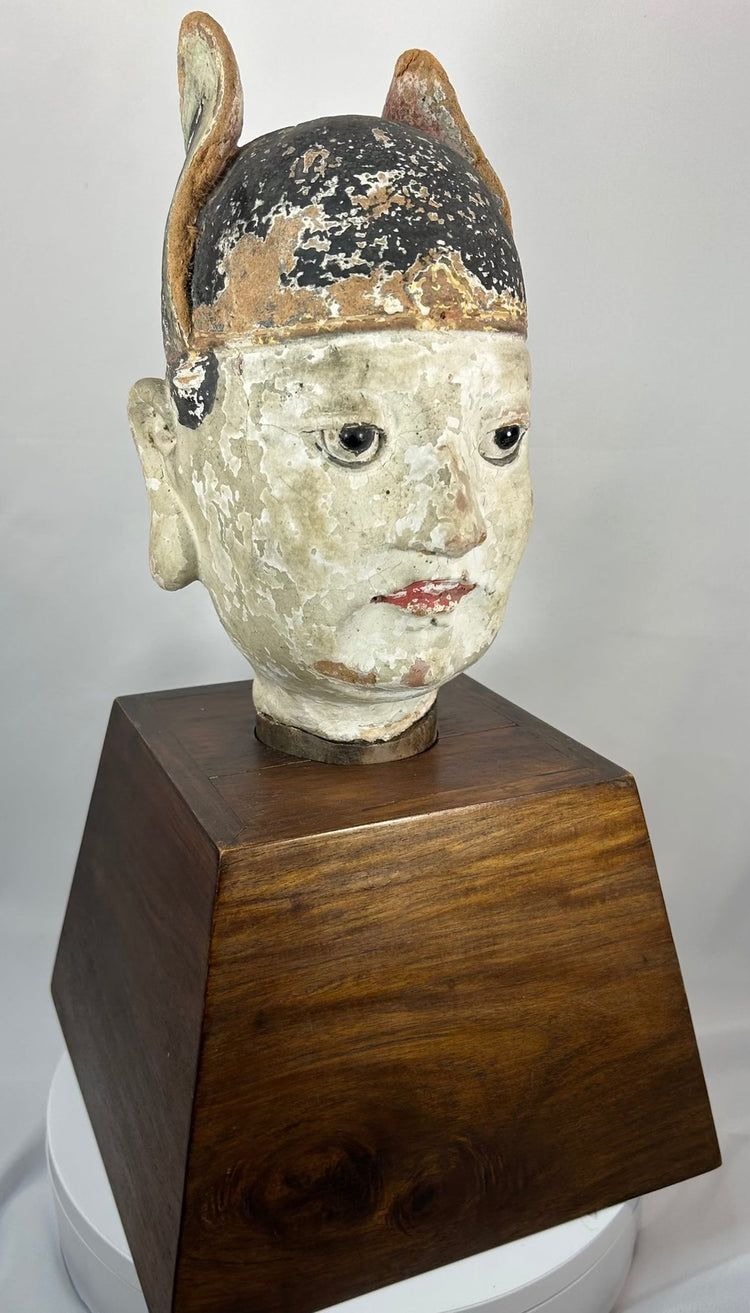
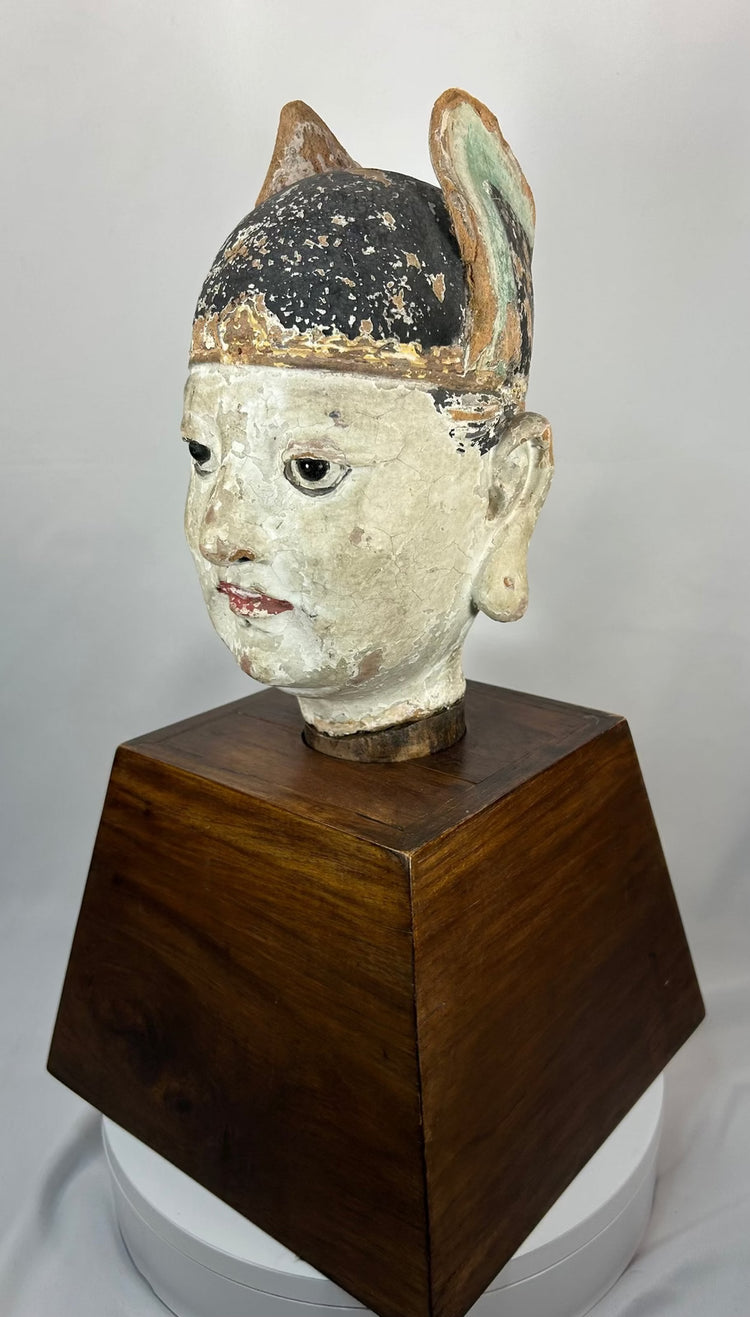
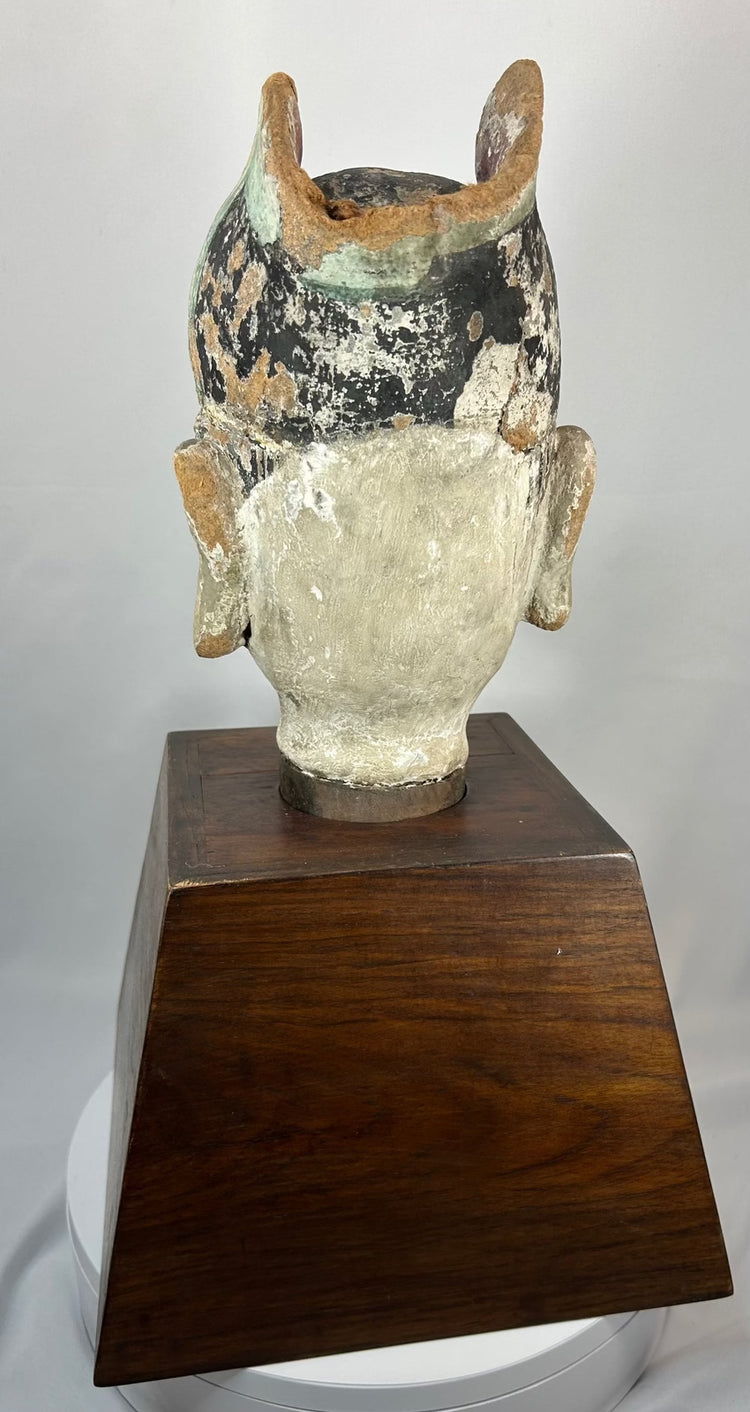
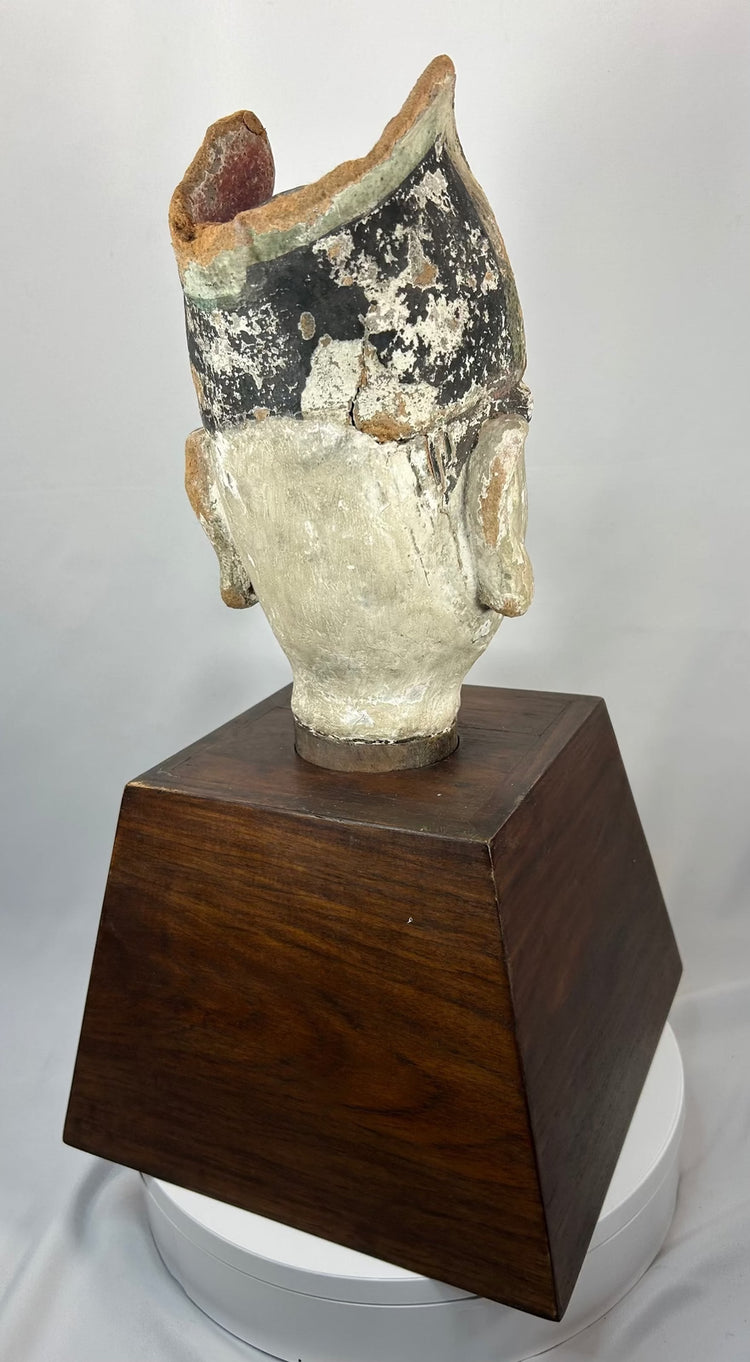
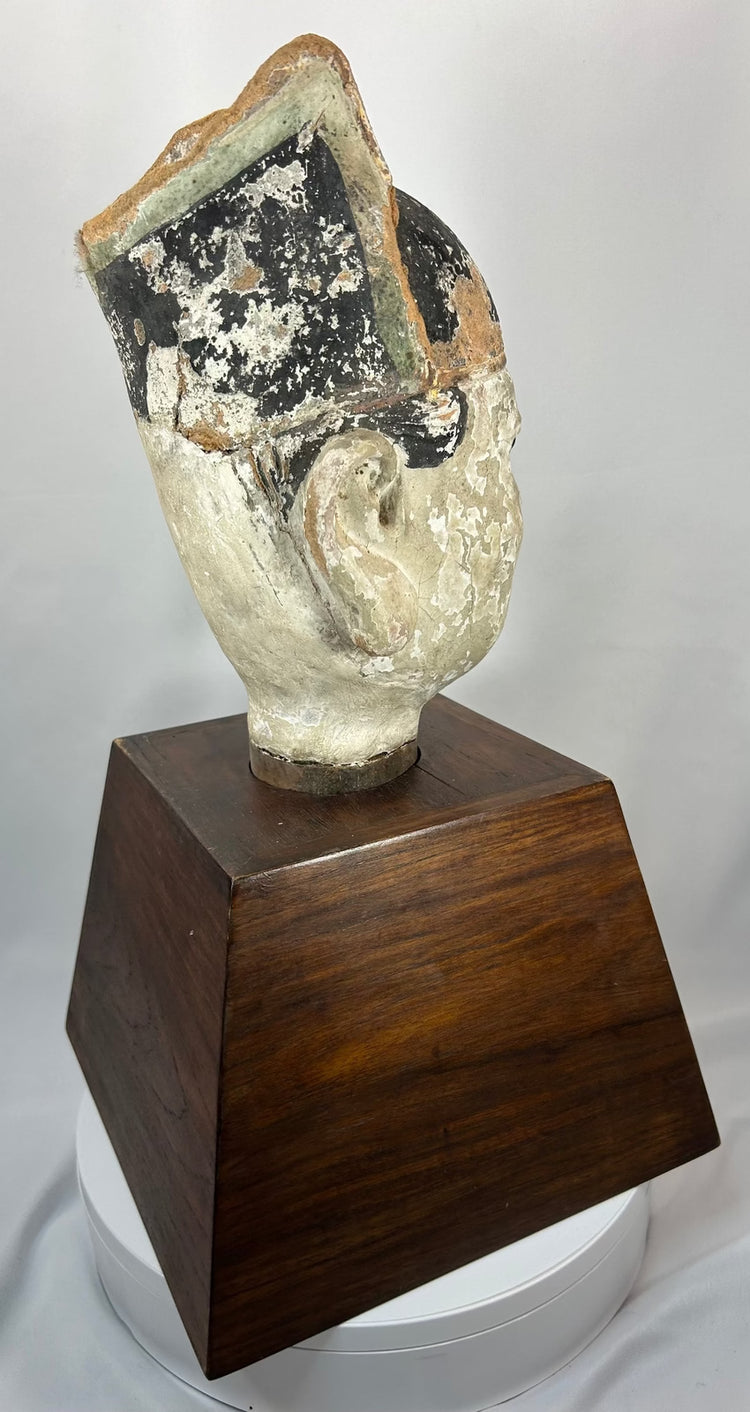
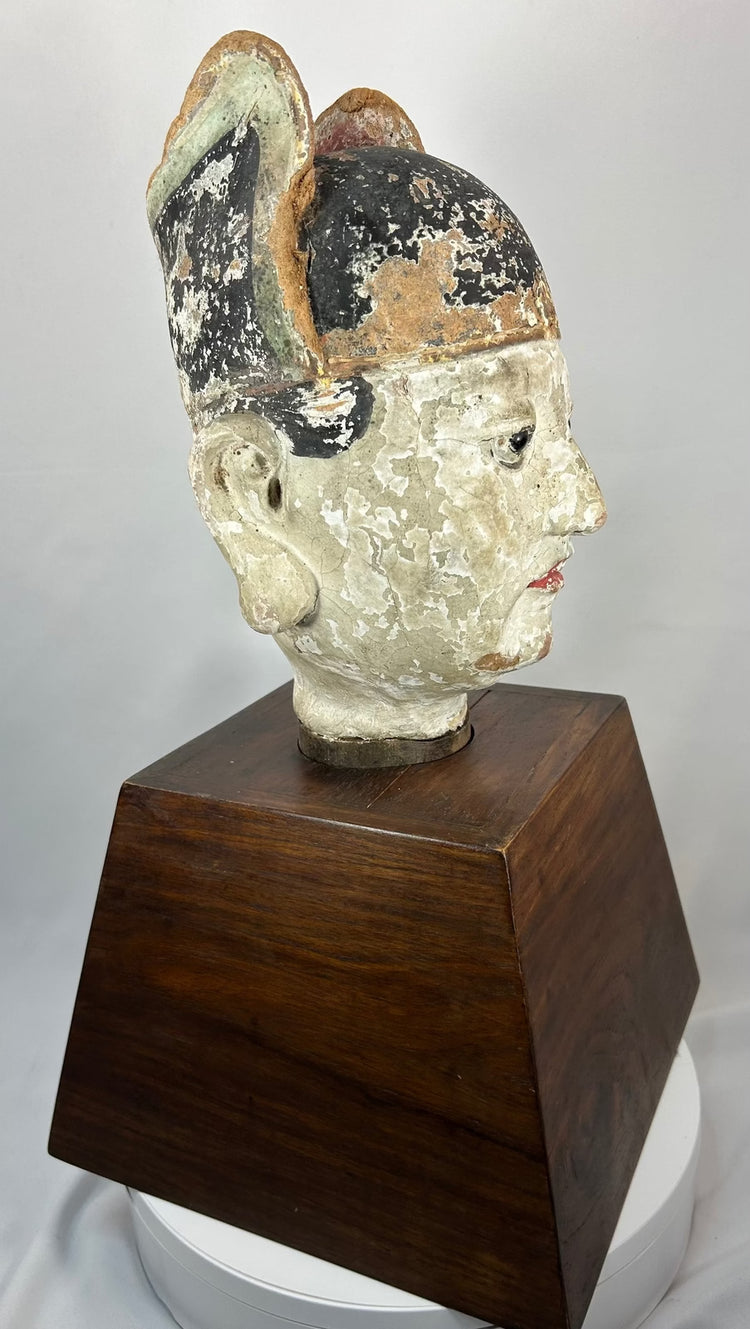
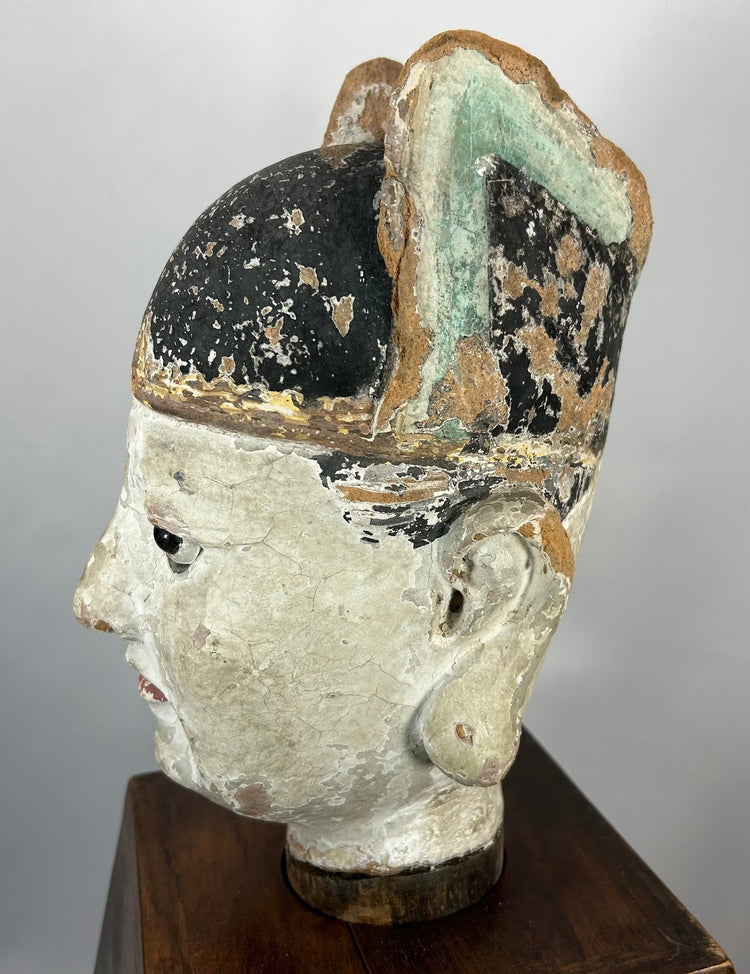
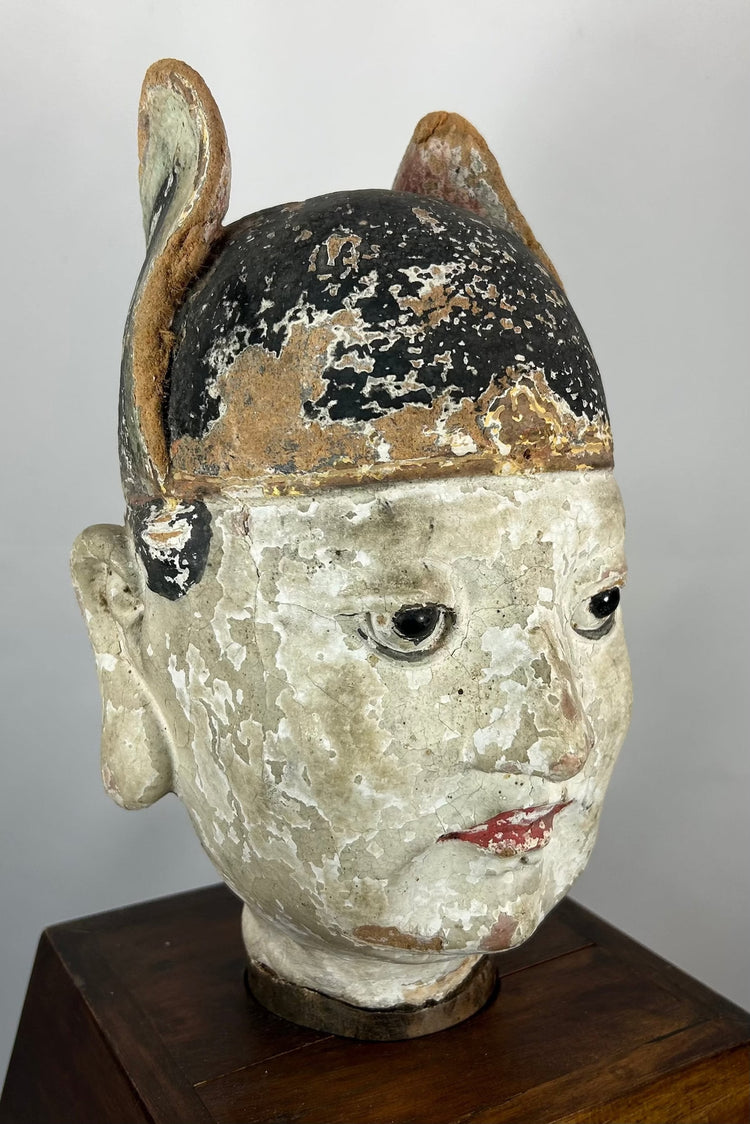
Ce buste chinois saisissant en terre cuite peinte représente un dignitaire de cour portant un chapeau cérémoniel traditionnel, probablement un lettré-fonctionnaire ou un assistant de temple. La sculpture présente des traits faciaux finement modelés, notamment des sourcils légèrement arqués, des yeux en amande et des lèvres délicatement formées, transmettant l'expression calme et introspective typique de l'imagerie religieuse et de cour chinoise.
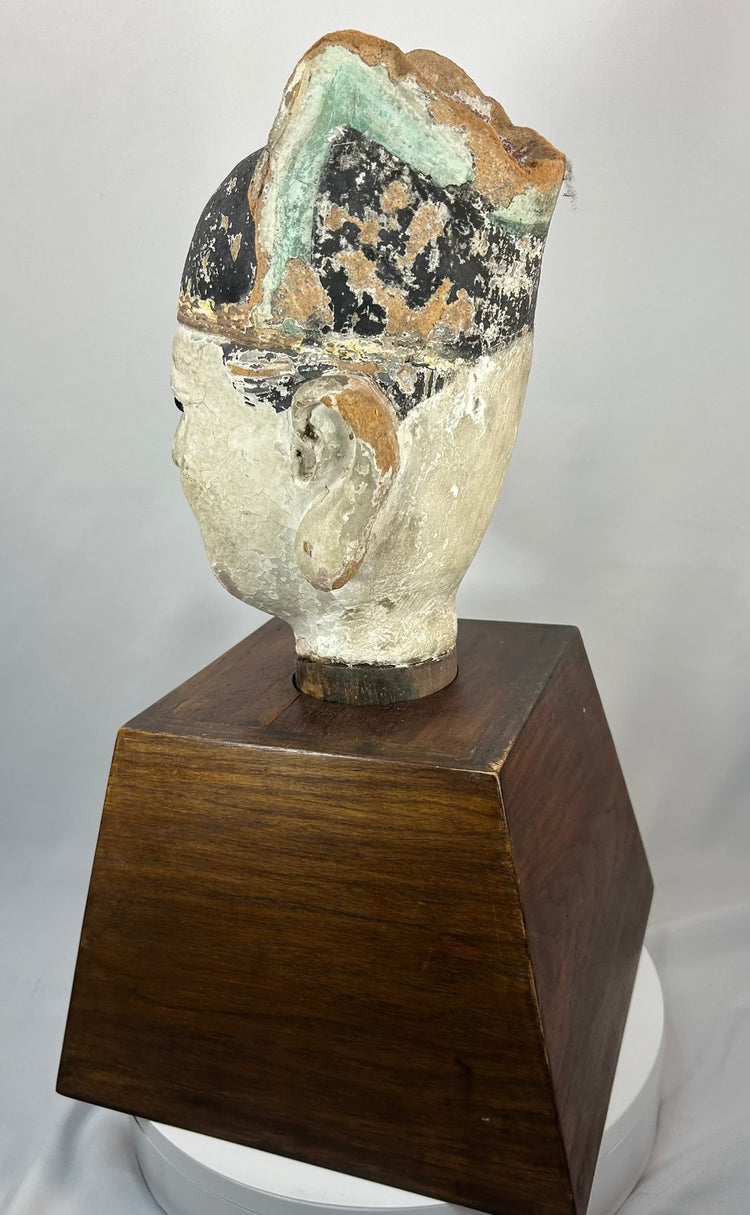
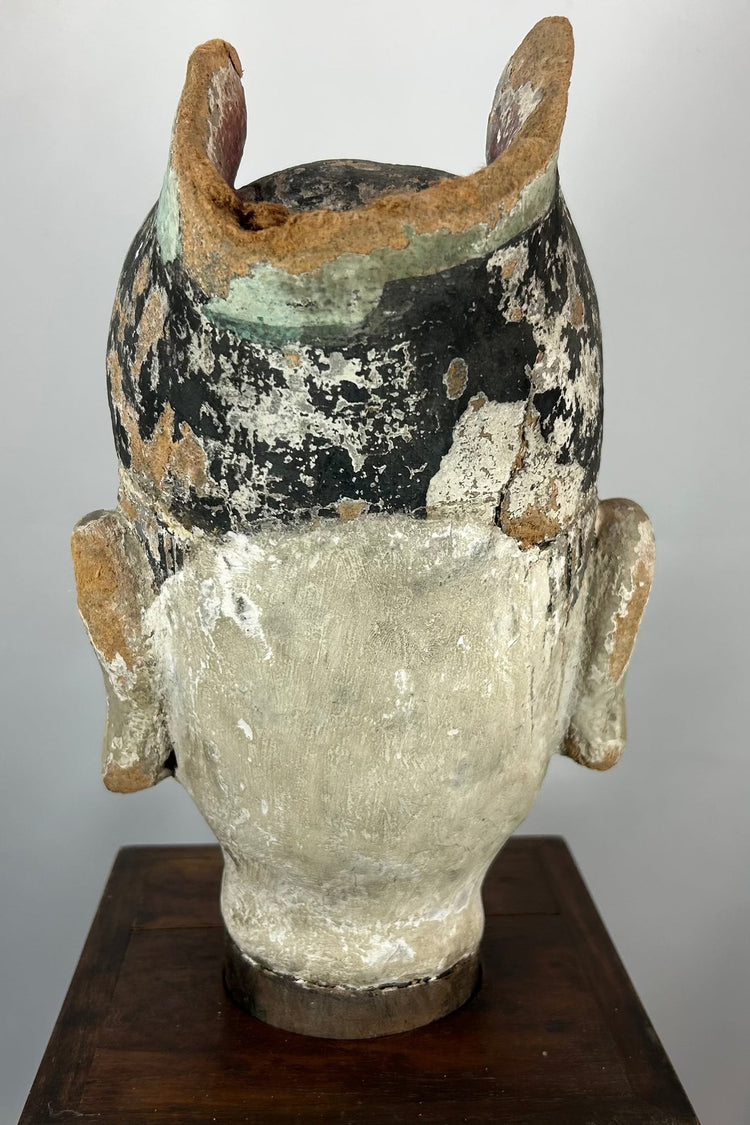
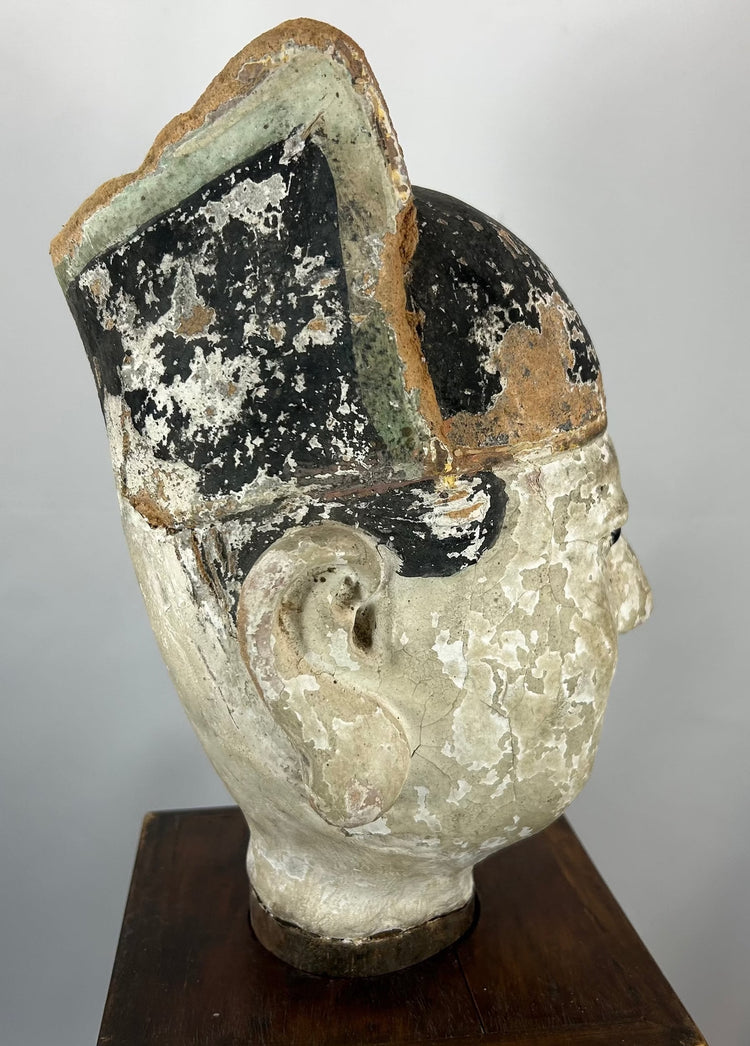
Le personnage porte une haute coiffe cérémonielle noire avec des panneaux latéraux relevés, une forme couramment associée aux fonctionnaires civils dans la culture visuelle chinoise. Ces figures étaient souvent créées pour les autels de temples, les sanctuaires ancestraux ou les niches architecturales où elles servaient d'assistants, de gardiens ou de représentations symboliques de l'autorité et de la vertu morale.
La surface conserve des traces de sa décoration peinte originale, y compris de la laque noire sur la coiffe et des pigments rouges sur les lèvres, tandis que le visage conserve un enduit minéral pâle typique de la sculpture de temple. La perte naturelle de pigments et l'usure de la surface ont produit une riche patine vieillie compatible avec une utilisation dévotionnelle historique.
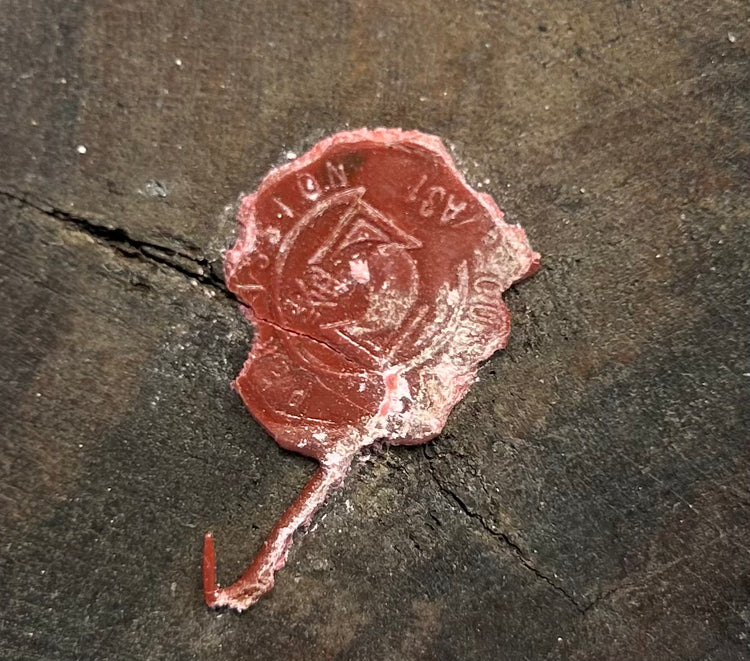
Le dessous du cou conserve un ancien sceau d'exportation en cire rouge portant l'inscription « ANT. OUD. ». Cette marque provient du commerce européen d'antiquités, probablement néerlandais ou belge, dérivée de l'expression Antiek Oud (« Antique / Vieux »). De tels sceaux étaient couramment apposés par les marchands ou maisons d'exportation européens à la fin du XIXe et au début du XXe siècle, à mesure que les antiquités asiatiques entraient dans les collections occidentales.
Monté sur une base d'exposition en bois personnalisée ultérieure, le buste faisait probablement partie d'une plus grande sculpture de temple ou architecturale avant d'être conservé comme un artefact indépendant.
Caractéristiques
- Sculpture en terre cuite modelée à la main
- Vestiges de pigments minéraux originaux et de laque
- Coiffe traditionnelle de style lettré-fonctionnaire
- Modélisation faciale expressive avec des oreilles allongées
- Surface vieillie avec perte naturelle de pigments et patine
- Ancien sceau d'exportation européen en cire rouge marqué « ANT. OUD »
- Monté sur une base d'exposition en bois personnalisée ultérieure
Signification culturelle
Les figures représentant des fonctionnaires, des lettrés et des assistants étaient des éléments importants de la décoration des temples et des sanctuaires chinois. Elles symbolisaient l'autorité morale, la sagesse et l'ordre bureaucratique au sein de la hiérarchie cosmologique des systèmes de croyance traditionnels chinois. Ces sculptures flanquaient souvent des figures de divinités plus grandes ou faisaient partie de programmes de sanctuaires architecturaux.
Le chapeau stylisé et les traits faciaux composés évoquent la classe lettrée qui jouait un rôle central dans la société impériale chinoise, où les fonctionnaires de la fonction publique étaient considérés comme des incarnations de l'éducation, de la gouvernance et de la vertu morale.
État
Bon état antique conforme à l'âge. La sculpture présente une usure de surface et une perte de pigments importantes, en particulier sur la coiffe et la surface faciale. De petits éclats, fissures et zones d'abrasion sont présents, typiques de la sculpture de temple historique en terre cuite. Le buste est monté sur une base en bois personnalisée plus récente pour l'exposition. Restaurations possibles.
Dimensions (approximatives)
Hauteur : 12 pouces
Largeur : 6,5 pouces
Profondeur : 7,5 pouces
Âge (approximatif)
115-175 ans
Provenance
Anciennement partie d'une collection privée à San Francisco, Californie, États-Unis, où l'objet a été conservé dans le cadre d'un assemblage plus large de matériel historique et culturel. Il est ensuite passé dans une collection privée à Los Angeles, Californie, États-Unis, où il est resté.
En savoir plus
Découvrez la sculpture bouddhiste chinoise à travers le Metropolitan Museum of Art
Explorez notre Collection d'Artefacts Chinois Anciens et Reliques Impériales
Description
Contexte historique et origine
Région : Chine
Matériau : Terre cuite modelée à la main avec pigments minéraux et traces de laque
Période : Fin de la dynastie Qing au début de la période républicaine, vers la fin du XIXe – début du XXe siècle
Description
Ce buste chinois saisissant en terre cuite peinte représente un dignitaire de cour portant un chapeau cérémoniel traditionnel, probablement un lettré-fonctionnaire ou un assistant de temple. La sculpture présente des traits faciaux finement modelés, notamment des sourcils légèrement arqués, des yeux en amande et des lèvres délicatement formées, transmettant l'expression calme et introspective typique de l'imagerie religieuse et de cour chinoise.
Le personnage porte une haute coiffe cérémonielle noire avec des panneaux latéraux relevés, une forme couramment associée aux fonctionnaires civils dans la culture visuelle chinoise. Ces figures étaient souvent créées pour les autels de temples, les sanctuaires ancestraux ou les niches architecturales où elles servaient d'assistants, de gardiens ou de représentations symboliques de l'autorité et de la vertu morale.
La surface conserve des traces de sa décoration peinte originale, y compris de la laque noire sur la coiffe et des pigments rouges sur les lèvres, tandis que le visage conserve un enduit minéral pâle typique de la sculpture de temple. La perte naturelle de pigments et l'usure de la surface ont produit une riche patine vieillie compatible avec une utilisation dévotionnelle historique.
Le dessous du cou conserve un ancien sceau d'exportation en cire rouge portant l'inscription « ANT. OUD. ». Cette marque provient du commerce européen d'antiquités, probablement néerlandais ou belge, dérivée de l'expression Antiek Oud (« Antique / Vieux »). De tels sceaux étaient couramment apposés par les marchands ou maisons d'exportation européens à la fin du XIXe et au début du XXe siècle, à mesure que les antiquités asiatiques entraient dans les collections occidentales.
Monté sur une base d'exposition en bois personnalisée ultérieure, le buste faisait probablement partie d'une plus grande sculpture de temple ou architecturale avant d'être conservé comme un artefact indépendant.
Caractéristiques
- Sculpture en terre cuite modelée à la main
- Vestiges de pigments minéraux originaux et de laque
- Coiffe traditionnelle de style lettré-fonctionnaire
- Modélisation faciale expressive avec des oreilles allongées
- Surface vieillie avec perte naturelle de pigments et patine
- Ancien sceau d'exportation européen en cire rouge marqué « ANT. OUD »
- Monté sur une base d'exposition en bois personnalisée ultérieure
Signification culturelle
Les figures représentant des fonctionnaires, des lettrés et des assistants étaient des éléments importants de la décoration des temples et des sanctuaires chinois. Elles symbolisaient l'autorité morale, la sagesse et l'ordre bureaucratique au sein de la hiérarchie cosmologique des systèmes de croyance traditionnels chinois. Ces sculptures flanquaient souvent des figures de divinités plus grandes ou faisaient partie de programmes de sanctuaires architecturaux.
Le chapeau stylisé et les traits faciaux composés évoquent la classe lettrée qui jouait un rôle central dans la société impériale chinoise, où les fonctionnaires de la fonction publique étaient considérés comme des incarnations de l'éducation, de la gouvernance et de la vertu morale.
État
Bon état antique conforme à l'âge. La sculpture présente une usure de surface et une perte de pigments importantes, en particulier sur la coiffe et la surface faciale. De petits éclats, fissures et zones d'abrasion sont présents, typiques de la sculpture de temple historique en terre cuite. Le buste est monté sur une base en bois personnalisée plus récente pour l'exposition. Restaurations possibles.
Dimensions (approximatives)
Hauteur : 12 pouces
Largeur : 6,5 pouces
Profondeur : 7,5 pouces
Âge (approximatif)
115-175 ans
Provenance
Anciennement partie d'une collection privée à San Francisco, Californie, États-Unis, où l'objet a été conservé dans le cadre d'un assemblage plus large de matériel historique et culturel. Il est ensuite passé dans une collection privée à Los Angeles, Californie, États-Unis, où il est resté.
En savoir plus
Découvrez la sculpture bouddhiste chinoise à travers le Metropolitan Museum of Art
Explorez notre Collection d'Artefacts Chinois Anciens et Reliques Impériales
Vous aimerez peut-être aussi
