

Statuette de moine espagnol de style colonial | Frère en bois sculpté avec des traces de polychromie | XVIIe-XVIIIe siècle
- Prix habituel
- $700.00
- Prix soldé
- $700.00
- Prix habituel
Impossible de charger la disponibilité du service de retrait


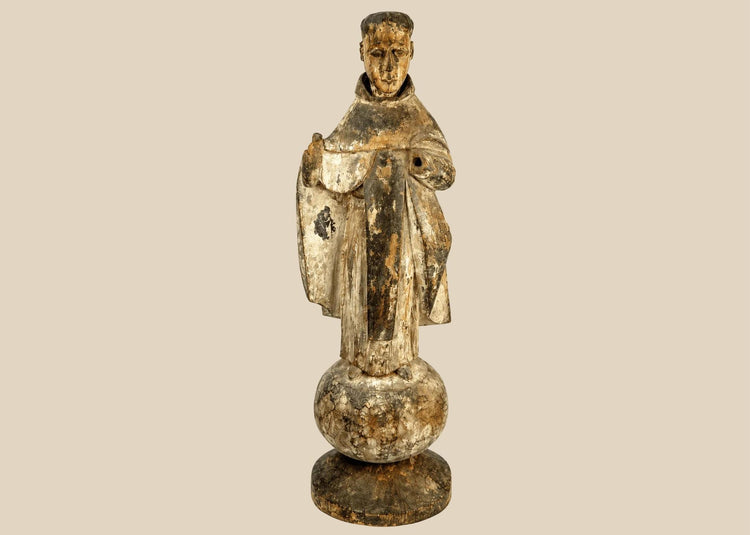
Statuette de moine espagnol de style colonial | Frère en bois sculpté avec des traces de polychromie | XVIIe-XVIIIe siècle
Description
Plus
Moins
Contexte historique et origine
Région : Amérique latine coloniale espagnole (probablement Mexique ou Pérou)
Matériau : Bois sculpté avec des traces de polychromie et de gesso
Période : XVIIe-XVIIIe siècle
Description
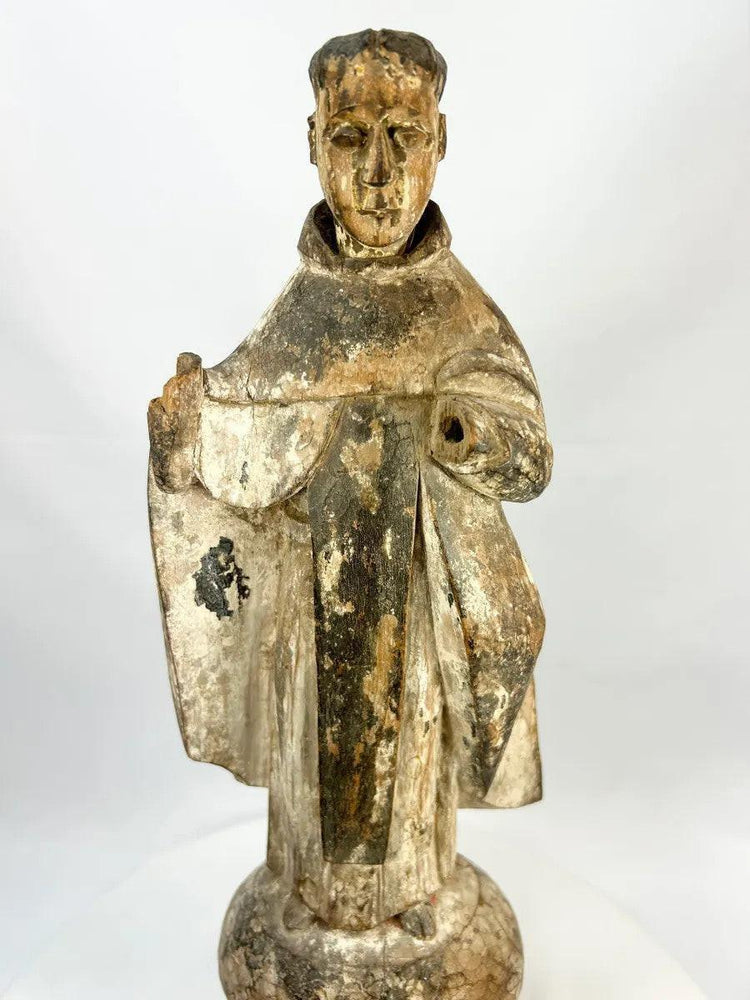
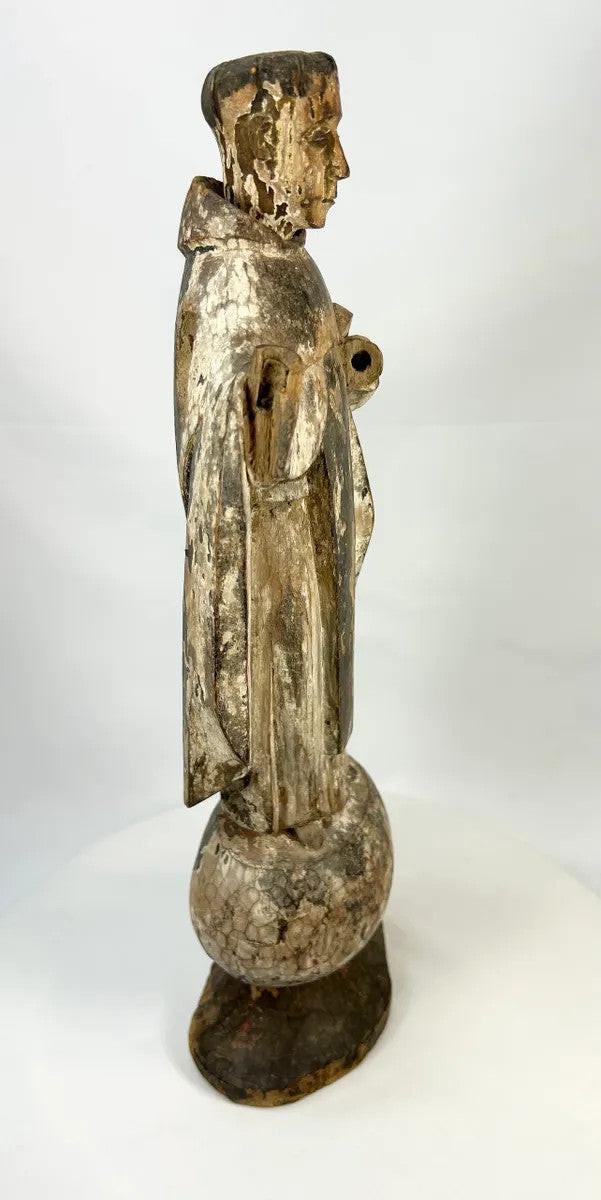
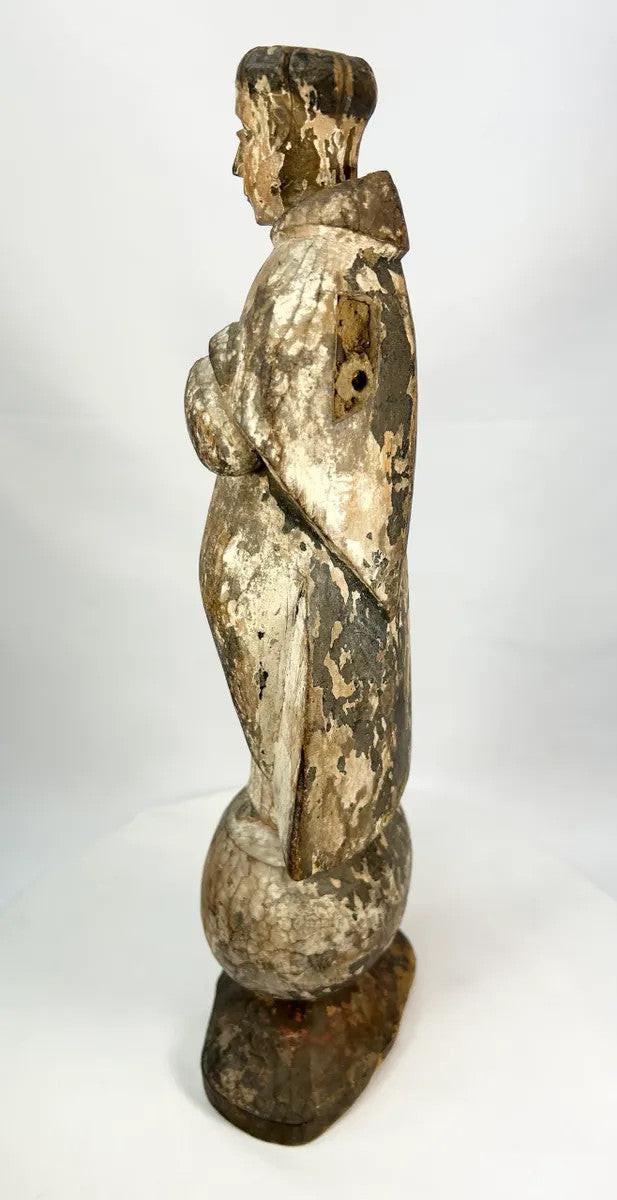
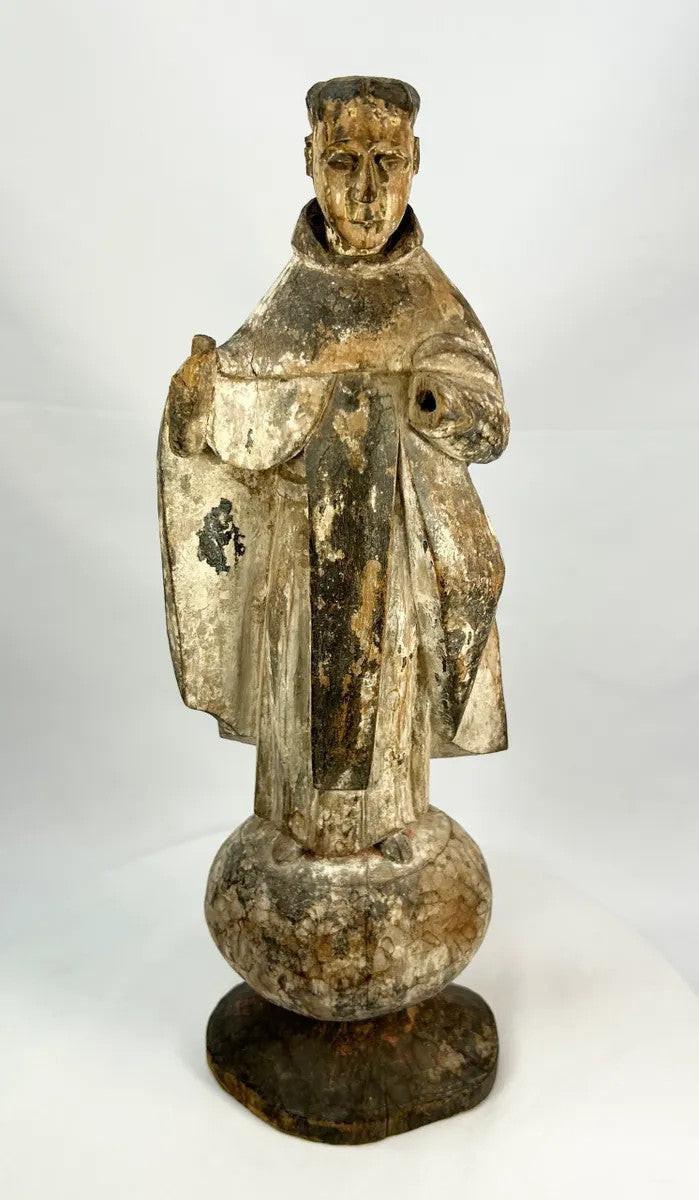
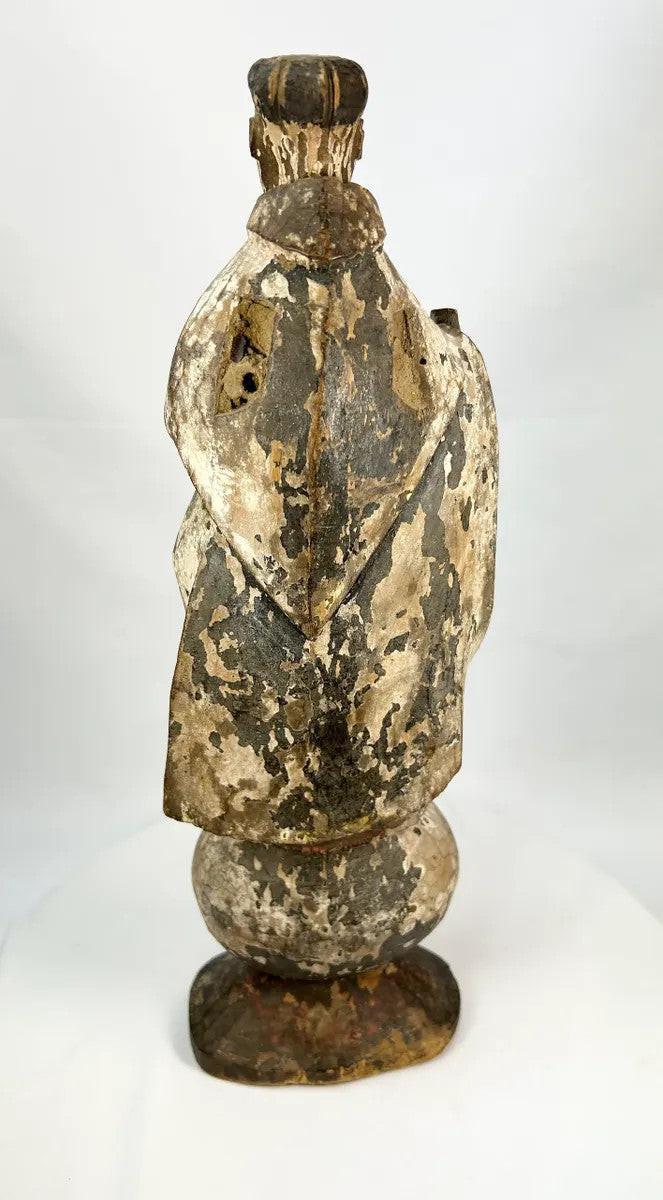
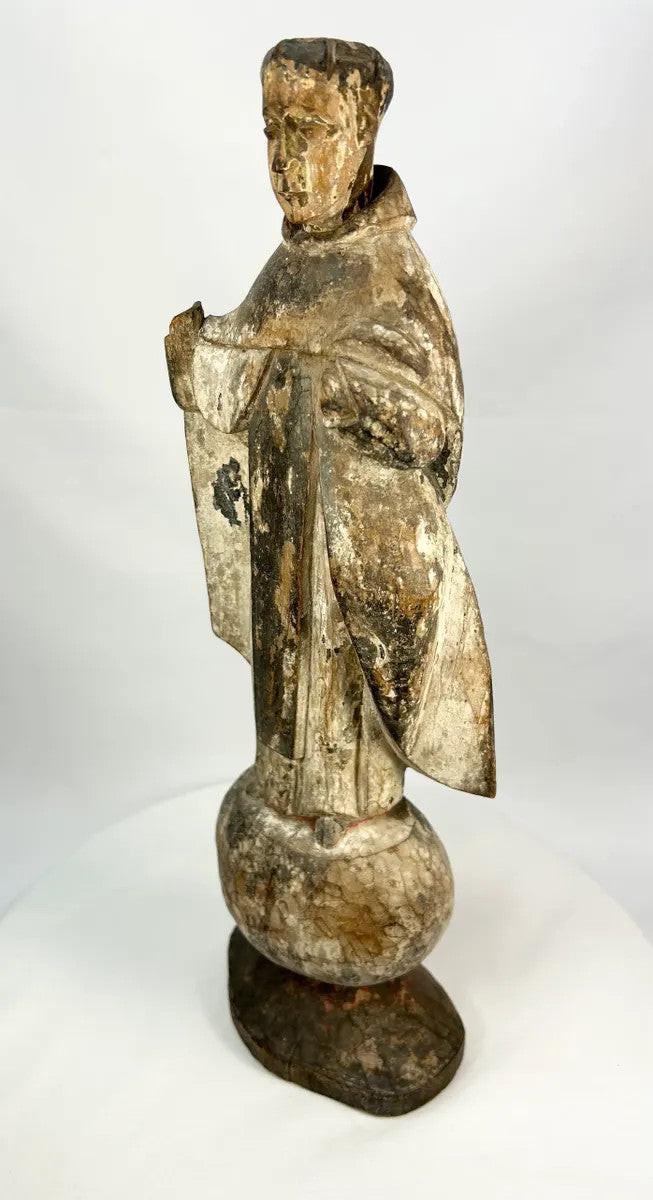
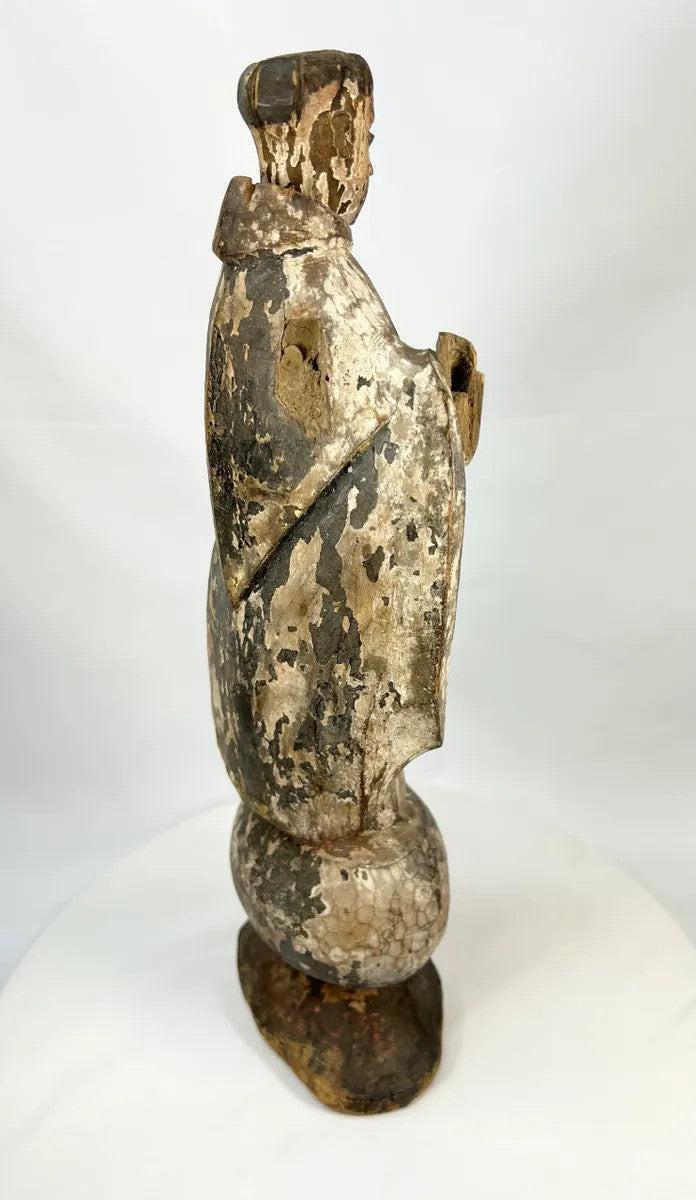
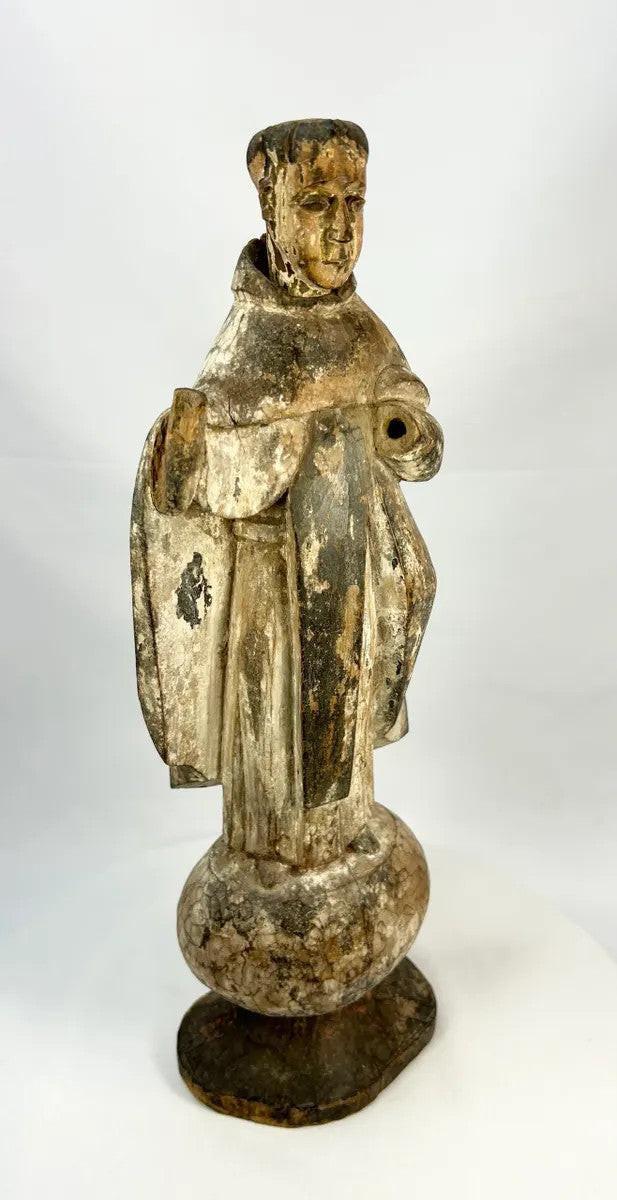
Une ancienne figurine de saint coloniale espagnole, sculptée à la main dans du bois et représentant un frère ou un moine — probablement franciscain ou dominicain — distingué par ses cheveux tonsurés et son vêtement simple de moine. La figurine se tient de face sur une base arrondie intégrale, sculptée dans le même bloc de bois, et aurait à l'origine tenu des attributs de dévotion dans les mains (maintenant manquantes). Bien que la finition de surface soit fragmentaire, les restes usés de polychromie et de gesso confèrent à ce saint une profonde impression d'âge, de caractère et d'histoire dévotionnelle.
Caractéristiques
- Saint en bois sculpté à la main avec des caractéristiques stylisées
- Représentation d'un frère ou d'un moine en robe traditionnelle
- Traces originales de polychromie et de finition au gesso
- Base arrondie intégrale pour un autel ou un présentoir domestique
- Tradition de l'art populaire dévotionnel colonial espagnol
Signification culturelle
Les santos étaient au cœur du culte catholique dans toute l'Amérique latine coloniale, produits par des artisans locaux pour incarner les saints, le Christ et la Vierge dans les églises et les foyers. Des figures comme ce frère soulignent le rôle missionnaire des ordres mendiants, servant d'outils d'instruction, de vénération et d'intégration culturelle. Sa forme humble reflète à la fois l'artisanat indigène et la dévotion catholique coloniale.
État
Bon état avec usure conforme à l'âge. Pertes de polychromie et de gesso partout ; fissures et abrasions de surface présentes sur la figurine et la base. Les mains ont perdu leurs attributs d'origine. Stable et expressif dans l'ensemble, avec une riche patine reflétant des siècles d'utilisation.
Dimensions (approximatives)
Hauteur : 40,6 cm
Âge (approximatif)
225-425 ans
Provenance
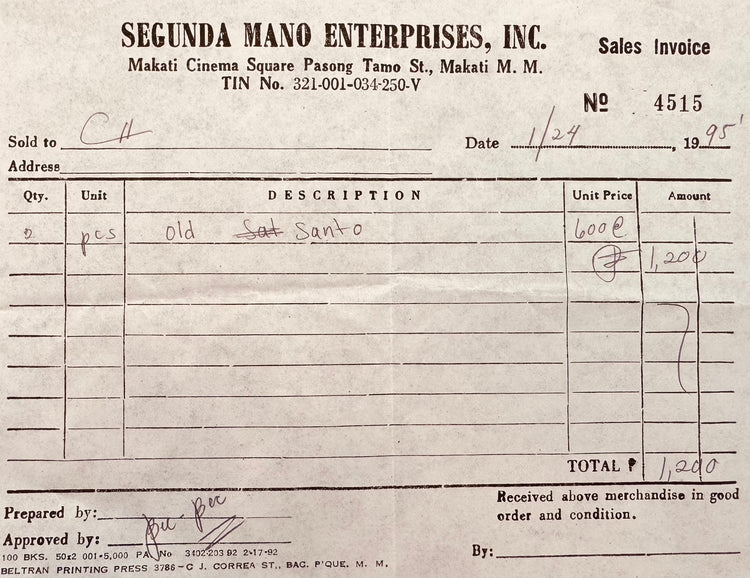
D'une collection privée à Norfolk, Virginie, États-Unis. Accompagné d'une facture de vente originale de Segunda Mano Enterprises, Inc., Makati, Philippines (Facture n° 4515), datée du 24 janvier 1995, documentant l'acquisition de deux figures de Santo antiques. Le document fournit l'historique de la propriété initiale et atteste de la présence de l'objet sur le marché international des antiquités dès le milieu des années 1990.
En savoir plus
Explorez l'histoire et le symbolisme de l'art religieux colonial espagnol via Art & Antiques Magazine
Parcourez notre Collection d'artefacts de culte et de dévotion – Reliques sacrées
Description
Contexte historique et origine
Région : Amérique latine coloniale espagnole (probablement Mexique ou Pérou)
Matériau : Bois sculpté avec des traces de polychromie et de gesso
Période : XVIIe-XVIIIe siècle
Description
Une ancienne figurine de saint coloniale espagnole, sculptée à la main dans du bois et représentant un frère ou un moine — probablement franciscain ou dominicain — distingué par ses cheveux tonsurés et son vêtement simple de moine. La figurine se tient de face sur une base arrondie intégrale, sculptée dans le même bloc de bois, et aurait à l'origine tenu des attributs de dévotion dans les mains (maintenant manquantes). Bien que la finition de surface soit fragmentaire, les restes usés de polychromie et de gesso confèrent à ce saint une profonde impression d'âge, de caractère et d'histoire dévotionnelle.
Caractéristiques
- Saint en bois sculpté à la main avec des caractéristiques stylisées
- Représentation d'un frère ou d'un moine en robe traditionnelle
- Traces originales de polychromie et de finition au gesso
- Base arrondie intégrale pour un autel ou un présentoir domestique
- Tradition de l'art populaire dévotionnel colonial espagnol
Signification culturelle
Les santos étaient au cœur du culte catholique dans toute l'Amérique latine coloniale, produits par des artisans locaux pour incarner les saints, le Christ et la Vierge dans les églises et les foyers. Des figures comme ce frère soulignent le rôle missionnaire des ordres mendiants, servant d'outils d'instruction, de vénération et d'intégration culturelle. Sa forme humble reflète à la fois l'artisanat indigène et la dévotion catholique coloniale.
État
Bon état avec usure conforme à l'âge. Pertes de polychromie et de gesso partout ; fissures et abrasions de surface présentes sur la figurine et la base. Les mains ont perdu leurs attributs d'origine. Stable et expressif dans l'ensemble, avec une riche patine reflétant des siècles d'utilisation.
Dimensions (approximatives)
Hauteur : 40,6 cm
Âge (approximatif)
225-425 ans
Provenance
D'une collection privée à Norfolk, Virginie, États-Unis. Accompagné d'une facture de vente originale de Segunda Mano Enterprises, Inc., Makati, Philippines (Facture n° 4515), datée du 24 janvier 1995, documentant l'acquisition de deux figures de Santo antiques. Le document fournit l'historique de la propriété initiale et atteste de la présence de l'objet sur le marché international des antiquités dès le milieu des années 1990.
En savoir plus
Explorez l'histoire et le symbolisme de l'art religieux colonial espagnol via Art & Antiques Magazine
Parcourez notre Collection d'artefacts de culte et de dévotion – Reliques sacrées
Vous aimerez peut-être aussi
