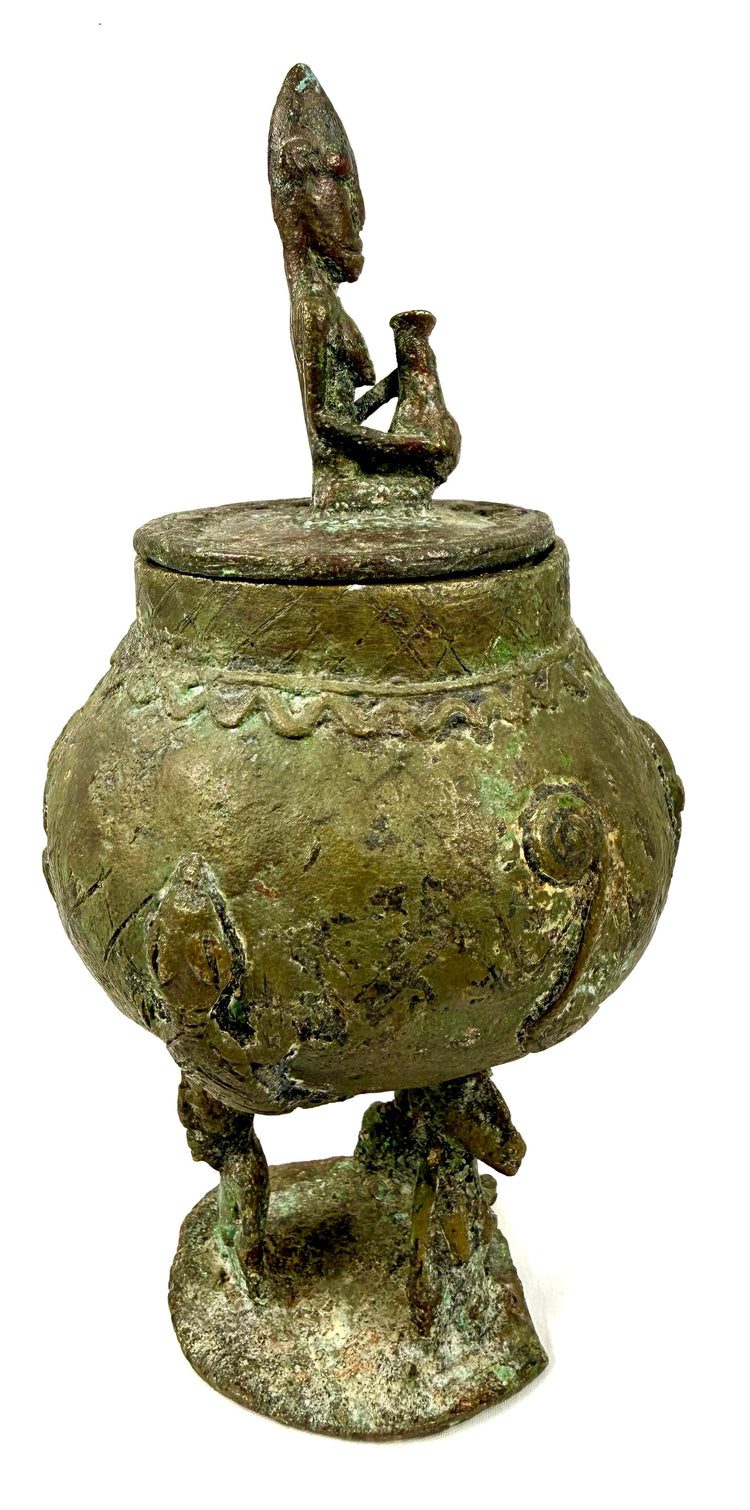
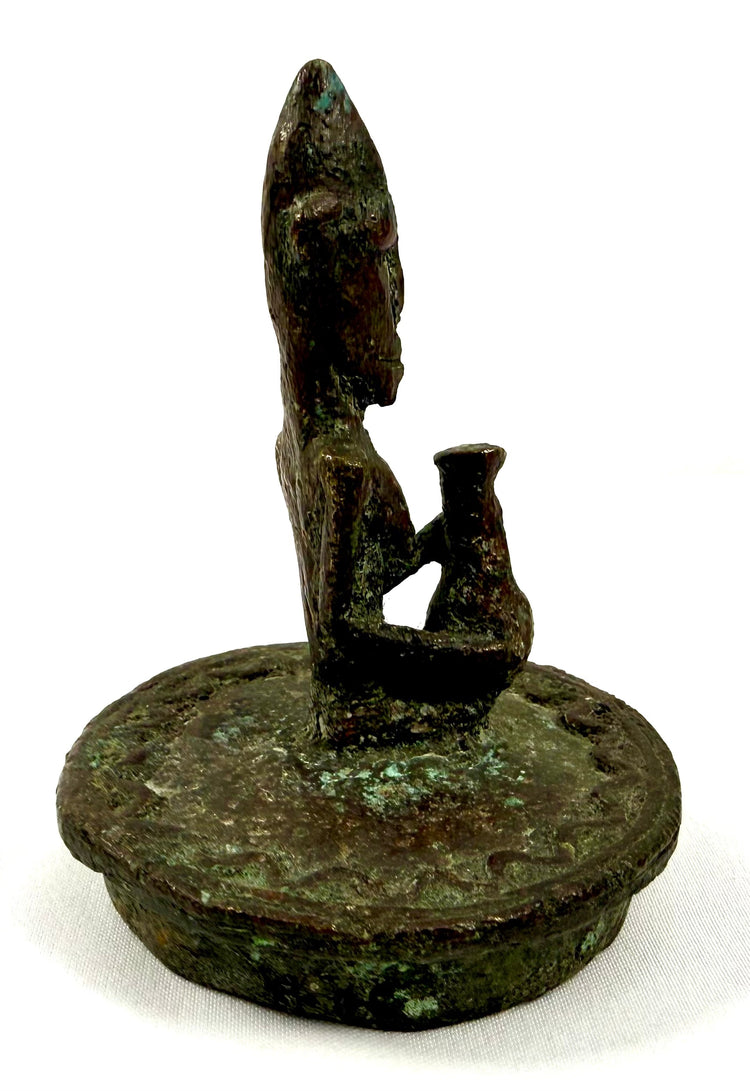
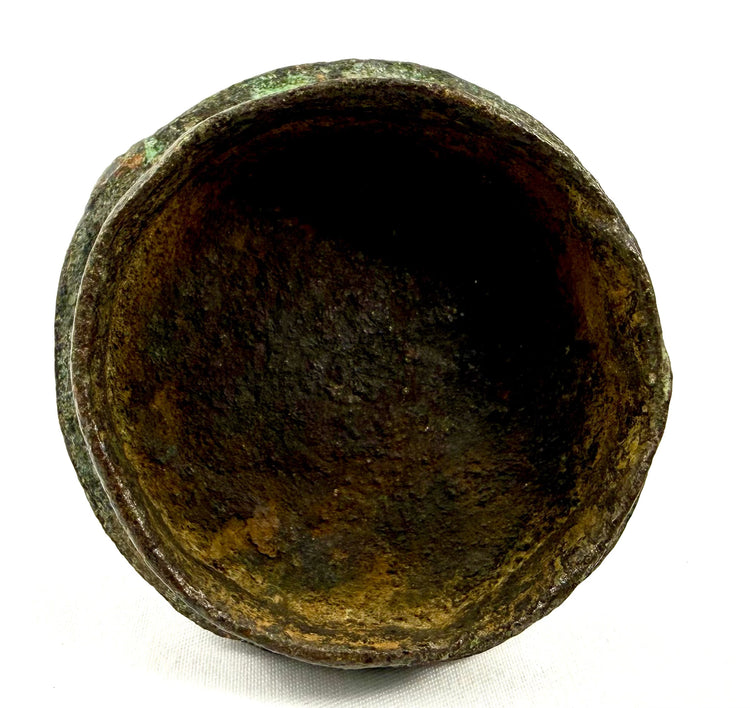
Récipient rituel en bronze Dogon | Vase anthropomorphe à couvercle figuratif | XIXe siècle

Historique de provenance et de propriété

A ensuite appartenu à B.C. Galleries, Armadale, Victoria, Australie, une galerie et un commerce de Melbourne établis de longue date, spécialisés dans l'art ancien, les antiquités, l'art tribal et les objets ethnographiques. Établie au moins depuis 2006, la galerie était située au 1069 High Street, Armadale, et était associée au marchand Frank Bottaro.

Prix habituel
$450.00
Prix soldé
$450.00
Prix habituel
Frais de port calculés à la caisse.

This is a one-of-a-kind historical object. Once sold, this exact piece will not be restocked.

Questions before acquiring? Additional photographs, condition details, documentation, shipping information or a private viewing are available upon request.
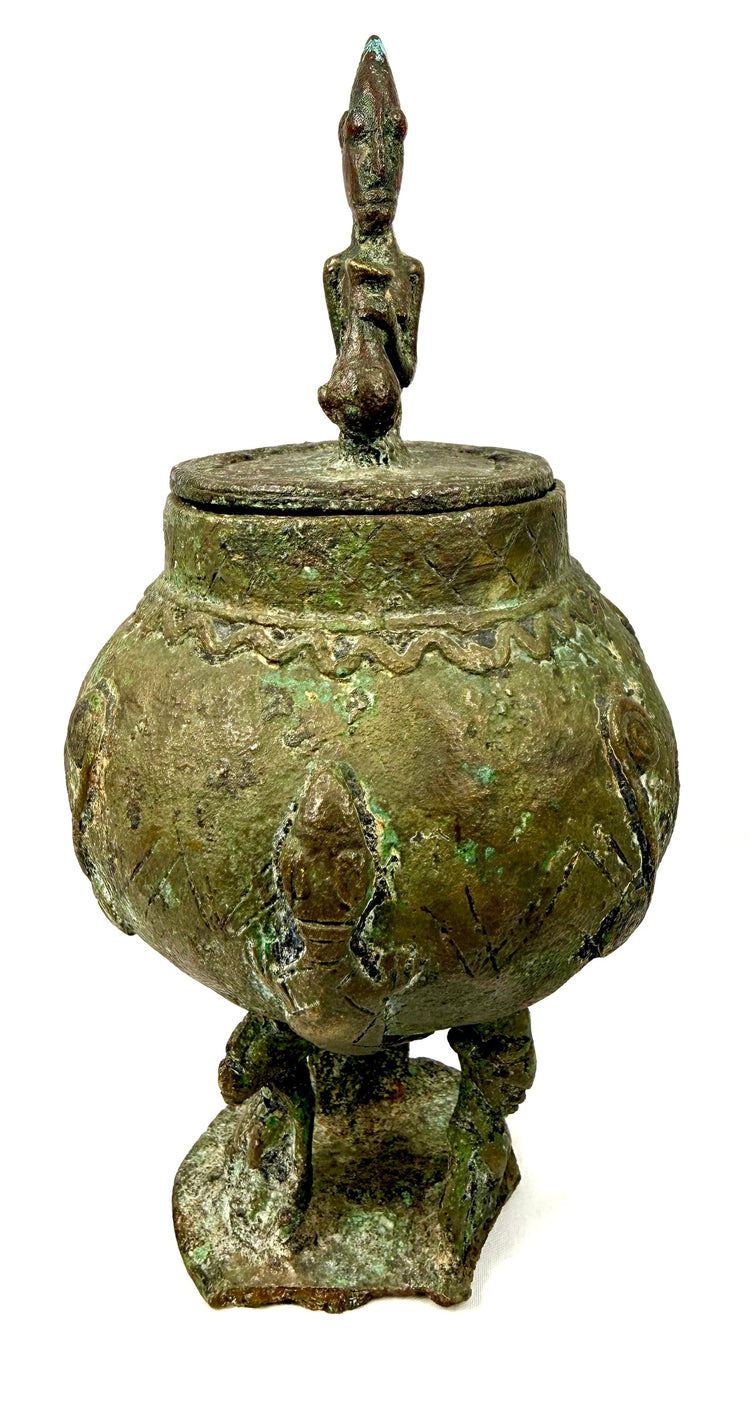
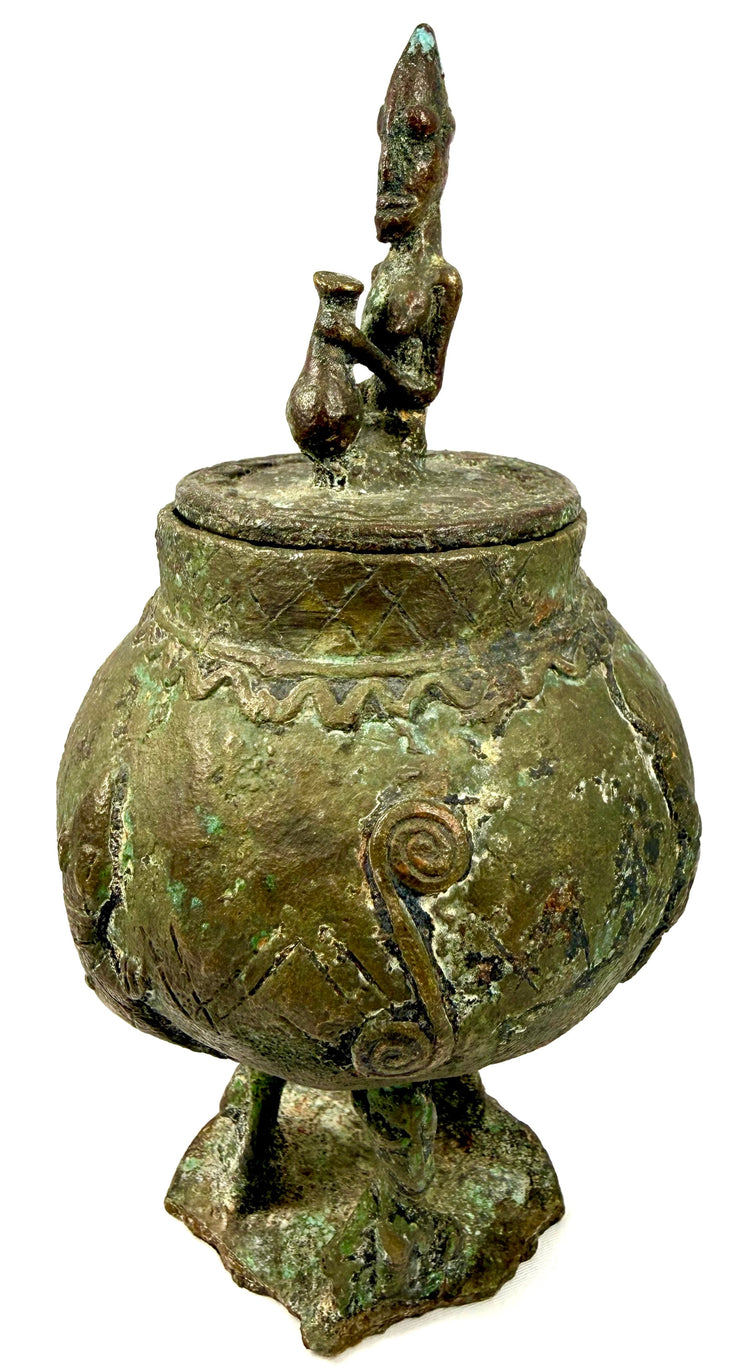
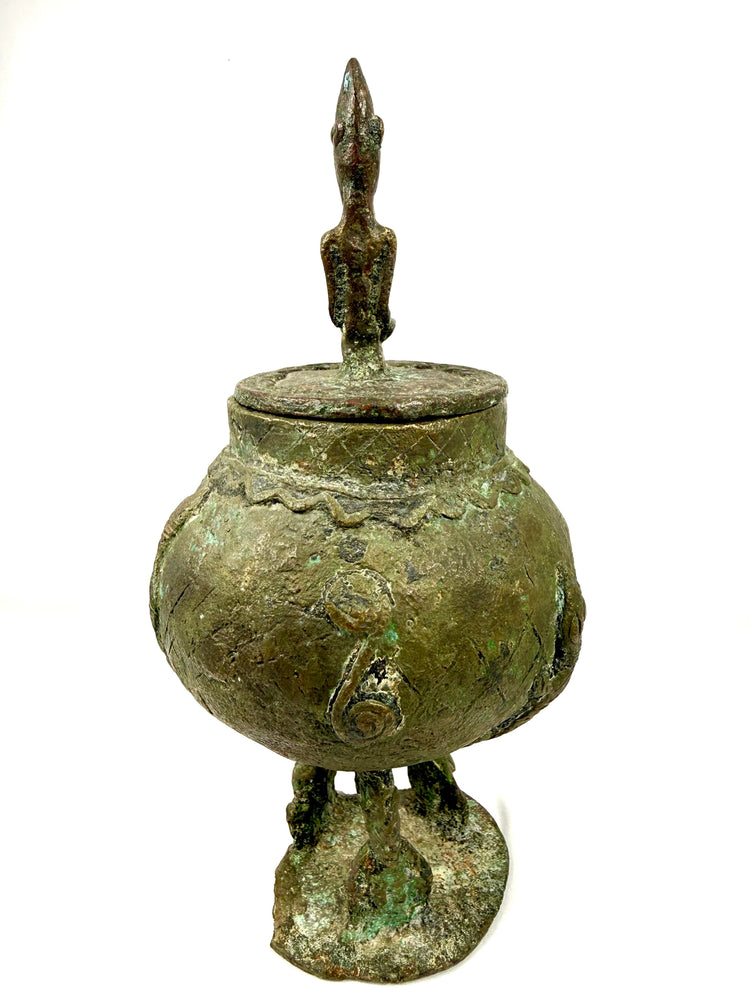
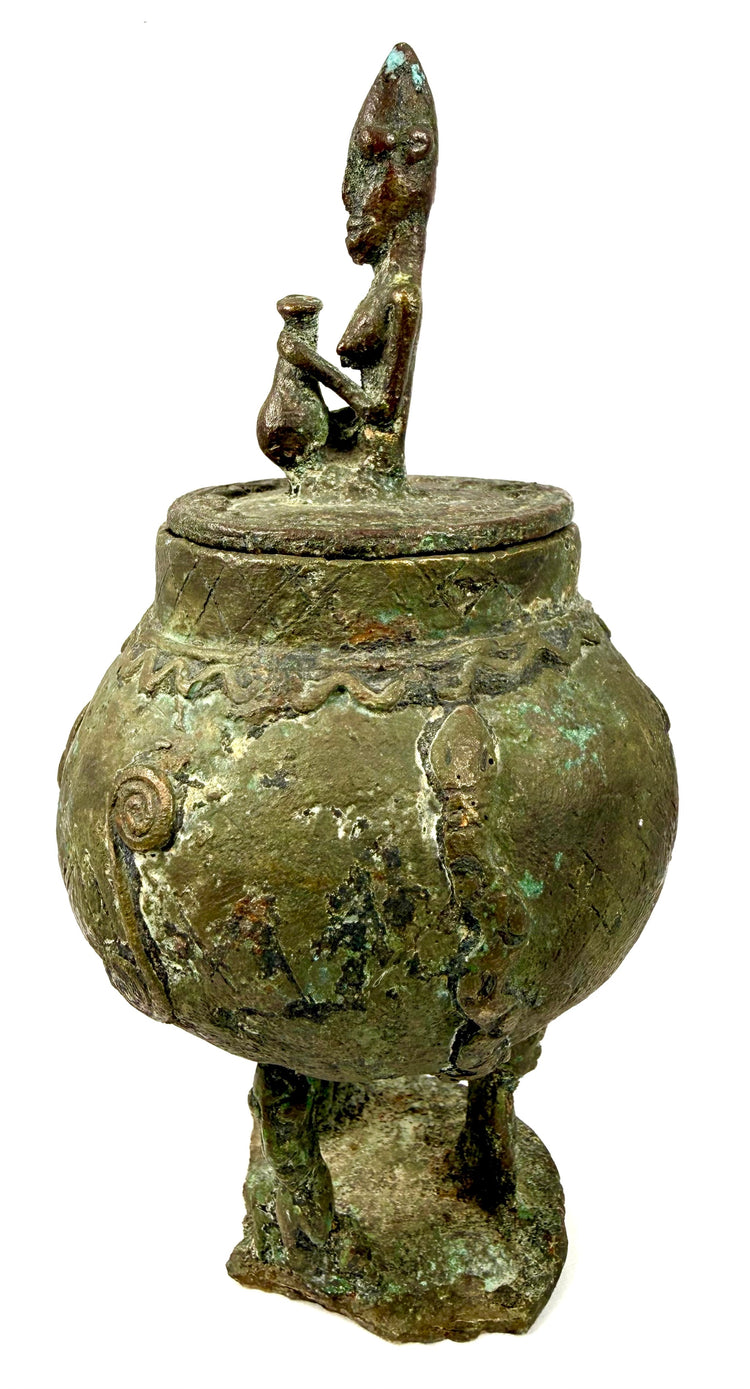
19th century Dogon bronze ritual container with anthropomorphic figure lid and embossed spiral motifs
360-degree rotating video of an antique Dogon bronze ritual container from Mali, West Africa, circa 19th century, featuring a rounded vessel with engraved spiral and geometric motifs, three stylized anthropomorphic legs, and a sculpted human figure crowning the lid. The ceremonial vessel displays rich green verdigris patina, traditional Dogon metalworking craftsmanship, and age-related surface wear, shown from multiple angles.
Dogon-attributed bronze vessel from Mali featuring a rounded body, figurative lid, and sculptural supports, circa 19th–early 20th century.
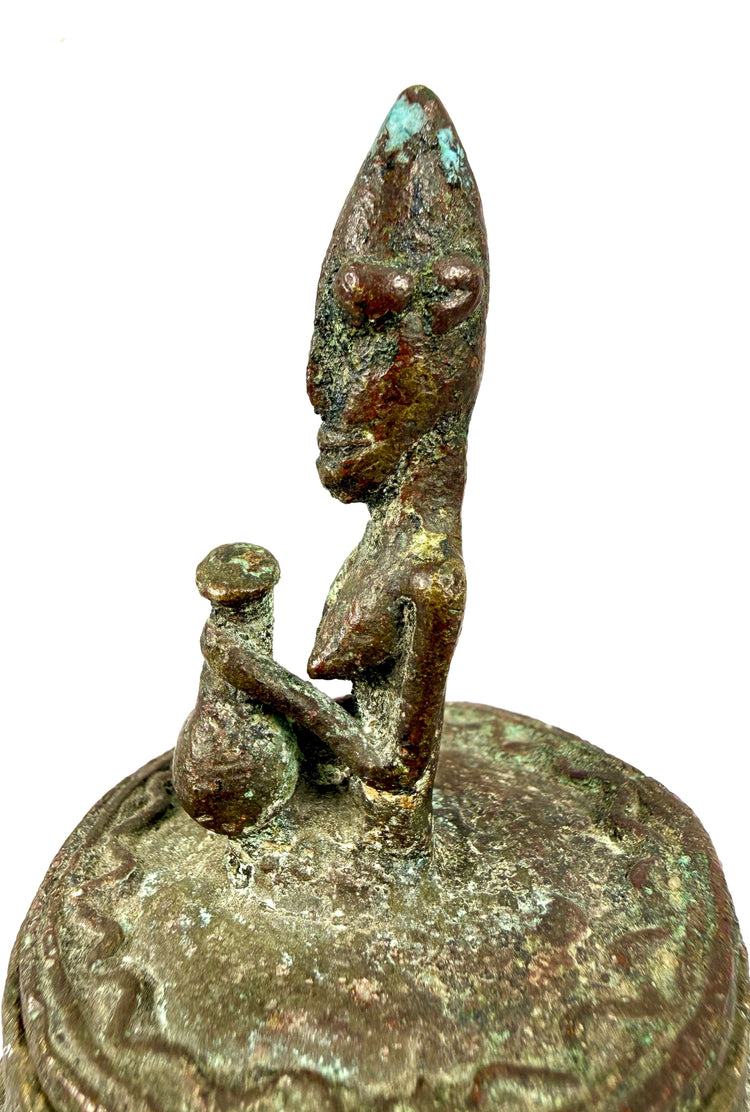
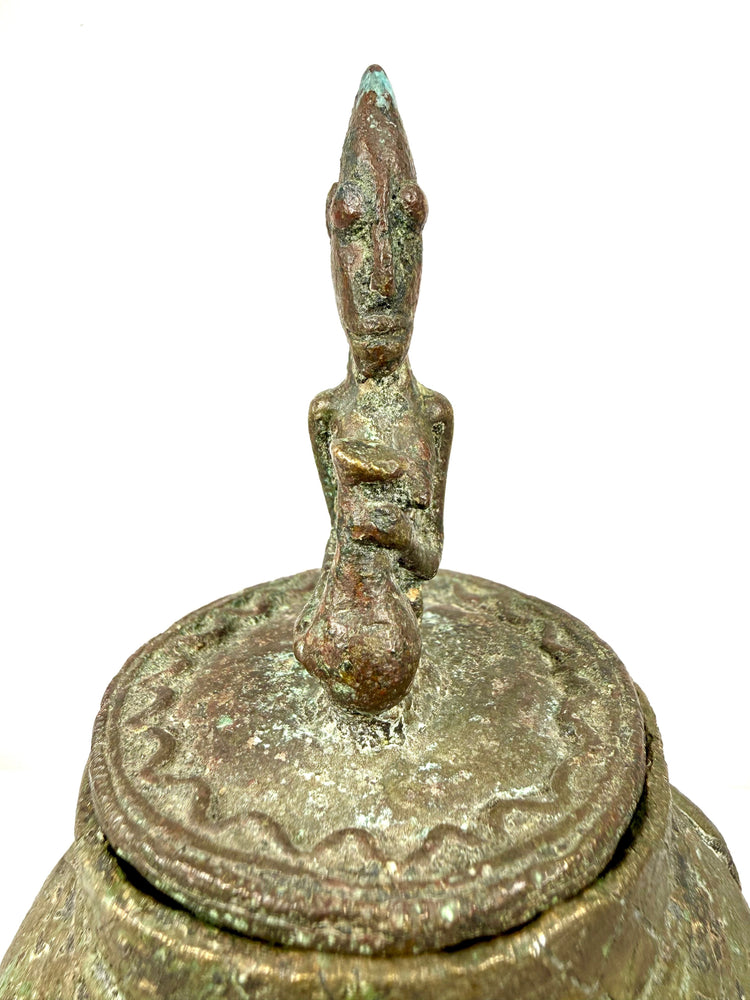
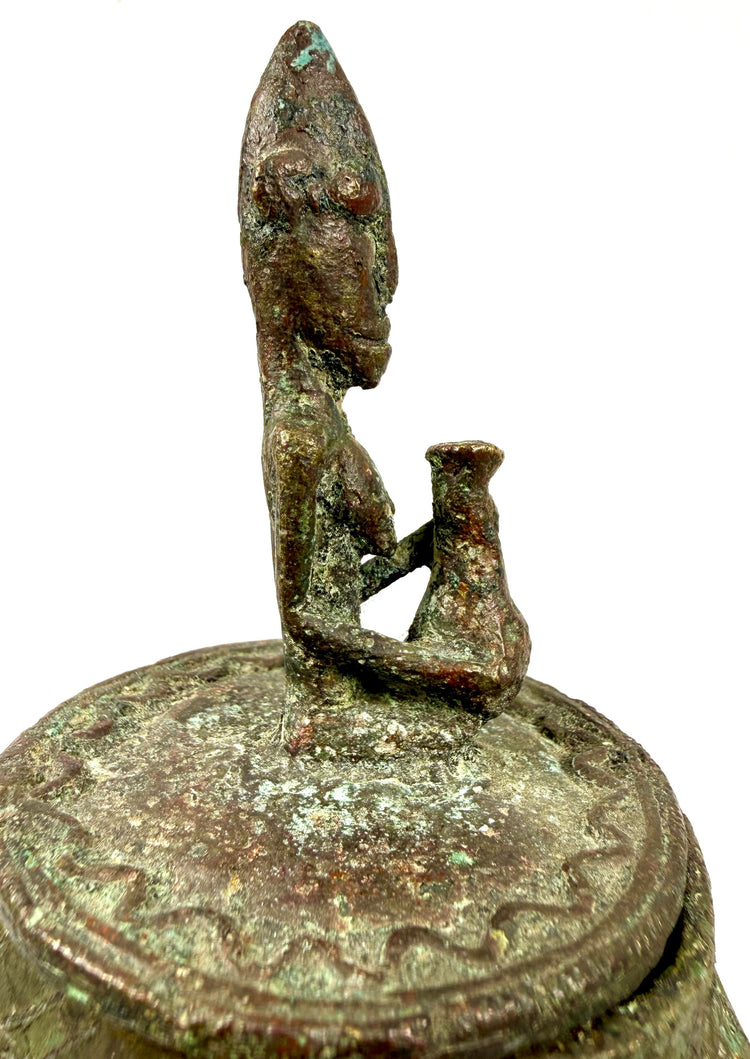
West African bronze container with a stylized standing human figure crowning its circular lid.
Antique Dogon bronze vessel displaying geometric ornamentation and rich green and brown patination.
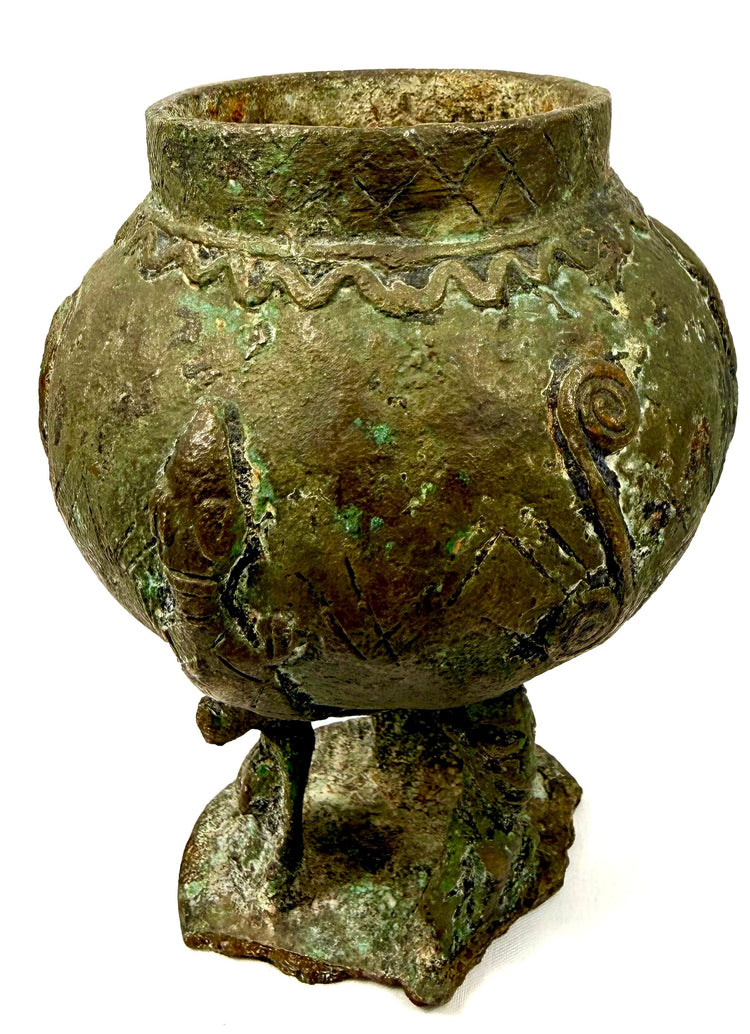
Traditional Malian bronze vessel featuring a bulbous body decorated with raised motifs and zigzag patterns.
Dogon-attributed bronze container with a sculptural human finial and distinctive circular lid.
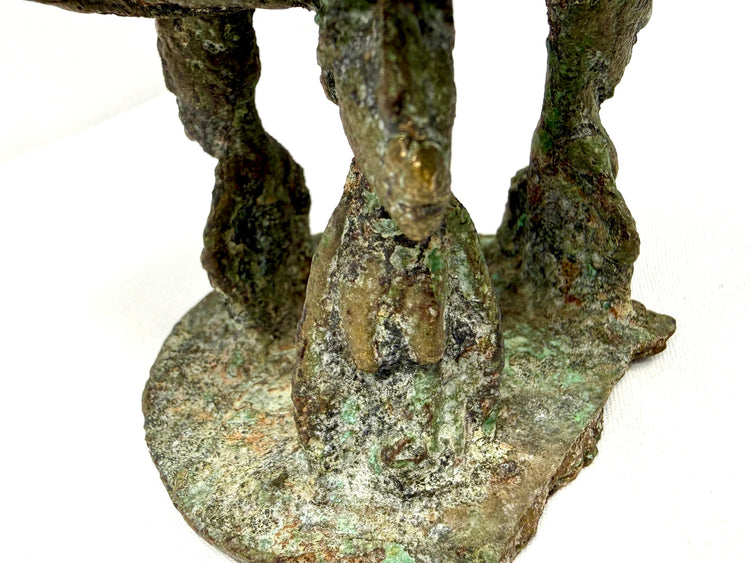
West African bronze artifact showcasing stylized anthropomorphic supports and traditional metalworking details.
Antique African bronze vessel with extensive verdigris, weathered surfaces, and decorative geometric patterns.
Dogon bronze container featuring a rounded body, raised ornamental detailing, and sculptural human imagery.
Historic Malian bronze vessel with a standing figurative lid ornament and naturally oxidized surface.
Dogon-attributed bronze artifact displaying intricate geometric bands along the upper section of its rounded body.
Antique West African bronze container with anthropomorphic decorative elements and aged olive-green patination.
Traditional Dogon-style bronze vessel featuring figurative sculpture, raised decorative motifs, and irregular surface textures.
African bronze container attributed to Mali, displaying sculptural supports, surface oxidation, and preserved geometric ornamentation.
Dogon-attributed bronze vessel measuring approximately 7.5 inches tall, featuring a human-shaped lid finial and rounded decorated body.
  • 19th century Dogon bronze ritual container with anthropomorphic figure lid and embossed spiral motifs
  • 360-degree rotating video of an antique Dogon bronze ritual container from Mali, West Africa, circa 19th century, featuring a rounded vessel with engraved spiral and geometric motifs, three stylized anthropomorphic legs, and a sculpted human figure crowning the lid. The ceremonial vessel displays rich green verdigris patina, traditional Dogon metalworking craftsmanship, and age-related surface wear, shown from multiple angles.
  • Dogon-attributed bronze vessel from Mali featuring a rounded body, figurative lid, and sculptural supports, circa 19th–early 20th century.
  • West African bronze container with a stylized standing human figure crowning its circular lid.
  • Antique Dogon bronze vessel displaying geometric ornamentation and rich green and brown patination.
  • Traditional Malian bronze vessel featuring a bulbous body decorated with raised motifs and zigzag patterns.
  • Dogon-attributed bronze container with a sculptural human finial and distinctive circular lid.
  • West African bronze artifact showcasing stylized anthropomorphic supports and traditional metalworking details.
  • Antique African bronze vessel with extensive verdigris, weathered surfaces, and decorative geometric patterns.
  • Dogon bronze container featuring a rounded body, raised ornamental detailing, and sculptural human imagery.
  • Historic Malian bronze vessel with a standing figurative lid ornament and naturally oxidized surface.
  • Dogon-attributed bronze artifact displaying intricate geometric bands along the upper section of its rounded body.
  • Antique West African bronze container with anthropomorphic decorative elements and aged olive-green patination.
  • Traditional Dogon-style bronze vessel featuring figurative sculpture, raised decorative motifs, and irregular surface textures.
  • African bronze container attributed to Mali, displaying sculptural supports, surface oxidation, and preserved geometric ornamentation.
  • Dogon-attributed bronze vessel measuring approximately 7.5 inches tall, featuring a human-shaped lid finial and rounded decorated body.
19th century Dogon bronze ritual container with anthropomorphic figure lid and embossed spiral motifs
360-degree rotating video of an antique Dogon bronze ritual container from Mali, West Africa, circa 19th century, featuring a rounded vessel with engraved spiral and geometric motifs, three stylized anthropomorphic legs, and a sculpted human figure crowning the lid. The ceremonial vessel displays rich green verdigris patina, traditional Dogon metalworking craftsmanship, and age-related surface wear, shown from multiple angles.
Dogon-attributed bronze vessel from Mali featuring a rounded body, figurative lid, and sculptural supports, circa 19th–early 20th century.
West African bronze container with a stylized standing human figure crowning its circular lid.
Antique Dogon bronze vessel displaying geometric ornamentation and rich green and brown patination.
Traditional Malian bronze vessel featuring a bulbous body decorated with raised motifs and zigzag patterns.
Dogon-attributed bronze container with a sculptural human finial and distinctive circular lid.
West African bronze artifact showcasing stylized anthropomorphic supports and traditional metalworking details.
Antique African bronze vessel with extensive verdigris, weathered surfaces, and decorative geometric patterns.
Dogon bronze container featuring a rounded body, raised ornamental detailing, and sculptural human imagery.
Historic Malian bronze vessel with a standing figurative lid ornament and naturally oxidized surface.
Dogon-attributed bronze artifact displaying intricate geometric bands along the upper section of its rounded body.
Antique West African bronze container with anthropomorphic decorative elements and aged olive-green patination.
Traditional Dogon-style bronze vessel featuring figurative sculpture, raised decorative motifs, and irregular surface textures.
African bronze container attributed to Mali, displaying sculptural supports, surface oxidation, and preserved geometric ornamentation.
Dogon-attributed bronze vessel measuring approximately 7.5 inches tall, featuring a human-shaped lid finial and rounded decorated body.
Authenticity and secure checkout guarantee

Récipient rituel en bronze Dogon | Vase anthropomorphe à couvercle figuratif | XIXe siècle

Description

Contexte historique et origine

Région : Mali, Afrique de l'Ouest
Matériau : Bronze
Période : XIXe siècle de notre ère

Description

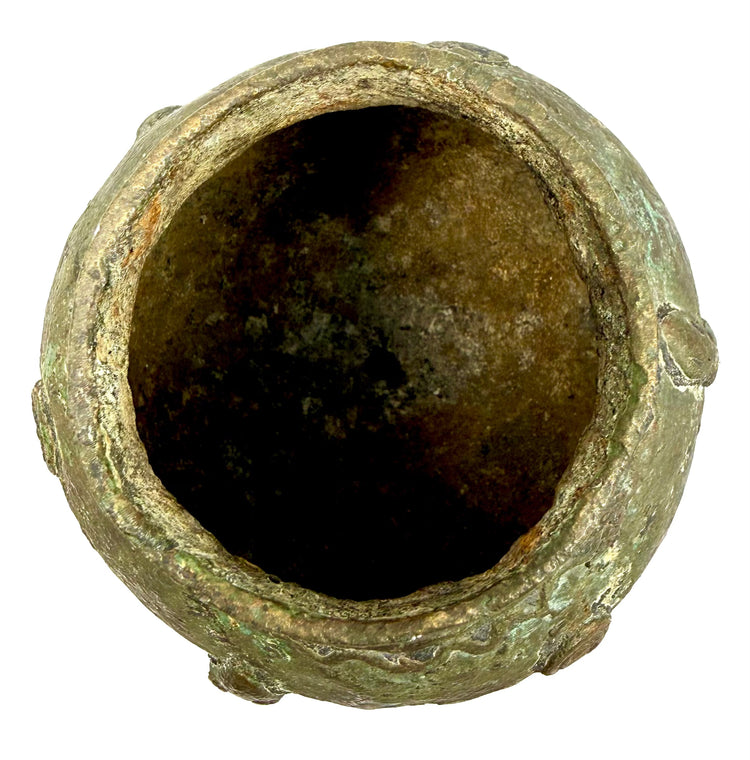
Cet exceptionnel récipient en bronze représente un exemple remarquable de l'artisanat et de la tradition spirituelle Dogon. Le peuple Dogon de l'escarpement de Bandiagara au Mali est réputé pour son riche patrimoine culturel, son expression artistique et sa cosmologie complexe. Utilisés dans des contextes rituels et de guérison, des récipients comme celui-ci contenaient des herbes sacrées, des médicaments ou des matériaux cérémoniels. Sa forme distinctive — avec un corps arrondi, des pieds anthropomorphes et une figure humaine couronnant le couvercle — reflète à la fois sa fonction rituelle et sa signification artistique.

Caractéristiques

- Corps bulbeux décoré de motifs gravés en spirale et géométriques

- Figure humaine sculpturale sur le couvercle symbolisant un guérisseur ou un guide spirituel

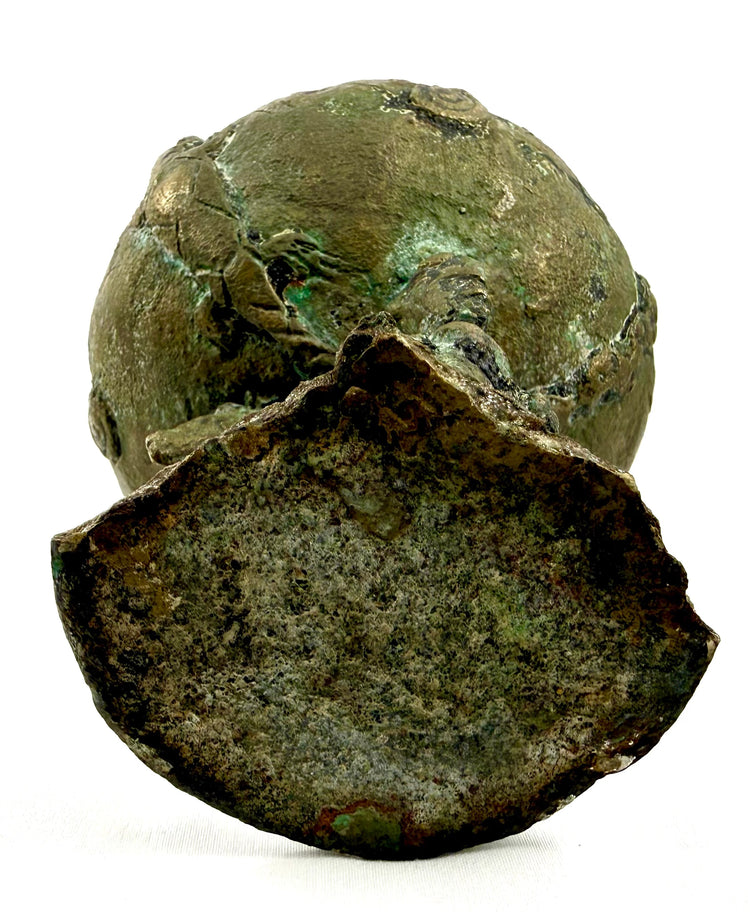
- Trois pieds anthropomorphes stylisés soulignant la connexion humaine symbolique

- Patine de vert-de-gris sur toute la surface rehaussant l'authenticité et l'âge

- Forme compacte mais dynamique conçue pour un usage sacré et pratique

Signification culturelle

Les récipients en bronze Dogon étaient traditionnellement utilisés pour stocker des herbes sacrées, des poudres ou des médicaments lors de cérémonies rituelles, reliant la vie quotidienne aux croyances spirituelles et cosmologiques. Les motifs gravés symbolisent l'interconnexion et l'énergie spirituelle, tandis que les éléments anthropomorphes soulignent le rôle humain dans le pont entre les mondes terrestre et spirituel. Ce récipient incarne la vision du monde Dogon, où l'art, le rituel et les pratiques de guérison fusionnent en une tradition culturelle unifiée.

État

Le récipient reste bien conservé avec une structure stable et une patine de vert-de-gris richement développée. L'usure de surface et l'oxydation sont cohérentes avec l'âge et l'usage rituel, confirmant davantage son authenticité historique.

Dimensions (Approximatives)

Hauteur : 19 cm

Âge (Approximatif)

125–225 ans

Provenance

Par la suite, détenu par B.C. Galleries, Armadale, Victoria, Australie, une galerie et maison de commerce établie de longue date à Melbourne, spécialisée dans l'art ancien, les antiquités, l'art tribal et les objets ethnographiques. Établie au moins en 2006, la galerie opérait depuis le 1069 High Street, Armadale, et était associée au marchand Frank Bottaro.

En savoir plus

Découvrez l'histoire et la culture du peuple Dogon

Explorez notre collection d'artefacts ethnographiques

Description

Contexte historique et origine

Région : Mali, Afrique de l'Ouest
Matériau : Bronze
Période : XIXe siècle de notre ère

Description

Cet exceptionnel récipient en bronze représente un exemple remarquable de l'artisanat et de la tradition spirituelle Dogon. Le peuple Dogon de l'escarpement de Bandiagara au Mali est réputé pour son riche patrimoine culturel, son expression artistique et sa cosmologie complexe. Utilisés dans des contextes rituels et de guérison, des récipients comme celui-ci contenaient des herbes sacrées, des médicaments ou des matériaux cérémoniels. Sa forme distinctive — avec un corps arrondi, des pieds anthropomorphes et une figure humaine couronnant le couvercle — reflète à la fois sa fonction rituelle et sa signification artistique.

Caractéristiques

- Corps bulbeux décoré de motifs gravés en spirale et géométriques

- Figure humaine sculpturale sur le couvercle symbolisant un guérisseur ou un guide spirituel

- Trois pieds anthropomorphes stylisés soulignant la connexion humaine symbolique

- Patine de vert-de-gris sur toute la surface rehaussant l'authenticité et l'âge

- Forme compacte mais dynamique conçue pour un usage sacré et pratique

Signification culturelle

Les récipients en bronze Dogon étaient traditionnellement utilisés pour stocker des herbes sacrées, des poudres ou des médicaments lors de cérémonies rituelles, reliant la vie quotidienne aux croyances spirituelles et cosmologiques. Les motifs gravés symbolisent l'interconnexion et l'énergie spirituelle, tandis que les éléments anthropomorphes soulignent le rôle humain dans le pont entre les mondes terrestre et spirituel. Ce récipient incarne la vision du monde Dogon, où l'art, le rituel et les pratiques de guérison fusionnent en une tradition culturelle unifiée.

État

Le récipient reste bien conservé avec une structure stable et une patine de vert-de-gris richement développée. L'usure de surface et l'oxydation sont cohérentes avec l'âge et l'usage rituel, confirmant davantage son authenticité historique.

Dimensions (Approximatives)

Hauteur : 19 cm

Âge (Approximatif)

125–225 ans

Provenance

Par la suite, détenu par B.C. Galleries, Armadale, Victoria, Australie, une galerie et maison de commerce établie de longue date à Melbourne, spécialisée dans l'art ancien, les antiquités, l'art tribal et les objets ethnographiques. Établie au moins en 2006, la galerie opérait depuis le 1069 High Street, Armadale, et était associée au marchand Frank Bottaro.

En savoir plus

Découvrez l'histoire et la culture du peuple Dogon

Explorez notre collection d'artefacts ethnographiques

Vous aimerez peut-être aussi