

Ouchebti en faïence égyptienne avec traces de pigments | Vers 664–332 av. J.-C.
- Prix habituel
- $850.00
- Prix soldé
- $850.00
- Prix habituel
Impossible de charger la disponibilité du service de retrait


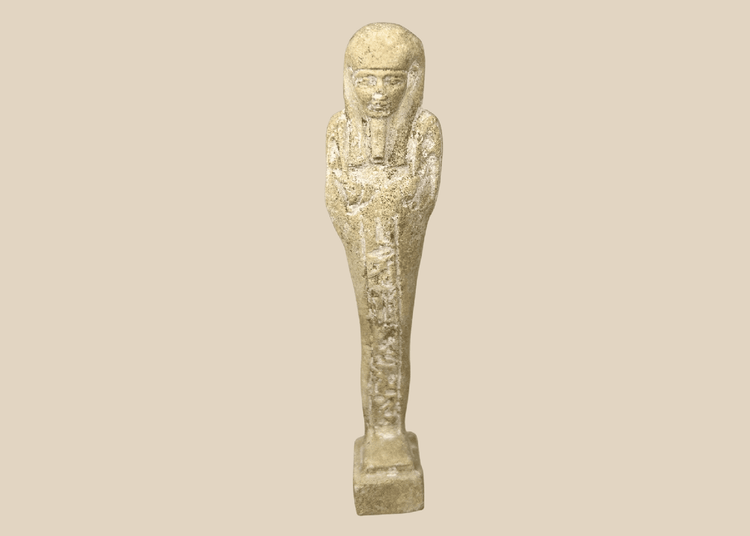
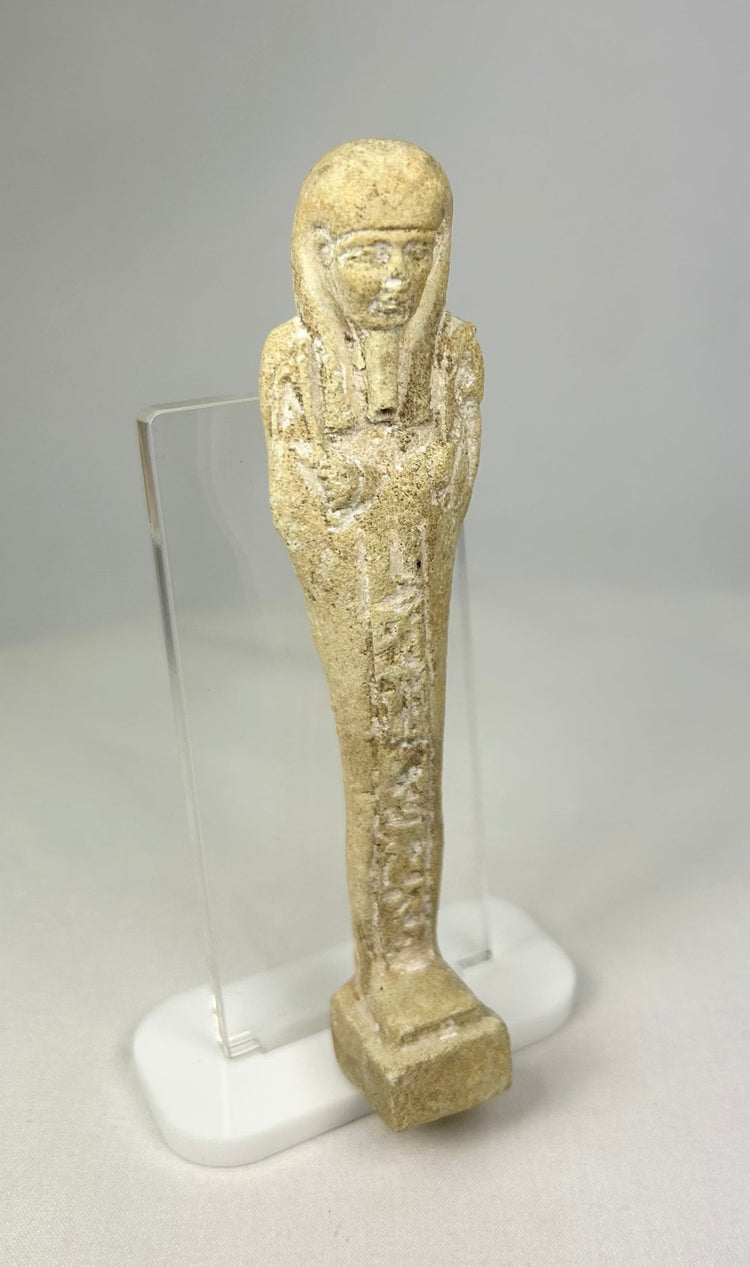
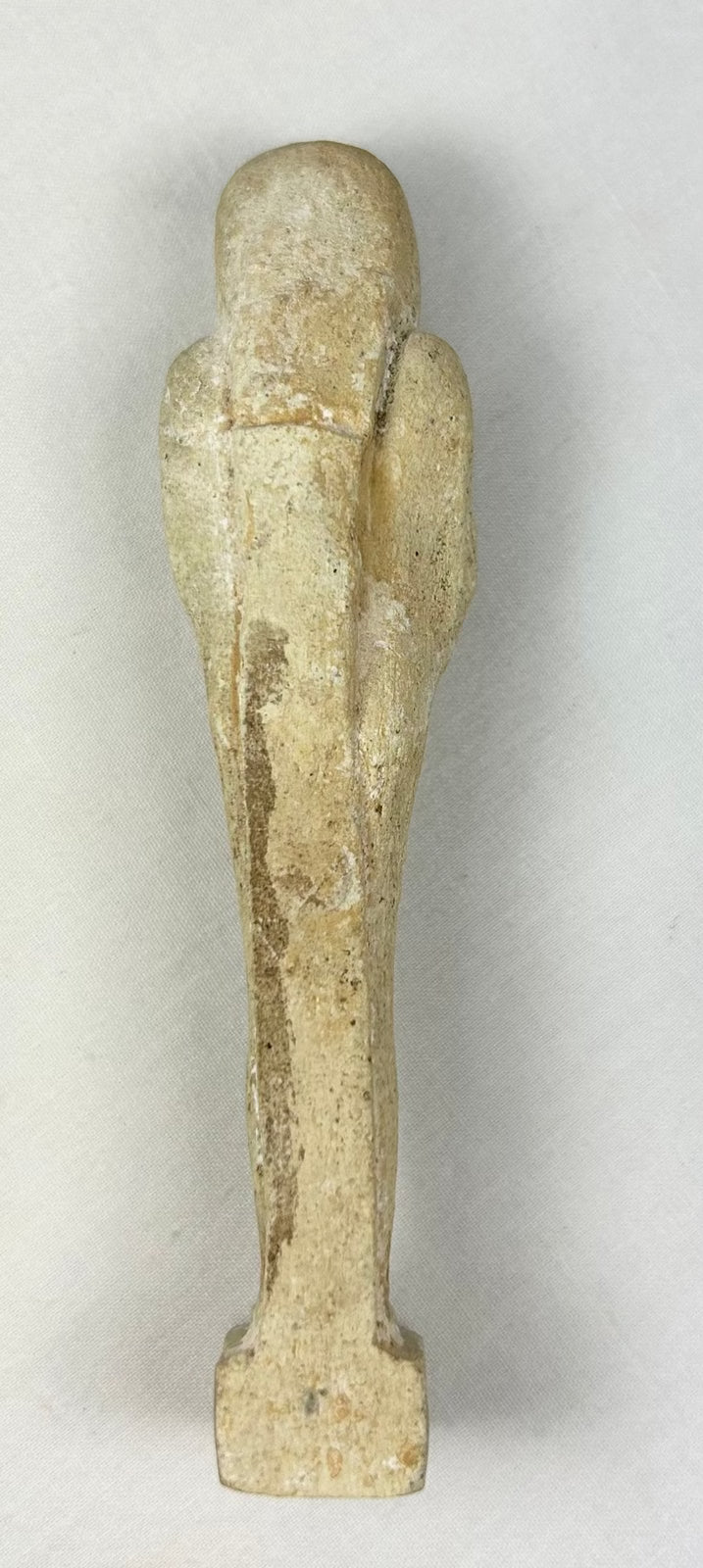
Ouchebti en faïence égyptienne avec traces de pigments | Vers 664–332 av. J.-C.
Description
Plus
Moins
Contexte historique et origine
Région : Égypte
Matériau : Faïence avec dépôts de surface minéraux
Période : Vers 664-332 av. J.-C.
Description
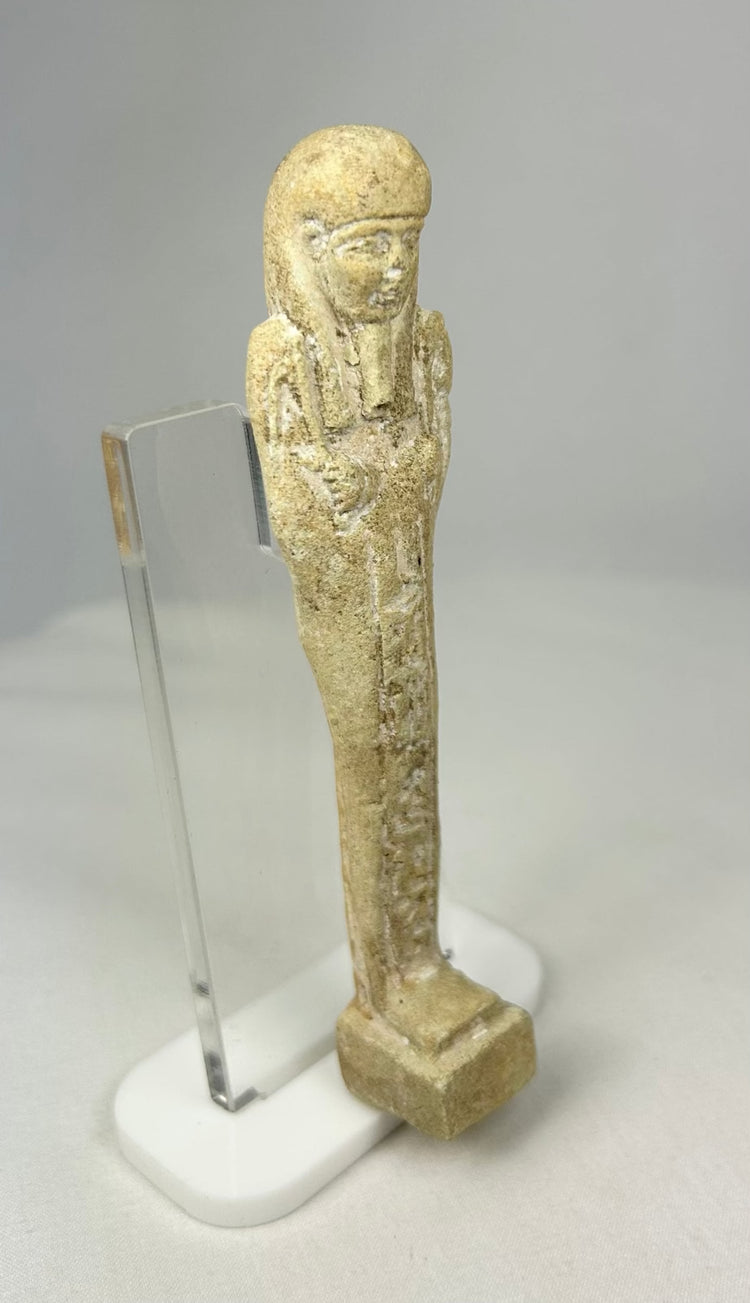
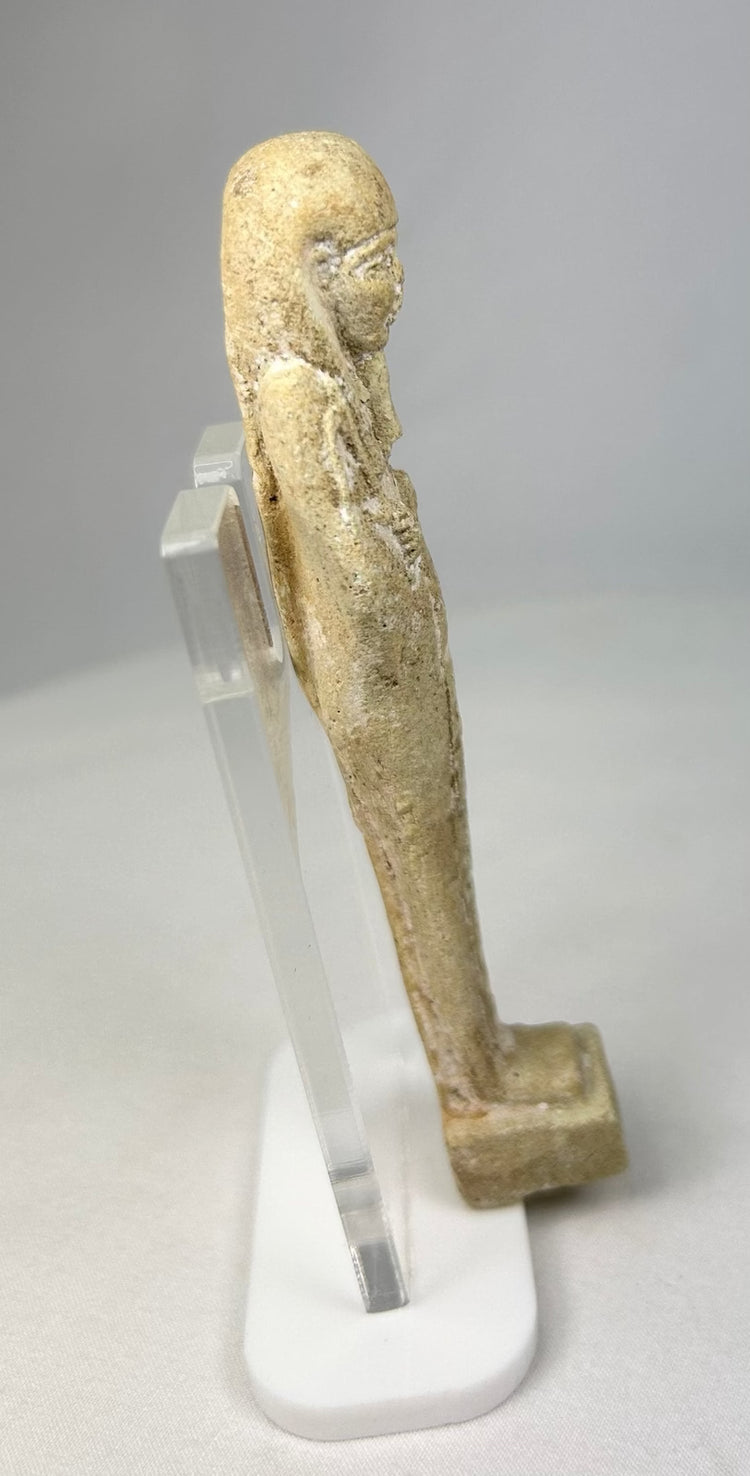
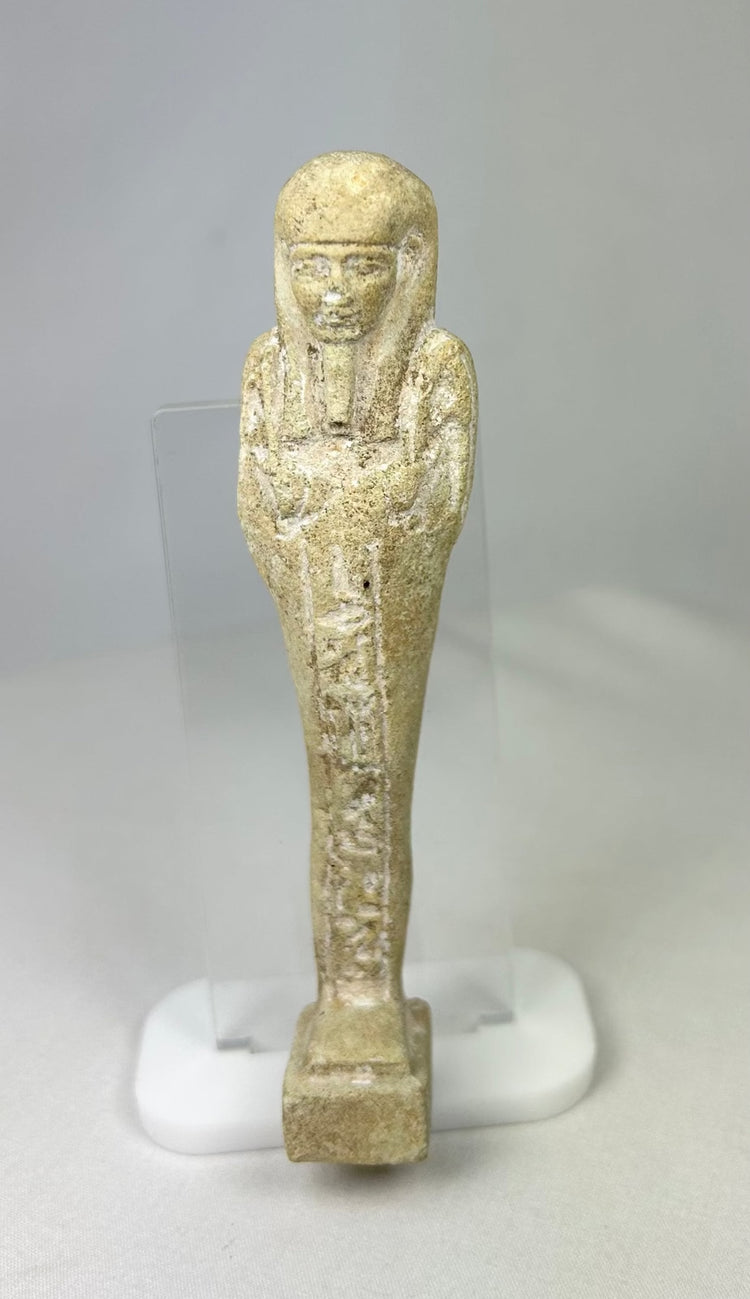
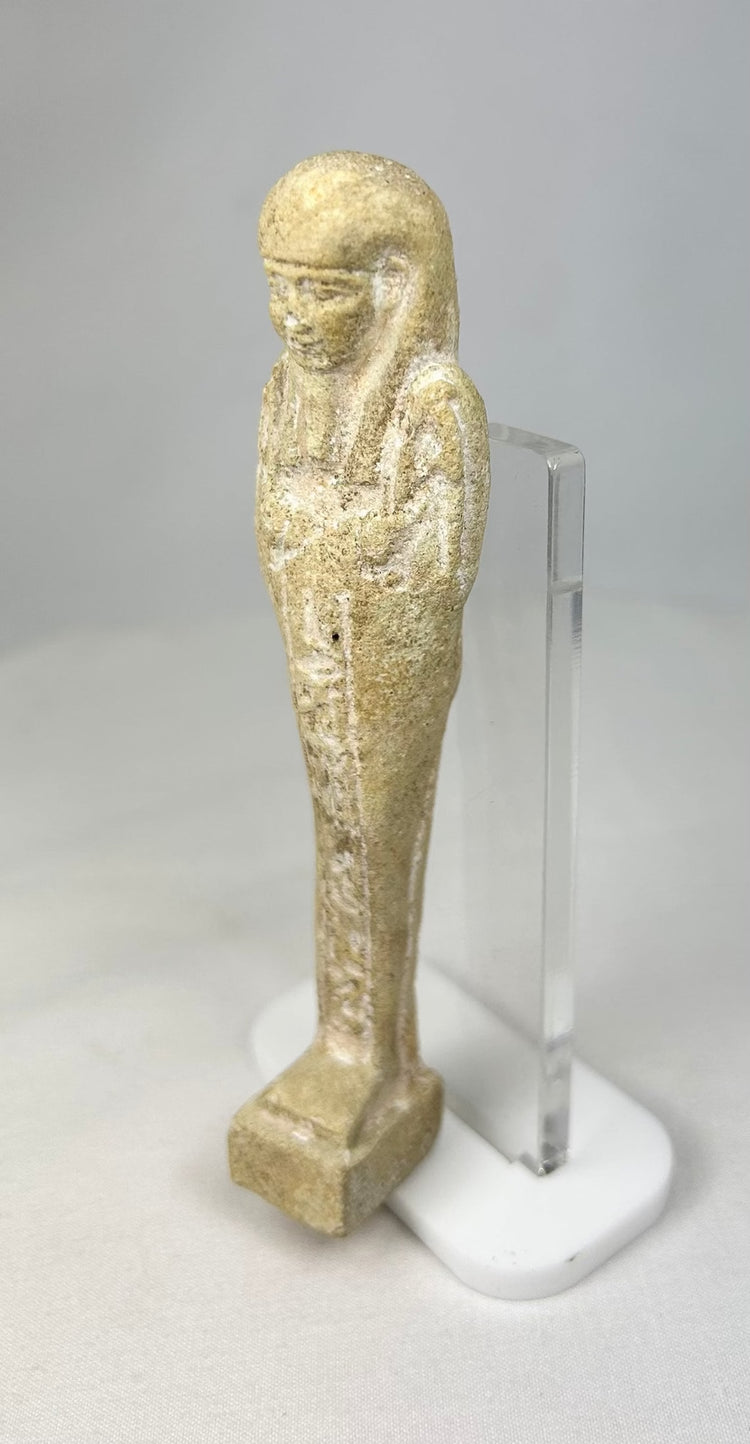
Il s'agit d'une authentique figurine ouchebti (shabti) égyptienne antique sculptée dans de la faïence pâle et présentée dans la pose momiforme traditionnelle. La figurine présente des bras croisés, une perruque tripartite lisse et de légers détails sculpturaux caractéristiques de l'artisanat de la Basse Époque. Les ouchebtis servaient d'assistants symboliques placés dans les tombes pour effectuer des travaux manuels au nom du défunt dans l'au-delà.
La surface conserve d'anciennes incrustations minérales et une patine d'enfouissement, donnant à la pièce une puissante présence historique. Malgré son âge, l'ouchebti reste bien proportionné avec une structure faciale et des contours corporels visibles.
Caractéristiques
- Figurine de serviteur funéraire momiforme
- Proportions traditionnelles de la Basse Époque
- Faïence pâle avec d'anciens dépôts minéraux
- Position debout avec les bras croisés
Signification culturelle
Les ouchebtis étaient des composants essentiels des pratiques funéraires égyptiennes, censés accomplir magiquement les tâches requises du défunt dans l'au-delà. Les personnes de statut en incluaient souvent des douzaines dans leurs ensembles funéraires. Cet exemple reflète l'artisanat durable et le symbolisme religieux de la Basse Époque, lorsque ces figurines étaient habilement produites en pierre, en faïence et parfois en bois.
État
Excellent pour son âge. Légère usure de surface, dépôts anciens stables et patine d'enfouissement attendue. Aucune restauration observée. Monté sur une base en acrylique transparent pour une exposition professionnelle.
Dimensions (approximatives)
Hauteur : 4,5 po
Largeur : 1,25 po
Âge (approximatif)
2 350-2 700 ans
En savoir plus
Explorez les ouchebtis égyptiens à travers le Art Institute of Chicago
Parcourez notre Collection d'artefacts et de momies de l'Égypte ancienne
Description
Contexte historique et origine
Région : Égypte
Matériau : Faïence avec dépôts de surface minéraux
Période : Vers 664-332 av. J.-C.
Description
Il s'agit d'une authentique figurine ouchebti (shabti) égyptienne antique sculptée dans de la faïence pâle et présentée dans la pose momiforme traditionnelle. La figurine présente des bras croisés, une perruque tripartite lisse et de légers détails sculpturaux caractéristiques de l'artisanat de la Basse Époque. Les ouchebtis servaient d'assistants symboliques placés dans les tombes pour effectuer des travaux manuels au nom du défunt dans l'au-delà.
La surface conserve d'anciennes incrustations minérales et une patine d'enfouissement, donnant à la pièce une puissante présence historique. Malgré son âge, l'ouchebti reste bien proportionné avec une structure faciale et des contours corporels visibles.
Caractéristiques
- Figurine de serviteur funéraire momiforme
- Proportions traditionnelles de la Basse Époque
- Faïence pâle avec d'anciens dépôts minéraux
- Position debout avec les bras croisés
Signification culturelle
Les ouchebtis étaient des composants essentiels des pratiques funéraires égyptiennes, censés accomplir magiquement les tâches requises du défunt dans l'au-delà. Les personnes de statut en incluaient souvent des douzaines dans leurs ensembles funéraires. Cet exemple reflète l'artisanat durable et le symbolisme religieux de la Basse Époque, lorsque ces figurines étaient habilement produites en pierre, en faïence et parfois en bois.
État
Excellent pour son âge. Légère usure de surface, dépôts anciens stables et patine d'enfouissement attendue. Aucune restauration observée. Monté sur une base en acrylique transparent pour une exposition professionnelle.
Dimensions (approximatives)
Hauteur : 4,5 po
Largeur : 1,25 po
Âge (approximatif)
2 350-2 700 ans
En savoir plus
Explorez les ouchebtis égyptiens à travers le Art Institute of Chicago
Parcourez notre Collection d'artefacts et de momies de l'Égypte ancienne
Vous aimerez peut-être aussi
