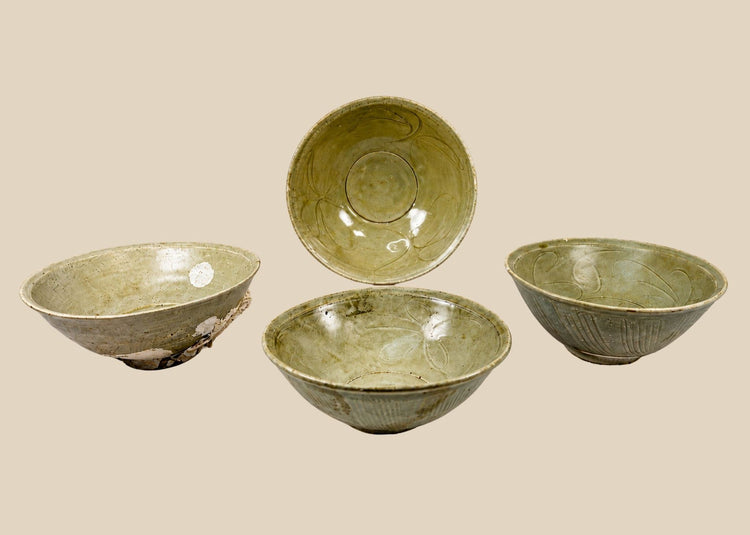
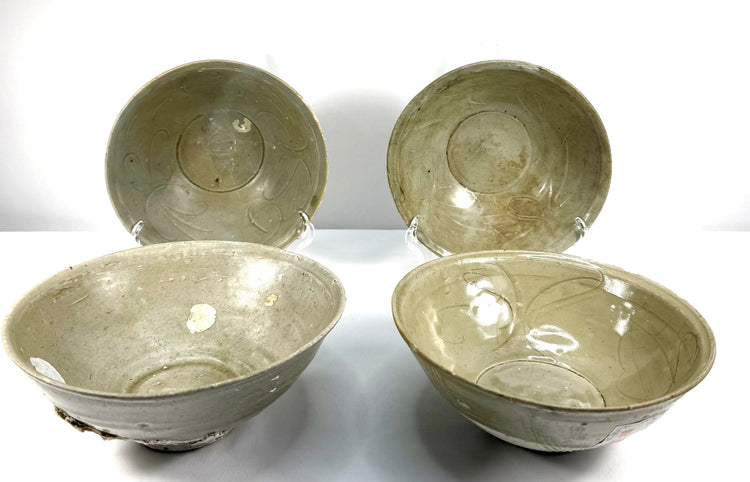
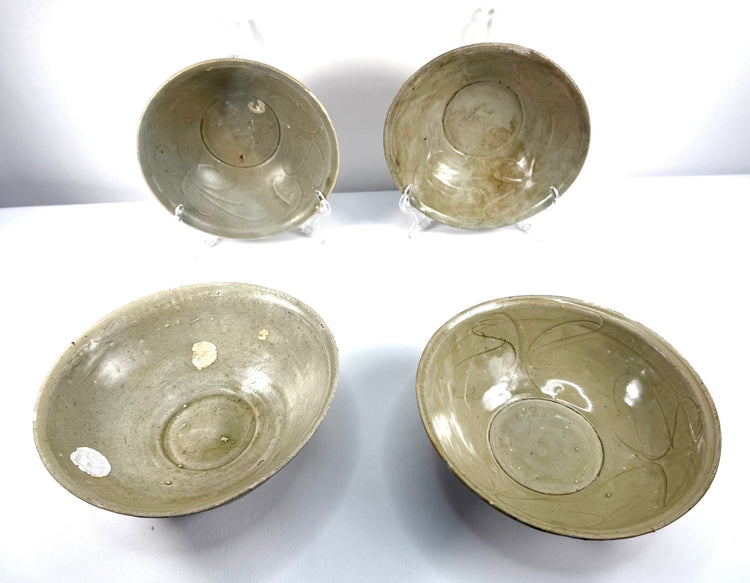
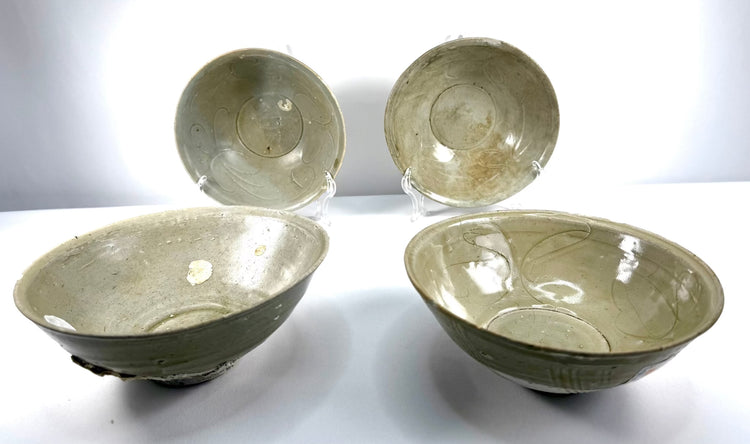
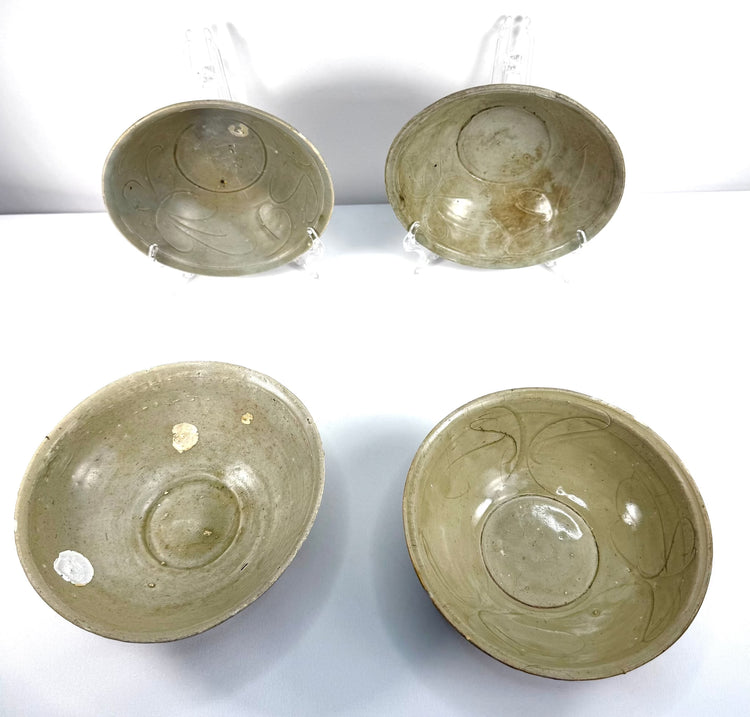
Quatre bols en céladon Song | Province du Fujian | Vers le XIIe siècle

Historique de provenance et de propriété

Anciennement dans la collection du Musée national des Philippines. La pièce a ensuite été proposée par Ahlers & Ogletree Auction Gallery, Atlanta, Géorgie, lors de sa vente aux enchères European, American & Asian Art and Antiquesdu 18 septembre 2023, en tant que lot 805. Après la vente aux enchères, elle est entrée dans une collection privée à Toronto, Ontario, Canada.

Prix habituel
$1,000.00
Prix soldé
$1,000.00
Prix habituel
Frais de port calculés à la caisse.

This is a one-of-a-kind historical object. Once sold, this exact piece will not be restocked.

Questions before acquiring? Additional photographs, condition details, documentation, shipping information or a private viewing are available upon request.
Set of four 12th century Song Dynasty celadon ware bowls with incised floral motifs and maritime wear
Video showcasing four Song dynasty celadon bowls from Fujian, China, circa the 12th century, highlighting their pale green glaze, incised floral decoration, and rounded forms.
360-degree video of a Song dynasty celadon bowl from Fujian, China, circa the 12th century, showing its pale green glaze, incised floral decoration, and rounded form.
Set of four ancient Chinese Song Dynasty celadon bowls dating to the 12th century CE, recovered from the Jepara Shipwreck off the coast of Java, Indonesia.
Four Song Dynasty Chinese ceramic bowls featuring pale green celadon glaze, incised floral decorations, and marine encrustations from centuries of underwater submersion.
Ancient Chinese celadon pottery collection consisting of four heavily potted Song Dynasty bowls with delicate green glazes and archaeological marine deposits.
Group of four 12th-century Song Dynasty celadon bowls from the Jepara Shipwreck, displaying traditional Chinese ceramic craftsmanship, incised patterns, and preserved barnacle accretions.
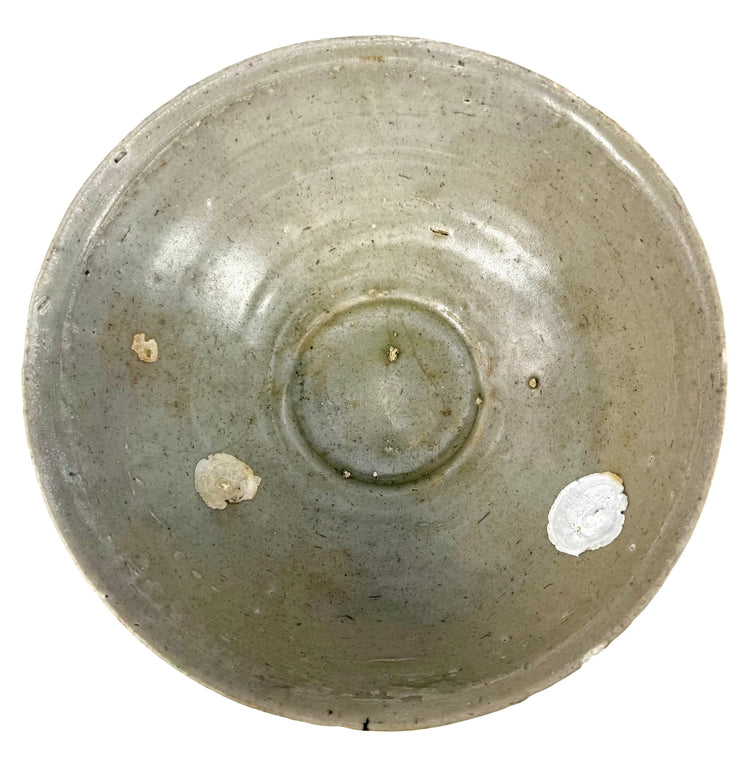
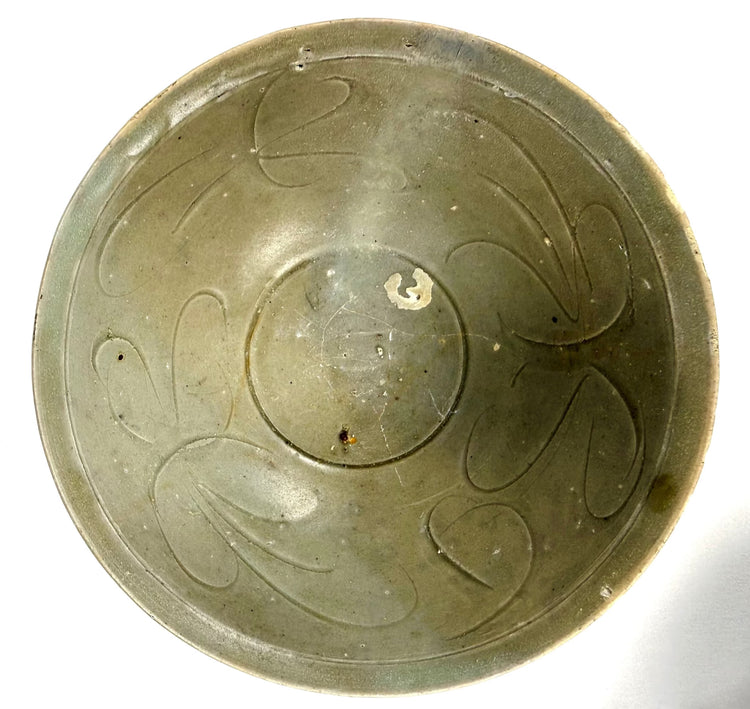
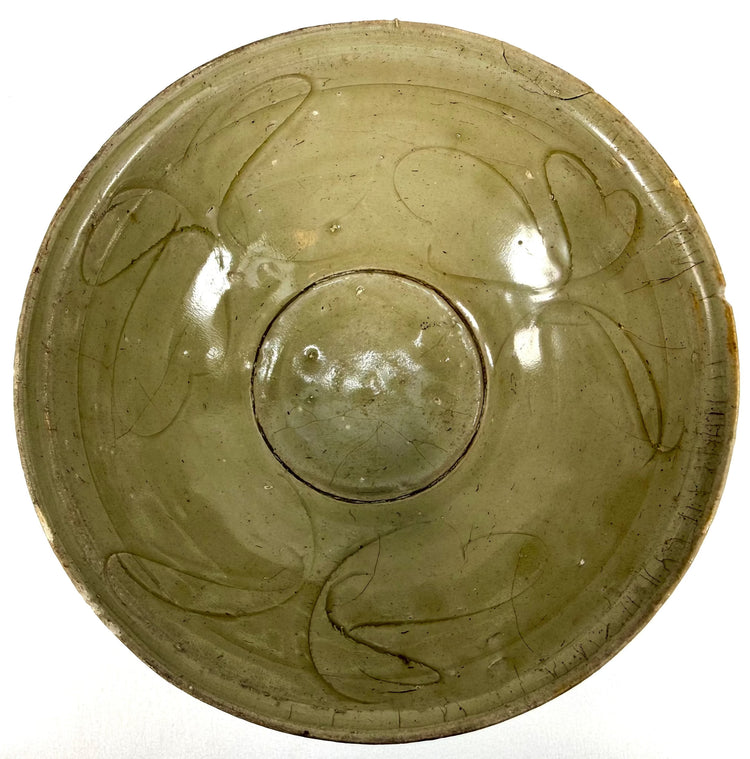
Ancient Chinese Song Dynasty celadon bowl featuring a softly translucent green glaze and finely incised floral motifs decorating its interior.
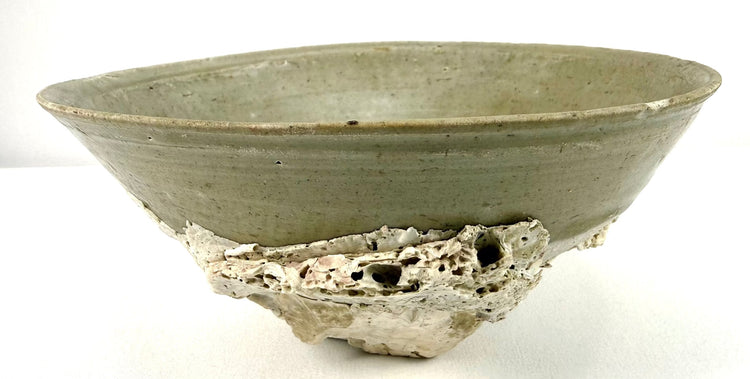
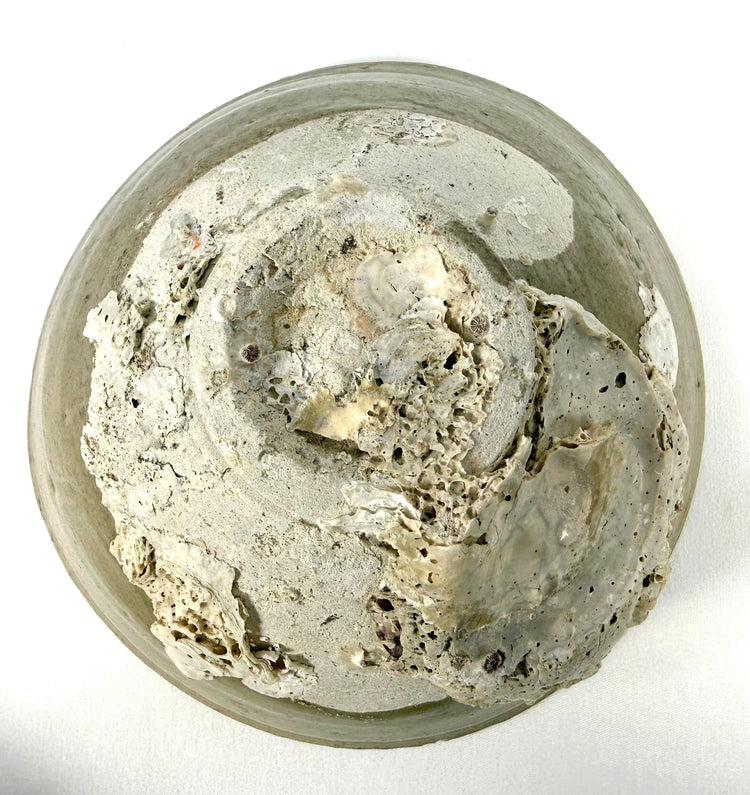
Twelfth-century Chinese celadon pottery bowl recovered from the Jepara Shipwreck, displaying marine encrustations and naturally weathered ceramic surfaces.
Song Dynasty ceramic bowl featuring delicate floral incising beneath a pale green celadon glaze, reflecting traditional Chinese pottery techniques.
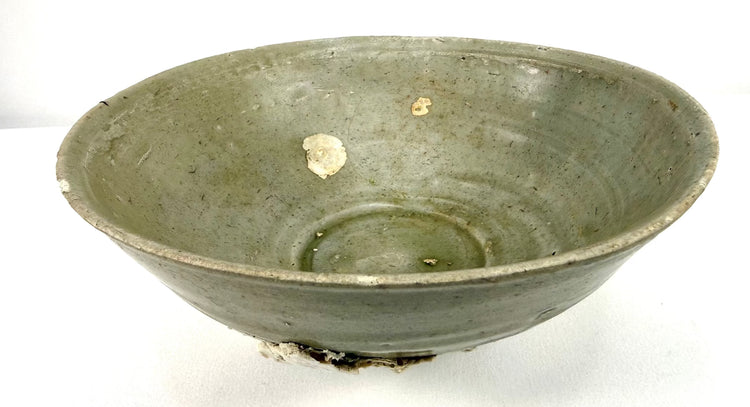
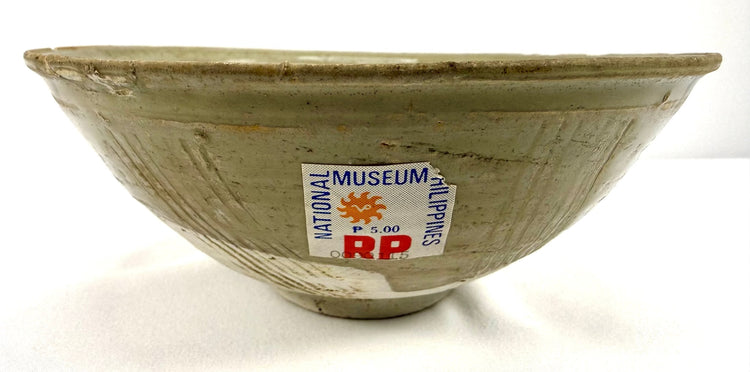
Ancient Chinese celadon-glazed bowl with a rounded body, gently flared rim, and decorative linear incisions along its exterior.
Archaeological Song Dynasty celadon bowl displaying preserved barnacle and mussel accretions from prolonged submersion in Southeast Asian waters.
Twelfth-century Chinese ceramic bowl featuring an unglazed foot ring, exposed natural clay body, and subtle variations in celadon glaze coloration.
Ancient Song Dynasty celadon ware bowl measuring approximately 6.75 inches in diameter, featuring a glazed interior and traditional incised floral decoration.
Chinese Song Dynasty shipwreck pottery bowl displaying marine mineral deposits, aged celadon glaze, and distinctive hand-finished ceramic construction.
Antique Chinese celadon bowl from the 12th century CE, featuring incised exterior lines, a softly rounded profile, and an unglazed base.
Song Dynasty celadon ceramic bowl recovered from the Jepara Shipwreck, preserving its original pale green glaze beneath areas of marine encrustation.
Ancient Chinese Song Dynasty celadon bowl associated with the National Museum of the Philippines collection, featuring traditional floral ornamentation and documented shipwreck provenance.
  • Set of four 12th century Song Dynasty celadon ware bowls with incised floral motifs and maritime wear
  • Video showcasing four Song dynasty celadon bowls from Fujian, China, circa the 12th century, highlighting their pale green glaze, incised floral decoration, and rounded forms.
  • 360-degree video of a Song dynasty celadon bowl from Fujian, China, circa the 12th century, showing its pale green glaze, incised floral decoration, and rounded form.
  • Set of four ancient Chinese Song Dynasty celadon bowls dating to the 12th century CE, recovered from the Jepara Shipwreck off the coast of Java, Indonesia.
  • Four Song Dynasty Chinese ceramic bowls featuring pale green celadon glaze, incised floral decorations, and marine encrustations from centuries of underwater submersion.
  • Ancient Chinese celadon pottery collection consisting of four heavily potted Song Dynasty bowls with delicate green glazes and archaeological marine deposits.
  • Group of four 12th-century Song Dynasty celadon bowls from the Jepara Shipwreck, displaying traditional Chinese ceramic craftsmanship, incised patterns, and preserved barnacle accretions.
  • Ancient Chinese Song Dynasty celadon bowl featuring a softly translucent green glaze and finely incised floral motifs decorating its interior.
  • Twelfth-century Chinese celadon pottery bowl recovered from the Jepara Shipwreck, displaying marine encrustations and naturally weathered ceramic surfaces.
  • Song Dynasty ceramic bowl featuring delicate floral incising beneath a pale green celadon glaze, reflecting traditional Chinese pottery techniques.
  • Ancient Chinese celadon-glazed bowl with a rounded body, gently flared rim, and decorative linear incisions along its exterior.
  • Archaeological Song Dynasty celadon bowl displaying preserved barnacle and mussel accretions from prolonged submersion in Southeast Asian waters.
  • Twelfth-century Chinese ceramic bowl featuring an unglazed foot ring, exposed natural clay body, and subtle variations in celadon glaze coloration.
  • Ancient Song Dynasty celadon ware bowl measuring approximately 6.75 inches in diameter, featuring a glazed interior and traditional incised floral decoration.
  • Chinese Song Dynasty shipwreck pottery bowl displaying marine mineral deposits, aged celadon glaze, and distinctive hand-finished ceramic construction.
  • Antique Chinese celadon bowl from the 12th century CE, featuring incised exterior lines, a softly rounded profile, and an unglazed base.
  • Song Dynasty celadon ceramic bowl recovered from the Jepara Shipwreck, preserving its original pale green glaze beneath areas of marine encrustation.
  • Ancient Chinese Song Dynasty celadon bowl associated with the National Museum of the Philippines collection, featuring traditional floral ornamentation and documented shipwreck provenance.
Set of four 12th century Song Dynasty celadon ware bowls with incised floral motifs and maritime wear
Video showcasing four Song dynasty celadon bowls from Fujian, China, circa the 12th century, highlighting their pale green glaze, incised floral decoration, and rounded forms.
360-degree video of a Song dynasty celadon bowl from Fujian, China, circa the 12th century, showing its pale green glaze, incised floral decoration, and rounded form.
Set of four ancient Chinese Song Dynasty celadon bowls dating to the 12th century CE, recovered from the Jepara Shipwreck off the coast of Java, Indonesia.
Four Song Dynasty Chinese ceramic bowls featuring pale green celadon glaze, incised floral decorations, and marine encrustations from centuries of underwater submersion.
Ancient Chinese celadon pottery collection consisting of four heavily potted Song Dynasty bowls with delicate green glazes and archaeological marine deposits.
Group of four 12th-century Song Dynasty celadon bowls from the Jepara Shipwreck, displaying traditional Chinese ceramic craftsmanship, incised patterns, and preserved barnacle accretions.
Ancient Chinese Song Dynasty celadon bowl featuring a softly translucent green glaze and finely incised floral motifs decorating its interior.
Twelfth-century Chinese celadon pottery bowl recovered from the Jepara Shipwreck, displaying marine encrustations and naturally weathered ceramic surfaces.
Song Dynasty ceramic bowl featuring delicate floral incising beneath a pale green celadon glaze, reflecting traditional Chinese pottery techniques.
Ancient Chinese celadon-glazed bowl with a rounded body, gently flared rim, and decorative linear incisions along its exterior.
Archaeological Song Dynasty celadon bowl displaying preserved barnacle and mussel accretions from prolonged submersion in Southeast Asian waters.
Twelfth-century Chinese ceramic bowl featuring an unglazed foot ring, exposed natural clay body, and subtle variations in celadon glaze coloration.
Ancient Song Dynasty celadon ware bowl measuring approximately 6.75 inches in diameter, featuring a glazed interior and traditional incised floral decoration.
Chinese Song Dynasty shipwreck pottery bowl displaying marine mineral deposits, aged celadon glaze, and distinctive hand-finished ceramic construction.
Antique Chinese celadon bowl from the 12th century CE, featuring incised exterior lines, a softly rounded profile, and an unglazed base.
Song Dynasty celadon ceramic bowl recovered from the Jepara Shipwreck, preserving its original pale green glaze beneath areas of marine encrustation.
Ancient Chinese Song Dynasty celadon bowl associated with the National Museum of the Philippines collection, featuring traditional floral ornamentation and documented shipwreck provenance.
Authenticity and secure checkout guarantee

Quatre bols en céladon Song | Province du Fujian | Vers le XIIe siècle

Description

Contexte historique et origine

Région : Chine (récupéré de l'épave de Jepara, côte centrale de Java)
Matériau : Terre cuite glaçurée céladon avec décor incisé
Période : Dynastie Song, XIIe siècle de notre ère

Description

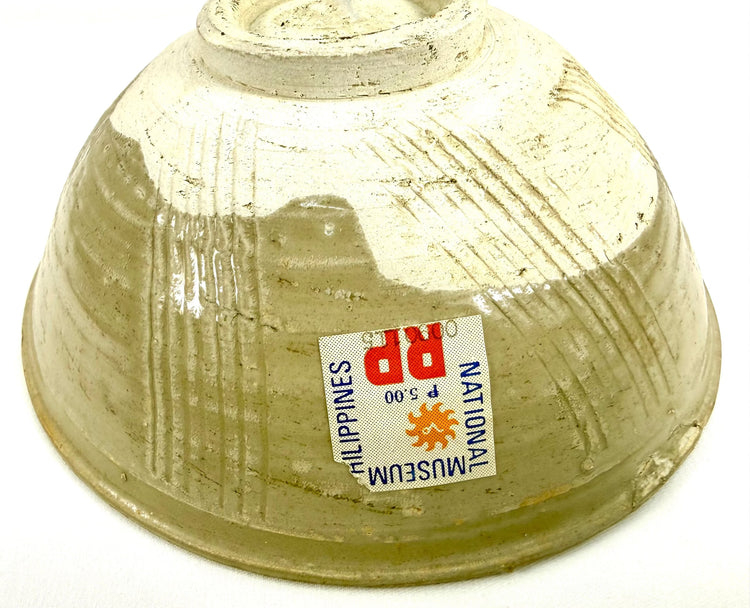
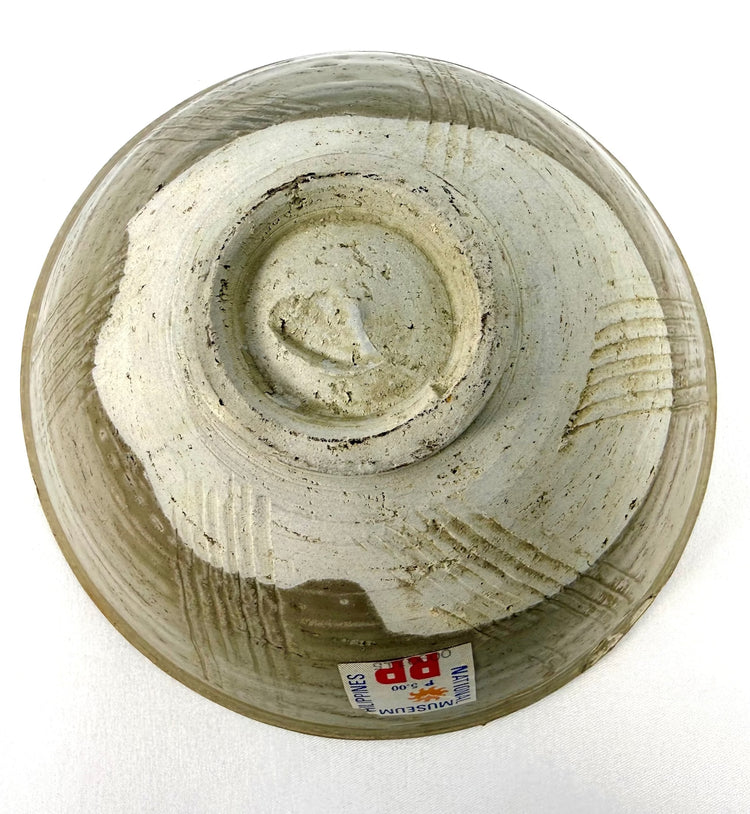
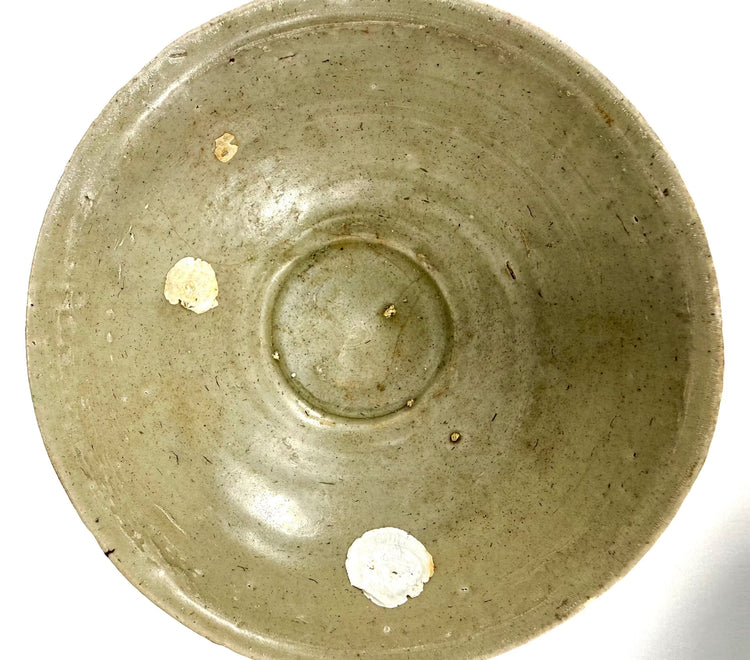
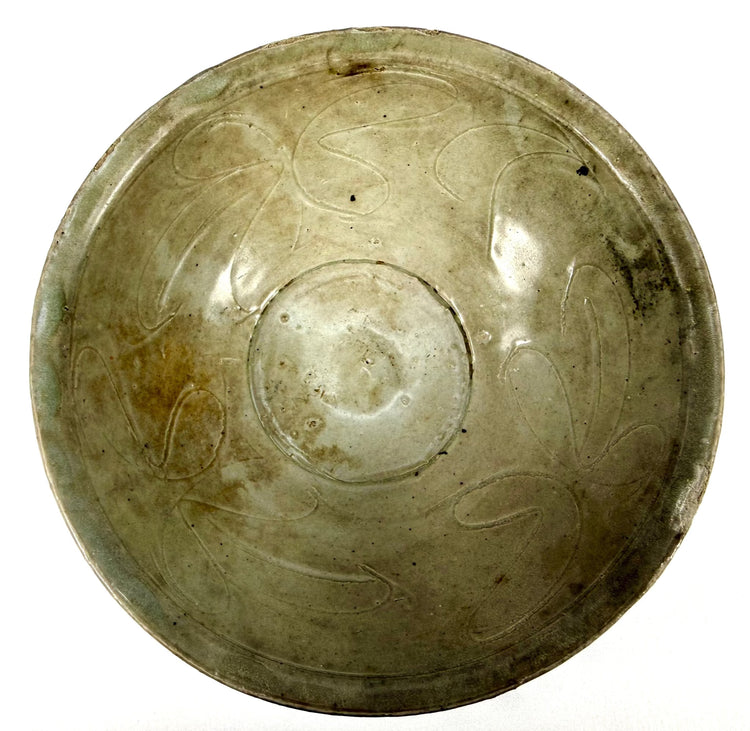
Cet ensemble de quatre bols en céladon Song reflète l'élégance et le savoir-faire de la céramique de l'époque Song. Chaque bol est lourdement tourné et fini avec une glaçure céladon transparente, produisant une teinte verte douce avec de subtiles variations tonales. Les intérieurs sont décorés de motifs floraux incisés, tandis que les extérieurs présentent des incisions linéaires, laissant les bases non émaillées pour révéler le corps en argile naturelle.

Caractéristiques

- Glaçure céladon transparente avec de subtiles variations tonales

- Décoration florale incisée à l'intérieur

- Incisions extérieures linéaires avec des anneaux de pied non glaçurés

- Construction lourdement tournée pour la durabilité et l'utilisation quotidienne

- Accrétions de bernacles et de moules après des siècles de submersion

Signification culturelle

Les céladons de la dynastie Song comptent parmi les exemples les plus raffinés des traditions céramiques chinoises. Ils étaient très prisés tant au niveau national qu'à l'étranger, de grandes quantités étant exportées dans toute l'Asie. L'épave de Jepara, découverte au large des côtes de Java, contenait plus de 10 000 pièces de céramique, offrant un aperçu inestimable des routes commerciales maritimes reliant la Chine à l'Asie du Sud-Est. Cet ensemble de bols incarne les échanges interculturels et les réseaux commerciaux qui ont défini cette période, tandis que leur décoration reflète l'équilibre entre fonctionnalité et beauté discrète de la dynastie Song.

État

Les bols sont bien conservés, avec la glaçure et la décoration intactes. Les accrétions marines – y compris les bernacles et les moules – attestent de leur longue submersion et renforcent leur provenance maritime. Un bol porte une étiquette du Musée national des Philippines, confirmant sa récupération documentée et renforçant sa provenance.

Dimensions (approximatives)

Diamètre : 17,15 cm
Hauteur : 6,99 cm

Âge (approximatif)

825 à 925 ans

Provenance 

Anciennement dans la collection du Musée national des Philippines. La pièce a ensuite été proposée par Ahlers & Ogletree Auction Gallery, Atlanta, Géorgie, lors de sa vente aux enchères Art et Antiquités européens, américains et asiatiques du 18 septembre 2023, comme lot 805. Suite à la vente aux enchères, elle a intégré une collection privée à Toronto, Ontario, Canada.

En savoir plus

Étudiez l'héritage des céramiques céladon de la dynastie Song

Parcourez notre collection d'artefacts chinois anciens

Description

Contexte historique et origine

Région : Chine (récupéré de l'épave de Jepara, côte centrale de Java)
Matériau : Terre cuite glaçurée céladon avec décor incisé
Période : Dynastie Song, XIIe siècle de notre ère

Description

Cet ensemble de quatre bols en céladon Song reflète l'élégance et le savoir-faire de la céramique de l'époque Song. Chaque bol est lourdement tourné et fini avec une glaçure céladon transparente, produisant une teinte verte douce avec de subtiles variations tonales. Les intérieurs sont décorés de motifs floraux incisés, tandis que les extérieurs présentent des incisions linéaires, laissant les bases non émaillées pour révéler le corps en argile naturelle.

Caractéristiques

- Glaçure céladon transparente avec de subtiles variations tonales

- Décoration florale incisée à l'intérieur

- Incisions extérieures linéaires avec des anneaux de pied non glaçurés

- Construction lourdement tournée pour la durabilité et l'utilisation quotidienne

- Accrétions de bernacles et de moules après des siècles de submersion

Signification culturelle

Les céladons de la dynastie Song comptent parmi les exemples les plus raffinés des traditions céramiques chinoises. Ils étaient très prisés tant au niveau national qu'à l'étranger, de grandes quantités étant exportées dans toute l'Asie. L'épave de Jepara, découverte au large des côtes de Java, contenait plus de 10 000 pièces de céramique, offrant un aperçu inestimable des routes commerciales maritimes reliant la Chine à l'Asie du Sud-Est. Cet ensemble de bols incarne les échanges interculturels et les réseaux commerciaux qui ont défini cette période, tandis que leur décoration reflète l'équilibre entre fonctionnalité et beauté discrète de la dynastie Song.

État

Les bols sont bien conservés, avec la glaçure et la décoration intactes. Les accrétions marines – y compris les bernacles et les moules – attestent de leur longue submersion et renforcent leur provenance maritime. Un bol porte une étiquette du Musée national des Philippines, confirmant sa récupération documentée et renforçant sa provenance.

Dimensions (approximatives)

Diamètre : 17,15 cm
Hauteur : 6,99 cm

Âge (approximatif)

825 à 925 ans

Provenance 

Anciennement dans la collection du Musée national des Philippines. La pièce a ensuite été proposée par Ahlers & Ogletree Auction Gallery, Atlanta, Géorgie, lors de sa vente aux enchères Art et Antiquités européens, américains et asiatiques du 18 septembre 2023, comme lot 805. Suite à la vente aux enchères, elle a intégré une collection privée à Toronto, Ontario, Canada.

En savoir plus

Étudiez l'héritage des céramiques céladon de la dynastie Song

Parcourez notre collection d'artefacts chinois anciens

Vous aimerez peut-être aussi