

Fragment de figurine en terre cuite antique | Ouest du Mexique (Nayarit/Jalisco) ou péninsule Ibérique | Vers 200 av. J.-C. – 300 apr. J.-C.
- Prix habituel
- $500.00
- Prix soldé
- $500.00
- Prix habituel
Impossible de charger la disponibilité du service de retrait


Fragment de figurine en terre cuite antique | Ouest du Mexique (Nayarit/Jalisco) ou péninsule Ibérique | Vers 200 av. J.-C. – 300 apr. J.-C.
Description
Plus
Moins
Contexte historique et origine
Région : Probablement l'Ouest du Mexique (Nayarit ou Jalisco) ou la péninsule ibérique
Matériau : Terre cuite (argile cuite)
Période : Vers 200 avant notre ère – 300 de notre ère (si mésoaméricain) ou vers le 1er siècle avant notre ère – 2e siècle de notre ère (si provincial romain/ibérique)
Description
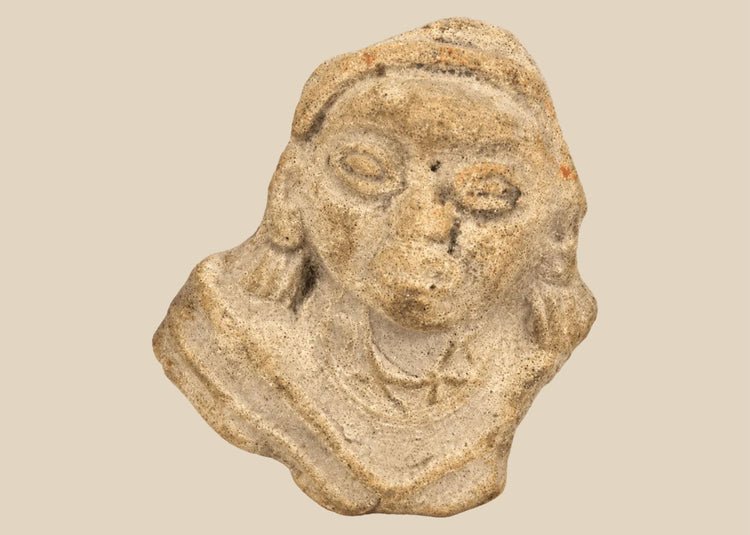
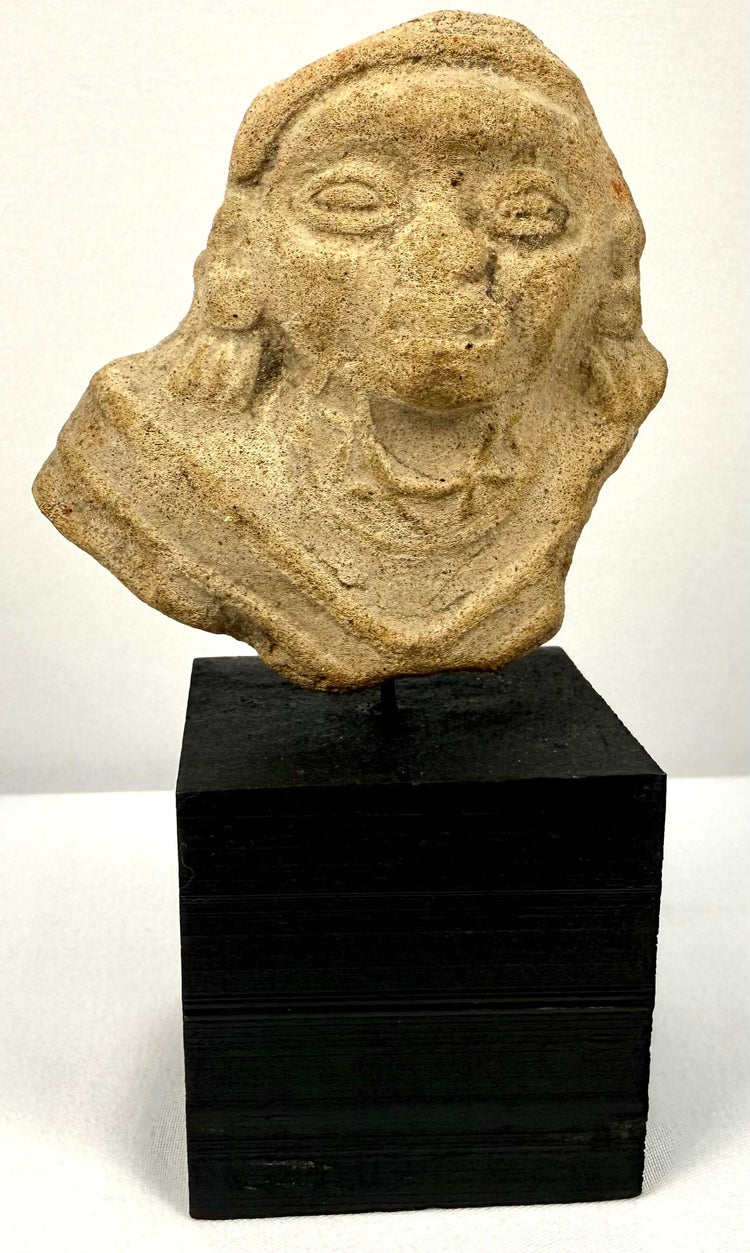
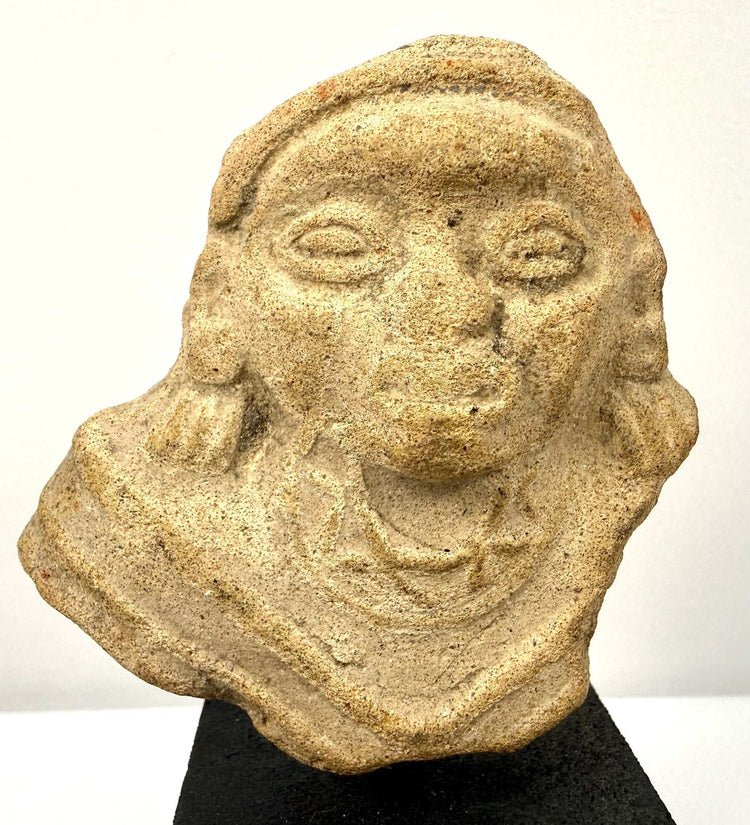
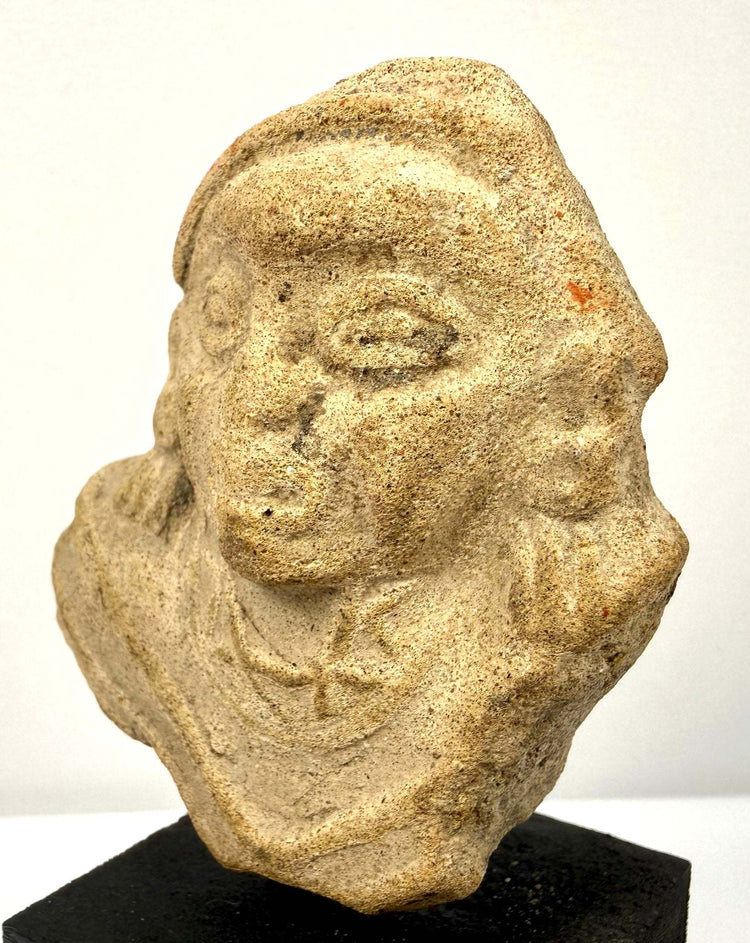
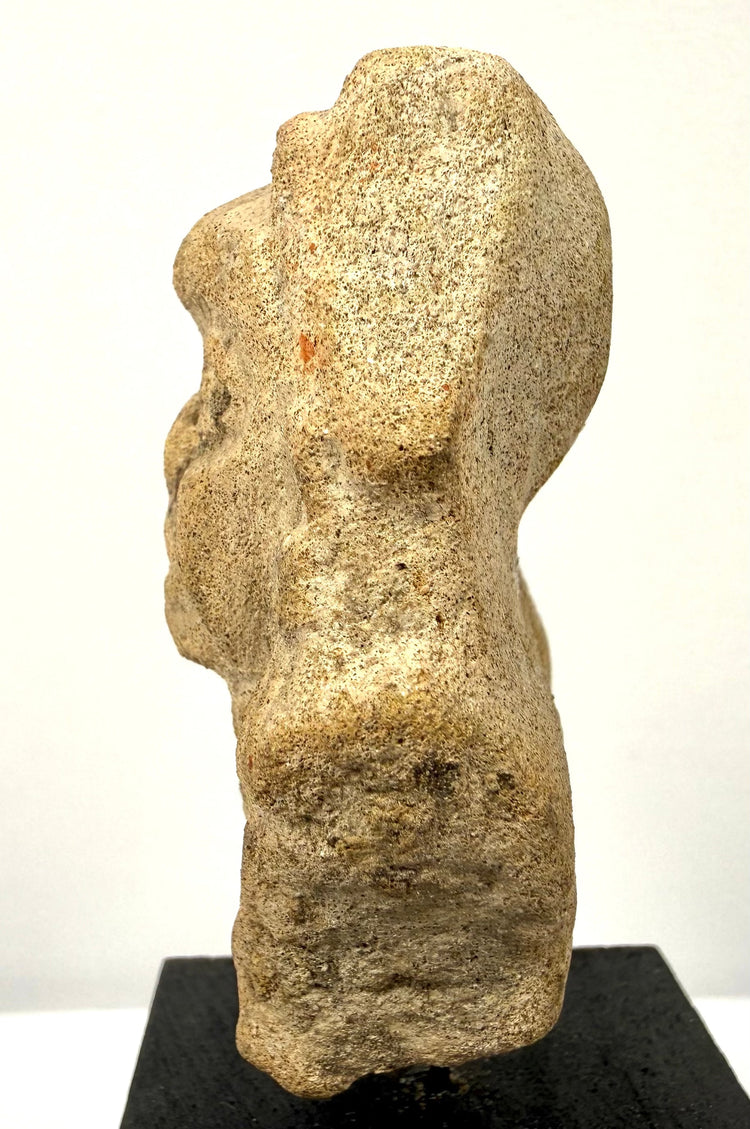
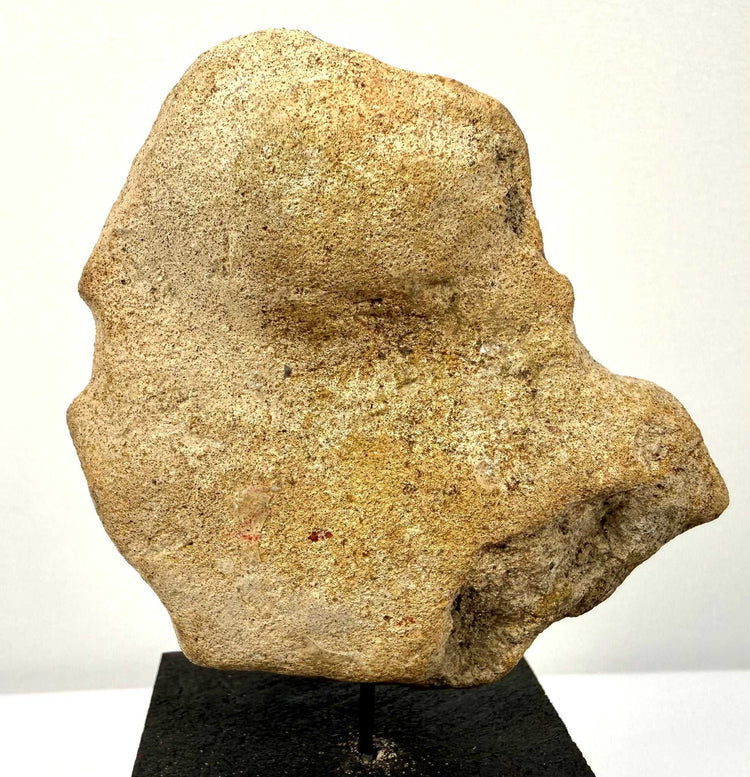
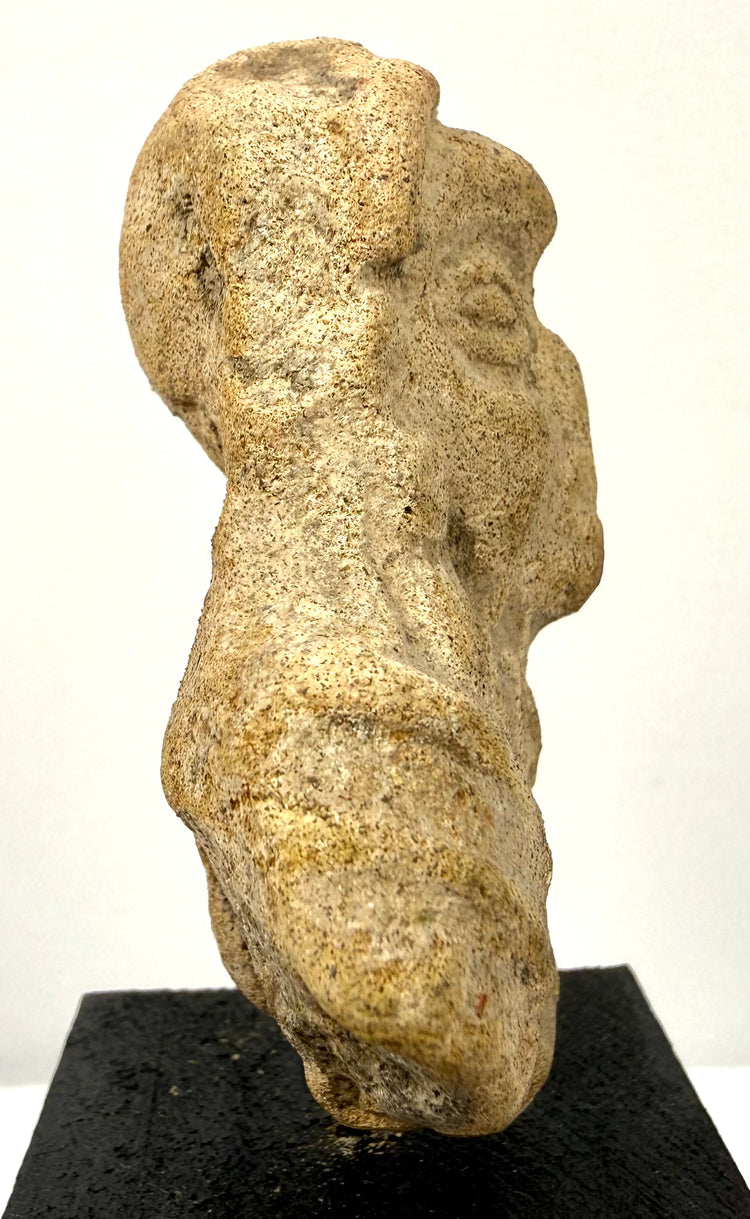
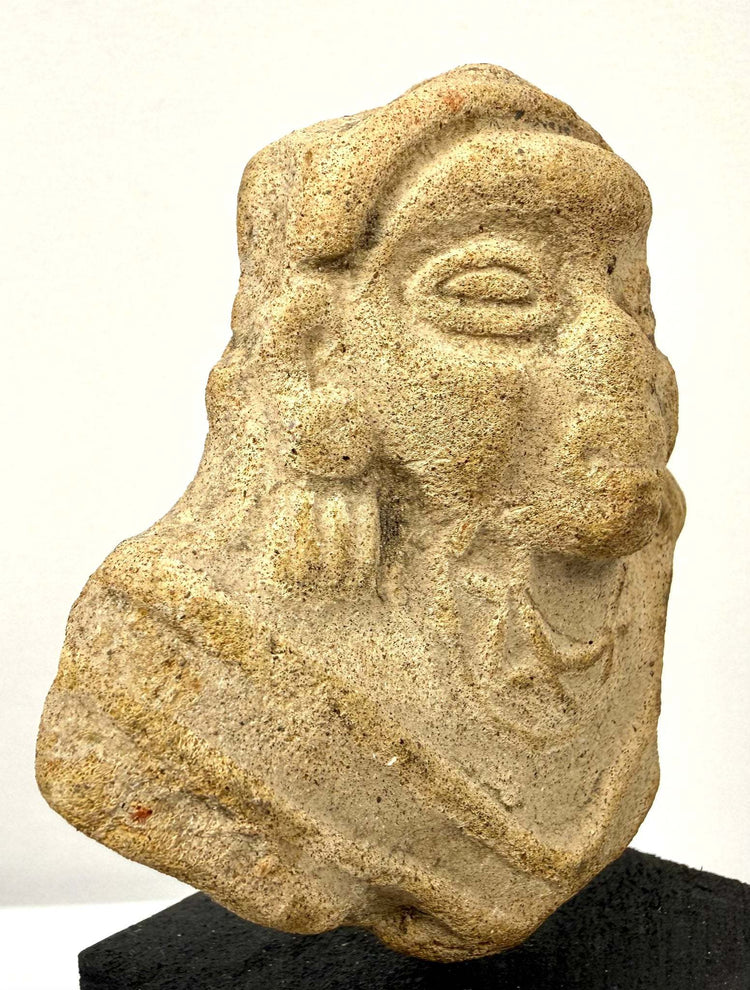
Ce fragment sculptural représente la partie supérieure d'une figure anthropomorphe stylisée, modelée en terre cuite. Le visage large présente des yeux en amande, un nez proéminent et des lèvres entrouvertes – peut-être en train de parler ou de chanter. Des traces d'écarteurs d'oreilles ou de coiffe subsistent sur les côtés de la tête, avec de faibles détails incisés suggérant un vêtement drapé ou un motif décoratif sur la poitrine. Le revers est brut et non travaillé, indiquant qu'il était à l'origine fixé à un vase plus grand, un élément architectural ou une figure complète destinée à une tombe ou à une exposition cérémonielle. Il est maintenant présenté sur un support de style musée moderne.
Caractéristiques
- Visage humain stylisé avec des traits exagérés
- Faibles traces de pigmentation ou d'incrustation minérale
- Terre cuite modelée à la main avec des détails incisés pour les plis et les ornements
- Revers non travaillé, indiquant une fixation à un objet plus grand
- Monté sur une base en bois sur mesure avec support central à broche
Signification culturelle
Les traditions de l'Ouest du Mexique et ibériques/romaines employaient des figures en terre cuite dans des contextes funéraires et rituels. Elles représentaient souvent des ancêtres, des divinités ou des figures symboliques et étaient placées dans des tombes ou des sanctuaires comme offrandes. Les traits abstraits de cette pièce suggèrent des associations avec des masques cérémoniels, des performances rituelles ou une oration symbolique. Des fragments comme celui-ci fournissent un aperçu précieux des traditions artistiques qui équilibraient l'abstraction avec la narration culturelle.
Condition
Bon état archéologique. Pertes aux parties inférieures et au dos. Altération de surface compatible avec un enfouissement à long terme. Stable, sans écaillage actif. Solidement monté.
Dimensions (approximatives)
Hauteur (avec la base) : 12,7 cm
Largeur : 5,08 cm
Profondeur : 5,08 cm
Âge (approximatif)
1 725-2 225 ans
Provenance
Provenant d'une collection privée à Ottawa, Ontario. Le propriétaire était un collectionneur d'art et d'artefacts précolombiens qui a beaucoup voyagé en Amérique du Sud. Après son décès, la collection a été liquidée par la famille.
En savoir plus
Explorez les traditions culturelles de l'art de l'Ouest mexicain à travers le Musée du textile du Canada
Parcourez notre collection d'artefacts précolombiens anciens
Description
Contexte historique et origine
Région : Probablement l'Ouest du Mexique (Nayarit ou Jalisco) ou la péninsule ibérique
Matériau : Terre cuite (argile cuite)
Période : Vers 200 avant notre ère – 300 de notre ère (si mésoaméricain) ou vers le 1er siècle avant notre ère – 2e siècle de notre ère (si provincial romain/ibérique)
Description
Ce fragment sculptural représente la partie supérieure d'une figure anthropomorphe stylisée, modelée en terre cuite. Le visage large présente des yeux en amande, un nez proéminent et des lèvres entrouvertes – peut-être en train de parler ou de chanter. Des traces d'écarteurs d'oreilles ou de coiffe subsistent sur les côtés de la tête, avec de faibles détails incisés suggérant un vêtement drapé ou un motif décoratif sur la poitrine. Le revers est brut et non travaillé, indiquant qu'il était à l'origine fixé à un vase plus grand, un élément architectural ou une figure complète destinée à une tombe ou à une exposition cérémonielle. Il est maintenant présenté sur un support de style musée moderne.
Caractéristiques
- Visage humain stylisé avec des traits exagérés
- Faibles traces de pigmentation ou d'incrustation minérale
- Terre cuite modelée à la main avec des détails incisés pour les plis et les ornements
- Revers non travaillé, indiquant une fixation à un objet plus grand
- Monté sur une base en bois sur mesure avec support central à broche
Signification culturelle
Les traditions de l'Ouest du Mexique et ibériques/romaines employaient des figures en terre cuite dans des contextes funéraires et rituels. Elles représentaient souvent des ancêtres, des divinités ou des figures symboliques et étaient placées dans des tombes ou des sanctuaires comme offrandes. Les traits abstraits de cette pièce suggèrent des associations avec des masques cérémoniels, des performances rituelles ou une oration symbolique. Des fragments comme celui-ci fournissent un aperçu précieux des traditions artistiques qui équilibraient l'abstraction avec la narration culturelle.
Condition
Bon état archéologique. Pertes aux parties inférieures et au dos. Altération de surface compatible avec un enfouissement à long terme. Stable, sans écaillage actif. Solidement monté.
Dimensions (approximatives)
Hauteur (avec la base) : 12,7 cm
Largeur : 5,08 cm
Profondeur : 5,08 cm
Âge (approximatif)
1 725-2 225 ans
Provenance
Provenant d'une collection privée à Ottawa, Ontario. Le propriétaire était un collectionneur d'art et d'artefacts précolombiens qui a beaucoup voyagé en Amérique du Sud. Après son décès, la collection a été liquidée par la famille.
En savoir plus
Explorez les traditions culturelles de l'art de l'Ouest mexicain à travers le Musée du textile du Canada
Parcourez notre collection d'artefacts précolombiens anciens
Vous aimerez peut-être aussi
