

Bague géométrique à intaille | Bronze romain antique | Vers le IIe-IIIe siècle de notre ère
- Prix habituel
- $175.00
- Prix soldé
- $175.00
- Prix habituel
Impossible de charger la disponibilité du service de retrait


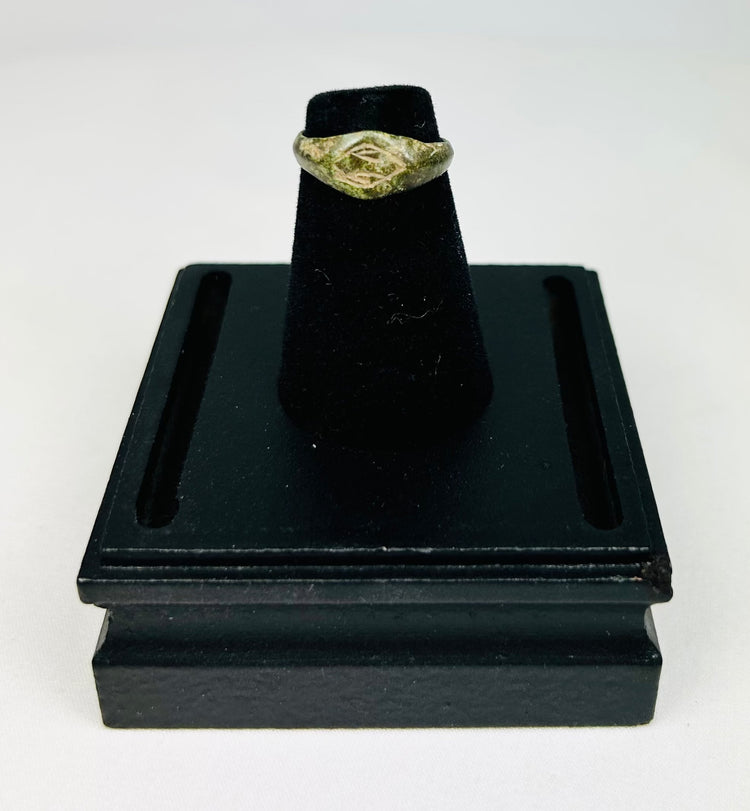
Bague géométrique à intaille | Bronze romain antique | Vers le IIe-IIIe siècle de notre ère
Description
Plus
Moins
Contexte historique et origine
Région : Empire romain
Matériau : Bronze
Période : Période romaine impériale, vers 100–300 de notre ère
Description
Cette bague sigillaire romaine antique en bronze finement conservée présente un chaton ovale classique gravé d'un motif intaille géométrique, formant un losange. De telles gravures symbolisaient souvent l'identité personnelle, l'autorité ou l'affiliation familiale. La bague est coulée à la main en bronze, avec un anneau fin et effilé qui équilibre fonction et élégance. Sa surface présente une riche patine verte et une minéralisation d'enfouissement, attestant de siècles d'ancienneté et de préservation.
Caractéristiques
- Construction authentique en bronze antique avec patine naturelle
- Chaton ovale gravé d'un motif intaille géométrique
- Anneau fin et effilé typique de l'artisanat romain
- Minéralisation d'enfouissement et usure de surface cohérentes avec l'antiquité
Signification culturelle
Les bagues romaines étaient plus que décoratives : elles servaient de sceaux, pressées dans la cire ou l'argile pour valider des documents et des transactions. Au-delà de leur utilité légale, elles servaient de marqueurs sociaux, signifiant la profession, le service militaire ou la lignée familiale. Cet exemple offre un lien tangible avec la vie bureaucratique, légale et personnelle romaine.
Condition
Structurellement saine, sans restauration moderne. La surface présente une usure et une patine aux teintes verdâtres-marron dues à un enfouissement prolongé. La gravure intaille reste visible bien qu'adoucie par le temps.
Dimensions (approximatives)
Taille de bague : US 5.25
Âge (approximatif)
1 700–1 900 ans
En savoir plus
Découvrez l'histoire et l'artisanat des Bagues Romaines Antiques
Explorez notre Collection de Bagues et Bijoux Antiques
Description
Contexte historique et origine
Région : Empire romain
Matériau : Bronze
Période : Période romaine impériale, vers 100–300 de notre ère
Description
Cette bague sigillaire romaine antique en bronze finement conservée présente un chaton ovale classique gravé d'un motif intaille géométrique, formant un losange. De telles gravures symbolisaient souvent l'identité personnelle, l'autorité ou l'affiliation familiale. La bague est coulée à la main en bronze, avec un anneau fin et effilé qui équilibre fonction et élégance. Sa surface présente une riche patine verte et une minéralisation d'enfouissement, attestant de siècles d'ancienneté et de préservation.
Caractéristiques
- Construction authentique en bronze antique avec patine naturelle
- Chaton ovale gravé d'un motif intaille géométrique
- Anneau fin et effilé typique de l'artisanat romain
- Minéralisation d'enfouissement et usure de surface cohérentes avec l'antiquité
Signification culturelle
Les bagues romaines étaient plus que décoratives : elles servaient de sceaux, pressées dans la cire ou l'argile pour valider des documents et des transactions. Au-delà de leur utilité légale, elles servaient de marqueurs sociaux, signifiant la profession, le service militaire ou la lignée familiale. Cet exemple offre un lien tangible avec la vie bureaucratique, légale et personnelle romaine.
Condition
Structurellement saine, sans restauration moderne. La surface présente une usure et une patine aux teintes verdâtres-marron dues à un enfouissement prolongé. La gravure intaille reste visible bien qu'adoucie par le temps.
Dimensions (approximatives)
Taille de bague : US 5.25
Âge (approximatif)
1 700–1 900 ans
En savoir plus
Découvrez l'histoire et l'artisanat des Bagues Romaines Antiques
Explorez notre Collection de Bagues et Bijoux Antiques
Vous aimerez peut-être aussi
