


Large Gilt Painted Stone Kneeling Buddha Figure | Southeast Asian Buddhist Devotional Sculpture | Circa 19th Century
- Prix habituel
- $600.00
- Prix soldé
- $600.00
- Prix habituel
Impossible de charger la disponibilité du service de retrait


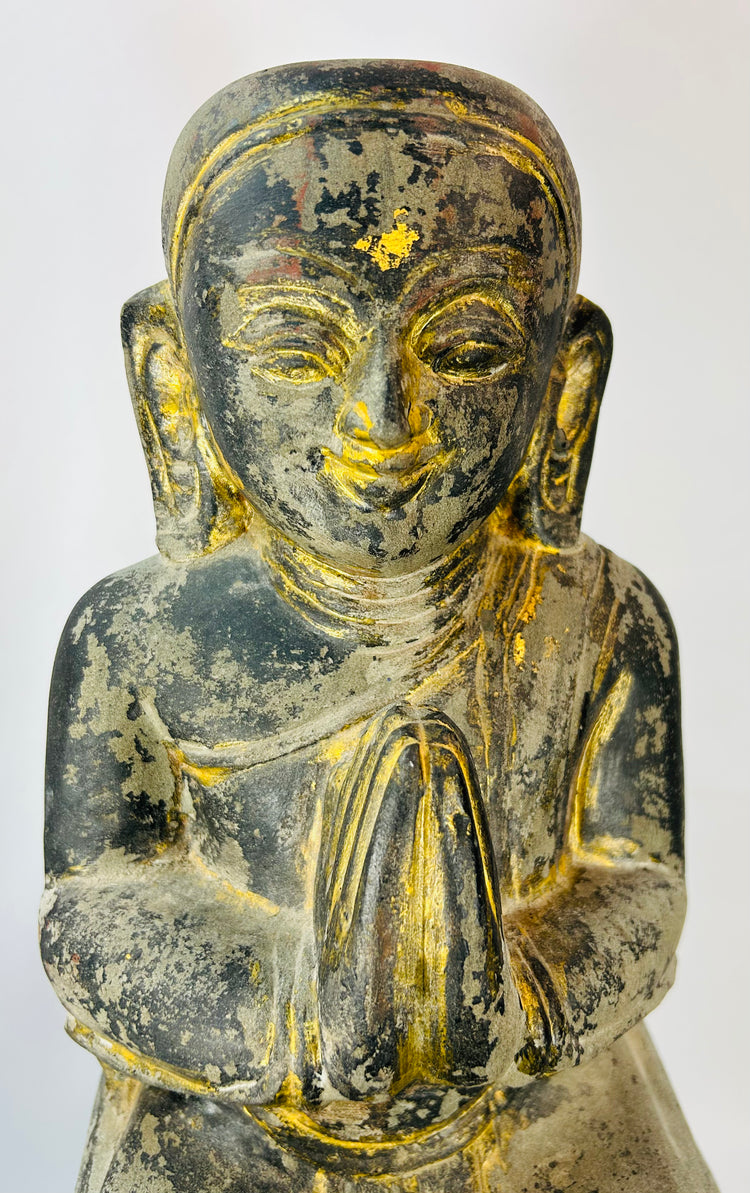
Large Gilt Painted Stone Kneeling Buddha Figure | Southeast Asian Buddhist Devotional Sculpture | Circa 19th Century
Description
Plus
Moins
Historical Context & Origin
Region: Myanmar (Burma)
Material: Carved wood with parcel gilding and painted surface
Period: Mandalay Period, circa 19th century
Description
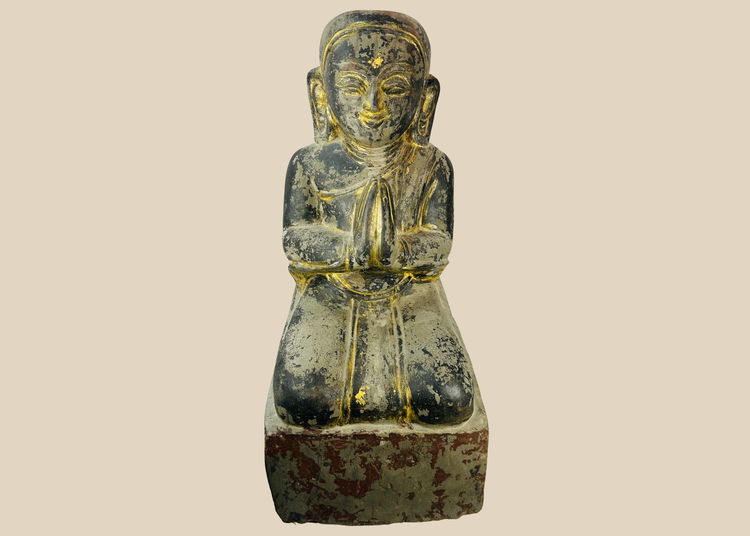
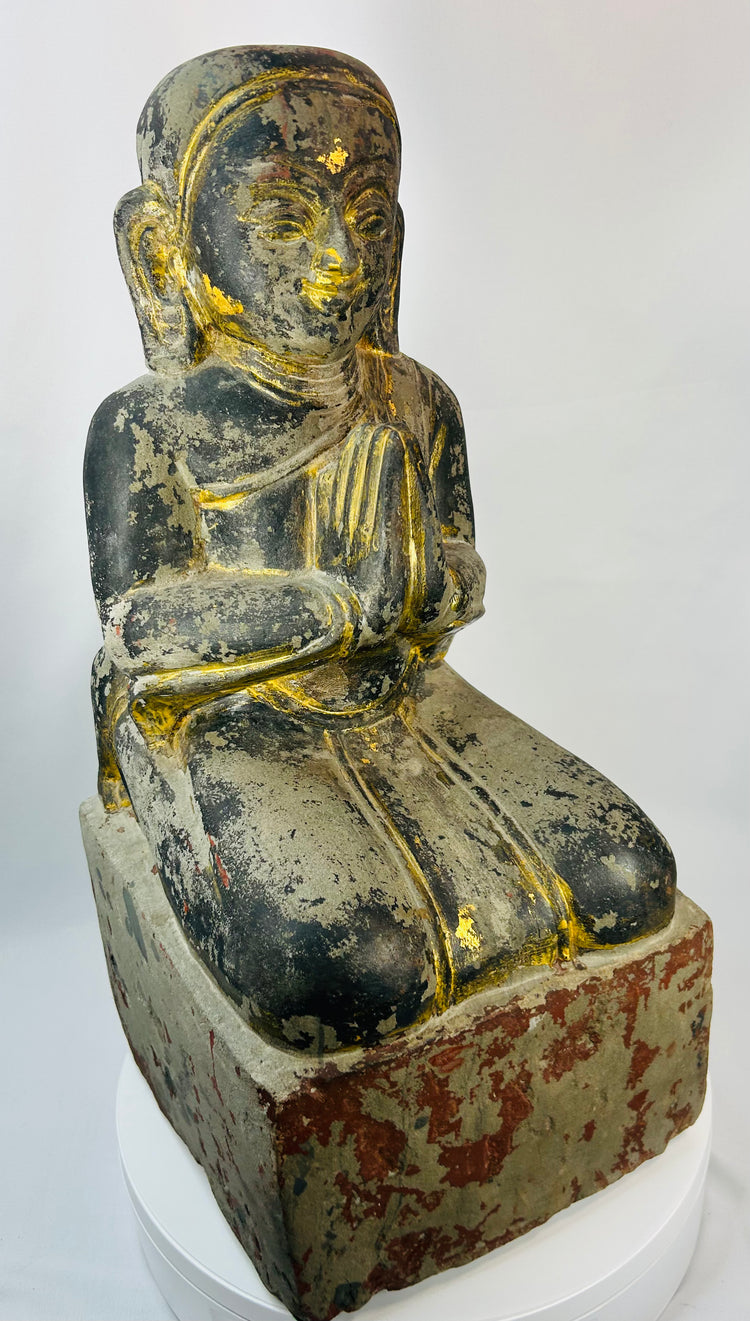
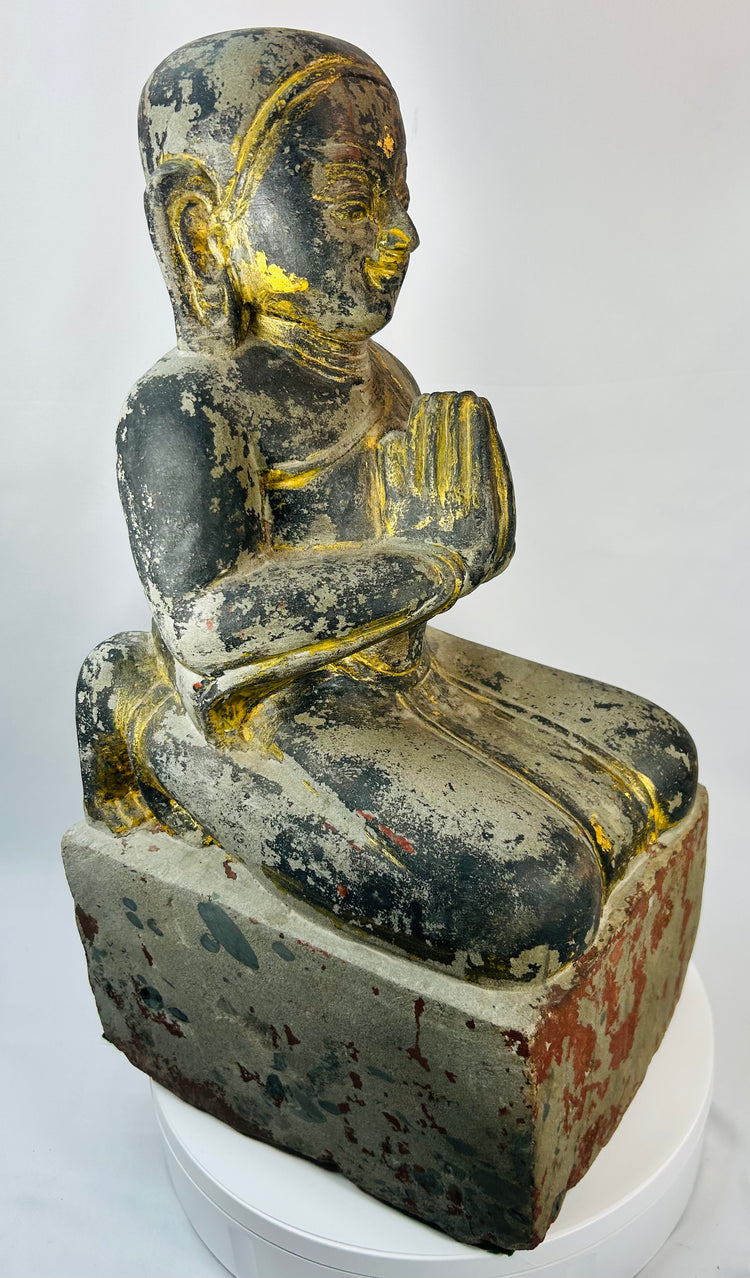
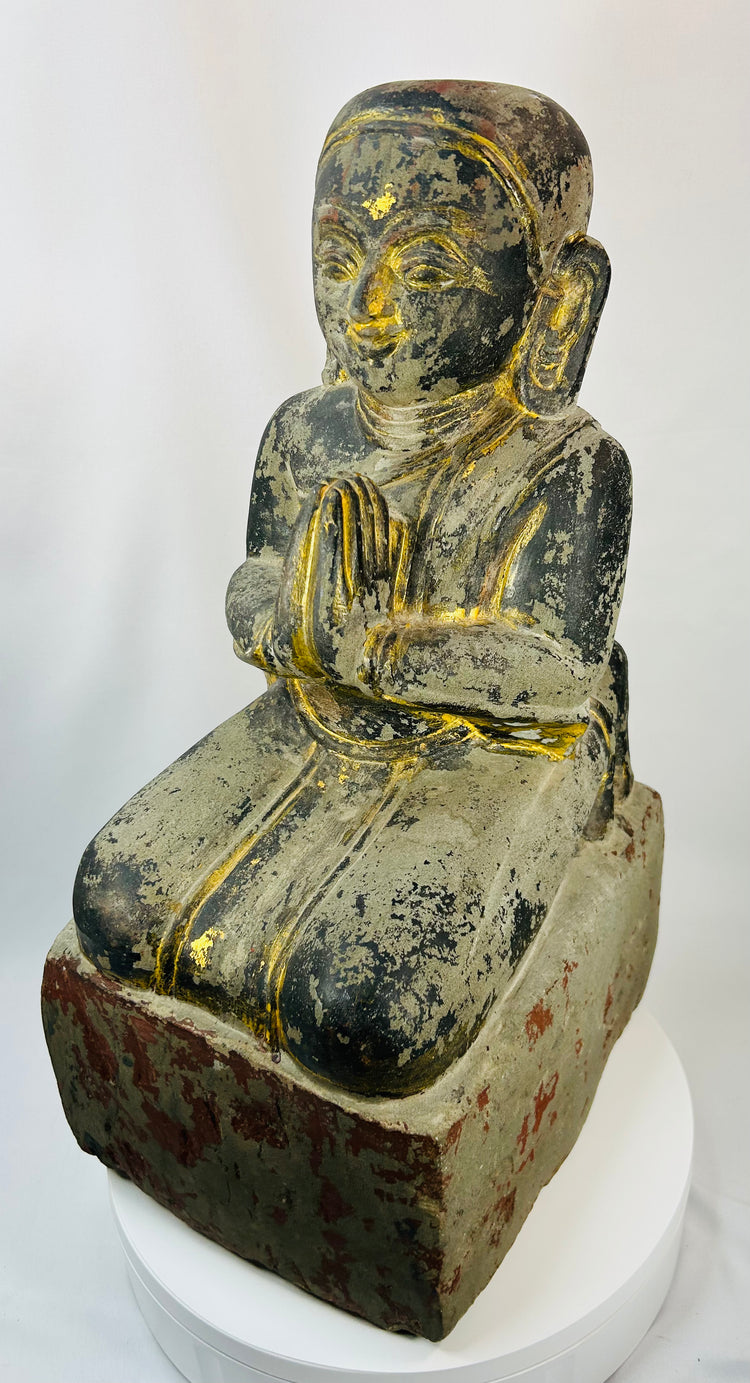
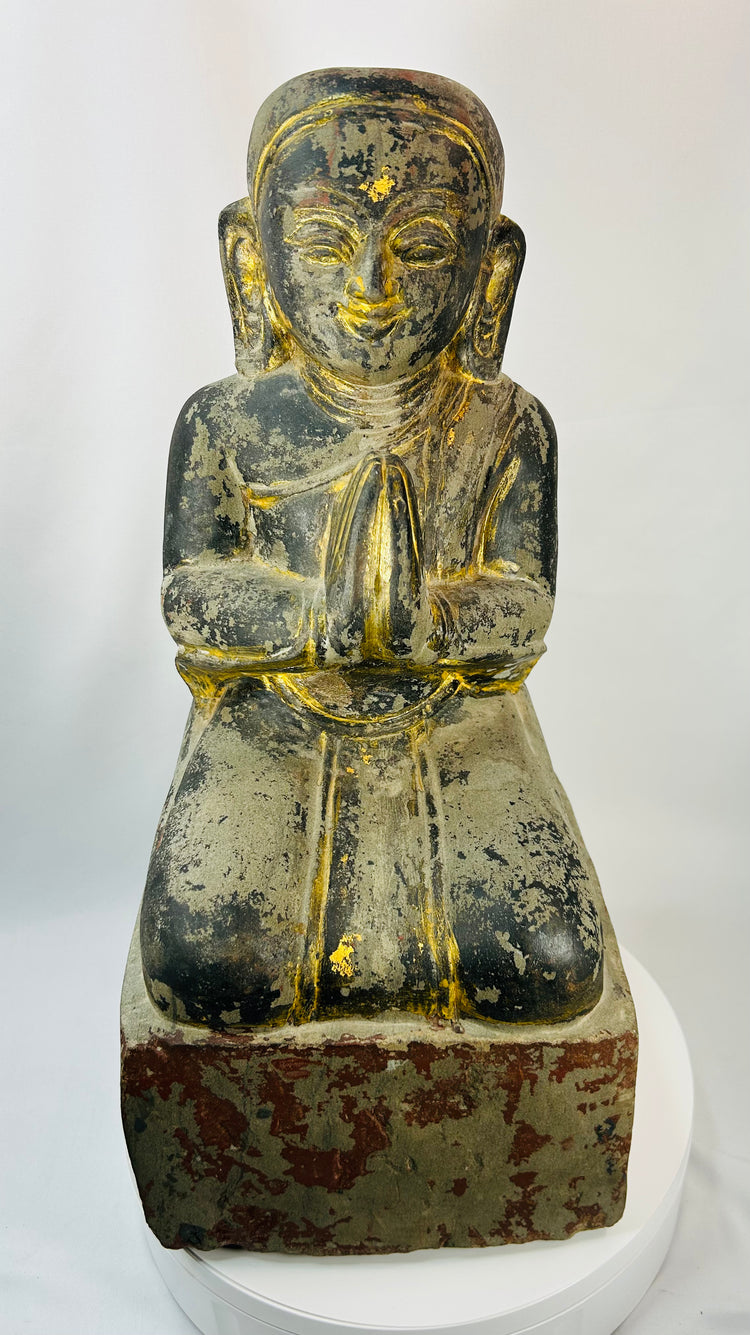
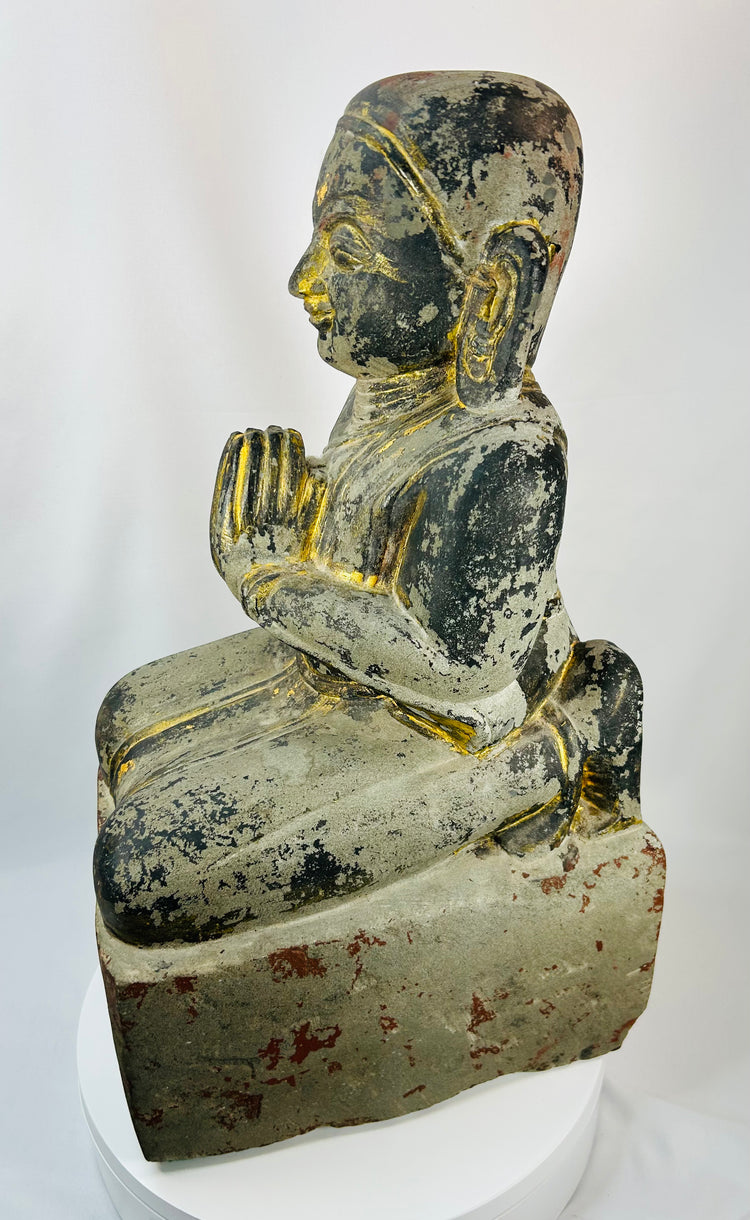
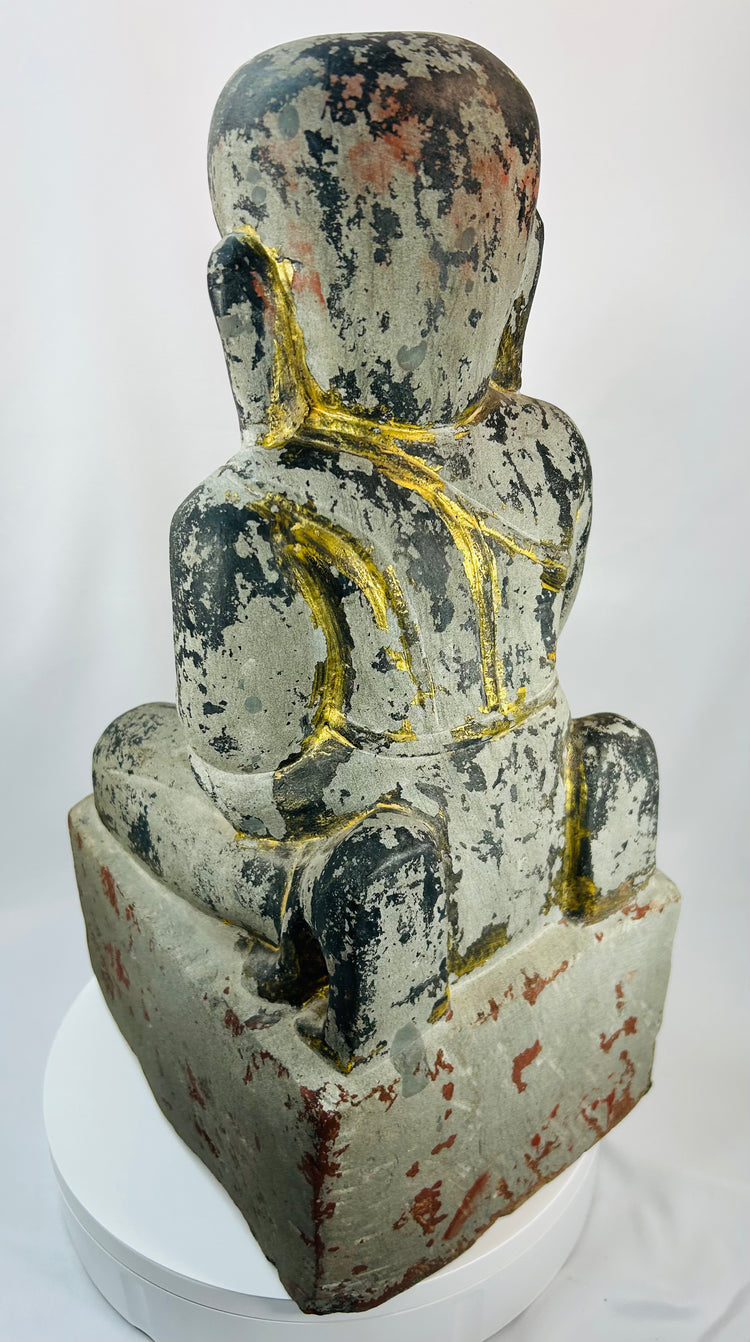
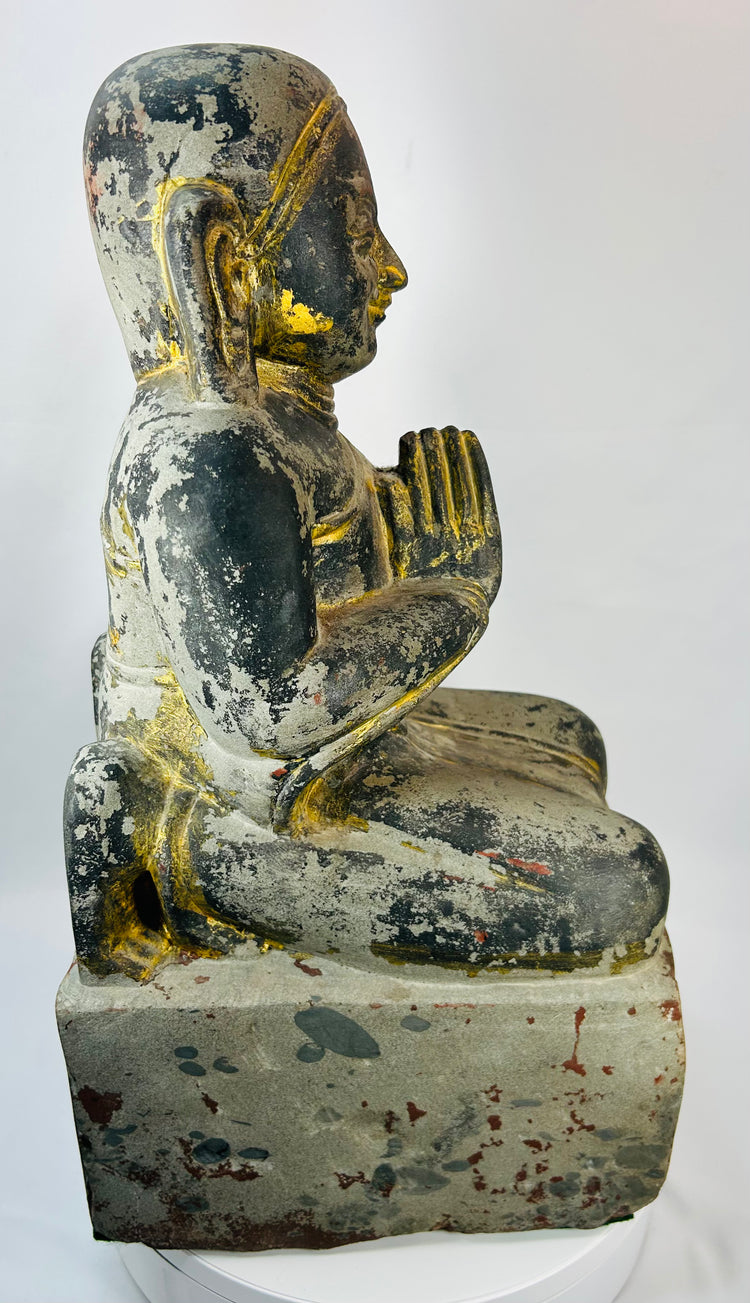
This striking devotional sculpture depicts a kneeling Buddhist devotee with hands pressed together in prayer (añjali mudrā), a traditional gesture of reverence offered before images of the Buddha. Figures of this type were commonly placed within Burmese temples and monastery shrines as symbolic attendants participating in eternal devotion.
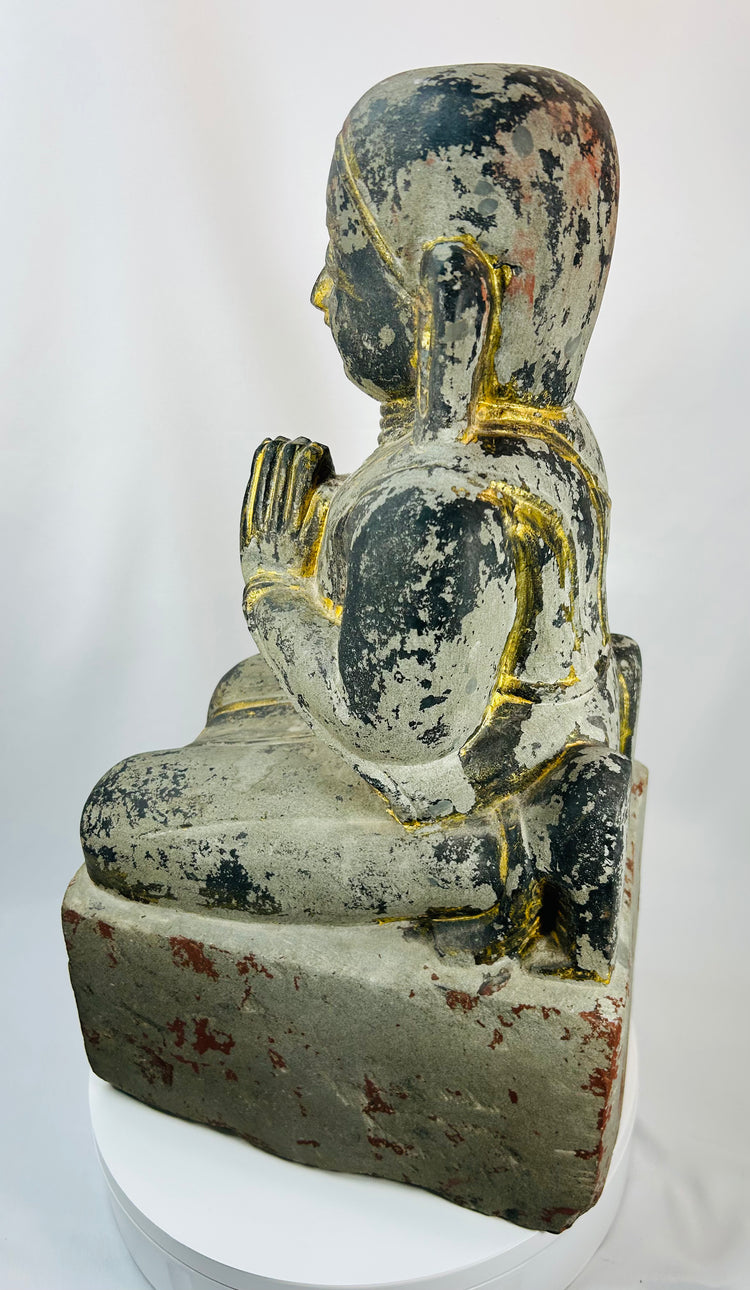
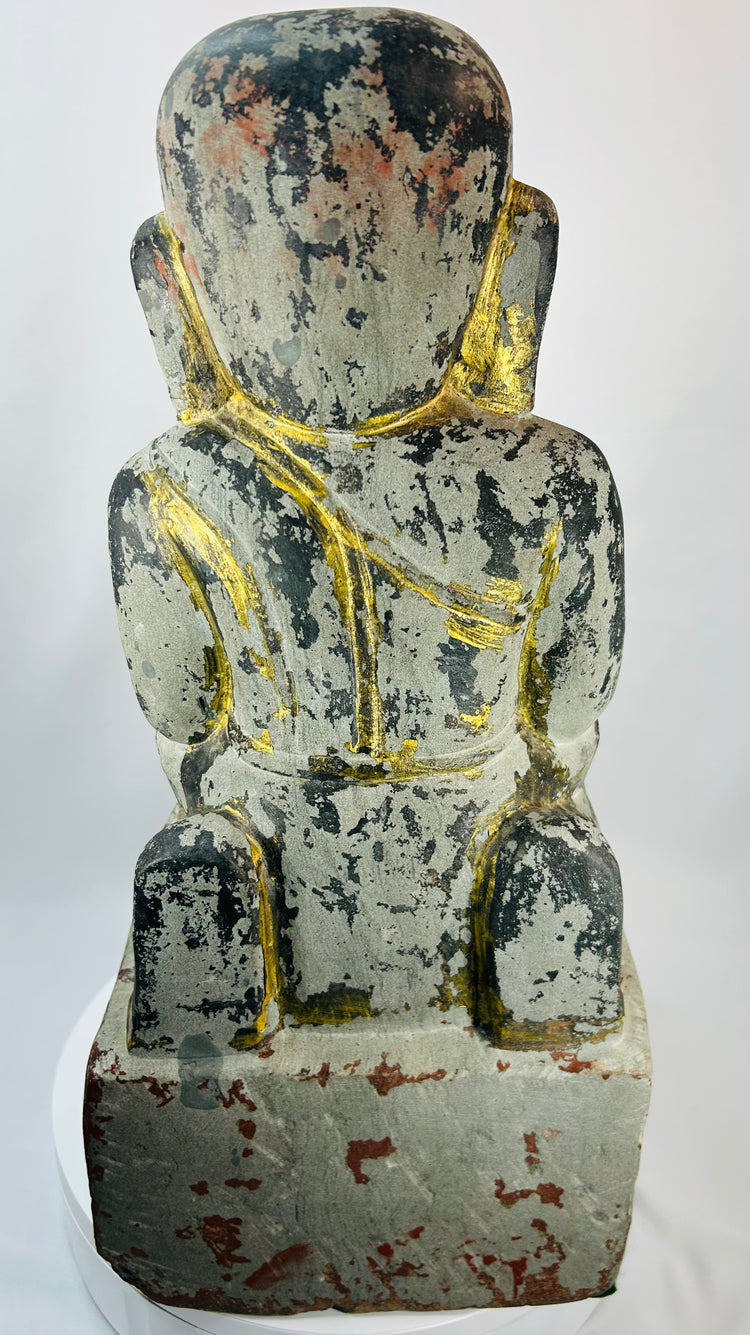
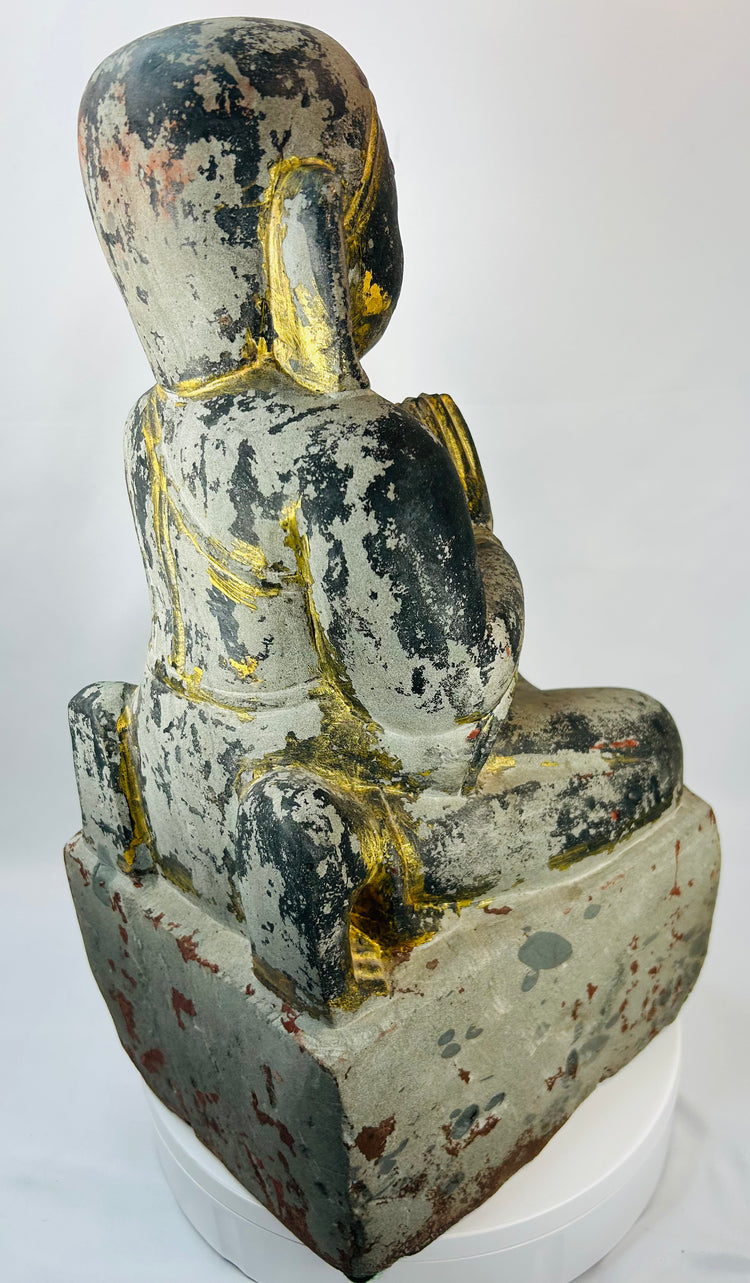
The figure is shown seated upon a rectangular base with legs folded beneath the body, the palms joined in respectful prayer at chest height. The serene facial expression, elongated ears, and smooth stylized features reflect the refined sculptural traditions associated with Burmese religious art of the Mandalay period (1857–1885).
Traces of original parcel gilding remain throughout the sculpture, particularly along the robes, facial features, and prayer hands, highlighting the contours of the carving. The surface retains areas of dark lacquer and painted decoration, now naturally worn through decades of devotional use and age. This weathered patina creates a rich visual texture characteristic of authentic temple sculpture.
The figure’s simplified robe forms and gentle modeling emphasize spiritual calm and humility. Such sculptures were traditionally displayed before larger Buddha images, symbolizing the perpetual reverence of the faithful.
Features
- Large devotional Burmese temple sculpture
- Traditional añjali mudrā prayer gesture
- Remnants of original parcel gilding and lacquer decoration
- Mandalay-style facial features and robe carving
- Sculptural base typical of temple attendant figures
- Authentic age-related patina from long-term devotional use
Cultural Significance
In Burmese Buddhist temples, kneeling figures representing devotees or monks are often placed before Buddha images as eternal worshippers. Their hands pressed together symbolize reverence, humility, and devotion to the Buddha’s teachings.
During the Mandalay period, Burmese religious sculpture flourished under royal patronage. Figures such as this were carved for monasteries, temple interiors, and domestic shrines, often finished with lacquer and gold leaf. Over time, the gilding would wear naturally through ritual handling and environmental exposure, creating the beautifully aged surfaces seen today.
These devotional sculptures represent the deeply spiritual artistic traditions of Myanmar and remain important expressions of Theravada Buddhist culture.
Condition
Good antique condition consistent with age and devotional use. Surface wear to the original gilding and painted layers is present, along with areas of exposed wood and lacquer patina. Minor abrasions and surface irregularities are visible, but the structure remains stable with no major damage observed.
Dimensions (Approximate)
Height: 18 in
Width: 8.5 in
Depth: 10 in
Age (Approximate)
140–180 years old
Learn More
Discover Southeast Asian Buddhist art through Art History Teaching Resources
Explore our curated Buddhist & Hindu Relics and Sacred Statues Collection
Description
Historical Context & Origin
Region: Myanmar (Burma)
Material: Carved wood with parcel gilding and painted surface
Period: Mandalay Period, circa 19th century
Description
This striking devotional sculpture depicts a kneeling Buddhist devotee with hands pressed together in prayer (añjali mudrā), a traditional gesture of reverence offered before images of the Buddha. Figures of this type were commonly placed within Burmese temples and monastery shrines as symbolic attendants participating in eternal devotion.
The figure is shown seated upon a rectangular base with legs folded beneath the body, the palms joined in respectful prayer at chest height. The serene facial expression, elongated ears, and smooth stylized features reflect the refined sculptural traditions associated with Burmese religious art of the Mandalay period (1857–1885).
Traces of original parcel gilding remain throughout the sculpture, particularly along the robes, facial features, and prayer hands, highlighting the contours of the carving. The surface retains areas of dark lacquer and painted decoration, now naturally worn through decades of devotional use and age. This weathered patina creates a rich visual texture characteristic of authentic temple sculpture.
The figure’s simplified robe forms and gentle modeling emphasize spiritual calm and humility. Such sculptures were traditionally displayed before larger Buddha images, symbolizing the perpetual reverence of the faithful.
Features
- Large devotional Burmese temple sculpture
- Traditional añjali mudrā prayer gesture
- Remnants of original parcel gilding and lacquer decoration
- Mandalay-style facial features and robe carving
- Sculptural base typical of temple attendant figures
- Authentic age-related patina from long-term devotional use
Cultural Significance
In Burmese Buddhist temples, kneeling figures representing devotees or monks are often placed before Buddha images as eternal worshippers. Their hands pressed together symbolize reverence, humility, and devotion to the Buddha’s teachings.
During the Mandalay period, Burmese religious sculpture flourished under royal patronage. Figures such as this were carved for monasteries, temple interiors, and domestic shrines, often finished with lacquer and gold leaf. Over time, the gilding would wear naturally through ritual handling and environmental exposure, creating the beautifully aged surfaces seen today.
These devotional sculptures represent the deeply spiritual artistic traditions of Myanmar and remain important expressions of Theravada Buddhist culture.
Condition
Good antique condition consistent with age and devotional use. Surface wear to the original gilding and painted layers is present, along with areas of exposed wood and lacquer patina. Minor abrasions and surface irregularities are visible, but the structure remains stable with no major damage observed.
Dimensions (Approximate)
Height: 18 in
Width: 8.5 in
Depth: 10 in
Age (Approximate)
140–180 years old
Learn More
Discover Southeast Asian Buddhist art through Art History Teaching Resources
Explore our curated Buddhist & Hindu Relics and Sacred Statues Collection
Vous aimerez peut-être aussi
