

Sculpté à la main | Colonie espagnole | Vierge Marie et l'Enfant | Vers le XVIIIe siècle
- Prix habituel
- $1,000.00
- Prix soldé
- $1,000.00
- Prix habituel
Impossible de charger la disponibilité du service de retrait


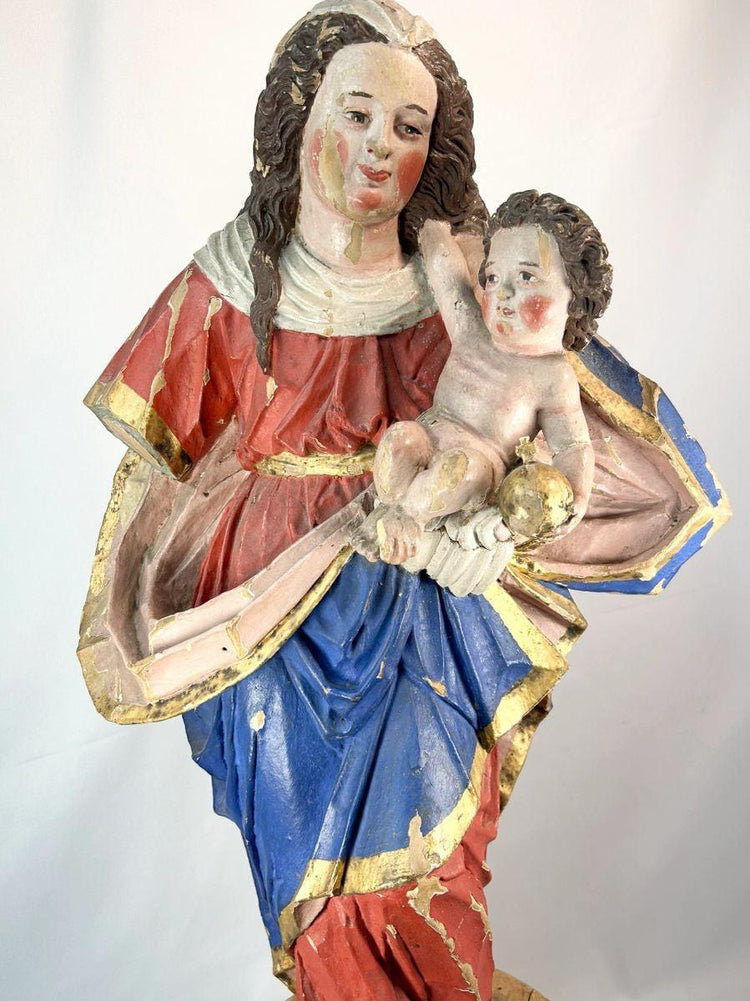
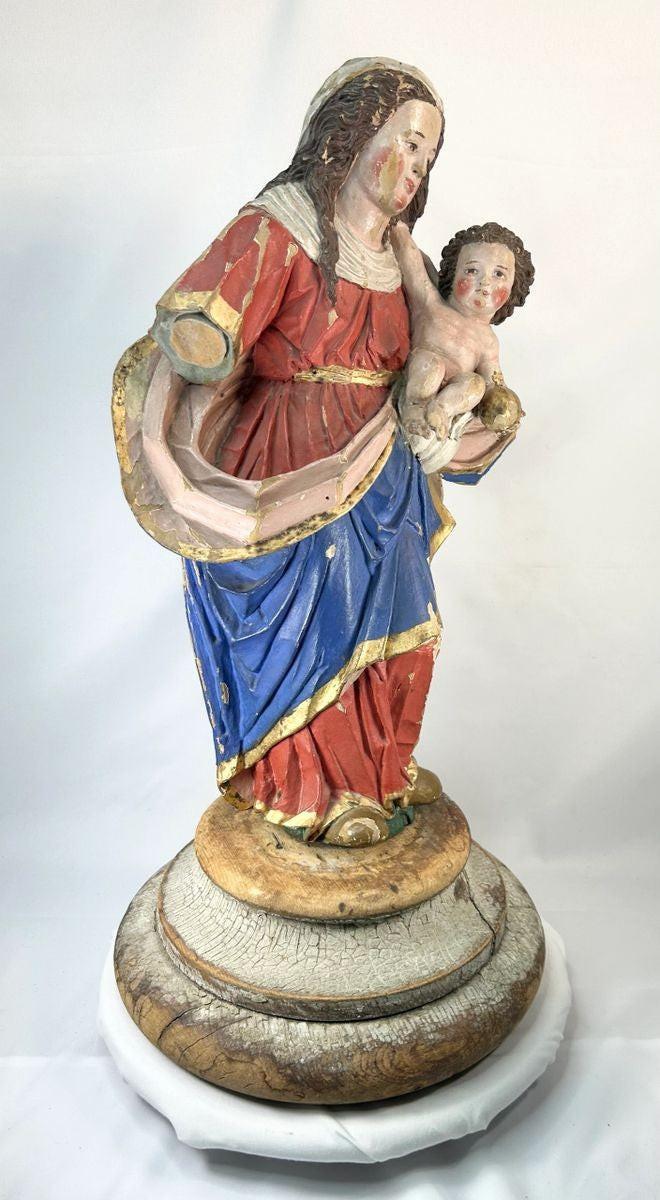
Sculpté à la main | Colonie espagnole | Vierge Marie et l'Enfant | Vers le XVIIIe siècle
Description
Plus
Moins
Contexte Historique & Origine
Région : Territoires Coloniaux Espagnols
Matériau : Bois sculpté à la main avec peinture polychrome et dorure originales
Période : Fin du XVIIIe - début du XIXe siècle
Description
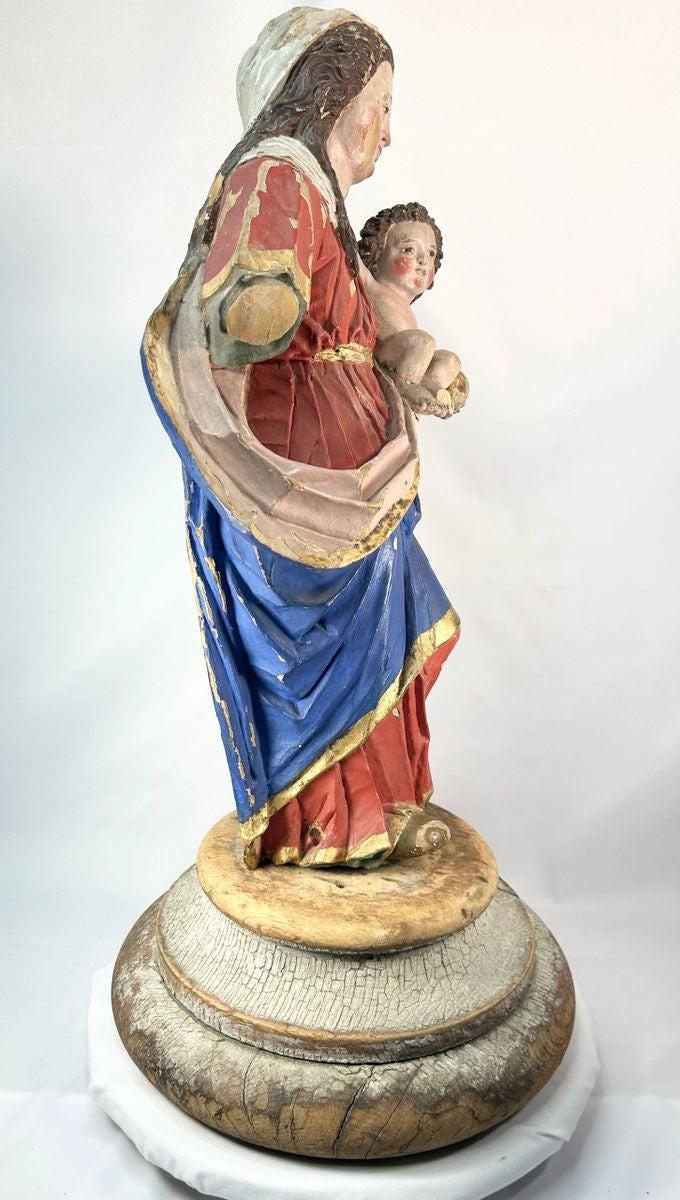
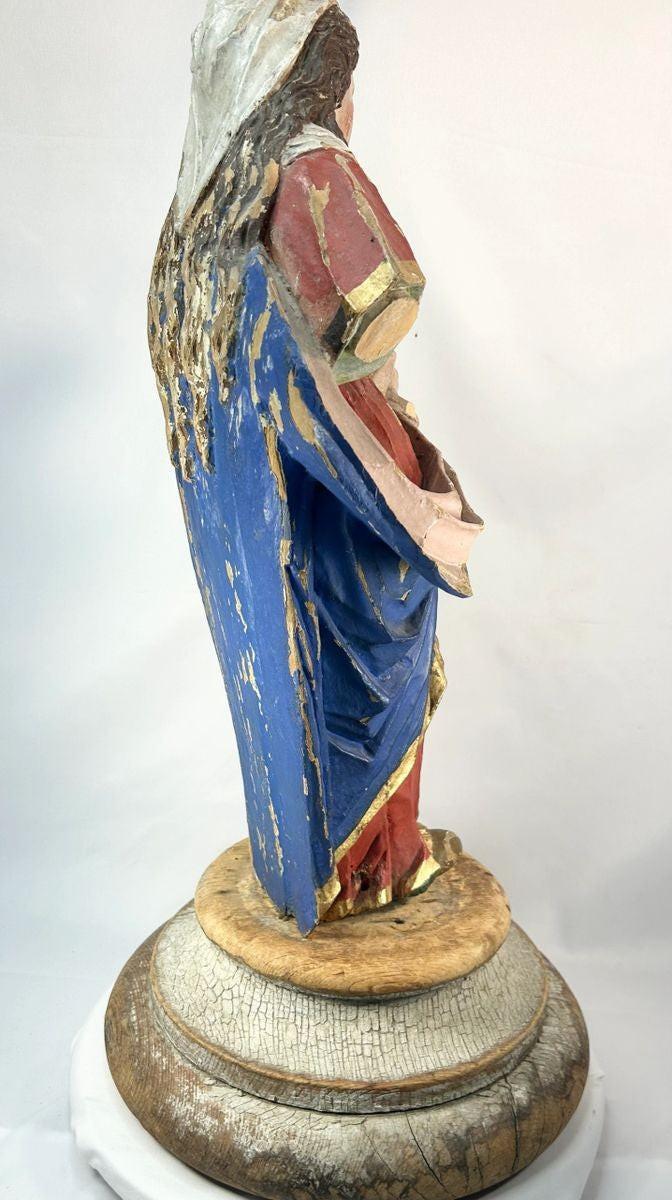
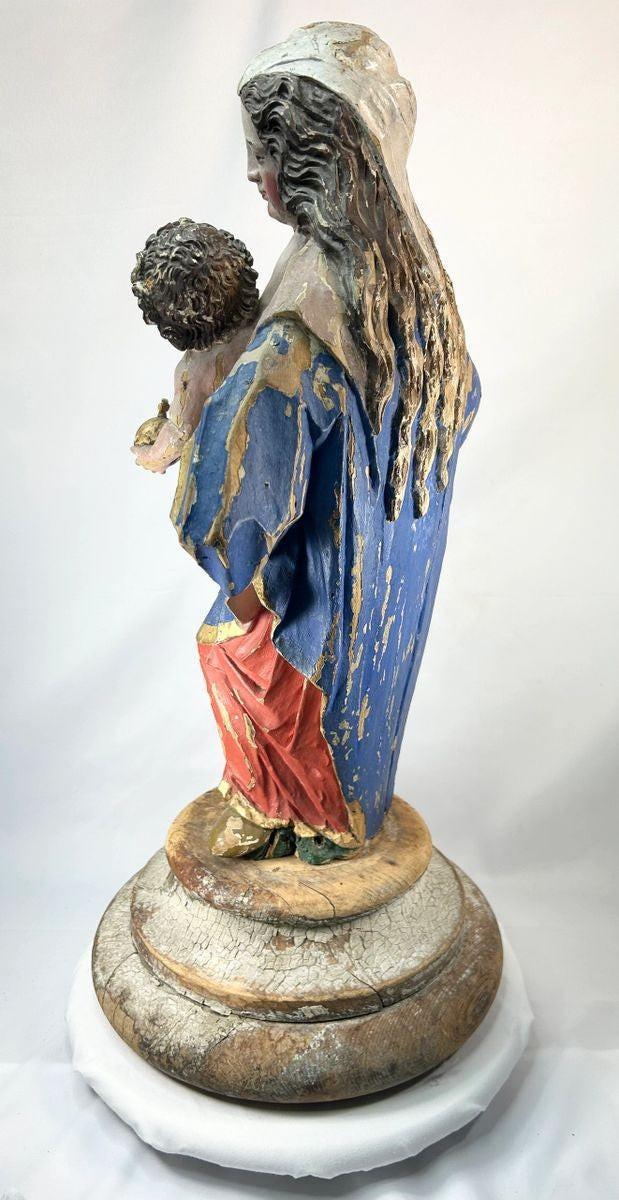
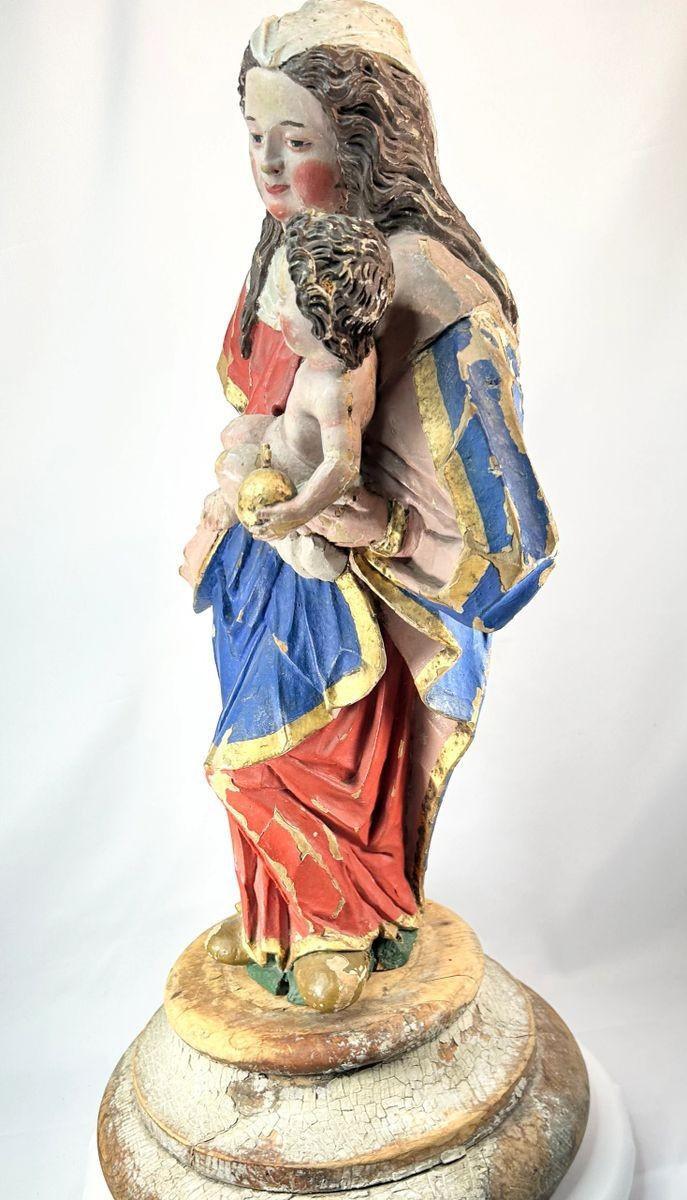
Cette statue en bois finement sculptée de la Vierge à l'Enfant est un exemple de l'art dévotionnel colonial espagnol. La Vierge Marie est représentée dans de longues robes rouges et bleues avec des rehauts dorés, tenant l'Enfant Jésus qui porte un orbe doré, un symbole traditionnel du Christ en tant que Salvator Mundi (« Sauveur du Monde »). Les figures sont rendues avec des expressions faciales délicatement modélisées et des plis de draperie robustes, caractéristiques de l'influence du baroque tardif dans la sculpture religieuse coloniale. La pièce est montée sur son socle en bois d'origine, qui présente une craquelure et une usure appropriées à son âge.
Caractéristiques
- Surface polychrome et dorée d'origine aux couleurs vives
- Madone représentée en robes royales, Enfant Jésus tenant un orbe doré
- Socle en bois robuste avec craquelure visible
- Style de sculpture expressif mêlant traditions européennes et indigènes
- Présence imposante, idéale pour un usage dévotionnel ou d'exposition
Signification Culturelle
L'imagerie de la Vierge à l'Enfant était centrale dans la foi catholique pendant l'ère coloniale, servant de puissant symbole d'intercession divine et de protection maternelle. Ces statues étaient placées dans les églises, les chapelles et les sanctuaires privés, incarnant la fusion de l'art baroque européen et de l'artisanat local à travers les colonies espagnoles.
État
Bon état antique avec une usure de surface attendue. Perte de polychromie et de dorure conforme à l'âge et à l'utilisation dévotionnelle. Structure stable sans réparations significatives, préservant ainsi sa présence historique et spirituelle.
Dimensions (Approximatives)
Hauteur : 27 po
Âge (Approximatif)
200-245 ans
Provenance
De réputation, anciennement d'une église du Vieux-Montréal, Québec, Canada. Par la suite détenue dans une collection privée à Montréal, Québec, Canada.
En savoir plus
Découvrez une sculpture coloniale espagnole de la Vierge à l'Enfant au Metropolitan Museum of Art
Explorez notre Collection d'Artefacts de Culte & de Dévotion
Description
Contexte Historique & Origine
Région : Territoires Coloniaux Espagnols
Matériau : Bois sculpté à la main avec peinture polychrome et dorure originales
Période : Fin du XVIIIe - début du XIXe siècle
Description
Cette statue en bois finement sculptée de la Vierge à l'Enfant est un exemple de l'art dévotionnel colonial espagnol. La Vierge Marie est représentée dans de longues robes rouges et bleues avec des rehauts dorés, tenant l'Enfant Jésus qui porte un orbe doré, un symbole traditionnel du Christ en tant que Salvator Mundi (« Sauveur du Monde »). Les figures sont rendues avec des expressions faciales délicatement modélisées et des plis de draperie robustes, caractéristiques de l'influence du baroque tardif dans la sculpture religieuse coloniale. La pièce est montée sur son socle en bois d'origine, qui présente une craquelure et une usure appropriées à son âge.
Caractéristiques
- Surface polychrome et dorée d'origine aux couleurs vives
- Madone représentée en robes royales, Enfant Jésus tenant un orbe doré
- Socle en bois robuste avec craquelure visible
- Style de sculpture expressif mêlant traditions européennes et indigènes
- Présence imposante, idéale pour un usage dévotionnel ou d'exposition
Signification Culturelle
L'imagerie de la Vierge à l'Enfant était centrale dans la foi catholique pendant l'ère coloniale, servant de puissant symbole d'intercession divine et de protection maternelle. Ces statues étaient placées dans les églises, les chapelles et les sanctuaires privés, incarnant la fusion de l'art baroque européen et de l'artisanat local à travers les colonies espagnoles.
État
Bon état antique avec une usure de surface attendue. Perte de polychromie et de dorure conforme à l'âge et à l'utilisation dévotionnelle. Structure stable sans réparations significatives, préservant ainsi sa présence historique et spirituelle.
Dimensions (Approximatives)
Hauteur : 27 po
Âge (Approximatif)
200-245 ans
Provenance
De réputation, anciennement d'une église du Vieux-Montréal, Québec, Canada. Par la suite détenue dans une collection privée à Montréal, Québec, Canada.
En savoir plus
Découvrez une sculpture coloniale espagnole de la Vierge à l'Enfant au Metropolitan Museum of Art
Explorez notre Collection d'Artefacts de Culte & de Dévotion
Vous aimerez peut-être aussi
