

Boîte historique à bétel | Philippines | Laiton gravé à la main | Vers 1780-1820
- Prix habituel
- $500.00
- Prix soldé
- $500.00
- Prix habituel
Impossible de charger la disponibilité du service de retrait


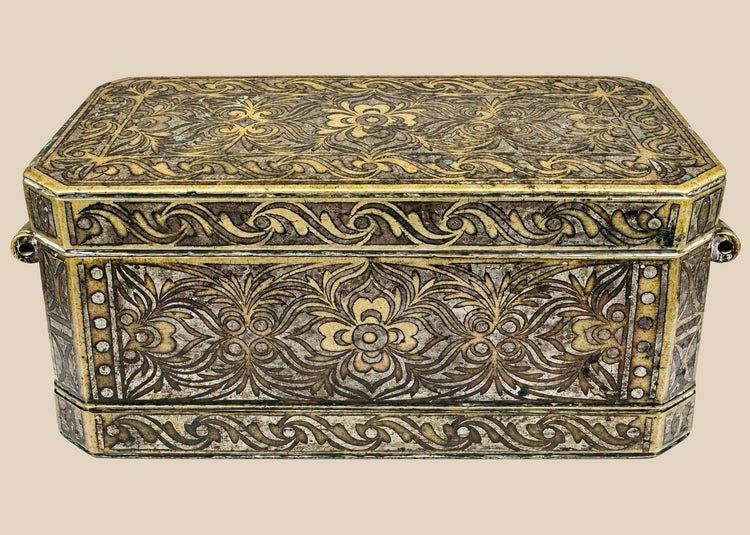
Boîte historique à bétel | Philippines | Laiton gravé à la main | Vers 1780-1820
Description
Plus
Moins
Contexte historique et origine
Région : Philippines (probablement la région de Mindanao)
Matériau : Alliage métallique mixte avec incrustations de laiton et de cuivre
Période : Fin du XVIIIe au début du XIXe siècle (environ 1780-1820)
Description
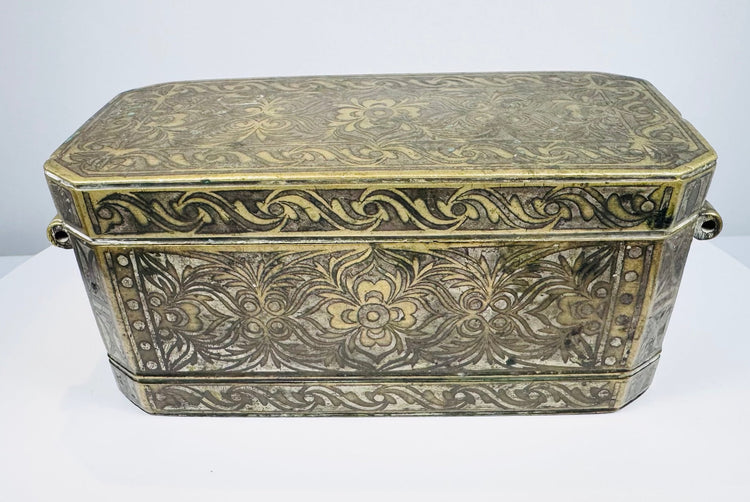
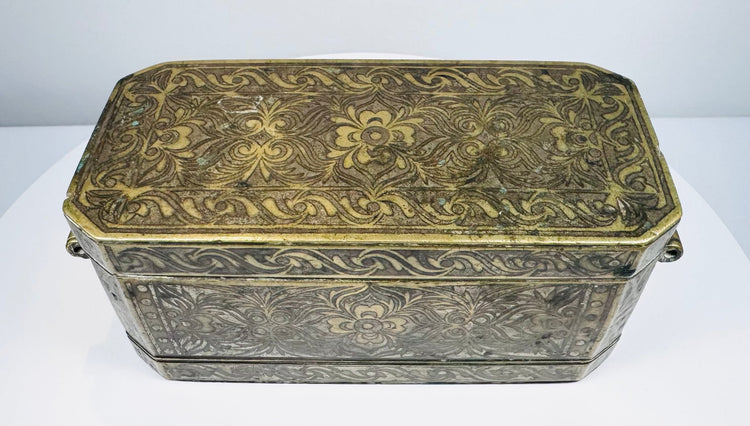
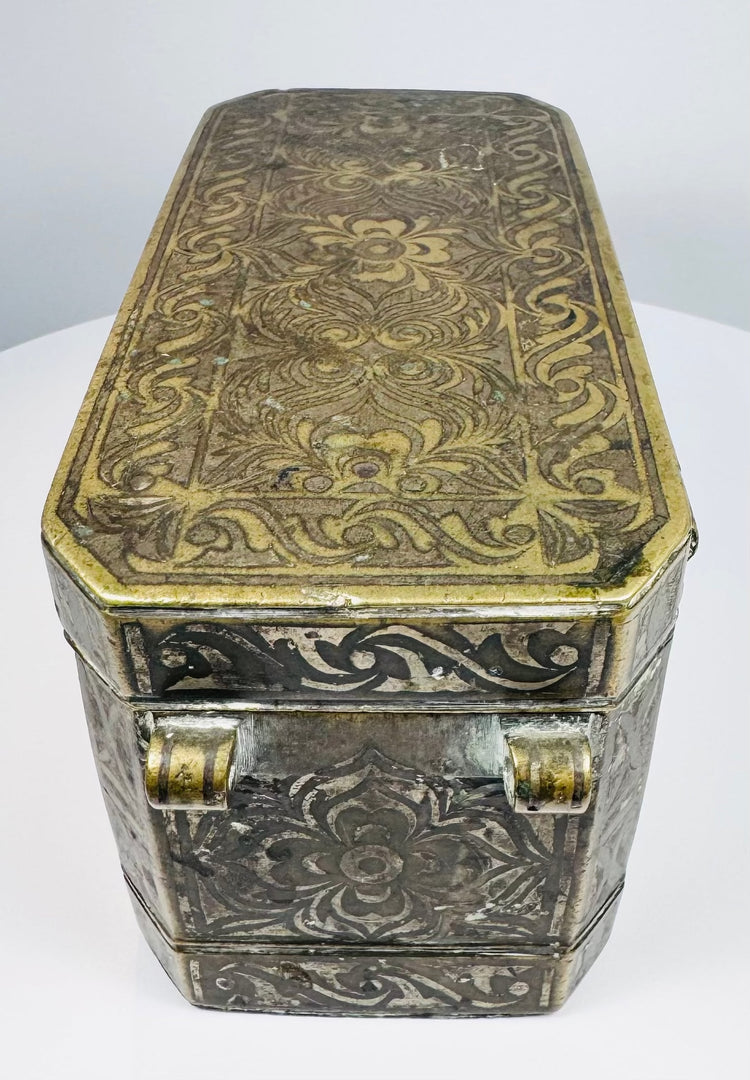
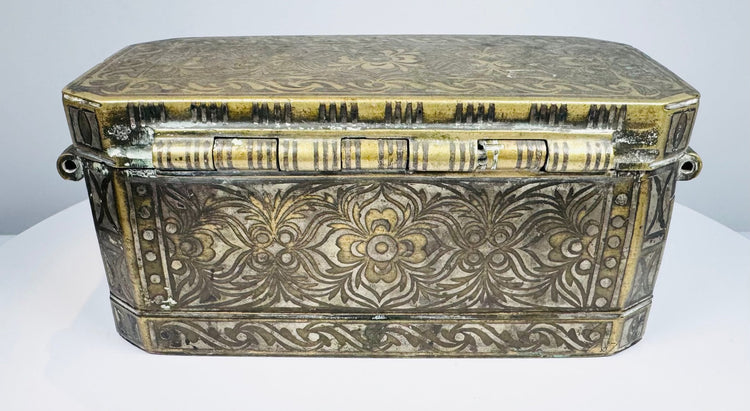
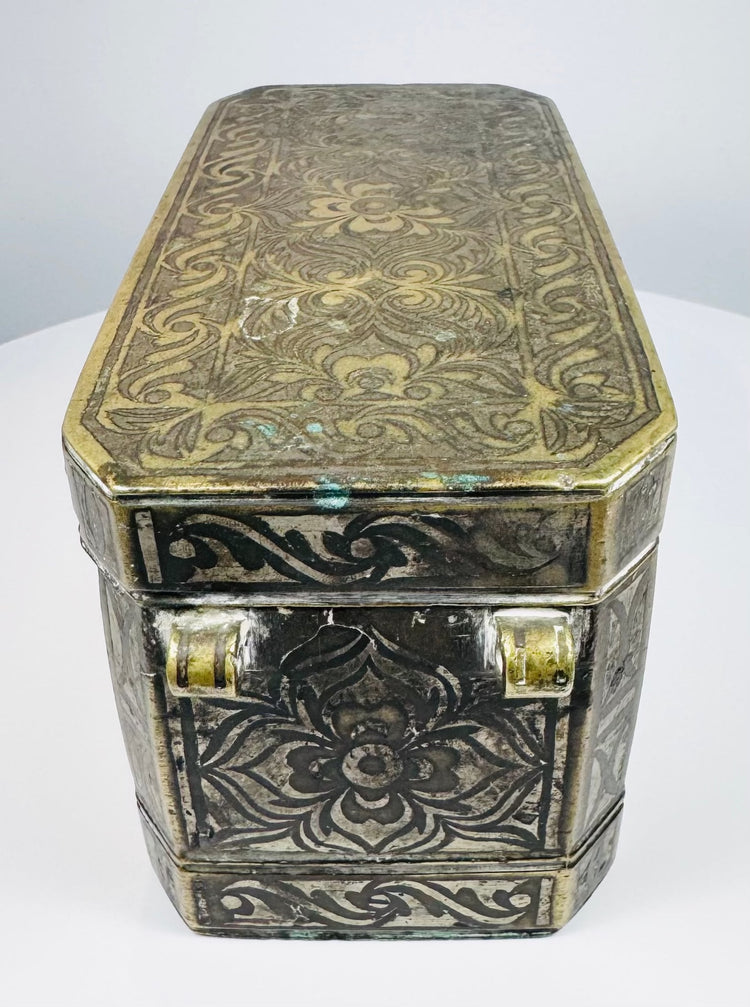
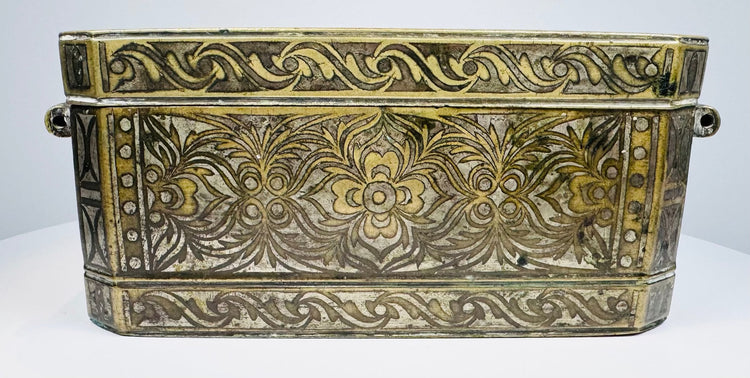
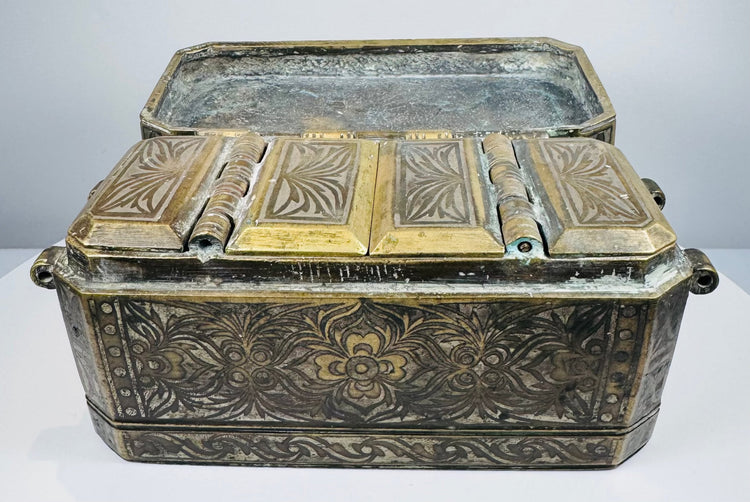
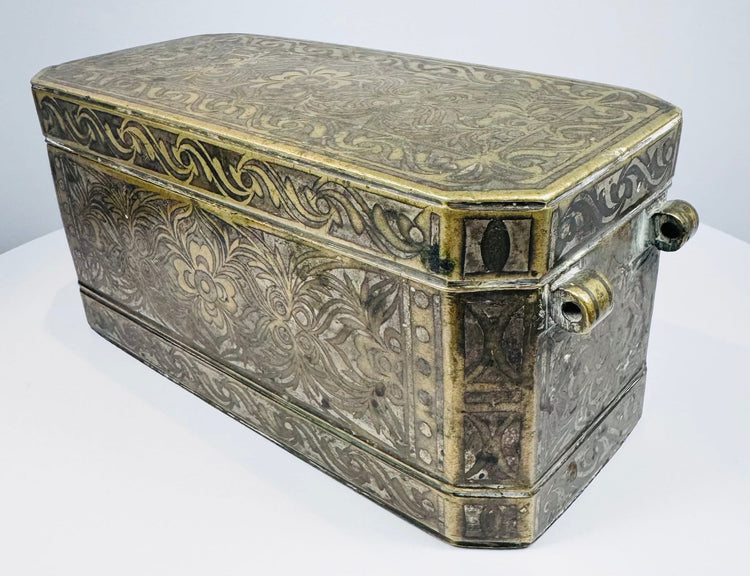
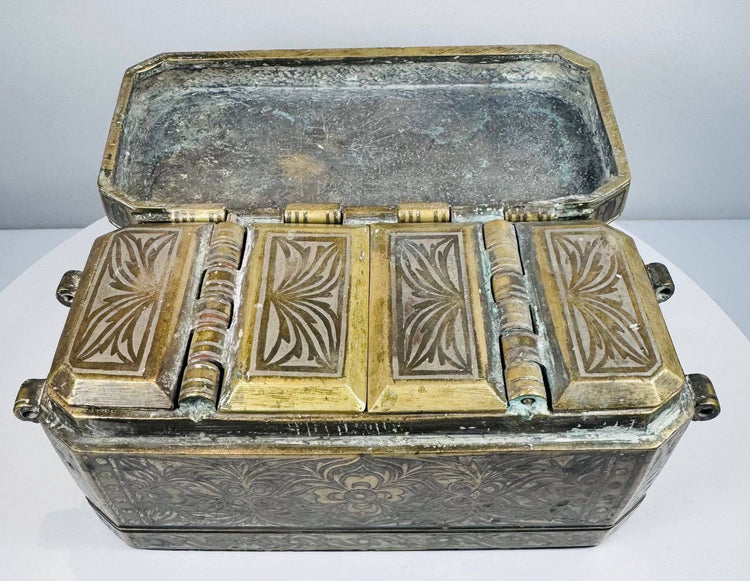
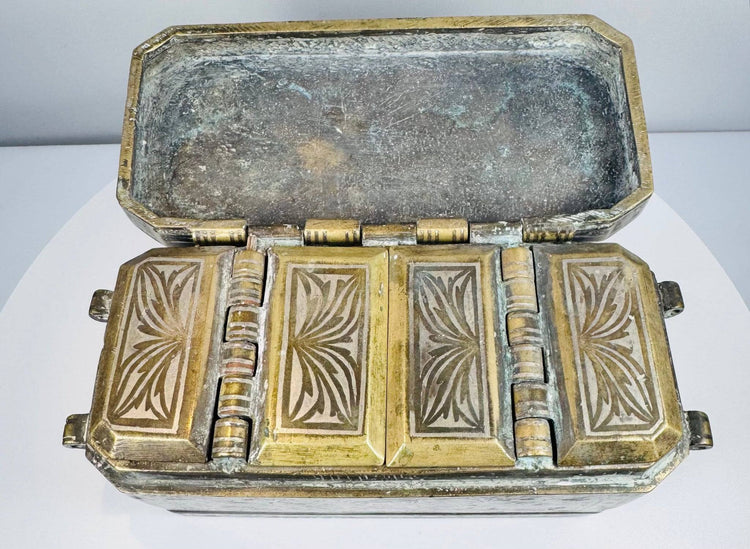
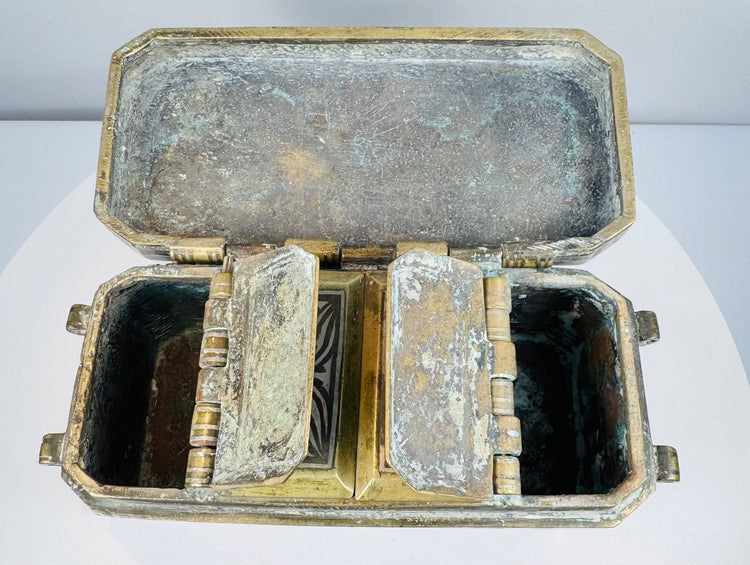
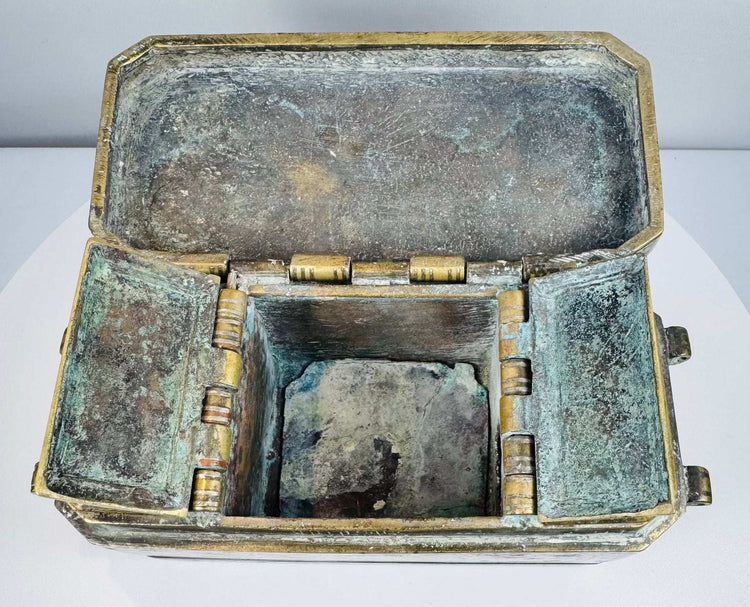
Cette boîte à noix de bétel finement ouvragée reflète les traditions ornementales de travail du métal de Mindanao, où les influences islamiques et coloniales espagnoles se sont mêlées pour créer un art utilitaire très décoratif. La forme rectangulaire est ornée de motifs floraux incrustés de laiton sur son couvercle et ses côtés, mettant en valeur la symétrie et le savoir-faire raffiné. L'intérieur contient quatre compartiments à charnières, traditionnellement utilisés pour ranger la noix de bétel, la pâte de chaux, le clou de girofle et d'autres éléments essentiels à la pratique de la mastication du bétel. Des anneaux latéraux suggèrent que la boîte a pu être suspendue ou portée à une ceinture ou une écharpe.
Caractéristiques
- Motifs floraux et volutes finement gravés à la main
- Quatre compartiments intérieurs à charnières pour les accessoires de noix de bétel
- Incrustations de laiton serties dans une base en alliage de métaux mixtes avec une patine vieillie naturelle
- Anneaux latéraux pour l'attache ou la suspension
- Construction traditionnelle reflétant la culture rituelle de l'Asie du Sud-Est
Signification culturelle
La mastication du bétel était profondément ancrée dans la société d'Asie du Sud-Est, servant à la fois de coutume quotidienne et de pratique cérémonielle. Les boîtes de ce type fonctionnaient comme des accessoires personnels et des symboles de statut, reflétant souvent l'artisanat local et l'identité culturelle. À Mindanao, de tels récipients sont souvent associés aux traditions de travail du métal Maranao et Maguindanao, où des boîtes incrustées de laiton, connues sous le nom de boîtes à buyo, étaient utilisées lors des cérémonies du bétel. Cet exemple démontre la synthèse des motifs indigènes, islamiques et coloniaux caractéristiques de l'artisanat philippin du XIXe siècle.
Condition
La boîte est dans un très bon état antique, avec une riche patine rehaussant son âge. Une légère oxydation et une usure superficielle sont présentes mais conformes à son historique d'utilisation. Les charnières et les couvercles intérieurs restent intacts et fonctionnels, sans aucune preuve de réparation ou de restauration moderne.
Dimensions (approximatives)
Hauteur : 7,6 cm
Largeur : 16,5 cm
Profondeur : 7,6 cm
Âge (approximatif)
205-245 ans
Provenance
Proposé par Waddington’s Auctioneers & Appraisers, Toronto, Ontario, Canada, lors de sa vente Asian Art le 25 février 2016, sous le lot 15. La pièce est ensuite entrée dans une collection privée à Toronto, Ontario, Canada.
En savoir plus
Examinez un exemple muséal comparable de Boîte à noix de bétel philippine au musée d'anthropologie Lam
Parcourez notre Collection d'objets ethnographiques rituels et de la vie quotidienne
Description
Contexte historique et origine
Région : Philippines (probablement la région de Mindanao)
Matériau : Alliage métallique mixte avec incrustations de laiton et de cuivre
Période : Fin du XVIIIe au début du XIXe siècle (environ 1780-1820)
Description
Cette boîte à noix de bétel finement ouvragée reflète les traditions ornementales de travail du métal de Mindanao, où les influences islamiques et coloniales espagnoles se sont mêlées pour créer un art utilitaire très décoratif. La forme rectangulaire est ornée de motifs floraux incrustés de laiton sur son couvercle et ses côtés, mettant en valeur la symétrie et le savoir-faire raffiné. L'intérieur contient quatre compartiments à charnières, traditionnellement utilisés pour ranger la noix de bétel, la pâte de chaux, le clou de girofle et d'autres éléments essentiels à la pratique de la mastication du bétel. Des anneaux latéraux suggèrent que la boîte a pu être suspendue ou portée à une ceinture ou une écharpe.
Caractéristiques
- Motifs floraux et volutes finement gravés à la main
- Quatre compartiments intérieurs à charnières pour les accessoires de noix de bétel
- Incrustations de laiton serties dans une base en alliage de métaux mixtes avec une patine vieillie naturelle
- Anneaux latéraux pour l'attache ou la suspension
- Construction traditionnelle reflétant la culture rituelle de l'Asie du Sud-Est
Signification culturelle
La mastication du bétel était profondément ancrée dans la société d'Asie du Sud-Est, servant à la fois de coutume quotidienne et de pratique cérémonielle. Les boîtes de ce type fonctionnaient comme des accessoires personnels et des symboles de statut, reflétant souvent l'artisanat local et l'identité culturelle. À Mindanao, de tels récipients sont souvent associés aux traditions de travail du métal Maranao et Maguindanao, où des boîtes incrustées de laiton, connues sous le nom de boîtes à buyo, étaient utilisées lors des cérémonies du bétel. Cet exemple démontre la synthèse des motifs indigènes, islamiques et coloniaux caractéristiques de l'artisanat philippin du XIXe siècle.
Condition
La boîte est dans un très bon état antique, avec une riche patine rehaussant son âge. Une légère oxydation et une usure superficielle sont présentes mais conformes à son historique d'utilisation. Les charnières et les couvercles intérieurs restent intacts et fonctionnels, sans aucune preuve de réparation ou de restauration moderne.
Dimensions (approximatives)
Hauteur : 7,6 cm
Largeur : 16,5 cm
Profondeur : 7,6 cm
Âge (approximatif)
205-245 ans
Provenance
Proposé par Waddington’s Auctioneers & Appraisers, Toronto, Ontario, Canada, lors de sa vente Asian Art le 25 février 2016, sous le lot 15. La pièce est ensuite entrée dans une collection privée à Toronto, Ontario, Canada.
En savoir plus
Examinez un exemple muséal comparable de Boîte à noix de bétel philippine au musée d'anthropologie Lam
Parcourez notre Collection d'objets ethnographiques rituels et de la vie quotidienne
Vous aimerez peut-être aussi
