

Romain impérial | Bague en bronze ornée de motifs incisés, vers le IIe-IVe siècle apr. J.-C.
- Prix habituel
- $200.00
- Prix soldé
- $200.00
- Prix habituel
Impossible de charger la disponibilité du service de retrait


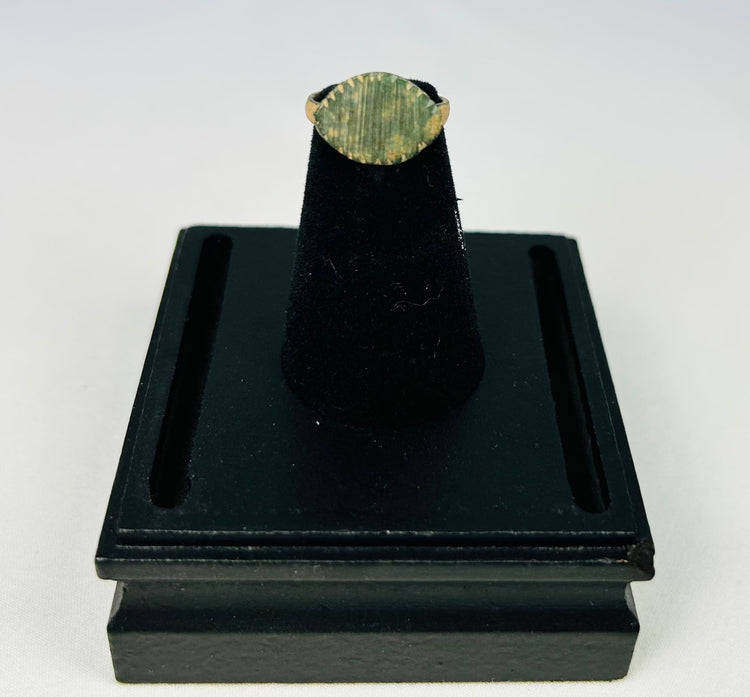


Romain impérial | Bague en bronze ornée de motifs incisés, vers le IIe-IVe siècle apr. J.-C.
Description
Plus
Moins
Contexte historique et origine
Région : Empire romain
Matériau : Bronze
Période : Vers 100–300 de notre ère
Description
Cette authentique bague romaine antique en bronze, datant du IIe au IVe siècle de notre ère, présente une construction massive avec un chaton ovale proéminent incisé de motifs linéaires verticaux. De tels motifs étaient courants parmi les chevalières personnelles dans les provinces romaines, servant à des fins à la fois décoratives et pratiques. La patine de sépulture vert chaud, avec des traces de dépôts terreux et des reflets exposés le long de l'anneau, témoigne de siècles d'âge et d'utilisation. Conçue avec une élégance utilitaire, cette bague aurait probablement été portée par un marchand, un soldat ou un individu de statut social modeste, incarnant la fusion romaine de la forme, de l'identité et de la fonction.
Caractéristiques
- Chaton ovale en relief avec motif linéaire vertical incisé
- Construction en bronze massif avec anneau intact
- Patine archéologique verte avec incrustations terreuses
- Courbure douce de l'anneau due à l'usure à long terme
- Représentatif de l'ornementation quotidienne et des pratiques de scellement romaines
Signification culturelle
Les anneaux romains en bronze étaient plus que de simples ornements personnels : ils servaient de sceaux fonctionnels et d'indicateurs d'identité sociale. Le chaton gravé aurait été pressé dans de la cire ou de l'argile, fournissant une marque d'authenticité unique dans un monde où l'alphabétisation était limitée. Des anneaux comme celui-ci mettent en évidence l'artisanat pratique des métallurgistes romains et offrent un aperçu des routines, des transactions et des identités des individus à travers l'Empire.
État
Excellente conservation pour son âge. La surface présente de légères piqûres et une corrosion naturelle conformes à des siècles d'enfouissement, tandis que la gravure du chaton reste bien définie. Structurellement sain, sans réparations ou restaurations modernes, conservant à la fois son authenticité et son caractère archéologique.
Dimensions (approximatives)
Taille de bague : US 3
Âge (approximatif)
1 700–1 900 ans
Provenance
Anciennement détenu dans une collection privée à Brooklyn, New York, États-Unis.
En savoir plus
Étudiez l'art et le savoir-faire des anneaux romains antiques sur Historic Jewellery Reproduction
Voir notre Collection d'anneaux antiques et d'histoire portable
Description
Contexte historique et origine
Région : Empire romain
Matériau : Bronze
Période : Vers 100–300 de notre ère
Description
Cette authentique bague romaine antique en bronze, datant du IIe au IVe siècle de notre ère, présente une construction massive avec un chaton ovale proéminent incisé de motifs linéaires verticaux. De tels motifs étaient courants parmi les chevalières personnelles dans les provinces romaines, servant à des fins à la fois décoratives et pratiques. La patine de sépulture vert chaud, avec des traces de dépôts terreux et des reflets exposés le long de l'anneau, témoigne de siècles d'âge et d'utilisation. Conçue avec une élégance utilitaire, cette bague aurait probablement été portée par un marchand, un soldat ou un individu de statut social modeste, incarnant la fusion romaine de la forme, de l'identité et de la fonction.
Caractéristiques
- Chaton ovale en relief avec motif linéaire vertical incisé
- Construction en bronze massif avec anneau intact
- Patine archéologique verte avec incrustations terreuses
- Courbure douce de l'anneau due à l'usure à long terme
- Représentatif de l'ornementation quotidienne et des pratiques de scellement romaines
Signification culturelle
Les anneaux romains en bronze étaient plus que de simples ornements personnels : ils servaient de sceaux fonctionnels et d'indicateurs d'identité sociale. Le chaton gravé aurait été pressé dans de la cire ou de l'argile, fournissant une marque d'authenticité unique dans un monde où l'alphabétisation était limitée. Des anneaux comme celui-ci mettent en évidence l'artisanat pratique des métallurgistes romains et offrent un aperçu des routines, des transactions et des identités des individus à travers l'Empire.
État
Excellente conservation pour son âge. La surface présente de légères piqûres et une corrosion naturelle conformes à des siècles d'enfouissement, tandis que la gravure du chaton reste bien définie. Structurellement sain, sans réparations ou restaurations modernes, conservant à la fois son authenticité et son caractère archéologique.
Dimensions (approximatives)
Taille de bague : US 3
Âge (approximatif)
1 700–1 900 ans
Provenance
Anciennement détenu dans une collection privée à Brooklyn, New York, États-Unis.
En savoir plus
Étudiez l'art et le savoir-faire des anneaux romains antiques sur Historic Jewellery Reproduction
Voir notre Collection d'anneaux antiques et d'histoire portable
Vous aimerez peut-être aussi
