

Bague indo-grecque à chaton sculpté | Vers IIe-Ier siècles av. J.-C.
- Prix habituel
- $600.00
- Prix soldé
- $600.00
- Prix habituel
Impossible de charger la disponibilité du service de retrait


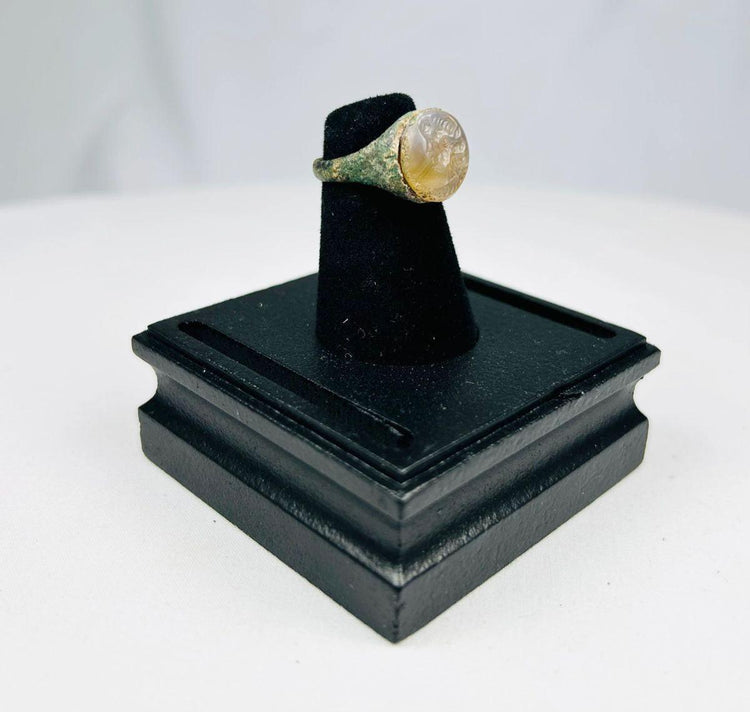
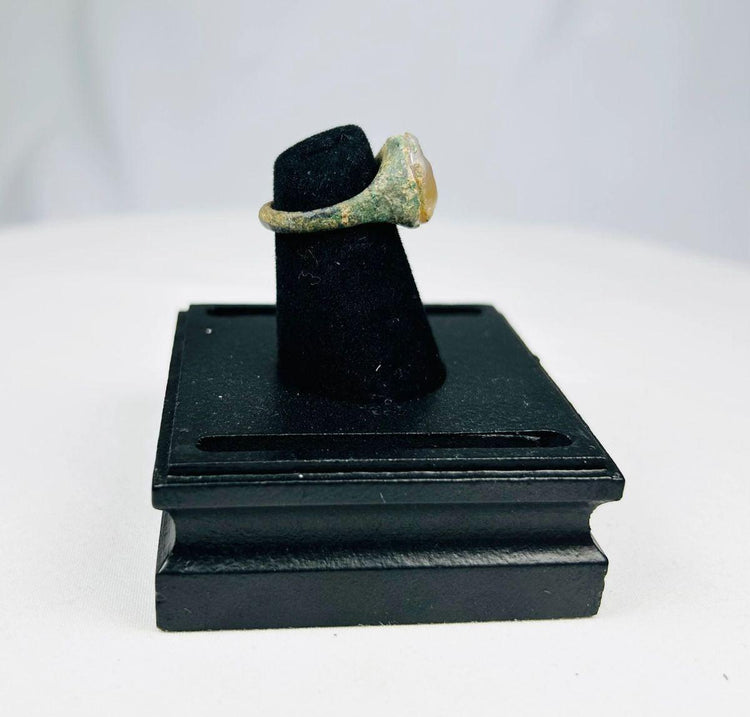
Bague indo-grecque à chaton sculpté | Vers IIe-Ier siècles av. J.-C.
Description
Plus
Moins
Contexte historique et origine
Région : Royaume indo-grec (Afghanistan, Pakistan, Inde du Nord actuels)
Matériau : Anneau métallique avec chaton en grenat sculpté (pierre semi-précieuse)
Période : Environ 2e-1e siècle avant J.-C.
Description
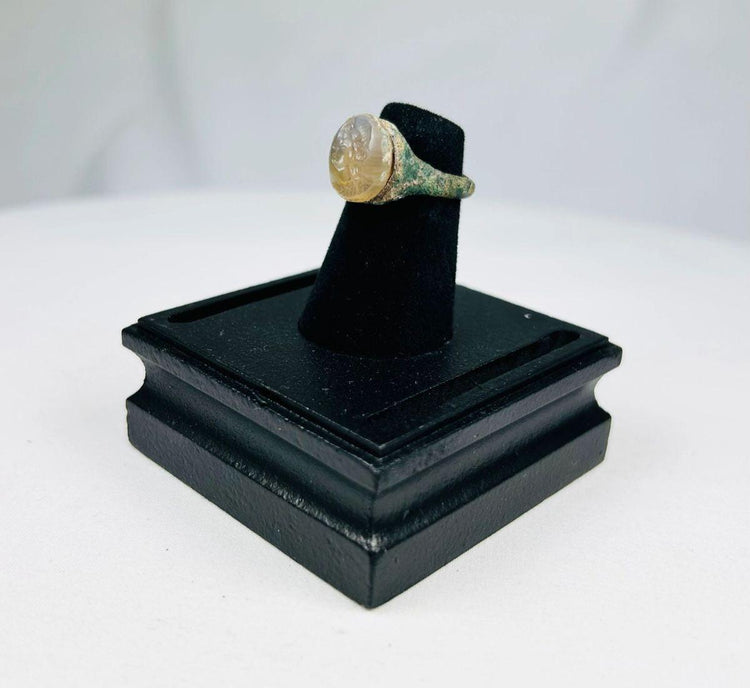
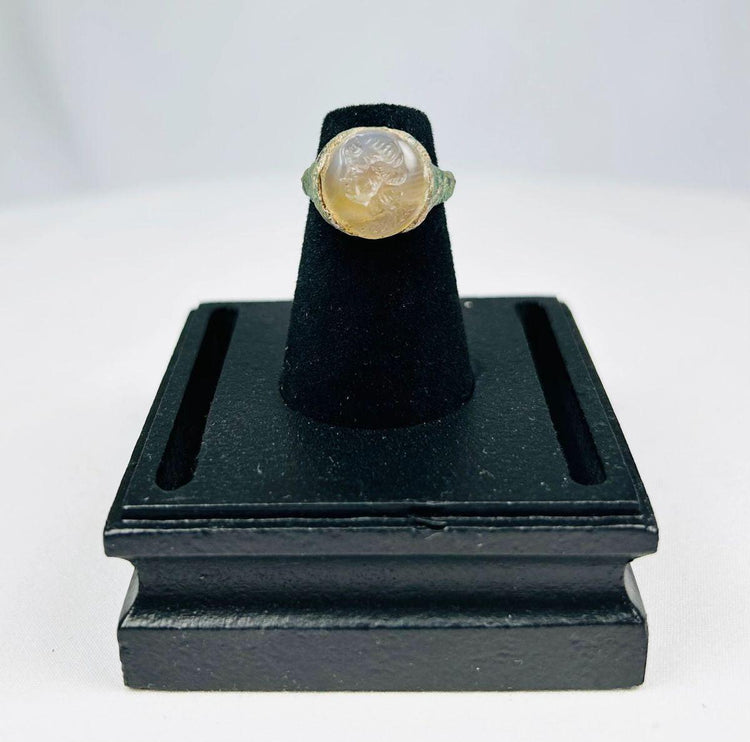
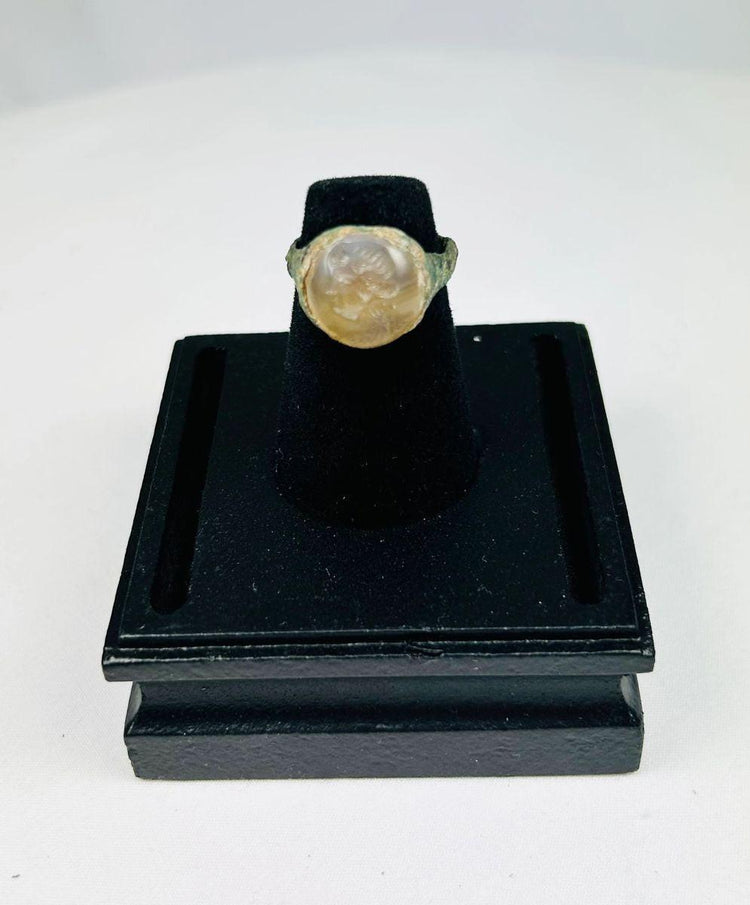
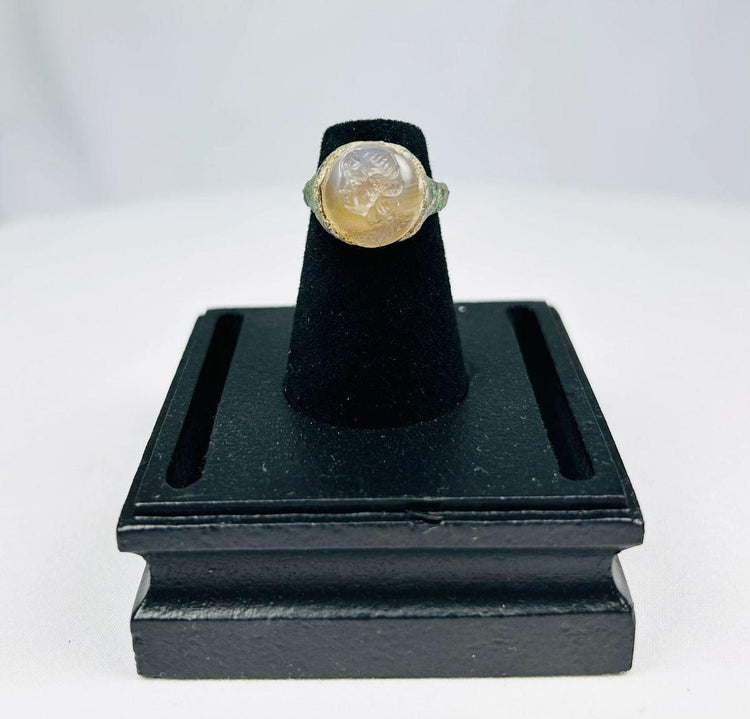
Cette extraordinaire bague antique, datant de la période indo-grecque, présente un chaton finement sculpté représentant le profil d'un buste masculin barbu. L'imagerie reflète la fusion culturelle et artistique de l'influence grecque hellénistique avec l'artisanat indien – une marque importante du Royaume indo-grec. La bague incarne la synthèse des traditions artistiques orientales et occidentales qui ont prospéré durant cette ère historique charnière.
Caractéristiques
• Chaton en grenat sculpté représentant un buste masculin barbu de profil
• Anneau métallique avec une riche patine vieillie développée au fil des siècles
• Forme élégante et simple mettant en valeur la sculpture détaillée du chaton
• Usure naturelle conforme à un artefact de plus de deux millénaires
Signification culturelle
Le Royaume indo-grec représentait un carrefour culturel unique où les traditions artistiques grecques se sont mêlées aux influences culturelles et religieuses indiennes. L'imagerie portraitiste – qu'elle représente des souverains, des divinités ou des figures symboliques – véhiculait souvent l'autorité, l'identité et l'appartenance culturelle. Les bagues de cette nature reflètent l'échange artistique remarquable qui a défini le monde indo-grec et servaient à la fois d'ornement personnel et de représentation symbolique.
Condition
Bien conservée avec des signes visibles d'âge. Le chaton en grenat conserve ses détails sculptés, tandis que l'anneau reste structurellement stable avec une belle patine naturelle développée au fil des siècles.
Dimensions (approximatives)
Taille de la bague : 10 US
Âge (approximatif)
2 025–2 225 ans
En savoir plus
Découvrez l'histoire du Royaume indo-grec sur Encyclopédie de l'histoire du monde
Parcourez notre Collection de bagues antiques et d'artefacts à porter
Description
Contexte historique et origine
Région : Royaume indo-grec (Afghanistan, Pakistan, Inde du Nord actuels)
Matériau : Anneau métallique avec chaton en grenat sculpté (pierre semi-précieuse)
Période : Environ 2e-1e siècle avant J.-C.
Description
Cette extraordinaire bague antique, datant de la période indo-grecque, présente un chaton finement sculpté représentant le profil d'un buste masculin barbu. L'imagerie reflète la fusion culturelle et artistique de l'influence grecque hellénistique avec l'artisanat indien – une marque importante du Royaume indo-grec. La bague incarne la synthèse des traditions artistiques orientales et occidentales qui ont prospéré durant cette ère historique charnière.
Caractéristiques
• Chaton en grenat sculpté représentant un buste masculin barbu de profil
• Anneau métallique avec une riche patine vieillie développée au fil des siècles
• Forme élégante et simple mettant en valeur la sculpture détaillée du chaton
• Usure naturelle conforme à un artefact de plus de deux millénaires
Signification culturelle
Le Royaume indo-grec représentait un carrefour culturel unique où les traditions artistiques grecques se sont mêlées aux influences culturelles et religieuses indiennes. L'imagerie portraitiste – qu'elle représente des souverains, des divinités ou des figures symboliques – véhiculait souvent l'autorité, l'identité et l'appartenance culturelle. Les bagues de cette nature reflètent l'échange artistique remarquable qui a défini le monde indo-grec et servaient à la fois d'ornement personnel et de représentation symbolique.
Condition
Bien conservée avec des signes visibles d'âge. Le chaton en grenat conserve ses détails sculptés, tandis que l'anneau reste structurellement stable avec une belle patine naturelle développée au fil des siècles.
Dimensions (approximatives)
Taille de la bague : 10 US
Âge (approximatif)
2 025–2 225 ans
En savoir plus
Découvrez l'histoire du Royaume indo-grec sur Encyclopédie de l'histoire du monde
Parcourez notre Collection de bagues antiques et d'artefacts à porter
Vous aimerez peut-être aussi
