Vallée de l'Indus | Bol en terre cuite peinte à motifs de poissons | IIe millénaire avant notre ère

Historique de provenance et de propriété

Anciennement une pièce de la collection des BC Galleries, Melbourne, Australie. Fondées en 1976, les BC Galleries étaient un important marchand australien indépendant spécialisé dans l'art ancien et les antiquités, l'art tribal, l'ethnographie et les objets historiques provenant d'un large éventail de cultures. Par la suite, la pièce a été conservée dans une collection privée à Armadale, Victoria, Australie.

Prix habituel
$431.00
Prix soldé
$431.00
Prix habituel
Frais de port calculés à la caisse.
Customers rate us 4.97/5 based on 121 reviews.

This is a one-of-a-kind historical object. Once sold, this exact piece will not be restocked.

Questions before acquiring? Additional photographs, condition details, documentation, shipping information or a private viewing are available upon request.
Indus Valley terracotta bowl with fish motifs and geometric bands
360-degree rotating view of an ancient Indus Valley painted terracotta bowl dating to the 2nd millennium BCE, featuring a wide, flattened body, narrow circular opening, and hand-painted fish motifs with geometric detailing. The video showcases the faded dark pigments, natural earthenware surface, ancient craftsmanship, and historical wear from multiple angles.
Ancient Indus Valley terracotta vessel with painted fish motifs and geometric bands, dating to the 2nd millennium BCE.
Late Harappan ceramic pottery vessel featuring black and brown slip-painted fish designs and traditional craftsmanship.
Ancient South Asian terracotta vessel with a flattened globular body, short neck, and decorated flared rim.
Post-Harappan Indus Valley pottery featuring stylized aquatic motifs and intricate geometric painted decoration.
Ancient Indus Valley ceramic vessel from present-day India or Pakistan with traditional fish imagery and aged patina.
Second-millennium BCE terracotta pottery vessel featuring hand-painted fish motifs and horizontal decorative bands.
Ancient Harappan-style earthenware vessel with black pigment decoration and traditional geometric patterns.
Historic Indus Valley pottery vessel featuring a rounded body, open mouth, and centuries-old archaeological surface wear.
Late Harappan terracotta ceramic vessel displaying stylized fish designs and traditional South Asian pottery techniques.
Ancient Indus Valley painted pottery with a flattened globular shape and black and brown linear decoration.
Post-Harappan ceramic artifact featuring traditional fish symbolism, decorative geometric bands, and naturally aged clay.
Ancient South Asian terracotta vessel dating to the 2nd millennium BCE with slip-painted motifs and historic patina.
  • Indus Valley terracotta bowl with fish motifs and geometric bands
  • 360-degree rotating view of an ancient Indus Valley painted terracotta bowl dating to the 2nd millennium BCE, featuring a wide, flattened body, narrow circular opening, and hand-painted fish motifs with geometric detailing. The video showcases the faded dark pigments, natural earthenware surface, ancient craftsmanship, and historical wear from multiple angles.
  • Ancient Indus Valley terracotta vessel with painted fish motifs and geometric bands, dating to the 2nd millennium BCE.
  • Late Harappan ceramic pottery vessel featuring black and brown slip-painted fish designs and traditional craftsmanship.
  • Ancient South Asian terracotta vessel with a flattened globular body, short neck, and decorated flared rim.
  • Post-Harappan Indus Valley pottery featuring stylized aquatic motifs and intricate geometric painted decoration.
  • Ancient Indus Valley ceramic vessel from present-day India or Pakistan with traditional fish imagery and aged patina.
  • Second-millennium BCE terracotta pottery vessel featuring hand-painted fish motifs and horizontal decorative bands.
  • Ancient Harappan-style earthenware vessel with black pigment decoration and traditional geometric patterns.
  • Historic Indus Valley pottery vessel featuring a rounded body, open mouth, and centuries-old archaeological surface wear.
  • Late Harappan terracotta ceramic vessel displaying stylized fish designs and traditional South Asian pottery techniques.
  • Ancient Indus Valley painted pottery with a flattened globular shape and black and brown linear decoration.
  • Post-Harappan ceramic artifact featuring traditional fish symbolism, decorative geometric bands, and naturally aged clay.
  • Ancient South Asian terracotta vessel dating to the 2nd millennium BCE with slip-painted motifs and historic patina.
Indus Valley terracotta bowl with fish motifs and geometric bands
360-degree rotating view of an ancient Indus Valley painted terracotta bowl dating to the 2nd millennium BCE, featuring a wide, flattened body, narrow circular opening, and hand-painted fish motifs with geometric detailing. The video showcases the faded dark pigments, natural earthenware surface, ancient craftsmanship, and historical wear from multiple angles.
Ancient Indus Valley terracotta vessel with painted fish motifs and geometric bands, dating to the 2nd millennium BCE.
Late Harappan ceramic pottery vessel featuring black and brown slip-painted fish designs and traditional craftsmanship.
Ancient South Asian terracotta vessel with a flattened globular body, short neck, and decorated flared rim.
Post-Harappan Indus Valley pottery featuring stylized aquatic motifs and intricate geometric painted decoration.
Ancient Indus Valley ceramic vessel from present-day India or Pakistan with traditional fish imagery and aged patina.
Second-millennium BCE terracotta pottery vessel featuring hand-painted fish motifs and horizontal decorative bands.
Ancient Harappan-style earthenware vessel with black pigment decoration and traditional geometric patterns.
Historic Indus Valley pottery vessel featuring a rounded body, open mouth, and centuries-old archaeological surface wear.
Late Harappan terracotta ceramic vessel displaying stylized fish designs and traditional South Asian pottery techniques.
Ancient Indus Valley painted pottery with a flattened globular shape and black and brown linear decoration.
Post-Harappan ceramic artifact featuring traditional fish symbolism, decorative geometric bands, and naturally aged clay.
Ancient South Asian terracotta vessel dating to the 2nd millennium BCE with slip-painted motifs and historic patina.
Authenticity and secure checkout guarantee

Vallée de l'Indus | Bol en terre cuite peinte à motifs de poissons | IIe millénaire avant notre ère

Description

Contexte historique et origine

Région : Région de la vallée de l'Indus (actuel nord-ouest de l'Inde ou Pakistan)
Matériau : Terre cuite (argile à faible cuisson)
Période : Phase Harappéenne tardive / Post-Harappéenne, 2e millénaire avant notre ère

Description

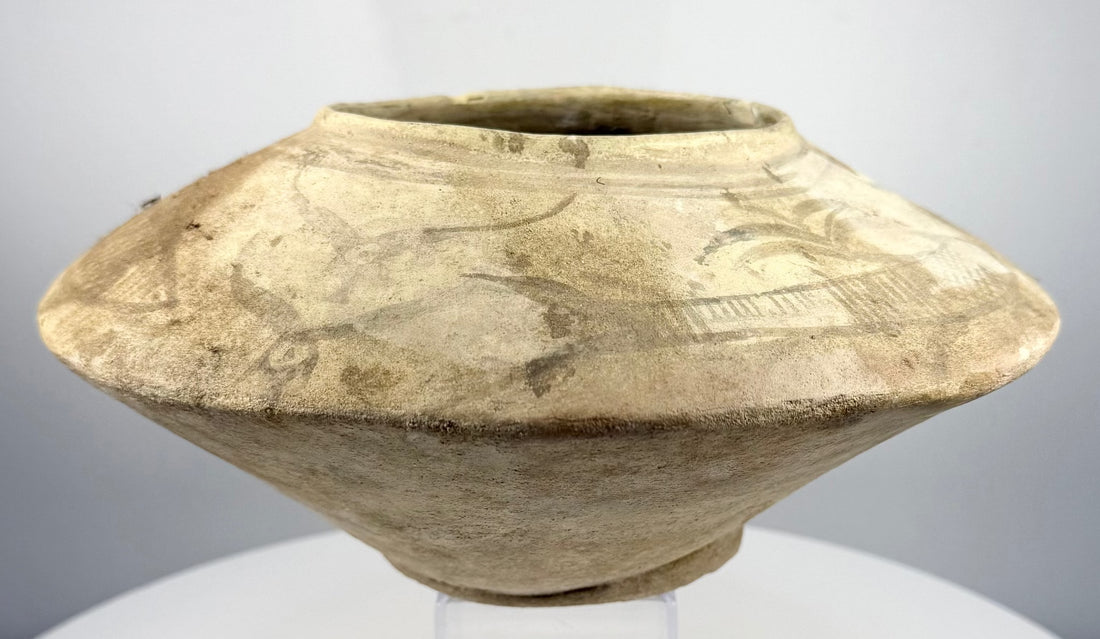
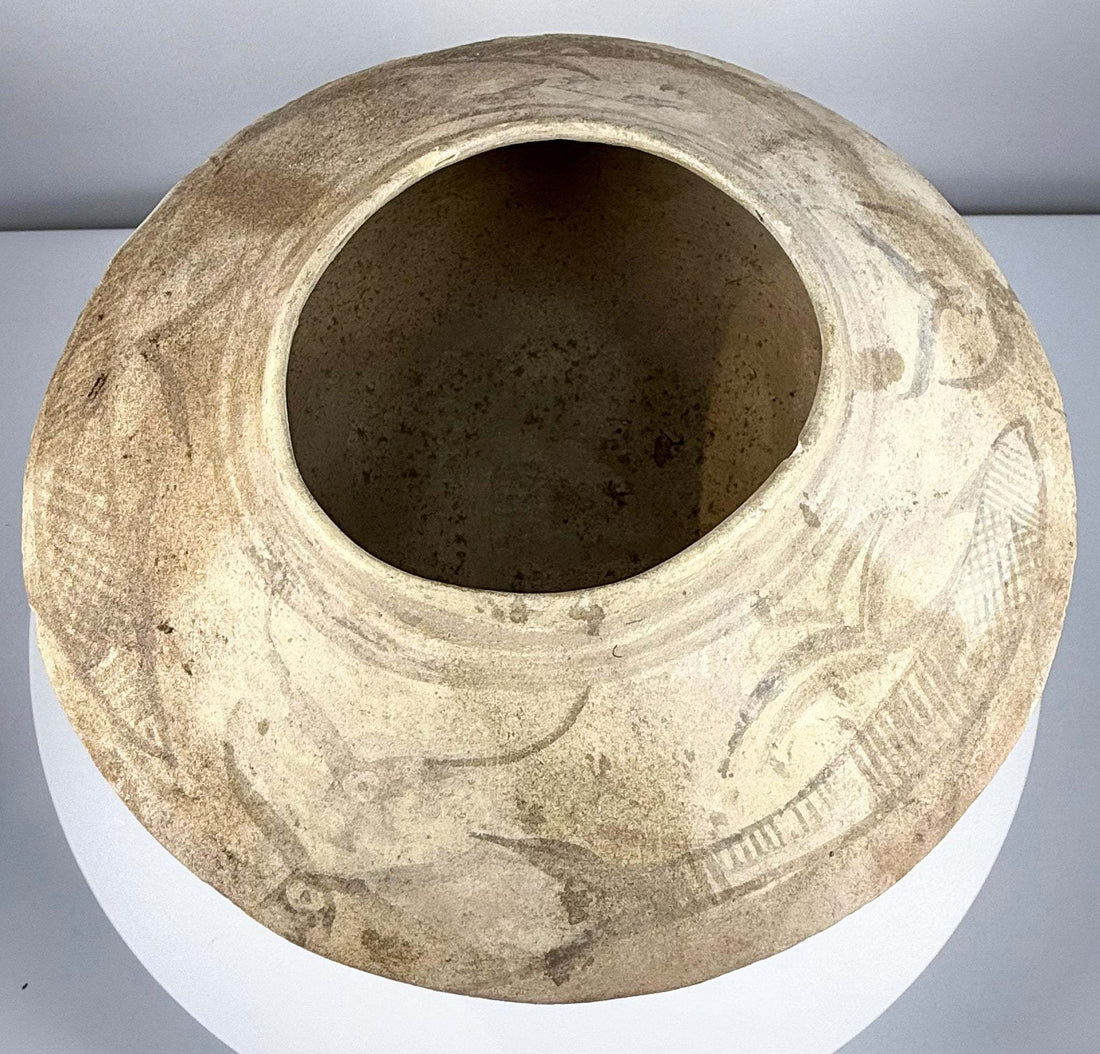
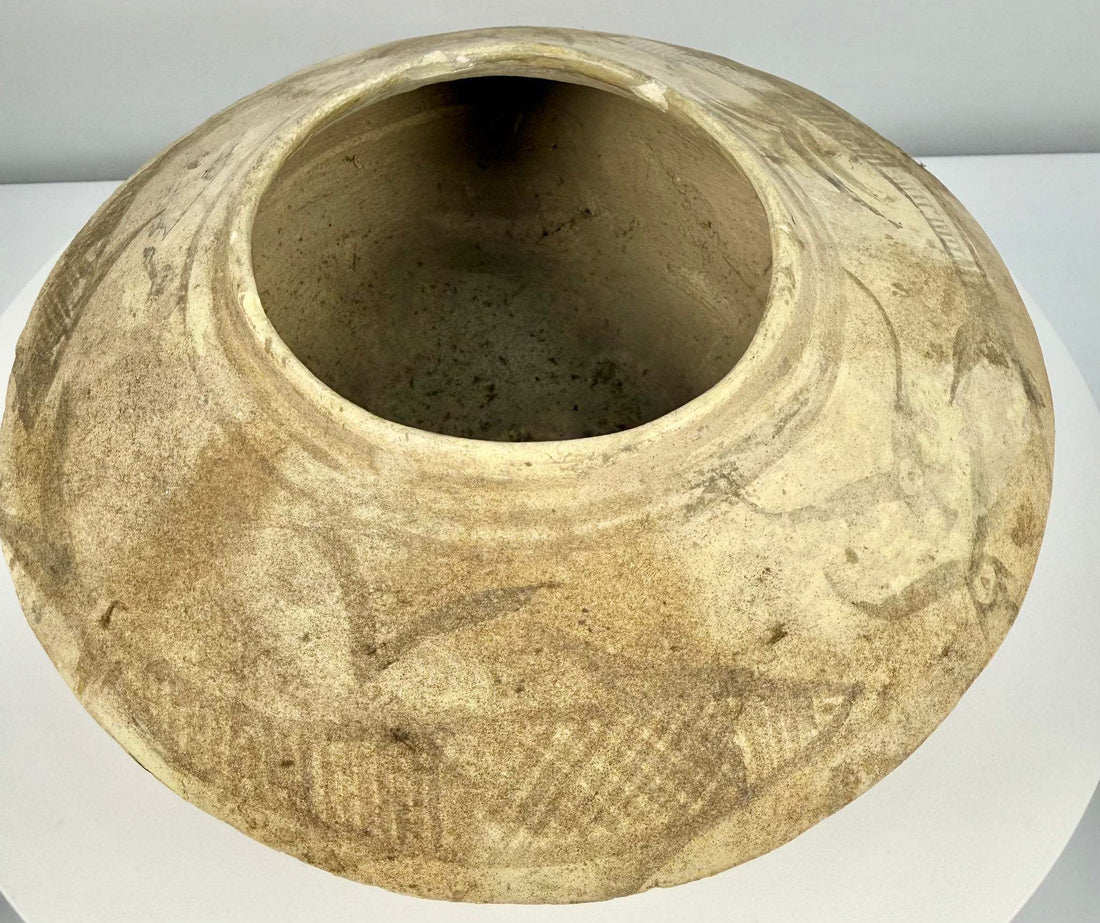
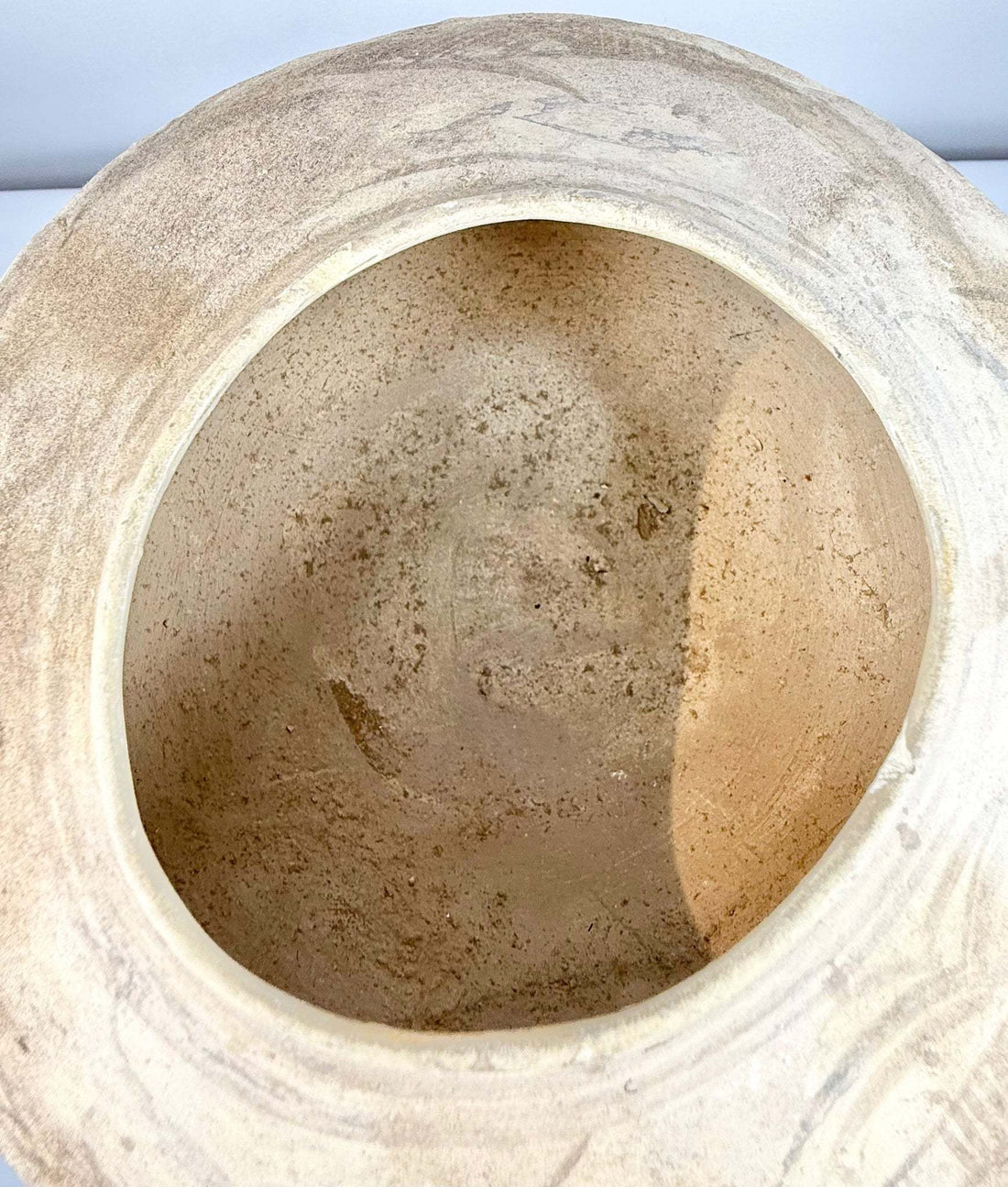
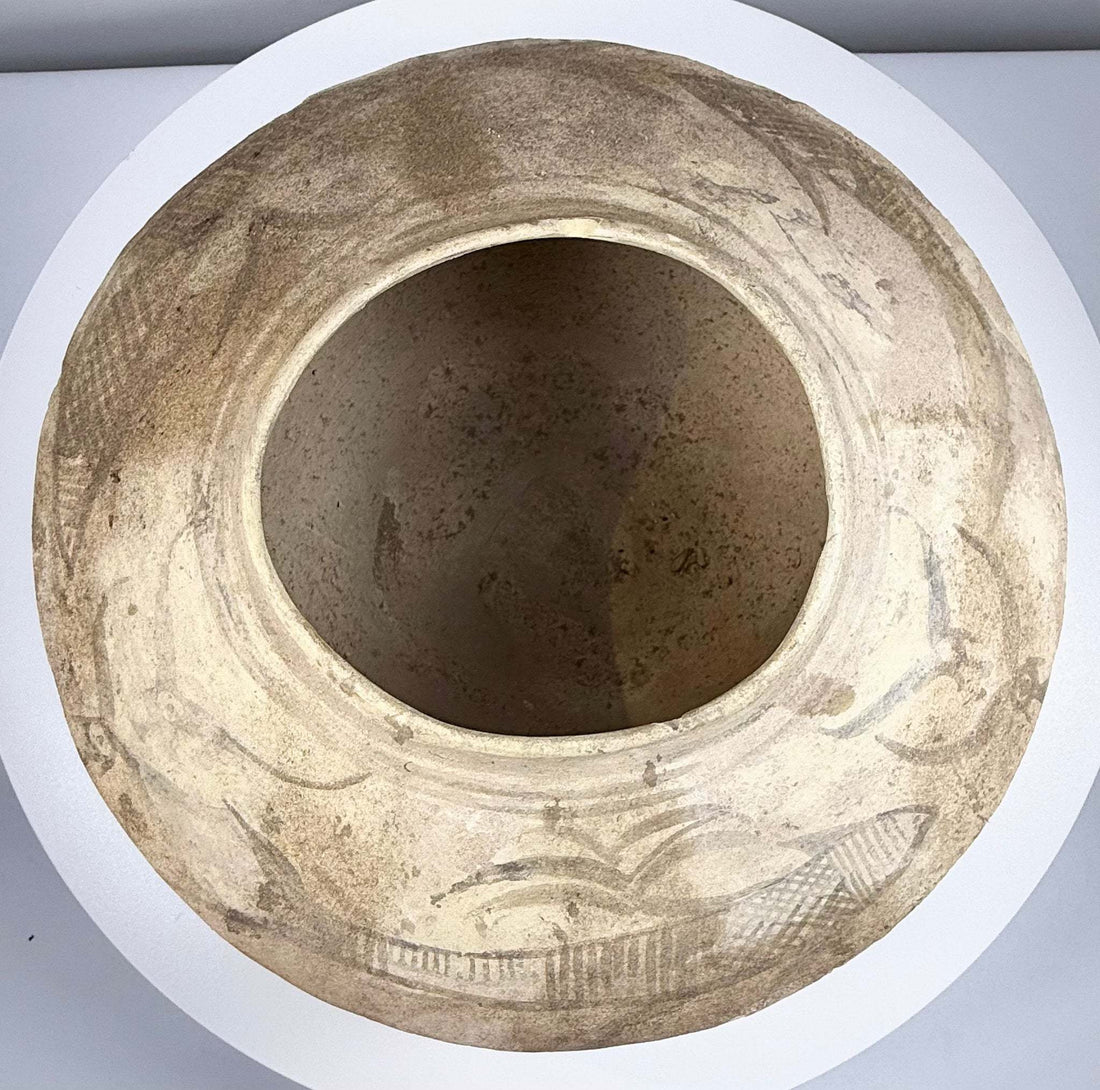
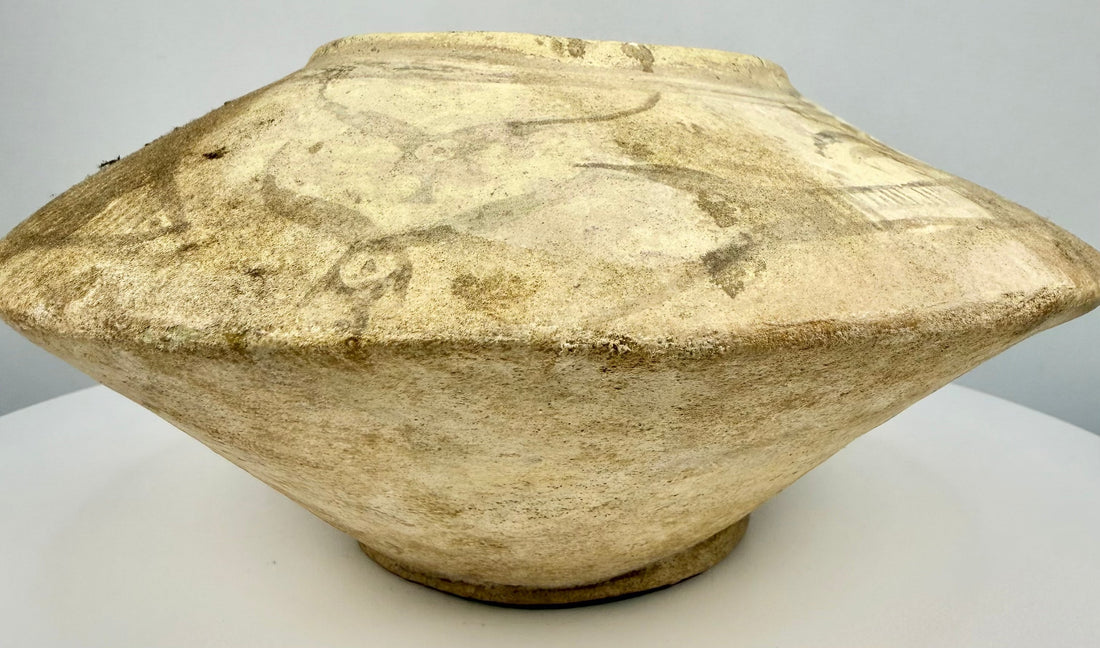
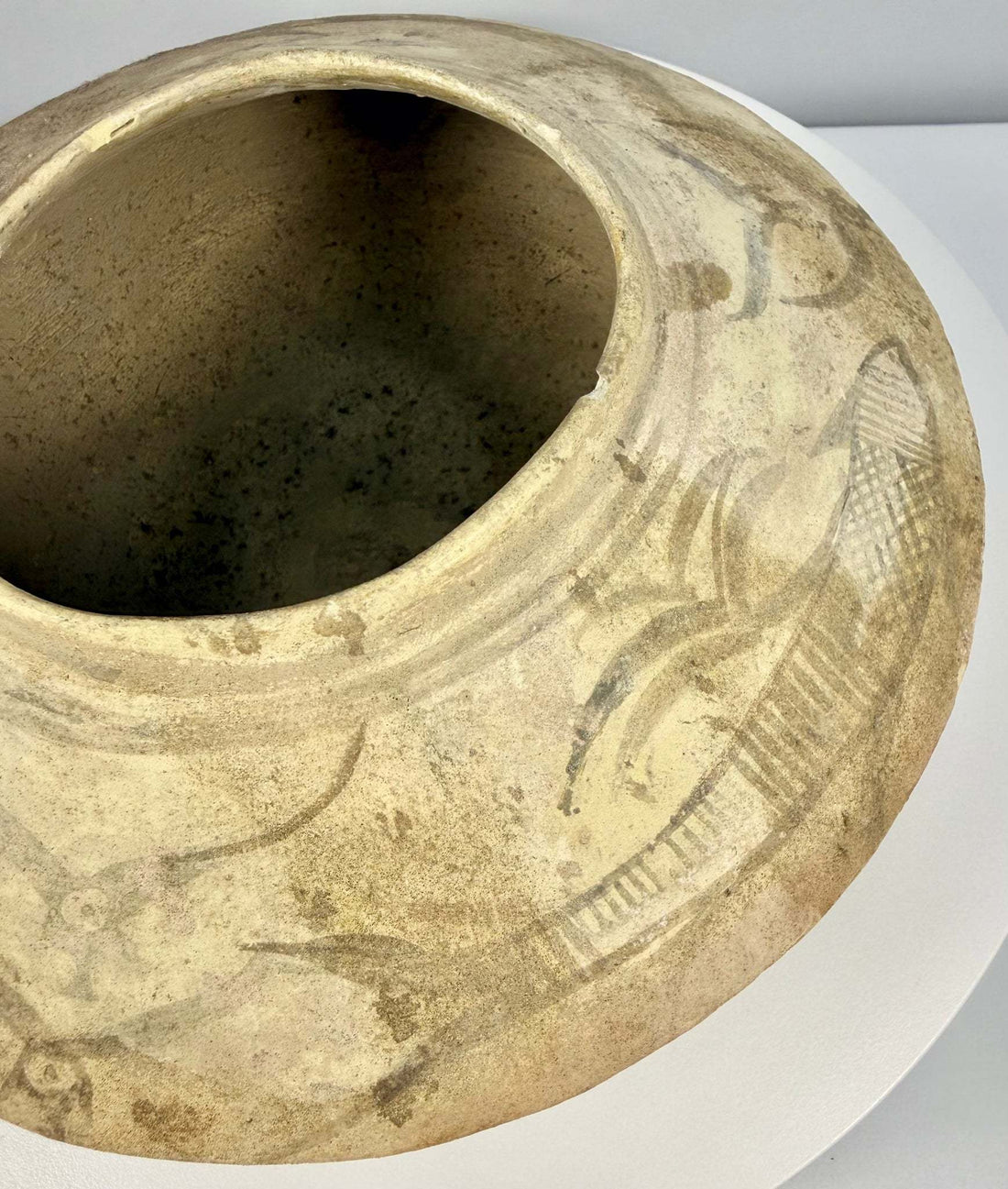
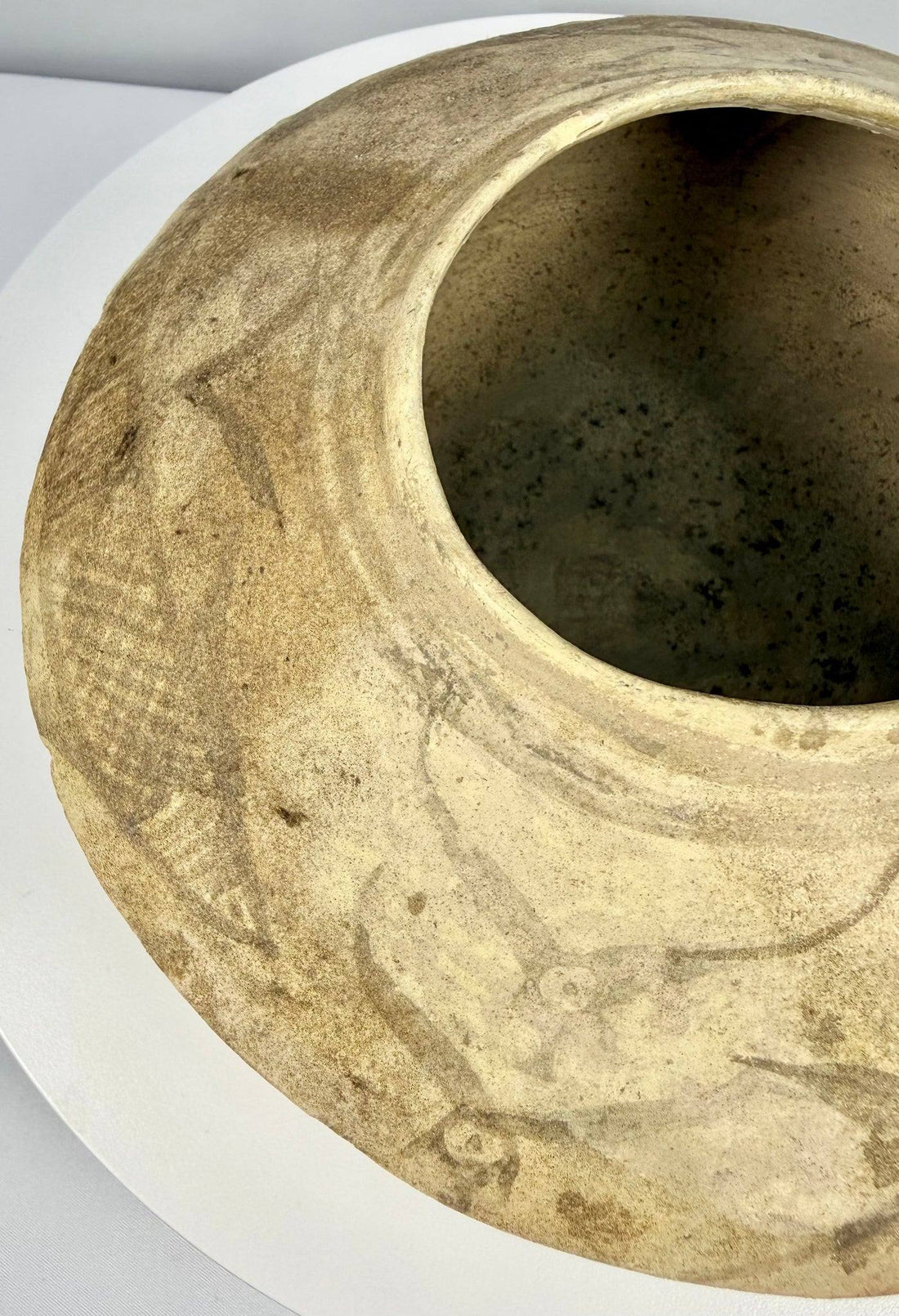
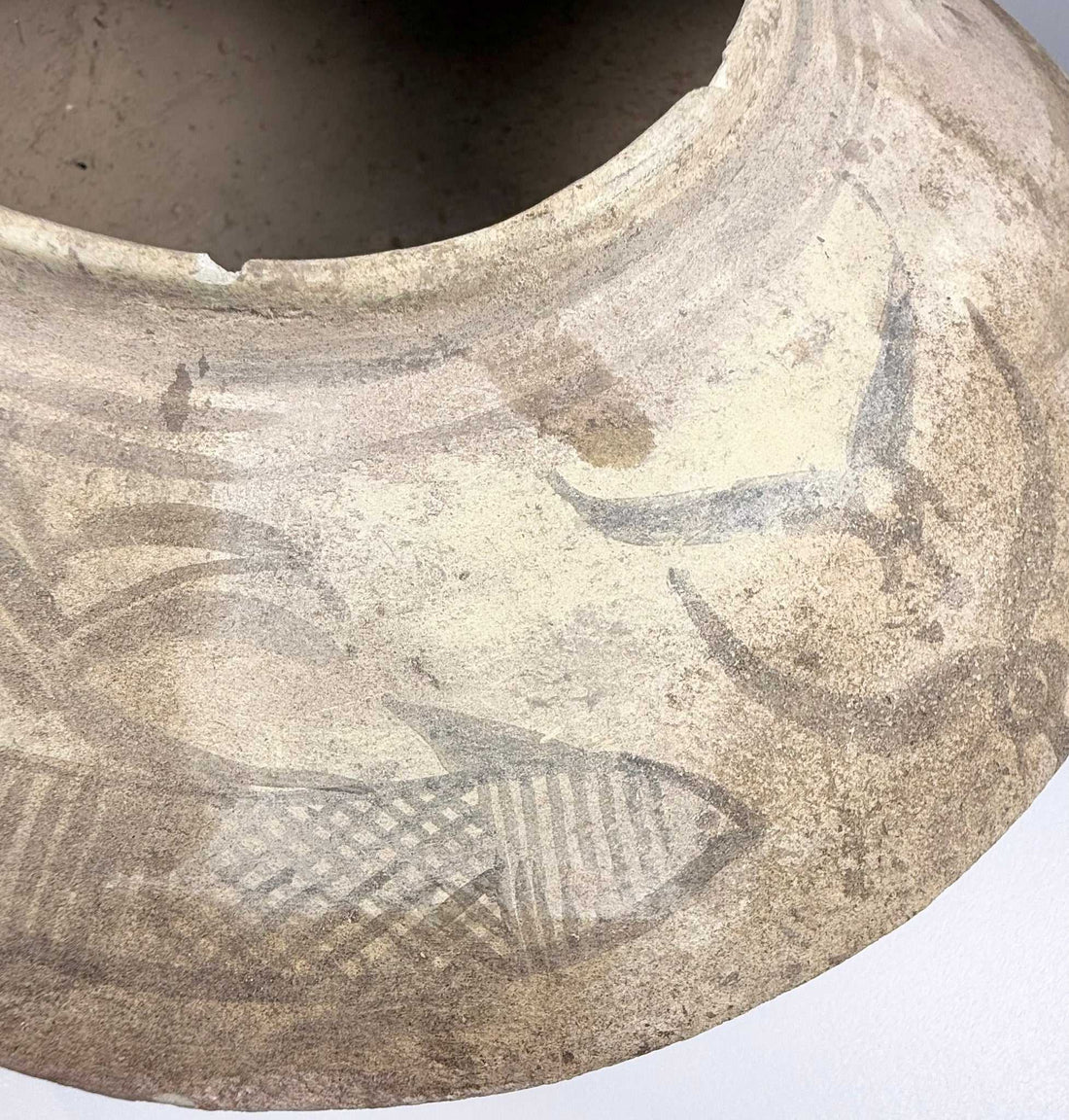
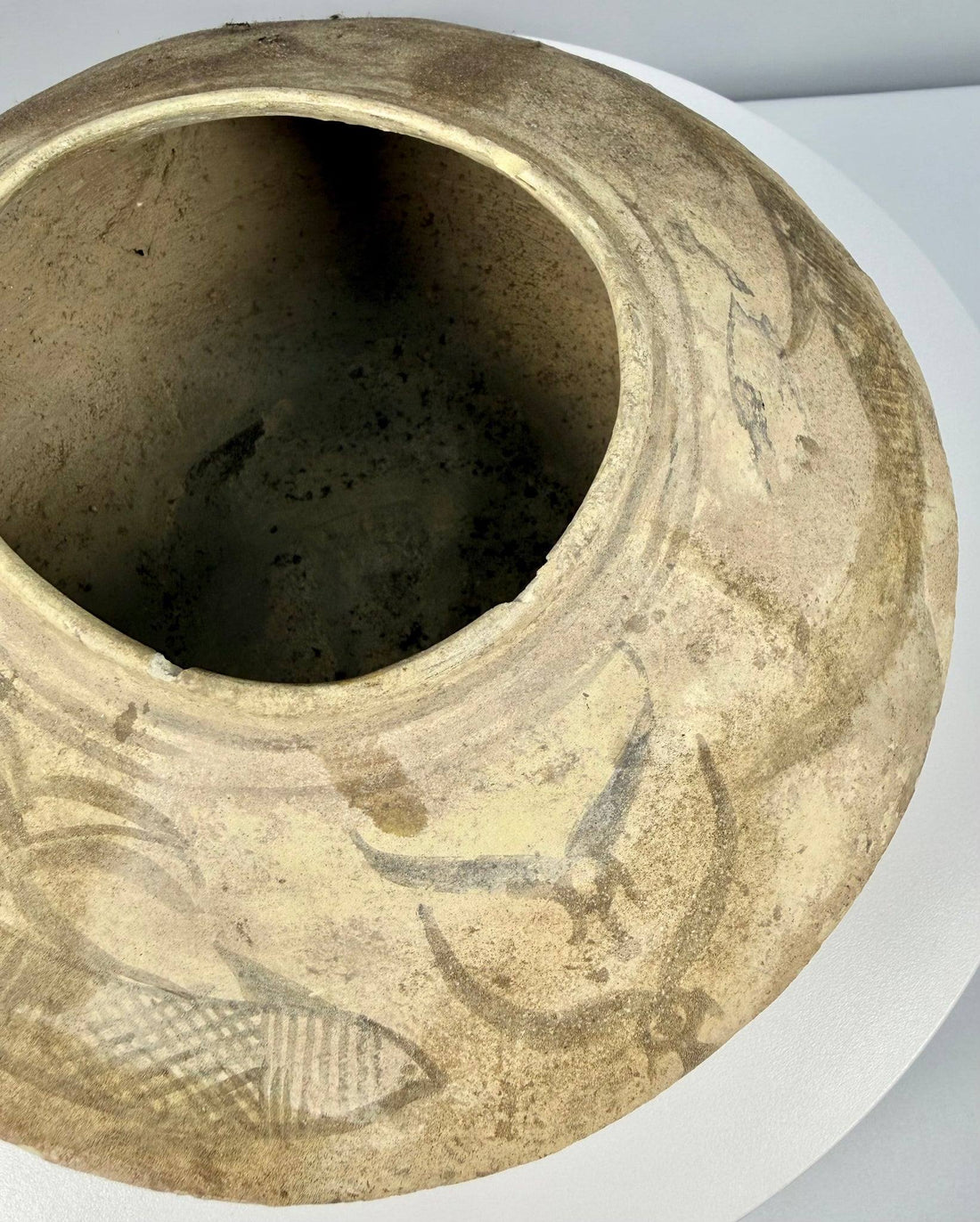
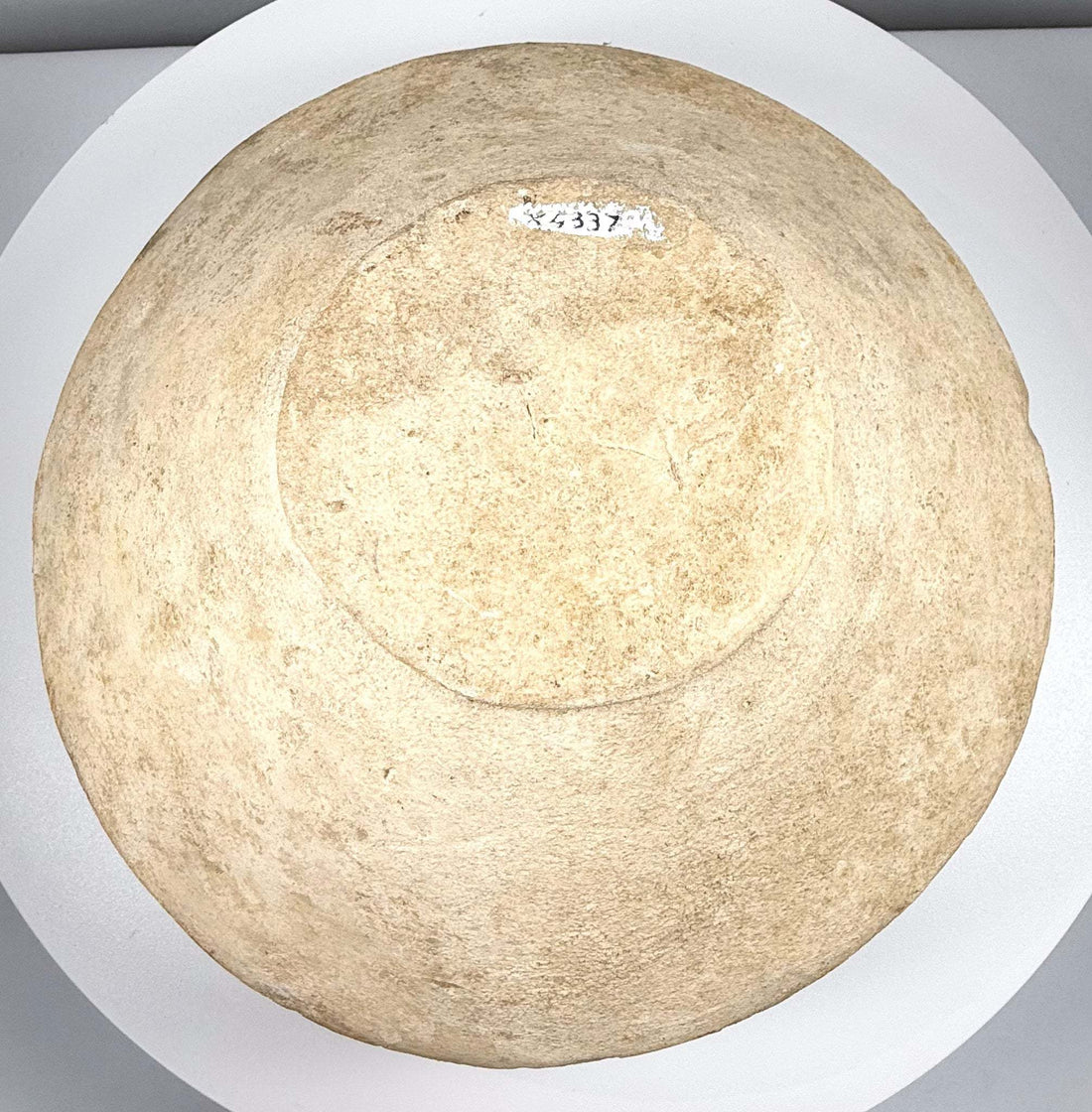
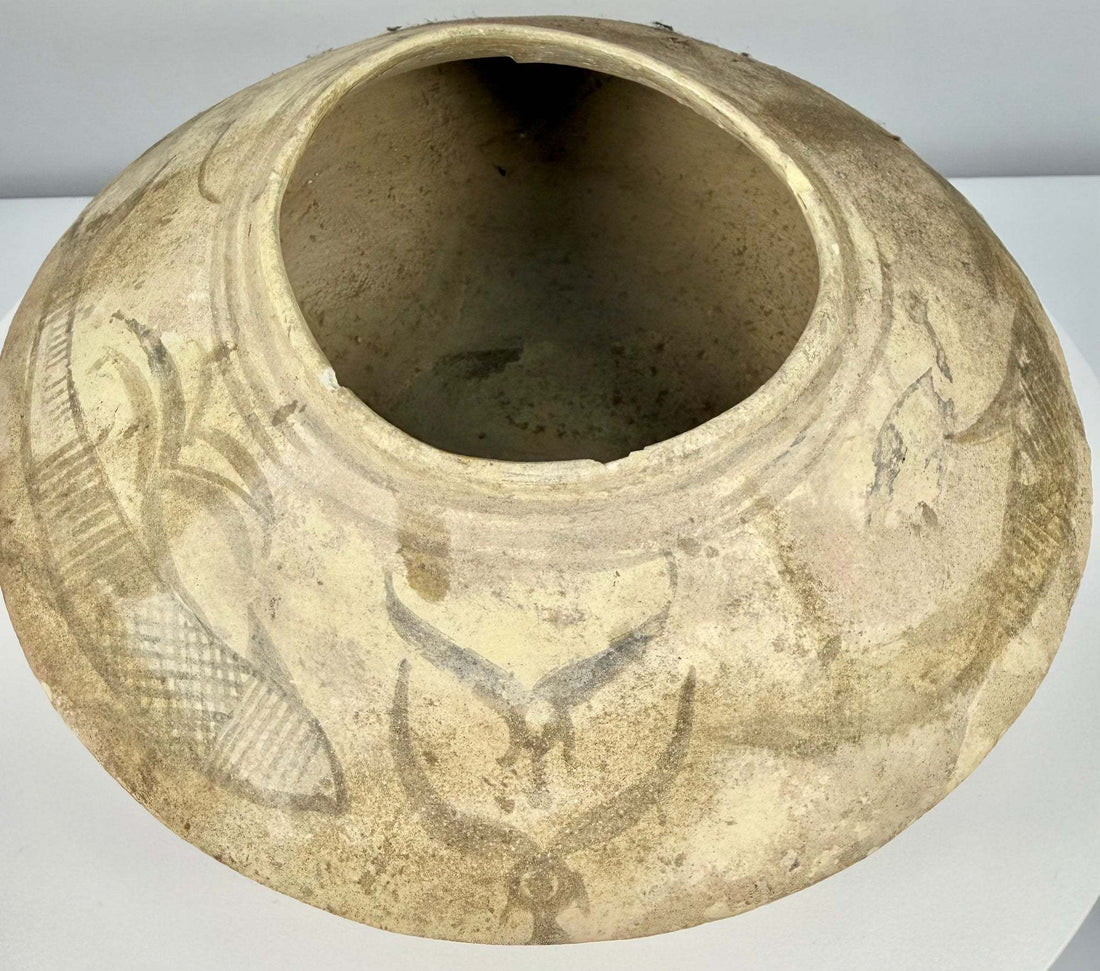
Ce vase en céramique ancien présente un corps globulaire aplati avec une bouche courte et ouverte et un bord légèrement évasé. Décorée dans un style peint à la barbotine, la surface porte des motifs de poissons stylisés et des bandes géométriques linéaires — des motifs caractéristiques des cultures tardives de la vallée de l'Indus et des cultures chalcolithiques précoces du nord de l'Inde. L'imagerie, en particulier le poisson, reflète un symbolisme rituel lié à la fertilité, à la subsistance et à la signification spirituelle de l'eau. Avec des traces de son étiquette d'inventaire d'excavation originale conservées sur la base, ce vase est un authentique artefact de l'une des plus anciennes civilisations urbaines du monde.

Caractéristiques

- Décoration peinte à la barbotine avec des pigments noirs et bruns

- Motifs de poissons encerclants avec des détails géométriques

- Lèvre irrégulière, montrant des signes d'utilisation ancienne

- Vestiges de l'étiquette d'excavation originale sur la base

- État non restauré, excavé avec usure naturelle

Signification culturelle

Des poteries comme celle-ci représentent à la fois les réalisations artistiques et utilitaires de la culture harappéenne tardive. Le motif du poisson avait un poids symbolique, incarnant l'abondance, l'eau et le renouveau cosmique, tout en reflétant les modes de vie agricoles et fluviaux de la civilisation. Ces récipients ne servaient pas seulement des fonctions quotidiennes ou rituelles, mais fournissent également un aperçu précieux du commerce, du symbolisme et de la continuité culturelle des premières sociétés sud-asiatiques.

État

Bon état d'excavation. Petits éclats sur le bord et abrasions superficielles conformes à l'âge. Aucune restauration. Stable et prêt à être exposé avec une patine archéologique authentique intacte.

Dimensions (approximatives)

Hauteur : 22,86 cm
Largeur : 11,43 cm

Âge (approximatif)

3 200–3 800 ans

Provenance

Anciennement partie de la collection des BC Galleries, Melbourne, Australie. Fondée en 1976, BC Galleries était un important marchand australien indépendant spécialisé dans l'art ancien et les antiquités, l'art tribal, l'ethnographie et les objets historiques d'un large éventail de cultures. Ultérieurement conservée dans une collection privée à Armadale, Victoria, Australie.

En savoir plus

Découvrez les secrets de la Civilisation de la vallée de l'Indus

Découvrez D'autres artefacts remarquables de la vallée de l'Indus dans notre collection

Description

Contexte historique et origine

Région : Région de la vallée de l'Indus (actuel nord-ouest de l'Inde ou Pakistan)
Matériau : Terre cuite (argile à faible cuisson)
Période : Phase Harappéenne tardive / Post-Harappéenne, 2e millénaire avant notre ère

Description

Ce vase en céramique ancien présente un corps globulaire aplati avec une bouche courte et ouverte et un bord légèrement évasé. Décorée dans un style peint à la barbotine, la surface porte des motifs de poissons stylisés et des bandes géométriques linéaires — des motifs caractéristiques des cultures tardives de la vallée de l'Indus et des cultures chalcolithiques précoces du nord de l'Inde. L'imagerie, en particulier le poisson, reflète un symbolisme rituel lié à la fertilité, à la subsistance et à la signification spirituelle de l'eau. Avec des traces de son étiquette d'inventaire d'excavation originale conservées sur la base, ce vase est un authentique artefact de l'une des plus anciennes civilisations urbaines du monde.

Caractéristiques

- Décoration peinte à la barbotine avec des pigments noirs et bruns

- Motifs de poissons encerclants avec des détails géométriques

- Lèvre irrégulière, montrant des signes d'utilisation ancienne

- Vestiges de l'étiquette d'excavation originale sur la base

- État non restauré, excavé avec usure naturelle

Signification culturelle

Des poteries comme celle-ci représentent à la fois les réalisations artistiques et utilitaires de la culture harappéenne tardive. Le motif du poisson avait un poids symbolique, incarnant l'abondance, l'eau et le renouveau cosmique, tout en reflétant les modes de vie agricoles et fluviaux de la civilisation. Ces récipients ne servaient pas seulement des fonctions quotidiennes ou rituelles, mais fournissent également un aperçu précieux du commerce, du symbolisme et de la continuité culturelle des premières sociétés sud-asiatiques.

État

Bon état d'excavation. Petits éclats sur le bord et abrasions superficielles conformes à l'âge. Aucune restauration. Stable et prêt à être exposé avec une patine archéologique authentique intacte.

Dimensions (approximatives)

Hauteur : 22,86 cm
Largeur : 11,43 cm

Âge (approximatif)

3 200–3 800 ans

Provenance

Anciennement partie de la collection des BC Galleries, Melbourne, Australie. Fondée en 1976, BC Galleries était un important marchand australien indépendant spécialisé dans l'art ancien et les antiquités, l'art tribal, l'ethnographie et les objets historiques d'un large éventail de cultures. Ultérieurement conservée dans une collection privée à Armadale, Victoria, Australie.

En savoir plus

Découvrez les secrets de la Civilisation de la vallée de l'Indus

Découvrez D'autres artefacts remarquables de la vallée de l'Indus dans notre collection

Vous aimerez peut-être aussi