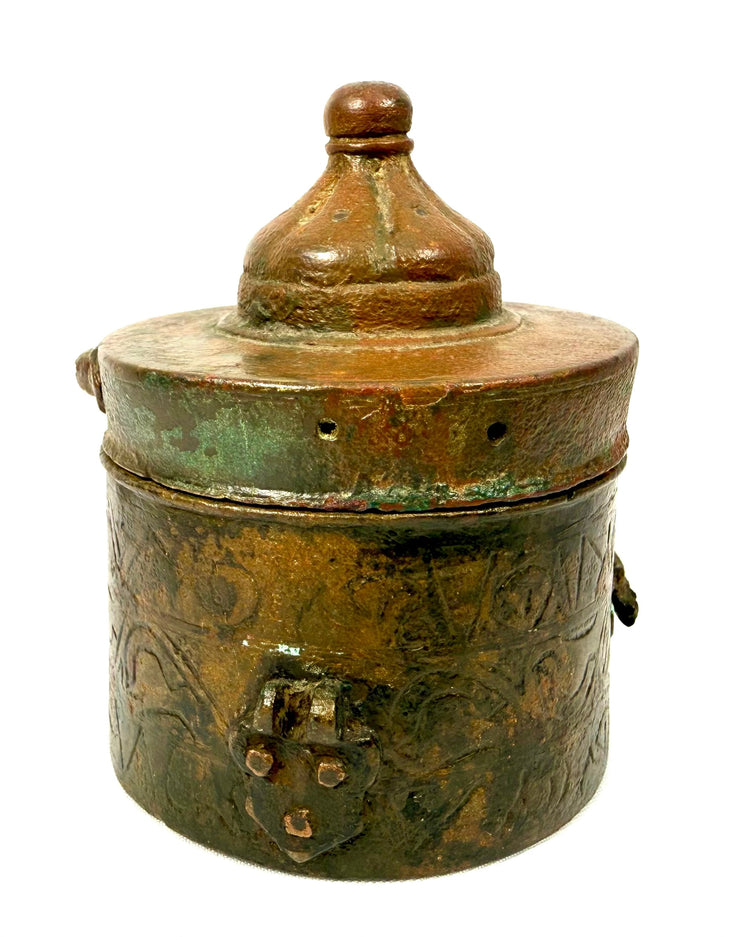
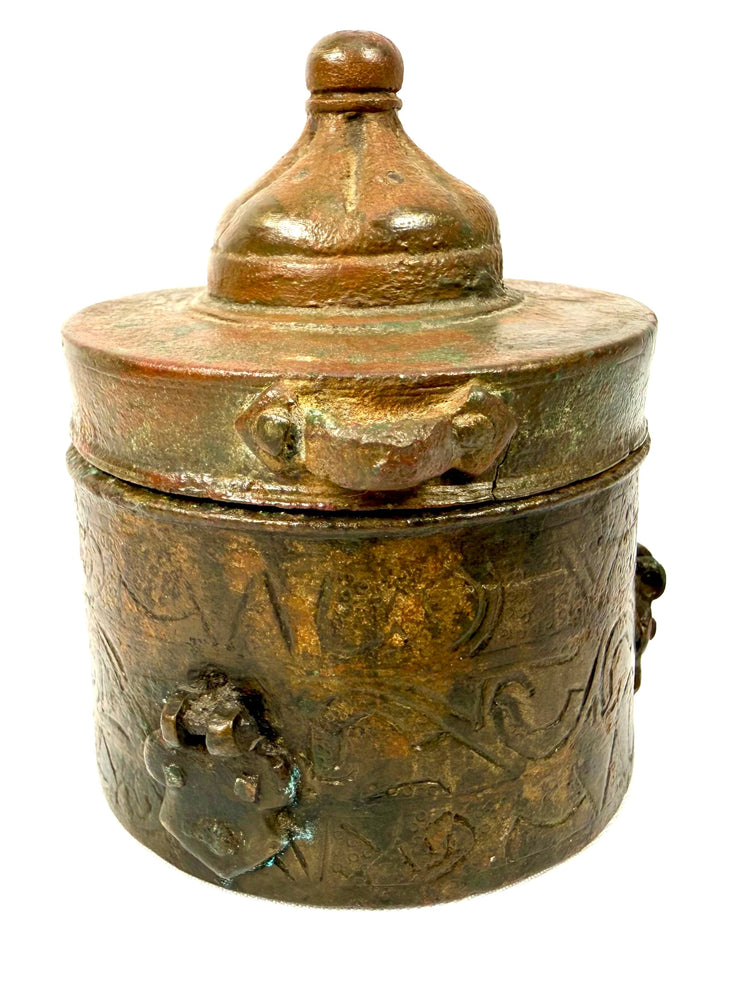
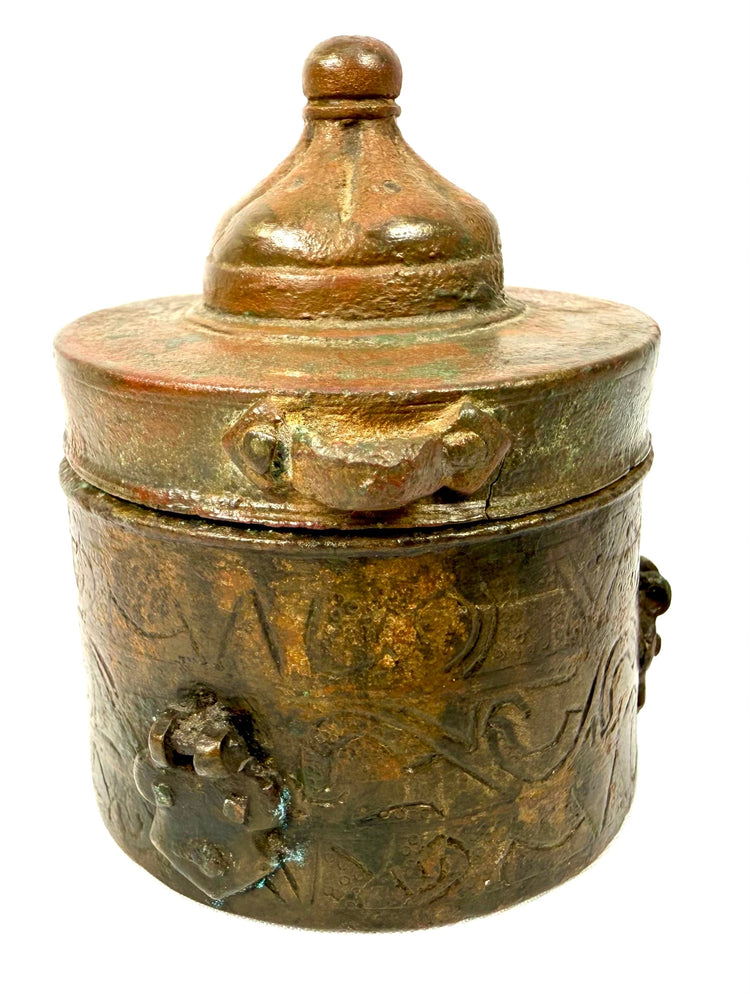
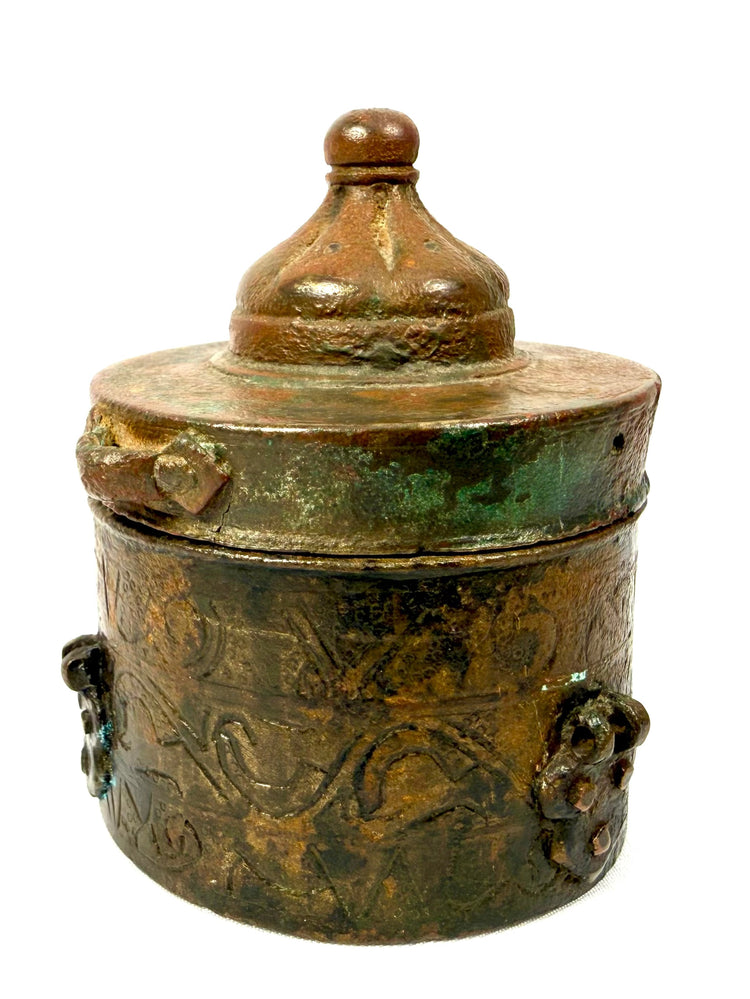
Khorassan islamique | Encrier en bronze | Xᵉ-XIIᵉ siècle

Historique de provenance et de propriété
Prix habituel
$500.00
Prix soldé
$500.00
Prix habituel
Frais de port calculés à la caisse.

This is a one-of-a-kind historical object. Once sold, this exact piece will not be restocked.

Questions before acquiring? Additional photographs, condition details, documentation, shipping information or a private viewing are available upon request.
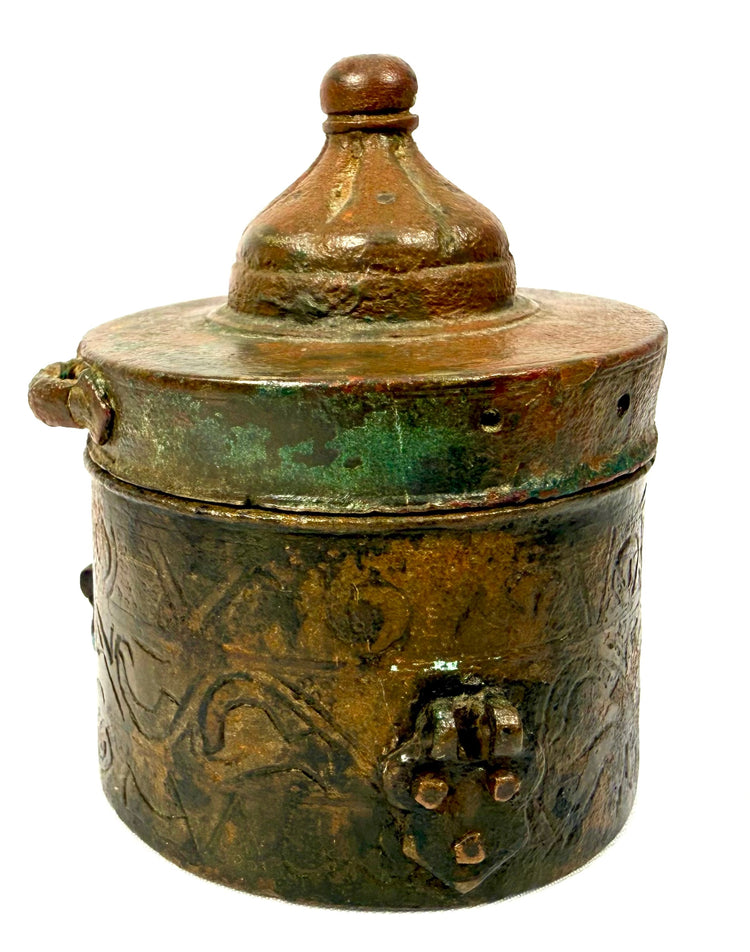
Islamic Khorassan bronze inkwell with domed lid and engraved floral geometric motifs
360-degree rotating video of an antique Islamic Khorassan bronze inkwell dating to the 10th–12th century CE, featuring a cylindrical body, domed lid with rounded finial, finely engraved floral and geometric patterns, decorative side fittings, and rich green and reddish-brown patina. An example of medieval Islamic metalwork from the Islamic Golden Age, shown from multiple angles.
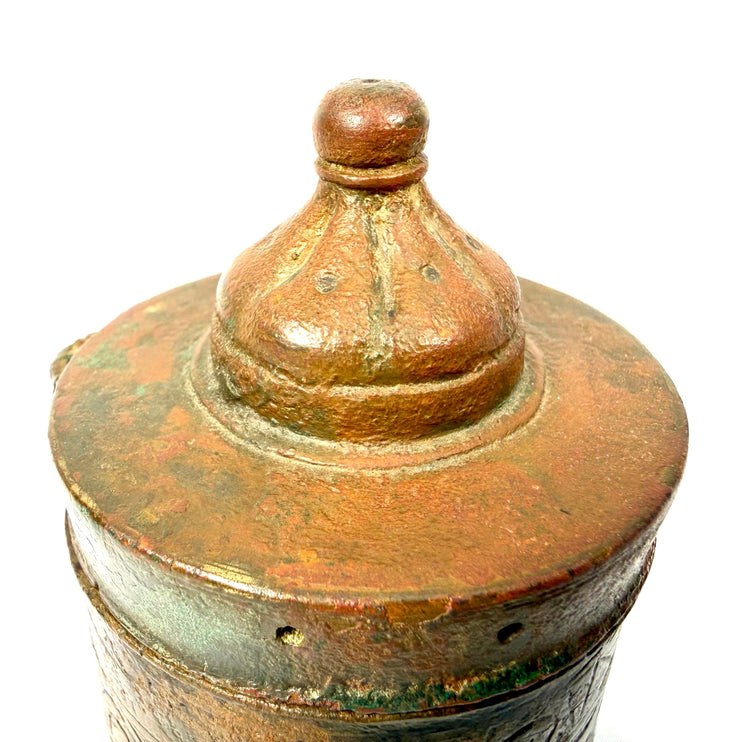
Medieval Islamic Khorassan bronze inkwell with a cylindrical body, conical domed lid, and rounded finial, attributed to the 10th–12th century CE.
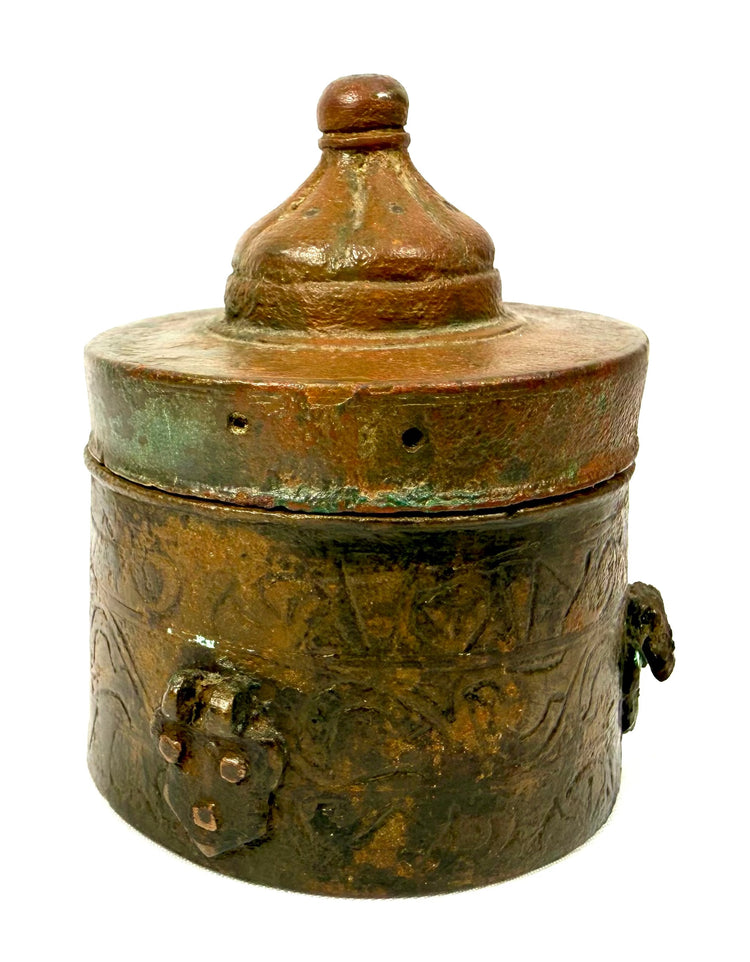
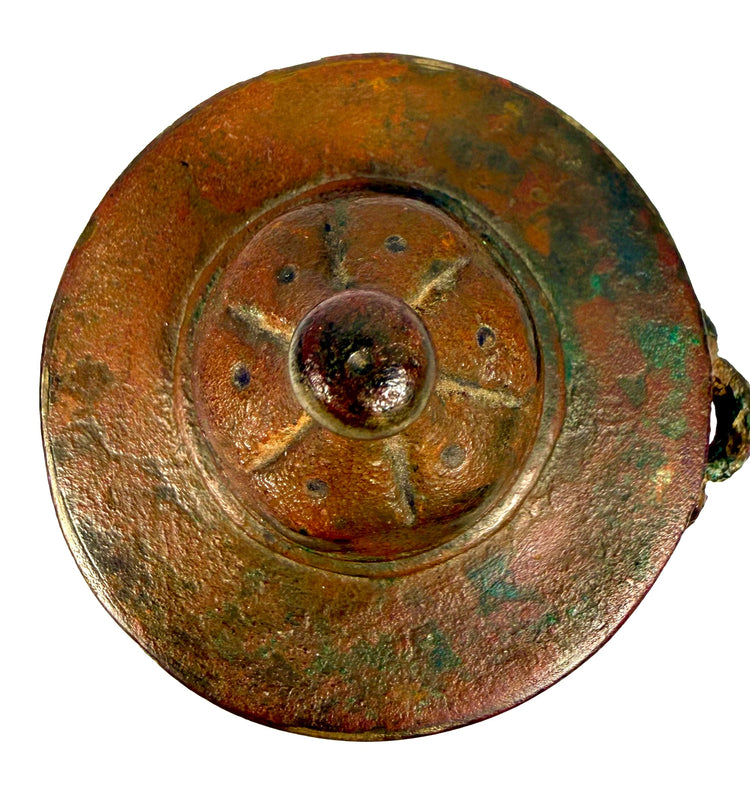
Antique Khorassan bronze inkwell featuring a broad circular lid with raised horizontal mouldings and a prominent rounded finial.
Islamic Golden Age bronze inkwell displaying intricate engraved scrolling, geometric, and circular motifs across its cylindrical body.
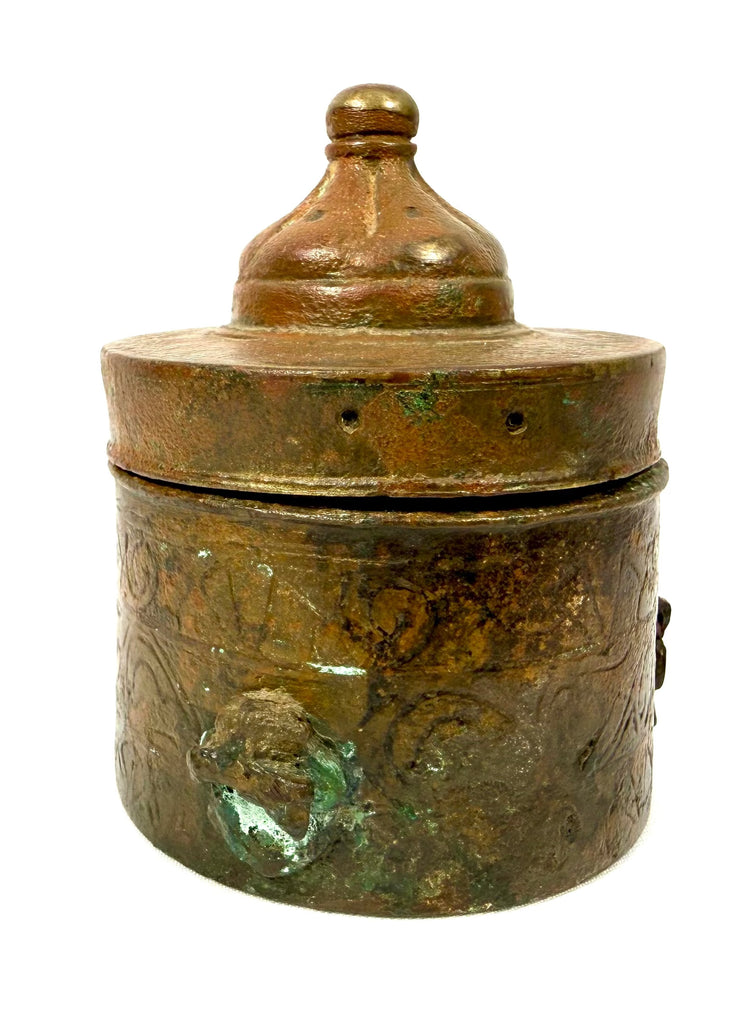
Medieval Islamic bronze writing vessel with a conical domed lid, small perforations along the upper band, and aged brown and green patination.
Khorassan bronze inkwell featuring surviving applied metal fittings, decorative engravings, and an irregular archaeological surface texture.
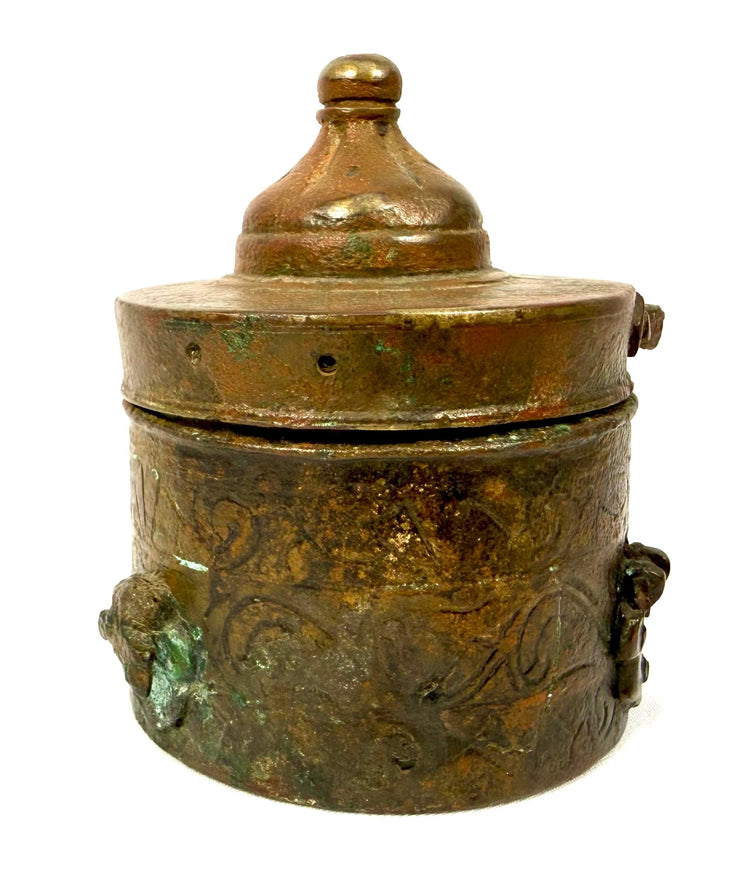
Antique Persian Khorassan bronze inkwell with a substantial cylindrical construction and naturally weathered olive, brown, and green surfaces.
Medieval Islamic bronze inkwell displaying engraved curvilinear ornamentation, localized oxidation, and centuries-old surface wear.
Historical Khorassan bronze writing accessory featuring a fitted domed lid, pronounced circular mouldings, and traditional Islamic metalworking details.
Islamic bronze inkwell with preserved metal attachment elements, small lid perforations, and partially worn geometric engravings.
Medieval Khorassan bronze inkwell showcasing a rounded lid finial, aged bronze patina, surface pitting, and intricate ornamental decoration.
Antique Islamic Khorassan bronze inkwell measuring approximately 3 inches tall and 2.5 inches wide, with a cylindrical body and conical domed lid.
  • Islamic Khorassan bronze inkwell with domed lid and engraved floral geometric motifs
  • 360-degree rotating video of an antique Islamic Khorassan bronze inkwell dating to the 10th–12th century CE, featuring a cylindrical body, domed lid with rounded finial, finely engraved floral and geometric patterns, decorative side fittings, and rich green and reddish-brown patina. An example of medieval Islamic metalwork from the Islamic Golden Age, shown from multiple angles.
  • Medieval Islamic Khorassan bronze inkwell with a cylindrical body, conical domed lid, and rounded finial, attributed to the 10th–12th century CE.
  • Antique Khorassan bronze inkwell featuring a broad circular lid with raised horizontal mouldings and a prominent rounded finial.
  • Islamic Golden Age bronze inkwell displaying intricate engraved scrolling, geometric, and circular motifs across its cylindrical body.
  • Medieval Islamic bronze writing vessel with a conical domed lid, small perforations along the upper band, and aged brown and green patination.
  • Khorassan bronze inkwell featuring surviving applied metal fittings, decorative engravings, and an irregular archaeological surface texture.
  • Antique Persian Khorassan bronze inkwell with a substantial cylindrical construction and naturally weathered olive, brown, and green surfaces.
  • Medieval Islamic bronze inkwell displaying engraved curvilinear ornamentation, localized oxidation, and centuries-old surface wear.
  • Historical Khorassan bronze writing accessory featuring a fitted domed lid, pronounced circular mouldings, and traditional Islamic metalworking details.
  • Islamic bronze inkwell with preserved metal attachment elements, small lid perforations, and partially worn geometric engravings.
  • Medieval Khorassan bronze inkwell showcasing a rounded lid finial, aged bronze patina, surface pitting, and intricate ornamental decoration.
  • Antique Islamic Khorassan bronze inkwell measuring approximately 3 inches tall and 2.5 inches wide, with a cylindrical body and conical domed lid.
Islamic Khorassan bronze inkwell with domed lid and engraved floral geometric motifs
360-degree rotating video of an antique Islamic Khorassan bronze inkwell dating to the 10th–12th century CE, featuring a cylindrical body, domed lid with rounded finial, finely engraved floral and geometric patterns, decorative side fittings, and rich green and reddish-brown patina. An example of medieval Islamic metalwork from the Islamic Golden Age, shown from multiple angles.
Medieval Islamic Khorassan bronze inkwell with a cylindrical body, conical domed lid, and rounded finial, attributed to the 10th–12th century CE.
Antique Khorassan bronze inkwell featuring a broad circular lid with raised horizontal mouldings and a prominent rounded finial.
Islamic Golden Age bronze inkwell displaying intricate engraved scrolling, geometric, and circular motifs across its cylindrical body.
Medieval Islamic bronze writing vessel with a conical domed lid, small perforations along the upper band, and aged brown and green patination.
Khorassan bronze inkwell featuring surviving applied metal fittings, decorative engravings, and an irregular archaeological surface texture.
Antique Persian Khorassan bronze inkwell with a substantial cylindrical construction and naturally weathered olive, brown, and green surfaces.
Medieval Islamic bronze inkwell displaying engraved curvilinear ornamentation, localized oxidation, and centuries-old surface wear.
Historical Khorassan bronze writing accessory featuring a fitted domed lid, pronounced circular mouldings, and traditional Islamic metalworking details.
Islamic bronze inkwell with preserved metal attachment elements, small lid perforations, and partially worn geometric engravings.
Medieval Khorassan bronze inkwell showcasing a rounded lid finial, aged bronze patina, surface pitting, and intricate ornamental decoration.
Antique Islamic Khorassan bronze inkwell measuring approximately 3 inches tall and 2.5 inches wide, with a cylindrical body and conical domed lid.
Authenticity and secure checkout guarantee

Khorassan islamique | Encrier en bronze | Xᵉ-XIIᵉ siècle

Description

Contexte historique et origine

Région : Khorassan (nord-est de l'Iran, Afghanistan, Asie centrale)
Matériau : Bronze
Période : Xe-XIIe siècle de notre ère

Description

Cet encrier exceptionnel en bronze islamique du Khorassan date du Xe-XIIe siècle, une période réputée pour ses réalisations artistiques et intellectuelles pendant l'âge d'or islamique. L'encrier est magnifiquement conçu avec un couvercle bombé doté d'une petite poignée et un corps cylindrique, richement gravé de motifs floraux et géométriques complexes. Sa forme élégante et ses détails décoratifs reflètent le raffinement de l'artisanat du métal du Khorassan, l'une des formes d'art les plus célèbres de cette période.

Caractéristiques

- Motifs floraux et géométriques finement gravés, typiques de l'art du Khorassan

- Couvercle bombé avec petite poignée et corps de forme cylindrique

- Conception compacte alliant fonctionnalité et beauté décorative

- Patine développée dans des tons verts et bruns due à des siècles d'âge et d'utilisation

Signification culturelle

Des encriers comme celui-ci étaient des outils essentiels pour les érudits, les scribes et les calligraphes, soulignant le rôle central de l'alphabétisation et de l'apprentissage pendant l'âge d'or islamique. Au-delà de leur fonction pratique, ces objets incarnaient la grande valeur accordée à la connaissance, aux manuscrits et à la calligraphie en tant que pursuits artistiques et intellectuelles. Cette pièce aurait été un bien précieux, symbolisant l'érudition et le raffinement culturel.

Condition

L'encrier présente une riche patine naturelle avec des nuances vertes et brunes conformes à son âge. L'usure de surface et les intempéries ajoutent de la profondeur à son authenticité tout en préservant ses motifs décoratifs complexes.

Dimensions (approximatives)

Hauteur : 7,6 cm
Largeur : 6,3 cm

Âge (approximatif)

800–1 100 ans

Provenance

Faisait autrefois partie de la collection des BC Galleries, Melbourne, Australie. Fondée en 1976, BC Galleries était un important marchand indépendant australien spécialisé dans l'art ancien et les antiquités, l'art tribal, l'ethnographie et les objets historiques issus d'un large éventail de cultures. Par la suite, détenue dans une collection privée à Armadale, Victoria, Australie.

En savoir plus

Examinez un exemple comparable d'œuvres métalliques du Moyen-Orient au Walters Art Museum

Explorez notre Collection d'antiquités et d'art ancien du Moyen-Orient

Description

Contexte historique et origine

Région : Khorassan (nord-est de l'Iran, Afghanistan, Asie centrale)
Matériau : Bronze
Période : Xe-XIIe siècle de notre ère

Description

Cet encrier exceptionnel en bronze islamique du Khorassan date du Xe-XIIe siècle, une période réputée pour ses réalisations artistiques et intellectuelles pendant l'âge d'or islamique. L'encrier est magnifiquement conçu avec un couvercle bombé doté d'une petite poignée et un corps cylindrique, richement gravé de motifs floraux et géométriques complexes. Sa forme élégante et ses détails décoratifs reflètent le raffinement de l'artisanat du métal du Khorassan, l'une des formes d'art les plus célèbres de cette période.

Caractéristiques

- Motifs floraux et géométriques finement gravés, typiques de l'art du Khorassan

- Couvercle bombé avec petite poignée et corps de forme cylindrique

- Conception compacte alliant fonctionnalité et beauté décorative

- Patine développée dans des tons verts et bruns due à des siècles d'âge et d'utilisation

Signification culturelle

Des encriers comme celui-ci étaient des outils essentiels pour les érudits, les scribes et les calligraphes, soulignant le rôle central de l'alphabétisation et de l'apprentissage pendant l'âge d'or islamique. Au-delà de leur fonction pratique, ces objets incarnaient la grande valeur accordée à la connaissance, aux manuscrits et à la calligraphie en tant que pursuits artistiques et intellectuelles. Cette pièce aurait été un bien précieux, symbolisant l'érudition et le raffinement culturel.

Condition

L'encrier présente une riche patine naturelle avec des nuances vertes et brunes conformes à son âge. L'usure de surface et les intempéries ajoutent de la profondeur à son authenticité tout en préservant ses motifs décoratifs complexes.

Dimensions (approximatives)

Hauteur : 7,6 cm
Largeur : 6,3 cm

Âge (approximatif)

800–1 100 ans

Provenance

Faisait autrefois partie de la collection des BC Galleries, Melbourne, Australie. Fondée en 1976, BC Galleries était un important marchand indépendant australien spécialisé dans l'art ancien et les antiquités, l'art tribal, l'ethnographie et les objets historiques issus d'un large éventail de cultures. Par la suite, détenue dans une collection privée à Armadale, Victoria, Australie.

En savoir plus

Examinez un exemple comparable d'œuvres métalliques du Moyen-Orient au Walters Art Museum

Explorez notre Collection d'antiquités et d'art ancien du Moyen-Orient

Vous aimerez peut-être aussi