


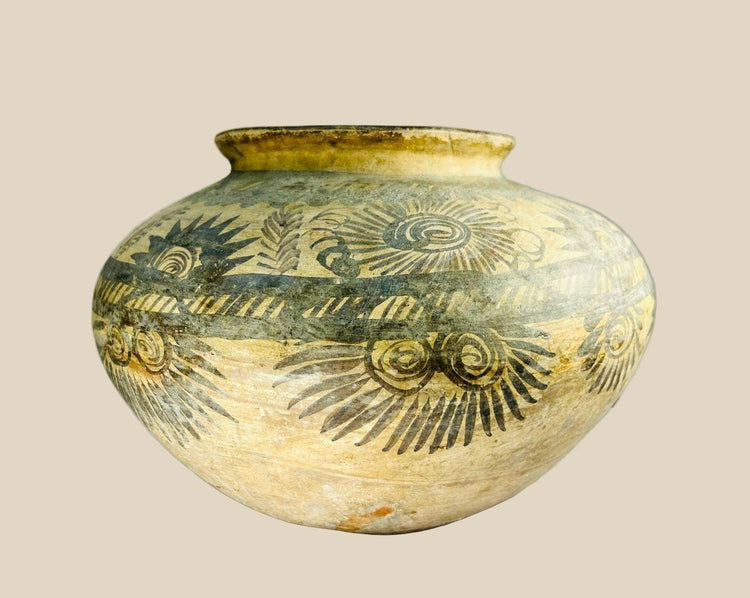
Vase en céramique néolithique européen | Jarre en terre cuite peinte | Vers 5500–4500 av. J.-C.
- Prix habituel
- $2,500.00
- Prix soldé
- $2,500.00
- Prix habituel
Impossible de charger la disponibilité du service de retrait



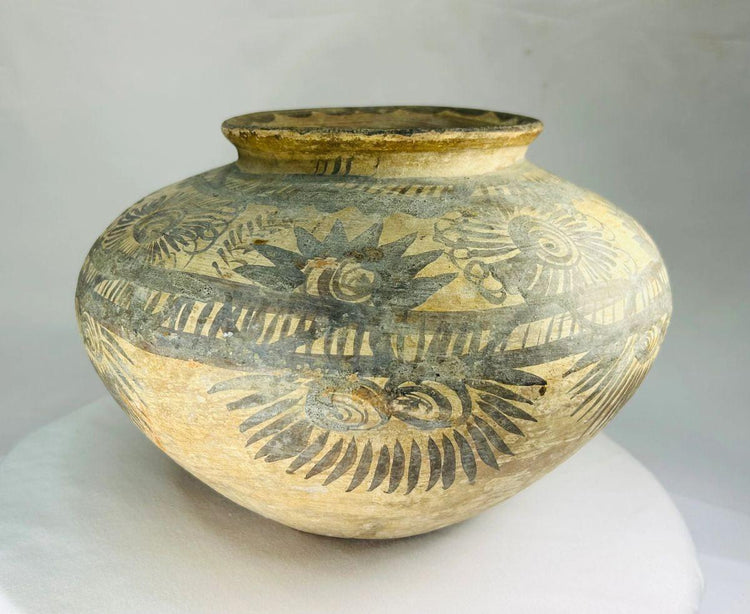
Vase en céramique néolithique européen | Jarre en terre cuite peinte | Vers 5500–4500 av. J.-C.
Description
Plus
Moins
Contexte historique et origine
Région : Europe néolithique (probablement la culture de la céramique linéaire [LBK] ou la culture de Vinča)
Matériau : Terre cuite moulée à la main avec décoration peinte
Période : vers 5500-4500 avant notre ère
Description
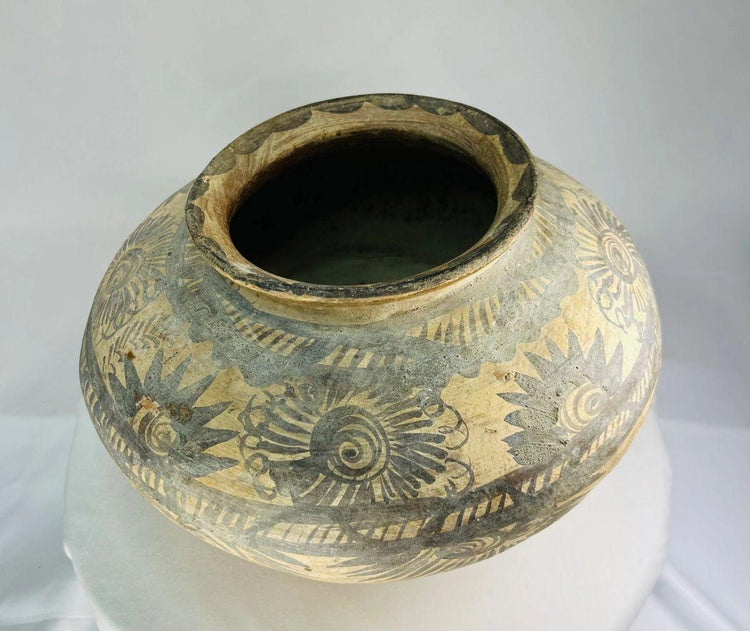
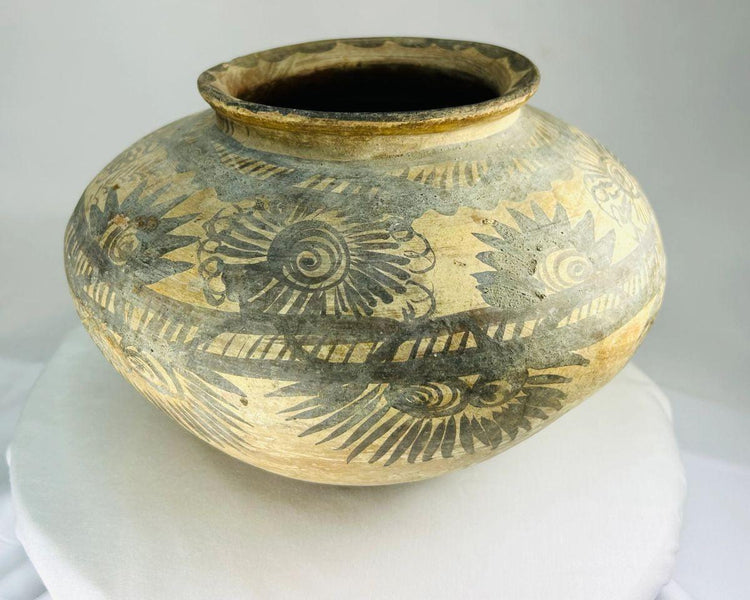
Ce rare vase en céramique peinte néolithique européen représente l'une des premières réalisations artistiques de la civilisation agraire. Façonné en terre cuite et orné de motifs en spirale, floraux et géométriques, il témoigne de la transition d'une vie nomade à des communautés agricoles sédentaires. Sa forme bulbeuse, son col étroit et son large rebord suggèrent une double fonction, rituelle et domestique, symbolisant la fertilité, la vie et le renouveau spirituel. Conservée sous une riche patine, sa surface peinte d'origine capture l'esprit de l'artisanat préhistorique européen. La symétrie et l'équilibre de son décor révèlent une maîtrise sophistiquée des proportions, des couleurs et du symbolisme, bien antérieure à l'histoire écrite.
Caractéristiques
- Authentique vase néolithique en terre cuite peint à la main
- Des motifs complexes en spirale, floraux et géométriques symbolisant la fertilité et les cycles de vie
- Corps bulbeux à large bord, idéal pour une utilisation rituelle ou cérémonielle
- Patine de surface riche et état de conservation compatible avec un âge de 7 000 ans
Importance culturelle
Ce type de poterie était essentiel aux premières cultures agricoles européennes, utilisée dans des rituels liés à la fertilité, aux récoltes et à la généalogie. Ses symboles peints reflètent les premières expressions artistiques de l'humanité et l'émergence des systèmes de croyances spirituelles en Europe néolithique.
Condition
Excellent état de conservation, malgré l'usure superficielle et la décoloration des pigments attendues après des millénaires d'enfouissement. Structure stable, peinture d'origine visible et vieillissement naturel conforme aux découvertes archéologiques.
Dimensions (approximatives)
Hauteur : 8,5 pouces
Largeur : 10,5 pouces
Âge
Vers 5500-4500 avant notre ère
Apprendre encore plus
Pour en savoir plus sur la poterie néolithique, consultez l'article de l'Université de Floride : « L'argile : l'enchevêtrement de la Terre à l'âge de l'argile ».
Découvrez-en plus sur la période néolithique grâce à Britannica : Anthropologie néolithique
Description
Contexte historique et origine
Région : Europe néolithique (probablement la culture de la céramique linéaire [LBK] ou la culture de Vinča)
Matériau : Terre cuite moulée à la main avec décoration peinte
Période : vers 5500-4500 avant notre ère
Description
Ce rare vase en céramique peinte néolithique européen représente l'une des premières réalisations artistiques de la civilisation agraire. Façonné en terre cuite et orné de motifs en spirale, floraux et géométriques, il témoigne de la transition d'une vie nomade à des communautés agricoles sédentaires. Sa forme bulbeuse, son col étroit et son large rebord suggèrent une double fonction, rituelle et domestique, symbolisant la fertilité, la vie et le renouveau spirituel. Conservée sous une riche patine, sa surface peinte d'origine capture l'esprit de l'artisanat préhistorique européen. La symétrie et l'équilibre de son décor révèlent une maîtrise sophistiquée des proportions, des couleurs et du symbolisme, bien antérieure à l'histoire écrite.
Caractéristiques
- Authentique vase néolithique en terre cuite peint à la main
- Des motifs complexes en spirale, floraux et géométriques symbolisant la fertilité et les cycles de vie
- Corps bulbeux à large bord, idéal pour une utilisation rituelle ou cérémonielle
- Patine de surface riche et état de conservation compatible avec un âge de 7 000 ans
Importance culturelle
Ce type de poterie était essentiel aux premières cultures agricoles européennes, utilisée dans des rituels liés à la fertilité, aux récoltes et à la généalogie. Ses symboles peints reflètent les premières expressions artistiques de l'humanité et l'émergence des systèmes de croyances spirituelles en Europe néolithique.
Condition
Excellent état de conservation, malgré l'usure superficielle et la décoloration des pigments attendues après des millénaires d'enfouissement. Structure stable, peinture d'origine visible et vieillissement naturel conforme aux découvertes archéologiques.
Dimensions (approximatives)
Hauteur : 8,5 pouces
Largeur : 10,5 pouces
Âge
Vers 5500-4500 avant notre ère
Apprendre encore plus
Pour en savoir plus sur la poterie néolithique, consultez l'article de l'Université de Floride : « L'argile : l'enchevêtrement de la Terre à l'âge de l'argile ».
Découvrez-en plus sur la période néolithique grâce à Britannica : Anthropologie néolithique
Vous aimerez peut-être aussi
