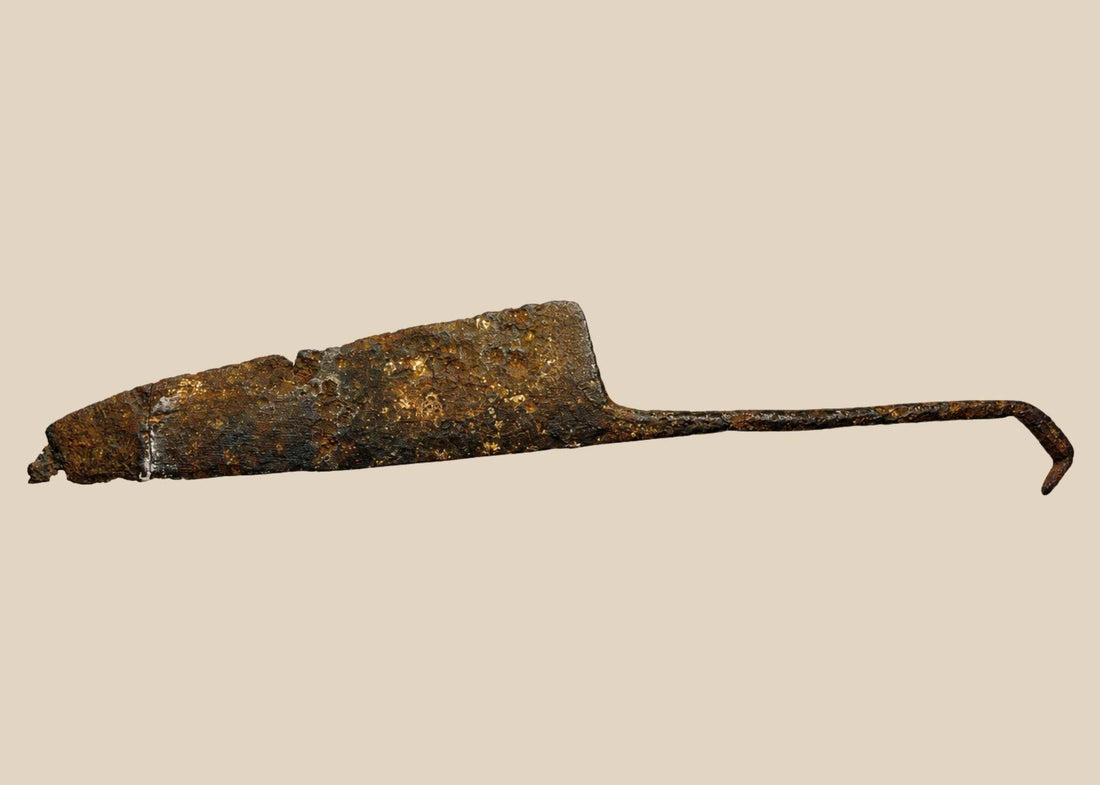
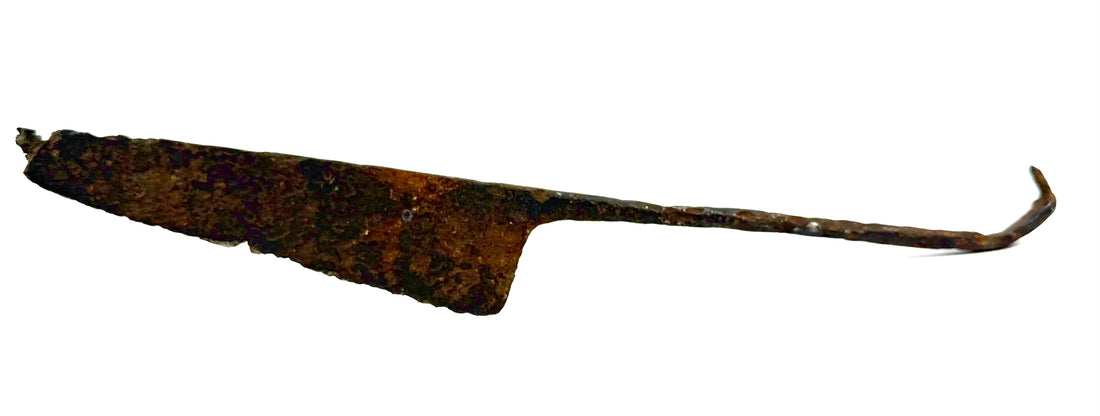
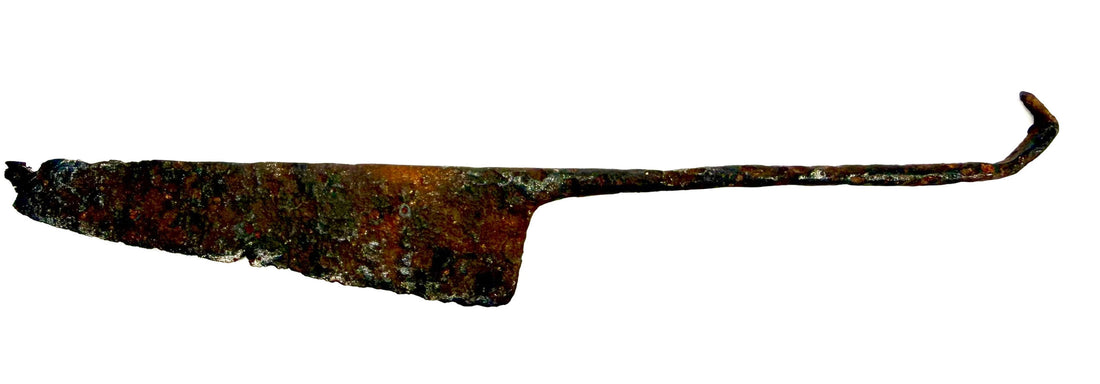
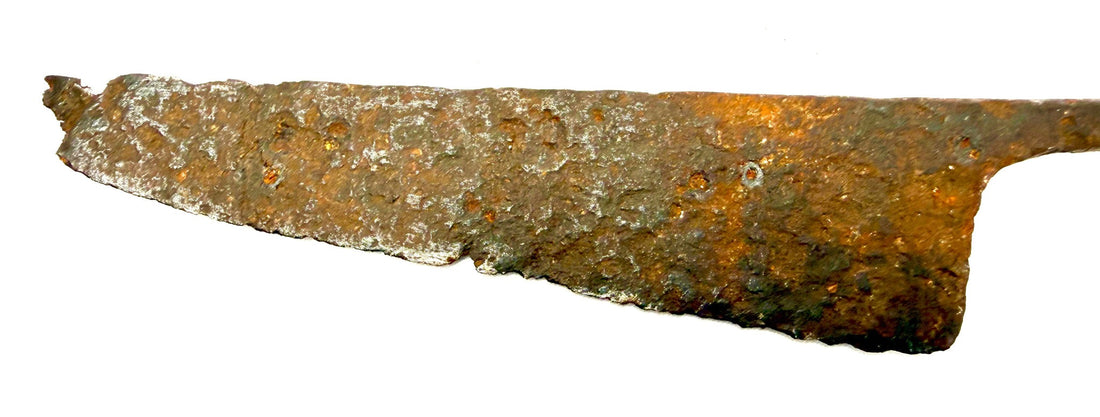
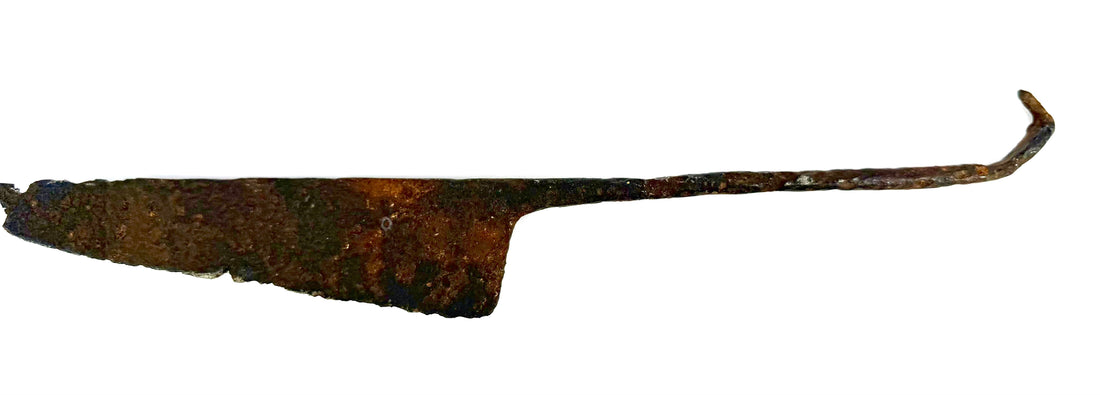
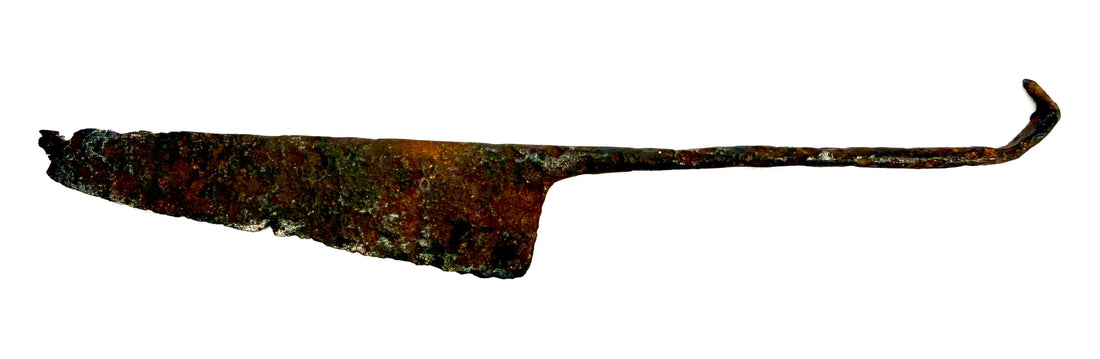
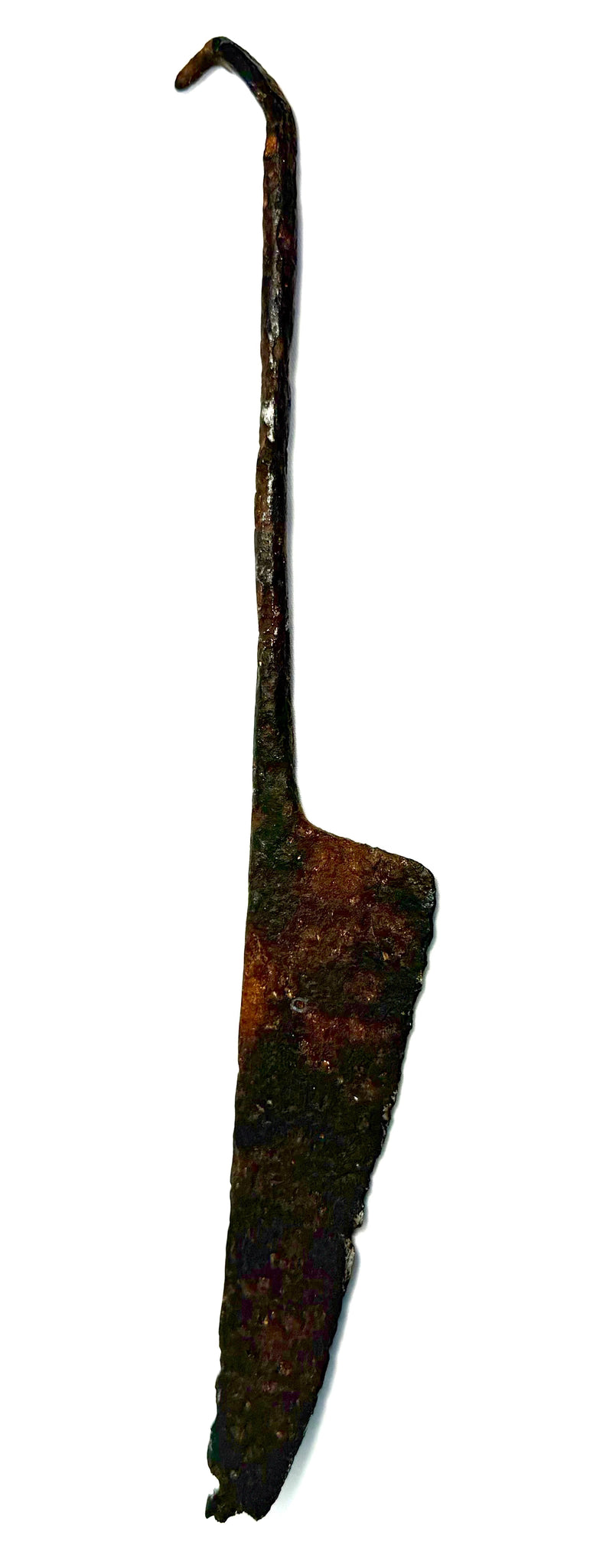
Couteau long médiéval | Lame en fer forgé à pointe effilée | XIIe-XVe siècle ap. J.-C.

Historique de provenance et de propriété

Anciennement détenue au sein d'une collection privée à Brea, Californie, États-Unis, constituée avec un intérêt particulier pour les armes à feu anciennes, les armes blanches et le matériel militaire connexe.

Prix habituel
$700.00
Prix soldé
$700.00
Prix habituel
Frais de port calculés à la caisse.
Customers rate us 4.97/5 based on 121 reviews.

This is a one-of-a-kind historical object. Once sold, this exact piece will not be restocked.

Questions before acquiring? Additional photographs, condition details, documentation, shipping information or a private viewing are available upon request.
Heavily corroded medieval iron long knife with wide single-edged blade and rough rust texture
360-degree rotating view of a medieval long knife dating to the 12th–15th century CE, featuring a forged iron single-edged blade, straight spine, tapered point, and slender full-length tang with a curved end. Displays aged metal patina, surface corrosion, and archaeological wear, highlighting medieval European blacksmithing and historical weapon craftsmanship.
Medieval forged iron long knife dating to the 12th–15th century, featuring a wide single-edged blade, tapered point, and elongated tang.
High to Late Medieval iron knife with a straight blade spine and gradually tapered cutting edge, reflecting traditional European metalworking techniques.
Excavated medieval long knife displaying extensive surface corrosion, natural patina, and preserved blade construction from centuries of aging.
European medieval forged iron blade featuring a broad cutting surface and narrow tang, characteristic of practical edged weapons from the Middle Ages.
Medieval long knife with a slender extended tang and slightly curved terminal, demonstrating historical handle construction and functional design.
Ancient European iron knife dating to circa 1100–1500 CE, preserving its distinctive single-edged blade profile and tapered point.
High Medieval forged iron knife displaying weathered metal surfaces, oxidation, and corrosion patterns consistent with archaeological burial.
Medieval utility knife and sidearm featuring a wide single-edged blade, straight upper spine, and elongated handle tang.
Excavated European medieval knife with a heavily patinated iron surface, retaining its original blade silhouette and narrow tang structure.
Forged iron medieval long knife measuring approximately 11.25 inches, featuring a tapered cutting blade and extended tang.
Medieval European edged weapon featuring a broad blade that narrows toward the tip, illustrating functional ironworking traditions of the Middle Ages.
Archaeological medieval iron knife displaying centuries of surface oxidation, textured corrosion, and preserved forged metal construction.
High to Late Medieval long knife with a straight-backed cutting blade and slightly curved tang end, reflecting practical medieval weapon design.
European medieval forged iron long knife dating to the 12th–15th century, preserved in excavated condition with substantial patina and visible blade detailing.
  • Heavily corroded medieval iron long knife with wide single-edged blade and rough rust texture
  • 360-degree rotating view of a medieval long knife dating to the 12th–15th century CE, featuring a forged iron single-edged blade, straight spine, tapered point, and slender full-length tang with a curved end. Displays aged metal patina, surface corrosion, and archaeological wear, highlighting medieval European blacksmithing and historical weapon craftsmanship.
  • Medieval forged iron long knife dating to the 12th–15th century, featuring a wide single-edged blade, tapered point, and elongated tang.
  • High to Late Medieval iron knife with a straight blade spine and gradually tapered cutting edge, reflecting traditional European metalworking techniques.
  • Excavated medieval long knife displaying extensive surface corrosion, natural patina, and preserved blade construction from centuries of aging.
  • European medieval forged iron blade featuring a broad cutting surface and narrow tang, characteristic of practical edged weapons from the Middle Ages.
  • Medieval long knife with a slender extended tang and slightly curved terminal, demonstrating historical handle construction and functional design.
  • Ancient European iron knife dating to circa 1100–1500 CE, preserving its distinctive single-edged blade profile and tapered point.
  • High Medieval forged iron knife displaying weathered metal surfaces, oxidation, and corrosion patterns consistent with archaeological burial.
  • Medieval utility knife and sidearm featuring a wide single-edged blade, straight upper spine, and elongated handle tang.
  • Excavated European medieval knife with a heavily patinated iron surface, retaining its original blade silhouette and narrow tang structure.
  • Forged iron medieval long knife measuring approximately 11.25 inches, featuring a tapered cutting blade and extended tang.
  • Medieval European edged weapon featuring a broad blade that narrows toward the tip, illustrating functional ironworking traditions of the Middle Ages.
  • Archaeological medieval iron knife displaying centuries of surface oxidation, textured corrosion, and preserved forged metal construction.
  • High to Late Medieval long knife with a straight-backed cutting blade and slightly curved tang end, reflecting practical medieval weapon design.
  • European medieval forged iron long knife dating to the 12th–15th century, preserved in excavated condition with substantial patina and visible blade detailing.
Heavily corroded medieval iron long knife with wide single-edged blade and rough rust texture
360-degree rotating view of a medieval long knife dating to the 12th–15th century CE, featuring a forged iron single-edged blade, straight spine, tapered point, and slender full-length tang with a curved end. Displays aged metal patina, surface corrosion, and archaeological wear, highlighting medieval European blacksmithing and historical weapon craftsmanship.
Medieval forged iron long knife dating to the 12th–15th century, featuring a wide single-edged blade, tapered point, and elongated tang.
High to Late Medieval iron knife with a straight blade spine and gradually tapered cutting edge, reflecting traditional European metalworking techniques.
Excavated medieval long knife displaying extensive surface corrosion, natural patina, and preserved blade construction from centuries of aging.
European medieval forged iron blade featuring a broad cutting surface and narrow tang, characteristic of practical edged weapons from the Middle Ages.
Medieval long knife with a slender extended tang and slightly curved terminal, demonstrating historical handle construction and functional design.
Ancient European iron knife dating to circa 1100–1500 CE, preserving its distinctive single-edged blade profile and tapered point.
High Medieval forged iron knife displaying weathered metal surfaces, oxidation, and corrosion patterns consistent with archaeological burial.
Medieval utility knife and sidearm featuring a wide single-edged blade, straight upper spine, and elongated handle tang.
Excavated European medieval knife with a heavily patinated iron surface, retaining its original blade silhouette and narrow tang structure.
Forged iron medieval long knife measuring approximately 11.25 inches, featuring a tapered cutting blade and extended tang.
Medieval European edged weapon featuring a broad blade that narrows toward the tip, illustrating functional ironworking traditions of the Middle Ages.
Archaeological medieval iron knife displaying centuries of surface oxidation, textured corrosion, and preserved forged metal construction.
High to Late Medieval long knife with a straight-backed cutting blade and slightly curved tang end, reflecting practical medieval weapon design.
European medieval forged iron long knife dating to the 12th–15th century, preserved in excavated condition with substantial patina and visible blade detailing.
Authenticity and secure checkout guarantee

Couteau long médiéval | Lame en fer forgé à pointe effilée | XIIe-XVe siècle ap. J.-C.

Description

Contexte historique et origine

Région : Probablement l'Europe centrale ou occidentale
Matériau : Fer/acier forgé
Période : Haut Moyen Âge à la fin du Moyen Âge (environ du XIIe au XVe siècle)

Description

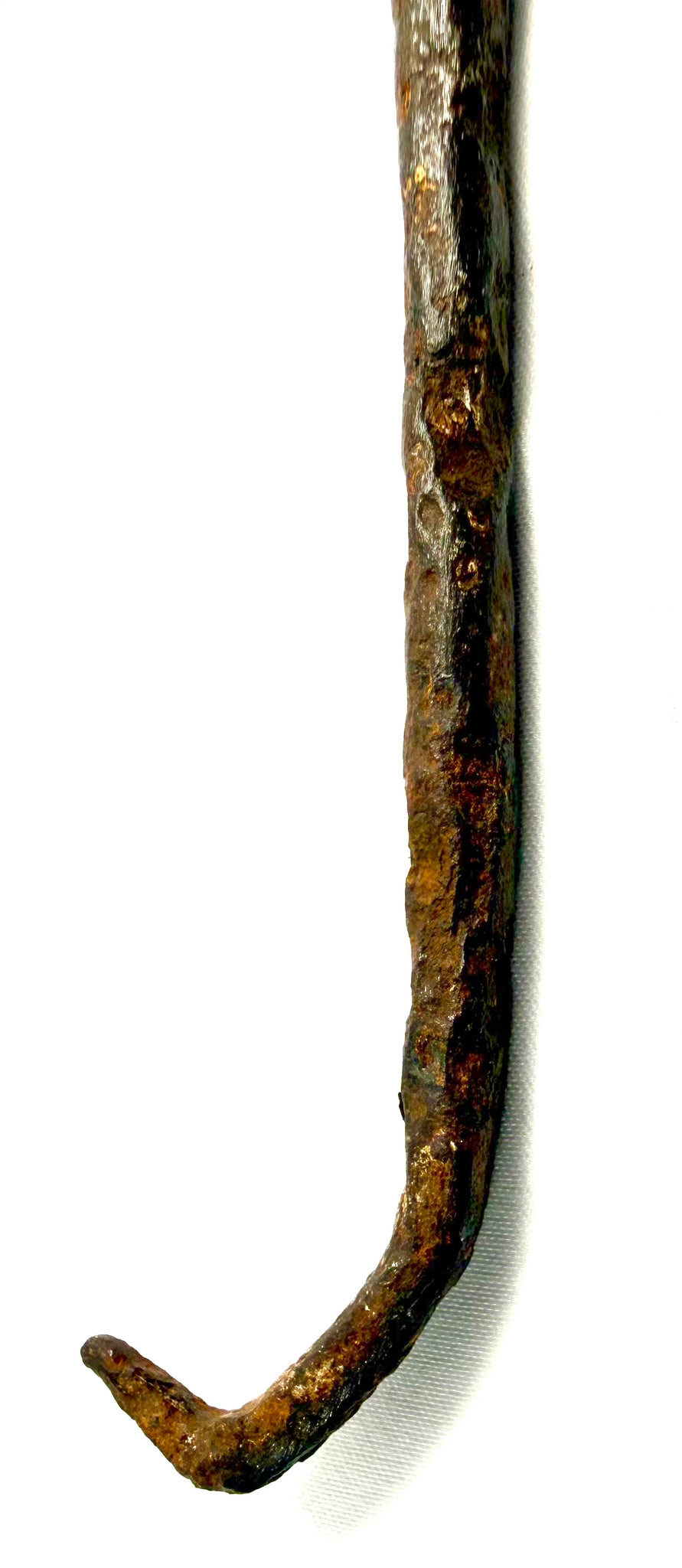
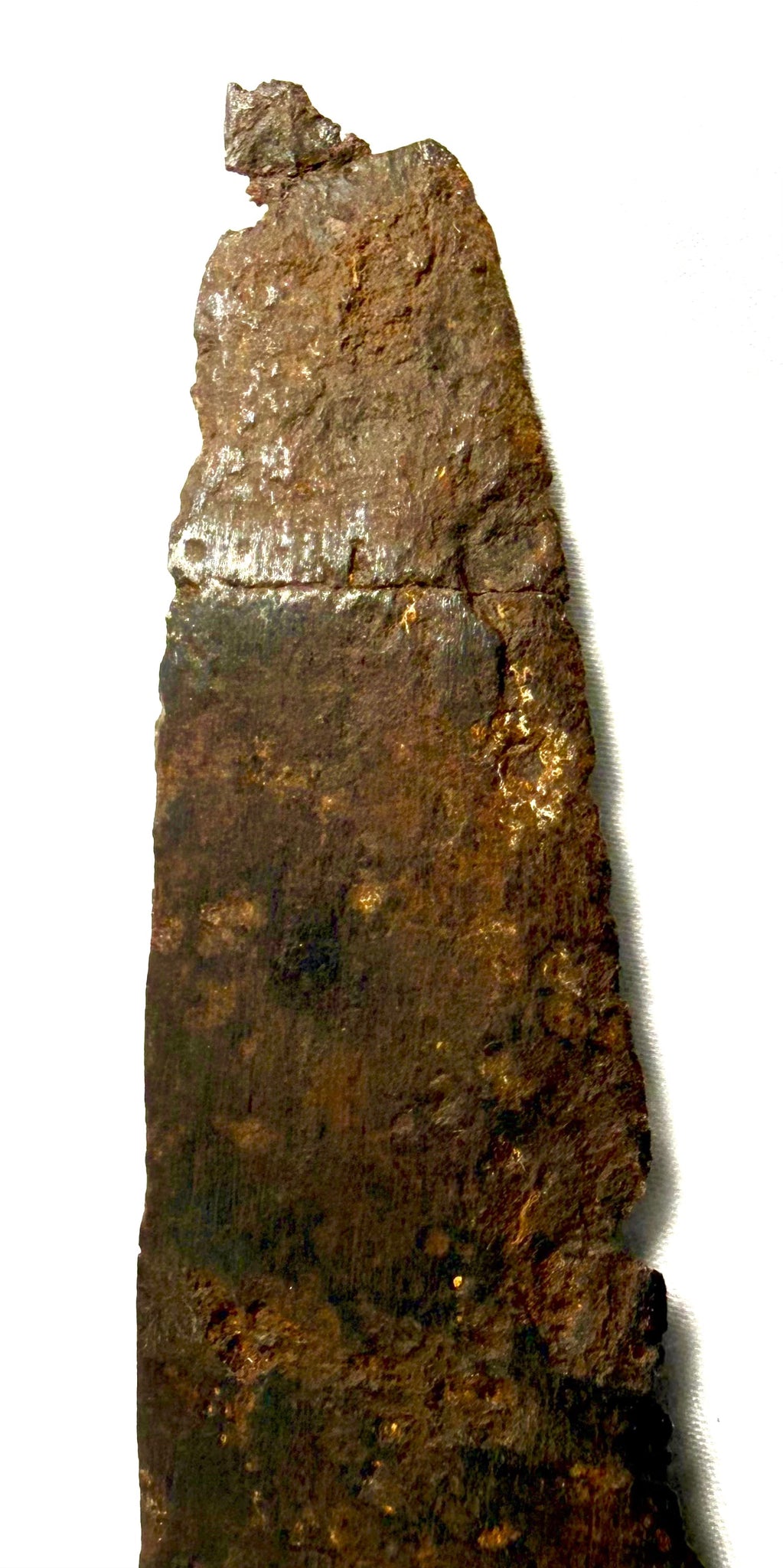
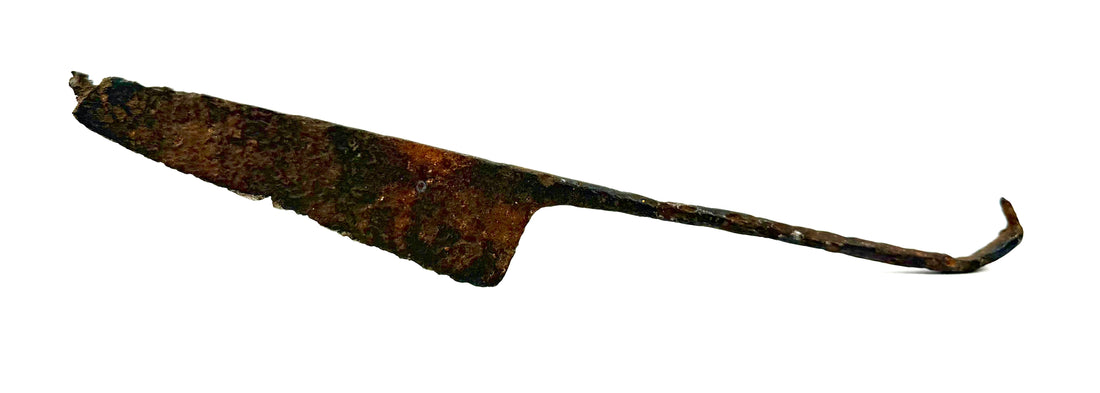
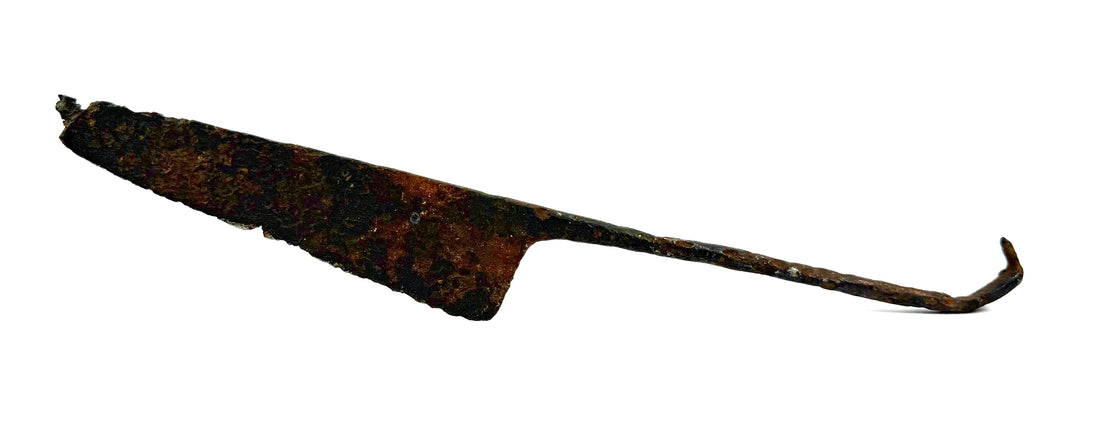
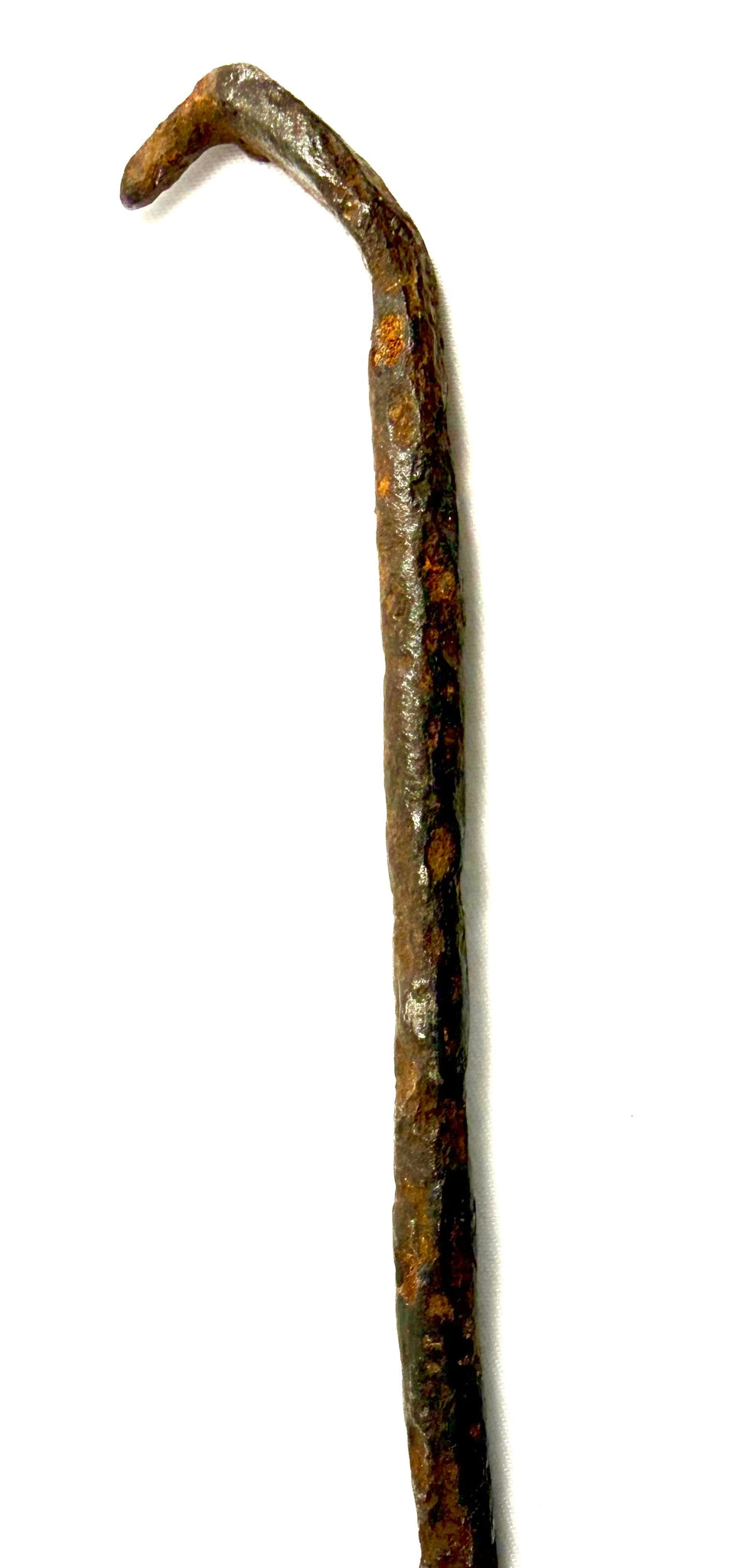
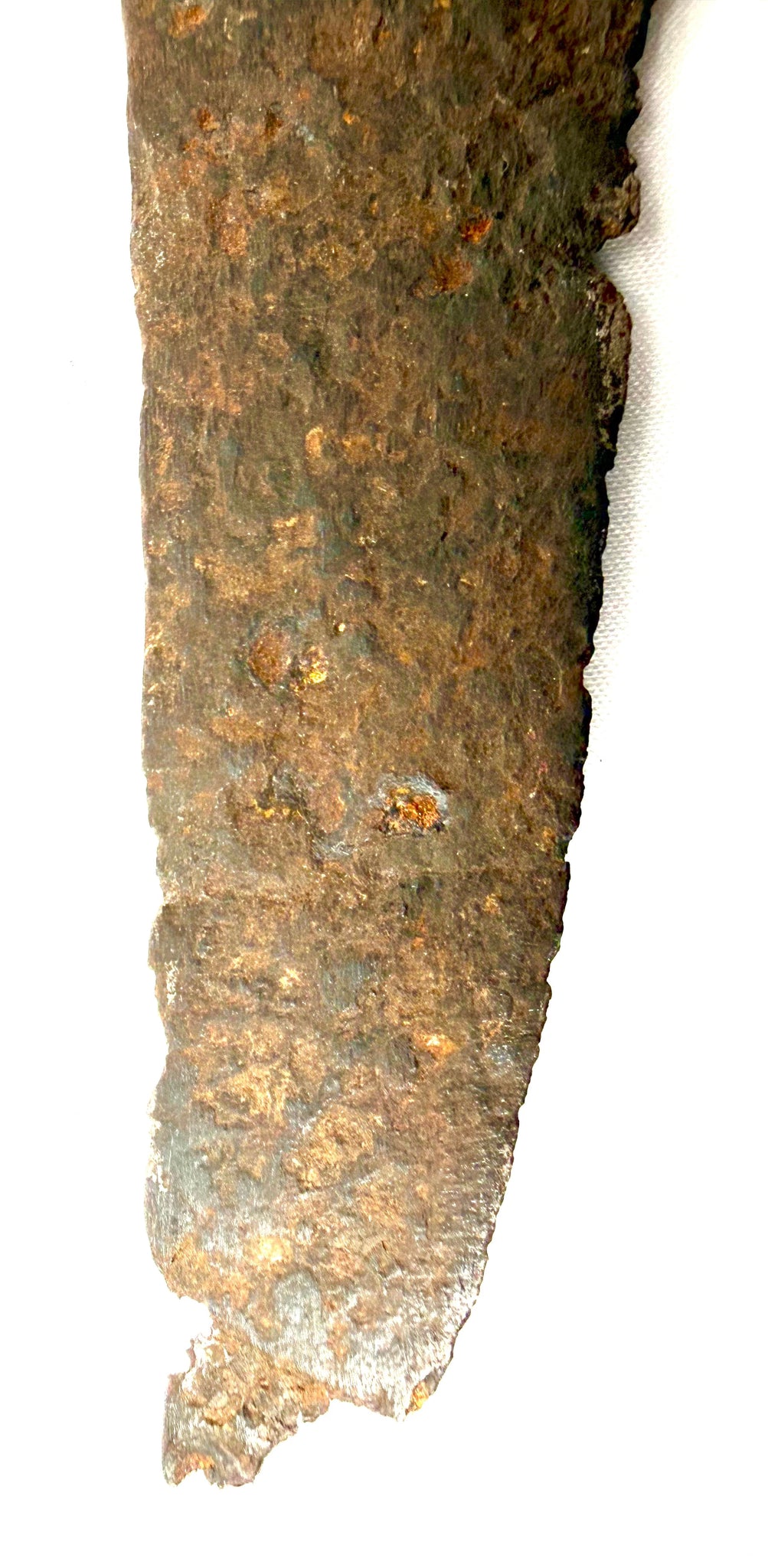
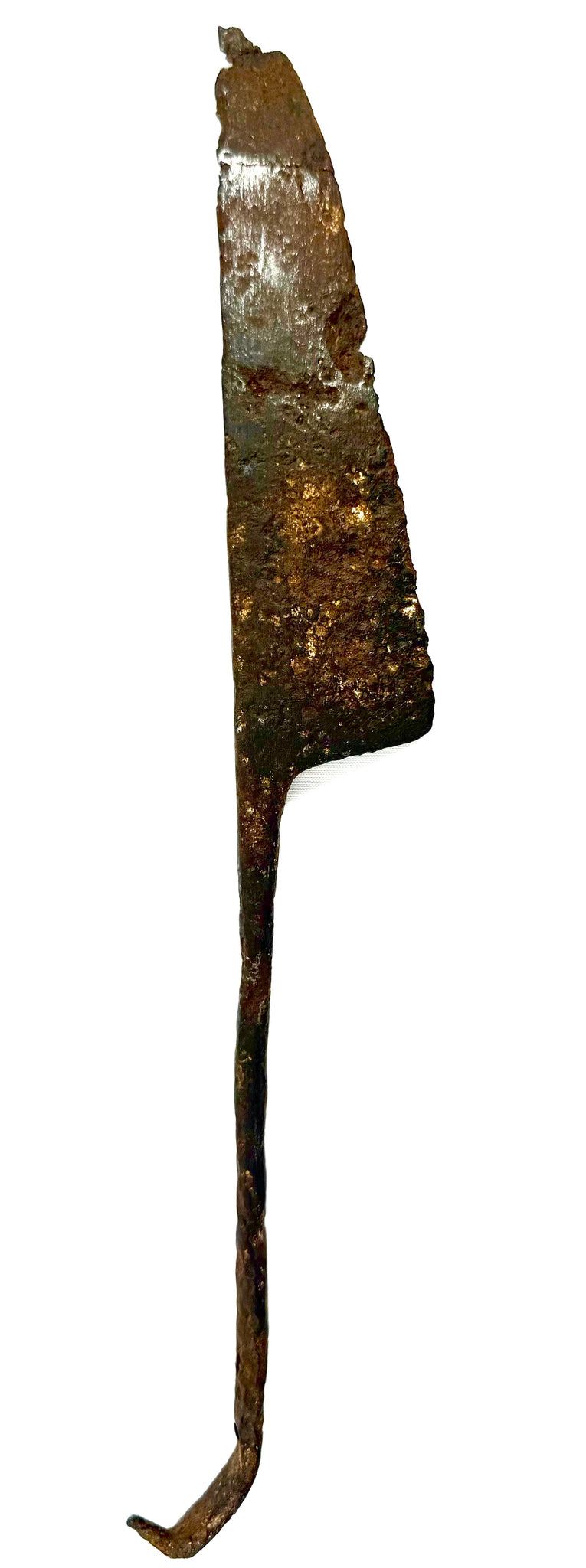
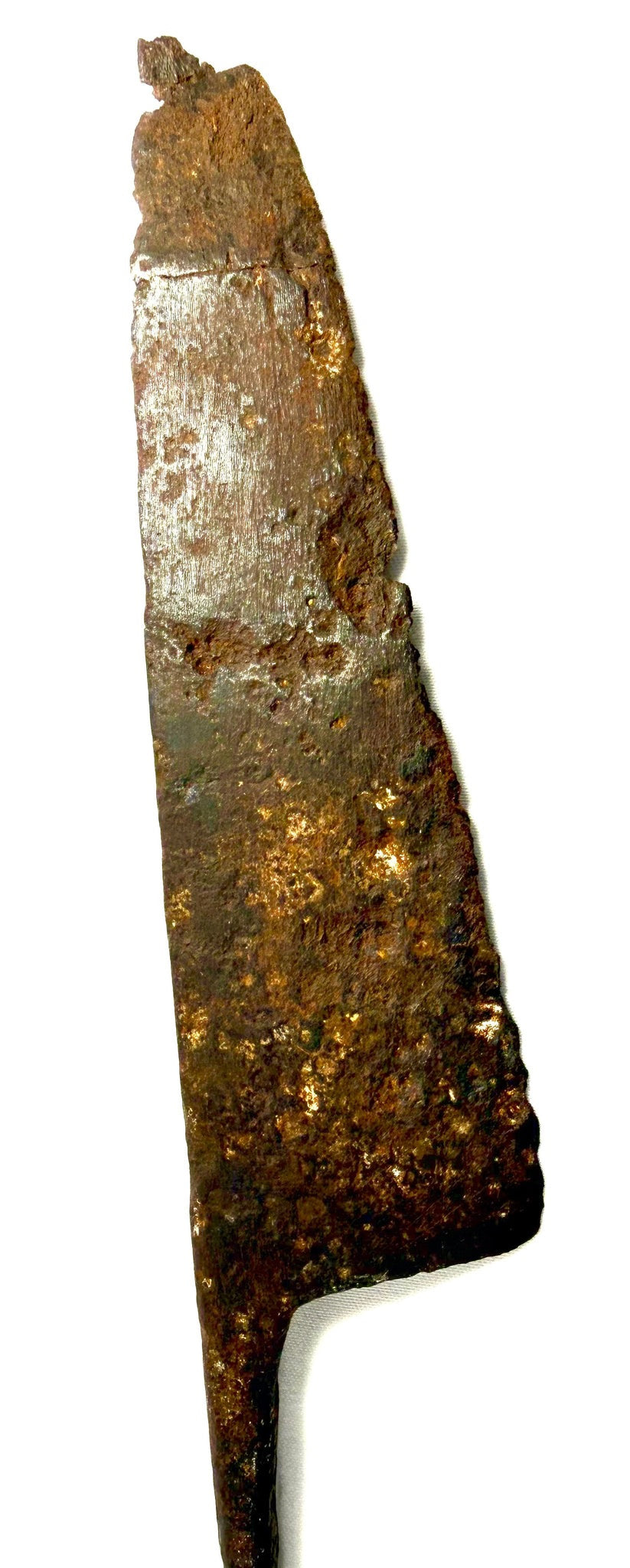
Cet ancien couteau long médiéval est un rare exemple excavé d'armement fonctionnel et d'utilité du Moyen Âge. Doté d'une large lame à un seul tranchant avec un dos droit qui s'affine élégamment vers la pointe, il allie puissance de coupe et précision. La soie mince s'étend à travers le manche et se courbe légèrement à l'extrémité, une conception qui assurait stabilité et équilibre tant au combat que lors de l'utilisation quotidienne.

Caractéristiques

- Lame large à un seul tranchant avec pointe effilée pour couper et transpercer

- Soie pleine longueur avec extrémité courbée pour une prise sûre et une durabilité accrue

- Proportions équilibrées, le rendant efficace à la fois comme outil et comme arme

- État excavé avec patine visible et vieillissement de surface

Importance culturelle

Le couteau long médiéval était l'une des armes de poing les plus courantes de l'époque, prisé par les soldats, les voyageurs et les gens du peuple. Contrairement aux épées, qui symbolisaient la richesse et le statut, le couteau long était pratique et polyvalent — utilisé pour la défense, les tâches quotidiennes et le combat rapproché. Sa conception durable reflète le double rôle des lames médiévales en tant qu'outils utilitaires et armes personnelles.

État

État excavé avec corrosion et patine conformes à l'âge. Malgré l'usure de surface, la forme de la lame et la soie restent clairement définies, préservant son authenticité historique.

Dimensions (approximatives)

Longueur : 28,58 cm

Âge (approximatif)

525–825 ans

Provenance

Anciennement détenue dans une collection privée à Brea, Californie, États-Unis, constituée avec un accent particulier sur les armes à feu anciennes, les armes blanches et le matériel militaire connexe.

En savoir plus

Découvrez le développement des épées médiévales : artisanat et héritage

Parcourez notre Collection de reliques médiévales : artefacts de chevaliers et de châteaux

Description

Contexte historique et origine

Région : Probablement l'Europe centrale ou occidentale
Matériau : Fer/acier forgé
Période : Haut Moyen Âge à la fin du Moyen Âge (environ du XIIe au XVe siècle)

Description

Cet ancien couteau long médiéval est un rare exemple excavé d'armement fonctionnel et d'utilité du Moyen Âge. Doté d'une large lame à un seul tranchant avec un dos droit qui s'affine élégamment vers la pointe, il allie puissance de coupe et précision. La soie mince s'étend à travers le manche et se courbe légèrement à l'extrémité, une conception qui assurait stabilité et équilibre tant au combat que lors de l'utilisation quotidienne.

Caractéristiques

- Lame large à un seul tranchant avec pointe effilée pour couper et transpercer

- Soie pleine longueur avec extrémité courbée pour une prise sûre et une durabilité accrue

- Proportions équilibrées, le rendant efficace à la fois comme outil et comme arme

- État excavé avec patine visible et vieillissement de surface

Importance culturelle

Le couteau long médiéval était l'une des armes de poing les plus courantes de l'époque, prisé par les soldats, les voyageurs et les gens du peuple. Contrairement aux épées, qui symbolisaient la richesse et le statut, le couteau long était pratique et polyvalent — utilisé pour la défense, les tâches quotidiennes et le combat rapproché. Sa conception durable reflète le double rôle des lames médiévales en tant qu'outils utilitaires et armes personnelles.

État

État excavé avec corrosion et patine conformes à l'âge. Malgré l'usure de surface, la forme de la lame et la soie restent clairement définies, préservant son authenticité historique.

Dimensions (approximatives)

Longueur : 28,58 cm

Âge (approximatif)

525–825 ans

Provenance

Anciennement détenue dans une collection privée à Brea, Californie, États-Unis, constituée avec un accent particulier sur les armes à feu anciennes, les armes blanches et le matériel militaire connexe.

En savoir plus

Découvrez le développement des épées médiévales : artisanat et héritage

Parcourez notre Collection de reliques médiévales : artefacts de chevaliers et de châteaux

Vous aimerez peut-être aussi