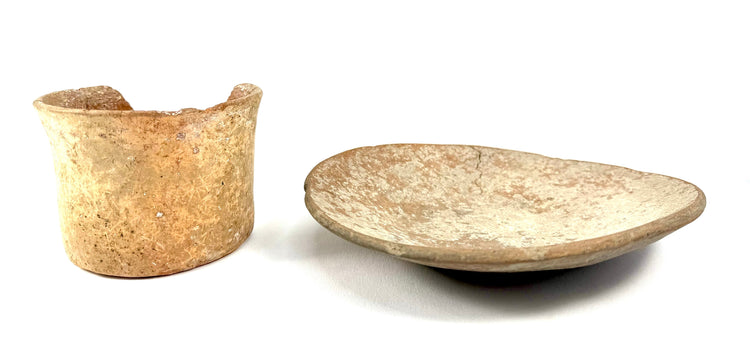
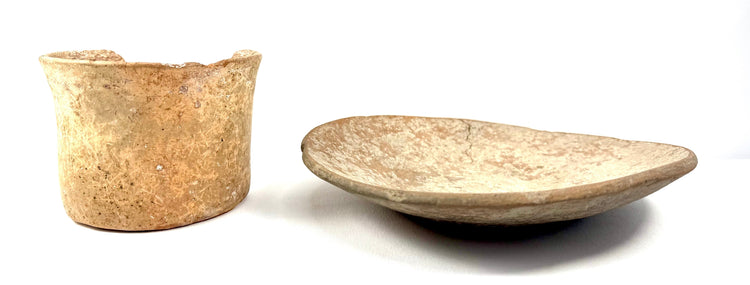
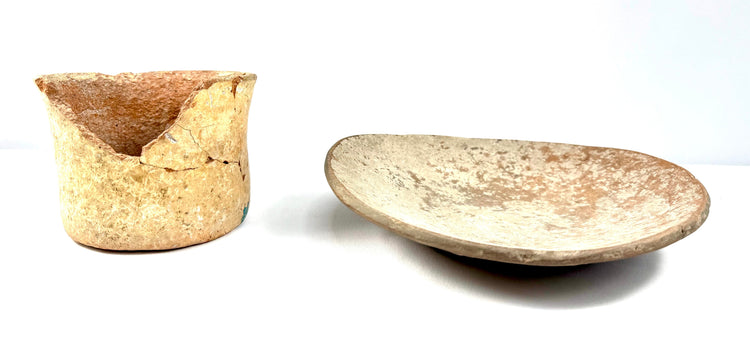
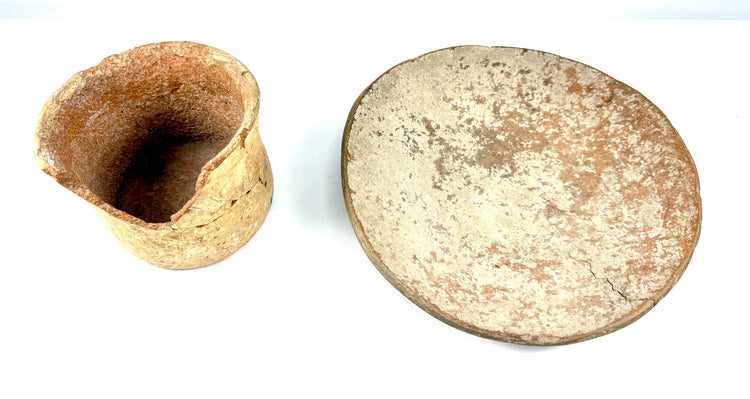
Ensemble de fragments de bol et de vase en céramique néolithique | Vers 4000–2000 av. J.-C.

Historique de provenance et de propriété
Anciennement conservée dans une collection privée à Boonton, New Jersey, États-Unis.

Prix habituel
$750.00
Prix soldé
$750.00
Prix habituel
Frais de port calculés à la caisse.

This is a one-of-a-kind historical object. Once sold, this exact piece will not be restocked.

Questions before acquiring? Additional photographs, condition details, documentation, shipping information or a private viewing are available upon request.
Neolithic terracotta pottery bowl and vessel fragment set, circa 4000–2000 BCE
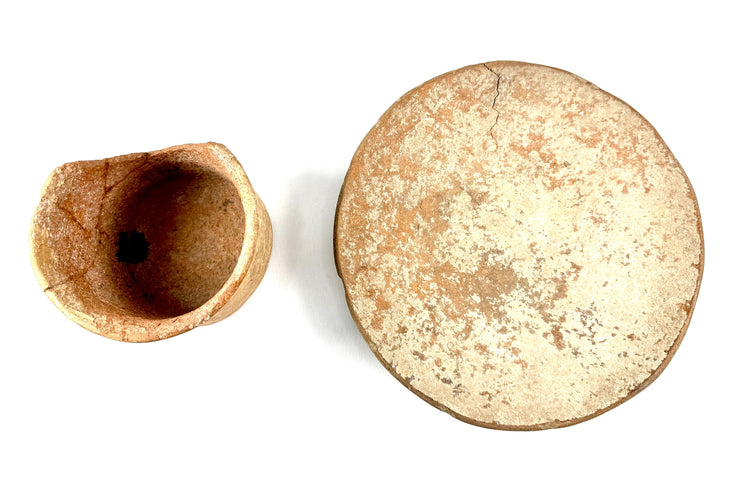
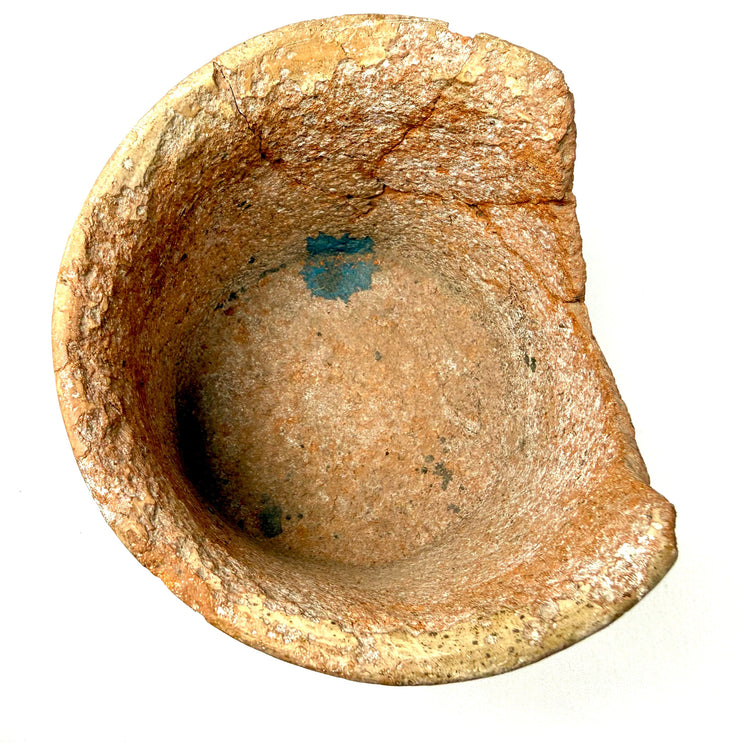
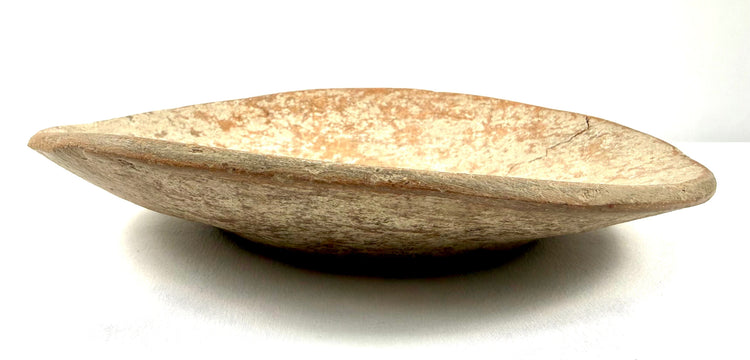
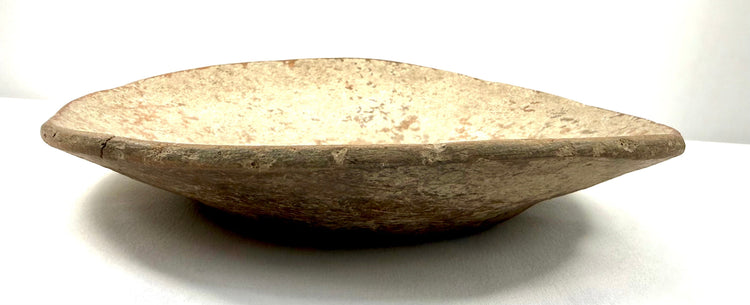
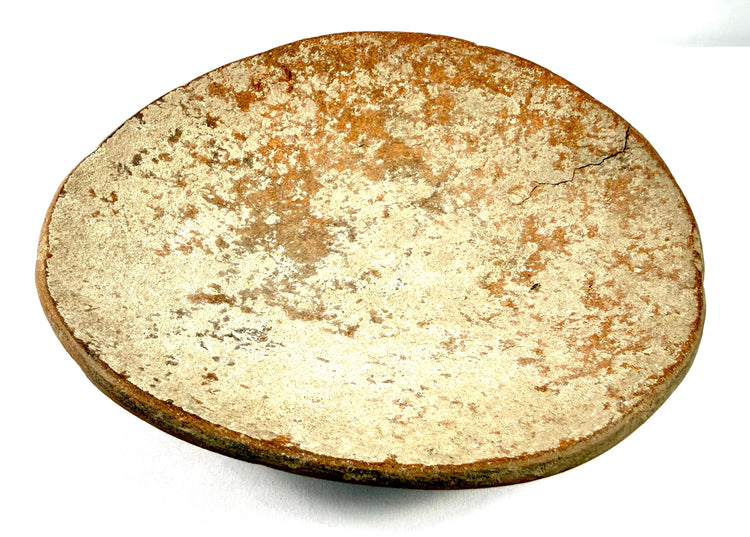
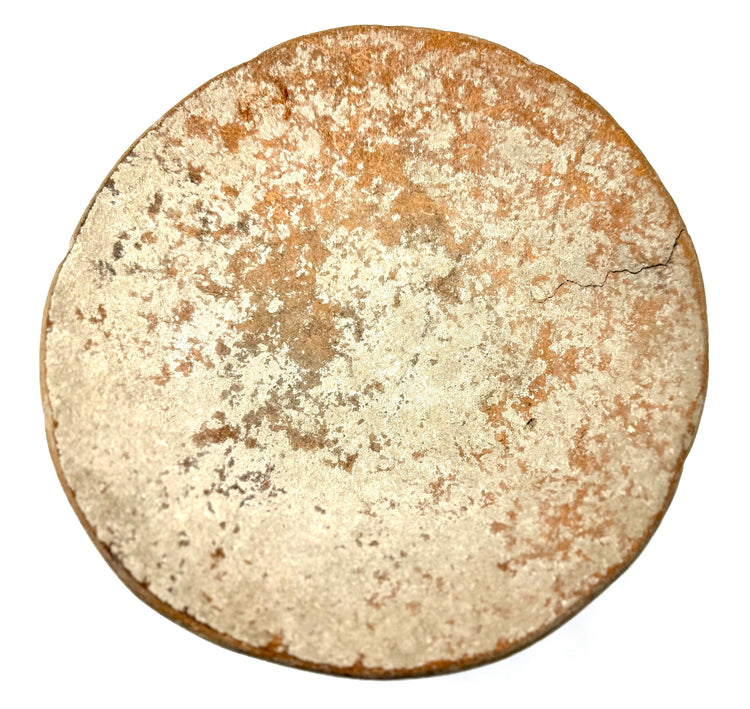
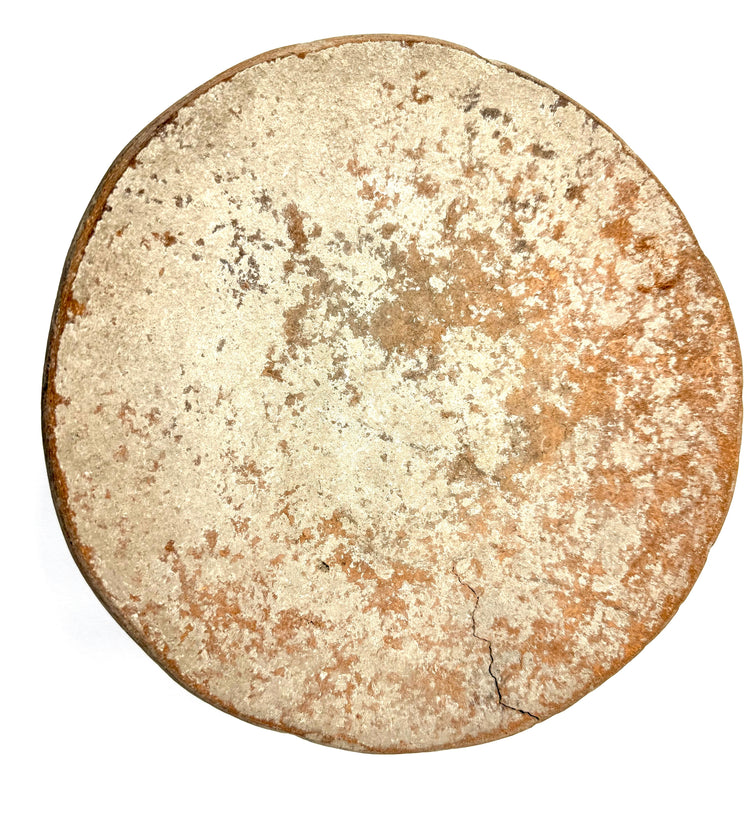
Shallow terracotta pottery bowl highlighting its irregular circular form, weathered reddish-brown surface, pale interior deposits, and visible rim cracking.
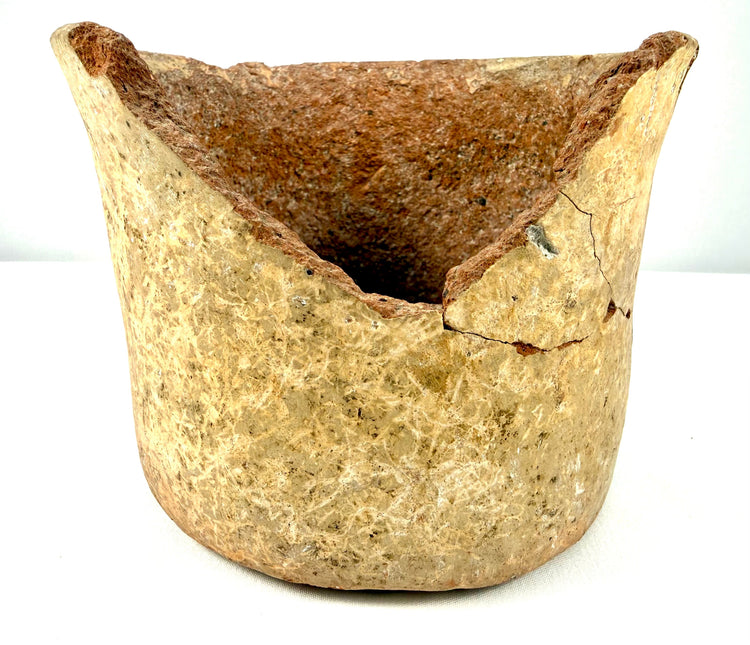
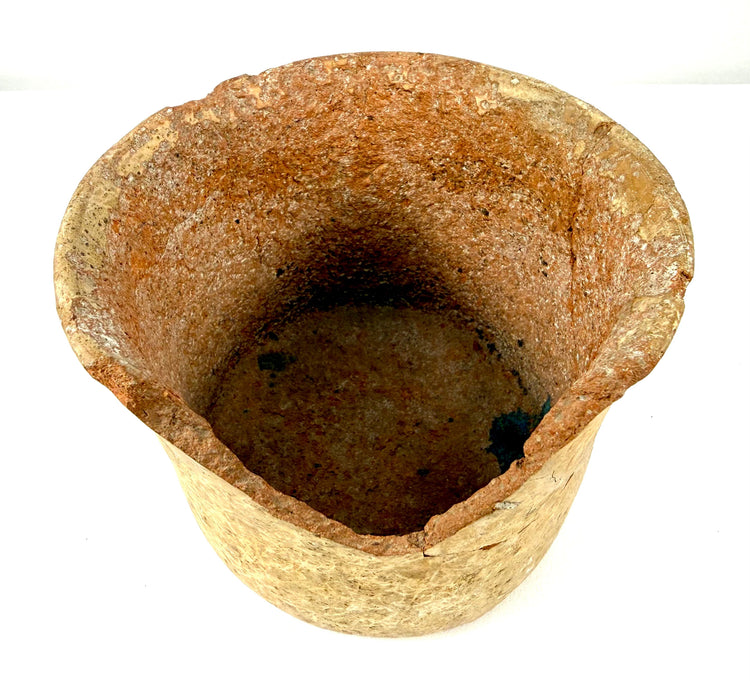
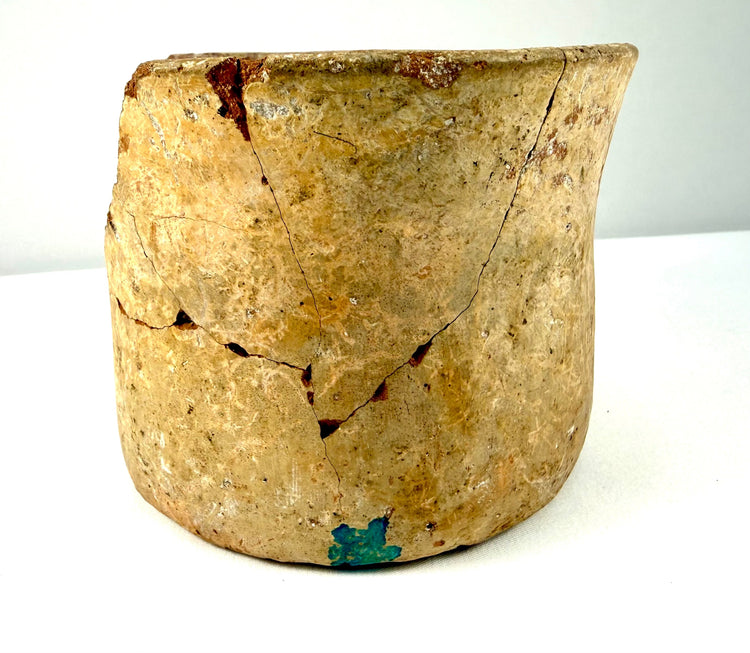
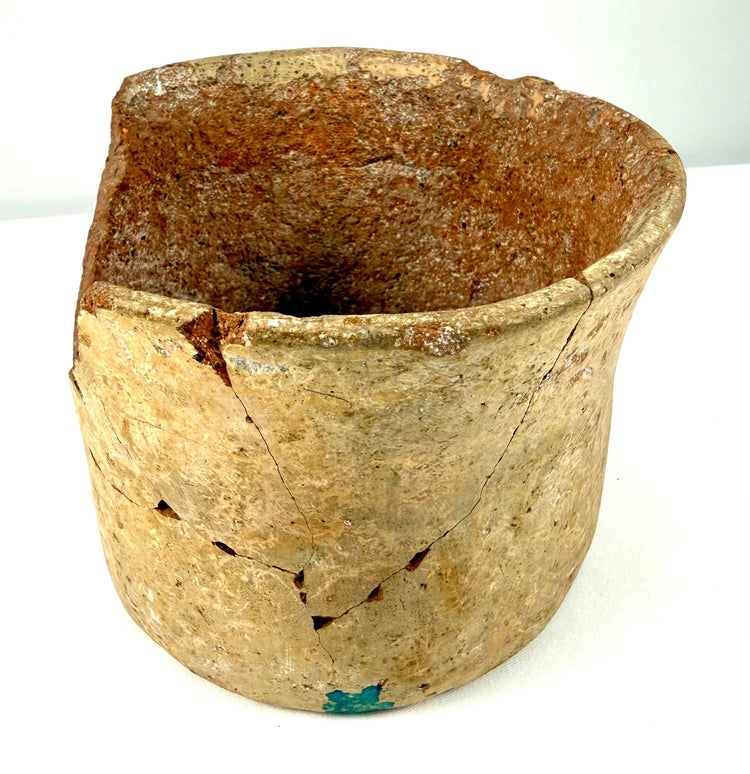
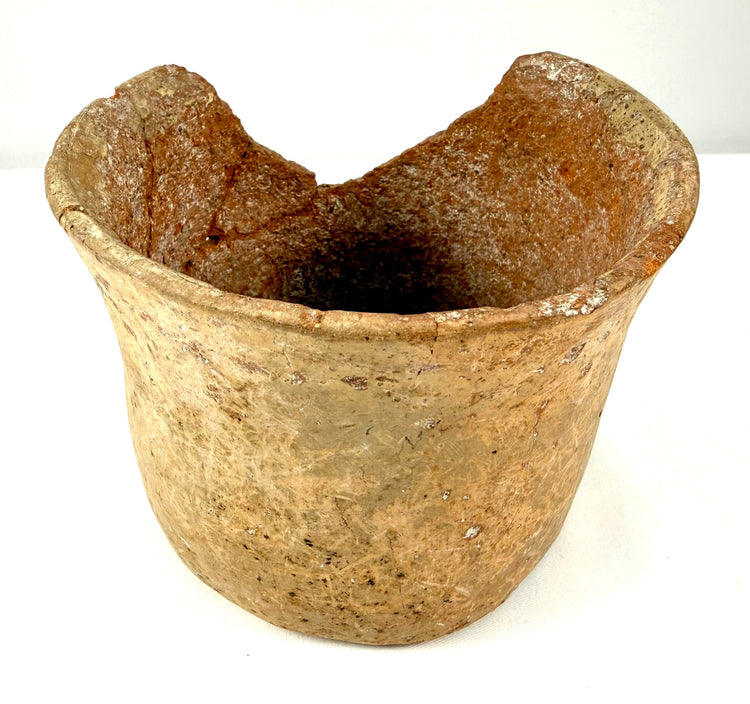
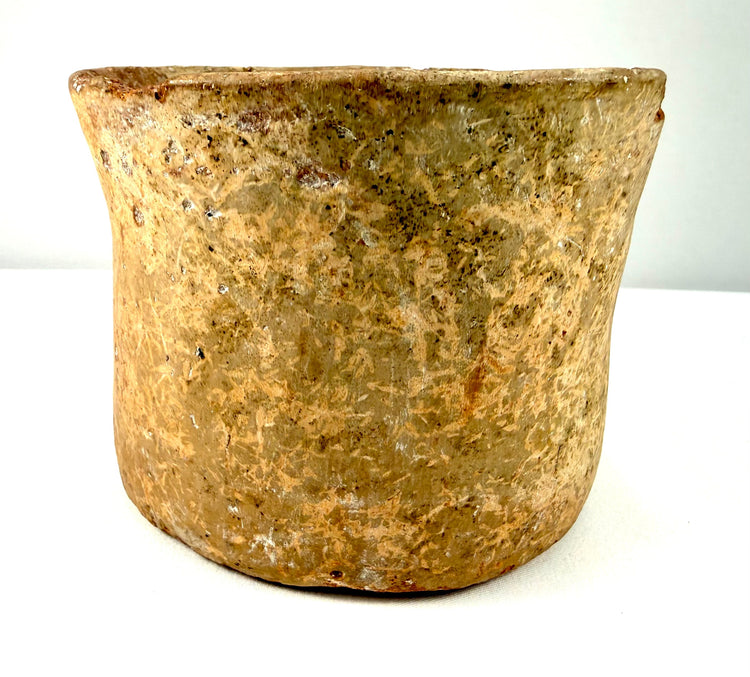
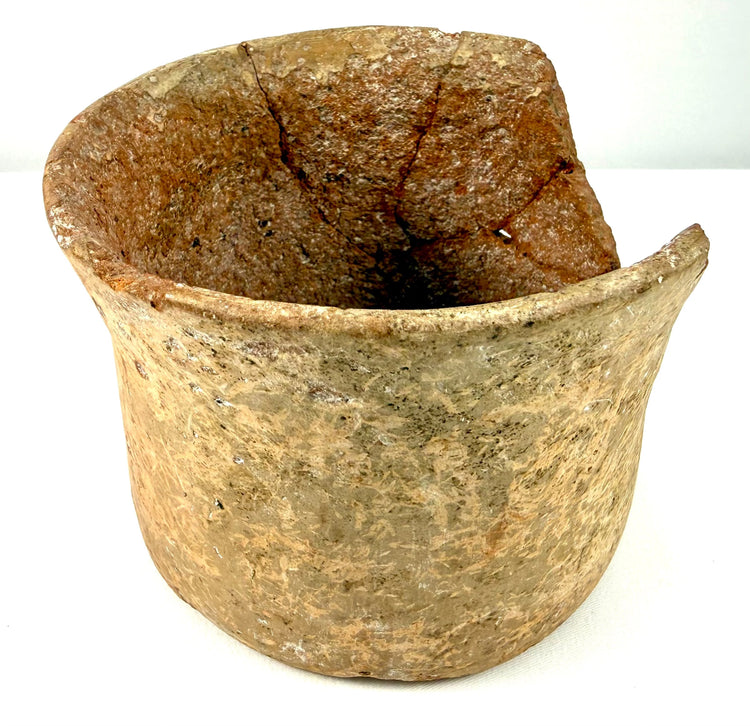
Fragmentary cylindrical terracotta vessel showcasing its thick earthenware walls, uneven opening, substantial rim loss, and heavily weathered ceramic surfaces.
Two-piece terracotta pottery collection featuring a shallow earthenware bowl and cylindrical vessel fragment with weathered surfaces.
Traditional unglazed pottery collection displaying earthy reddish-brown tones, pale mineral deposits, and irregular handmade forms.
Pair of weathered earthenware vessels traditionally attributed to the Neolithic period, featuring natural surface discoloration and cracking.
Ancient-style terracotta pottery collection comprising two undecorated ceramic pieces with contrasting shapes and textured surfaces.
Two-piece archaeological-style pottery collection featuring a rounded bowl and fragmentary cylindrical vessel with extensive age-like wear.
Shallow terracotta pottery bowl featuring a broad circular profile, irregular rim, and heavily weathered earthenware surface.
Unglazed earthenware bowl with reddish-brown coloration, pale interior deposits, and naturally textured ceramic surfaces.
Traditional handmade pottery bowl displaying extensive surface discoloration, visible cracks, and an uneven rounded rim.
Weathered terracotta bowl featuring a gently curved interior with cream-colored deposits and reddish-brown clay tones.
Undecorated earthenware bowl traditionally attributed to the Neolithic period, featuring a simple utilitarian ceramic design.
Rustic pottery bowl with a pronounced rim crack, irregular edges, and extensive pale mineral-like deposits.
Shallow circular terracotta vessel displaying an uneven handmade profile, textured interior, and natural earthy coloration.
Traditional unglazed ceramic bowl featuring visible surface abrasions, structural cracking, and contrasting beige and reddish-brown tones.
Fragmentary terracotta pottery vessel featuring thick earthenware walls, an uneven opening, and extensive surface weathering.
Unglazed cylindrical ceramic fragment displaying reddish-brown clay, substantial rim loss, and pronounced structural cracking.
Traditional earthenware vessel fragment with coarse interior surfaces, pale exterior deposits, and irregular handmade construction.
Weathered cylindrical terracotta pottery fragment featuring a partially preserved rim, chipped edges, and textured clay surfaces.
Archaeological-style earthenware vessel fragment displaying substantial material loss, natural discoloration, and visible surface cracks.
  • Neolithic terracotta pottery bowl and vessel fragment set, circa 4000–2000 BCE
  • Shallow terracotta pottery bowl highlighting its irregular circular form, weathered reddish-brown surface, pale interior deposits, and visible rim cracking.
  • Fragmentary cylindrical terracotta vessel showcasing its thick earthenware walls, uneven opening, substantial rim loss, and heavily weathered ceramic surfaces.
  • Two-piece terracotta pottery collection featuring a shallow earthenware bowl and cylindrical vessel fragment with weathered surfaces.
  • Traditional unglazed pottery collection displaying earthy reddish-brown tones, pale mineral deposits, and irregular handmade forms.
  • Pair of weathered earthenware vessels traditionally attributed to the Neolithic period, featuring natural surface discoloration and cracking.
  • Ancient-style terracotta pottery collection comprising two undecorated ceramic pieces with contrasting shapes and textured surfaces.
  • Two-piece archaeological-style pottery collection featuring a rounded bowl and fragmentary cylindrical vessel with extensive age-like wear.
  • Shallow terracotta pottery bowl featuring a broad circular profile, irregular rim, and heavily weathered earthenware surface.
  • Unglazed earthenware bowl with reddish-brown coloration, pale interior deposits, and naturally textured ceramic surfaces.
  • Traditional handmade pottery bowl displaying extensive surface discoloration, visible cracks, and an uneven rounded rim.
  • Weathered terracotta bowl featuring a gently curved interior with cream-colored deposits and reddish-brown clay tones.
  • Undecorated earthenware bowl traditionally attributed to the Neolithic period, featuring a simple utilitarian ceramic design.
  • Rustic pottery bowl with a pronounced rim crack, irregular edges, and extensive pale mineral-like deposits.
  • Shallow circular terracotta vessel displaying an uneven handmade profile, textured interior, and natural earthy coloration.
  • Traditional unglazed ceramic bowl featuring visible surface abrasions, structural cracking, and contrasting beige and reddish-brown tones.
  • Fragmentary terracotta pottery vessel featuring thick earthenware walls, an uneven opening, and extensive surface weathering.
  • Unglazed cylindrical ceramic fragment displaying reddish-brown clay, substantial rim loss, and pronounced structural cracking.
  • Traditional earthenware vessel fragment with coarse interior surfaces, pale exterior deposits, and irregular handmade construction.
  • Weathered cylindrical terracotta pottery fragment featuring a partially preserved rim, chipped edges, and textured clay surfaces.
  • Archaeological-style earthenware vessel fragment displaying substantial material loss, natural discoloration, and visible surface cracks.
Neolithic terracotta pottery bowl and vessel fragment set, circa 4000–2000 BCE
Shallow terracotta pottery bowl highlighting its irregular circular form, weathered reddish-brown surface, pale interior deposits, and visible rim cracking.
Fragmentary cylindrical terracotta vessel showcasing its thick earthenware walls, uneven opening, substantial rim loss, and heavily weathered ceramic surfaces.
Two-piece terracotta pottery collection featuring a shallow earthenware bowl and cylindrical vessel fragment with weathered surfaces.
Traditional unglazed pottery collection displaying earthy reddish-brown tones, pale mineral deposits, and irregular handmade forms.
Pair of weathered earthenware vessels traditionally attributed to the Neolithic period, featuring natural surface discoloration and cracking.
Ancient-style terracotta pottery collection comprising two undecorated ceramic pieces with contrasting shapes and textured surfaces.
Two-piece archaeological-style pottery collection featuring a rounded bowl and fragmentary cylindrical vessel with extensive age-like wear.
Shallow terracotta pottery bowl featuring a broad circular profile, irregular rim, and heavily weathered earthenware surface.
Unglazed earthenware bowl with reddish-brown coloration, pale interior deposits, and naturally textured ceramic surfaces.
Traditional handmade pottery bowl displaying extensive surface discoloration, visible cracks, and an uneven rounded rim.
Weathered terracotta bowl featuring a gently curved interior with cream-colored deposits and reddish-brown clay tones.
Undecorated earthenware bowl traditionally attributed to the Neolithic period, featuring a simple utilitarian ceramic design.
Rustic pottery bowl with a pronounced rim crack, irregular edges, and extensive pale mineral-like deposits.
Shallow circular terracotta vessel displaying an uneven handmade profile, textured interior, and natural earthy coloration.
Traditional unglazed ceramic bowl featuring visible surface abrasions, structural cracking, and contrasting beige and reddish-brown tones.
Fragmentary terracotta pottery vessel featuring thick earthenware walls, an uneven opening, and extensive surface weathering.
Unglazed cylindrical ceramic fragment displaying reddish-brown clay, substantial rim loss, and pronounced structural cracking.
Traditional earthenware vessel fragment with coarse interior surfaces, pale exterior deposits, and irregular handmade construction.
Weathered cylindrical terracotta pottery fragment featuring a partially preserved rim, chipped edges, and textured clay surfaces.
Archaeological-style earthenware vessel fragment displaying substantial material loss, natural discoloration, and visible surface cracks.
Authenticity and secure checkout guarantee

Ensemble de fragments de bol et de vase en céramique néolithique | Vers 4000–2000 av. J.-C.

Description

Contexte historique et origine

Région : Probablement l'Europe, le Moyen-Orient ou l'Afrique du Nord
Matériau : Terre cuite façonnée à la main (poterie non émaillée)
Période : Néolithique, vers 4000-2000 avant notre ère

Description

Cet ensemble remarquable de poteries néolithiques comprend un bol peu profond et un fragment de récipient cylindrique partiellement intact. Les deux pièces illustrent l'ingéniosité et le savoir-faire des premières sociétés agricoles lors de la transition des modes de vie nomades vers l'établissement permanent. La forme arrondie du bol suggère une utilisation pour la préparation ou le service des aliments, tandis que le fragment cylindrique a pu servir de récipient de stockage, de vase rituel ou d'urne funéraire. Ensemble, ils représentent le rôle essentiel de la poterie dans la vie quotidienne et les pratiques cérémonielles de l'ère néolithique.

Caractéristiques

- Fabrication artisanale reflétant les techniques de poterie des premiers hommes

- Tons terreux naturels avec des surfaces non émaillées typiques des céramiques néolithiques

- Forme de bol peu profond adaptée à la préparation ou au service des aliments

- Fragment de récipient cylindrique potentiellement utilisé pour le stockage ou à des fins rituelles

- Les deux pièces présentent une altération naturelle et une patine développées au cours des millénaires

Signification culturelle

La poterie a été l'une des innovations les plus transformatrices de la période néolithique, accompagnant le passage des sociétés de chasseurs nomades aux communautés agricoles sédentaires. Ces récipients fournissaient des moyens durables pour stocker la nourriture, préparer les repas et mener des activités rituelles. Des artefacts comme ceux-ci ne répondaient pas seulement à des besoins pratiques, mais reflétaient également le développement spirituel et culturel des premières sociétés humaines.

État

Les deux pièces présentent une usure de surface, des abrasions mineures et une patine naturelle, conformes à leur âge considérable. Malgré leur état fragmentaire, elles restent des exemples évocateurs de l'artisanat céramique ancien.

Dimensions (approximatives)

Bol :
Diamètre : 22,86 cm

Fragment de récipient :
Hauteur : 12,7 cm
Largeur : 8,89 cm

Âge (approximatif)

4 000 à 6 000 ans

Provenance

Anciennement détenu dans une collection privée à Boonton, New Jersey, États-Unis.

En savoir plus

Découvrez les premières traditions potières de la Période néolithique

Parcourez notre Collection de céramiques et poteries anciennes

Description

Contexte historique et origine

Région : Probablement l'Europe, le Moyen-Orient ou l'Afrique du Nord
Matériau : Terre cuite façonnée à la main (poterie non émaillée)
Période : Néolithique, vers 4000-2000 avant notre ère

Description

Cet ensemble remarquable de poteries néolithiques comprend un bol peu profond et un fragment de récipient cylindrique partiellement intact. Les deux pièces illustrent l'ingéniosité et le savoir-faire des premières sociétés agricoles lors de la transition des modes de vie nomades vers l'établissement permanent. La forme arrondie du bol suggère une utilisation pour la préparation ou le service des aliments, tandis que le fragment cylindrique a pu servir de récipient de stockage, de vase rituel ou d'urne funéraire. Ensemble, ils représentent le rôle essentiel de la poterie dans la vie quotidienne et les pratiques cérémonielles de l'ère néolithique.

Caractéristiques

- Fabrication artisanale reflétant les techniques de poterie des premiers hommes

- Tons terreux naturels avec des surfaces non émaillées typiques des céramiques néolithiques

- Forme de bol peu profond adaptée à la préparation ou au service des aliments

- Fragment de récipient cylindrique potentiellement utilisé pour le stockage ou à des fins rituelles

- Les deux pièces présentent une altération naturelle et une patine développées au cours des millénaires

Signification culturelle

La poterie a été l'une des innovations les plus transformatrices de la période néolithique, accompagnant le passage des sociétés de chasseurs nomades aux communautés agricoles sédentaires. Ces récipients fournissaient des moyens durables pour stocker la nourriture, préparer les repas et mener des activités rituelles. Des artefacts comme ceux-ci ne répondaient pas seulement à des besoins pratiques, mais reflétaient également le développement spirituel et culturel des premières sociétés humaines.

État

Les deux pièces présentent une usure de surface, des abrasions mineures et une patine naturelle, conformes à leur âge considérable. Malgré leur état fragmentaire, elles restent des exemples évocateurs de l'artisanat céramique ancien.

Dimensions (approximatives)

Bol :
Diamètre : 22,86 cm

Fragment de récipient :
Hauteur : 12,7 cm
Largeur : 8,89 cm

Âge (approximatif)

4 000 à 6 000 ans

Provenance

Anciennement détenu dans une collection privée à Boonton, New Jersey, États-Unis.

En savoir plus

Découvrez les premières traditions potières de la Période néolithique

Parcourez notre Collection de céramiques et poteries anciennes

Vous aimerez peut-être aussi