

Étui à plume et encrier en bronze, antiquité du Moyen-Orient, XVIIIe-XIXe siècle
- Prix habituel
- $350.00
- Prix soldé
- $350.00
- Prix habituel
Impossible de charger la disponibilité du service de retrait


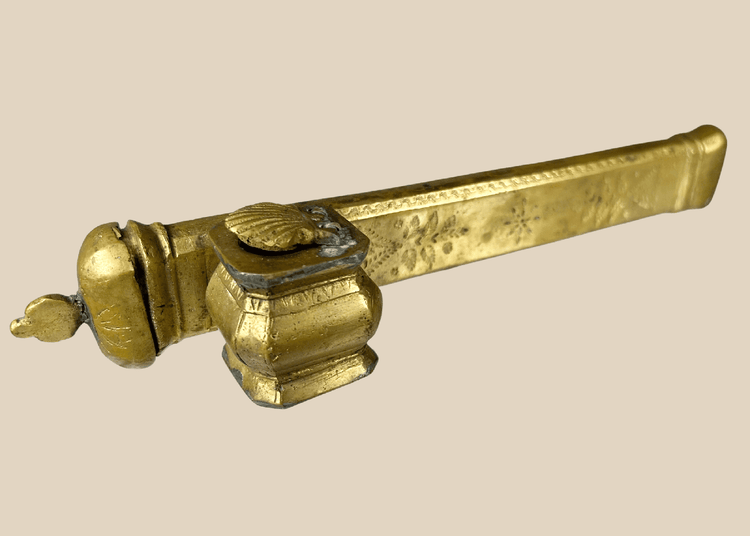
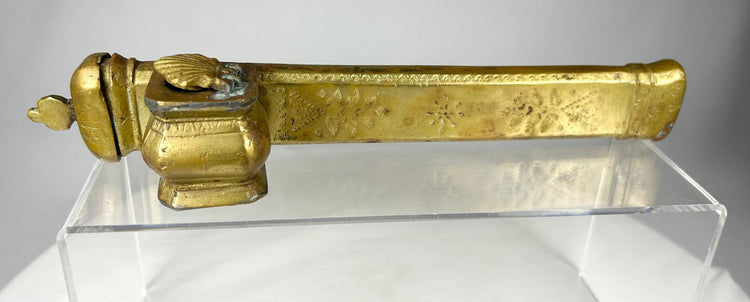
Étui à plume et encrier en bronze, antiquité du Moyen-Orient, XVIIIe-XIXe siècle
Description
Plus
Moins
Contexte historique et origine
Région : Empire ottoman, Moyen-Orient (probablement l'Anatolie ou le Levant)
Matériau : Bronze coulé
Période : XVIIIe-XIXe siècle de notre ère
Description
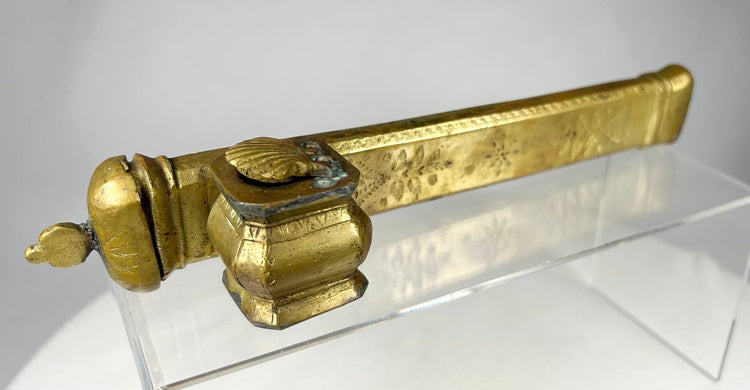
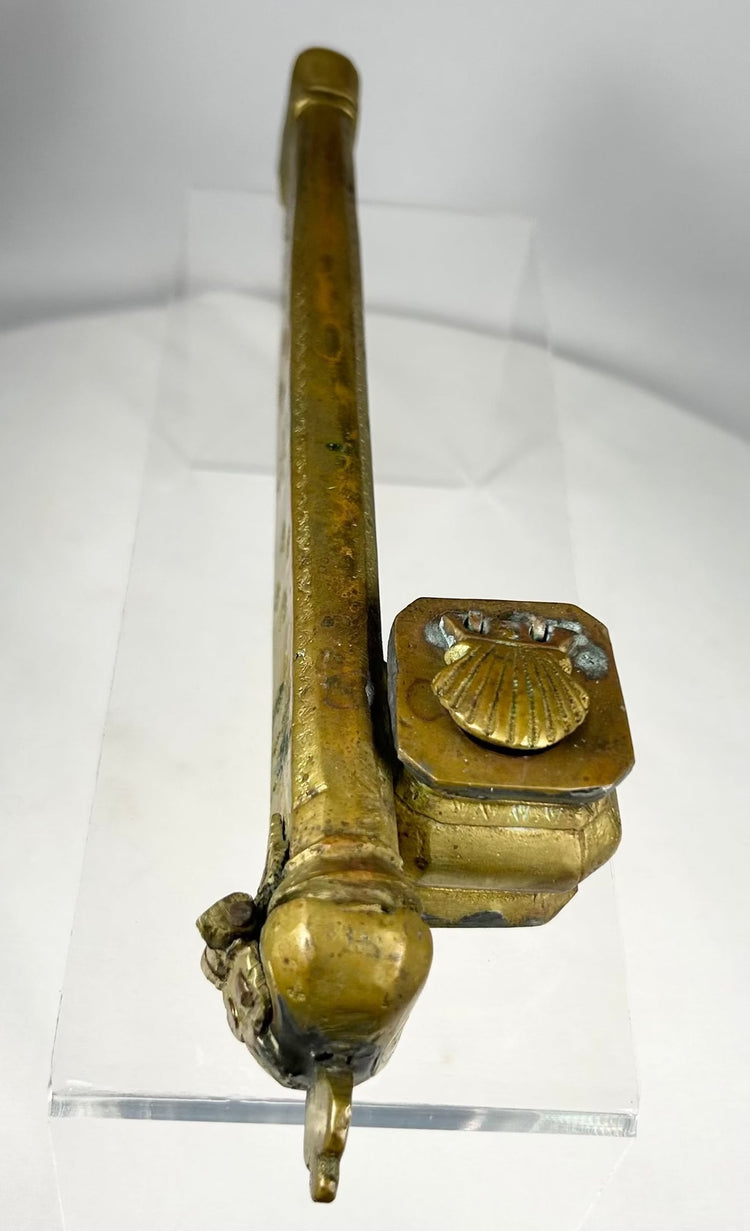
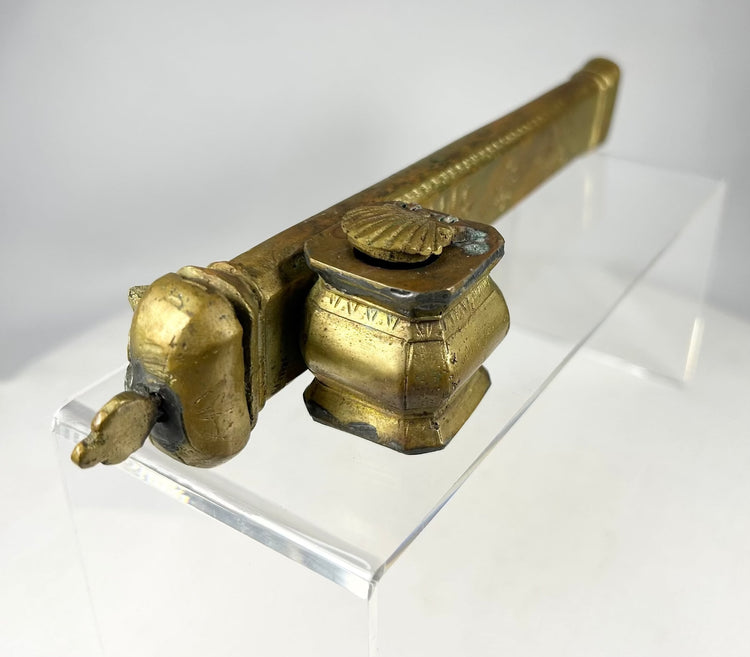
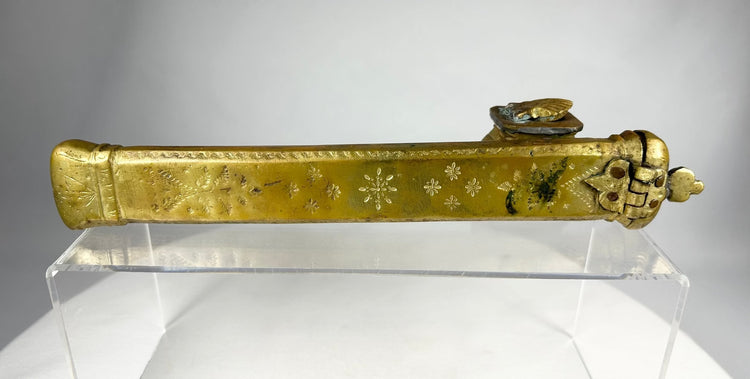
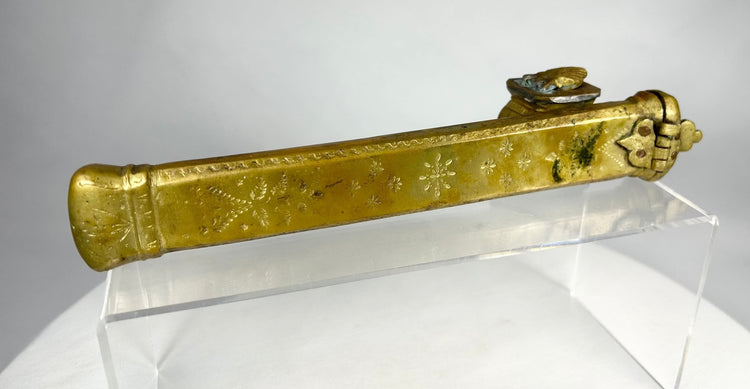
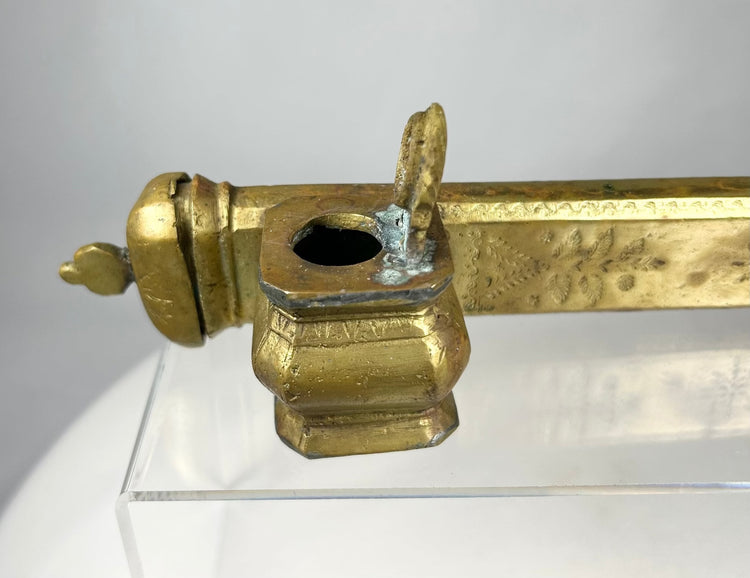
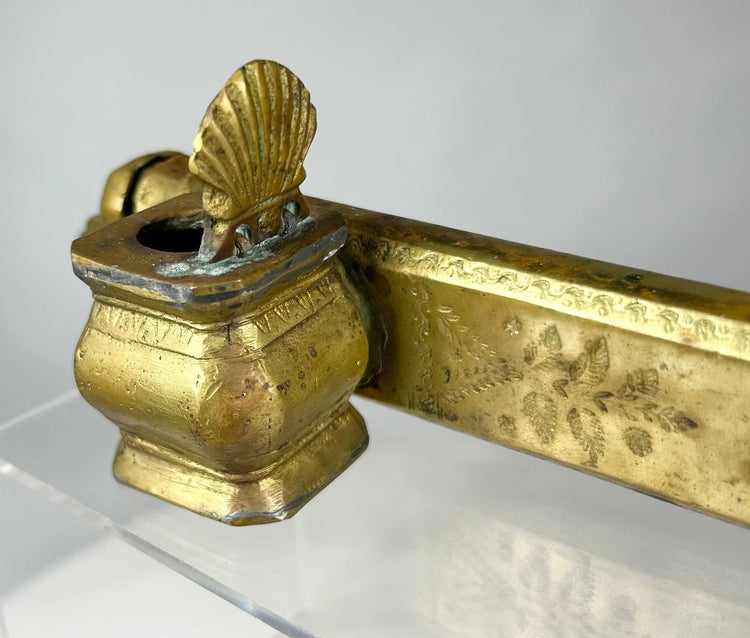
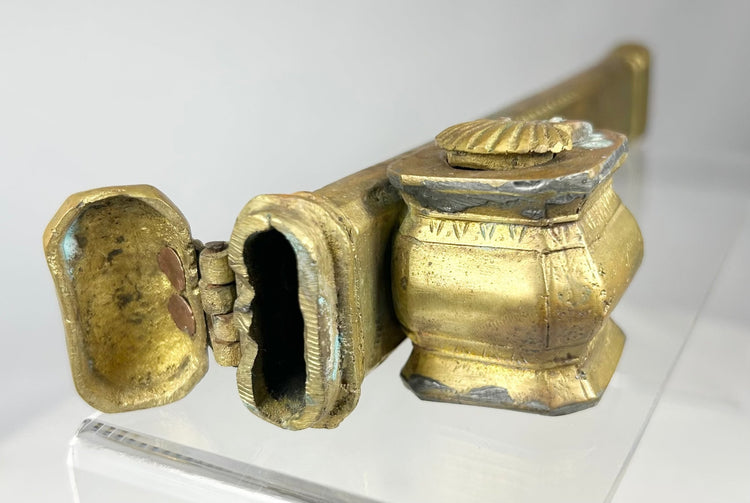
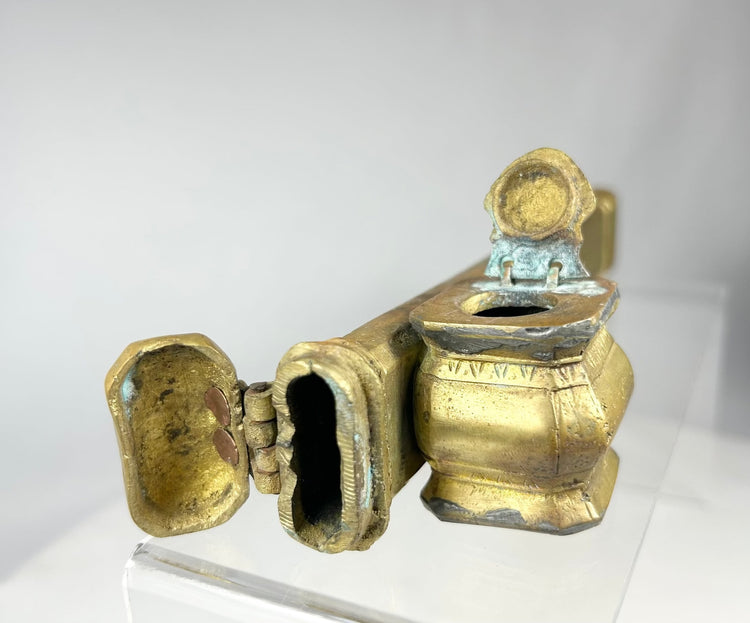
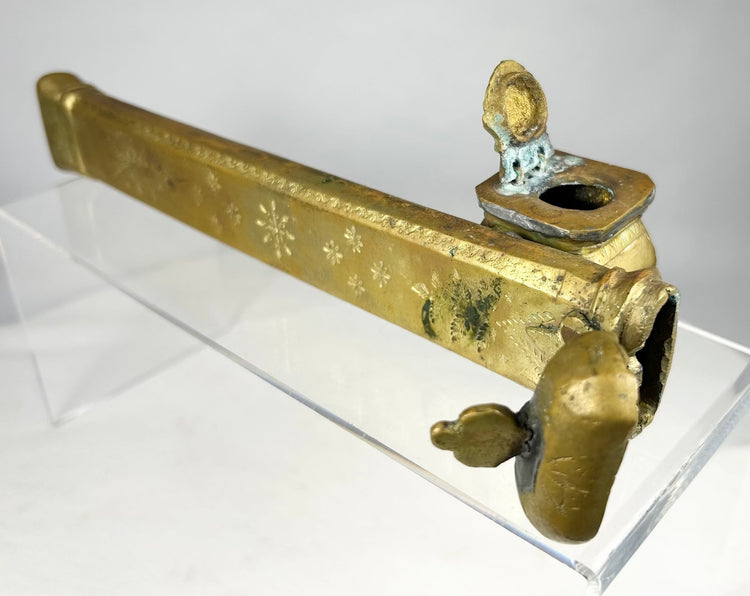
Cet ancien étui de voyage ottoman pour encre et plumes, traditionnellement connu sous le nom de divit, est un objet utilitaire finement ouvragé utilisé par les scribes, les érudits et les fonctionnaires de tout l'Empire ottoman. Moulé en bronze massif, l'étui présente une forme rectangulaire allongée conçue pour contenir des plumes de roseau, ainsi qu'un encrier intégré muni d'un couvercle à charnière pour un transport sécurisé.
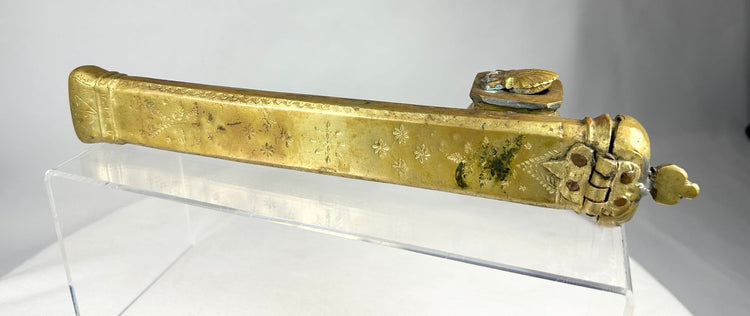
L'extérieur est décoré de motifs floraux et géométriques gravés, reflétant les traditions raffinées de la métallurgie du monde ottoman. Conçus pour la mobilité, ces étuis à écrire étaient des outils essentiels pour les élites éduquées, permettant la correspondance, la tenue de registres et le travail calligraphique lors des déplacements.
Caractéristiques
- Encrier en bronze intégré avec couvercle à charnière
- Compartiment à plumes allongé avec fermeture d'extrémité à charnière
- Décoration florale et géométrique gravée à la main
- Construction en bronze massif coulé avec patine vieillie
- Instrument d'écriture de voyage fonctionnel utilisé par les scribes ottomans
Signification culturelle
L'écriture et la calligraphie revêtaient une importance profonde au sein de la société ottomane, en particulier dans l'administration, la religion et la littérature. Des objets tels que ce divit étaient des symboles d'éducation, d'autorité et de raffinement. Les étuis portables pour encre et plumes permettaient aux fonctionnaires et aux érudits d'accomplir leurs tâches en déplacement, ce qui en faisait des outils indispensables à la vie bureaucratique et intellectuelle de l'empire.
État
Bon état antique, avec usure de surface, patine et oxydation conformes à l'âge et à l'usage historique. Les charnières sont intactes, la décoration gravée est clairement visible et aucune réparation moderne n'est observée.
Dimensions (approximatives)
Longueur : 24,1 cm
Largeur : 5,7 cm
Âge (approximatif)
150 à 250 ans
Provenance
D'une collection privée à Montréal, Québec, Canada.
En savoir plus
Découvrez l'Art de la Calligraphie dans l'art islamique
Voir Notre Collection d'Antiquités et d'Art Ancien du Moyen-Orient
Description
Contexte historique et origine
Région : Empire ottoman, Moyen-Orient (probablement l'Anatolie ou le Levant)
Matériau : Bronze coulé
Période : XVIIIe-XIXe siècle de notre ère
Description
Cet ancien étui de voyage ottoman pour encre et plumes, traditionnellement connu sous le nom de divit, est un objet utilitaire finement ouvragé utilisé par les scribes, les érudits et les fonctionnaires de tout l'Empire ottoman. Moulé en bronze massif, l'étui présente une forme rectangulaire allongée conçue pour contenir des plumes de roseau, ainsi qu'un encrier intégré muni d'un couvercle à charnière pour un transport sécurisé.
L'extérieur est décoré de motifs floraux et géométriques gravés, reflétant les traditions raffinées de la métallurgie du monde ottoman. Conçus pour la mobilité, ces étuis à écrire étaient des outils essentiels pour les élites éduquées, permettant la correspondance, la tenue de registres et le travail calligraphique lors des déplacements.
Caractéristiques
- Encrier en bronze intégré avec couvercle à charnière
- Compartiment à plumes allongé avec fermeture d'extrémité à charnière
- Décoration florale et géométrique gravée à la main
- Construction en bronze massif coulé avec patine vieillie
- Instrument d'écriture de voyage fonctionnel utilisé par les scribes ottomans
Signification culturelle
L'écriture et la calligraphie revêtaient une importance profonde au sein de la société ottomane, en particulier dans l'administration, la religion et la littérature. Des objets tels que ce divit étaient des symboles d'éducation, d'autorité et de raffinement. Les étuis portables pour encre et plumes permettaient aux fonctionnaires et aux érudits d'accomplir leurs tâches en déplacement, ce qui en faisait des outils indispensables à la vie bureaucratique et intellectuelle de l'empire.
État
Bon état antique, avec usure de surface, patine et oxydation conformes à l'âge et à l'usage historique. Les charnières sont intactes, la décoration gravée est clairement visible et aucune réparation moderne n'est observée.
Dimensions (approximatives)
Longueur : 24,1 cm
Largeur : 5,7 cm
Âge (approximatif)
150 à 250 ans
Provenance
D'une collection privée à Montréal, Québec, Canada.
En savoir plus
Découvrez l'Art de la Calligraphie dans l'art islamique
Voir Notre Collection d'Antiquités et d'Art Ancien du Moyen-Orient
Vous aimerez peut-être aussi
