

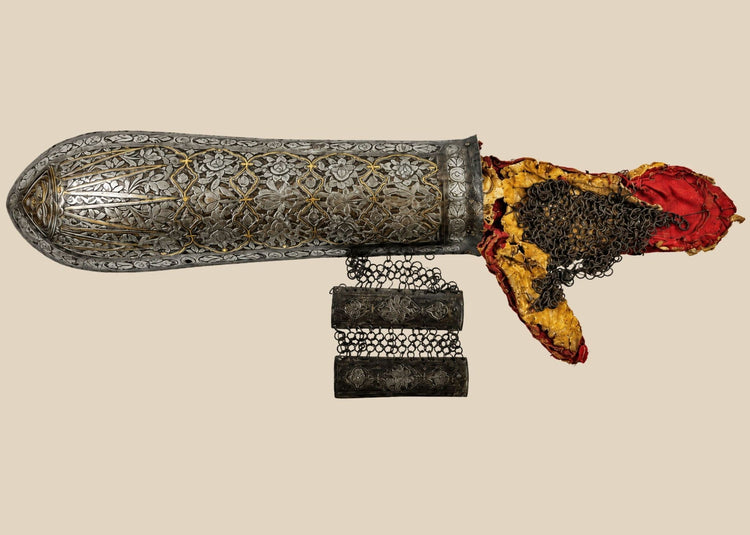
Brassard de guerrier perse Qajar | Manchette d'armure en acier Koftgari doré | XIXe siècle
- Prix habituel
- $2,000.00
- Prix soldé
- $2,000.00
- Prix habituel
Impossible de charger la disponibilité du service de retrait


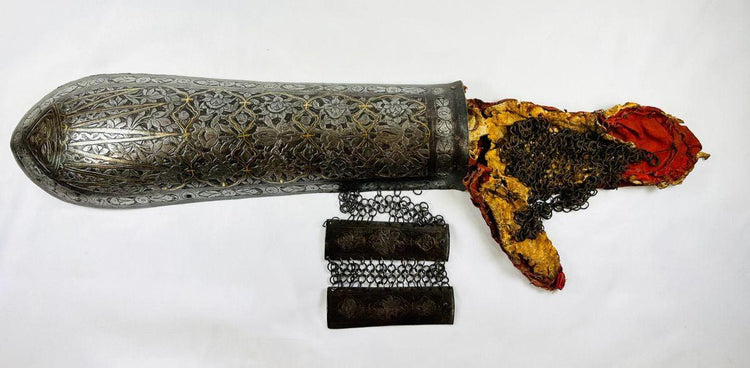
Brassard de guerrier perse Qajar | Manchette d'armure en acier Koftgari doré | XIXe siècle
Description
Plus
Moins
Contexte historique et origine
Région : Perse (Iran)
Matériaux : Acier avec incrustations en or koftgari, cotte de mailles et doublure en tissu
Période : Dynastie Qajare, 1789–1925 de notre ère
Description
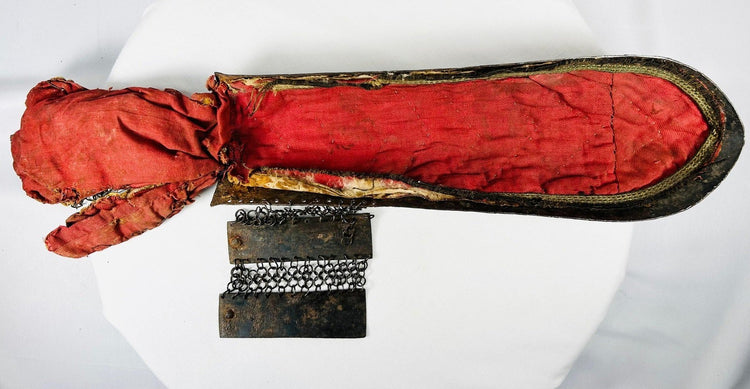
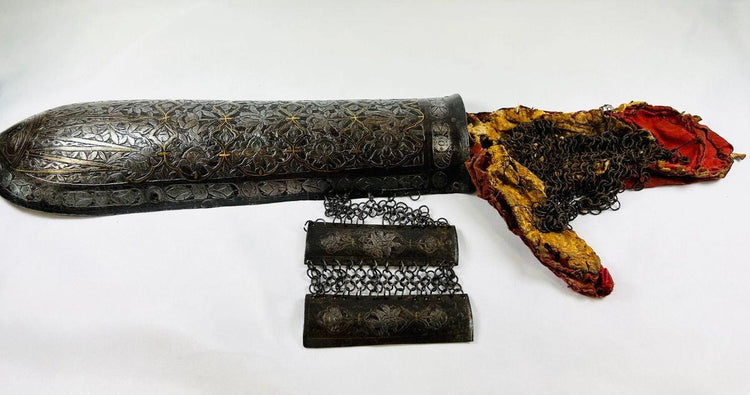
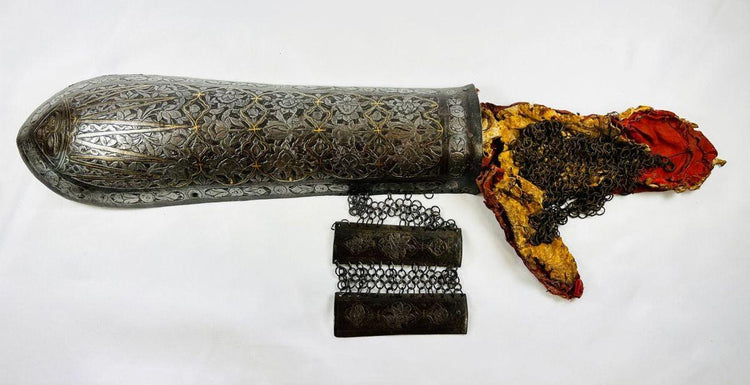
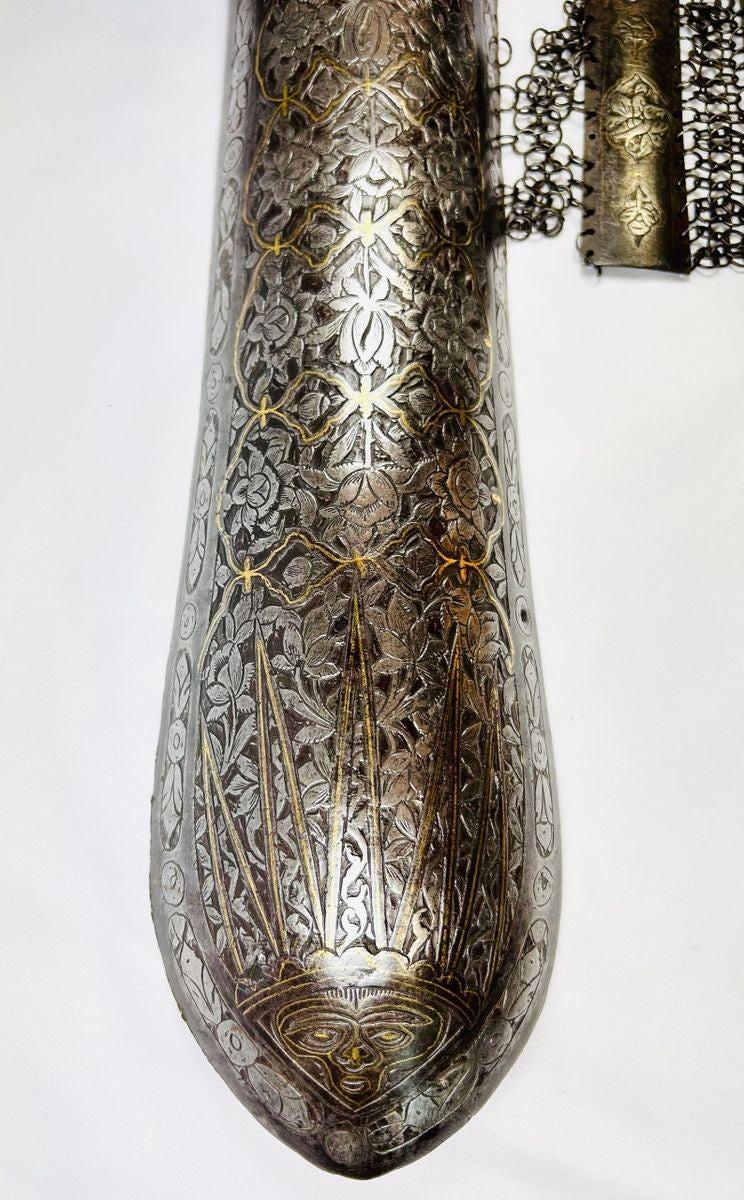
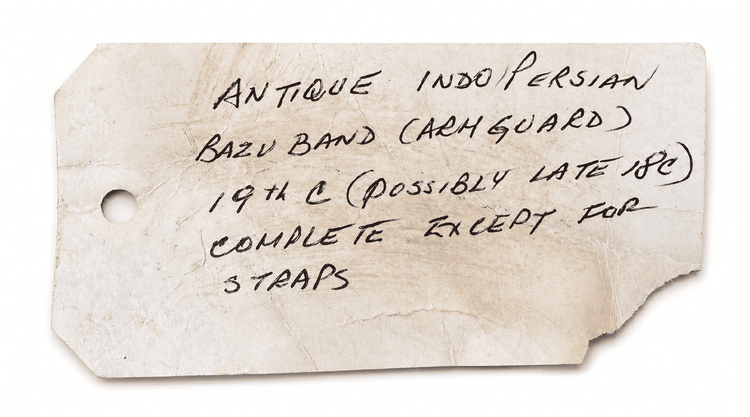
Ce bazu band (protège-bras) de guerrier perse est un exemple frappant d'armure de l'époque Qajare, fabriquée en acier et décorée d'incrustations complexes en or koftgari (damasquinage). Le protège-bras a conservé sa doublure originale en cotte de mailles et son rare intérieur en tissu rouge, ce qui en rehausse considérablement l'authenticité et l'importance historique. Conçus pour protéger l'avant-bras pendant le combat, les bazu bands constituaient un élément essentiel de l'armure défensive perse tout en servant également de démonstration de statut et de savoir-faire.
Caractéristiques
- Incrustations en or koftgari formant des motifs décoratifs ornementaux sur l'acier
- Doublure originale en cotte de mailles offrant une protection supplémentaire
- Rare intérieur en tissu rouge conservé
- Exemple complet, peu courant pour les armures de la période Qajare qui subsistent
Signification culturelle
Pendant la dynastie Qajare, l'armure finement décorée symbolisait à la fois la fonction martiale et le prestige social. Les guerriers et les nobles commandaient souvent des pièces richement ornées qui reflétaient à la fois la préparation militaire et le raffinement artistique. La décoration koftgari — des incrustations d'or ou d'argent martelées dans des surfaces d'acier — était une caractéristique distinctive de l'orfèvrerie perse, démontrant une compétence technique extraordinaire tout en soulignant l'autorité et le prestige des guerriers d'élite.
État
Condition exceptionnellement bien conservée avec les incrustations d'or, la doublure en cotte de mailles et l'intérieur en tissu d'origine intacts. L'usure mineure cohérente avec l'âge et l'utilisation historique renforce son authenticité en tant que pièce d'armure fonctionnelle.
Dimensions (approximatives)
Longueur : 11,5 po
Largeur : 4,5 po
Âge (approximatif)
100 à 236 ans
Provenance
Faisait autrefois partie d'une importante collection privée à Carrollton, Texas, États-Unis, assemblée sur de nombreuses années avec un accent particulier sur les armes, armures, militaria et objets connexes du patrimoine martial historique.
En savoir plus
Examinez des exemples d'Armes et armures de la période Qajare conservées à la Wallace Collection
Étudiez le savoir-faire et le symbolisme des traditions de la métallurgie Qajare
Parcourez notre collection d'artefacts de guerre historique et d'exploration.
Description
Contexte historique et origine
Région : Perse (Iran)
Matériaux : Acier avec incrustations en or koftgari, cotte de mailles et doublure en tissu
Période : Dynastie Qajare, 1789–1925 de notre ère
Description
Ce bazu band (protège-bras) de guerrier perse est un exemple frappant d'armure de l'époque Qajare, fabriquée en acier et décorée d'incrustations complexes en or koftgari (damasquinage). Le protège-bras a conservé sa doublure originale en cotte de mailles et son rare intérieur en tissu rouge, ce qui en rehausse considérablement l'authenticité et l'importance historique. Conçus pour protéger l'avant-bras pendant le combat, les bazu bands constituaient un élément essentiel de l'armure défensive perse tout en servant également de démonstration de statut et de savoir-faire.
Caractéristiques
- Incrustations en or koftgari formant des motifs décoratifs ornementaux sur l'acier
- Doublure originale en cotte de mailles offrant une protection supplémentaire
- Rare intérieur en tissu rouge conservé
- Exemple complet, peu courant pour les armures de la période Qajare qui subsistent
Signification culturelle
Pendant la dynastie Qajare, l'armure finement décorée symbolisait à la fois la fonction martiale et le prestige social. Les guerriers et les nobles commandaient souvent des pièces richement ornées qui reflétaient à la fois la préparation militaire et le raffinement artistique. La décoration koftgari — des incrustations d'or ou d'argent martelées dans des surfaces d'acier — était une caractéristique distinctive de l'orfèvrerie perse, démontrant une compétence technique extraordinaire tout en soulignant l'autorité et le prestige des guerriers d'élite.
État
Condition exceptionnellement bien conservée avec les incrustations d'or, la doublure en cotte de mailles et l'intérieur en tissu d'origine intacts. L'usure mineure cohérente avec l'âge et l'utilisation historique renforce son authenticité en tant que pièce d'armure fonctionnelle.
Dimensions (approximatives)
Longueur : 11,5 po
Largeur : 4,5 po
Âge (approximatif)
100 à 236 ans
Provenance
Faisait autrefois partie d'une importante collection privée à Carrollton, Texas, États-Unis, assemblée sur de nombreuses années avec un accent particulier sur les armes, armures, militaria et objets connexes du patrimoine martial historique.
En savoir plus
Examinez des exemples d'Armes et armures de la période Qajare conservées à la Wallace Collection
Étudiez le savoir-faire et le symbolisme des traditions de la métallurgie Qajare
Parcourez notre collection d'artefacts de guerre historique et d'exploration.
Vous aimerez peut-être aussi
